

In Brief
- With BNPL apps, customers get the ability to make payments in easy installments, while merchants can leverage the flexibility of payments to optimize checkouts, conversions, and access new customer categories.
- The major opportunities that BNPL apps can provide include consumer BNPL, merchant financing, B2B BNPL, embedded finance, vertical BNPL, and regional expansion. Businesses can choose a model that will suit their target audience and the chosen market.
- Features include user registration and KYC verification, eligibility check, immediate approval, tracking of installments, payment reminders, payment processing, merchant dashboards, and admin management. It is also very important to provide a high level of security and to monitor fraud and compliance with the necessary regulations.
- BNPL app development costs can vary from $30,000-$80,000 (MVP), $80,000-$180,000 (mid-level app), to $180,000-$400,000+. The exact cost depends on the features of the app, platforms used, third-party integration, AI, security, compliance, and many more factors.
- The successful BNPL platform will require to have the following phases in its development lifecycle: planning of the business model, market research, UI/UX design, development, integrations, security testing, launch, and improvements. With the help of MVP development and the gradual addition of AI-based risk assessment and fraud prevention technologies, one can build sustainable growth.
The concept of Buy Now, Pay Later (BNPL) allows customers to make purchases without paying the full price at the moment of buying a product. The buyer can divide the cost of the item into several parts and pay in installments. For businesses, such a solution can offer flexible checkout options along with additional opportunities to increase their client base.
Due to the increased interest in digital payments and eCommerce services, the number of requests for BNPL is growing in such industries as retail, travel, healthcare, electronics, and others. This has motivated many fintech companies, merchants, and startups to invest in BNPL apps.
In this blog, we will talk about everything you should know about BNPL app development, such as its features, development costs, cost drivers, monetization, business opportunities, and the development process itself.
What is a BNPL App and How Does It Work?
A Buy Now Pay Later app is an application that enables customers to make purchases and pay back later using multiple payments. This happens when customers, merchants, and payment or finance service providers are integrated into a single platform.
The operation of the BNPL app is fairly straightforward. A customer chooses the BNPL app at the time of purchasing a good or service. The platform verifies the eligibility of the customer based on some personal information and issues the purchase, and the customer commits to repay the loan in accordance with the schedule chosen.
Beyond this basic process, a BNPL platform performs multiple crucial tasks, such as payment processing, risk assessment, repayment monitoring, communication, fraud detection, and merchant settlement.
A typical BNPL ecosystem includes:
- Customer App: Transactions, payments, and account management.
- Merchant Platform: Checkout integration and transaction tracking.
- Administrator Panel: User, merchant, payment, and risk management.
- Backend: API integration, security, decision-making, and data management.
Why Invest in BNPL App Development?
BNPL has become an essential element of the digital payment system as consumers are increasingly searching for flexibility and convenience when managing their purchases. Investing in the development of BNPL apps can provide additional benefits to businesses besides the provision of another payment method. Flexibility of installments can make customers feel more encouraged to make high-value purchases.
BNPL apps can attract customers who have preferences for deferred payments as opposed to paying the full cost upfront. Providing a seamless process of repayment can even make the experience more comfortable for customers and motivate them to make repeated purchases. The approach is applicable to multiple sectors, including eCommerce, travel, health care, education, electronics, and retail.
From a business point of view, BNPL solutions can be profitable with merchant fees, subscription services, finance charges, and other methods. If you possess the necessary technology and infrastructure, you can even develop a scalable fintech solution.
BNPL Market Opportunities for Businesses
With the rise in popularity of digital commerce and cashless transactions, there have been numerous opportunities for business organizations entering the BNPL platform. Rather than limiting themselves to consumer shopping, businesses can pursue various options depending on their customers.
Opportunities may include:
- Consumer BNPL: Make provisions for offering payment plans in daily transactions.
- Merchant BNPL: Provide services for the retailer to offer BNPL at checkout.
- B2B BNPL: Let the business organization make purchases using flexible payment plans.
- Embedded BNPL: Provide financing in eCommerce, banking, marketplace, or fintech platforms.
- Industry-specific BNPL: Create BNPL solutions for industries such as health, tourism, education, and automotive.
- Regional expansion: Adapt the platform for the regional payment systems, regulations, and customers.
Essential Features of a BNPL App
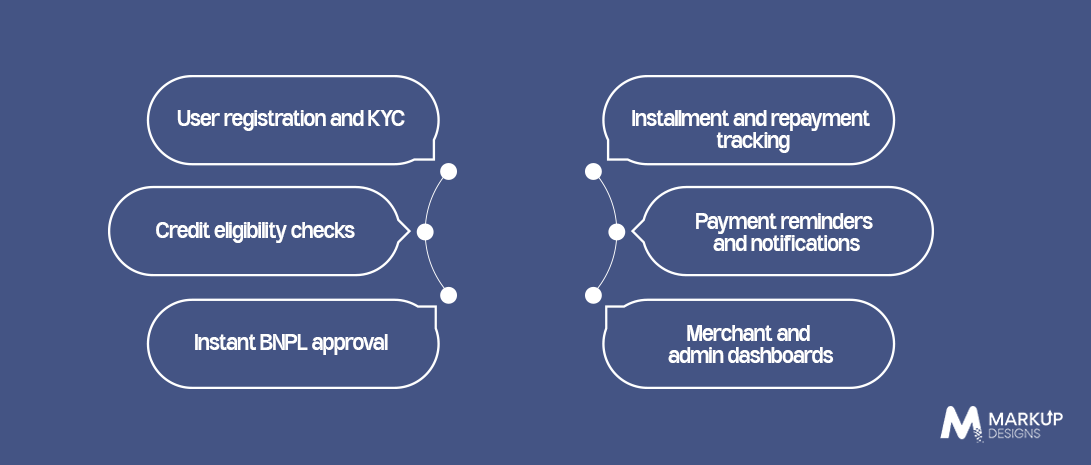
The successful implementation of BNPL services relies on a balance between customer-facing and business-focused functionalities. The key aim here is to make the process of buying and repaying convenient while allowing companies to manage all necessary aspects of the transactions efficiently.
1. User registration and KYC
Offer customers a convenient onboarding process in which they can easily register and undergo identification. KYC checks can serve the interests of both sides.
2. Credit eligibility checks
Check a customer’s eligibility for a BNPL payment before issuing an offer. All the information about a customer’s financial and transaction history can be used in decision-making.
3. Instant BNPL approval
Give an immediate eligibility decision upon checkout in order not to prolong the process for customers and minimize drop-off rates.
4. Installment and repayment tracking
Offer the ability to monitor repayments and track scheduled installments, made payments, and the balance left to pay.
5. Payment reminders and notifications
Ensure that customers are always up-to-date regarding their payments by sending them reminders through push notifications, email, or SMS.
6. Merchant and admin dashboards
Provide merchants with transaction and settlement details, whereas admins have control over all user-related, merchant-related, payment-related, and reporting activities from a central dashboard.
Ready to turn your BNPL idea into a secure digital payment solution?
Partner with Markup Designs to build a scalable BNPL app with essential fintech features, secure integrations, and a seamless customer experience.

BNPL App Development Cost
The cost to develop an app in the Buy Now Pay Later category depends on the functionality, technologies, integrations, and complexity of the platform. The simpler your minimum viable product (MVP) is in terms of customer and payment functionality, the less money you need to pay for its development compared to a sophisticated platform with many features.
Here is a general estimate:
| BNPL App Type | Estimated Cost | Development Time |
| Basic MVP | $30,000–$80,000 | 3–5 months |
| Mid-Level Platform | $80,000–$180,000 | 5–8 months |
| Advanced BNPL Platform | $180,000–$400,000+ | 8–12+ months |
Factors Affecting BNPL App Development Cost
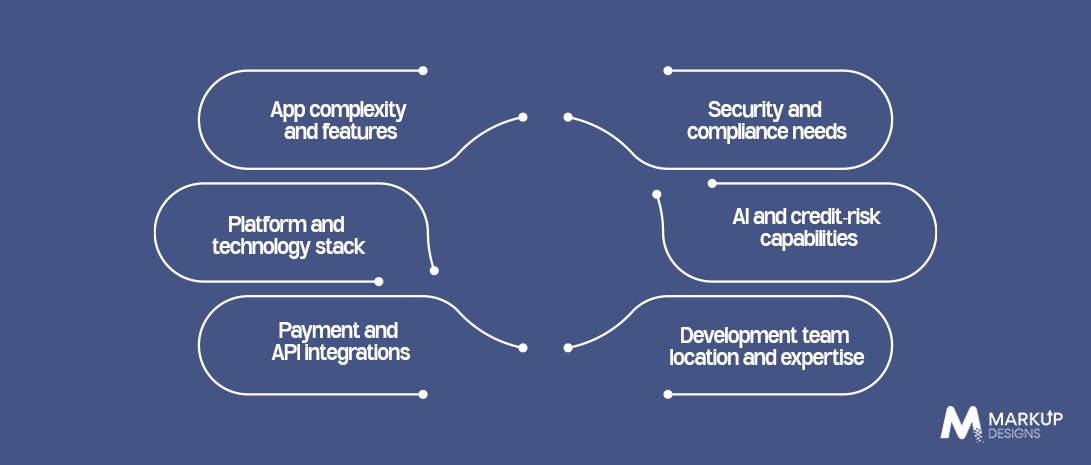
Several factors can influence the overall investment required to build a BNPL application. Understanding them early can help businesses plan their development budget more effectively.
App complexity and features
A platform with advanced functionality, several user roles, and complex flows will take more effort and time for development.
Platform and technology stack
The app developed for iOS, Android, and web can cost more than a platform launched for one particular OS or through cross-platform mobile app technology.
Payment and API integrations
Working with payment gateways, banks API, and financial services of various third parties requires some integration effort and testing.
Security and compliance needs
KYC, AML, data protection, encryption, authentication, and payment security solutions add to development costs and testing.
AI and credit-risk capabilities
Automated credit scoring, fraud detection, and risk management solutions can add to development costs and complexity.
Development team location and expertise
Location, skills, size, and experience in fintech application development can dramatically affect your hourly rate and the total project budget.
BNPL App Monetization Models
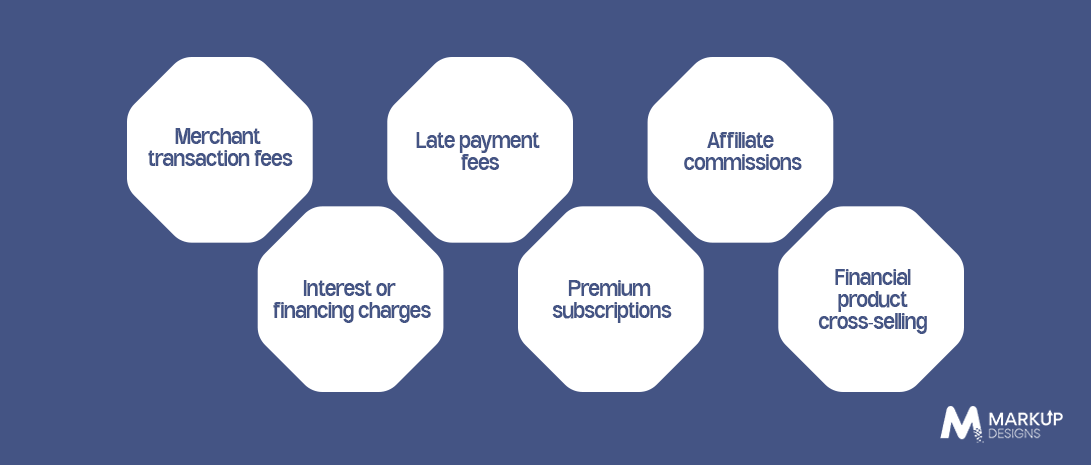
Monetization strategy plays an integral role in the financial sustainability of the BNPL platform while also ensuring its continuous usefulness to consumers and merchants. It is up to companies to choose which models will be utilized in their business operations, either individually or in combination.
Merchant transaction fees
Collect fees from merchants in the form of either a percentage or flat amount per BNPL transaction on the platform. This could be a stable source of income for you as more transactions take place.
Interest or financing charges
Under certain conditions or according to local laws, businesses can earn income from interest or finance charges on eligible purchases.
Late payment fees
Platforms have the option of collecting a fee in cases where customers default on their repayments.
Premium subscriptions
Offer a paid subscription plan where customers can enjoy privileges such as exclusive discounts, limits, loyalty rewards, etc.
Affiliate commissions
You can also earn money by affiliating with businesses, retailers, or financial institutions.
Financial product cross-selling
Market other financial products or services to eligible customers.
How to Develop a BNPL App?
Developing a BNPL application needs thoughtful planning since this platform will manage payments, customer data, credit analysis, and repayment details. A well-defined process will help businesses create a secure application and at the same time maintain a simple interface for users.
- Determine Business Model
In the beginning, it is important to define the business model of this application. This could be BNPL for consumers, B2B financing, embedded BNPL, etc.
- Perform Market Analysis
Performing customer needs analysis, competitor analysis, payment preferences, and regulations in the targeted market is an integral part of this stage since it will allow you to know the gaps in this area.
- Plan Features and UI/UX
Plan the user flow for the sign-up process, eligibility verification, checkout, installment choice, and repayment. Ensure that the interface is clean and the clients are always aware of their payment responsibilities.
- Build the Platform
Develop the customer app, merchant dashboard, administration panel, back-end, APIs, and risk management elements. Integrate the necessary payment services, KYC, banking, and notification services.
- Test Security and Performance
Test payments, authentication, APIs, fraud, repayment processes, and performance in general. Security and compliance testing must be incorporated into the process from the very beginning.
- Launch and Improve
Launch the MVP, collect feedback from both customers and merchants, track the repayment behavior, and evolve the platform using these real-world insights. Next, markets and features can be introduced after that.
Why Choose Markup Designs for BNPL App Development?
Building a BNPL platform goes beyond building an application that allows the user to make payments. It involves secure payment processing, stable backend infrastructure, integration with third parties, risk management, protection of data, and delivering great experiences for both the customer and merchant. Markup Designs works to help organizations integrate the various components required to create stable BNPL platforms.
The development process starts with business planning, followed by UI/UX design, software development, software testing, deployment, and post-deployment services. Security features such as authentication, encryption, protection of the API, and data security are also integral parts of the platform creation process.
Fintech solutions can be integrated into the BNPL platform, such as payment gateways, KYC providers, banking APIs, and notification services. AI and analytics capabilities could also be embedded to assess credit risk, monitor fraud, and gain customer insight.
Scalability could be ensured as the number of users, merchants, and transactions increases. Ongoing monitoring, maintenance, and updates of the BNPL solution after its deployment could keep the business competitive and protected.
Looking to enter the growing BNPL market?
Markup Designs can help you plan, develop, and scale a BNPL platform based on your business goals and target market. Discuss your BNPL app idea with our development team today.

Conclusion
Nowadays, BNPL is evolving into one of the integral elements of the digital payment landscape, giving birth to new opportunities for fintech businesses, merchants, and startups. An effective BNPL application should have not only flexible payment solutions. Such a product should ensure a seamless customer experience along with safe payments, risk management, merchant management, and regulatory compliance.
The general cost of development will depend on various elements like features, integrations, platforms, security, artificial intelligence, target market, etc. Companies that begin developing a product with a minimum viable product (MVP) and then expand it step by step can control the expenses.
With the proper tech approach and developer, the BNPL platform can become a scalable fintech product, supporting customers, merchants, and further growth of the business.
FAQs
1. How much does it cost to develop a BNPL app?
BNPL app development can cost anywhere from $30,000 to $400,000+, depending on the platform’s complexity, features, integrations, security requirements, and target market.
2. How long does it take to develop a BNPL app?
A basic BNPL MVP may take around 3–5 months, while a more advanced platform can take 8–12 months or longer.
3. What are the key features of a BNPL app?
Important features include user registration, KYC, eligibility checks, instant approval, installment tracking, payment reminders, payment processing, merchant dashboards, and admin management.
4. How does a BNPL app make money?
BNPL platforms can generate revenue through merchant transaction fees, financing charges, eligible late-payment fees, subscriptions, affiliate commissions, and financial product cross-selling.
5. Is BNPL app development regulated?
Yes. BNPL platforms may need to follow financial, lending, consumer protection, payment security, KYC/AML, and data privacy requirements depending on the country and business model.
Author's Perspective
BNPL is evolving beyond a simple checkout option into a broader fintech opportunity. Businesses can benefit by starting with a secure MVP that offers smooth payments, clear repayment terms, strong risk controls, and a reliable merchant experience. As the market continues to grow, AI-driven risk assessment, fraud prevention, embedded finance, and industry-specific BNPL models can create new opportunities. A strong focus on technology, regulatory compliance, security, and customer value can help businesses build sustainable BNPL platforms and support long-term growth.
Discuss Your Project NowJupinder Singh Arora
Founder and CEO
Related Posts
FinTech Cybersecurity: Essential Controls for Secure Financial Applications
Neobank App Development Cost: Enterprise Banking Guide for...
Insights Are Valuable & Execution is Priceless
You’ve read about the digital future. Now, let’s build the infrastructure to take you there. Move your strategy from the page to the product.
Design Your Solution Now
Contact Us
Schedule The Appointment At Your Convenience Date And Time.
30 Min
Web Conference
Time Zone
Indian standard time (08:30pm)

Thanks For Getting In Touch!
You’ve Taken The First Step Toward Transforming Your Digital Presence. Our Experts Will Reach Out Shortly To Take It Forward.
Launch Your Dream Project
Provide a brief overview of your project, and our specialists will evaluate your requirements. We will connect with you to explore how the right digital solutions can help you launch faster.