
In Brief
- Data security in healthcare covers patient confidential data in electronic health records, mobile applications, cloud, and hospital databases. Data security emphasizes data privacy, integrity, and availability, which aid in providing quality and secure patient care.
- Common problems include ransomware attacks, phishing incidents, human error, outdated infrastructure, vulnerable medical devices, security flaws in cloud storage, unsafe data sharing, and lack of resources for cybersecurity.
- Best practices are security risk assessments, access control based on user roles, multifactor authentication, data encryption, training of employees, secure cloud configuration, backup, and incident management plans.
- Healthcare organizations have to comply with regulatory bodies that may include the US HIPAA regulation, the European Union GDPR, and other regional data protection regulations. Other new technologies like AI-based threat detection, blockchain technology, Zero Trust Architecture, and privacy-enhancing technologies could further enhance security.
- For developing an effective strategy for security, one needs constant monitoring, testing, vendor assessments, compliance, and constant improvement. Markup Designs assists healthcare organizations in developing their own custom software solutions, keeping in view security, data protection, secure integrations, and scalability.
Medical facilities are now leveraging digital technology to store information about patients, offer remote consultations, store medical reports, and improve the quality of care. However, such a step increases the risk of leaking private information of patients due to a lack of proper measures. The security breach could potentially lead to the exposure of confidential data, disruption of the functioning of the facility, and loss of confidence among the patients.
Data security has become one of the major priorities of hospitals, clinics, insurance companies, and digital medicine companies. Such organizations have to make sure that the private information of their clients is not exposed to any attacks, breaches, mistakes, or misuse. At the same time, they have to abide by all necessary legislation and provide access to necessary information to medical professionals.
In this blog, we will try to understand what is meant by healthcare data security, its significance, and the main issues involved. We will also look into the security best practices that can be adopted and the new-age technology that can be implemented by choosing the right software development partner.
What is Healthcare Data Security?
Data security in healthcare is the method through which patient information is protected against any kind of unauthorized access, theft, loss, or use. This encompasses any kind of information that is present in electronic health records systems, mobile applications, cloud storage, and hospital systems.
Patient names, history, lab tests, prescriptions, insurance information, and billing information fall under this category. As the information is very sensitive, there has to be an adequate level of protection for the same.
The following are three main factors in healthcare data security:
- Confidentiality: The ability to ensure that the right people get access to patients’ data.
- Integrity: The maintenance of patient data in an accurate form and the prevention of any alterations by those not authorized.
- Availability: Guaranteeing that healthcare workers can access the necessary information whenever required.
The best way to achieve healthcare data security is through the use of technical solutions, staff awareness, and proper security policies. Examples of such technical solutions include encryption of patient data and controlling access to certain information.
Why is Healthcare Data Security Important?
All healthcare institutions deal with sensitive information on a daily basis. Thus, in order to ensure patient safety, confidentiality, and efficient operation of the facilities, proper data security is a must. Otherwise, any security threat will lead to disclosure of patient records, disruption of services, and creation of serious problems for patients and healthcare organizations.
The following are the major reasons why healthcare information security is important:
- Protection of patient privacy: Ensures that all medical records, diagnoses, and personal information of patients do not fall into the wrong hands.
- Prevention of data breaches and fraud: Helps to prevent any kind of theft of medical information, insurance fraud, etc.
- Building trust with patients: Assures patients that their personal and medical information is properly handled.
- Uninterrupted care: Assists healthcare providers in getting access to proper records during the decision-making process.
- Saving money: Minimizes the losses related to security threats and recovery of the system.
- Compliance with regulations: Allows healthcare organizations to comply with various data security regulations.
In light of the increasing connectivity of the healthcare industry, protecting patient information is a must.
Major Healthcare Data Security Challenges
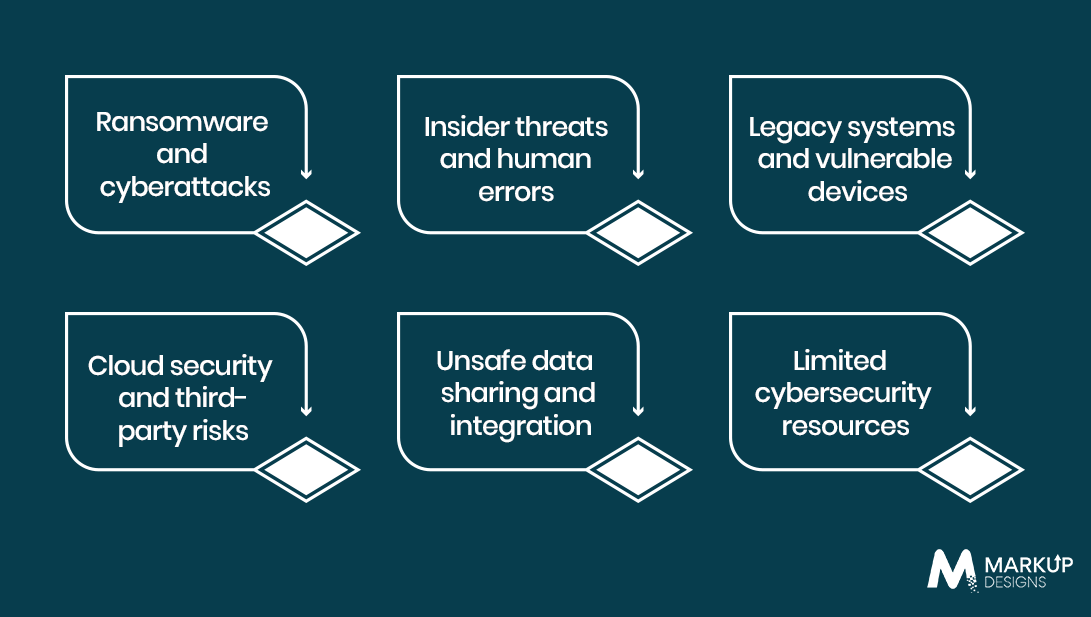
Healthcare organizations store sensitive patient information on various systems, devices, and platforms. The protection of data in such cases is challenging due to the constant development of new cyber threats, which can make sensitive records vulnerable even if there are minor security issues. Here are six major challenges that healthcare organizations face regarding protecting their sensitive patient information.
Ransomware and cyberattacks
Criminals can launch ransomware and phishing attacks, and use malware to access the system and disturb the functioning of hospitals.
Insider threats and human errors
It is possible for employees to accidentally send out sensitive documents, click on malicious links, or give access to unauthorized persons. Also, misuse of access rights poses a threat to sensitive information.
Legacy systems and vulnerable devices
Unsupported by any vendor, old software can lack important security updates and become an easy target for cybercriminals.
Cloud security and third-party risks
Inappropriate configuration of cloud storage, insecure vendor control, and third-party integration pose a threat to patient data.
Unsafe data sharing and integration
Data sharing between hospitals, laboratories, pharmacies, and other healthcare applications may be insecure due to inconsistent protection mechanisms.
Limited cybersecurity resources
Budgets, skilled individuals, and time may be limited when it comes to monitoring, updating software, and responding to cyber threats.
Healthcare Data Security Best Practices
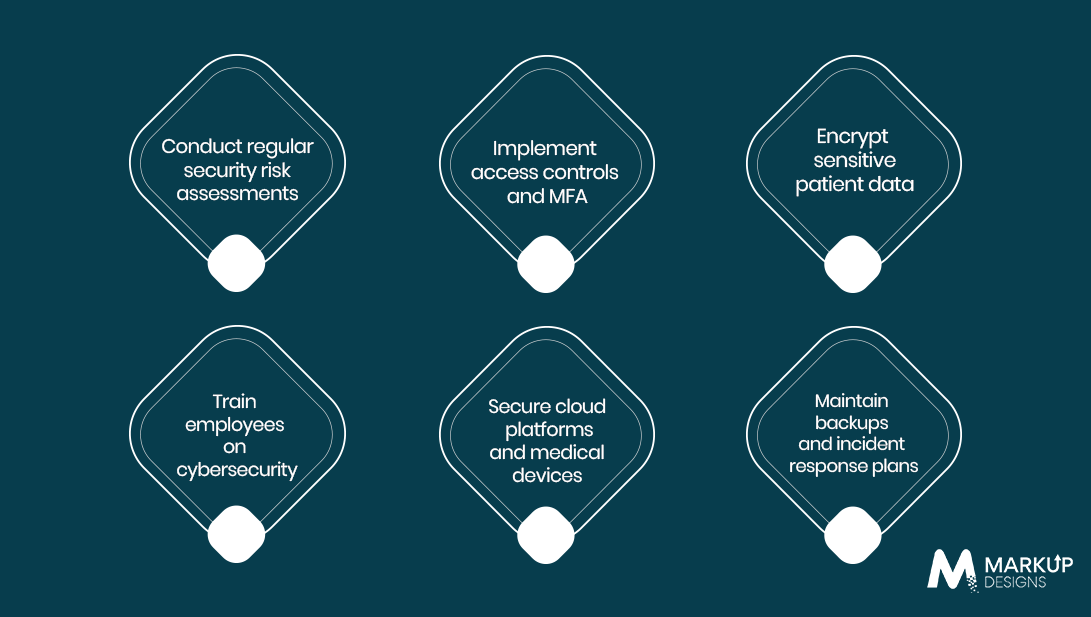
The healthcare industry requires security strategies that will help protect patient data and minimize cybersecurity threats. The following are six best practices for cybersecurity in the healthcare industry.
Conduct regular security risk assessments
Assess security risks for healthcare systems, applications, networks, and storage. Prioritize these security risks based on their likelihood of affecting patient data or operations in the health organization.
Implement access controls and MFA
Use access control with different roles to ensure that an employee accesses information that is necessary for their work. Incorporate MFA to prevent anyone from accessing unauthorized accounts.
Encrypt sensitive patient data
Securely encrypt all medical records, both stored and transmitted ones, using the appropriate encryption techniques. Utilize effective key management techniques to prevent exposure of data.
Train employees on cybersecurity
Regularly conduct training on phishing attacks, password safety, proper data handling, and any other suspicious activity. Help employees know how their activities influence the confidentiality of patients’ information.
Secure cloud platforms and medical devices
Implement secure cloud infrastructure, update software, and track all medical devices that are connected to the network. Evaluate third-party access and vendor security practices.
Maintain backups and incident response plans
Keep protected backups and conduct recovery process testing regularly. Develop an incident response plan to detect, minimize, and mitigate the effects of incidents.
Healthcare Data Security Compliance and Regulations
Healthcare organizations are supposed to ensure the confidentiality of patient data in adherence to the specific requirements of the data protection legislation applicable to their activities. The relevant requirements depend on the jurisdiction, the nature of the data, and the role of the organization in its processing. Knowing the relevant laws can help organizations create the proper mechanisms to comply with them.
1. HIPAA in the United States
HIPAA prescribes requirements related to the protection of certain health data processed by covered entities and their business associates. The Privacy, Security, and Breach Notification Rules relate to the protection of health data, electronic safeguards, and notification obligations applicable in certain cases.
2. GDPR in the European Union
The General Data Protection Regulation (GDPR) regulates the processing of personal data within its scope. There is special protection of health data, and organizations should implement the relevant security measures and process such data lawfully.
3. Other Local Data Protection Regulations
The local laws are also important when it comes to ensuring compliance. For instance, entities that process personal data in India will have to consider the provisions of the Digital Personal Data Protection Act and other local implementation guidelines.
4. Develop a Healthcare Data Security Compliance Checklist
Determine what laws and regulations apply.
Define patient data flow and access rights.
Adopt appropriate technical and organizational measures.
Evaluate vendors’ agreements and incident response plans.
Audit your compliance efforts and regularly assess them.
Ensuring compliance is an ongoing activity. Healthcare institutions should assess their security measures on a regular basis as they evolve due to new regulations, systems, and threats.
Emerging Technologies Transforming Healthcare Data Security
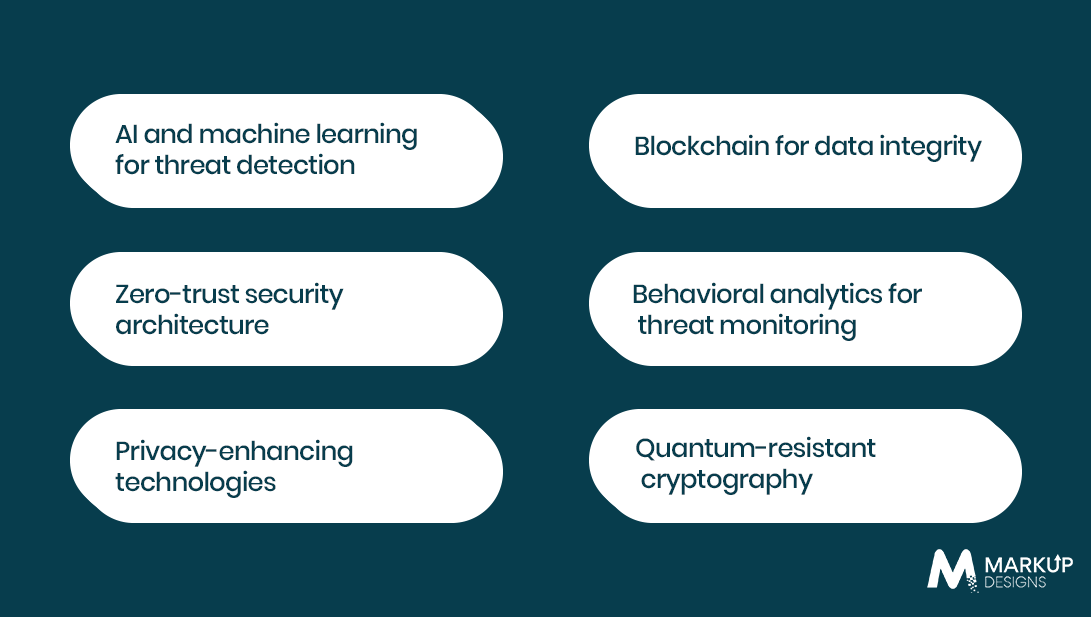
Healthcare entities are investigating innovative technology solutions that would allow them to detect threats quickly, secure sensitive documents, and manage patient information more efficiently. When integrated properly and with appropriate security measures in place, such technologies can enhance existing data security practices.
AI and machine learning for threat detection
Such tools can monitor system performance and detect abnormal user logins and activities, which can be further investigated by security specialists.
Blockchain for data integrity
With blockchain, it is possible to create tamper-resistant audit trails and ensure secure information flow. Nevertheless, the use of encryption and access controls is necessary for sensitive data protection.
Zero-trust security architecture
The zero-trust approach involves the continuous verification of users, their devices, and authentication, which decreases unnecessary access.
Behavioral analytics for threat monitoring
This technology is based on the concept of using anomalous behavior relative to normal behavior to detect anomalies. For example, access to medical records that exceeds an employee’s role description would be suspicious.
Privacy-enhancing technologies
Such techniques as data masking and tokenization would prove useful in helping health care organizations use their data without compromising patients’ privacy.
Quantum-resistant cryptography
Since quantum computing has advanced considerably, it would be wise for health care organizations to monitor advancements in the field of cryptography to protect sensitive information.
Such technologies will enhance data security for the health care sector, although they alone cannot provide comprehensive solutions.
How Can Healthcare Organizations Develop a Strong Data Security Strategy?
A robust healthcare data security approach cannot just involve the use of security software alone. Healthcare organizations should be equipped with an appropriate plan addressing technology, staff, data, and compliance. Below are some steps which may be helpful for healthcare providers in improving their digital security.
Assess Existing Systems and Security Gaps
It is crucial to evaluate current technologies used, identify any gaps that may exist, and determine the risks involved.
Developing a Risk-Based Security Strategy
It is important to establish security objectives, responsibilities, and resources allocated based on the identified risks. Attention should be paid to the risks that are more likely to cause severe problems.
Establishing Security Measures
Encryption, multifactor authentication, access control, and backup mechanisms should be employed to protect patient data.
Align Security Measures with Compliance Requirements
Identify the regulations that apply to your organization and map them to appropriate technical and operational safeguards. Keep policies and records updated as requirements change.
Train Employees and Evaluate Vendors
Provide regular security training and assess third-party providers before sharing sensitive information. Make sure employees and vendors understand their responsibilities for protecting patient data.
Monitor, Test, and Improve Continuously
Conduct security assessments, test incident response plans, review access permissions, and update systems regularly. Use lessons from incidents and audits to strengthen security over time.
By following these steps, healthcare organizations can make data security part of their everyday operations rather than treating it as a one-time technical task.
How Markup Designs Helps Build Secure Healthcare Software Solutions
Healthcare software should be able to maintain the confidentiality of sensitive information about patients while at the same time facilitating efficient workflow and access to data. Markup Designs is capable of providing customized software development services for healthcare institutions based on their technical needs, workflow, and future development plans.
By concentrating on secure software development, Markup Designs provides healthcare software development, application security, data access control, system integration, and cloud computing solutions. Such solutions may include proper user permission management, security settings, and data protection mechanisms to facilitate the protection of sensitive data.
Build Secure Healthcare Software with Markup Designs
Looking to develop or upgrade your healthcare software? Markup Designs can help you plan and build customized digital solutions with security, scalability, and data protection in mind.
Conclusion
Healthcare data security is crucial for protecting the confidentiality of patients’ data, building trust, and delivering reliable healthcare services. As companies turn to electronic records, cloud computing, interconnected devices, and remote consultation through the Internet, they have to take into account threats like cyberattacks, human mistakes, and data breaches.
To minimize the above risks, one can implement access controls, encryption, staff training, backups, and risk assessments. New technologies like artificial intelligence for detection of possible threats and a zero-trust approach will be beneficial if used properly.
The key elements of a good data security approach are technological solutions, policies, and monitoring. With the right focus on security in software development and operations, healthcare companies can ensure the protection of their sensitive data.
FAQs
1. What is healthcare data security?
Healthcare data security involves the policies, technologies, and practices used to protect patient information from unauthorized access, theft, loss, and misuse. It helps maintain the confidentiality, integrity, and availability of medical records.
2. What are the biggest healthcare data security challenges?
Common challenges include ransomware attacks, phishing, insider threats, outdated systems, insecure medical devices, cloud misconfigurations, and third-party vulnerabilities. Limited budgets and cybersecurity expertise can make these risks harder to manage.
3. What are the best practices for protecting healthcare data?
Key practices include conducting regular risk assessments, encrypting sensitive information, implementing multifactor authentication, restricting access based on job roles, training employees, maintaining secure backups, and monitoring systems for suspicious activity.
4. Which regulations apply to healthcare data security?
Requirements depend on the organization’s location and activities. HIPAA applies to covered entities and business associates within its scope in the United States, while GDPR may apply to organizations processing personal data within its scope in the European Union and beyond. Other regional data protection laws may also apply.
5. How can AI improve healthcare data security?
AI can help identify unusual system activity, detect potential threats, analyze security logs, and prioritize alerts. However, AI tools require proper configuration, human oversight, and safeguards to reduce false alerts and protect sensitive information.
Author's Perspective
Healthcare data security is essential for protecting patient information and maintaining trust in digital healthcare services. Organizations must make security a priority at every stage, from software planning and development to deployment and maintenance. Regular risk assessments, employee training, and strong access controls help reduce potential threats. While modern technologies support threat detection and data protection, they must be backed by clear policies and responsible practices. A balanced approach to security and usability helps healthcare providers deliver reliable digital services while protecting patient privacy.
Discuss Your Project NowGaurav Goyal
Global Sales- VP
Related Posts
What Is Fueling Investor Excitement In Healthtech?
Healthcare 4.0 Explained: Technologies Driving the Next Era...
Healthcare IT Outsourcing: A Strategic Guide for Modern...
Insights Are Valuable & Execution is Priceless
You’ve read about the digital future. Now, let’s build the infrastructure to take you there. Move your strategy from the page to the product.
Design Your Solution Now
Contact Us
Schedule The Appointment At Your Convenience Date And Time.
30 Min
Web Conference
Time Zone
Indian standard time (08:30pm)

Thanks For Getting In Touch!
You’ve Taken The First Step Toward Transforming Your Digital Presence. Our Experts Will Reach Out Shortly To Take It Forward.
Launch Your Dream Project
Provide a brief overview of your project, and our specialists will evaluate your requirements. We will connect with you to explore how the right digital solutions can help you launch faster.