

In Brief
- Digital transformation is playing an important role in Kuwait’s ambition to modernise its public services, streamline administrative processes, and enhance the availability of government services.
- AI, cloud computing, data analytics, and automation allow government agencies to work faster and more efficiently.
- Digital government solutions are capable of enhancing transparency, minimising paperwork, and making important services accessible to citizens and residents.
- Cybersecurity and legacy systems, data privacy, and readiness of the workforce are some significant aspects to be considered to ensure successful digital transformation.
- A well-thought-out digital strategy will allow Kuwait to provide safe, scalable, and citizen-oriented government services that will be in compliance with the overall strategy of digital development of the state.
Government services are changing as citizens and residents expect faster and easier interaction with public authorities. Digital transformation in Kuwait opens a way for administrative process modernization, delivery of online services, and better coordination of government entities. Digital technologies, such as digital portals, online payments, AI-based assistance, and automation, can help government institutions reduce manual work and make routine services easier to access.
Successful digital transformation implies more than just moving existing services online. Government entities must also address data security, system integration, infrastructure scalability, and employee readiness to ensure that digital initiatives deliver measurable results. By implementing technological advances such as AI technology, cloud technology, and data analytics tools, Kuwait will improve its operational effectiveness, boost service quality, and establish a more effectively integrated digital government system.
Understanding Digital Transformation in Kuwait’s Government Sector
Digital transformation in Kuwait‘s government sector means better utilization of technologies in the operations of public entities, such as the delivery of services or management of data and communication with people. Such government institutions can alter their conventional processes by adopting technology such as digital technology, internet cloud solutions, AI technology, and tools for data analysis. Various processes can be simplified, and the functioning of government entities can be improved through the use of these innovative technologies.
The idea is not merely to transfer existing processes to the digital format, but to create a more efficient, responsive, and citizen-centered state. For example, automated procedures can help eliminate time-consuming administrative activities, and operational integration will facilitate the availability of information to concerned persons from the appropriate organization.
With a well-planned approach to technology adoption, data governance, and cybersecurity services, Kuwait can strengthen its digital public infrastructure and support the delivery of more reliable government services.
Key Benefits of Digital Transformation for Government Services in Kuwait
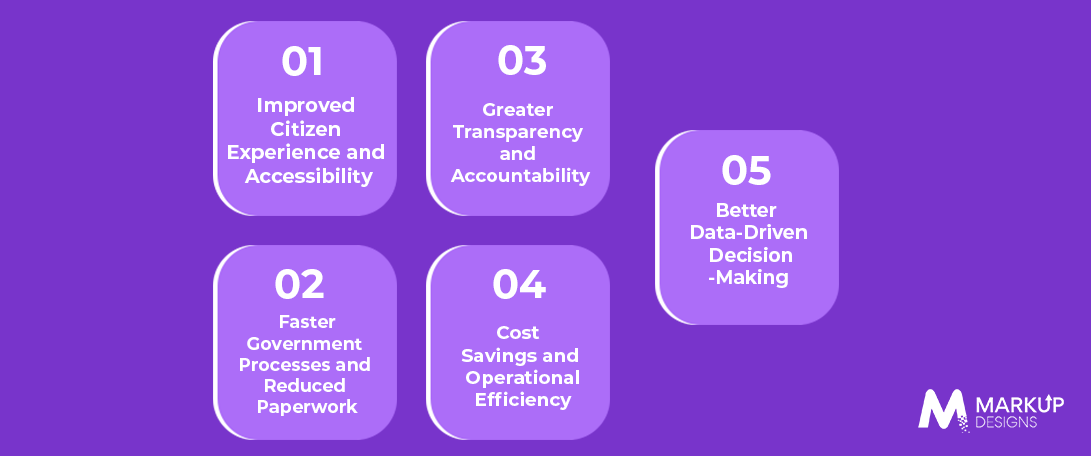
Digital transformation can assist governmental authorities in Kuwait in achieving improved service delivery, improving the efficiency of the operations of government offices and increasing their ability to meet the needs of the citizens. Due to the combination of digital technologies, good data processing, and automation of processes, government institutions can provide better service to the public while maximizing their resources.
Improved Citizen Experience and Accessibility
Digital government services enable citizens and residents to get information providing services, submit applications, make payments, and monitor their requests without going to governmental authorities as well. Thanks to online platforms, all services can be accessed even outside office hours, leading to a reduction in time and effort required to perform administrative duties.
Moreover, multilingual interfaces, accessible website designs, and user-friendly navigation improve accessibility for users with different levels of digital literacy. Hence, the design of services can be implemented taking into account the needs and requirements of users, thus improving convenience and accessibility of services provided by authorities.
Faster Government Processes and Reduced Paperwork
Various procedures such as manual documentation, repetitive data input, and disconnected approval processes can hinder the functioning of the government. However, countries can ensure efficient government processes through digitalization by using electronic document management, automated processes, and software integration services.
For instance, digital processing can help streamline permit approvals, license renewals, and the provision of certificates by minimizing paperwork and routing the request applications to the concerned departments. As a result, processes can be shortened, and procedural mistakes can be avoided, while civil servants will have more time to fill in the forms that require human judgment.
Greater Transparency and Accountability
Digitalization can help facilitate the monitoring of government processes by keeping electronic records, application histories, and approval logs. At the same time, citizens will get updates on their requests, while officials will be able to track government processes.
Such capabilities will contribute to accountability as responsibilities and timelines of processes become clearer. With appropriate access permissions, proper auditing, the prevention of data loss, and other measures, digital documents will help conduct inspections and detect inconsistencies.
Cost Savings and Operational Efficiency
Digital transformation can reduce expenses associated with paper-based documentation, physical record storage, repetitive manual work, and certain in-person administrative activities. Automating routine tasks can also help government departments manage workloads more efficiently.
Cloud infrastructure and shared digital platforms may enable agencies to scale services according to demand and reduce the need for duplicative systems. However, these savings depend on implementation quality, integration costs, licensing requirements, and ongoing maintenance. A clear assessment of operational needs is essential to ensure that technology investments deliver long-term value.
Better Data-Driven Decision-Making
Government entities generate information through service requests, administrative transactions, public infrastructure, and citizen interactions. Data analytics can help transform this information into actionable insights for planning and resource allocation.
For example, departments can analyse service demand, identify recurring delays, forecast resource requirements, and evaluate the effectiveness of public programmes. Predictive analytics can also support areas such as urban planning and infrastructure management. To achieve reliable results, government agencies need accurate data, consistent reporting standards, and appropriate safeguards for personal information.
Key Digital Transformation Trends Shaping Kuwait’s Government Services
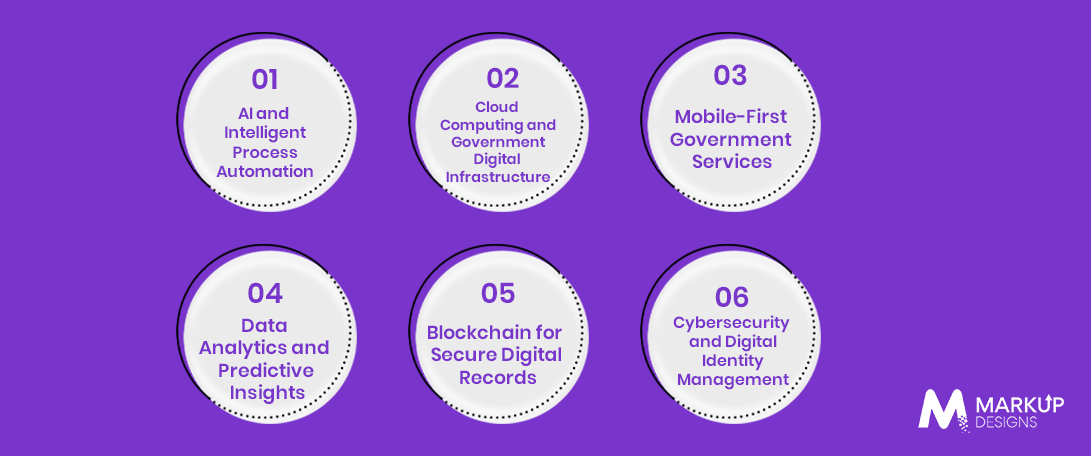
The advent of new technologies provides unlimited possibilities for modernising public administration and enhancing service delivery by public entities. One of the most useful approaches to modernisation involves adapting technology to specific operational conditions, security requirements, and desired public service outputs.
Artificial Intelligence and Intelligent Process Automation
AI helps public entities with simple queries, document sorting, information extraction from forms, and assistance in performing administrative duties. Unlike conventional virtual assistants capable of responding to common queries, intelligent automation can minimise human intervention in the performance of repetitive tasks.
Besides that, AI-based analytics can help government organisations to identify the bottlenecks in service delivery and make better planning decisions. However, human involvement must be ensured in cases when decisions on programme eligibility or public benefits are taken.
Cloud Computing and Government Digital Infrastructure
Cloud solutions create opportunities for an agile infrastructure that helps with hosting digital platforms, data storage, and running government applications. Cloud computing allows public agencies to flexibly adjust capacity and facilitate interaction between different systems that need data exchange.
Cloud-based services may also support backup, disaster recovery, and business continuity. For government deployments, selecting an appropriate cloud model requires careful consideration of data residency, regulatory obligations, access controls, encryption, and vendor dependencies.
Mobile-First Government Services
Mobile-first services make it possible for individuals to access government services using mobile devices instead of depending solely on PCs or physical offices.
Mobile apps can facilitate booking appointments, tracking applications, sending notifications, making payments, and accessing documents.
An adequate mobile experience should ensure simple navigation, robust authentication, support for Arabic and English languages, and compatibility with assistive technologies.
Moreover, the government should ensure that users who are not able to use mobile services have an alternative channel to reach services.
Data Analytics and Predictive Capabilities
With the help of data analytics, public bodies can assess the demand for services, follow operational performance, and detect trends that may otherwise go unnoticed.
Dashboard solutions may help with visibility concerning processing speed, number of applications, number of resources used, and gaps in service.
Predictive models can help authorities forecast demand for public services or plan infrastructure. Their efficacy depends on the quality of data, sufficient validation of the model, and ongoing monitoring to prevent making public decisions based on biased results.
Blockchain for Secure Digital Records
Blockchain technology may not be of great use, but it can confidently find its place in multi-party record verification and multiple transaction history keeping that needs to be verified by numerous parties.
Potential use cases include document verification, credential management, and certain forms of interdepartmental record exchange.
However, blockchain is not necessary for every digital government service. Conventional databases with strong access controls, audit logs, and encryption may be more efficient for many applications. Government entities should evaluate the technology against specific requirements for privacy, scalability, AI governance consulting services, and cost before implementation.
Cybersecurity and Digital Identity Management
With many government services shifting to the internet, it is crucial to protect citizens’ data and prevent unauthorized access to it. Digital identity systems assist in verifying users, while multifactor authentication and role-based access systems restrict user access to sensitive data.
Government agencies can improve the security of their data by using encryption, continuous monitoring, vulnerability assessment, incident response planning, and ongoing security testing.
Real-World Applications of Digital Transformation in Kuwait’s Public Sector
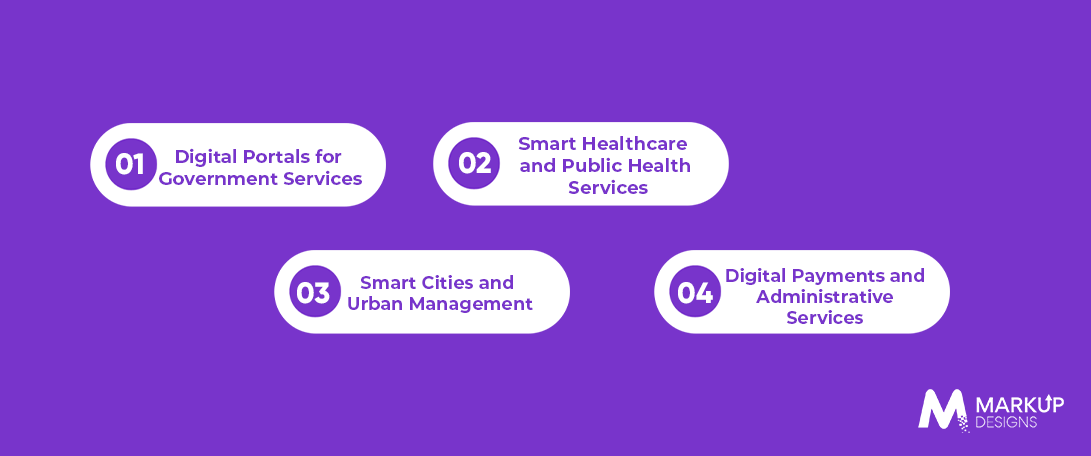
When it comes to implementing digital technologies, digital transformation can ensure substantial improvement in service provision by establishing clear links between technology and the necessities of service provision. A number of applications illustrate how digital technologies can help Kuwait achieve improvements in the accessibility and efficiency of public agencies.
Digital Portals for Government Services
Unified government portals create a single point of entry to all the services offered by the government, including applications, license renewals, certificates, payments, and public information. Thus, instead of dealing with multiple unconnected systems, people are able to find the required services through a unified digital portal.
When portals are associated with different departments’ databases and ensured with user identification systems, data entry and application tracking become more efficient. Clear instructions, accessible design, and reliable support are essential to ensure that these platforms work for a broad range of users.
Smart Healthcare and Public Health Services
Digital healthcare systems can improve access to public health services through online appointment scheduling, electronic health records, digital prescriptions, and secure communication between authorised healthcare providers.
Data integration can help healthcare institutions coordinate care and manage administrative workloads more effectively. However, medical information requires particularly strong privacy protections, controlled access, and reliable systems to maintain confidentiality and service continuity.
Smart Cities and Urban Management
Digital technologies can help public authorities monitor traffic, manage municipal services, track infrastructure conditions, and improve the use of urban resources. Connected sensors and data analytics can provide information about traffic patterns, utility consumption, and maintenance requirements.
For Kuwait, these capabilities could support more informed urban planning and help authorities respond to changing infrastructure demands. Successful implementation requires dependable connectivity, coordination between responsible agencies, and clear policies governing the collection and use of data.
Digital Payments and Administrative Services
Electronic payment systems can simplify the payment of government fees, fines, and service charges. When integrated with online applications, they allow users to complete transactions without relying on in-person payments or separate manual procedures.
Automated receipts, transaction records, and payment reconciliation can also reduce administrative effort and improve financial tracking. Secure payment gateways, reliable transaction processing, and clear procedures for refunds or disputed payments are important to maintaining user confidence.
Read Also: How Mobile Apps Are Transforming Digital Businesses Across the Middle East
Challenges of Digital Transformation in Kuwait’s Government Sector
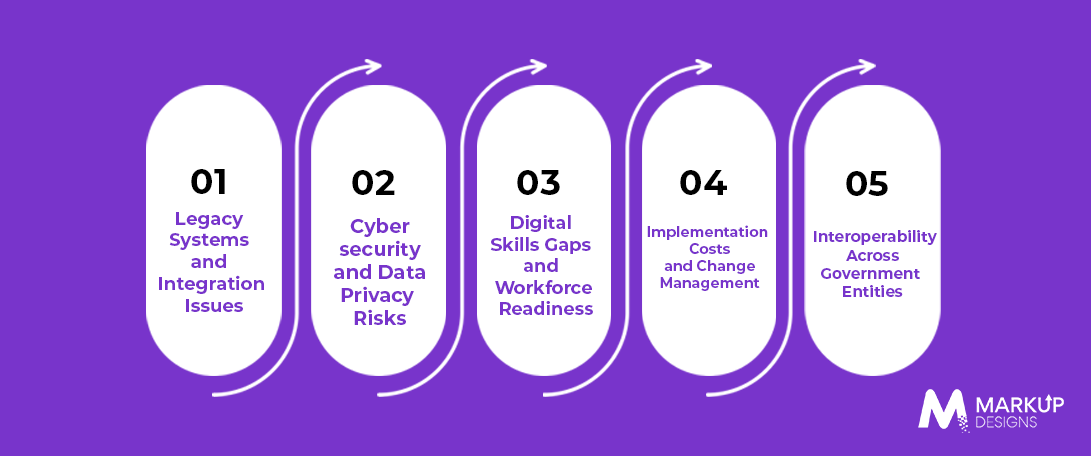
Although digital transformation offers significant opportunities, implementation can be complex when government entities rely on legacy infrastructure, handle sensitive information, or operate under different technical and administrative requirements. Identifying these challenges early helps agencies build more practical digital strategies.
Legacy Systems and Integration Issues
Older government systems may use incompatible technologies, outdated databases, or limited integration capabilities. Connecting these systems to modern platforms can require substantial technical work and careful data migration.
A phased modernisation strategy, supported by documented interfaces and clear integration standards, can help reduce disruption. Agencies should assess which systems need replacement and which can be upgraded or integrated cost-effectively.
Cybersecurity and Data Privacy Risks
Expanding digital services increases the number of systems and access points that need protection. Weak authentication, misconfigured infrastructure, unpatched software, and insufficient monitoring can expose government data to security incidents.
Government entities should adopt security-by-design principles, conduct regular risk assessments, establish incident response procedures, and apply access controls based on user responsibilities. Privacy requirements should also guide how personal data is collected, stored, shared, and retained.
Digital Skills Gaps and Workforce Readiness
Introducing new technologies does not guarantee better performance if employees lack the skills or support needed to use them effectively. Staff may need training in digital workflows, data handling, cybersecurity awareness, and new software applications.
Government entities can address these gaps through role-specific training, practical workshops, change management, and ongoing technical support. Involving employees early in the implementation process can also help identify operational problems before they affect service delivery.
Implementation Costs and Change Management
Digital transformation requires investment in software, infrastructure, integration, cybersecurity, employee training, and ongoing maintenance. Poorly defined requirements or unrealistic timelines can increase costs and delay expected benefits.
A more effective approach is to prioritise services with clear public value, define measurable performance indicators, and implement projects in manageable phases. Regular reviews can help decision-makers identify issues, adjust priorities, and assess whether the investment is achieving its intended outcomes.
Interoperability Across Government Entities
Government departments may maintain separate databases, identity systems, and administrative procedures. Without suitable interoperability, users may need to submit the same information multiple times, while employees may struggle to obtain a complete view of a service request.
Common data standards, secure APIs, agreed information-sharing policies, and clear institutional responsibilities can improve coordination. Interoperability must be supported by appropriate governance so that information is exchanged only when authorised and necessary.
How to Implement a Successful Government Digital Transformation Strategy in Kuwait
Successful digital transformation requires a clear roadmap that aligns technology investments with government priorities and citizen needs. Government entities in Kuwait can follow these steps to modernise services effectively.
Assess Existing Systems and Service Gaps:
Review current infrastructure, administrative workflows, and citizen feedback to identify areas that need improvement.
Set Measurable Goals:
Define clear objectives, such as reducing application processing times, improving online service adoption, and lowering administrative costs.
Prioritise High-Impact Services:
Start with frequently used services, including licence renewals, certificate applications, and online payments.
Build Secure, Integrated Platforms:
Develop scalable digital solutions that connect government systems and support reliable information exchange.
Strengthen Data Governance and Cybersecurity:
Establish access controls, data protection policies, and security monitoring to safeguard sensitive information.
Train Employees and Manage Change:
Equip government staff with the skills and support needed to adopt new digital tools and workflows.
Monitor and Improve Performance:
Track service usage, processing times, user satisfaction, and system reliability to identify opportunities for improvement.
How Markup Designs Can Support Government Digital Transformation in Kuwait
Markup Designs can assist organisations in the public sector by modernising their digital operations through custom software solutions, AI integration services, cloud computing, and system integration. The company can help its clients create sophisticated but safe platforms that can automate processes, improve digital services, and connect current systems. Moreover, every solution developed is tailored to meet specific demands in terms of data protection, maintenance requirements, and business results.
Modernise Government Services with Smart Digital Solutions
Transform public service delivery with secure, scalable, and citizen-centric technology. Markup Designs can help you build digital platforms that streamline operations and support long-term digital growth in Kuwait.

Conclusion
Digital transformation in Kuwait creates an opportunity to improve governmental service delivery in terms of accessibility, effectiveness, and transparency. This can be accomplished not only by introducing new technologies, but also by ensuring integration of the system, cybersecurity, employee preparedness, and data governance. It is necessary to adopt a phased approach and emphasise the interests of citizens.
FAQ
1. What does digital transformation in Kuwait mean?
Digital transformation covers the use of technologies, including AI, cloud computing, and digital platforms in the process of modernising governmental operations.
2. What are the major advantages of using digital services in government operations?
Key benefits include faster service delivery, reduced paperwork, improved accessibility, greater transparency, lower administrative effort, and more informed decision-making.
3. What industry technologies help change the event management business?
Technologies contributing to the transformations in the event management industry include social media, websites, mobile apps, and augmented and virtual reality. The technologies each company decides to adopt depend on its objectives and situation.
4. Which challenges hinder revolution in event management?
Some of the most common difficulties include outdated methods, people’s reluctance to learn about new technologies, expensive equipment and software implementation, and problems with transforming the organization.
5. What are the ways in which the new technologies enhance customer experience?
The technologies that help improve customer experience include gamification, chatbot usage, and live streaming.
Author's Perspective
All in all, the whole process of implementing the technologies in the event management business is complex and time-consuming. Although the new technologies provide many opportunities for the improvement of the functioning of companies, their mere implementation is not sufficient. Event organizers need to analyze their activities in order to effectively use the new technologies.
Discuss Your Project NowJupinder Singh Arora
Founder and CEO
Related Posts

Why Businesses in Oman Need Digital Transformation Services

Digital Transformation in Financial Services: Trends, Benefits &...
IoT in Banking: Transforming Financial Services Through Connected...
Insights Are Valuable & Execution is Priceless
You’ve read about the digital future. Now, let’s build the infrastructure to take you there. Move your strategy from the page to the product.
Design Your Solution Now
Contact Us
Schedule The Appointment At Your Convenience Date And Time.
30 Min
Web Conference
Time Zone
Indian standard time (08:30pm)

Thanks For Getting In Touch!
You’ve Taken The First Step Toward Transforming Your Digital Presence. Our Experts Will Reach Out Shortly To Take It Forward.
Launch Your Dream Project
Provide a brief overview of your project, and our specialists will evaluate your requirements. We will connect with you to explore how the right digital solutions can help you launch faster.