

In Brief
- Development of an AI-based photo editing application such as PicsArt will likely cost between $40,000 and $300,000+, depending on the features, AI capabilities, platforms, integrations, UI/UX, infrastructure, and development.
- Features of the application might include photo and video editing, background/object removal using AI, filters, effects, templates, image enhancement, social media integration, and other community-related features. More sophisticated applications may add features such as image creation, style transfer, generative background, and intelligent photo editing suggestions.
- App development involves conducting market research, planning the minimum viable product, designing the user interface/user experience, developing the application and backend, implementing AI capabilities, testing, deployment, and maintenance. Development of a basic application is expected to take 3 to 5 months, while development of a more advanced application will likely take 8 to 12+ months.
- Cost drivers include feature complexity, AI/ML needs, platform support, UI/UX, third-party integrations, development skills, cloud infrastructure, and AI processing and maintenance.
- Approaches that may be used to minimize initial costs and provide for future advanced AI capabilities include starting with an MVP, using existing AI models/APIs, focusing on valuable editing features, and developing scalable cloud infrastructure.
The emergence of Artificial Intelligence technology has brought about a great transformation in the editing of pictures. Users can remove the background of the picture, enhance their images, create unique visuals, and apply different creative filters in seconds rather than doing it manually for hours. Such changes in the editing process have led to the growth in popularity of AI photo editing applications among users.
PicsArt application proves that the blend of traditional photo editing features, AI technologies, templates, and social aspects can create an effective digital platform. Therefore, it can be a good choice for businesses to develop such an application; however, it demands careful planning considering features, technologies, development period, and budget issues.
In this blog post, we will describe the process of developing an AI photo editing application like PicsArt from the point of view of its features, technologies, development stages, and costs. We will also discuss what makes up the development expenses and what businesses should pay attention to while launching the project.
What is an AI Photo Editing App Like PicsArt?
AI image editor software is a mobile or web application that uses both traditional tools of image editing and artificial intelligence to make creating images simpler and more convenient. Users can edit their pictures themselves or use AI-assisted functions to perform complicated edits automatically.
An AI picture editor app might have filters, effects, stickers, text, collages, background removal, object removal, image enhancement, and creative templates similar to other applications, like PicsArt. However, AI extends these options by being able to analyze the contents of a picture and make intelligent editing choices.
Instead of picking a subject out of an image, for instance, people can just use an AI background removal function to perform this task automatically. Other functions might include image enhancement, object removal, new background creation, or visualizations based on text prompts.
This combination of intuitive editing tools and automated AI allows such applications not only for beginners but for professionals as well. In addition, it provides companies with ways to develop subscription-based, freemium, or credit-based products around creative image editing.
How Does an AI Photo Editing App Work?
An AI photo editing software makes use of artificial intelligence and image processing algorithms in order to understand the uploaded image and make the necessary changes. This is done in order to simplify complex photo editing procedures for the users.
Below is how the procedure is usually carried out:
- Upload Image: The user uploads an image from their device or takes a photo using the application.
- Image Processing: Algorithms and models are used to analyze the image and understand elements like faces, objects, background, colors, etc.
- User Selection: The user selects which editing algorithm they would like to use, such as background removal, object removal, image enhancement, or any particular AI effect.
- AI Editing: The AI algorithm chosen processes the image and makes the necessary edits.
- Review and Edit: The user reviews the image and makes any other adjustments using the usual photo editing tools.
- Final Output: The photo is edited and can be downloaded or shared using the application.
This provides users with more flexibility without increasing the time needed for complex edits.
Key Features to Build an AI Photo Editing App Like PicsArt
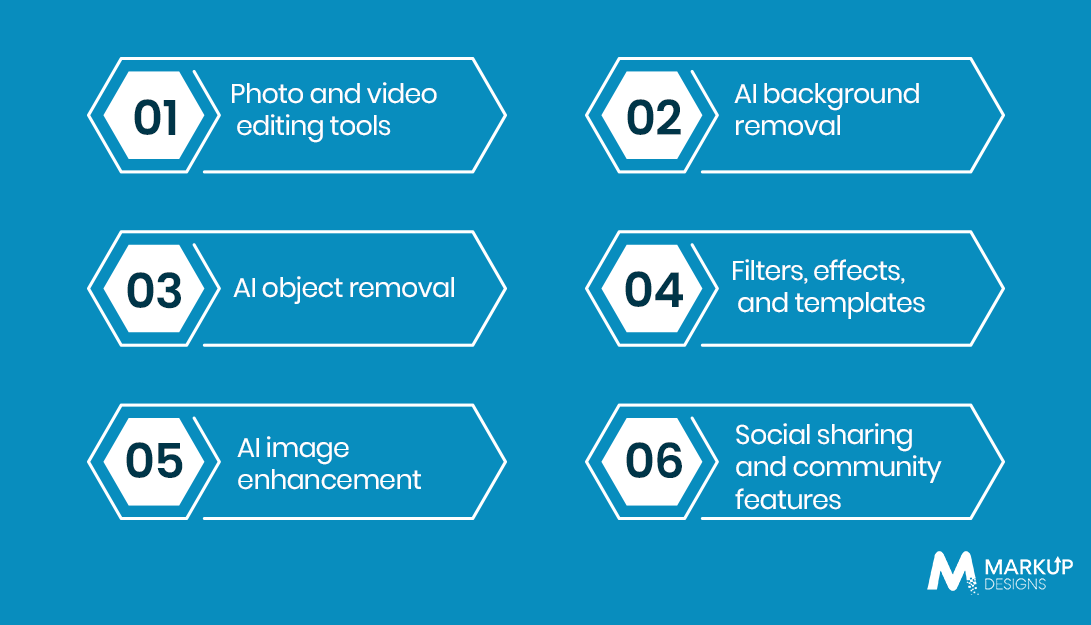
For an AI photo editor app to be successful, it requires more than just several AI functionalities. For example, users need to be able to perform quick edits, create new content, and share it all from one platform. Proper features can also be useful for getting customers and retaining them.
Here is what you should look into:
Photo and video editing tools
Include cropping, resizing, color correction, filters, effects, and basic video editing tools.
AI background removal
Give your users automatic background removal/replacement.
AI object removal
Provide your users with automatic object identification and removal.
Filters, effects, and templates
Provide pre-built creative effects, templates, stickers, and other presets.
AI image enhancement
Help your users enhance their photos by improving sharpness, lighting, quality, etc.
Social sharing and community features
Include social profile features like likes, comments, sharing, challenges, etc.
A well-planned feature set gives users both creative control and AI-powered convenience, making the app useful for different types of creators.
Advanced AI Features for a Photo Editing App
Basic editing features can be helpful in attracting users; however, more advanced AI functions can help make an application more competitive. Using certain AI functions, users will be able to perform difficult and complicated creative work that usually can only be done by professionals.
Some of the advanced AI functions to consider are:
- AI Image Generation: Allows users to create unique images using just text.
- AI Object Detection: Detects people, objects, and other important elements of images automatically.
- AI Face Enhancement: Enhances facial expressions, lighting, skin texture, and other aspects.
- AI Style Transfer: Transfers pictures into different artistic styles like sketches, paintings, illustrations, etc.
- Generative Backgrounds: Generate or change the background of the picture based on text prompts or certain themes.
- AI Editing Suggestions: Analyze an image and offer correct filters, corrections, or effects.
However, advanced AI functions require a strong processing system, the right AI models, and proper testing.
Ready to Build Your AI Photo Editing App?
Have an idea for an AI-powered photo editing app? Let’s turn it into a scalable product with the right features, AI capabilities, and user experience.

AI Photo Editing App Development Process
It is essential to develop a strategy for building an AI photo editing application like PicsArt from the very beginning. Each stage of development plays a crucial role in the successful launch and operation of such an app.
1. Market Research and Planning
To begin with, define the users you need to attract to your application, the competitors, and the issues your application will address. Define the basic features of your application and determine what capabilities your application must have in the MVP.
2. UI/UX Design
Develop a convenient user interface where all tools and AI capabilities will be easily available to users. The editing interface of the application must stay convenient despite having many options.
3. Application and Backend Development
Develop a mobile application itself, backend, user accounts of the users, content management system, cloud storage, and API’s. Develop an architecture able to process large amounts of images.
4. AI Integration
Add appropriate AI/ML models responsible for background removal, object recognition, image enhancement, image generation of images, and other functions you are going to provide. Depending on requirements, companies may use existing APIs or create their own models.
5. Testing and Deployment
Perform testing on different devices, screens, and operating systems. Verify the output of the AI algorithms, the performance, security, and usability of the app before its release.
6. App Release and Maintenance
Once launched, you should monitor its performance and the feedback from the users. Regular updates and improvements will keep your app relevant.
How Much Does It Cost to Build an AI Photo Editing App Like PicsArt?
The price for developing a photo editing application equipped with AI features like PicsArt may differ substantially according to the application itself, the AI features involved, the platforms required, and many other factors. Developing a basic application with AI functionality will take less money than developing a full-fledged platform with all these and additional features.
As an initial estimate, development can range from $40,000 to $300,000 or more.
| App Type | Estimated Cost | Development Timeline |
| Basic AI Photo Editor | $40,000–$80,000 | 3–5 months |
| Mid-Level AI Editing App | $80,000–$150,000 | 5–8 months |
| Advanced PicsArt-Like App | $150,000–$300,000+ | 8–12+ months |
A simple one could contain common editing tools, filters, AI functionality, and background removal. A mid-range one could have additional AI features, templates, social capabilities, and cloud architecture. An advanced one might need generative AI, video editing, advanced image processing, real-time processing, and a robust backend.
The development approach would also affect the total budget. Development for iOS and Android, creation of own AI models, integration of third-party APIs, and support of numerous users could drive up the expenses.
Thus, it makes sense to determine the MVP functionality in advance and then estimate the budget.
Factors Affecting AI Photo Editing App Development Cost
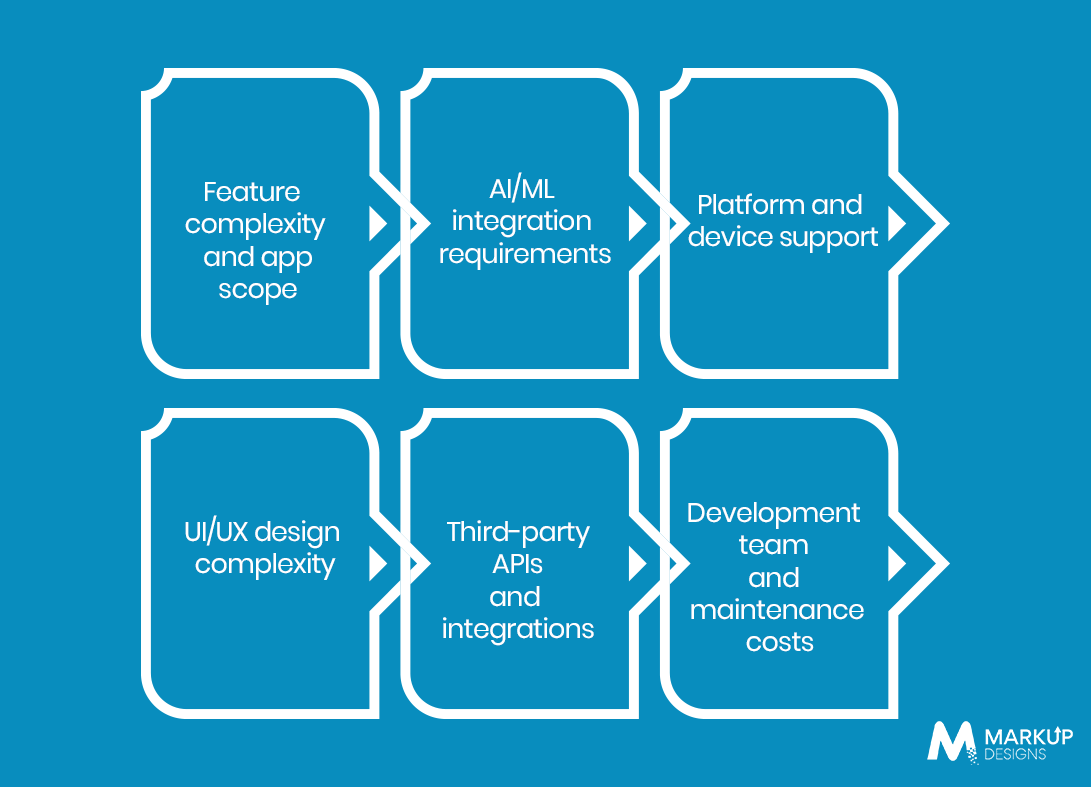
There are several factors that may affect the total cost of the development of an AI photo editing app. Knowing about them will allow companies to set up the most realistic budget and eliminate unexpected development expenditures.
Feature complexity and app scope
Basic photo editing features cost less than advanced ones such as layers, AI object removal, generative photo editing, and video processing.
AI/ML integration requirements
Third-party AI APIs, pre-trained AI models, and the development of a custom enterprise AI model may significantly affect the cost of the project. The higher the complexity of AI integration services, the more expensive its development is.
Platform and device support
iOS-only, Android-only, or cross-platform app development will affect the project’s cost depending on its specifics. Also, the number of platforms may affect its cost.
UI/UX design complexity
Simple editors with a limited set of basic features require less design work compared to interactive editors that offer users various features, templates, animations, and other elements of UI/UX.
Third-party APIs and integrations
Payment gateways, cloud storage, analytics, AI services and solutions, social media integration, and other third-party integrations will make the development process more costly.
Development team and maintenance costs
The developer’s location, developer’s skills, testing needs, cloud needs, updates, and maintenance of the AI model are also part of the total cost.
Considering all these factors before the development process helps one to prioritize features and manage the project budget.
Challenges in Building an AI Photo Editing App
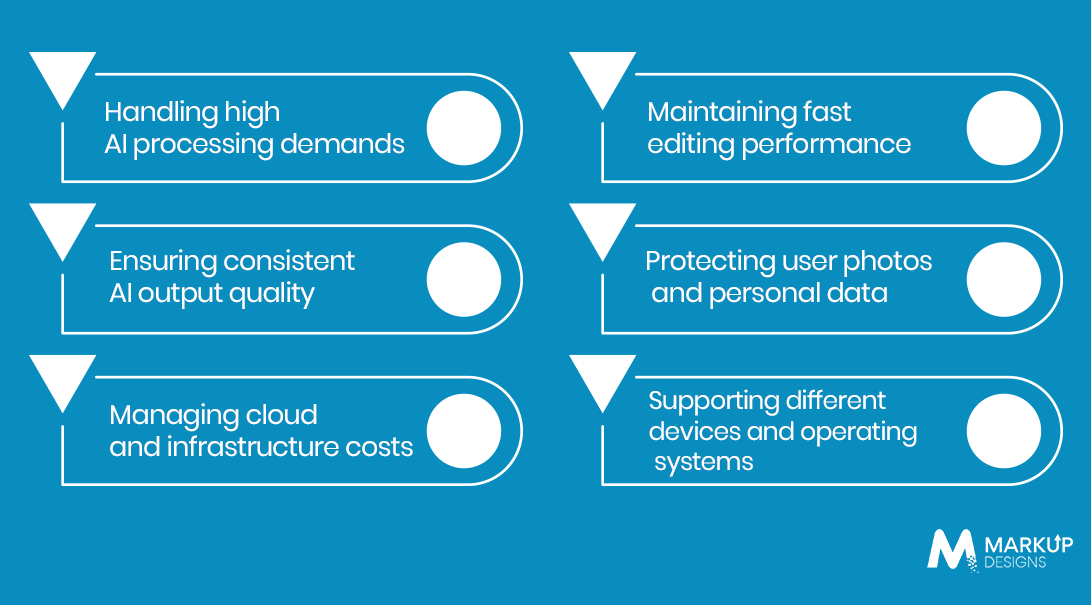
The development of the photo editing AI application could present great market opportunities for any business. Still, certain challenges should be considered to build a good-quality product.
Handling high AI processing demands
The process of generating, enhancing, or detecting objects in images with AI requires substantial computer resources to run smoothly.
Maintaining fast editing performance
Images generated from the photo editing process are vital for providing users with quick output. Slowing down of the processing could harm the user experience and make him abandon the app.
Ensuring consistent AI output quality
Generated or edited images by the AI could fail to match customer expectations. They require proper testing, optimization, and improvement of the models used.
Protecting user base photos and personal data
Photographic applications store the data of the users, which could be sensitive for some people. Security and privacy are critical here.
Managing cloud and infrastructure costs
As the user base increases, costs related to storage space, computing power, bandwidth usage, and artificial intelligence API can escalate rapidly. Scalable cloud infrastructure could help address the issue.
Supporting different devices and operating systems
The application should function well on various types of smartphones, operating systems, screens, and hardware components. It is essential to conduct proper tests.
Why Choose Markup Designs for AI Photo Editing App Development?
Developing an AI-based photo editor application is more than just building an average mobile app. You will need a team capable of creating a scalable product based on mobile tech, AI capabilities, a back-end system, and user-centric design.
Markup Designs is ready to help your business transform its photo editing application concept into a working solution. Having experience in developing mobile applications, AI/ML-based solutions, cloud tech, and digital products, the development process can include all the steps from initial idea development to further product improvements after launch.
The team can help with:
- AI-based photo and video editing tools
- Implementing generative AI and image processing capabilities
- Development of iOS and Android applications
- Back-end development and cloud infrastructure
- Third-party APIs and payment integration
- Testing, deployment, and maintenance
Moreover, the approach to development can be adapted according to the project budget and aims. For instance, your company can start with the MVP, including the essential editing features and AI tools, get feedback from actual users, and add more sophisticated functionality step by step.
With the right technology architecture and approach, you can create an application that can adapt to growing user numbers, advanced AI features, and changing creative needs.
Want to Create the Next AI-Powered Editing App?
From AI background removal to generative image editing, build a feature-rich app designed around your users and business goals.

Conclusion
AI is helping to make photo editing processes more efficient and effective in terms of speed and creativity. With an app like PicsArt, which provides familiar photo editing functions along with AI capabilities, users can become more productive in creating and enhancing visual content.
To develop such an app, a business should consider many things, including app functionality, technology used, user experience, app security, scalability, etc. It will take from $40,000 to more than $300,000 for the app development process, depending on its complexity.
In case you don’t know if there is demand for your product yet, starting your journey with the MVP might be a good solution. Later, as your product gains more popularity, you can introduce additional advanced features, such as generative AI, intelligent editing, AI effects, etc.
The right development partner will be able to help you build a reliable product, taking all technological, budgetary, and growth strategy aspects into account.
FAQs
1. How much does it cost to build an AI photo editing app like PicsArt?
The development cost can range from $40,000 to $300,000 or more. The final cost depends on features, AI complexity, platforms, integrations, design, and development requirements.
2. How long does it take to develop an AI photo editing app?
A basic AI photo editing app may take around 3–5 months, while a more advanced platform can take 8–12 months or longer depending on its scope and complexity.
3. What AI features should an AI photo editing app include?
Popular options include AI background removal, object removal, image enhancement, face enhancement, smart effects, style transfer, AI-generated images, and generative backgrounds.
4. Can I build an AI photo editing app without creating my own AI model?
Yes. Businesses can integrate existing AI models and third-party APIs instead of developing models from scratch. This can reduce initial development time and cost.
5. What technology is used to build an AI photo editing app?
A typical technology stack can include Flutter or React Native for mobile development, Python or Node.js for backend development, TensorFlow or PyTorch for AI/ML, and cloud platforms such as AWS, Azure, or Google Cloud.
Author's Perspective
An AI photo editing app can be a strong product opportunity when technology is combined with a simple and enjoyable user experience. The goal should not be to add every possible AI feature from the beginning. Instead, focus on solving specific editing needs and building a reliable core product.
A well-planned MVP can help validate the concept while keeping the initial investment manageable. As users adopt the app, advanced AI capabilities can be introduced based on actual demand. Choosing the right technology stack, development approach, and AI strategy can also make it easier to scale the platform over time.
Discuss Your Project NowGaurav Goyal
VP - Business Operations
Related Posts

How Much Does It Cost to Build an...
Insights Are Valuable & Execution is Priceless
You’ve read about the digital future. Now, let’s build the infrastructure to take you there. Move your strategy from the page to the product.
Design Your Solution Now
Contact Us
Schedule The Appointment At Your Convenience Date And Time.
30 Min
Web Conference
Time Zone
Indian standard time (08:30pm)

Thanks For Getting In Touch!
You’ve Taken The First Step Toward Transforming Your Digital Presence. Our Experts Will Reach Out Shortly To Take It Forward.
Launch Your Dream Project
Provide a brief overview of your project, and our specialists will evaluate your requirements. We will connect with you to explore how the right digital solutions can help you launch faster.