
In Brief
- Artificial Intelligence is helping UAE energy industry improve efficiency, reduce operational costs, enhance sustainability, and support the country’s Net Zero 2050 objectives through data-driven decision-making.
- Energy companies are using AI for predictive maintenance, smart grid management, renewable energy optimization, demand forecasting, infrastructure inspection, and intelligent energy consumption management.
- Successful AI implementation requires a structured approach that includes assessing business needs, identifying high-value use cases, building a strong data foundation, integrating AI with existing systems, and continuously optimizing performance.
- AI development costs in UAE energy sector vary based on project complexity, data quality, infrastructure requirements, integration needs, customization levels, and ongoing maintenance, with investments ranging from basic solutions to enterprise-wide AI ecosystems.
- Despite challenges such as legacy systems, data quality issues, talent shortages, cybersecurity concerns, and high initial investments, organizations that adopt AI strategically can achieve long-term operational excellence, sustainability, and competitive advantage.
UAE energy industry is undergoing a major transformation driven by digital innovation, sustainability goals, and growing energy demands. As the country continues to invest in renewable energy projects, smart grids, and advanced infrastructure, energy companies are looking for smarter ways to improve efficiency and reduce operational costs. This is where Artificial Intelligence is making a significant impact.
From predicting equipment failures and optimizing power generation to improving energy efficiency and supporting renewable energy integration, AI is helping energy organizations make faster, more informed decisions. It enables companies to analyze large volumes of data in real time, automate complex processes, and improve overall operational performance.
As UAE moves toward its Net Zero 2050 goals and strengthens its position as a global leader in energy innovation, AI is becoming a critical technology for future growth. In this blog, we will explore how AI is transforming UAE energy industry, its key benefits, practical use cases, implementation strategies, costs, and best practices for maximizing returns on AI investments.
Why UAE Energy Industry Needs Artificial Intelligence
UAE’s energy sector is expanding rapidly, driven by rising electricity demand, renewable energy investments, and ambitious sustainability goals. According to UAE Energy Strategy 2050, the country aims to triple the contribution of renewable energy and invest between AED 150 billion and AED 200 billion by 2030 to meet growing energy needs while achieving net-zero emissions targets.
Managing this transition is becoming increasingly complex. Energy providers must balance traditional oil and gas operations with renewable energy sources, smart grids, and modern infrastructure. At the same time, they face challenges such as equipment failures, fluctuating energy demand, operational inefficiencies, and carbon reduction requirements.
This is where Artificial Intelligence is becoming essential. AI helps energy companies analyze massive volumes of operational data, predict maintenance needs, optimize power generation, and improve energy distribution in real time. Major UAE organizations are already investing heavily in AI-driven transformation. For example, ADNOC has launched advanced AI initiatives to improve operational efficiency and sustainability across its energy value chain.
As UAE continues its journey toward Net Zero 2050, AI is no longer just an emerging technology-it is becoming a strategic tool for building a more efficient, sustainable, and resilient energy ecosystem.
Key Benefits of AI in UAE Energy Sector
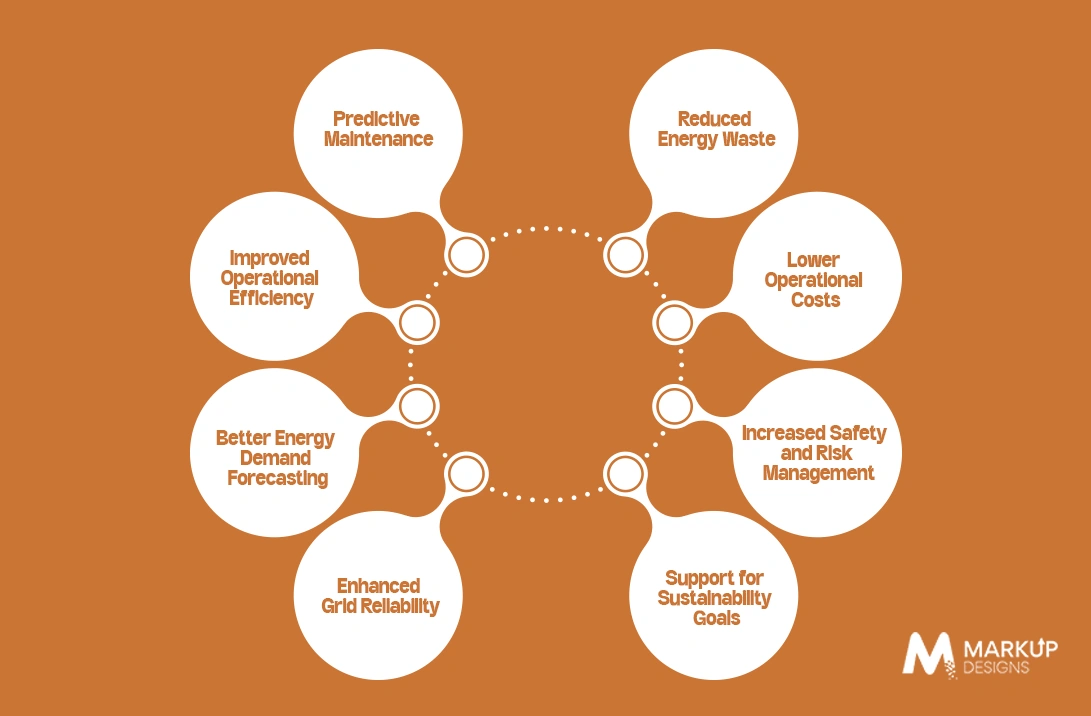
Artificial Intelligence is helping energy companies in UAE improve efficiency, reduce costs, and accelerate their sustainability initiatives. Here are some of the key benefits driving AI adoption across the industry:
Predictive Maintenance
AI analyzes equipment data in real time to identify potential failures before they occur, reducing unplanned downtime and maintenance expenses.
Improved Operational Efficiency
Energy companies can automate routine processes, optimize workflows, and improve resource utilization across power plants, oil fields, and distribution networks.
Better Energy Demand Forecasting
AI helps predict energy consumption patterns by analyzing historical and real-time data, enabling providers to balance supply and demand more effectively.
Enhanced Grid Reliability
Smart AI systems can detect anomalies, predict outages, and support faster issue resolution, leading to a more stable and reliable energy infrastructure.
Reduced Energy Waste
AI-powered analytics identify inefficiencies in energy production and consumption, helping organizations minimize waste and improve overall energy efficiency.
Lower Operational Costs
By optimizing maintenance schedules, energy distribution, and asset performance, AI significantly reduces operating expenses.
Increased Safety and Risk Management
AI can monitor hazardous environments, detect safety risks, and provide early warnings to prevent accidents and operational disruptions.
Support for Sustainability Goals
AI enables better integration of renewable energy sources, improved carbon tracking, and smarter energy management, supporting UAE’s Net Zero 2050 vision.
Top AI Use Cases Transforming the UAE Energy Industry
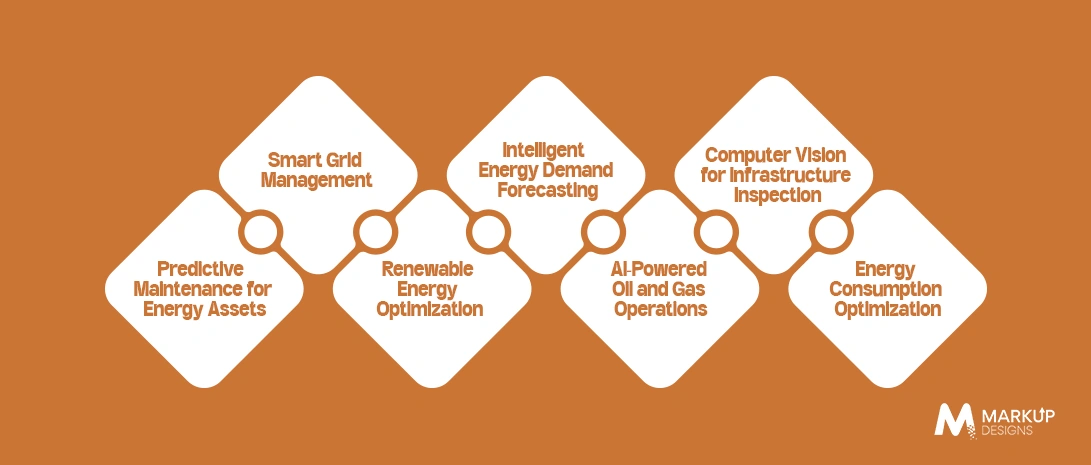
Artificial Intelligence is transforming every stage of the energy value chain, helping UAE energy companies improve efficiency, enhance sustainability, reduce costs, and optimize operations.
Predictive Maintenance for Energy Assets
AI-powered predictive maintenance helps energy companies monitor equipment health and detect potential failures before they occur. This reduces downtime, extends asset lifespan, and lowers maintenance costs for power plants, refineries, and transmission networks.
Smart Grid Management
AI enables utilities to analyze grid performance in real time, balance electricity loads, predict outages, and improve power distribution. This helps create more reliable and efficient energy networks.
Renewable Energy Optimization
Solar and wind energy production can fluctuate due to changing weather conditions. AI helps forecast energy generation, optimize storage systems, and improve the efficiency of renewable energy assets.
Intelligent Energy Demand Forecasting
By analyzing historical consumption patterns, weather conditions, and market trends, AI can accurately predict future energy demand and support better planning decisions.
AI-Powered Oil and Gas Operations
Energy companies use AI to optimize drilling activities, analyze geological data, improve reservoir management, and enhance production efficiency while reducing operational risks.
Computer Vision for Infrastructure Inspection
AI-powered cameras and drones can inspect pipelines, transmission lines, substations, and solar farms, helping identify defects faster and improving maintenance planning.
Energy Consumption Optimization
AI helps commercial facilities and industrial plants monitor energy usage, identify inefficiencies, and implement strategies to reduce consumption and operating costs.
How to Implement AI in Energy Operations
Successfully implementing AI in energy operations requires a structured approach that aligns technology investments with business objectives. Rather than deploying AI across the entire organization at once, energy companies should focus on high-impact use cases and scale gradually based on measurable results.
Assess Existing Infrastructure and Business Needs
Begin by evaluating current systems, operational challenges, data availability, and business goals. This helps identify areas where AI can deliver the greatest value.
Define High-Impact AI Use Cases
Prioritize use cases such as predictive maintenance, demand forecasting, grid optimization, or renewable energy management based on operational requirements and expected ROI.
Build a Strong Data Foundation
AI models rely on high-quality data. Organizations should collect, clean, and organize data from sensors, IoT devices, operational systems, and energy assets.
Develop and Train AI Models
Choose suitable AI technologies and train models using historical and real-time data to solve specific business challenges.
Integrate AI With Existing Systems
Ensure seamless integration with existing infrastructure, enterprise software, and monitoring systems to maximize efficiency.
Monitor, Optimize, and Scale
Continuously track performance, refine AI models, and expand successful implementations across different business functions to achieve long-term value and operational improvements.
Looking to modernize your energy operations with AI?
Partner with Markup Designs to build intelligent AI solutions that improve efficiency, reduce costs, and accelerate digital transformation across your energy business.

Cost of Implementing AI in UAE Energy Industry
The cost of implementing AI in UAE energy industry varies significantly depending on project complexity, data requirements, infrastructure readiness, and integration needs. A basic AI solution focused on a single use case, such as demand forecasting or predictive maintenance, requires a lower investment than an enterprise-wide AI platform that manages multiple energy operations.
Organizations should view AI implementation as a long-term investment rather than a one-time technology expense. While initial costs may include AI development, data preparation, cloud infrastructure, and system integration, the long-term benefits often include reduced downtime, lower operational costs, improved energy efficiency, and better decision-making.
| AI Project Type | Estimated Cost (USD) | Typical Use Cases |
| Basic AI Solution | $20,000 – $50,000 | Demand forecasting, energy analytics, reporting automation |
| Mid-Level AI Platform | $50,000 – $150,000 | Predictive maintenance, smart grid monitoring, asset management |
| Enterprise AI Solution | $150,000 – $500,000+ | End-to-end energy optimization, digital twins, AI-powered operations |
| Advanced Custom AI Ecosystem | $500,000+ | Multi-site energy management, autonomous operations, enterprise-wide AI transformation |
The final investment depends on the organization’s objectives, the complexity of AI models, the volume of data being processed, and the level of customization required.
Factors Affecting AI Development Costs
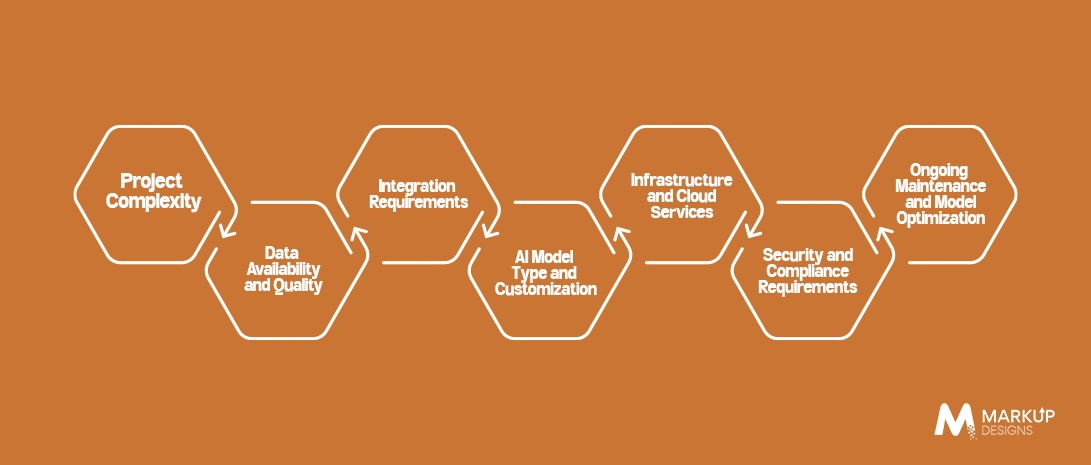
The cost of AI implementation in UAE energy industry can vary significantly from one project to another. Several technical, operational, and business factors influence the overall investment required to build, deploy, and maintain AI solutions.
Project Complexity
Simple AI applications such as energy consumption forecasting typically cost less than advanced solutions involving predictive analytics, digital twins, or autonomous energy management systems.
Data Availability and Quality
AI systems require large volumes of accurate and well-structured data. Organizations with fragmented or poor-quality data may need additional investment in data collection, cleaning, and preparation.
Integration Requirements
Integrating AI with existing energy management systems, IoT devices, ERP platforms, and legacy infrastructure can increase development complexity and costs.
AI Model Type and Customization
Custom-built AI models designed for specific energy operations generally require more time, expertise, and resources than pre-trained or off-the-shelf AI solutions.
Infrastructure and Cloud Services
The choice between on-premise deployment, cloud infrastructure, or hybrid environments directly impacts implementation and operational costs.
Security and Compliance Requirements
Energy companies must comply with industry regulations and cybersecurity standards, which may require additional investments in data protection and governance frameworks.
Ongoing Maintenance and Model Optimization
AI implementation does not end after deployment. Continuous monitoring, retraining, updates, and performance optimization contribute to long-term project costs.
Challenges of AI Adoption in UAE Energy Industry and Their Solutions
While Artificial Intelligence offers significant opportunities for UAE energy sector, organizations often face several challenges during implementation. Understanding these obstacles and addressing them proactively can improve project success and accelerate AI adoption.
| Challenge | Impact on Energy Operations | Solution |
| Data Quality and Availability | Inaccurate or incomplete data can reduce AI model accuracy and decision-making effectiveness. | Establish strong data governance practices and invest in data cleansing and management. |
| Legacy Infrastructure | Older systems may not easily integrate with modern AI technologies. | Adopt phased modernization strategies and use integration platforms to connect existing systems. |
| High Initial Investment | AI implementation can require substantial upfront spending on technology and infrastructure. | Start with high-value pilot projects and scale gradually based on proven ROI. |
| Skills and Talent Shortage | Lack of AI expertise can slow project execution and adoption. | Partner with experienced AI development companies and invest in workforce training. |
| Change Management Challenges | Employees may resist new technologies and automated processes. | Create awareness programs, provide training, and involve stakeholders throughout implementation. |
| Cybersecurity Risks | Increased connectivity creates potential vulnerabilities for critical energy infrastructure. | Implement robust cybersecurity frameworks, continuous monitoring, and compliance measures. |
By addressing these challenges strategically, UAE energy companies can successfully leverage AI to improve efficiency, strengthen sustainability efforts, and gain long-term competitive advantages in a rapidly evolving energy landscape.
Read Also: Role of AI Automation in Digital Transformation in UAE
Why Choose Markup Designs for AI Development in UAE Energy Industry
As energy companies across UAE accelerate their digital transformation initiatives, choosing the right AI development partner becomes critical for achieving long-term success. At Markup Designs, we help energy organizations leverage Artificial Intelligence to improve operational efficiency, reduce costs, enhance sustainability, and unlock data-driven decision-making.
Our team combines AI expertise with industry knowledge to develop custom solutions tailored to the unique requirements of energy providers, utility companies, renewable energy operators, and oil & gas enterprises. From predictive maintenance and demand forecasting to smart grid optimization and intelligent analytics, we deliver scalable AI solutions that generate measurable business outcomes.
Why energy companies partner with Markup Designs:
- Custom AI solutions aligned with business objectives
- End-to-end AI consulting, development, and deployment
- Integration with existing enterprise and energy management systems
- Expertise in Machine Learning, Computer Vision, and Predictive Analytics
- Scalable cloud-based AI architectures
- Focus on security, compliance, and data governance
- Continuous optimization and support services
Whether you are exploring your first AI initiative or scaling enterprise-wide AI adoption, Markup Designs can help transform your energy operations with innovative and future-ready solutions.
Ready to unlock the full potential of AI in the energy sector?
Connect with Markup Designs to develop scalable, future-ready AI solutions tailored to your operational goals, sustainability initiatives, and long-term growth strategy.

Conclusion
Artificial Intelligence is transforming UAE energy industry by improving operational efficiency, reducing costs, enhancing sustainability, and enabling smarter decision-making. From predictive maintenance and smart grid management to renewable energy optimization and demand forecasting, AI is helping energy companies modernize their operations and achieve better business outcomes.
As UAE advances toward its Net Zero 2050 goals, AI will continue to play a crucial role in driving innovation and energy transformation. However, successful implementation requires a strong data foundation, strategic planning, and continuous optimization. Organizations that invest in AI today will be better positioned for long-term growth, efficiency, and competitiveness.
FAQs
1. How is AI transforming UAE energy industry?
AI is helping energy companies improve operational efficiency, optimize energy production, predict equipment failures, enhance grid reliability, and support renewable energy integration.
2. What are the most common AI use cases in the energy sector?
Popular AI applications include predictive maintenance, smart grid management, demand forecasting, energy consumption optimization, infrastructure inspection, and renewable energy management.
3. How much does AI implementation cost in UAE energy industry?
The cost depends on project complexity, infrastructure requirements, data availability, and integration needs. Basic AI projects may start from $20,000, while enterprise-scale solutions can exceed $500,000.
4. Can AI help achieve sustainability goals?
Yes. AI helps reduce energy waste, improve resource utilization, optimize renewable energy generation, and support carbon reduction initiatives.
5. How long does it take to implement an AI solution?
Implementation timelines vary based on project scope. Simple AI solutions may take a few months, while enterprise-wide deployments can require six months to a year or more.
Author's Perspective
UAE energy industry is entering a new phase where operational excellence and sustainability are becoming equally important. Artificial Intelligence is helping bridge this gap by enabling smarter decision-making, predictive capabilities, and greater efficiency across the energy value chain. While the technology continues to evolve, its real value lies in solving practical business challenges and delivering measurable outcomes. Organizations that adopt AI strategically today will be better equipped to navigate future energy demands, regulatory expectations, and sustainability goals while maintaining a strong competitive position in the market.
Discuss Your Project NowJupinder Singh Arora
Founder and CEO
Related Posts
How to Build Production-Ready Applications with AI Coding...
Cost, Benefits & Business Impact: Generative AI vs....

Enterprise AI Agents: Practical Use Cases Driving Business...
Insights Are Valuable & Execution is Priceless
You’ve read about the digital future. Now, let’s build the infrastructure to take you there. Move your strategy from the page to the product.
Design Your Solution Now
Contact Us
Schedule The Appointment At Your Convenience Date And Time.
30 Min
Web Conference
Time Zone
Indian standard time (08:30pm)

Thanks For Getting In Touch!
You’ve Taken The First Step Toward Transforming Your Digital Presence. Our Experts Will Reach Out Shortly To Take It Forward.
Launch Your Dream Project
Provide a brief overview of your project, and our specialists will evaluate your requirements. We will connect with you to explore how the right digital solutions can help you launch faster.