

In Brief
- Qatar’s real estate industry is shifting from traditional property systems to integrated digital platforms that improve efficiency, transparency, and long-term business growth.
- Future-ready real estate platforms are designed to adapt to regulatory changes, support multiple asset types, and integrate with evolving national and business ecosystems.
- Custom real estate solutions provide centralized property management, better tenant and customer experiences, automated workflows, real-time analytics, and scalable growth opportunities.
- Building a successful platform requires clear business objectives, stakeholder planning, modular architecture, compliance-driven workflows, and strong data governance.
- Data quality, system integrations, security controls, and local compliance requirements play a major role in maintaining platform reliability and trust.
- Long-term platform success depends on choosing stable technologies, phased implementation strategies, and experienced development teams that prioritize scalability and sustainability.
There is a shift in the real estate industry of Qatar beyond listings and brokers. With increased urbanization and stricter regulatory practices, fragmented systems are being replaced by unified platforms that can address all data-related and governing issues in one system. The need here is not for convenience but for development infrastructure.
For many organizations, the issue is figuring out how to create a real estate platform in Qatar that will always be useful in the long run. A future-ready estate platform in Qatar is not something that is defined by capabilities alone, but rather by its capability to evolve according to changes in policies, integrate into the national system, and expand over different types of assets without rebuilding. This growing reality is driving increased adoption of proptech platforms in Qatar, as their modular architecture offers greater flexibility, scalability, and easier adaptation to evolving market needs.
The purpose of this article is to analyze the requirements of creating a real estate platform in Qatar from an implementation point of view. This includes the design and essential components of the platform, timelines involved, and important implementation issues.
Understanding the Digital Transformation of Real Estate in Qatar
The Qatar real estate industry is rapidly transforming through digital means as real estate players use technology to enhance efficiencies and improve the customer experience. Property recommendation tools and virtual tours powered by artificial intelligence, smart building facilities, and digital transaction solutions are some of the ways in which technology is revolutionizing the industry in Qatar.
With the advancement of smart city concepts and the rising need for digital integration, the real estate industry in Qatar is turning towards methods that foster transparency, faster decision-making, and efficiency. This has proven beneficial for enterprises to cut down on costs, enhance tenant interaction, and form a more interconnected real estate ecosystem.
Why Qatar Vision 2030 is Changing How Real Estate Platforms Are Built
Real estate portals in Qatar are now constructed to meet broader national goals that go beyond mere property management or transactional needs. Qatar National Vision 2030 puts great emphasis on sustainable development, smart cities, and increased data utilization within heavy infrastructure industries such as real estate. This is important considering that the digital systems will be in use for many decades to come.
That is the reason why the digitization process for the real estate sector in Qatar appears different from the conventional one in the case of PropTech solutions. When working on a proptech platform for Qatar, teams should go beyond the functionality aspect and consider long-term perspectives such as decision-making and expansion of the platform.
The level of dedication that is required for this change is quite high. One of the things that is mentioned quite often is that the National Vision 2030 in Qatar contains a major transformation strategy that requires investments worth about $200 billion. This investment forms a key part of Qatar’s broader vision to build a self-sustaining, diversified economy that supports long-term growth and reduces dependence on traditional sectors.
Vision 2030 is an effective way of designing any state-of-the-art real estate platform in Qatar, as it creates expectations for durability, integration, and accountability that modern real estate platforms are expected to deliver from day one. That is why the choice of technology used in the development of a real estate platform makes such a big difference.
Benefits of Custom Real Estate Platforms
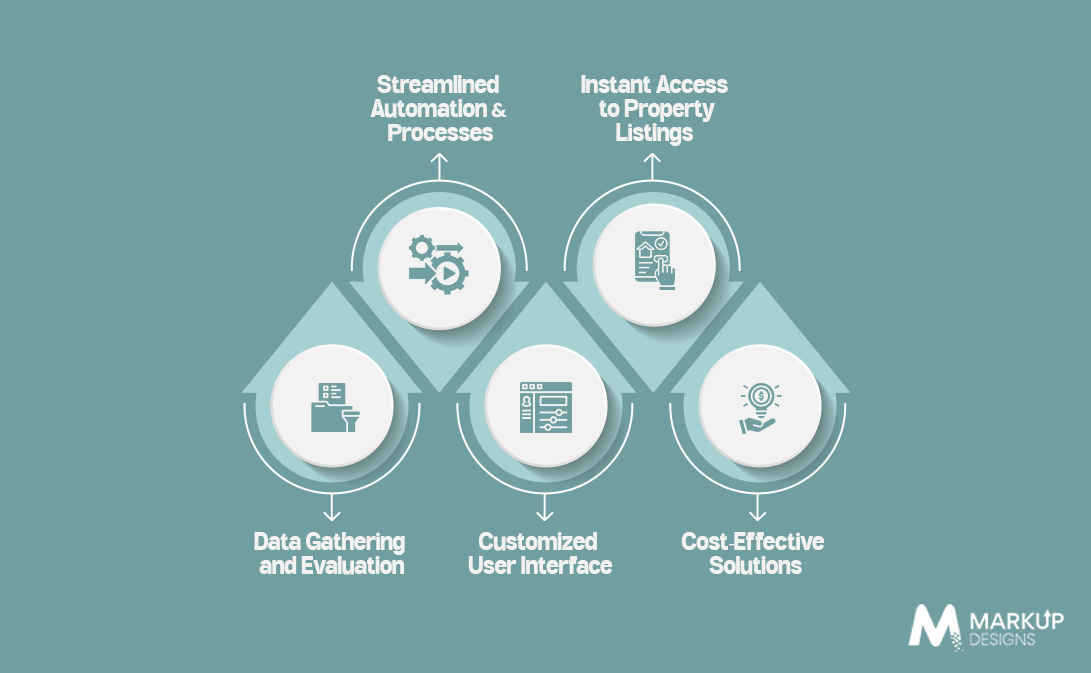
Streamlined Automation & Processes
Integrate the various aspects of real estate services on one platform, including document processing, communication with clients, and listings. Automate processes that are mundane and time-consuming, including scheduling meetings, reminding individuals to show up for meetings, and reporting.
Instant Access to Property Listings
The traditional process of searching for property listings or properties is now a thing of the past. Visiting all the properties listed one by one and then making decisions is a very tedious and lengthy process. But now, with the use of real estate mobile applications or software, the task of searching for property listings is done in just a few clicks. Moreover, you can even get images or videos of the property that you are looking for.
Data Gathering and Evaluation
Analyze data on preferences for real estate, market trends, behavioral patterns of users, and other topics in order to obtain valuable information necessary for making informed decisions in business. In order to obtain maximum advantage from your products and marketing activities, you should identify favorable features of real estate properties, popular places, and price trends.
Customized User Interface
Provide your clients with the ability to make searches as per their needs, such as spending capacity, preferred area, type of property, and facility. Satisfy your clients’ preferences through personalized property suggestions based on their search criteria.
Cost-Effective Solutions
Reducing the costs that may be incurred using traditional marketing methods such as printed advertisements, open houses, and physical real estate pamphlets. Introduction of AI and AI agents may result into efficiency through automation of the operations and reduction of the human element. This also aids in reducing costs related to manpower. This is done through the use of technology to enhance efficiency, speed up processes, and utilize resources optimally.
How to Build a Real Estate Platform in Qatar
The key to building a real estate platform isn’t necessarily speed but rather right choices. Rushing through development leads to major redesigns of the entire system in the future. Successful teams take their time to solidify the basics prior to coding.
What follows below is an example of how the successful team would approach building a real estate platform in Qatar.
1. Start With Platform Purpose, Not Features
Before architecture or tech stacks come into play, teams need clarity on why the platform exists.
Is it meant to be:
- A system of record for assets and ownership
- An operational tool for approvals and compliance
- An investor-facing interface for visibility and reporting
- Or all three, phased over time
This distinction matters because it defines the platform’s structure, governance model, and ability to scale over time. Many unsuccessful attempts to build a real estate platform in Qatar happen when businesses replicate feature lists instead of clearly defining the platform’s purpose, responsibilities, and long-term operational requirements.
2. Map Stakeholders and Authority Boundaries Early
In this market, the real estate portals are never used by a single type of user; rather, they are used by all stakeholders, including government officials, developers, managers, and sometimes even citizens.
It is essential at this point to determine:
- Who will generate and update the data?
- Who will approve, review, or audit the data?
- Who will consume the information?
This is vital in the case of the development of real estate systems in Qatar, as the access policies and the approval process are built into the system itself.
3. Design Architecture for Long Lifecycles
Typically, platforms should last for several years or even decades. This means that monolithic solutions cannot be considered.
The following aspects should be characteristic of good platforms:
- Modularity in terms of services related to asset management, ownership, leasing, and compliance
- An API-first approach to facilitate integration in the future
- Separation of concerns in terms of data, logic, and UIs
- Such an architecture is necessary for real estate platform scalability in Qatar.
4. Treat Data as the Core Product
Data outlasts any features in real estate applications. The initial investment should be made in:
- Data modeling for property objects, parcels, units, and owners
- History keeping and version control for approvals and changes
- Consistency and uniqueness validations
- This is the bedrock upon which analytics, reporting, and even artificial intelligence development of real estate applications can happen without redoing the application itself.
5. Build Compliance Into the Workflow
Compliance must not be external to the process; it needs to be internal.
This means that:
- Approval procedures are part of the routine processes.
- Automated audits are conducted instead of manual reporting.
- Traceability of who did what and when is possible.
- The proper way of doing things, compliance real estate software Qatar, becomes part of the work itself.
6. Choose Technology for Stability, Not Hype
The tech stack must enable maintainability for the long term.
In most cases, this would entail:
- Backend framework proven to provide high security
- Scalable cloud technology with local data control capabilities
- Independent frontend system
- The key is not to introduce something new, but something reliable in terms of real estate tech development for Qatar.
7. Roll Out in Phases, Not All at Once
Big platforms don’t work when all the parts are launched at once.
More sensible strategy:
- Start with a specific asset class or development region
- Test out data and workflows
- Scale up to more users, assets, and integrations
- This gradual process will also help teams handle the timeline for developing a real estate platform in Qatar that meets the needs of Qatar without interfering with the rest of their work.
Developing a real estate platform in Qatar is a long-term play. Teams that win concentrate more on the base than on the features and adaptability. When that works well, the platform grows organically without having to be completely rebuilt every couple of years.
Transform Your Real Estate Vision into a Digital Platform
Build a future-ready real estate solution to streamline property management, enhance buyer experiences, and accelerate business growth. Leverage advanced technologies and scalable architecture to stay ahead.

Core Architecture of a Real Estate Platform
Discussions around architectures begin with the technologies and frameworks. In reality, these are the least of concerns. What truly counts is the ability of the architecture to stand up to changes. Real estate platforms have very long lifetimes and are subject to regulatory changes, scope expansion, and new participants appearing many years down the road. Architecture has to take all these things in stride and not degenerate into a never-ending rebuild. This is what platforms strive to achieve.
Here’s how teams with real delivery experience tend to think about it.
1. Keep the Structure Simple and Clearly Separated
Good systems do not put everything into a jumbled mess. They have clean separations to make sure one change doesn’t affect everything.
Typical systems include:
- The data layer with asset information, ownership, zoning, lease info, and history. The data layer prioritizes accuracy and traceability over anything else.
- The logic layer that contains all the business rules. Validations, approvals, and compliance should be here, not spread around on the screens.
- The user interface layer that you actually see. Everyone sees something different, but none of it is a core data.
2. Build Around Real Domains, Not Feature Lists
Feature-driven development tends to work just fine until it doesn’t. What really lasts is structuring the system based on the way that real estate operates. Typically, this is characterized by definite boundaries around areas such as:
- Assets and units
- Ownership and titles
- Leasing and transactions
- Compliance and approvals
- Reporting and analytics
By separating out these areas into individual pieces, the system allows one piece to be updated without bringing the whole thing down.
3. Assume the Platform Will Need to Connect to Other Systems
Real estate portals seldom function in isolation. They lie at the intersection of planning systems, infrastructure data, financial systems, and reporting systems.
Designing for integration from the start will make it easier to:
- Import planning and zoning data
- Connect to infrastructure data
- Transfer records to financial or regulatory systems
- Thinking that you can “add integrations later” tends to end in tears.
4. Make Data Control Part of the Design
Problems on a platform rarely emerge because of poor coding practices. The problem stems from the ownership of the data itself not being clear.
Great platforms have built-in:
- Transparent rules for accessing based on accountability
- A complete record of modifications and approvals
- Transparency around what was modified and when
- Otherwise, trust becomes impossible regardless of interface quality
5. Use Cloud Infrastructure Carefully
Scaling is easy using cloud infrastructure, but only when done right. Commonly considered factors include:
- Scalability according to data and users
- Test and live deployment environments
- Audit and review controls
- The idea is flexibility, yet not losing control.
Features of a Real Estate Management Platform in Qatar
A real estate management platform shows its worth once people are no longer doubtful about the information and begin to use it. This is not about cramming in as many features as possible. The idea is to build an environment that can be trusted when performing approvals, audits, and other operations. When organizations design features for a real estate management platform in Qatar, their attention is inevitably drawn to stability and control.
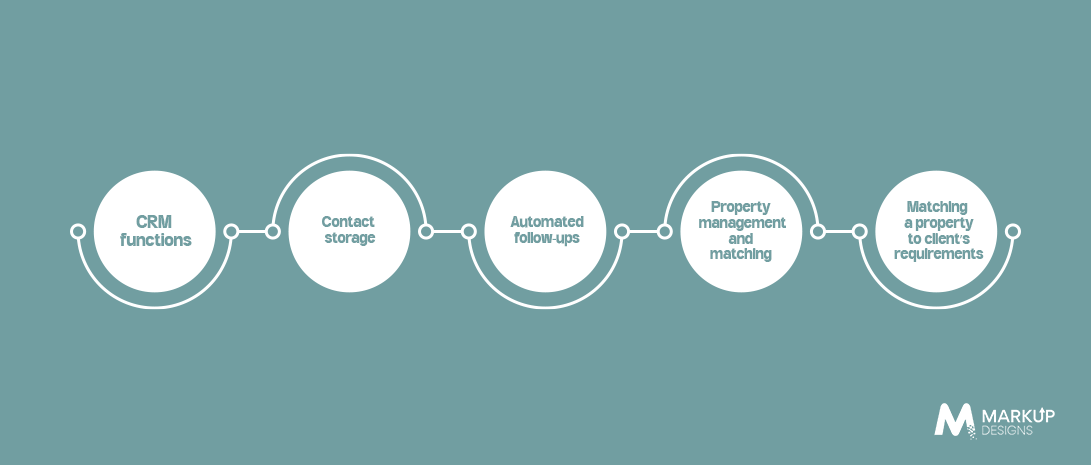
CRM Functions
The client plays a pivotal role in property management; hence, you need to have your client-related processes managed perfectly. In this regard, an effective property management software application must have sophisticated CRM features to allow you to exploit client interaction.
Contact storage
The real estate management software acts as a single place where you can store all your contacts and leads. Hence, it becomes necessary that your app should be capable of storing all information in an organized form and have access to it at any point of time.
Automated follow-ups
Not only should you be able to save all of the client’s data in the app, but it is also important that you are able to contact the clients and send out follow-up messages. In order to do that, the app should have an automatic system of following up as well as sending out reminders and emails. In addition, it should show the preferred way of contacting each of your clients on the list.
Property management and matching
The second thing that should be taken into account in any real estate management system is property management and matchings. The manager will want to provide a good deal for the customer and also get an idea about the status of all properties in the directory. That is where a well-thought-out app comes in handy.
Matching a property to client’s requirements
There could be thousands of properties in your database, and think about the time it will take you to select a proper property for just one customer from all of them. No matter how good the filters are, it will still take too much of the agent’s time to browse the entire list. That is why there are many property management services that provide the opportunity of automated property matching.
Read Also: Cost of Building a Real Estate App Like Property Finder?
Data and Integration Requirements for Real Estate Platforms
What often makes a real estate platform difficult to manage is not poor design or missing functionality, it is the lack of alignment in the underlying data. Information is frequently distributed across multiple sources, inconsistently updated, and disconnected from other business systems. As these gaps grow, maintaining accuracy, enabling smooth operations, and creating a unified user experience become increasingly challenging.
However, when it comes to practical implementation, real estate information changes due to changes in ownership, changes in approvals, and decisions that are being reconsidered over the years. It becomes vital for the system to be prepared for such an environment. In most cases, the real difference lies in how effectively the platform handles these everyday operational changes.
- Establish clear definitions from the outset: Every stakeholder must align on the meaning of core terms such as assets, parcels, units, ownership, leases, and approvals. Without standardized definitions and a structured data model, reporting inconsistencies emerge, leading teams to rely on disconnected records. Strong data modeling creates the foundation for reliable real estate operations.
- Maintain a complete record of historical changes: Real estate decisions evolve, and systems must preserve a full history of modifications, including what changed, who initiated the change, and when it occurred. Retaining change history strengthens accountability, transparency, and long-term traceability.
- Validate data before it enters circulation: Real estate data can lose accuracy quickly if left unchecked. Implementing validation measures such as mandatory fields, format controls, dependency checks, and entry rules helps prevent downstream issues that typically surface during reporting, compliance, or audits.
- Integrate directly with planning and zoning frameworks: Property and asset information should remain connected to current planning approvals and zoning regulations. This integration ensures that records stay accurate, up to date, and aligned with regulatory realities.
- Connect asset data with utility and infrastructure insights: Linking real estate information with utility access, infrastructure availability, and future development plans provides a broader operational context. This enables more informed decisions than relying on property data alone.
Security, Compliance, and Data Sovereignty in Qatar
Security often goes unnoticed when systems operate smoothly, but the moment users detect inconsistencies or feel their data may be at risk, trust begins to erode rapidly. In Qatar’s evolving digital landscape, maintaining strong security, regulatory compliance, and data sovereignty is essential to sustaining confidence and long-term platform credibility. The property exchange sites are all about handling data related to ownership, identification, transactions, and approvals, which are mostly binding in nature.
Once an organisation embarks on developing its real estate platform in Qatar, most of its decisions regarding security and data sovereignty will endure for many years. Changes to hosting, access controls, and auditing systems are difficult to make at a later stage. That is why experienced organisations treat security not as an additional requirement, but as a foundational element of long-term platform strategy.
Data that will be controlled locally: The data that is sensitive, like ownership and transactional data, must always stay within the borders of the country. The hosting approach adopted by the company would normally be in accordance with the recommendations.
Compliance with relevant data protection regulations: Any platform that collects or processes any kind of personal information or commercial data needs to comply with Law Number 13 of 2016 regarding personal data privacy protection (PDPL). It simply means that the law regulates the use, processing, retention, and transfer of the data among other factors.
Responsibility-based access: There is no need to provide the same degree of access to all users in the real world. The use of role-based permissions and separation of duties can be helpful in avoiding errors.
Documentation that will be used to justify decisions in the future: Real estate decisions are frequently reviewed long after they were made. Audit logs are automatically kept to document which user approved which decision. That is an essential requirement for any real estate compliance software solution.
Security as a constant practice: Access reviews, monitoring, and incident planning are all as important as the controls themselves. Security is not something to be done once; it is something to be maintained.
Cost to Build a Real Estate Platform in Qatar
Building a real estate platform in Qatar can be costly, depending on many factors like the complexity of the platform, the features that will be available on the platform, the technologies used, integrations, the level of security, and the scalability of the platform. The platform, which focuses mainly on property listing and user management, needs less capital than the platform that incorporates AI recommendation and contract automation.
The cost of development also depends on whether the platform will have an admin dashboard, multiple language options, cloud integration, and third-party integration.
| Development Stage | Estimated Cost (QAR) |
| Discovery & Planning | QAR 15,000 – 35,000 |
| UI/UX Design | QAR 20,000 – 45,000 |
| Basic Platform Development | QAR 60,000 – 120,000 |
| Advanced Feature Development | QAR 120,000 – 250,000 |
| Mobile App Development | QAR 80,000 – 180,000 |
| Third-Party Integrations | QAR 20,000 – 60,000 |
| Testing & Quality Assurance | QAR 15,000 – 40,000 |
Key Challenges in Developing PropTech Platforms in Qatar
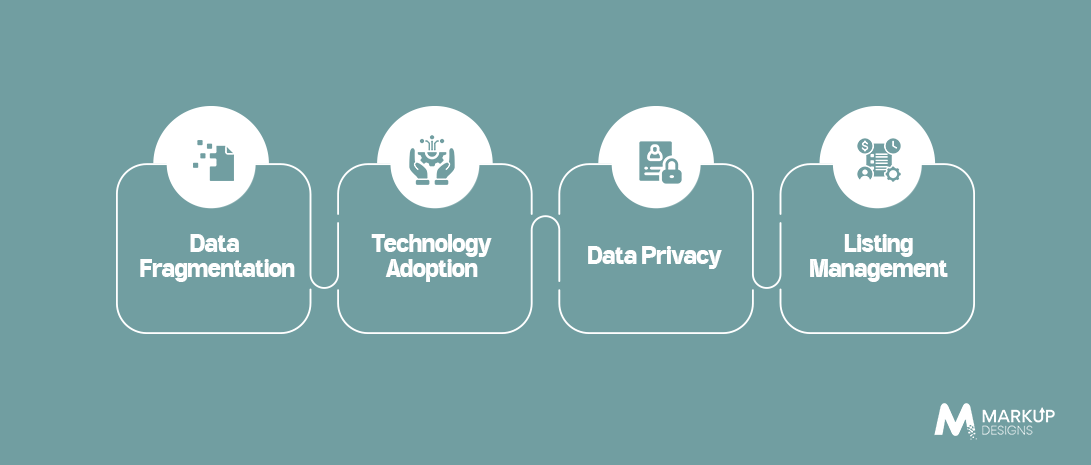
One of the key challenges in developing PropTech platforms in Qatar is that issues often emerge gradually rather than immediately. Users begin relying on external records and manual processes when the platform cannot keep up with real estate complexity. Over time, the system remains not because it performs well, but because replacing it becomes more difficult than maintaining it.
This is what teams encounter again and again, and what helps them when they address it directly.
1. Data Fragmentation
Systems related to property management, accounting, and CRM are separate and do not communicate with each other, requiring manual reconciliation and making operations more expensive. Agents face difficulties when matching customers with available inventory, and managers have little understanding of performance metrics.
2. Technology Adoption
Many people in the real estate business are used to conventional offline networking. Inclusion of technology may pose challenges since it requires a learning curve and some resistance to change. Failure to adopt technology leads to organizations failing to get value from software or applications investments.
3. Data Privacy
Platform systems deal with sensitive information like financial records, personal information, and even legal agreements, which make them vulnerable to cybersecurity attacks. Tight regulations regarding data privacy and advertisement force constant changes in the system in order to evade heavy fines and lose consumers’ trust.
4. Listing Management
The task of continually refreshing property listings on various portals, social media sites, or customized applications without creating duplicates is technologically difficult. Crashes or lagging when there are many users online during peak times for the real estate market, especially as witnessed in big cities such as Mumbai, irritate users.
Choosing the Right Development Partner in Qatar
Selecting the right partner impacts not only the first launch but also the platform’s long-term success. It determines the decision-making process, the approach to deal with trade-offs, and how the platform behaves after being put into use. The choice of the partner becomes especially important when organizations plan to develop a real estate platform in Qatar.
An understanding of how real estate platforms work comes from the realization that such platforms function more like an infrastructure than applications. The experience of developing real estate technologies shows that building the foundation is the firsthand priority.
Experience beyond the demo: It’s better to find firms with a prior experience, building enterprise and regulated-scale platforms. There is much discipline involved with delivering a platform for enterprise real estate.
Clear thinking, not just technical skill: Great partners will be able to explain their recommendations, particularly when it comes to data architecture, integration, and security.
Open to slowing things down early: Those who argue against rushing to develop particular features often save time in the long run
The capacity to scale: A strong team will plan for future growth and scalability of the real estate platform as complexity and user numbers increase.
Open dialogues on costs and timeline: Open dialogues regarding the scope of work, risk factors, and real estate platform cost are positive signs of future success.
How Markup Designs Can Help Build a Future-Ready Real Estate Platform in Qatar?
Our services enable companies to turn their vision into real estate platforms that can be successfully developed for Qatar. Through our innovative strategy of planning and design and using advanced technologies, we create platforms that will facilitate property management, ensure better customer experience, and improve the efficiency of business processes. Intelligent property listings, tenants’ management, CRM integration, analytics, and contract management are developed by us to help businesses grow sustainably.
Launch a Smarter Real Estate Experience
Create intelligent real estate platforms that simplify property discovery, automate operations, and improve customer engagement. Partner with experts to develop secure, high-performance solutions.

Conclusion
Building a future-ready real estate platform in Qatar requires more than simply digitizing existing processes. It will be important for any successful platform to have scalable technology systems that ensure sustainability, enable integration into the changing business environment, remain secure, and provide great usability. Every decision impacts the long-term success of a real estate platform, including platform architecture, data governance, and more.
FAQs
1. What is a real estate platform?
A real estate platform is a digital solution that helps manage property listings, tenant operations, contracts, customer relationships, transactions, and business workflows through a centralized system.
2. How long does it take to develop a real estate platform in Qatar?
The development timeline varies depending on platform complexity, required integrations, and feature scope. A standard platform may take several months, while enterprise-grade solutions often require phased implementation.
3. What features should a modern PropTech platform include?
A modern PropTech platform should include property management, tenant and lease administration, CRM capabilities, advanced search functionality, contract management, analytics, and secure integrations.
4. Why is custom real estate software better than off-the-shelf solutions?
Custom platforms are designed around specific business requirements, allowing greater scalability, improved workflows, better integrations, and long-term flexibility compared to generic software.
5. How important is security for real estate platforms in Qatar?
Security is critical because these platforms manage property records, customer data, financial information, and contractual documents. Strong access controls, encryption, and compliance measures are essential.
Author's Perspective
The future of real estate in Qatar is not going to hinge on who digitizes first but on who develops platforms that stay relevant despite changes in regulations, consumer demands, and the market environment. The best platforms may not necessarily have the best features because what makes them better is how adaptable and scalable they are from the outset. Companies that approach real estate technology as an investment instead of a one-off job stand a better chance at success.
Discuss Your Project NowAjit Kumar Jha
VP - Business Operations
Insights Are Valuable & Execution is Priceless
You’ve read about the digital future. Now, let’s build the infrastructure to take you there. Move your strategy from the page to the product.
Design Your Solution Now
Contact Us
Schedule The Appointment At Your Convenience Date And Time.
30 Min
Web Conference
Time Zone
Indian standard time (08:30pm)

Thanks For Getting In Touch!
You’ve Taken The First Step Toward Transforming Your Digital Presence. Our Experts Will Reach Out Shortly To Take It Forward.
Launch Your Dream Project
Provide a brief overview of your project, and our specialists will evaluate your requirements. We will connect with you to explore how the right digital solutions can help you launch faster.