
In Brief
- Cloud Computing provides an opportunity for companies in Kuwait to gain access to storage, software, applications, and computing power through the Internet, which makes them less dependent on physical infrastructure and helps in their digital transformation.
- The main advantages are cost management, scalability, secure data backups, accessibility, quick deployment of applications, and better collaboration among employees in various sectors, including financial services, healthcare, retail, logistics, and education.
- There are different cloud computing products available for businesses, namely IaaS, PaaS, SaaS, cloud storage, cloud backup and recovery, and cloud applications, as well as cloud deployment options like public cloud, private cloud, hybrid, and multi-cloud.
- Data privacy and sovereignty, regulatory compliance, connectivity problems, integration with existing systems, cloud lock-in, and increased costs are common challenges that should be carefully managed through thorough planning, security measures, phased migrations, and cost tracking.
- For successful implementation of cloud computing, there is a need to have clear business objectives, an appropriate cloud model, proper security and compliance controls, a tested backup strategy, and performance monitoring. The services of Markup Designs can be helpful in this process.
In Kuwait, businesses utilize digital technologies to enhance their day-to-day operations, data management, and customer services. As an enterprise grows, managing its IT infrastructure, huge data volumes, and security becomes more difficult. Here, cloud computing solutions come into play.
Cloud computing enables businesses to access computing resources, storage, software, and applications through the internet without relying solely on physical servers. Cloud technology provides additional flexibility to manage IT requirements, cut down expenses, and accommodate remote team members. Regardless of company size, cloud technology can cater to various business needs and their growth.
For Kuwaiti businesses, adopting the cloud approach requires taking into account such aspects as data security, regulations in place, and future technological plans of a business. In this blog, we will explore the main benefits of cloud computing solutions in Kuwait, services provided, possible approaches to deployment, challenges, and best practices.
What are Cloud Computing Solutions?
Cloud computing solutions are services that give an organization the ability to make use of computer hardware, software, and data storage through the internet rather than using its personal computer hardware or servers. They help organizations to store their data, run applications, handle workloads, and access organizational tools any time they wish.
Some of these solutions include cloud storage, where an organization can store its data, cloud software, where the organization can execute some of its tasks, and even cloud infrastructure, where the organization runs its website or applications.
In most cases, cloud computing solutions adopt a pay-per-use or subscription model depending on the service chosen. It allows for the ability to use resources according to needs without having to spend much on the initial acquisition of hardware.
For companies in Kuwait, cloud computing offers the benefits of digitizing their operations, enhancing collaboration among staff, and making it easier to scale up IT resource provision. The choice of solution will be determined by several factors.
Why are Businesses in Kuwait Adopting Cloud Computing Solutions?
Businesses in Kuwait are interested in finding ways to enhance their business processes and make them easier to manage, while at the same time dealing with changes in customer demands. Cloud computing can help them by providing businesses with flexible IT resources without taking responsibility for all the infrastructure associated with it.
Here are the main reasons for implementing cloud computing in Kuwait:
- Digital transformation: Organizations are implementing more and more activities using digital channels.
- Flexible IT resources: Cloud computing lets organizations adjust the amount of computing resources according to the demands of their businesses.
- Cost control: Businesses can avoid high investments in hardware purchasing and IT infrastructure maintenance.
- Support for remote teams: Employees can securely access approved applications and files from different locations.
- Data management: Storage, backups, and data recovery through cloud technology are available to help businesses manage data.
- Growing technology needs: Retail businesses, financial institutions, healthcare organizations, logistics organizations, and educational institutions need digital services supported by reliable IT systems.
The digital objectives of Kuwait have made cloud technology one of the vital aspects for companies to consider for their future expansion. However, companies need to consider security issues and data locations while opting for cloud technology.
Key Benefits of Cloud Computing Solutions in Kuwait
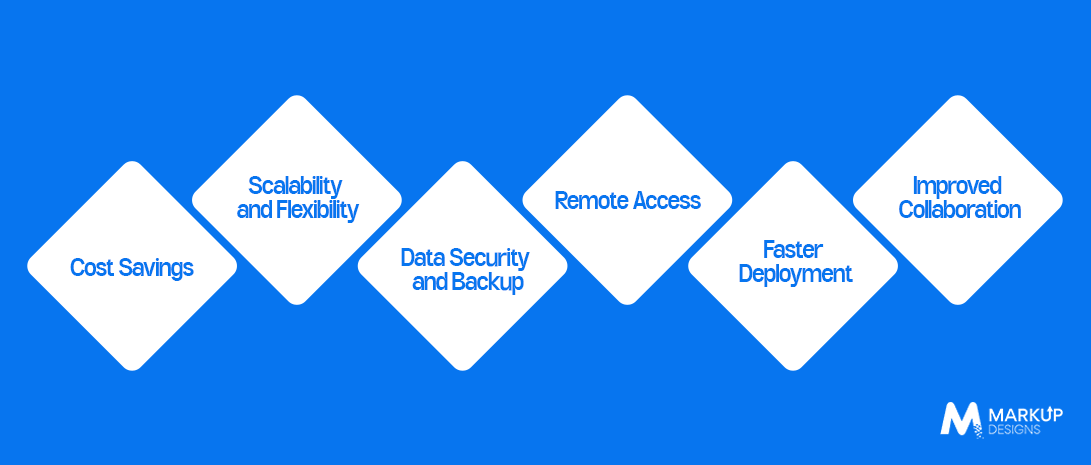
Cloud computing can be helpful in many ways for those business organizations that want to upgrade their IT practices without complicating things.
Cost Savings
IT expenditure decreases with the help of cloud computing, as there would be no need to purchase servers, networking equipment, etc. The business organizations can use the facilities as per their requirements and pay as per the pricing scheme provided by the service provider. Though it may be easy to spend money on IT, yet it is necessary to keep a check on it.
Scalability and Flexibility
There might be a change in the requirements of IT practices with the expansion of the business organization. The companies can increase the storage capacity, computing power, or any other application capacity with the help of cloud services.
Data Security and Backup
Data security measures available in the cloud include encryption, identity management, access control, and surveillance tools. Cloud service providers also offer data backup and disaster recovery facilities. The business has to use the services properly to secure its confidential data.
Remote Access
Cloud computing allows authorized personnel to access various applications and files through the internet from wherever they are. This enables the business to collaborate and cooperate with its staff members in distant offices, while also keeping their data safe by providing them with access permissions and authentication features.
Faster Deployment
Through cloud computing, businesses do not have to wait for buying and install all the necessary hardware before setting up the infrastructure and applications of the business. This helps developers quickly deploy their services.
Improved Collaboration
With the help of cloud-based tools, the business’s employees can easily communicate with each other, exchange documents, and keep track of updated information.
Types of Cloud Computing Solutions for Businesses
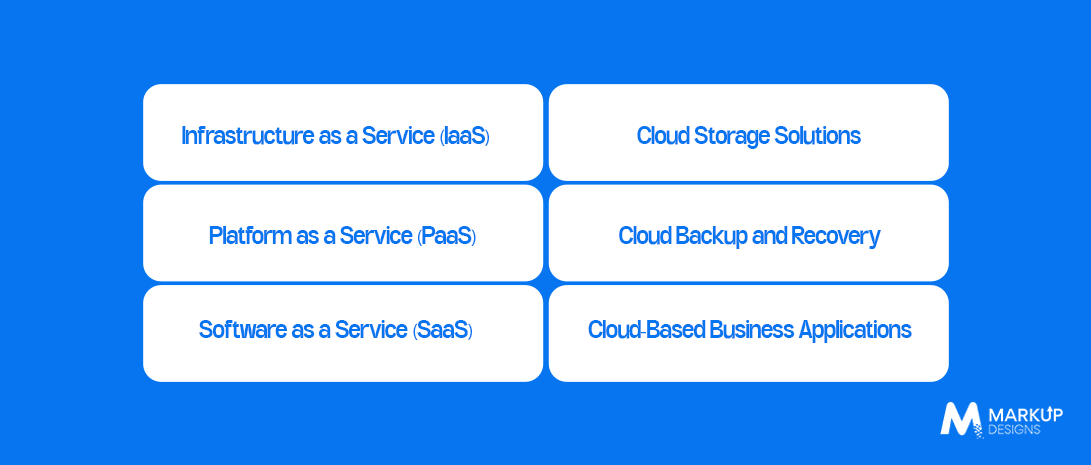
There are various types of cloud computing services offered to serve particular business purposes. Having knowledge of the available cloud computing services will be helpful for businesses in Kuwait to adopt cloud computing systems according to their IT needs and budget.
1. Infrastructure as a Service (IaaS)
Infrastructure as a service is a form of cloud computing whereby computing services are provided to businesses through cloud. The computing services include virtual server space, storage space, and network connections. Businesses get an opportunity to host their websites and applications without having to purchase all the physical hardware.
2. Platform as a Service (PaaS)
The Platform as a Service model provides a pre-configured environment to create, test, and launch software applications. PaaS includes development tools, databases, and application management services. Using PaaS enables development teams to concentrate more on software development and enhancement without being bogged down by platform setup and maintenance activities.
3. Software as a Service (SaaS)
The Software as a Service model provides businesses with the ability to use applications via a web browser or special apps through subscriptions. CRM applications, accounting, communication, and project management tools are just some examples of software available through SaaS. This service model represents an excellent solution for companies that need to leverage business software without dealing with its platform maintenance.
4. Cloud Storage Solutions
With cloud storage services, organizations can store their files, documentation, databases, and other digitized information in the cloud-based system. The staff would be able to access authorized files when necessary according to the company’s security measures. In making decisions on what service to choose, companies have to take into consideration storage capacity, access rights, data location, and cost.
5. Cloud Backup and Recovery
Through cloud backup services, it is possible for companies to keep backups of critical information in an isolated environment. Recovery services are useful in recovering data and systems after any accidental loss of data, any hardware failure, cyber-attacks, and other incidents. The backup plan must be tested regularly to ensure its success.
6. Cloud-Based Business Applications
These business applications assist in managing the day-to-day operations of the business, including sales, financials, human resources, inventory management, and customer service. Because the application is accessed via the cloud, authorized members can access it irrespective of their location.
Cloud-based applications for companies in Kuwait can also assist in connecting various departments and decreasing the reliance on other individual systems. The optimal selection will depend on the current process and degree of customization needed.
Cloud Deployment Models: Public, Private, Hybrid, and Multi-Cloud
Choosing the right cloud deployment architecture is a critical process for all businesses looking forward to transferring their operations to the cloud environment. Each of them provides various features ranging from different levels of control, management, and flexibility. Therefore, companies in Kuwait need to take into account their data requirements, security concerns, budget, and IT architecture.
1. Public Cloud
Public cloud utilizes the infrastructure controlled by a cloud service provider. The company can have access to computing and storage through the internet without having its own infrastructure. This used deployment model would be a good choice for businesses that want to develop applications fast and with scaling capabilities.
2. Private Cloud
The private cloud is meant for use by just one organization. There is an increase in the level of control that you have regarding the infrastructure, access, and configuration, depending on how it is done. It is possible for businesses that deal with confidential information and have strict security needs to use this form. Private clouds may demand higher costs than other types of clouds.
3. Hybrid Cloud
Hybrid cloud involves private infrastructure being used with public cloud services so that organizations can place workloads in different settings. This means that while some sensitive systems can be hosted within the private setting, others can be hosted in the public cloud services.
4. Multi-Cloud
Multi-cloud refers to a situation where organizations rely on cloud computing services from different vendors. For example, a business can rely on one vendor for application hosting and another for analytics and other services. Multi-cloud gives more flexibility to businesses as they will have many options. At the same time, it is difficult and expensive to manage multiple cloud platforms.
Common Challenges of Cloud Computing in Kuwait
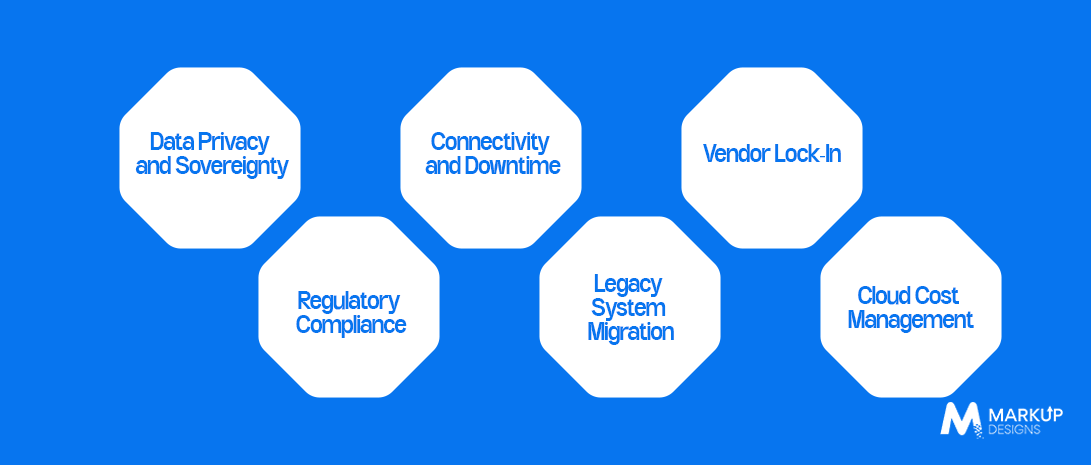
The application of cloud computing technology can help businesses perform better, yet migrating existing IT infrastructure into the cloud can also create some difficulties. Being aware of those issues will make it possible for businesses in Kuwait to manage the process of cloud computing implementation in a more efficient manner.
Data Privacy and Sovereignty
A number of companies can keep customer, financial, employee, and other personal data within cloud environments. Therefore, they should know about the location of such data, people who have access to it, as well as regulations related to its collection, processing, and storage.
Regulatory Compliance
Businesses operating in regulated industries can have to comply with certain legal regulations concerning data protection, cybersecurity, records management, and cloud computing in general.
Connectivity and Downtime
Network connection is key to the availability of cloud services. Slow connection speeds or network failures at either end can result in downtime in terms of application usage and access to the company’s information.
Legacy System Migration
There are some companies that still use older software that has not been developed to work in cloud settings. Transferring them into the cloud environment can result in complications.
Vendor Lock-In
Vendor lock-in happens if a business becomes dependent on one service provider’s technology, services, and applications. Changing service providers in the future could prove difficult and costly.
Cloud Cost Management
Despite saving money on infrastructure costs, companies can find themselves having higher costs because of unused services, storage needs, data transfer fees, or misconfiguration of services.
How Markup Designs Helps Businesses Adopt Cloud Solutions
Selecting the right cloud solution depends on a clear understanding of your business objectives, the current information technology infrastructure in place, and future business needs. At Markup Designs, we assist our clients in discovering various cloud technologies that will work within their everyday operations and future development plans. We can help with cloud strategy planning, application development, migration plans, system integration, and technical support.
We start by understanding your needs first, before suggesting the right solution. The objective here is to help you select the right solution that will fit within your budget and meet your needs. Whether it is about migrating an existing application or developing a new cloud application, our goal is to make the technology easy to manage and helpful to your business.
We also pay attention to issues related to data security, system performance, scalability, and other compliance requirements. Having the right cloud strategy for your business in Kuwait will be very important as it will help you to become more flexible and effective in managing your digital processes.
Ready to Move Your Business to the Cloud?
Cloud adoption can help simplify IT operations and create room for growth when planned properly. Connect with Markup Designs to discuss your requirements and explore the right cloud approach for your company.

Conclusion
Cloud computing is considered a promising option for improving the performance of information technology, handling the information of enterprises, and responding to the changes in the environment. The advantages of the use of cloud computing by Kuwaiti enterprises might include flexibility of resources, decreased dependence on physical facilities, increased possibility of collaboration, and fast deployment of applications.
At the same time, for the effective introduction of cloud technology into businesses’ operations, there is a need to have a strategic approach to its implementation. The issues that should be taken into account in choosing a cloud technology include issues of the protection of data, compliance with regulations, network problems, migration issues, as well as cost-related aspects. The choice of cloud service and cloud deployment models may also play an important role in implementing cloud technology.
The most effective way of introducing the technology is to set business priorities, perform an evaluation of the current information system, prioritize security issues, and implement the workload gradually, ensuring regular monitoring and planning of the recovery process.
FAQs
1. What are cloud computing solutions?
Cloud computing solutions allow businesses to access computing power, storage, software, and other IT resources over the internet. They reduce the need to manage all infrastructure on-site and allow companies to select resources according to their requirements.
2. What are the main benefits of cloud computing for businesses in Kuwait?
Key benefits include flexible resource usage, easier collaboration, faster deployment, data backup options, and reduced dependence on physical infrastructure. Actual savings and performance improvements depend on the services selected and how they are managed.
3. How much do cloud computing solutions cost in Kuwait?
The cost depends on factors such as storage capacity, computing requirements, number of users, security needs, migration work, and ongoing support. Businesses should compare provider pricing, data transfer charges, and management costs before preparing a budget.
4. Are cloud computing solutions secure for businesses in Kuwait?
Cloud solutions can provide security features such as encryption, identity controls, monitoring, and backup services. However, security also depends on proper configuration, access management, provider selection, and the customer’s own responsibilities.
5. How can businesses choose the right cloud service provider?
Businesses should compare security capabilities, service reliability, pricing, support quality, integration options, data location, and relevant compliance requirements. They should also review contract terms and understand how they can retrieve or move their data if their needs change.
Author's Perspective
Cloud computing is not just about moving data or applications to the internet. It is about choosing technology that helps a company work more efficiently and prepare for future needs. For businesses in Kuwait, a successful cloud strategy should balance flexibility, security, cost control, and regulatory responsibilities. Instead of moving every system at once, companies can begin with clear priorities, test their approach, and expand as they gain experience. Careful planning, regular monitoring, and the right technical support can help businesses get lasting value from their cloud investments.
Discuss Your Project NowAjit Kumar Jha
VP - Business Operations
Related Posts
How Cloud Product Development Helps Businesses Build Faster...
Cloud Services Company in Kuwait: Benefits, Solutions &...
How is DevOps Charting a New Model for...
Insights Are Valuable & Execution is Priceless
You’ve read about the digital future. Now, let’s build the infrastructure to take you there. Move your strategy from the page to the product.
Design Your Solution Now
Contact Us
Schedule The Appointment At Your Convenience Date And Time.
30 Min
Web Conference
Time Zone
Indian standard time (08:30pm)

Thanks For Getting In Touch!
You’ve Taken The First Step Toward Transforming Your Digital Presence. Our Experts Will Reach Out Shortly To Take It Forward.
Launch Your Dream Project
Provide a brief overview of your project, and our specialists will evaluate your requirements. We will connect with you to explore how the right digital solutions can help you launch faster.