

In Brief
- In Oman, digital transformation aids businesses in enhancing their operational efficiency, reducing the amount of manual work undertaken, and managing their resources more efficiently.
- Technologies like artificial intelligence, cloud technology, automation, and data analysis aid in better decision making and performance of businesses.
- Industries like banking and financial services, oil and gas, healthcare, retail, logistics, etc., are adopting digital technologies to enhance their services and streamline their processes.
- Organisations will need to face obstacles such as cybersecurity risks, problems with old systems, cost of implementation, and lack of digital skills.
- A well-defined digital transformation strategy that meets the requirements of business goals and Oman’s Vision 2040 will aid organisations to enhance the competitiveness of their businesses and maintain competitiveness.
Digital transformation operates in a way that business functioning and service provision change in Oman, as companies implement technologies like cloud computing, artificial intelligence, business automation, and data analytics that streamline processes and improve service provision.
Moreover, this change is connected with digitalization strategies in Oman aimed at achieving economic diversification, innovation, and developing a knowledge-based economy according to Vision 2040.
Nevertheless, implementing innovative technologies will not bring benefits unless businesses find out how to fill operational gaps, choose appropriate solutions, and make sure that workers are able to operate new technologies. From routine process automation to enhanced user experience and data-driven decision-making, there are many ways in which digital transformation may add business value if approached properly. Thus, understanding the concept of digital transformation, its drivers, industries, challenges, and implementation techniques may help businesses in Oman to make the right investments.
What Is Digital Transformation and Why Does It Matter for Businesses in Oman?
Digital transformation refers to the use of digital technologies in order to enhance business processes, user experience, and decision-making. This approach allows modern companies in Oman to adapt to changes in the market and operate more efficiently.
The Role of Digital Technologies in Modern Business Operations
Digital technologies allow businesses to substitute repetitive manual activities with automated routines, coordinate the efforts of different departments, and control information flow more efficiently.
Tools such as cloud platforms, enterprise software, and automation systems improve coordination and give teams better access to the information they need.
Oman’s Vision 2040 and the Push Towards Digitalisation
The Vision 2040 of Oman encourages economic diversification, innovation, and the creation of a knowledge-based economy. Digital transformation facilitates the achievement of these goals through the adoption of new technologies, increased efficiency, and provision of digital services.
How Digital Transformation Supports Business Competitiveness
By adopting the right digital solutions, businesses can meet customer requirements faster, deliver better-quality services, and make better decisions. The capabilities mentioned here help organisations establish themselves in the market while adapting to changes in customer demands and the industry.
How Is Digital Transformation Driving Business Growth in Oman?
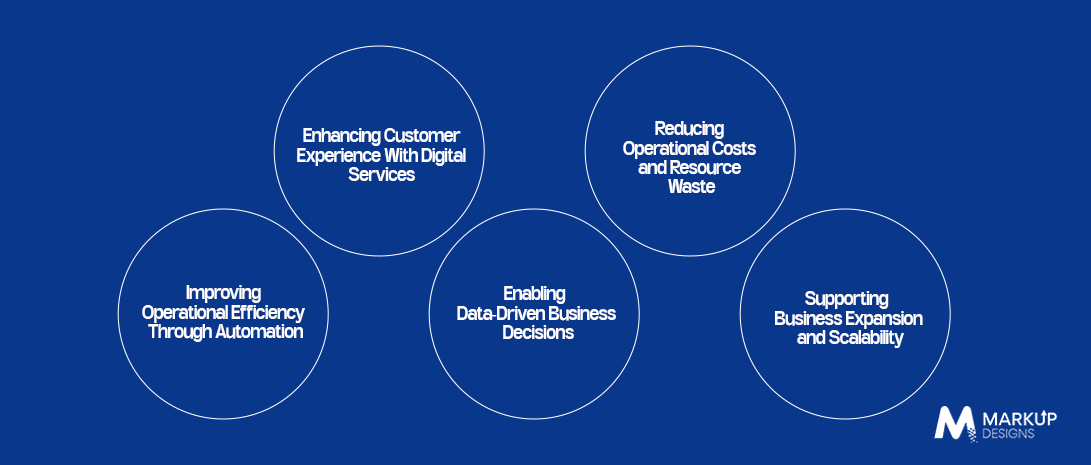
Digital transformation assists in the improvement of business operations, engagement with customers, and management of resources. With proper alignment with business goals, digital solutions can facilitate the identification of business opportunities and the scaling of operations in Oman.
Improving Operational Efficiency Through Automation
Automation leads to a reduction in the time spent by employees on performing repetitive tasks such as data entry, invoicing, and report making. Employees can then focus on more productive activities.
Enhancing Customer Experience With Digital Services
Digital services such as mobile apps, websites, and customer service enable customers to conveniently access their services and engage in various transactions. Businesses can take advantage of these platforms to make customers’ lives easier by providing convenient services and responding to customer inquiries effectively.
Enabling Data-Driven Business Decisions
Data analysis helps businesses see different trends and assess their own performance, as well as customer behavior. Making decisions based on reliable data rather than assumptions allows for better planning and investments.
Reducing Operational Costs and Resource Waste
With digital services, there will be less paperwork, fewer duplicated actions, and effective use of the employees’ time and other resources. In the long run, these actions will lead to reduced operating costs, but how much will depend on the implementation costs.
Supporting Business Expansion and Scalability
With cloud technologies and comprehensive business systems, an organisation is capable of expanding its capacity and adding users and services without changing its technological infrastructure.
Which Technologies Are Driving Digital Transformation in Oman?
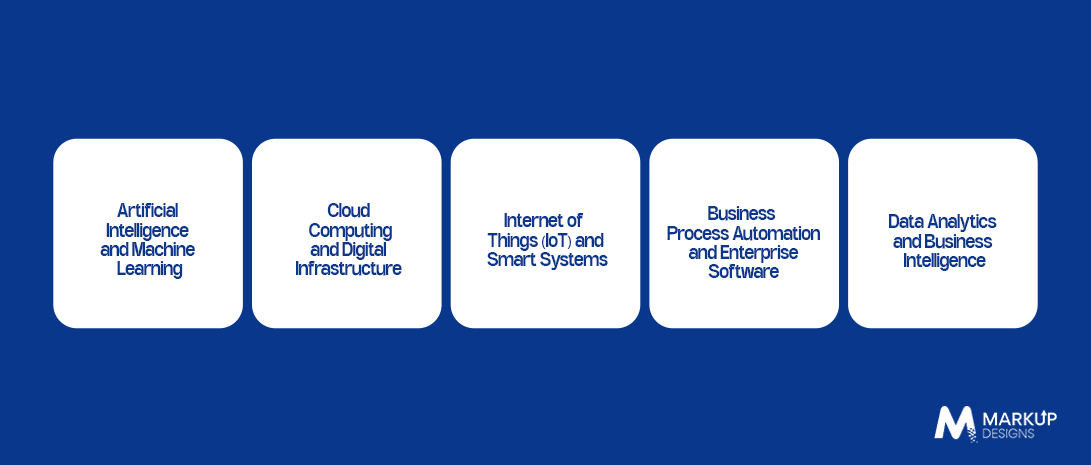
Businesses in Oman may deploy various technological tools to modernize their operations and optimize service delivery. However, the proper combination of technologies is determined by organizational needs and requirements, infrastructure, financial constraints, etc.
Artificial Intelligence and Machine Learning
Applications of artificial intelligence (AI) and machine learning include business analysis of large datasets, automation of certain processes, and identification of trends for efficient decision-making. For example, applications of AI and machine learning are customer service chatbots, demand forecasting, fraud detection, and predictive maintenance.
Cloud Computing and Digital Infrastructure
Cloud computing allows businesses to access computing capabilities, cloud storage, and various software services over the Internet. It can minimize the need for local IT infrastructure, facilitate collaboration, and facilitate scaling of digital services in accordance with evolving business needs.
Internet of Things (IoT) and Smart Systems
Internet of Things (IoT) represents physical objects and devices used to gather and exchange data. Businesses in certain sectors, including logistics, manufacturing, and energy, can utilize smart systems to track operations, monitor devices, and schedule maintenance activities.
Business Process Automation and Enterprise Software
Tools of business process automation and enterprise systems assist organizations in organizing their operations, including accounting, inventory management, procurement, and human resource management.
These solutions reduce manual effort and improve visibility across departments.
Data Analytics and Business Intelligence
Data analytics and business intelligence tools turn operational and customer data into useful reports and insights. Businesses can use dashboards and performance indicators to track targets, identify inefficiencies, and evaluate the results of their digital initiatives.
Which Industries in Oman Are Benefiting From Digital Transformation?
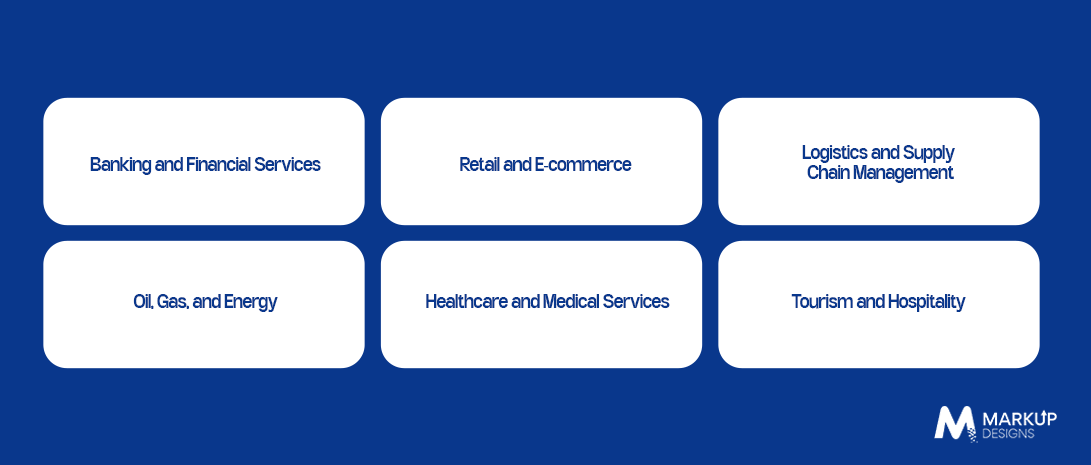
Transforming processes with the help of digitalization is possible in numerous areas of the Omani economy. In each area, there are some specifics associated with the particularities of the work, customer demands, and the use of various technological instruments.
Banking and Financial Services
Financial organizations utilize digital solutions to perform online transactions, conduct mobile banking operations, verify clients, and detect fraud. Thus, such technologies contribute not only to better accessibility but also to managing risks and improving controls at institutions.
Oil, Gas, and Energy
With the help of sensors and IoT solutions, as well as with the help of predictive maintenance and data analysis, energy organizations may track equipment and manage operations to increase efficiency in using the available resources.
Retail and E-commerce
With the adoption of platforms for e-commerce, payment system, and inventory management, it is possible to connect online and offline business processes, manage stocks and know better purchasing patterns of consumers.
Healthcare and Medical Services
Medical institutions are able to implement such technologies as electronic health records, appointment management software, and telemedicine solutions. It is important to remember security and healthcare data regulations when dealing with patient information.
Logistics and Supply Chain Management
Online tracking, route optimization, and inventory management enable logistics firms to track their shipments and facilitate deliveries. Increased visibility in supply chain networks is useful in mitigating delays, enhancing planning, and responding to interruptions.
Tourism and Hospitality
Travel agencies, hotels, and other tourism/hospitality businesses can utilize online booking systems, customer relationship management software, and digital payment services to make it easier for them to handle customer relations and bookings.
What Are the Key Challenges of Digital Transformation in Oman?
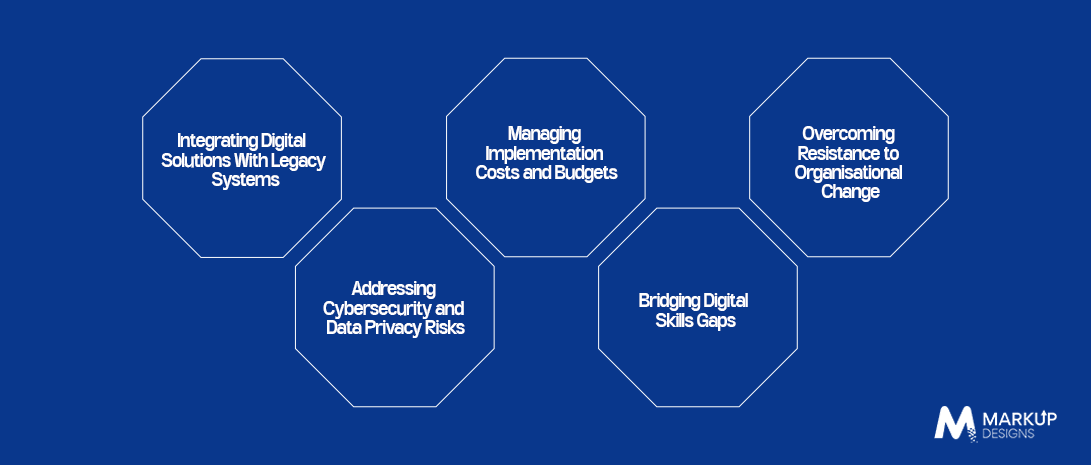
Even though it has many benefits, digital transformation calls for proper planning, investments, and coordination within organizations in order to overcome the technical and operational barriers that prevent successful implementation of the transformation process.
Integrating Digital Solutions With Legacy Systems
Outdated software programs may not be compatible with modern-day applications and may not have the capability of exchanging information with current systems. Organizations need to evaluate the old software programs and prepare for any necessary integration and data migration.
Addressing Cybersecurity and Data Privacy Risks
The integration of connected systems can lead to cybersecurity issues that may include unauthorized access and hacking, among others.
Businesses need appropriate access controls, encryption, security monitoring, employee awareness, and data protection practices suited to their operations.
Managing Implementation Costs and Budgets
Infrastructure, software development, training, integration, and maintenance will lead to higher costs associated with digital transformation. To avoid unnecessary spending, organizations need to focus on high-impact projects and implement changes gradually in order to assess returns from such changes.
Bridging Digital Skills Gaps
Workers may not have the right skills for the efficient use of new systems and technologies. Companies should develop the necessary skills by providing employees with appropriate training and guidance.
Overcoming Resistance to Organisational Change
Employees may be unwilling to work with new technologies due to changes in responsibilities. Effective communication, employee participation, and training will enable explaining the purpose and necessity of such changes.
How Can Businesses in Oman Implement a Successful Digital Transformation Strategy?
A successful digital transformation strategy will combine technological investment and its application in terms of certain priorities of the organization. Therefore, organizations need to start from their requirements, select appropriate solutions, and evaluate their efficiency.
Identify Business Needs and Set Measurable Goals
Understand the business processes in need of change, such as delayed delivery of services, cumbersome reporting, or disparate business processes. Set measurable objectives like faster processing, improved response rates, or reduced cost to measure the value of the undertaking.
Assess Existing Systems and Digital Readiness
Undertake an evaluation of the current software, hardware, quality of data, skills of employees, and security practices before considering new technologies for your business. This process helps organisations identify integration needs, resource limitations, and possible risks early on in the planning process.
Choose the Right Technologies and Solutions
Pick up technologies to solve the business problems and suit your budgets and infrastructure requirements and future expansion plans. Consider functionality, integration capability, security considerations, scalability, and vendor support before making a commitment.
Develop a Phased Implementation Roadmap
Plan the technology transformation process in phases, beginning with projects that solve critical business needs and provide visible benefit. Assign responsibilities, plan out the time frame, and test your solutions before broader implementation.
Train Employees and Encourage Digital Adoption
Train staff based on roles and give them detailed instructions regarding the effects of new systems on their jobs. Get their feedback during implementation and offer support to help solve any usability problems.
Monitor Performance and Continuously Optimise
Measure agreed performance metrics to evaluate progress made in relation to productivity, costs, customer satisfaction, and service delivery. Use this information to discover any deficiencies and decide which digital activities need to be enhanced or scaled up.
How Can Businesses Choose the Right Digital Transformation Partner in Oman?
The criteria for selecting the best digital transformation partner cannot be limited to the technical skills of the company and pricing. The best partner is one who can provide an understanding of business needs and implement appropriate technologies.
Evaluate Technical Expertise and Industry Experience
See the experience of the vendor in working with technologies and business systems that you need. It is important that they can deliver what you want based on your requirements. Case studies and client references can help establish whether the team can translate business requirements into practical solutions.
Test the Ability to Integrate and Customise
A proper partner would be able to integrate a solution into existing software and provide customisation of functionality according to individual business needs. Thus, businesses would be able to avoid replacing their systems and use digital tools for their actual work processes.
Check Data Security and Compliance with Regulations
It is vital to check the policy on data protection, access rights, encryption, testing, and risk management of the provider. At the same time, the solution offered by the provider should comply with applicable Omani laws for the business and its data processing activities.
Think About Scalability, Support, and Added Value
It is essential to find a provider who can help with upgrades, system scaling, troubleshooting, and maintenance. The total cost of ownership should be compared between the providers, rather than making a choice based only on prices.
How can Markup Designs assist business organisations in Oman in Digital Transformation?
Markup Designs assists businesses in finding digital solutions that suit their operational needs and business goals. It does not matter whether the organisation needs custom software development and enterprise systems integration, AI-powered applications, or cloud-based services.
Ready to Accelerate Your Digital Transformation in Oman?
Modernise your business operations with digital solutions tailored to your goals. Connect with Markup Designs to discuss your requirements and identify the right approach for your next stage of growth.

Conclusion
Digital transformation is assisting businesses in Oman in enhancing their operational efficiency, strengthening customer experiences, and adapting to market changes. Technologies like AI, cloud computing, automation, and data analytics provide businesses with the possibility to enhance business performance by utilizing them based on specific needs. However, the successful implementation of digital technologies requires proper planning, employee engagement, security, and the appropriate choice of the technology provider. Businesses in Oman can take advantage of phased approaches for the achievement of certain goals through the creation of digital competencies.
FAQ
1. What is digital transformation, and how does it benefit businesses in Oman?
Digital transformation implies the use of digital technologies for business process optimization, service improvement, and better decision-making. Digital transformation in Oman allows businesses to reduce manual labor, enhance customer experience, manage resources better, and expand.
2. How is Oman’s Vision 2040 assisting digital transformation?
Vision 2040 of Oman encourages economic diversification, innovation, and establishment of a knowledge-based economy. These objectives can be reached with the assistance of digital technologies because of their ability to increase productivity and create business models.
3. Which industries will get the most out of digital transformation in Oman?
In Oman, banking, oil and gas, healthcare, retail, logistics, and tourism are some industries that could benefit from digital transformation. The exact impact would depend on the needs of the industry and the technologies involved.
4. Which technologies are needed for digital transformation of businesses in Oman?
The common technologies used in digital transformation in Oman include cloud computing, artificial intelligence, automation of business processes, enterprise software, Internet of Things (IoT), and data analytics. It is not necessary for businesses to adopt all available technologies; they need to use the right ones for their objectives, existing systems, and available resources.
5. What are the main digital transformation challenges faced by businesses in Oman?
The common digital transformation challenges include legacy system integration, high implementation cost, cybersecurity risks, skilled personnel shortages, and organizational changes. Setting clear objectives and phased implementation, together with proper staff training, will assist organizations in handling such challenges.
Author's Perspective
Businesses get value from digital transformation only when technology solves their existing problem rather than complicates it. For businesses in Oman, the priority should be to identify operational gaps, invest in suitable digital capabilities, and measure the outcomes of each initiative. A well-planned approach, supported by the right expertise and ongoing optimisation, can help organisations improve efficiency and remain competitive as the market evolves.
Discuss Your Project NowJupinder Singh Arora
Founder and CEO
Related Posts

Digital Transformation for Government Services in Kuwait: Key...

Why Businesses in Oman Need Digital Transformation Services

Digital Transformation in Financial Services: Trends, Benefits &...
Insights Are Valuable & Execution is Priceless
You’ve read about the digital future. Now, let’s build the infrastructure to take you there. Move your strategy from the page to the product.
Design Your Solution Now
Contact Us
Schedule The Appointment At Your Convenience Date And Time.
30 Min
Web Conference
Time Zone
Indian standard time (08:30pm)

Thanks For Getting In Touch!
You’ve Taken The First Step Toward Transforming Your Digital Presence. Our Experts Will Reach Out Shortly To Take It Forward.
Launch Your Dream Project
Provide a brief overview of your project, and our specialists will evaluate your requirements. We will connect with you to explore how the right digital solutions can help you launch faster.