
In Brief
- DevOps is reshaping cloud development by combining development, operations, automation, and continuous delivery within a unified workflow.
- Cloud environments make it easier to automate infrastructure, testing, deployment, scaling, and resource management.
- Practices such as CI/CD, Infrastructure as Code, containers, and automated testing help teams deliver cloud applications faster and more consistently.
- DevSecOps brings security into the cloud development lifecycle through automated security checks, access controls, and continuous monitoring.
- Emerging approaches such as AI-assisted DevOps, GitOps, platform engineering, and AIOps are further changing how cloud applications are developed and managed.
Cloud development has changed how businesses build, deploy, and scale software, but managing cloud environments efficiently requires more than simply moving applications to cloud infrastructure. Development teams need repeatable processes for code integration, testing, infrastructure provisioning, deployment, monitoring, and updates. This is where DevOps provides a structured approach by bringing development and operations closer together and automating key stages of the software delivery lifecycle.
The combination of DevOps and cloud computing is creating a more continuous and automation-driven model for application development. Cloud platforms provide scalable infrastructure and on-demand resources, while DevOps practices such as CI/CD, Infrastructure as Code, containerisation, and continuous monitoring help teams use these resources more efficiently. As cloud-native architectures, DevSecOps, platform engineering, and AI-assisted operations continue to evolve, DevOps is becoming an important part of how modern cloud-native applications are developed, deployed, secured, and maintained.
Understanding the Relationship Between DevOps and Cloud Development
What Is DevOps?
DevOps is a software development approach that brings development and operations teams together through collaboration, automation, continuous integration, testing, deployment, and monitoring. It helps organisations create repeatable processes for delivering and managing applications.
What Is Cloud Development?
Cloud development involves building, testing, deploying, and managing applications using cloud-based infrastructure and services. It allows teams to access computing resources, databases, storage, networking, and other services without relying entirely on physical infrastructure.
How DevOps and Cloud Work Together
Cloud platforms provide the infrastructure and services, while DevOps provides the processes and automation used to manage software delivery. Together, they support automated deployments, scalable infrastructure, continuous testing, monitoring, and faster application updates.
Why DevOps Is Changing the Cloud Development Model
Faster Development and Release Cycles
Automated development and deployment workflows help teams move code from development to production more quickly and consistently.
Automated Software Delivery
DevOps automates repetitive tasks such as builds, testing, deployments, and infrastructure changes, reducing manual intervention.
Scalable Cloud Infrastructure
Cloud resources can be provisioned and scaled according to application requirements, while DevOps practices help manage these changes consistently.
Continuous Integration and Continuous Delivery
CI/CD pipelines allow developers to integrate code regularly, run automated tests, and deliver validated changes through structured release processes.
Infrastructure as Code
Infrastructure can be defined and managed through code, making cloud environments easier to reproduce, update, and control.
Improved Collaboration Across Teams
Shared workflows, tools, and monitoring bring development, operations, security, and other technical teams closer together.
Reduced Manual Operations
Automation reduces repetitive infrastructure and deployment tasks, allowing teams to focus more on application improvements and operational requirements.
How DevOps Is Transforming the Cloud Development Lifecycle
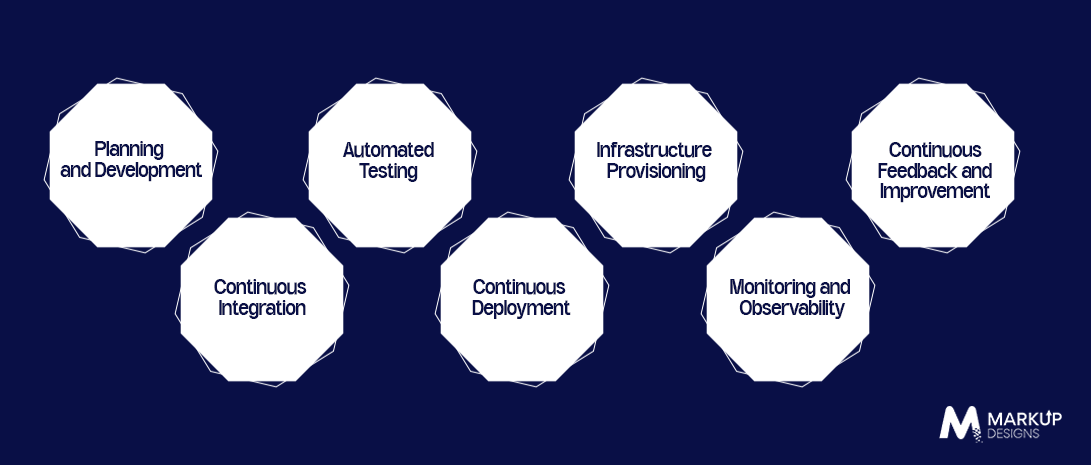
Planning and Development
Teams define application requirements, architecture, infrastructure needs, and development workflows before implementation begins.
Continuous Integration
Code changes are regularly integrated into shared repositories and automatically validated through builds and tests.
Automated Testing
Automated functional, integration, security, and performance tests help identify issues earlier in the development cycle.
Continuous Deployment
Validated code can be deployed through automated pipelines, reducing manual release processes and improving deployment consistency.
Infrastructure Provisioning
Cloud infrastructure can be created, configured, and updated through automated processes and Infrastructure as Code.
Monitoring and Observability
Teams monitor application performance, infrastructure health, logs, metrics, and user activity to identify operational issues.
Continuous Feedback and Improvement
Monitoring results, testing outcomes, and user feedback help teams identify improvements and continuously refine applications and infrastructure.
Key DevOps Practices for Cloud Development
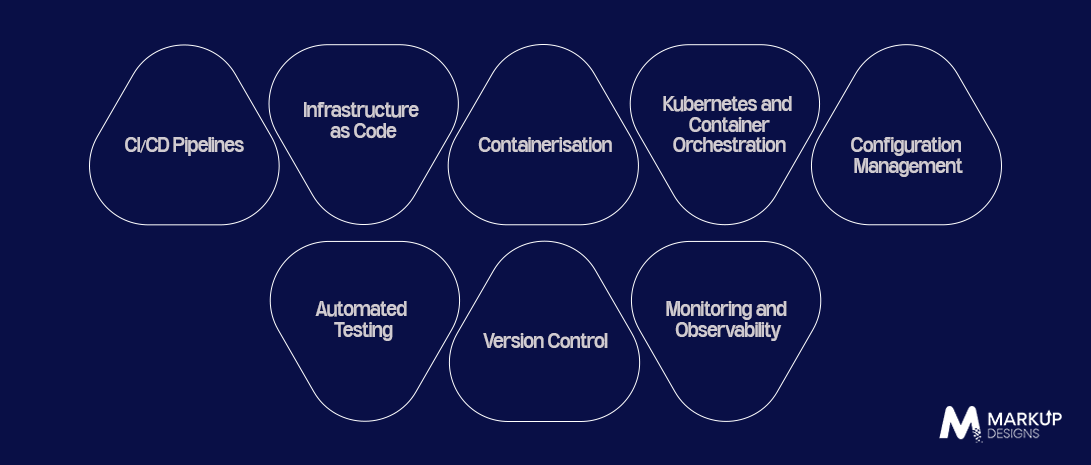
CI/CD Pipelines
Automate code integration, testing, deployment, and release workflows to create a consistent software delivery process.
Infrastructure as Code
Define cloud infrastructure through code to improve consistency, version control, and repeatability.
Containerisation
Package applications and their dependencies into containers to support consistent development, testing, and deployment across environments.
Kubernetes and Container Orchestration
Use Kubernetes and similar platforms to deploy, manage, scale, and monitor containerised applications.
Configuration Management
Manage system and application configurations consistently across development, testing, staging, and production environments.
Automated Testing
Integrate automated testing into development and CI/CD pipelines to identify defects before applications reach production.
Version Control
Use version control systems to manage source code, configuration files, infrastructure definitions, and development changes.
Monitoring and Observability
Collect logs, metrics, traces, and other operational data to understand application behaviour and identify issues.
Role of DevSecOps in Cloud Development
Security From the Development Stage
Integrate security requirements into development and deployment workflows instead of treating security as a separate final-stage activity.
Automated Security Testing
Use automated vulnerability scanning, code analysis, dependency checks, and other security tests within development pipelines.
Identity and Access Management
Control access to applications, cloud resources, development tools, and infrastructure based on defined permissions and roles.
Vulnerability Management
Identify, prioritise, and address vulnerabilities across application code, dependencies, containers, and cloud infrastructure.
Compliance and Policy Automation
Automate applicable security policies and compliance checks to help maintain consistent controls across cloud environments.
Technologies Powering Cloud DevOps
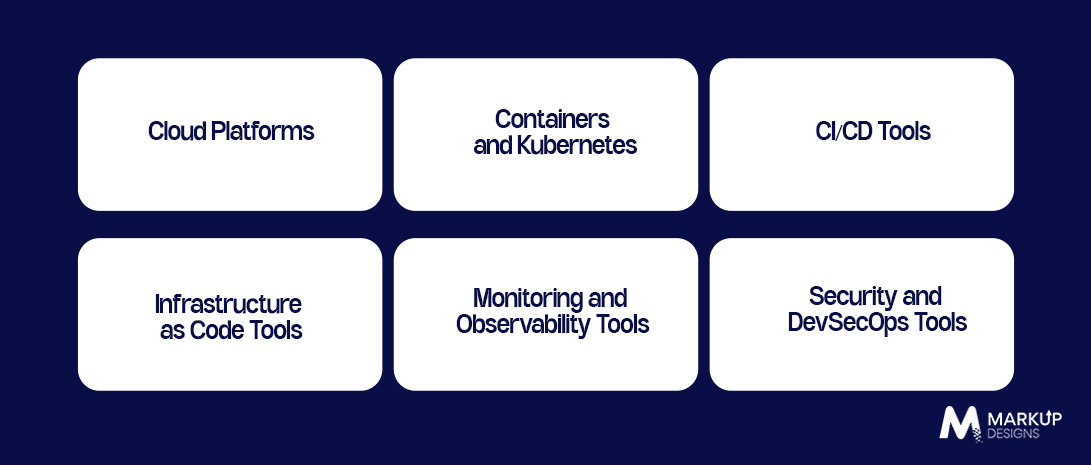
Cloud Platforms
Platforms such as AWS, Microsoft Azure, and Google Cloud provide infrastructure, storage, databases, networking, monitoring, and other cloud services.
Containers and Kubernetes
Docker and Kubernetes support containerised application development, deployment, orchestration, and scaling.
CI/CD Tools
Tools such as Jenkins, GitHub Actions, GitLab CI/CD, and Azure DevOps can automate software delivery pipelines.
Infrastructure as Code Tools
Terraform, AWS CloudFormation, and Ansible can help automate infrastructure provisioning and configuration.
Monitoring and Observability Tools
Tools such as Prometheus, Grafana, Datadog, and cloud-native monitoring services help teams monitor applications and infrastructure.
Security and DevSecOps Tools
Security scanning, secrets management, identity, vulnerability management, and policy tools can be integrated into DevOps pipelines.
Benefits of a DevOps-Driven Cloud Development Model
Faster Time to Market
Automation and continuous delivery can help teams release tested application updates more efficiently.
Greater Scalability
Cloud infrastructure and automated provisioning make it easier to accommodate changing application workloads.
Improved Application Reliability
Continuous testing, monitoring, and repeatable deployment processes can improve consistency and reduce operational issues.
Better Resource Utilisation
Automated infrastructure management helps teams provision and adjust cloud resources according to application requirements.
Reduced Deployment Risks
Automated testing and standardised deployment pipelines can reduce errors associated with manual releases.
More Efficient Infrastructure Management
Infrastructure as Code and automation provide greater consistency when creating and managing cloud environments.
Faster Issue Detection and Resolution
Continuous monitoring and observability help teams identify application and infrastructure issues earlier.
How DevOps Supports Cloud-Native Development
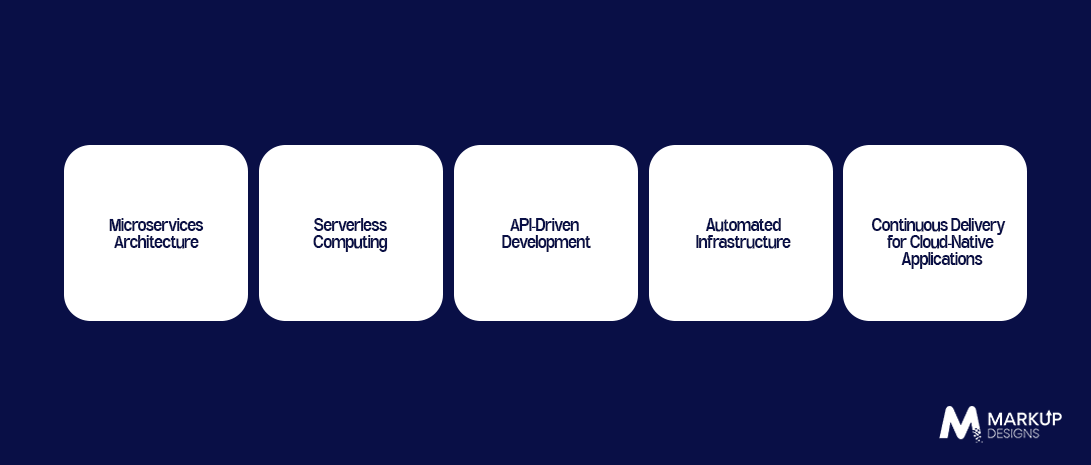
Microservices Architecture
DevOps practices support independent development, testing, deployment, and scaling of individual microservices.
Serverless Computing
Automated deployment and monitoring can help teams manage serverless applications without directly managing underlying servers.
API-Driven Development
DevOps workflows can automate the development, testing, deployment, and monitoring of APIs used across cloud applications.
Automated Infrastructure
Cloud-native infrastructure can be provisioned and updated automatically using Infrastructure as Code and deployment pipelines.
Continuous Delivery for Cloud-Native Applications
CI/CD enables frequent and controlled delivery of updates across cloud-native applications while maintaining automated testing and monitoring.
Read Also: Why Cloud is Essential for Successful Digital Transformation
Challenges of Implementing DevOps in Cloud Development
Toolchain Complexity
Managing multiple development, deployment, infrastructure, security, and monitoring tools can create operational complexity. Teams need a well-integrated toolchain that fits their workflows.
Skills and Talent Requirements
Cloud DevOps requires knowledge of cloud services, automation, CI/CD, containers, infrastructure, security, and monitoring. Organisations may need to upskill existing teams or bring in specialised expertise.
Security Risks
Cloud environments can introduce risks related to misconfigurations, access controls, exposed resources, and application vulnerabilities. Security needs to be integrated throughout the DevOps lifecycle.
Cloud Cost Management
Automated provisioning and scalable cloud resources can increase costs if they are not properly monitored. Teams need visibility into resource usage and appropriate cost controls.
Legacy System Integration
Existing applications may not be designed for automated deployment or cloud-native workflows. Integrating legacy systems with modern DevOps processes may require additional architecture and development work.
Cultural and Organisational Changes
DevOps involves changes to how development, operations, security, and other teams collaborate. Establishing shared responsibilities and processes can be as important as implementing the technology itself.
How to Implement a Cloud DevOps Strategy
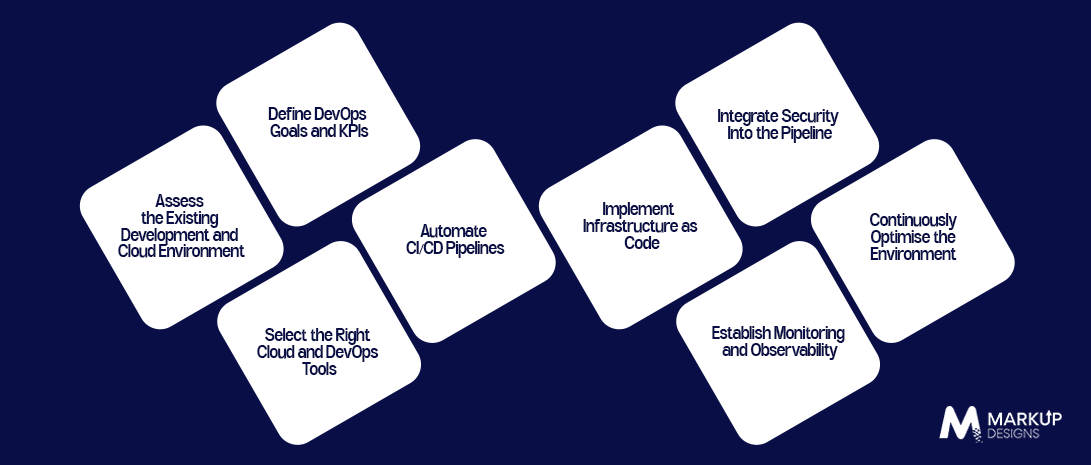
Step 1: Assess the Existing Development and Cloud Environment
Review current applications, infrastructure, development workflows, deployment processes, cloud resources, security controls, and operational challenges.
Step 2: Define DevOps Goals and KPIs
Set measurable objectives around deployment frequency, release time, reliability, recovery, infrastructure efficiency, and application performance.
Step 3: Select the Right Cloud and DevOps Tools
Choose cloud platforms and DevOps tools based on existing systems, technical requirements, team capabilities, security needs, and scalability objectives.
Step 4: Automate CI/CD Pipelines
Create automated workflows for code integration, builds, testing, approvals, and deployments to establish a consistent software delivery process.
Step 5: Implement Infrastructure as Code
Define and manage cloud infrastructure through code to make environments repeatable, version-controlled, and easier to update.
Step 6: Integrate Security Into the Pipeline
Include security testing, vulnerability scanning, access controls, secrets management, and policy checks within the development and deployment workflows.
Step 7: Establish Monitoring and Observability
Set up monitoring for applications, infrastructure, logs, metrics, traces, availability, and performance to support faster issue detection.
Step 8: Continuously Optimise the Environment
Review deployment performance, cloud usage, security findings, application behaviour, and team workflows regularly to identify areas for improvement.
Future of DevOps in Cloud Development
AI-Assisted DevOps
AI can assist with code analysis, test generation, incident investigation, deployment workflows, and operational recommendations.
AIOps and Intelligent Monitoring
AIOps can analyse operational data from applications and infrastructure to identify patterns, detect anomalies, and support incident management.
Platform Engineering
Platform engineering provides internal development platforms that simplify access to infrastructure, deployment tools, security controls, and standardised development workflows.
GitOps
GitOps uses Git repositories as a central source of truth for infrastructure and application configuration, supporting controlled and automated deployments.
Serverless and Event-Driven Architectures
DevOps practices can support the development and deployment of event-driven and serverless applications while reducing direct infrastructure management.
Edge and Distributed Cloud
As applications increasingly operate across cloud, edge, and distributed environments, DevOps practices can help manage deployments and infrastructure across multiple locations.
Automated Cloud Cost Optimisation
Automation and intelligent monitoring can help identify unused resources, optimise workloads, and manage cloud consumption more efficiently.
Modernise Cloud Development With DevOps
Adopt a structured DevOps approach to automate software delivery, strengthen cloud operations, improve visibility, and support scalable application development.

Conclusion
DevOps is changing the cloud development model by connecting development, operations, infrastructure, security, and monitoring through automation and continuous workflows. Practices such as CI/CD, Infrastructure as Code, containerisation, automated testing, and observability help teams build and manage cloud applications with greater consistency.
However, implementing DevOps requires more than adopting a set of tools. Organisations need to consider their existing infrastructure, team capabilities, security requirements, cloud costs, legacy systems, and development processes. A structured strategy can help businesses introduce automation gradually while creating a cloud environment that can adapt to changing application and operational requirements.
FAQ
1. What is the role of DevOps in cloud development?
DevOps helps automate and manage development, testing, deployment, infrastructure, monitoring, and operational processes within cloud environments.
2. How does DevOps improve cloud application development?
DevOps can streamline software delivery through CI/CD, automated testing, Infrastructure as Code, monitoring, and collaborative workflows.
3. What are the benefits of using DevOps with cloud computing?
Combining DevOps with cloud computing can support faster releases, scalable infrastructure, automated operations, improved monitoring, and more consistent deployment processes.
4. What DevOps tools are used for cloud development?
Common tools include GitHub Actions, GitLab CI/CD, Jenkins, Docker, Kubernetes, Terraform, Ansible, Prometheus, Grafana, and cloud-native DevOps services from major cloud providers.
5. Is DevOps required for cloud-native application development?
DevOps is not a mandatory requirement for every cloud application, but its practices can support the automation, continuous delivery, scalability, monitoring, and operational processes commonly associated with cloud-native development.
Author's Perspective
From a development perspective, DevOps should be treated as an ongoing operating model rather than simply a collection of automation tools. The right approach depends on the application’s architecture, cloud environment, team structure, security requirements, and business objectives. Starting with clearly defined workflows and gradually automating development, infrastructure, security, and monitoring can create a more manageable path toward efficient cloud operations.
Discuss Your Project NowJupinder Singh Arora
Founder and CEO
Related Posts

Green Cloud Computing: Sustainable Cloud Strategies for Modern...

Cloud Computing in Logistics: Building Smarter, Faster, and...
Cloud-Based App Development: Features, Benefits, and Cost Breakdown
Insights Are Valuable & Execution is Priceless
You’ve read about the digital future. Now, let’s build the infrastructure to take you there. Move your strategy from the page to the product.
Design Your Solution Now
Contact Us
Schedule The Appointment At Your Convenience Date And Time.
30 Min
Web Conference
Time Zone
Indian standard time (08:30pm)

Thanks For Getting In Touch!
You’ve Taken The First Step Toward Transforming Your Digital Presence. Our Experts Will Reach Out Shortly To Take It Forward.
Launch Your Dream Project
Provide a brief overview of your project, and our specialists will evaluate your requirements. We will connect with you to explore how the right digital solutions can help you launch faster.