
In Brief
- Hiring the best custom software development talent requires assessing technical skills, prior experience in your industry, viable security measures, and long-term support options, at least not solely by price.
- When assessing custom software development firms, businesses in Saudi Arabia should consider factors such as standing up to the Vision 2030 agenda, meeting data residency requirements, and ensuring compliance with local laws and regulations.
- There are different hiring models, such as employing developers internally, contracting, creating an outsourced team to work for you, or adding to your existing staff, and each of these models best suits specific business objectives and degrees of complexity of the project.
- Using a structured software development hiring process that includes conducting a requirements analysis and reviewing developer portfolios, completing a technical analysis of potential candidates, and overseeing a governance review will help to reduce project risks and increase project success.
- If you partner with an experienced custom software development firm, your business can use technology to enhance digital transformation, improve your operational efficiency, and create scalable solutions supporting long-term growth.
From evaluating technical expertise and industry experience to assessing security standards and development methodologies, businesses must carefully navigate the hiring process to ensure successful outcomes. This guide explores the key factors to consider when hiring custom software developers in Saudi Arabia, helping organizations make informed decisions and choose the right development partner for their digital transformation journey.
Why Saudi Businesses Are Reassessing Their Software Development Strategy
Saudi Arabia is undergoing a massive shift to digitisation, and all Saudi Businesses need to review their approach to how they create, manage, and scale technology solutions. Businesses are also concluding that generic or off-the-shelf software does not currently meet the business’s need for evolving business processes, security, and regulatory compliance. These factors have contributed to the rise in popularity of custom software development because it offers greater flexibility, control, and long-term benefits to the business.
Saudi Arabia’s Vision 2030 Accelerates Digital Transformation
Vision 2030 encourages all Saudi Businesses to adopt digital technology and innovation. From automating workflow processes to providing better customer satisfaction, companies are investing in software solutions to support their digital transformation initiative(s) while maintaining a competitive advantage in the rapidly changing marketplace.
The Demand For Custom Enterprise Software is Growing
Each Saudi Business has unique processes, challenges, and business growth plans. As the demand for custom software continues to grow, companies want to build solutions that match their specific operating requirements rather than adjusting existing workflows to adapt to branded software products.
Data Sovereignty and Regulatory Compliance
Due to an increase in concern over data protection and security, all companies must ensure that they meet all local regulations and industry standards when selecting or developing software.
Organizations can utilize custom software to increase their ability to put security protocols in place and have more control over what sensitive data about the business and its customers is monitored.
Why Off-the-Shelf Solutions are Not Sufficient Today
While off-the-shelf solutions may provide a relatively fast and easy way to get your project started, they come with limitations related to customization, integration, and scalability. If a business experiences growth, these limitations can cause operational inefficiency and hinder innovation, therefore, custom solutions are often a better financial investment for businesses.
The Need for Scalable and Secure Digital Infrastructure
As businesses continue to expand at an unprecedented rate, they require a software solution that is able to scale and grow with them while ensuring the solution continues to perform at a high level of security. Through custom software development, new digital ecosystems can be created to meet the needs of the current and future state of an organization and also be easily integrated with existing systems. Additionally, businesses may need to adapt to changes in the market; custom software development provides the flexibility to do this.
Enterprise Software Hiring Models: What Works Best?
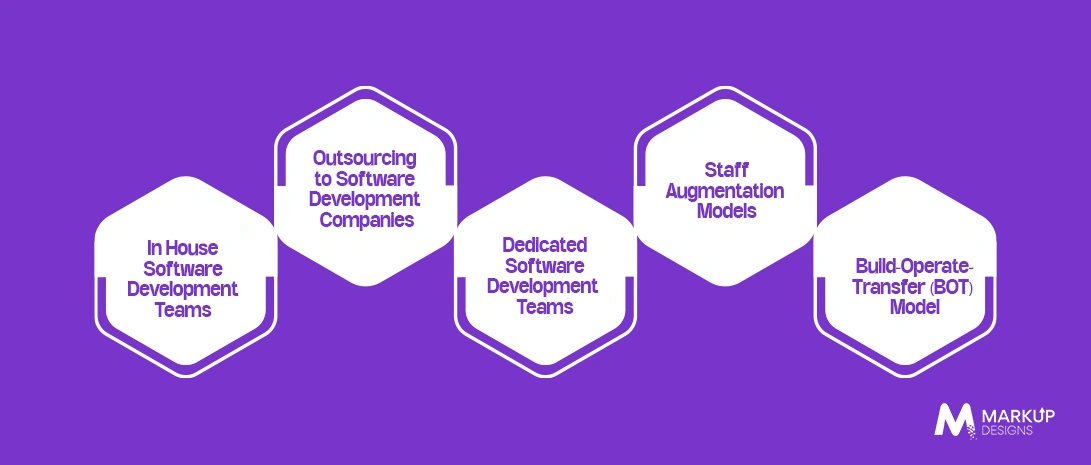
One of the most important decisions you will make in regards to building custom software will be what hiring model to use. When selecting the right hiring model, consider the following criteria; The type of project you are creating, budget, time frame to build the project, level of expertise needed and long-term business goals. By understanding how each hiring model works, organizations can make an informed decision and maximize their return on investment.
In-House Software Development Teams
In-house development teams consist of employees of your organization who work directly for you.
This type of model allows for maximum control of the project management, development, and communications aspect of an organization. Many times, companies use this type of approach because they have existing software needs; however, the expense associated with recruiting, salaries, training, and infrastructure is very large and may not benefit the organization.
Outsourcing to a Software Development Companies
Outsourcing to a software development company is a partnership with an external team that provides access to specialized skills and expertise. The outsourcing relationship allows organizations to avoid many of the challenges associated with hiring, increase the speed of development, and lower operational costs.
Dedicated Software Development Team
A Dedicated Model consists of teams of programmers, designers, and project managers who work exclusively for a company. This type of modeling combines the advantages of both outsourcing and in-house resources, making it a great option for businesses whose software needs continuously evolve.
Staff Augmentation Models
Staff augmentation is the process of adding qualified developers (staff) to existing teams for a fixed period of time based on a specific project/effect. Companies use the staff augmentation model to bridge a skill gap, find specialists that their current team lacks, or expand their current team’s capabilities temporarily to meet an impending project deadline.
Build-Operate-Transfer Model (BOT)
The Build-Operate-Transfer (BOT) Model is similar to the Staff Augmentation model in that the development partner will build and manage a software team or development operation on behalf of the client, but the BOT model is designed specifically for clients to eventually take control of the operations.
In most cases, corporations desire to set up a local development center (or “establish a presence”) in order to limit their overall risk level and lessen their operational complexities.
Choosing Your Business’s Best Hiring Model
There is no definitive answer to the question of how to hire developers for software projects. Before selecting a hiring model, companies should consider the various factors impacting their project, such as project scope, budget, internal capabilities, scalability requirements, and long-term goals. Selecting the appropriate model can help with efficiency and minimize risk, thus leading to the successful delivery of the final product.
Expense of Employing Software Developers in Saudi Arabia
The total cost of hiring software developers in Saudi Arabia to create a custom application can differ based on a variety of aspects, including the intricacy of the project, the necessary skill levels of the developer, the method of development used, etc. While some companies focus only on the initial (or upfront) costs associated with developing the application, it is extremely important to look at the full amount of money invested in developing the app, such as the costs for hardware, security, maintenance, and ongoing support. Knowing this information will enable businesses to prepare and budget effectively to avoid hidden or extra charges.
Factors Affecting Software Development Project Expense
There are multiple elements that have an impact on the overall cost of developing a software application, including project scope, level of functional complexity (e.g., does the application require a complicated user interface?), technology stack, level of developer experience, requirements for integration, and duration of the project.
One of the major factors is the features needed to be developed in order to create the software application(s) and how many of those features can be created using existing functionality.
Applications that require advanced features (e.g., AI-based features, cloud computing capabilities, real-time analytics, and enterprise-level integration) typically will require more time to develop and cost more to develop than applications that only require basic functionality, such as off-the-shelf solutions or simple websites.
Comparative Costs of Various Hiring Solutions
The selection of a hiring solution will directly affect the cost associated with delivering a project. The reason is that building an internal team usually incurs long-term costs that businesses will incur through their need to ‘recruit’, ‘pay wages’, ‘train’, and ‘build an IT Infrastructure’ over time. In contrast, outsourcing to companies that provide specialized skills will lower the ongoing cost of operations, while dedicated teams and/or staff augmentation methods provide an excellent trade-off between budget, flexibility, and control.
Infrastructure & Technology Costs
In addition to development costs, businesses also need to consider their overall technology-related cost after development has taken place (e.g., cloud hosting, database costs, software licensing costs, development tooling costs, test environment costs, and third parties that are integrated into their solutions). The total cost of technology will vary depending on the size and performance of the software being developed by the business.
Security & Compliance Costs
Businesses that operate in industries that are regulated must pay close attention to their security and compliance functions. Security and compliance measures normally increase initial development costs because of the need to protect data (i.e., ‘data protection’), use encryption protocols, use access control mechanisms for application security, conduct security testing, establish compliance frameworks, etc. Nonetheless, these measures will help to mitigate risk and ensure the future protection of sensitive data.
Long-Term Maintenance and Support Costs
The software development process does not stop when an application is deployed. Businesses must continue to update, fix any bugs that occur, optimize performance, enhance features and provide technical support for the application so that the application is maintained securely, reliably, and is continually aligned with the evolving needs of the business.
By factoring in the maintenance costs of a software project into the overall budget, you can ensure that the solution continues to provide value long after its initial launch.
Essential Skills to Look for When Hiring Custom Software Developers

When hiring a software development team, there is much more to it than assessing coding skills. The ideal development team will incorporate technical expertise with strategic thinking and collaboration skills to deliver solutions that are secure, scalable and business-focused. Here are the competencies that businesses should focus on as part of the hiring process.
Software Architecture and System Design
The strongest developers are able to design software solutions that are scalable, efficient, and maintainable. They have the ability to design robust architectures that fulfil current business requirements while accommodating future growth and changing needs.
Cloud and Infrastructure Expertise
As more applications continue to be developed in the cloud and leverage distributed infrastructures, developers who have previously worked in these types of environments will be able to build flexible solutions that offer improved performance, reliability and scalability, while at the same time, reducing operational costs.
Cybersecurity and Secure Development Practices
It is important to include security as part of all phases of the development process. When interviewing developers, look for developers that utilise secure coding practices, employ data protection methodologies, and have an understanding of how to discover and mitigate potential vulnerabilities in the product.
Enterprise Integration Knowledge
Companies generally use more than one type of software to run their business. A developer with enterprise integration knowledge knows how to connect applications, databases, and company systems together to provide for an uninterrupted flow of information and increase the efficiency of operations.
Development of APIs and Third-Party Integrations
APIs are an important part of today’s software ecosystem. Developers should have the ability to develop usable APIs that can be integrated with third-party services like payment gateways, CRM systems, analytics and cloud services without impact on the performance or security of the API.
Agile Development and Project Governance
Successful software projects are built upon a foundation of adaptability and structure. A developer who utilizes Agile methodology will be better suited to accommodate developing requirements, and a solid governance structure will maintain project quality, transparency, and delivery on time.
Collaboration and Documentation Skills
Being technically proficient is not enough. Developers should have the ability to document processes, convey clear messages to stakeholders, and collaborate well across multiple teams. A strong documentation process and team cohesiveness will minimize project risks and ensure long-term maintenance and scalability.
Step-by-Step Process to Hire Custom Software Developers in Saudi Arabia

Define the Business and Technical Announcements
The first step in developing custom software with a development partner is to identify the underlying issue you wish to address, as well as the expected results of that software. Creating clear business objectives, defining essential capabilities/features needed, identifying your target customers, and establishing clear performance metrics will set the foundation for the development partner search.
Develop Your Technical Stack and Desired Skill Sets
Different projects will require different technical skill sets. Knowing the type of technology you require – cloud applications, enterprise software, artificial intelligence, mobile solutions, etc. – can help narrow down which developers would be ideal for your project as well as assessing their technical capabilities.
Review Previous Projects and Case Studies
Investigating a company’s past projects gives you valuable insight into their capabilities, the quality of their development, and how successfully they have completed other projects. Pay particular attention to projects with applicable technical expertise and measurable results for businesses that are similar in nature to yours.
Assess the Security and Compliance Capabilities of the Development Partner
If your business deals with sensitive data, security is an even more critical evaluation criterion. Verify that any potential development partner uses secure development methods, as well as understanding relevant legal and regulatory compliance requirements.
Validate Industry-Specific Experience
Companies that have worked within your industry previously will frequently be more knowledgeable about the business issues involved with your business, the expectations of end users, and any compliance issues associated with your business. Utilizing a development partner that specializes in your industry will typically result in significantly less time spent onboarding and lower project-related risks.
Review the Development Methodologies and Governance Processes
Understanding how a development team executes and manages development projects is just as crucial as assessing the technical skill level of that team. Research Existing Development Methodologies, Report Processes, Quality Assurance Processes and Governance Frameworks.
Conduct Technical and Strategic Interviews
Get in front of the Development Team directly to review both their technical abilities and business capabilities. The topics discussed should include; their approach to solving problems, approaches to communication, their approach to projects, and their approach to executing projects.
Begin with Discovery Phase or Pilot Project
If you’re going to conduct a large-scale engagement with the Development team then you should consider a discovery workshop or pilot project as your starting point. The intention behind this is to evaluate the style which is used for working collaboratively, the quality of the deliverables produced from the project, and how effectively the Development team can meet your expectations in a lower-risk environment.
Consider Long-Term Support/Maintenance Plan
After the deployment of software, it will require continual updates, monitoring and improvement. Before finalizing a business relationship, you should clarify who will maintain the software, how, by whom, service level agreements, and plans for future scalability to ensure the overall success of the project.
Common Mistakes That Businesses Make When Hiring Software Developers
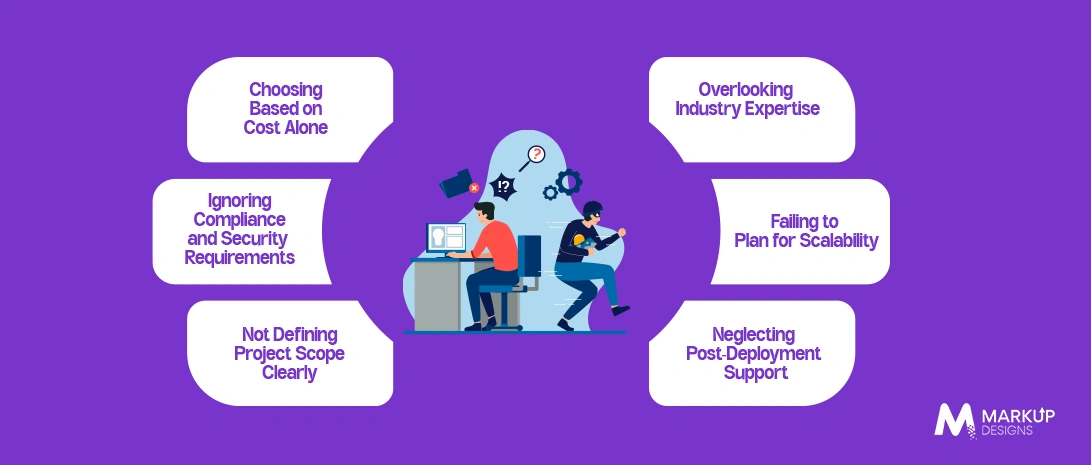
Hiring software developers is one of the most important decisions for a business. Many businesses tend to focus on their current needs rather than their long term needs. Even if the team you are looking to hire has the technical ability needed to successfully complete your project, if they’ve missed any of the key factors in your evaluating process, the team may have difficulty successfully delivering what you want. By being aware of these common mistakes, businesses can make better decisions in order to reduce the delay, budget overruns and failure of their projects.
Choosing Based on Cost Alone
While budget is an important consideration, selecting a development partner solely because they offer the lowest price can lead to poor code quality, missed deadlines, and expensive rework. Businesses should focus on overall value, expertise, and long-term reliability rather than upfront costs alone.
Ignoring Compliance and Security Requirements
Security and regulatory compliance should never be treated as afterthoughts. Failing to assess a developer’s ability to implement secure coding practices and comply with industry regulations can expose businesses to data breaches, operational disruptions, and legal risks.
Not Defining Project Scope Clearly
One of the most common causes of project delays and budget overruns is a lack of clearly defined requirements. Without a detailed project scope, misunderstandings can arise regarding features, timelines, deliverables, and expectations, leading to costly revisions later.
Overlooking Industry Expertise
Developers may have strong technical skills, but industry-specific knowledge often plays a major role in project success. Teams familiar with your sector can better understand business processes, compliance requirements, and user expectations, reducing development risks and improving efficiency.
Failing to Plan for Scalability
Many businesses focus on solving current challenges without considering future growth. Software that cannot scale efficiently may require significant redevelopment as user demands, transaction volumes, or business operations expand. Scalability should be a key consideration from the start.
Neglecting Post-Deployment Support
Successful software requires ongoing maintenance, updates, performance monitoring, and technical support after launch. Businesses that overlook post-deployment services may face prolonged downtime, unresolved issues, and increased operational risks. A reliable support strategy is essential for long-term software performance and stability.
Benefits of Hiring Custom Software Developers in Saudi Arabia
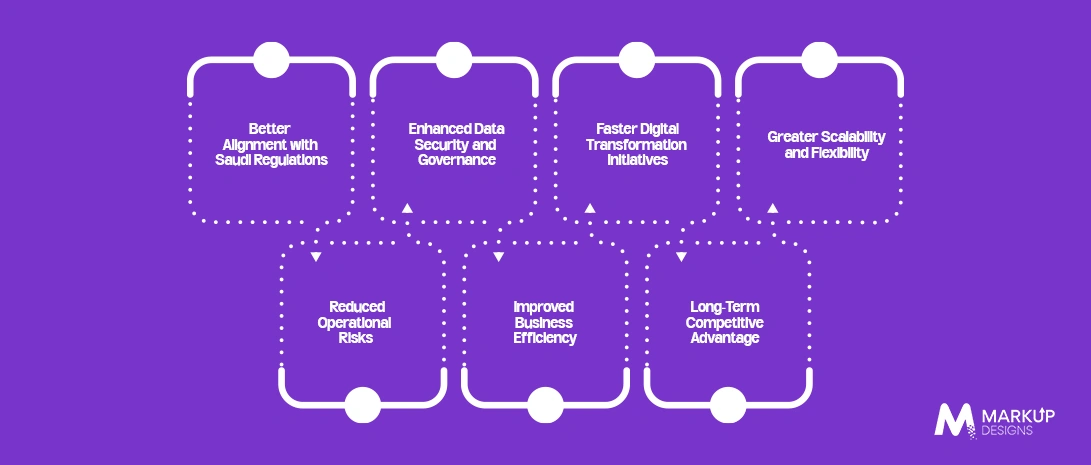
As businesses continue to embrace digital transformation, custom software has become a strategic investment rather than a technology expense. Hiring experienced custom software developers enables organizations to build solutions that align with their operational needs, regulatory requirements, and long-term growth objectives. Here are some of the key benefits businesses can gain from partnering with the right development team.
Better Alignment with Saudi Regulations
Custom software can be designed with local regulatory requirements in mind, helping businesses meet compliance standards while maintaining greater control over their data, processes, and operational workflows.
Enhanced Data Security and Governance
Unlike generic software solutions, custom applications can incorporate tailored security measures that address specific business risks. This enables stronger data protection, improved access control, and more effective governance of critical business information.
Faster Digital Transformation Initiatives
Custom software developers can create solutions that directly support business objectives, reducing reliance on manual processes and disconnected systems. This accelerates digital transformation efforts and helps organizations adapt more quickly to changing market demands.
Greater Scalability and Flexibility
Business requirements evolve over time, and custom software can evolve with them. Whether expanding operations, adding new features, or integrating emerging technologies, custom-built solutions provide the flexibility needed to support future growth.
Reduced Operational Risks
Custom applications are developed around specific business processes, reducing inefficiencies and minimizing the risks associated with incompatible systems, unnecessary features, or workflow limitations often found in off-the-shelf software.
Improved Business Efficiency
By automating routine tasks, streamlining workflows, and enabling seamless system integration, custom software helps teams work more efficiently and make better-informed decisions based on real-time data and insights.
Long-Term Competitive Advantage
Organizations that invest in custom software gain access to technology tailored to their unique goals and market requirements. This allows them to innovate faster, improve customer experiences, and differentiate themselves from competitors in an increasingly digital business environment.
How to Choose the Best Custom Software Development Company in Saudi Arabia
Selecting the right software development partner can significantly impact the success of your project. Beyond technical capabilities, businesses should evaluate a company’s experience, processes, security practices, and long-term commitment to ensure they can deliver solutions that align with both immediate requirements and future growth plans.
Evaluate Technical Expertise
A reliable development company should possess expertise across relevant technologies, frameworks, and platforms. Reviewing technical capabilities helps ensure the team can successfully build, integrate, and maintain the solution your business requires.
Review Industry Experience
Industry-specific knowledge can accelerate development and reduce project risks. Companies with experience in your sector are often better equipped to understand operational challenges, compliance requirements, and customer expectations.
Assess Security and Compliance Standards
Security should be a core consideration when evaluating potential partners. Look for development companies that follow secure coding practices, implement robust data protection measures, and understand applicable regulatory requirements.
Examine Development Processes and Governance
Well-defined development methodologies and governance frameworks contribute to project transparency and quality. Understanding how a company manages communication, quality assurance, reporting, and risk mitigation can provide valuable insight into project delivery capabilities.
Verify Client References and Success Stories
Case studies, testimonials, and client references offer evidence of a company’s ability to deliver successful outcomes. Reviewing previous projects can help assess technical proficiency, reliability, and overall client satisfaction.
Assess Long-Term Partnership Capabilities
Software development is often an ongoing journey rather than a one-time project. Consider whether the company can provide long-term support, future enhancements, and strategic guidance as your business and technology requirements evolve.
Compare Pricing and Value Delivered
While cost is an important factor, businesses should focus on the overall value offered by a development partner. Expertise, quality, scalability, support, and long-term reliability often provide greater returns than choosing the lowest-cost option.
Why Markup Designs Is a Trusted Custom Software Development Partner in Saudi Arabia
At Markup Designs, we help businesses transform ideas into powerful digital solutions that drive efficiency, innovation, and growth. Our team combines technical expertise, industry knowledge, and a client-focused approach to deliver software solutions tailored to the unique needs of modern organizations.
Expertise Across Multiple Industries
Our developers have experience working with businesses across diverse sectors, enabling us to understand industry-specific challenges and create solutions that deliver measurable business value.
End-to-End Software Development Services
From strategy and planning to development, testing, deployment, and support, we provide comprehensive software development services designed to support every stage of your digital transformation journey.
Enterprise-Grade Security and Compliance Focus
Security is integrated into every phase of our development process. We follow industry best practices to help businesses protect sensitive data, maintain compliance, and reduce operational risks.
Agile and Transparent Development Approach
Our Agile methodology promotes collaboration, flexibility, and continuous improvement. Clients benefit from regular updates, clear communication, and complete visibility throughout the development lifecycle.
Scalable Solutions Built for Growth
We develop software with future expansion in mind, ensuring applications can adapt to changing business requirements, increased user demand, and emerging technologies without compromising performance.
Dedicated Support and Continuous Improvement
Our commitment extends beyond project delivery. We provide ongoing maintenance, technical support, performance optimization, and feature enhancements to ensure long-term success and maximum return on investment.
Build Custom Software That Grows With Your Business
Hiring the right software developers can determine the success of your digital initiatives. Markup Designs combines technical expertise, industry knowledge, and agile development practices to deliver solutions that drive measurable business outcomes.

FAQs
1. How much does it cost to hire custom software developers in Saudi Arabia?
The cost depends on several factors, including project complexity, required features, technology stack, development timeline, and hiring model. Small projects may require a modest investment, while large-scale enterprise applications involving advanced integrations, cloud infrastructure, or AI capabilities can significantly increase development costs.
2. Should I hire an in-house team or outsource development?
The right choice depends on your business goals and resources. An in-house team offers greater control and long-term availability but requires substantial investment in recruitment, salaries, and infrastructure. Outsourcing provides access to specialized expertise, faster development timelines, and reduced operational overhead, making it a popular option for many businesses.
3. How long does custom software development take?
Development timelines vary based on project scope and complexity. Simple applications may take a few months to complete, while enterprise-grade software with extensive integrations and custom features can take six months or longer. Proper planning and clear requirements help ensure smoother project delivery.
4. What industries benefit most from custom software solutions?
Custom software can benefit organizations across a wide range of industries, including healthcare, finance, retail, manufacturing, logistics, education, real estate, and government services. Any business with unique workflows, operational challenges, or scalability requirements can gain value from a tailored software solution.
5. How do I evaluate a software development company?
Start by reviewing the company’s portfolio, case studies, technical expertise, client testimonials, and industry experience. You should also assess their development processes, communication practices, security standards, and ability to provide long-term support to ensure they align with your business objectives.
Author's Perspective
Hiring custom software developers in Saudi Arabia is no longer simply a technology decision—it is a strategic business investment that can directly influence operational efficiency, customer experience, and long-term growth. While cost and technical capabilities are important considerations, businesses should prioritize partners who understand their industry, regulatory environment, and future scalability requirements. The most successful software projects are typically built on strong collaboration, clear communication, and a shared commitment to achieving measurable business outcomes.
As Saudi Arabia continues to advance its digital transformation agenda, organizations that invest in well-designed, secure, and scalable software solutions will be better positioned to adapt to changing market demands and maintain a competitive edge. By carefully evaluating hiring models, technical expertise, security practices, and long-term support capabilities, businesses can select development partners that not only deliver software but also contribute to sustainable digital success.
Discuss Your Project NowGaurav Goyal
Global Sales- VP
Related Posts
How to Build Production-Ready Applications with AI Coding...
Case Management Software Development: Enterprise Features & Implementation...
Farm Management Software Development in Australia: Features, AI...
Insights Are Valuable & Execution is Priceless
You’ve read about the digital future. Now, let’s build the infrastructure to take you there. Move your strategy from the page to the product.
Design Your Solution Now
Contact Us
Schedule The Appointment At Your Convenience Date And Time.
30 Min
Web Conference
Time Zone
Indian standard time (08:30pm)

Thanks For Getting In Touch!
You’ve Taken The First Step Toward Transforming Your Digital Presence. Our Experts Will Reach Out Shortly To Take It Forward.
Launch Your Dream Project
Provide a brief overview of your project, and our specialists will evaluate your requirements. We will connect with you to explore how the right digital solutions can help you launch faster.