
What is Custom Software Development and Why Businesses in Oman Need It
In Brief
- Many businesses in Oman still rely on outdated systems, spreadsheets, and disconnected tools that slow down operations and create inefficiencies.
- Custom software development helps businesses build solutions designed specifically around their workflows instead of adjusting to generic software limitations.
- Oman’s growing digital economy and Vision 2040 initiatives are pushing businesses toward smarter and more scalable digital solutions.
- Industries like logistics, healthcare, retail, oil & gas, and banking are increasingly adopting custom software to improve operational efficiency.
- Key benefits of custom software include better scalability, stronger security, seamless integrations, long-term cost efficiency, and improved business control.
- Businesses without custom software often face challenges like manual errors, disconnected systems, lack of real-time visibility, and higher operational costs.
- Compared to off-the-shelf software, custom solutions offer greater flexibility and long-term ROI, although they require higher initial investment and development time.
- The cost of custom software development in Oman depends on project complexity, features, integrations, security requirements, and scalability needs.
In today’s fast-moving business environment, many companies in Oman are still struggling with outdated systems, manual spreadsheets, and disconnected tools. This is where the demand for custom software development is rapidly growing, as businesses look for smarter ways to manage operations and improve efficiency.
Imagine a logistics company in Muscat trying to track deliveries using multiple Excel sheets. One delay, one data error, and the entire system gets misaligned. This is not just inconvenient, it directly impacts customer experience and costs money.
This is the reality for many growing businesses. They know they need digital solutions, but off-the-shelf software often feels restrictive and disconnected from how they actually work.
That’s exactly where custom software steps in, not as a luxury, but as a practical business solution designed to solve real operational problems and support long-term growth. It helps businesses in Oman move from reactive to proactive decision-making.
What is Custom Software Development?
Custom software development is the process of creating software that is designed specifically for a business’s unique needs instead of using a one-size-fits-all product. In simple terms, it means building a system that works exactly the way your business operates.
Unlike ready-made tools that come with fixed features, custom software is flexible and built around real workflows. For example, a retail business might need a system that manages inventory, billing, and customer data in one place, while a logistics company may require real-time tracking and fleet management. These are not generic requirements, which is why custom solutions become essential.
This is where enterprise software solutions in Oman are gaining importance. Businesses are no longer satisfied with basic tools, they want systems that integrate multiple functions, improve decision-making, and scale with growth.
Why Businesses in Oman Need Custom Software
Oman’s digital economy is growing steadily, supported by Vision 2040 and strong investments in technology-driven sectors. As a result, many organizations are now actively searching for a reliable software development company in Oman to modernize their operations and stay competitive.
However, despite this progress, a large number of businesses still rely on generic software that often fails to handle their operational complexity, especially in industries like logistics, healthcare, and retail.
Recent market insights highlight this shift clearly. The Oman digital transformation market is expected to grow at a CAGR of around 11% between 2024–2029 , showing strong adoption of modern technologies. Additionally, the country’s ICT spending is projected to reach over USD 2.3 billion by 2026 , reflecting rising digital investment across sectors. The custom software market itself is estimated at USD 130–140 million and growing steadily.
Key drivers behind this shift include increasing logistics complexity, expansion of healthcare and retail sectors, demand for bilingual (Arabic-English) systems, and strong government focus on automation and digital-first services.
This clearly shows a major transition: businesses in Oman are no longer questioning whether they need custom software, they are focused on choosing the right time and partner to implement it.
How Custom Software Development Works?
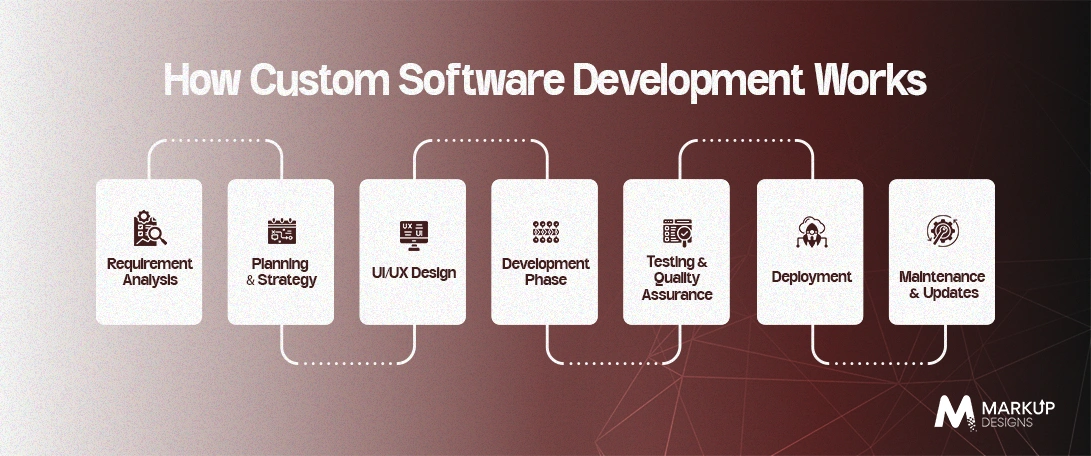
The process of custom software development follows a structured lifecycle that ensures every solution is built with clarity, purpose, and long-term scalability. Businesses exploring custom software development in Oman use this process to understand how an idea is transformed into a fully functional system.
- Requirement Analysis
This is the foundation stage where business needs, challenges, and goals are clearly identified. Developers work closely with stakeholders to understand what problems the software must solve and what outcomes are expected.
- Planning & Strategy
Once requirements are defined, a detailed roadmap is created. This includes selecting the right technology stack, defining system architecture, and estimating timelines and resources.
- UI/UX Design
Designers focus on creating simple and intuitive interfaces. Wireframes and prototypes are developed to ensure smooth navigation and a good user experience.
- Development Phase
In this stage, actual coding begins. Frontend and backend systems are built, APIs are integrated, and all required features are developed into a working product.
- Testing & Quality Assurance
The software is thoroughly tested for bugs, performance issues, and security vulnerabilities. This ensures the system is stable, reliable, and ready for real-world use.
- Deployment
After successful testing, the software is launched in a live environment where it becomes accessible for actual business operations.
- Maintenance & Updates
Post-deployment support ensures continuous improvements, bug fixes, and feature upgrades to keep the system efficient over time.
For businesses evaluating software development services Oman, understanding this process helps in choosing the right partner and setting realistic expectations.
Key Benefits of Custom Software Development
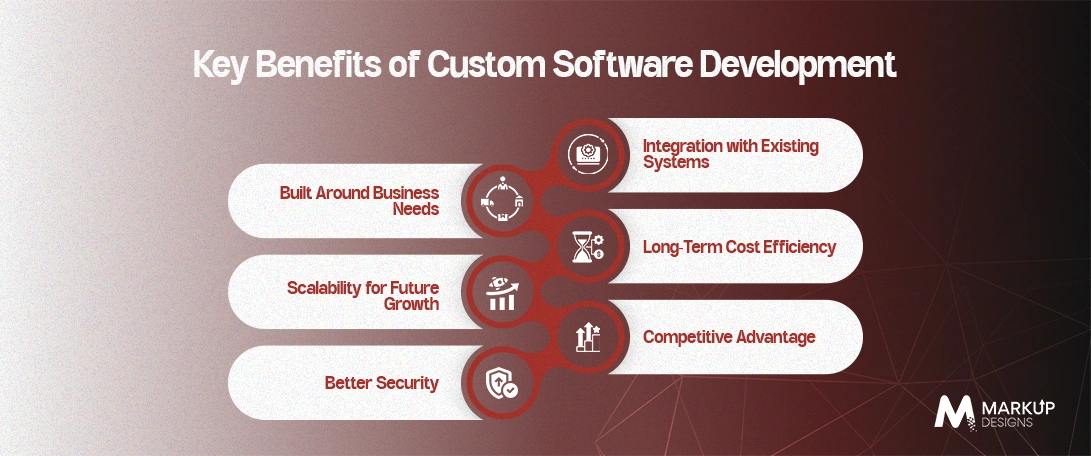
One of the biggest reasons businesses are investing in custom solutions is the long-term value they offer. The benefits of custom software development go far beyond basic automation, helping companies improve efficiency, scalability, and overall business performance.
- Built Around Business Needs
Custom software is designed specifically for how a business operates. Unlike ready-made tools, it does not include unnecessary features that complicate workflows. Every functionality is built to match operational requirements, making daily processes faster and more efficient.
- Scalability for Future Growth
As businesses grow, their operational needs also change. Custom software can easily scale by adding new features, users, or integrations without disrupting existing operations. This flexibility makes it a long-term investment rather than a temporary solution.
- Better Security
Generic software is often more vulnerable because it is widely used across different organizations. Custom-built systems offer stronger control over security features, reducing the risk of cyber threats and unauthorized access.
- Integration with Existing Systems
Businesses often use multiple platforms such as ERP systems, CRM tools, accounting software, and payment gateways. Custom software allows smooth integration between these systems, creating a more connected and efficient workflow.
- Long-Term Cost Efficiency
Although the initial investment may seem higher, custom software reduces long-term operational costs by improving productivity, minimizing manual errors, and eliminating dependency on multiple third-party tools.
- Competitive Advantage
Custom solutions help businesses operate faster and more efficiently than competitors using standard software. Partnering with the right software development company in Oman also ensures businesses receive solutions that align with local market needs and future growth goals.
Industries in Oman That Benefit the Most
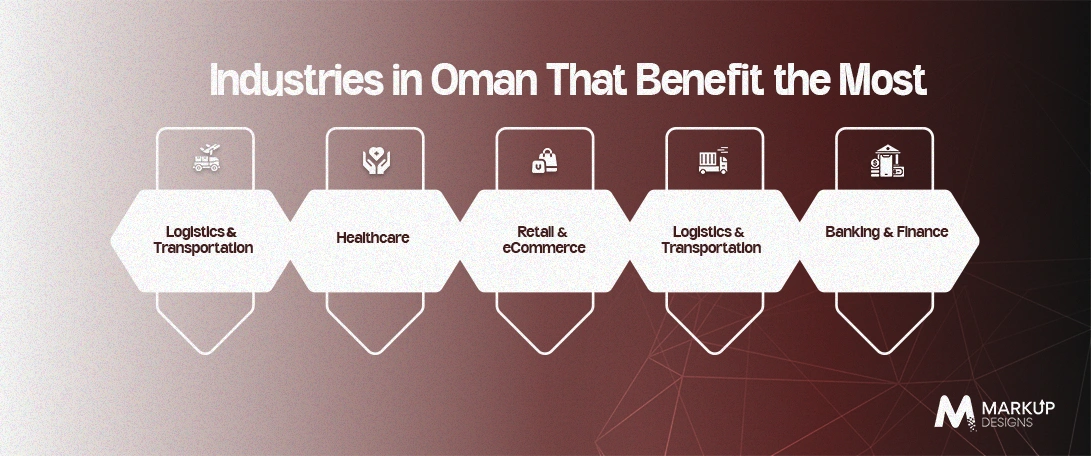
Custom software is becoming essential across multiple industries in Oman because every sector has unique operational challenges that generic tools often fail to address. Businesses are now investing in solutions that improve efficiency, reduce manual work, and provide better control over operations.
- Logistics & Transportation
Oman’s logistics sector is expanding rapidly, especially with growing trade and supply chain activities. Custom software helps logistics companies manage fleet tracking, route optimization, fuel monitoring, and real-time delivery updates. This improves operational visibility and reduces delays.
- Healthcare
Hospitals and clinics require systems that can securely manage patient records, appointment scheduling, billing, and doctor coordination. Custom healthcare software also helps improve patient experience while ensuring compliance with healthcare regulations.
- Retail & eCommerce
Retail businesses use custom software for inventory management, POS systems, customer tracking, and order management. For eCommerce platforms, it helps integrate payment gateways, delivery tracking, and customer support into one connected system.
- Oil & Gas
The oil & gas industry in Oman handles complex operations that require real-time monitoring and safety management. Custom software supports asset tracking, workforce management, equipment monitoring, and safety compliance systems, helping companies reduce operational risks.
- Banking & Finance
Financial institutions need highly secure systems for transactions, customer management, and fraud detection. Custom software helps banks and finance companies improve security, automate workflows, and provide faster digital services to customers.
Across all these industries, the objective is the same: businesses want systems that are faster, smarter, and built specifically around their operational needs rather than relying on rigid off-the-shelf platforms.
Impact of Lacking Custom Software on Business Efficiency
Many businesses continue to rely on multiple generic tools to manage their daily operations. While this may work initially, it often creates long-term operational challenges as the business grows. This is why many organizations are now shifting toward tailored software solutions for their businesses that are designed around their specific workflows and requirements.
- Dependency on Multiple Tools
Different departments often use separate systems for operations, accounting, communication, and customer management. This creates disconnected workflows and slows down overall productivity.
- Manual Errors and Inefficiencies
Businesses relying heavily on spreadsheets and manual processes are more likely to face data entry mistakes, duplicate records, and delayed reporting.
- Lack of Real-Time Visibility
Without a centralized system, tracking real-time business data becomes difficult. Decision-makers may not get accurate insights when they need them the most.
- Poor Scalability
As operations expand, generic software may struggle to handle increasing workloads, users, or advanced business requirements.
- Higher Operational Costs
Using multiple tools often increases subscription costs, maintenance expenses, and employee workload over time.
- Security Risks
Managing sensitive business data across different platforms can create security vulnerabilities and increase the risk of unauthorized access or data breaches.
Over time, these challenges not only reduce efficiency but also impact business growth, customer experience, and overall operational control.
Custom Software vs Off-the-Shelf Software
Businesses often struggle to choose between custom software and ready-made solutions. While off-the-shelf software offers quick implementation, custom software provides greater flexibility and long-term business value. The right choice depends on operational needs, scalability goals, and future business plans.
| Factor | Custom Software | Off-the-Shelf Software |
| Flexibility | Built according to business workflows and requirements | Limited customization options |
| Upfront Cost | Higher initial investment | Lower starting cost |
| Long-Term ROI | Better long-term value and efficiency | May increase costs over time |
| Scalability | Easily expandable as business grows | Limited scalability |
| Deployment Speed | Takes more development time | Faster to implement |
In the end, there is no one-size-fits-all solution. Small businesses with simple needs may prefer off-the-shelf software for quick deployment, while growing enterprises often benefit more from custom solutions that offer scalability, control, and long-term operational efficiency.
Cost Breakdown of Custom Software Development in Oman
One of the most common questions businesses ask before starting a project is: About the cost of custom software development in Oman? The answer depends on several factors, including project complexity, required features, integrations, security standards, and long-term scalability goals.
Below is a general cost estimate based on current market trends in Oman’s software industry.
Estimated Custom Software Development Cost in Oman
| Complexity Level | Features Included | Estimated Cost | Development Timeline |
| Basic System | Simple dashboard, internal management tools, basic UI | $3,000 – $8,000 | 3–6 Weeks |
| Mid-Level System | APIs, reporting dashboards, role-based access, integrations | $8,000 – $18,000 OMR | 6–12 Weeks |
| Advanced System | AI features, automation, cloud infrastructure, enterprise integrations | $18,000 – $40,000+ | 3–6 Months |
Key Factors That Affect Development Cost
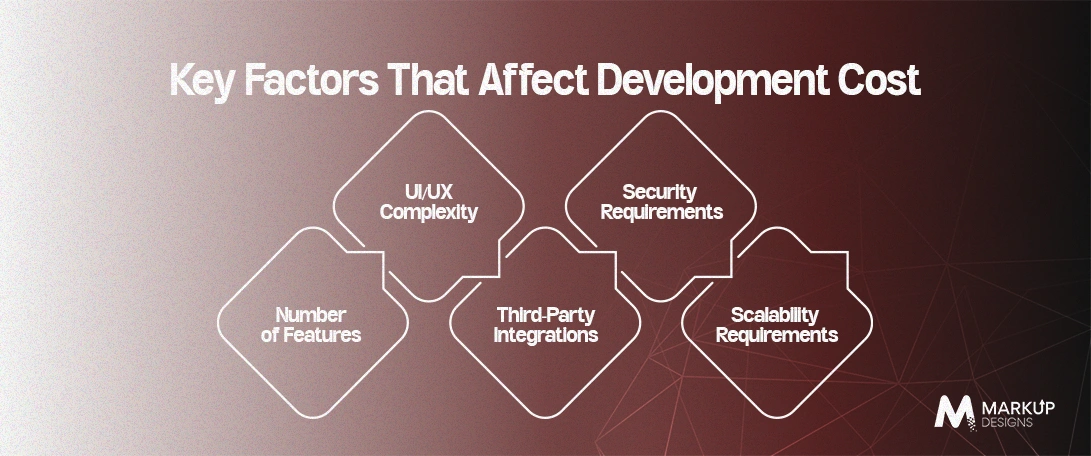
- Number of Features
The more modules and functionalities required, the higher the development effort and cost.
- UI/UX Complexity
Custom dashboards, animations, and user-friendly interfaces require additional design and testing work.
- Third-Party Integrations
Connecting the software with ERP systems, payment gateways, CRMs, or external APIs increases development complexity.
- Security Requirements
Industries like healthcare, banking, and oil & gas often require advanced security protocols and compliance measures.
- Scalability Requirements
If the software is expected to support future growth, cloud scalability and flexible architecture become essential.
While custom software may require a higher initial investment, it often reduces long-term operational costs by improving efficiency, minimizing manual work, and eliminating dependency on multiple disconnected tools.
Future of Custom Software Development in Oman
The future of software development in Oman is becoming increasingly technology-driven as businesses focus on automation, scalability, and smarter operations. Companies are no longer looking for basic digital tools, they want systems that can support long-term growth and evolving market demands.
One major trend is the integration of AI into business software. From predictive analytics to automated customer support, AI-powered business systems are helping organizations improve efficiency and decision-making. Cloud-based enterprise solutions are also becoming more popular because they offer flexibility, remote accessibility, and easier scalability.
At the same time, Oman’s Vision 2040 initiative continues to encourage digital transformation across industries such as logistics, healthcare, retail, and finance. This is increasing the demand for localized and industry-specific platforms.
Read Also: Digital Transformation Framework for Enterprise Growth
Conclusion
Businesses in Oman are entering a phase where digital transformation is no longer just about adopting technology, it is about choosing solutions that truly support operational growth and efficiency. Generic software may solve short-term problems, but it often lacks the flexibility and scalability modern businesses require.
Custom software helps organizations streamline operations, improve productivity, strengthen security, and adapt quickly to changing market demands. Whether it is logistics, healthcare, retail, banking, or oil & gas, businesses now need systems designed around their specific workflows.
As competition continues to grow, investing in custom software can provide long-term business value and a stronger market position.
FAQs
1. What is custom software development?
Custom software development is the process of building software specifically designed for a business’s unique operational needs and workflows.
2. How much does custom software development cost in Oman?
The cost typically ranges from 3,000 OMR to 40,000+ OMR depending on complexity, features, integrations, and scalability requirements.
3. Which industries benefit most from custom software?
Industries like logistics, healthcare, retail, oil & gas, and banking benefit the most from customized digital solutions.
4. How long does it take to develop custom software?
Development timelines can range from a few weeks to several months depending on project size and functionality.
5. Why choose custom software over off-the-shelf solutions?
Custom software offers better flexibility, scalability, security, and long-term efficiency compared to generic ready-made platforms.
Author's Perspective
Many businesses delay digital transformation because they see custom software as an expensive investment rather than a long-term growth strategy. However, companies that invest early often gain better operational control, improved efficiency, and stronger scalability. In Oman’s rapidly evolving business landscape, customized digital solutions are becoming essential for staying competitive and future-ready.
Discuss Your Project NowAjit Kumar Jha
VP - Business Operations
Related Posts

How to Build Production-Ready Applications with AI Coding...
Case Management Software Development: Enterprise Features & Implementation...
Farm Management Software Development in Australia: Features, AI...
Insights Are Valuable & Execution is Priceless
You’ve read about the digital future. Now, let’s build the infrastructure to take you there. Move your strategy from the page to the product.
Design Your Solution Now
Contact Us
Schedule The Appointment At Your Convenience Date And Time.
30 Min
Web Conference
Time Zone
Indian standard time (08:30pm)

Thanks For Getting In Touch!
You’ve Taken The First Step Toward Transforming Your Digital Presence. Our Experts Will Reach Out Shortly To Take It Forward.
Launch Your Dream Project
Provide a brief overview of your project, and our specialists will evaluate your requirements. We will connect with you to explore how the right digital solutions can help you launch faster.