
In Brief
- Development of embedded software is done by developing software that is designed to run on specific hardware to control different devices like automobiles, medical devices, smart appliances, industrial machinery, etc.
- The embedded software architecture comprises of hardware elements, device drivers, hardware abstraction layer, operating system/firmware, application layer, and communication layer. The structured development process consists of various aspects like requirements gathering, platform selection, architectural design, coding, integration, testing, installation, and maintenance.
- The most common difficulties faced in the development process are limited memory and processing capability, real-time processing requirements, hardware compatibility, cybersecurity threats, regulatory compliance issues, and maintenance.
- The cost of development depends on many factors such as project complexity, requirements for hardware and platform, connectivity, integration, testing, security, compliance, and updates. It is important for organizations to plan their budget according to the entire lifecycle of the product.
- Embedded software is applicable to different sectors like automotive, healthcare, manufacturing, consumer electronics, aerospace, and IoT. Some recent trends include edge AI, edge computing, over-the-air updates, security-first development, and increased interoperability. Markup Designs can assist in developing embedded software for organizations.
Many devices we use on a daily basis, such as smart household devices, medical appliances, cars, and various types of machinery, contain embedded software. Embedded software makes all those devices capable of performing certain actions, processing data, and responding to user input. With the constant evolution of embedded software, the business world is looking for ways to create better and more advanced solutions.
However, embedded software development is completely different from website or application development. For instance, developers must have comprehensive knowledge about hardware and other aspects of system architecture, as well as system performance and security. It is necessary to ensure that software operates well with the limited resources of the available memory, computing capacity, and energy.
This blog will introduce embedded software development, such as its architecture, the process itself, possible challenges, and cost factors, etc. Moreover, we will consider its applications, current trends, and the selection of a proper development company.
What is Embedded Software Development?
Development of embedded software is a process of developing software that operates on dedicated hardware and serves a certain purpose. In contrast to general software, which can be used to fulfill numerous tasks, embedded software is developed for the control of the functioning of a concrete device.
It is used for the selection of the optimal wash cycle by the washing machine, monitoring of the car engine, measurement of the patient’s vital signs by the medical device, and so forth. Embedded software makes it possible to process inputs, control hardware elements, and manage changes in the environment.
Embedded software usually interacts with components such as microcontrollers, sensors, processors, and memory. According to the needs of the concrete device, the software can operate on the basis of the hardware itself or using an operating system (for example, a real-time operating system or embedded Linux).
Embedded software development consists of understanding the hardware requirements, design, coding, integration of components, and testing the whole system.
Understanding Embedded Software Architecture
The software architecture of the embedded system is a design pattern that determines the interaction between various software pieces and the hardware and enables the completion of tasks. This architecture serves as a roadmap for the system, allowing for organizing functions, allocating resources, and ensuring its reliable operation.
An appropriately designed architecture can facilitate testing, maintenance, and updating of the software. Although the exact architecture varies depending on the needs of the device, the typical architecture of embedded systems contains the following levels.
1. Hardware Layer
It consists of physical elements like microcontrollers, processors, memory, sensors, and communication interfaces. They allow the software to function and interact with the outside world.
2. Hardware Abstraction Layer (HAL) and Device Drivers
The HAL and device drivers assist the software in interacting with hardware devices. Some of the tasks include reading sensors, controlling displays, and accessing other peripherals.
3. Operating System and Firmware Layer
In this layer, there are the activities that take place in order for the system to perform its core activities. Bare-metal programming, Real-Time OS (RTOS), or Embedded Linux is used based on the requirements of the projects being undertaken.
4. Application and Communication Layer
In this layer, there is the application that takes care of the device functionalities, and also there is the communication layer that makes it possible for the devices to interact with each other or with the network and/or cloud infrastructure.
The Embedded Software Development Process: Step by Step
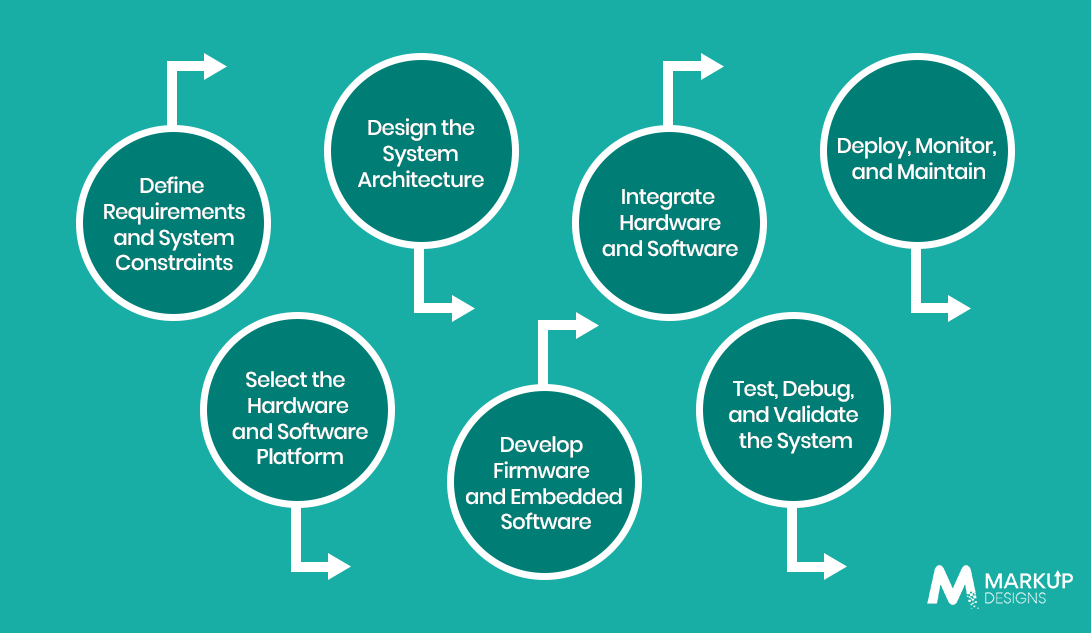
Designing embedded software entails proper planning, technical know-how, and testing. Every step is necessary to ensure that the software functions effectively with the hardware and also meets the performance needs of the device. The following are the processes involved in designing embedded software.
Step 1.Define Requirements and System Constraints
In the first place, determine the needs of the device. Specify the functionality, performance, power consumption, memory, operational environment, and security needs of the device.
Step 2. Select the Hardware and Software Platform
Identify appropriate microcontrollers, processors, sensors, and other hardware. Identify the software platform depending on the complexity and real-time nature of the device.
Step 3. Design the System Architecture
Establish how the software modules should work with the hardware. Establish data flow, communication interfaces, operating system needs, and overall system architecture.
Step 4. Develop Firmware and Embedded Software
Design the software that controls the operation of the hardware modules and performs the core functionality of the device. It can be implemented through device drivers, control logic, data processing, and communication capabilities.
Step 5. Integrate Hardware and Software
Integrate the created software with the target hardware. Determine if the components communicate correctly and discover integration problems that might negatively influence the system.
Step 6. Test, Debug, and Validate the System
Perform tests of the software in various operating conditions. Implement functional, integration, performance, and security tests to detect any mistakes in the process.
Step 7. Deploy, Monitor, and Maintain
Deploy the software on the device after finishing all tests. Perform constant monitoring, debugging, security checks, and releases if needed.
Following these steps helps development teams reduce technical risks, improve reliability, and build embedded systems that meet both current and future requirements.
Common Challenges in Embedded Software Development
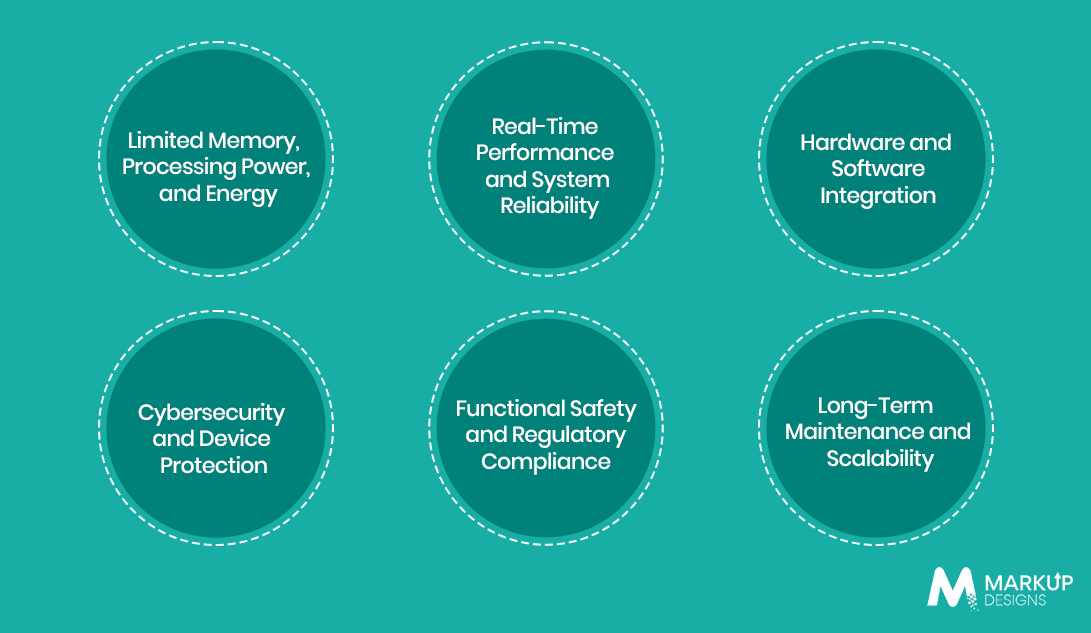
The process of developing embedded software faces a number of technical challenges owing to the need for the software to operate in a particular hardware environment and yet maintain good levels of performance, efficiency, and security. It is important for developers to be aware of these challenges to enable them to develop good software.
Limited Memory, Processing Power, and Energy
Embedded systems have insufficient memory and processing capacity as well as energy capacity. Developers should ensure that their programs are optimized so that the systems will operate effectively.
Real-Time Performance and System Reliability
In some cases, the embedded system should be able to operate in response to inputs within a specified period of time. Failure to do so will affect performance.
Hardware and Software Integration
The combination of software with sensors, processors, and other hardware components may lead to compatibility problems. Proper interface design, integration testing, and hardware debugging facilitate the detection and solution of these problems.
Cybersecurity and Device Protection
Connected embedded devices can be exposed to various security risks such as unauthorized access, information theft, and modification of the firmware. Secure boot, encryption, authentication, and secure software protect the device.
Functional Safety and Regulatory Compliance
Embedded devices used in medical equipment, automobiles, and industry have to comply with certain safety regulations. Early identification of standards is crucial for developers, who need to keep proper documentation and test records.
Long-Term Maintenance and Scalability
Embedded products are expected to be in operation for many years; therefore, their further updates and hardware compatibility become critical aspects for the future development of the team.
Addressing these challenges during development can improve product reliability, reduce maintenance issues, and support a longer operational life.
How Much Does Embedded Software Development Cost?
The cost of developing an embedded software application will vary according to the type of device, software complexity, hardware, and testing requirements. A standard embedded system that has fewer functionalities is normally cheaper to develop compared to an advanced one.
Businesses need to assess the cost of developing the system as well as the maintenance costs of the software.
Project Complexity and Features
The number of features, modules of software, and interactions of the system are critical factors when considering the efforts required for the development process. A simple controller is simpler to develop than a system that enables real-time operations, various operating modes, and automation capabilities.
Hardware and Platform
Selection of the microcontroller, processor, sensors, memory, and operating system may directly influence the total project cost. Development of custom hardware and its prototypes may increase costs too.
Connectivity and Integration
Products that connect with mobile apps, cloud services, or enterprise-level applications can be subject to extra development expenses. Communication, data transfer, and compatibility issues can add to the expense of the project.
Testing, Security, and Certification
Embedded software requires extensive testing to guarantee that it operates well under normal conditions. Extra security measures, special testing devices, and certification standards in certain industries can also affect the budget.
Maintenance and Software Upgrades
Development costs do not end once the product is ready for sale. Debugging, security upgrades, software and hardware upgrades, and customer support might become an expensive issue during the lifetime of the product.
Applications of Embedded Software Across Industries
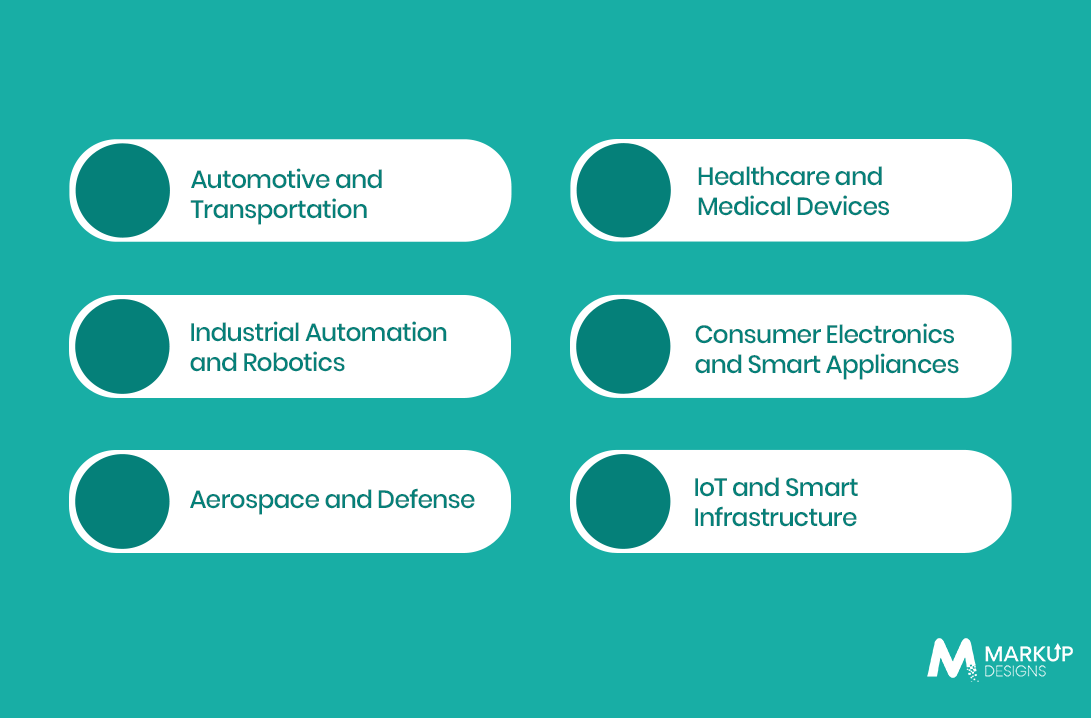
Embedded software is a significant tool in various industries, where it assists devices in executing some particular operations, processing information, and adjusting to changing environments. Embedded software allows automating processes and ensuring accurate and reliable performance.
Here are six major industries that use embedded software.
Automotive and Transportation
Embedded software controls the functioning of engines, brakes, parking aids, and driver-assistive technologies. It contributes to the improved performance and safety of vehicles.
Healthcare and Medical Devices
Medical devices utilize embedded software in order to monitor patients’ vital signs, process diagnostic information, and control medical devices. Reliability of performance is crucial in the healthcare sector.
Industrial Automation and Robotics
Robotic arms, production line equipment, sensors, and monitoring systems in manufacturing plants are controlled using embedded robotics. Embedded software ensures consistent operations with minimal human intervention.
Consumer Electronics and Smart Appliances
Smart televisions, smart washing machines, wearable devices, and home appliances use embedded software to regulate their operations. Embedded software enables the operation of such devices through user commands.
Aerospace and Defense
Aircraft tracking and communications systems use embedded software for controlling various aspects of an aircraft. This category involves engineering, testing, and meeting necessary safety guidelines.
IoT and Smart Infrastructure
Devices for monitoring buildings and environments utilize embedded software to collect and process data. Such devices can enable remote monitoring when connected to appropriate platforms.
Across these industries, embedded software helps organizations build products that are more responsive, efficient, and capable of meeting specific operational needs.
How to Choose the Right Embedded Software Development Partner
Selecting the right development partner is essential in order to create embedded software which fulfills your product needs, works flawlessly, and fits the budget. Your ideal development partner should be aware of the specifics of software engineering and hardware where the software will operate.
The following is a list of some factors that you need to consider before making any decision.
1. Expertise and Industry Background
Try to choose a team that has experience in embedded system, firmware, microcontroller, RTOS, embedded Linux. Knowledge about your industry would definitely help a lot, too.
2. Hard System Integration Skills
Your development partner must know the integration between the software and the processors, sensors, communication chips, and other components of hardware.
3. Testing and Security Processes
Inquire how the team performs debugging, performance testing, hardware integration testing, and cybersecurity testing. For any product with certain regulatory compliance, determine if the team is capable of handling compliance requirements.
4. Effective Communication and Planning for the Project
It is essential that a trustworthy partner determines project scope, milestones, deliverables, and project roles before embarking on software development.
5. Maintenance after Launch
For embedded products, it might be required to update and modify the application after the release with security patches, bug fixes, and improved compatibility. Consider hiring a partner who can provide such support.
Prior to choosing a team, you should communicate with your requirements, expected results, budget, and deadlines.
Have an embedded product idea or an existing system that needs improvement?
Markup Designs can help you plan and develop software solutions based on your product requirements, hardware capabilities, and performance goals. Connect with our team to discuss your project and explore the right development approach.

Conclusion
The embedded software development process enables companies to develop intelligent gadgets that can work effectively by performing particular operations. Each step in the development process from architecture and hardware design, testing to maintenance has a great impact on product performance.
Knowledge of development problems and costs will enable companies to make good decisions and plan budgets. Selection of the right technologies and development processes will improve system reliability.
With developments in edge AI, IoT, and remote firmware, embedded systems present many new possibilities in automation and connectivity. Collaboration with an expert development team will assist companies in developing intelligent, efficient, and reliable gadgets.
FAQs
1. What is embedded software development used for?
Embedded software development is used to create software that controls dedicated devices and hardware. Common examples include automotive control systems, medical equipment, smart appliances, industrial machines, and IoT devices.
2. What are the main stages of embedded software development?
The main stages include requirement analysis, hardware and platform selection, architecture design, software development, hardware integration, testing, deployment, and ongoing maintenance.
3. What is the difference between embedded software and firmware?
Firmware is generally low-level software that controls hardware and provides essential device functions. Embedded software is a broader term that can include firmware, operating-system components, and application-level software running on an embedded system.
4. How much does embedded software development cost?
The cost depends on software complexity, hardware requirements, connectivity, security, testing, and compliance needs. A reliable estimate requires a clear understanding of the project’s scope and technical specifications.
5. How long does it take to develop embedded software?
The timeline varies depending on device complexity, hardware availability, integration requirements, and testing needs. A basic system may require less development time than a complex, connected, or safety-critical product.
Author's Perspective
Embedded software development involves more than writing code. It requires a clear understanding of hardware, device requirements, security, and operating conditions. Planning for the entire product lifecycle helps businesses manage development costs, simplify maintenance, and improve reliability. Choosing the right architecture and testing approach also reduces technical risks. Businesses should focus on building systems that meet current needs while supporting future upgrades. With proper planning and suitable technology, embedded software can help create reliable products and support long-term growth.
Discuss Your Project NowJupinder Singh Arora
Founder and CEO
Related Posts

Enterprise Software Development Cost in Saudi Arabia: 2026...
How Much Does Software Development Cost in Australia...

Custom Biometric Software Development: A Complete Guide for...
Insights Are Valuable & Execution is Priceless
You’ve read about the digital future. Now, let’s build the infrastructure to take you there. Move your strategy from the page to the product.
Design Your Solution Now
Contact Us
Schedule The Appointment At Your Convenience Date And Time.
30 Min
Web Conference
Time Zone
Indian standard time (08:30pm)

Thanks For Getting In Touch!
You’ve Taken The First Step Toward Transforming Your Digital Presence. Our Experts Will Reach Out Shortly To Take It Forward.
Launch Your Dream Project
Provide a brief overview of your project, and our specialists will evaluate your requirements. We will connect with you to explore how the right digital solutions can help you launch faster.