
In Brief
- Identify the problem: Before embarking on your development journey, ensure you clarify the problem, validate your idea, and learn about your audience.
- Build with intent: Define the features to use, choose the technology stack, and design the architecture according to the product needs.
- Launch right: Start with an MVP, test your hypotheses, get feedback, and improve.
- Plan for the future: In order to achieve success with your product, you need to consider safety, performance, maintenance, and optimisations.
- Pick the right development company: They will help you minimise your technical risks, speed up the delivery, and support your objectives.
A successful product is more than just code. You need to identify the problem you are solving, prove that there is a demand for the product, come up with a strong product strategy and define its basic features, tech, and budget, and only then develop it. A software product development process encompasses all those activities, allowing you to turn an idea into a viable product.
Without this groundwork, even a technically sound product can struggle to attract users, meet business expectations, or justify its development costs. Software product development brings these activities together to transform an idea into a functional, market-ready solution.
The development journey continues well beyond the first release. A successful product must deliver a reliable user experience, adapt to changing customer needs, and scale as adoption grows. From product discovery and MVP development to architecture planning, testing, deployment, and post-launch optimisation, every stage influences the outcome. In this guide, we explore the software product development process, the key decisions involved, and how Markup Designs can help businesses turn their product ideas into scalable digital solutions.
What Is Software Product Development?
Software product development entails creating a software solution from scratch. For software products to be ready for market, every step of the way, including ideation, design, and development, must be successfully executed.
Software Product Development vs Software Development
Software development focuses on the creation of a software solution based on certain requirements. On the other hand, in software product development, market research and strategies are taken into account. The aim of the latter is not only to develop a working software product, but also one that is sustainable and meets users’ needs.
Why Businesses Invest in Custom Software Products
Businesses invest in custom software products because existing solutions may not serve them well. By developing custom software, companies have full control over the product in terms of functionality, compatibility, security, etc.
From Product Idea to Market Launch
A successful product passes through a number of stages before being used by customers. Initially, any product is subject to idea validation, which is followed by product discovery. The next steps will include defining requirements, designing UX, making an MVP, testing, deploying, and improving the product afterwards.
Treating launch as the end of development is a mistake. Real user feedback after launch is often what determines which features should be improved, removed, or developed next.
How to Turn Your Software Idea Into a Viable Product
An idea alone does not warrant the creation of a product. Evidence must first be gathered to show that the product will solve a significant problem, have a group of users, and a clear path to market.
Identify the Problem Your Product Will Solve
Start with identifying a particular problem and not with what features you want the product to have. A successful product solves some important pain for the user, reduces some inefficiencies, enhances an experience, or provides something that already existing products do not.
Define Your Target Users
You should determine who the users or buyers of your product are and know what they need, do, and what technology they expect. This contributes to the formation of successful user profiles that will help the product to be designed regarding the functions, UX, pricing, and marketing.
Research the Market and Competitors
It is important to study the existing products, competitors, pricing models, user reviews, and the gaps in the market. This helps determine whether there is genuine demand and where your product can offer a meaningful advantage instead of becoming another version of an existing solution.
Validate Your Idea
You can use surveys, interviews, prototypes, landing pages, or an MVP to test if your assumptions are correct before spending money on development.
Validation can reveal whether users actually care about the problem you identified and whether they would consider paying for a solution.
Define Your Unique Value Proposition
Clearly establish why customers should choose your product over existing alternatives. Your value proposition should communicate the specific benefit you provide and the audience you serve without relying on vague claims.
Establish Business Goals and KPIs
Define measurable objectives before development begins. Depending on the product, KPIs may include user acquisition, activation, retention, conversion rate, recurring revenue, customer lifetime value, or operational efficiency.
What Should You Prepare Before Starting Software Product Development?
Preparation is vital to limit costly alterations further into the development cycle. Before development commences, ensure that the product vision, requirements, tech specifications, resources, and business goals are in sync.
Define Product Requirements
Record the core functions, user journeys, business rules, integrations, technical specifications, and non-functional specifications. Doing so will provide the development team with a solid foundation for estimation and planning purposes.
Determine the Project Scope
Distinguish between must-have features of the MVP and those that can come later. A clearly defined scope will eliminate unnecessary complications and allow the team to focus on bringing the main value of the product to customers.
Assess Technical Feasibility
Check if the features, integrations, data, and performance requirements are feasible with the available technologies and resources. Tech viability should be checked before any significant investments in development.
Estimate the Budget and Resources
Take into consideration product strategy, design, development, testing, infrastructure, third-party services, deployment, maintenance, and future improvements. The lowest initial estimate may not be the lowest cost option if it creates technical debt or limits scaling.
Identify Security, Compliance, and Integration Requirements
Determine security controls, data protection requirements, industry regulations, authentication needs, and third-party integrations early. These considerations can significantly influence architecture and development decisions.
Choose the Right Development Partner
Look beyond development rates when selecting a partner. Assess technical expertise, product thinking, communication, development methodology, portfolio relevance, security practices, and post-launch support capabilities.
How to Build a Software Product: Step-by-Step Process
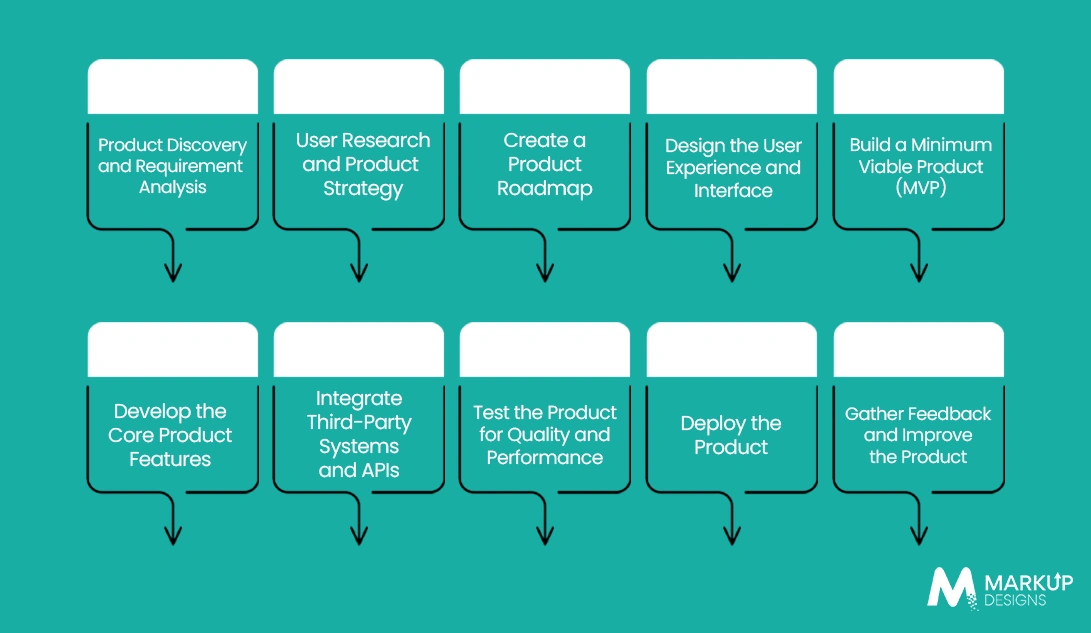
A systematic development process transforms the confirmed requirements into the final product and ensures that testing and iteration can take place.
Product Discovery and Requirement Analysis
Study business goals, user problems, product requirements, technical limitations, and market context. The output should set all the parameters necessary for design/development.
User Research and Product Strategy
Examine how potential customers use the existing products and identify possibilities for improvement. The findings allow prioritisation of functionality based on actual users instead of assumptions.
Create the Product Roadmap
Map out product features, fulfilment terms, releases, dependencies, and priorities across the product development cycle. The roadmap allows all stakeholders to be on the same page while leaving room for the evolution of product requirements.
Design the User Experience and Interface
Develop user flows, wireframes, prototypes, and designs prior to development. The aim is simple: the product must be as intuitive as possible for the intended audience.
Build a Minimum Viable Product (MVP)
Create the minimal product version that still captures the essence of the solution. The development of a minimum viable product (MVP) gives a company access to the market faster and enables it to observe actual users’ behavior.
Develop the Core Product Features
Prepare the required features according to the chosen technological architecture. The development must comply with all the applicable programming, security, testing, and documentation standards.
Integrate Third-Party Systems and APIs
Set up such connections as payment gateways, communication systems, analytical tools, enterprise systems, cloud services, etc. Ensure their compatibility and reliability.
Test the Product for Quality and Performance
Conduct tests related to functionality, usability, protection, compatibility, and performance to detect possible problems before your product is released. Remember that testing must be performed at all stages of product development.
Deploy the Product
Deploy the tested product into the production environment according to the chosen strategy. It is not enough just to deploy the product and forget about the monitoring procedures.
Gather Feedback and Improve the Product
Track user behaviour, feedback, performance data, and business KPIs after launch. Use these insights to prioritise improvements and future releases based on evidence rather than assumptions.
Which Software Product Development Methodology Should You Choose?
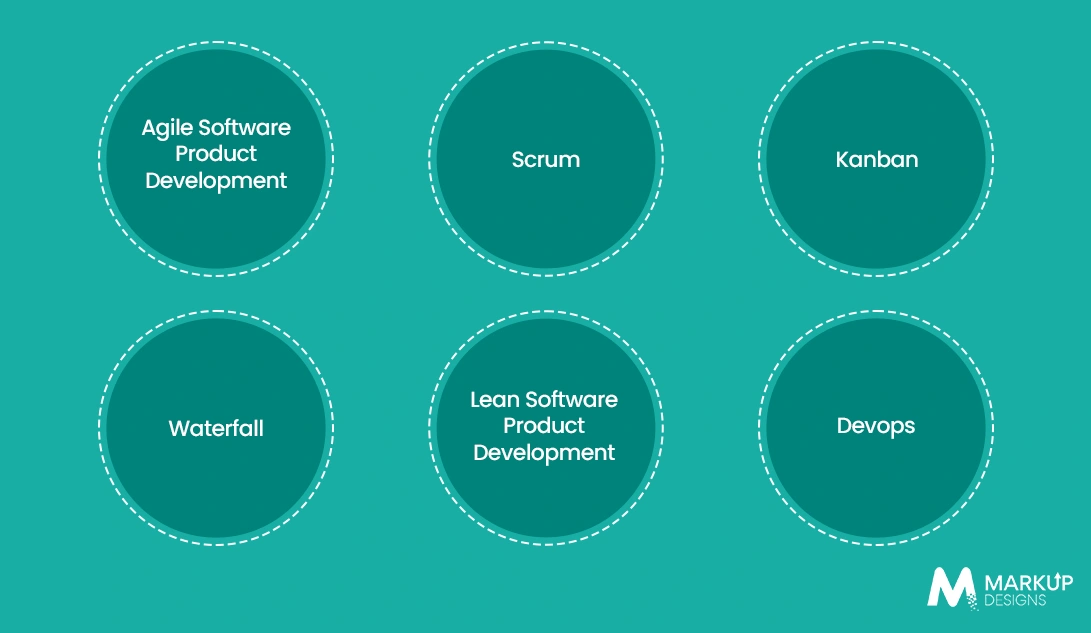
Development methodology defines how teams strategize, develop, test, and make a product available. There is no single best choice; the right option is dictated by the complexity of the product, its specifications, deadlines, and frequency of change.
Agile Software Product Development
Agile promotes iterative development, frequent product launches, and constant feedback. It is very effective if product requirements are expected to evolve throughout the usage of the product.
Scrum
Scrum employs development sprints, proper planning, reviews, and retrospectives. It is a good way to provide more clarity and accountability for teams working on complicated products.
Kanban
Kanban method is focused on continuous workflow and limiting work in progress. It is suitable in situations where teams have to deal with constant product development and adaptation to unexpected changes.
Waterfall
Waterfall represents a sequential development approach as requirements, design, development, testing, and release stages are handled separately. This approach is appropriate when specifications can be clearly defined from the beginning.
Lean Software Product Development
Lean approach aims to maximize value-added work and minimize non-value-added work. It can be useful when companies need to verify their hypotheses fast without spending too much money on unnecessary features.
DevOps
DevOps brings development and operations together through automation, continuous integration, continuous delivery, monitoring, and infrastructure practices. It helps teams release changes more reliably and efficiently.
How to Choose the Right Methodology for Your Product
Consider your product’s complexity, requirement stability, release frequency, team structure, regulatory requirements, and expected user feedback cycle. For many modern software products, an Agile approach supported by DevOps practices provides the flexibility needed for continuous development without sacrificing delivery discipline.
What Are the Different Types of Software Products?
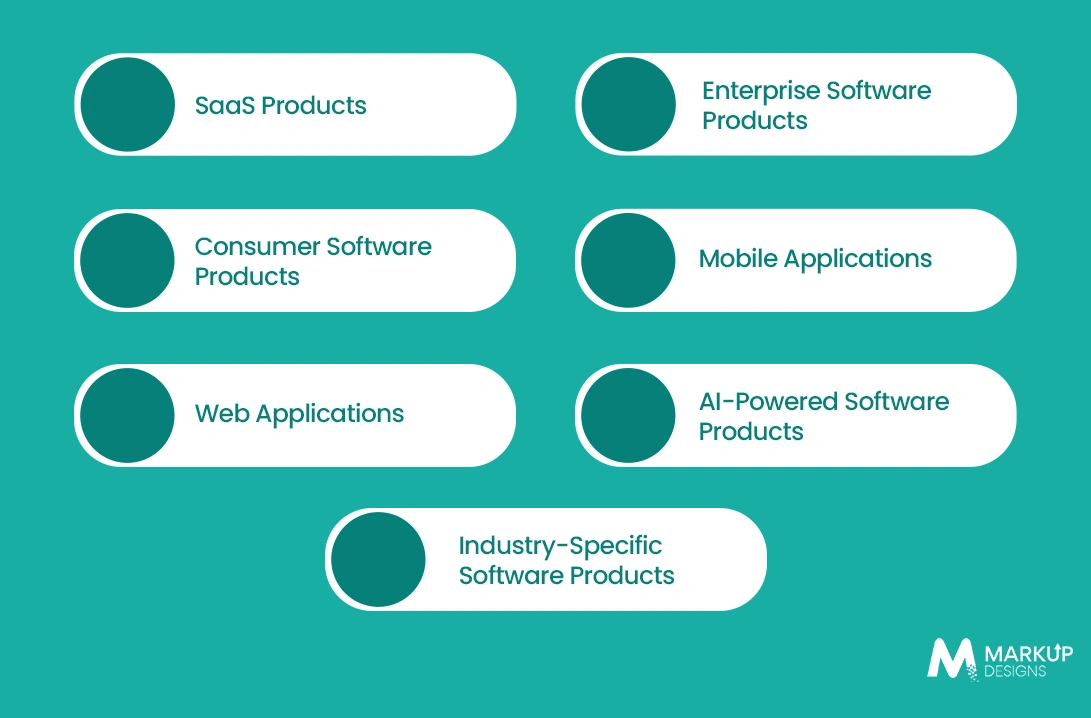
The number of software products in today’s world is vast, and each product caters to different industries and business models, such as subscription-based models, enterprise applications, or specific AI applications. The development methodology depends on the features of the software project as well as its users, functionality, scalability, and monetization method.
SaaS Applications
SaaS applications are cloud-based software solutions delivered through subscription and pay-per-use services. Such applications are characterized by a trustworthy infrastructure, user management, payment process, and constant updates.
Enterprise Software Products
Enterprise applications are meant for multi-step business processes and mostly require complex permissions, integrations, reporting, security, and compliance.
Consumer Software Products
Consumer-side applications are aimed at a broad audience and usually focus on usability, performance, engagement, and seamless onboarding.
Mobile Applications
Mobile software solutions can be developed using native programming or cross-platform development technologies for mobile phones and tablets. Mobile applications are commonly integrated with the features of mobile phones, such as camera, GPS, biometrics, and push notifications.
Web Applications
Web applications run through browsers and can support everything from customer portals and marketplaces to complex business platforms. Their accessibility makes them suitable for many B2B and B2C use cases.
AI-Powered Software Products
AI-powered products incorporate technologies such as machine learning, generative AI, natural language processing, computer vision, or predictive analytics to deliver intelligent functionality and automation.
Industry-Specific Software Products
Industry-specific products address specialised requirements in sectors such as healthcare, fintech, retail, logistics, education, real estate, and manufacturing. Their development often requires deeper domain knowledge and compliance considerations.
What Features Should Your Software Product Include?
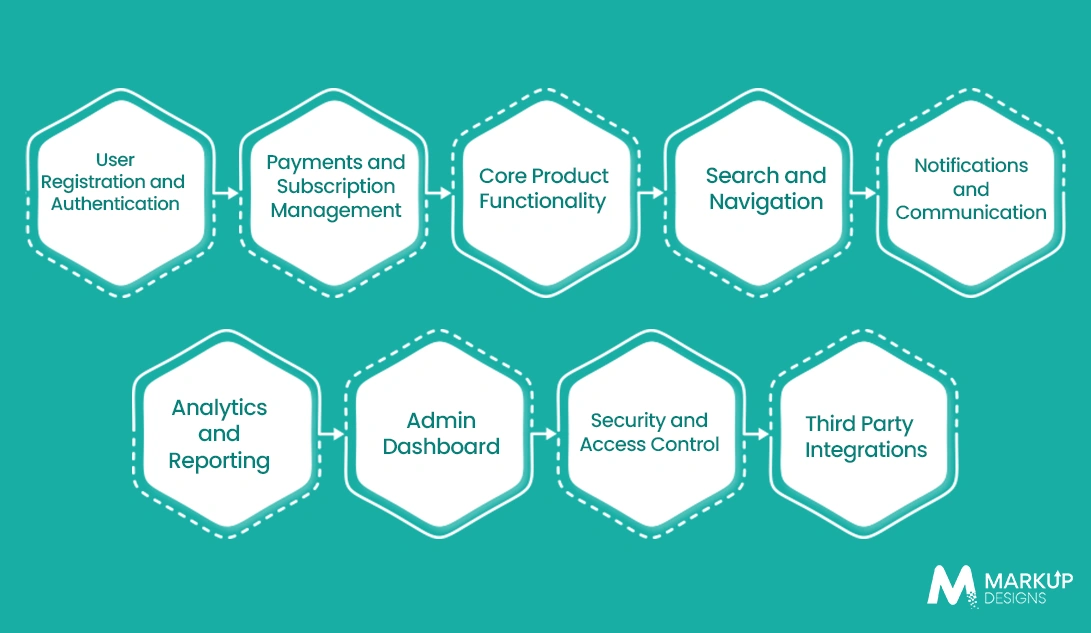
The appropriate set of features is highly dependent on the specifics of your business, users, and business model. Pay attention to functions that help to fulfil the core user journey rather than those aimed at giving your product an impression of extensive functionality.
User Registration and Authentication
Secure account registration and logging in should be ensured. Consider incorporating various options for this, such as email verification, social login, multifactor authentication, and the like.
Core Product Functionality
Implement those features that help you create the main value of your product. Make sure they provide the basis for your MVP.
Search and Navigation
Make sure the users can easily find the required information, goods, or functions within the app. Good navigation and relevant results will help reduce friction in the app’s usability.
Notifications and Communication
Use various channels such as push notifications, email, SMS or in-app messaging to keep users informed about what is going on.
Payments and Subscription Management
If you are creating a commercial product, make sure that you add secure payment processing and management.
Analytics and Reporting
Track meaningful product and business metrics to understand user behaviour, feature adoption, performance, and overall product growth.
Admin Dashboard
Give authorised teams a central interface to manage users, content, transactions, settings, reports, and other operational activities.
Security and Access Control
Protect user and business data through authentication, role based permissions, encryption, secure APIs, and appropriate security controls.
Third-Party Integrations
Connect the product with external platforms, APIs, payment systems, CRMs, analytics tools, or other services needed to support its workflows.
How to Choose the Right Technology Stack for Software Product Development?
Your technology stack should support the product’s functionality today without creating unnecessary limitations as it grows. Consider performance, scalability, security, development expertise, integration requirements, and long-term maintenance before making the decision.
Frontend Technologies
Choose frontend technologies based on the required user experience, platform, performance, and development needs. Common choices include React, Angular, Vue, and Flutter for applications requiring cross-platform interfaces.
Backend Technologies
The backend handles business logic, APIs, authentication, data processing, and integrations. Technologies such as Node.js, Python, Java, .NET, and PHP can be selected based on project requirements.
Database Selection
Choose between relational and NoSQL databases based on data structure, transaction requirements, scalability, and performance. PostgreSQL, MySQL, MongoDB, and similar solutions can support different product needs.
Cloud Infrastructure
Cloud platforms provide the infrastructure needed to deploy, monitor, secure, and scale software products. AWS, Microsoft Azure, and Google Cloud are commonly used for modern product environments.
APIs and Third-Party Integrations
APIs allow your product to communicate with external systems and services. Plan integrations around reliability, authentication, data security, rate limits, and future maintenance.
AI and Machine Learning Technologies
AI can add capabilities such as recommendations, automation, prediction, natural language processing, and intelligent search. Use it where it creates measurable product value rather than adding AI without a clear purpose.
Native vs Cross Platform Development
Native development can provide deeper platform-specific optimisation, while cross-platform frameworks can reduce development effort when the same product needs to support multiple platforms. The right choice depends on performance, functionality, budget, and platform requirements.
Factors That Influence Technology Stack Selection
Consider product complexity, scalability, security, development cost, time to market, integrations, available expertise, and future requirements before finalising the stack.
How to Design a Scalable and Secure Software Product Architecture?
Architecture determines how effectively a product can handle growing users, data, integrations, and functionality. It should be designed around current requirements while leaving enough flexibility for future expansion.
Monolithic vs Microservices Architecture
A monolithic architecture can be simpler to develop and manage for smaller products, while microservices can provide greater flexibility for complex, independently scalable systems. The choice should match the product rather than follow architectural trends.
Cloud Native Architecture
Cloud native architecture uses cloud infrastructure and services to support scalability, resilience, automation, and efficient deployment.
API First Architecture
An API first approach treats APIs as a core part of the product architecture, making it easier to connect applications, services, and third-party platforms.
Data Management and Storage
Define how product data will be collected, stored, accessed, backed up, and protected. Database architecture should account for performance, security, availability, and future data growth.
Scalability and Performance Planning
Plan for increased traffic, transactions, and data volumes from the beginning. Caching, load balancing, efficient databases, and scalable infrastructure can help maintain performance as demand grows.
Security by Design
Security should be incorporated throughout architecture and development rather than added after the product is built. Apply secure authentication, encryption, access controls, monitoring, and regular security testing.
Disaster Recovery and Business Continuity
Prepare backup, recovery, redundancy, and incident response strategies to minimise downtime and data loss when failures occur.
How to Ensure Software Product Quality and Security?
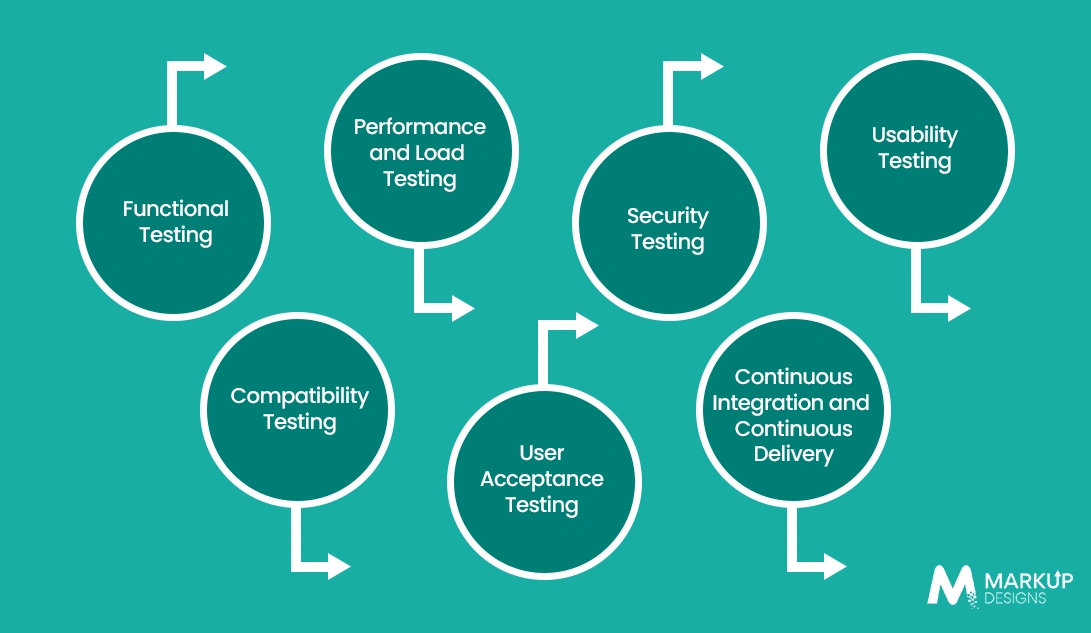
Testing should happen throughout development rather than being treated as a final checkpoint. A structured QA process helps identify defects, performance issues, usability problems, and security vulnerabilities before they affect users.
Functional Testing
Verify that features and workflows behave according to their requirements and business rules.
Performance and Load Testing
Test how the product performs under normal, peak, and increasing workloads to identify bottlenecks before launch.
Security Testing
Identify vulnerabilities across applications, APIs, authentication systems, databases, and infrastructure.
Usability Testing
Evaluate whether users can understand and complete key tasks efficiently without unnecessary friction.
Compatibility Testing
Check that the product works consistently across supported browsers, devices, operating systems, and screen sizes.
User Acceptance Testing
Allow business stakeholders or representative users to verify that the product meets practical requirements before release.
Continuous Integration and Continuous Delivery
Automated build, testing, and deployment processes help teams release updates faster while maintaining development quality and consistency.
What Are the Common Challenges in Software Product Development?
Software products can fail because of poor planning as easily as poor development. Identifying risks early helps businesses control costs, timelines, quality, and technical complexity.
Unclear Product Requirements
Ambiguous requirements create misunderstandings, rework, and inconsistent outcomes. Clear documentation and stakeholder alignment are essential.
Scope Creep
Continually adding features can increase costs and delay launch. Prioritise the MVP and move lower priority requirements into future releases.
Limited Budget and Resources
Budget constraints can force difficult trade offs between features, quality, and timelines. Prioritisation helps ensure resources are spent on the areas that create the most value.
Choosing the Wrong Technology
An unsuitable technology stack can create performance, scalability, integration, or maintenance problems later.
Poor User Experience
A technically capable product can still fail if users find it difficult or frustrating to use. UX decisions should be validated throughout development.
Security and Compliance Risks
Weak security controls or missed regulatory requirements can expose businesses to data breaches, penalties, and reputational damage.
Integration Challenges
Third party systems may introduce compatibility, API, authentication, or data synchronisation issues that need to be considered during architecture planning.
Scalability Issues
Products that are not designed for growth can experience slow performance, outages, and increasing infrastructure costs as usage rises.
Delayed Time to Market
Uncontrolled scope, unclear requirements, and inefficient development processes can push launch dates further out.
How to Overcome These Challenges
Use clear requirements, realistic planning, iterative development, regular testing, strong technical architecture, and continuous stakeholder communication to reduce development risks.
How Much Does Software Product Development Cost?
There is no meaningful single price for software product development. Cost depends on the product’s complexity, platforms, features, integrations, technology stack, team structure, security requirements, and development timeline.
Factors That Influence Software Product Development Costs
The main cost drivers include product complexity, number of features, platforms, integrations, design requirements, security, infrastructure, and development location.
Development Team and Resource Costs
Costs vary according to the roles required, such as product managers, UI/UX designers, developers, QA engineers, DevOps specialists, and project managers.
Technology and Infrastructure Costs
Cloud hosting, databases, APIs, development tools, third party services, and other infrastructure can contribute to both initial and ongoing expenses.
Design and Development Costs
The number and complexity of screens, workflows, backend services, integrations, and custom functionality directly influence development effort.
Testing and Quality Assurance Costs
Testing across devices, platforms, workloads, and security scenarios requires dedicated time and expertise.
Maintenance and Support Costs
After launch, businesses need ongoing monitoring, bug fixes, security updates, infrastructure management, and feature enhancements.
How to Estimate Your Software Product Development Budget
Start by defining the product scope and MVP requirements, then estimate design, development, testing, infrastructure, deployment, and post-launch costs separately. This produces a more realistic budget than relying on a single development rate.
How Long Does It Take to Develop a Software Product?
Development timelines vary significantly depending on product complexity and scope. A focused MVP can reach market much faster than a complex enterprise platform with extensive integrations and compliance requirements.
Discovery and Planning Timeline
This stage defines the product vision, requirements, users, technical approach, and development roadmap.
UI/UX Design Timeline
Design time depends on the number of screens, user journeys, platforms, and level of customisation required.
MVP Development Timeline
MVP development focuses on core functionality and typically takes less time than building the complete product.
Testing and Deployment Timeline
Testing, bug resolution, security checks, deployment preparation, and production setup all need to be included in the launch timeline.
Post-Launch Development Timeline
Product development continues after launch as teams analyse feedback, fix issues, improve performance, and introduce new functionality.
Factors That Affect Development Time
Product complexity, team size, feature scope, integrations, technology choices, testing requirements, and changes in requirements can all affect the timeline.
Read Also: Digital Product Engineering: The Complete Guide for Business Leaders
How to Launch and Market Your Software Product
Building the product is only half the job. A strong launch strategy helps you reach the right audience, communicate the product’s value, and turn early users into long-term customers.
Prepare for Product Launch
Complete final testing, infrastructure checks, documentation, analytics, support processes, and operational readiness before release.
Conduct Beta Testing
Release the product to a limited audience to identify usability issues and gather real-world feedback before a wider launch.
Develop a Go-to-Market Strategy
Define your target market, positioning, channels, pricing, messaging, and customer acquisition strategy before launch.
Choose the Right Pricing Model
Align pricing with customer value, product usage, competitors, and your long-term revenue model.
Build Customer Acquisition Channels
Use relevant channels such as search, content marketing, partnerships, paid campaigns, sales outreach, or product-led acquisition depending on the audience.
Measure Product Adoption and Retention
Track activation, engagement, retention, conversion, and customer feedback to understand whether the product is gaining sustainable traction.
How to Monetise Your Software Product?
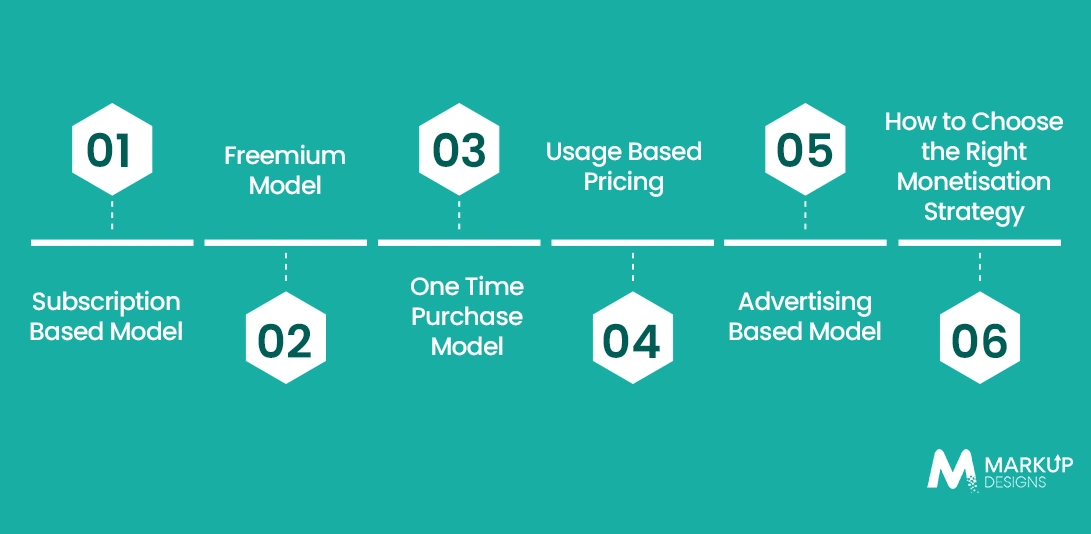
Your monetisation model should support both customer adoption and long term profitability. The right approach depends on how customers use the product and the value they receive.
Subscription-Based Model
Charge customers recurring fees for continued access to the product, often through monthly or annual plans.
Freemium Model
Offer a basic version at no cost while charging for advanced features, higher usage limits, or premium capabilities.
One-Time Purchase Model
Customers pay once for access to the software or a specific version. This model is more suitable for certain products than continuously evolving SaaS platforms.
Usage-Based Pricing
Charge customers according to their consumption, such as transactions, API calls, storage, or active usage.
Advertising-Based Model
Generate revenue by displaying relevant advertisements to users. This model is more common for products with large consumer audiences.
How to Choose the Right Monetisation Strategy
Consider your target audience, product value, usage patterns, competitors, acquisition strategy, and expected customer lifetime value before selecting a model.
How to Manage and Scale Your Software Product After Launch?
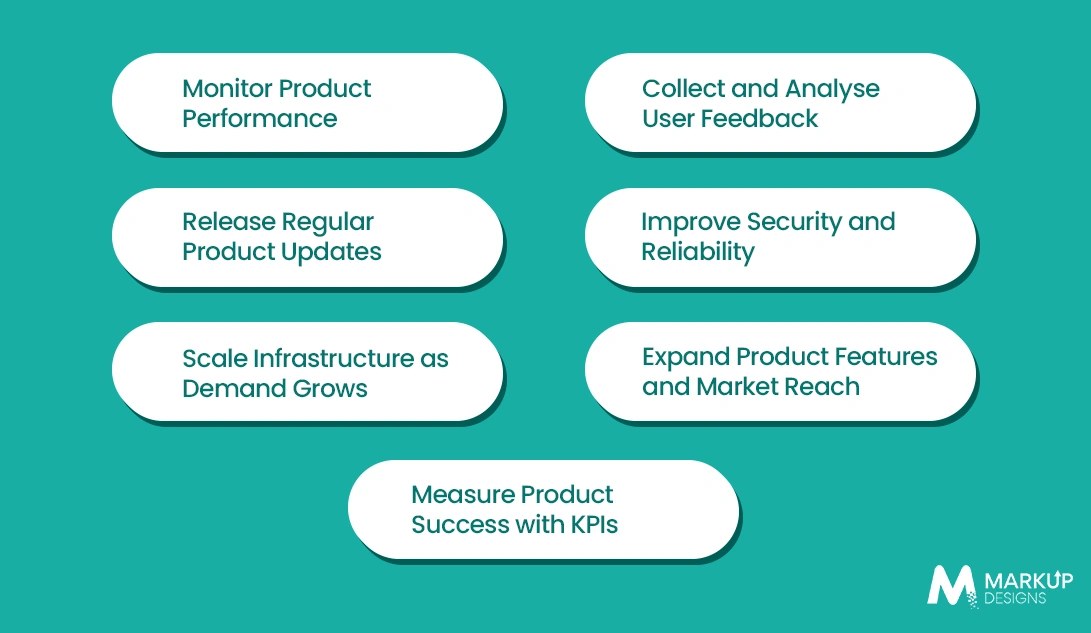
Launching the product does not end the development lifecycle. Continuous monitoring and improvement are necessary to maintain performance, security, user satisfaction, and competitiveness.
Monitor Product Performance
Track application performance, uptime, errors, infrastructure usage, and other technical indicators.
Collect and Analyse User Feedback
Use reviews, support requests, surveys, interviews, and product analytics to identify areas that need improvement.
Release Regular Product Updates
Prioritise fixes, improvements, and new features based on user needs and business priorities rather than releasing changes without a clear purpose.
Improve Security and Reliability
Regularly update dependencies, review vulnerabilities, monitor threats, and strengthen infrastructure as the product evolves.
Scale Infrastructure as Demand Grows
Increase computing resources, optimise databases, introduce caching, or adopt additional architectural strategies when usage requires them.
Expand Product Features and Market Reach
Once the core product is stable, expand functionality or enter new markets based on validated demand.
Measure Product Success with KPIs
Track metrics such as user retention, conversion, engagement, revenue, customer acquisition cost, and lifetime value to evaluate product performance.
Best Practices for Successful Software Product Development
Successful products are built around disciplined decision-making rather than feature volume. Keep development focused on customer value, technical quality, and measurable business outcomes.
Start with a Clear Product Vision
Define what the product aims to achieve, who it serves, and what problem it solves before development begins.
Prioritise User Needs
Build around validated user problems rather than assumptions about what customers might want.
Build an MVP Before Scaling
Prove the core product concept before investing heavily in advanced features or large-scale infrastructure.
Use Agile Development Practices
Iterative development makes it easier to respond to feedback and changing requirements without disrupting the entire project.
Plan for Security from the Beginning
Build security into requirements, architecture, development, testing, and deployment rather than treating it as a final stage.
Invest in Quality Assurance
Consistent testing reduces defects and protects the product experience as new features are introduced.
Choose a Scalable Architecture
Avoid unnecessary complexity, but make sure the architecture can support realistic future growth.
Maintain Clear Communication Across Teams
Regular communication between business stakeholders, designers, developers, QA teams, and product managers reduces misunderstandings and delays.
Continuously Improve the Product
Use product analytics, customer feedback, and business performance data to guide future improvements.
Why Choose Markup Designs for Software Product Development?
Markup Designs can support the complete product development lifecycle, from early product planning and UX design to development, testing, deployment, and ongoing optimisation.
End-to-End Product Development Expertise
Bring product strategy, design, software engineering, QA, and deployment together through a coordinated development process.
Custom Software Solutions for Diverse Industries
Develop software products around specific business processes, user requirements, and industry needs rather than forcing businesses into generic solutions.
Scalable and Secure Technology Architecture
Build products with architecture, security, performance, and future scalability considered from the early stages.
AI and Emerging Technology Integration
Incorporate AI, automation, analytics, and other emerging technologies where they provide genuine business or user value.
Agile Development and Transparent Collaboration
Use iterative development and regular communication to keep product progress aligned with business objectives.
Post Launch Support and Product Optimisation
Continue improving the product through maintenance, performance optimisation, security updates, and feature enhancements as business needs evolve.
Ready to Make Your Software Product Idea Come True?
From product discovery and MVP development to scalable architecture and post-launch optimization, Markup Designs helps companies develop software products that can be used by real customers and grow.
Conclusion
Successful software product development starts long before coding and continues well after launch. A clear product vision, validated market need, focused MVP, suitable technology stack, secure architecture, and continuous user feedback all contribute to building a product that can compete and scale.
The key is to avoid treating development as a one time project. A software product needs ongoing optimisation as users, markets, technologies, and business priorities change. With the right strategy and development partner, businesses can move from an initial idea to a reliable product built for sustainable growth.
FAQs
1. What does software product development mean?
Software product development is a term that highlights the procedure of converting an approved idea into a useful and fully operational software solution. The process encompasses product planning, UX design, development, testing, implementation, and improvements after going live.
2. What are the major steps of the software product development process?
The main steps of the process are product discovery, market and user research, requirement definition, UI/UX design, MVP development, testing, implementation, and post-launch support. The length of the process differs depending on the complexity of the product and the business goals to be accomplished.
3. How to begin the software product development project?
To start a project, you should determine the problem, target audience, goals of a product, required set of features, and market opportunities. After that, the development team can evaluate how feasible the product is from the technical point of view.
4. How much does it cost to develop a software product?
The cost depends on factors such as product complexity, features, platforms, integrations, technology stack, development team, security requirements, and ongoing support. A clear scope and MVP plan are essential for creating a realistic estimate.
5. How much time is needed to develop a software product?
A simple MVP might take several months, but complex enterprise solutions would take much longer. The time needed for development depends greatly on the size of the project, the number of functions or features, integrations, platforms, size of the team, testing requirements, and on any changes made throughout the development process.
Author's Perspective
A successful software product is not defined by how many features it contains or how quickly it reaches production. It is defined by whether it solves a real problem, delivers a useful experience, and continues to create value after launch. Businesses should therefore validate the idea early, keep the initial scope focused, and make scalability and security part of the product strategy from day one.
Discuss Your Project NowJupinder Singh Arora
Founder and CEO
Related Posts
Farm Management Software Development in Australia: Features, AI...
Knowledge Management System Development in Australia: Building AI-Ready...

Custom Software Development Cost in the UK: Features,...
Insights Are Valuable & Execution is Priceless
You’ve read about the digital future. Now, let’s build the infrastructure to take you there. Move your strategy from the page to the product.
Design Your Solution Now
Contact Us
Schedule The Appointment At Your Convenience Date And Time.
30 Min
Web Conference
Time Zone
Indian standard time (08:30pm)

Thanks For Getting In Touch!
You’ve Taken The First Step Toward Transforming Your Digital Presence. Our Experts Will Reach Out Shortly To Take It Forward.
Launch Your Dream Project
Provide a brief overview of your project, and our specialists will evaluate your requirements. We will connect with you to explore how the right digital solutions can help you launch faster.