
In Brief
- Businesses can use a software as a service platform (SaaS) to provide web-based services without having to install or maintain any infrastructure themselves.
- SaaS development costs vary depending on your SaaS platform’s complexity and scalability; you can expect to pay anywhere from $25,000 (for an MVP) to over $300,000 (for enterprise-class SaaS platforms).
- The most critical features of SaaS platforms (in order of importance) include: multi-tenancy or shared resources, subscription management, user authentication, analytics, and security.
- Your choice of architecture, technology stack, and development strategy significantly affects the performance, cost to maintain, and future scalability of your product.
- Artificial intelligence (AI) powered automation, predictive analytics, and intelligent workflows are quickly becoming key differentiators for leading-edge SaaS products.
- Partnering with an experienced development partner will lower the risk of development, speed up time to market, and ultimately increase long-term ROI.
Overview
Software delivery has gone through a major change in the last decade. Organizations no longer want to commit large amounts of capital to build on-premise data center infrastructure, go through a lengthy software installation process, or spend a significant amount of time maintaining their own infrastructure. Therefore, more and more companies are moving to cloud-based architectures that provide flexibility, availability, predictable pricing, and ongoing innovation. The rapid growth of Software as a Service (SaaS) has led it to be one of the most widely used methods of delivering software worldwide in the technology world.
SaaS applications now account for almost all business functions. Whether you are an entrepreneur, start-up, or enterprise, SaaS products can offer an opportunity to build scalable revenues using subscription-based business models. Building a successful SaaS platform, however, is not just about developing computer programs. In addition to proper planning, developing a robust architecture, ensuring secure development, considering future scalability, and understanding end-users’ needs, developing a SaaS platform requires a thorough knowledge of software architecture. This comprehensive guide contains all the necessary elements surrounding building a SaaS platform, such as cost items, the types of features to include, making architectural decisions, strategies to use for building the platform, and how to build a platform correctly.
What is a SaaS Platform?
SaaS is a type of software delivery model in which the application is hosted in the cloud and is accessed via either a web browser or a mobile device (internet-connected). The main difference between SaaS applications and traditional desktop applications is that SaaS applications are stored on a common infrastructure in the cloud and are accessed via an electronic device (a computer or mobile device). In addition, with traditional applications, you typically install the application on your local device, whereas SaaS applications are “leased” from the service provider (SaaS vendor) and are available for use when you need them. Examples of provided SaaS applications include:
- Salesforce
- Slack
- Zoom
- HubSpot
- Shopify
The value proposition of Software as a Service (SaaS) is primarily driven by the following four factors: continuous access to software applications, automatic software updates, subscription-based pricing, and seamless scalability.
Reasons for the Growth of SaaS Solutions
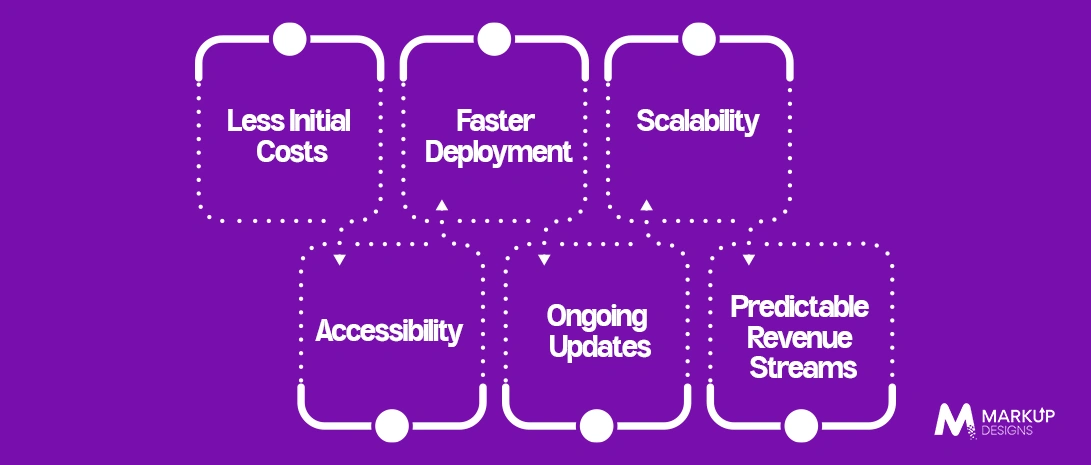
Organizations are increasingly choosing SaaS solutions to avoid the limitations of traditional software applications. Here are five reasons for this:
1. Less Initial Costs
Organizations no longer have to make significant capital investments to purchase new hardware and other infrastructure necessary to host software applications. With SaaS, they only pay for the service(s) they use.
2. Faster Deployment
SaaS applications can generally be implemented within a few days or weeks, compared to months for traditional software applications.
3. Scalability
Because SaaS solutions run on cloud infrastructure, organizations can easily scale their SaaS services up or down (depending on user demand).
4. Accessibility
SaaS users can access their application from any location just with an internet connection.
5. Ongoing Updates
SaaS providers are able to deliver new features and security updates on an ongoing basis with no disruption to end users.
6. Predictable Revenue Streams
Because SaaS providers generally charge their customers on a subscription basis, they can count on predictable, recurring revenue streams.
Types of SaaS Platforms
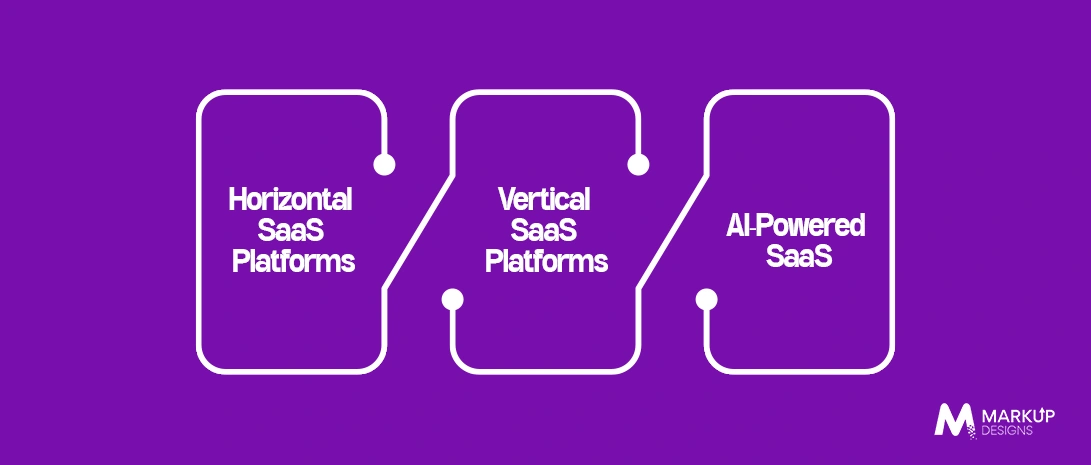
1. Horizontal SaaS Platforms
Horizontal SaaS platforms are multi-industry solutions such as project management, customer relationship management (CRM), and accounting.
2. Vertical SaaS Platforms
Vertical SaaS platforms are focused on a single industry. For example:
- Healthcare Management Software
- Real Estate Software
- Legal Practice Management Software
- Construction Project Management Software
- Enterprise SaaS
Enterprise SaaS is targeted toward large companies that need advanced security features, integration capabilities, and compliance with industry regulations.
3. AI-Powered SaaS
AI-powered SaaS leverages artificial intelligence for automation, recommendations, analytics, and decision-making processes.
Key Features to Have In SaaS Application
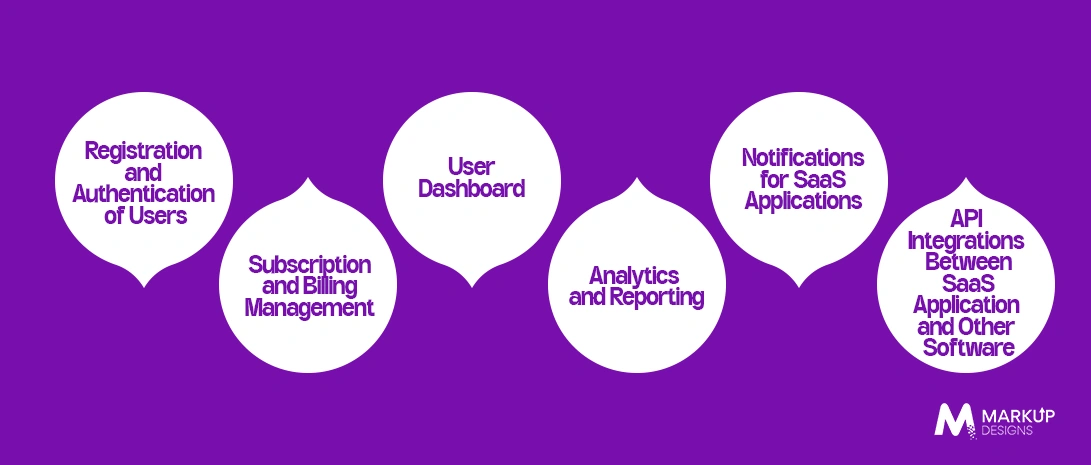
Registration and Authentication of Users
The building blocks of every SaaS application include secure signup, logging in, recovering lost passwords, and having role-based access control.
This includes the following main attributes:
- Email Authentication
- Social Logins
- Multiple Forms of Authentication Represented By Multi-Factor Authentication or 2FA
- Single Sign-On (SSO)
Subscription and Billing Management for SaaS Applications
Subscription Management in SaaS requires flexibility in how subscriptions will be handled.
Examples of this include:
- Monthly and Yearly Subscriptions
- Coupons
- Payment Gateway Integrations
- Automatic Invoicing
- Reminders of Renewals
User Dashboard for SaaS Applications
User dashboards give the end-user a view into what they have done, metrics about their activity level, and provide a means for managing their work (workflow).
Analytics and Reporting of SaaS Applications
Organizations depend upon receiving data in the form of analytics that they can use to make good business decisions.
Examples of common reports are:
- Tracking Usage
- Revenue Analytics
- Customer Engagement Metrics
- Operations KPIs
Notifications for SaaS Applications
Real-time methods to communicate with users enhance user engagement.
Examples of Types of Notifications Include:
- Email Alan
- SMSText Alerts
- Push Notifications
- In-App Messaging
API Integrations Between SaaS Application and Other Software
All modern SaaS applications must have integrations to third-party applications.
Some examples include:
- CRM
- Payment processing systems
- Marketing Automation
- Cloud Storage Providers
Security of SaaS Applications
Security continues to be an essential element of any SaaS offering.
Key elements for the security of SaaS Applications include:
- Encryption
- Access Control
- Audit Logs
- Monitoring for Threats
- Data Back-Ups
Step 1: Research and Validate Your Idea Before Writing Any Code
Businesses must perform market research and validation prior to developing their product idea and writing code.
Market Research should focus on:
- Is there demand for my product in the marketplace?
- Who are my competitors that have a similar product?
- What are the customers’ largest pain points?
- How can my product generate revenue?
Step 2: Define Product Requirements
Establish:
- Defined target audience
- The main features of the product
- User journeys
- Desired business goals
- Metrics to determine if the goal was successful
Step 3: Create an MVP
An MVP will allow you to solve only one main problem while having little to no features.
Benefits of your MVP:
- You can launch faster
- It requires a lower investment
- You will get feedback from customers early on
- There is less risk in developing your MVP
Step 4: UX/UI Design
The design has direct effects on the number of users who adopt your product and also how many retain after using it. Your design for the SaaS product will need to include:
- Ease of use
- Accessibility for all users regardless of ability
- A consistent look and feel throughout the application
- Excellent performance
Step 5: Planning the Architecture
At this point, you will determine how your platform will scale in the future, depending on things such as:
- The design of the database
- The design of the API
- The cloud infrastructure that will be used
- How the application will be secured
Step 6: Development of the Application
During the development phase, you will have the following:
Frontend Development
Handles the experience of users interacting with your application through the interface
Backend Development
This is where logic, APIs, databases, and the integration among the applications occur.
DevOps Setup
Support for deploying, automating, monitoring, and scaling your application.
Step 7: Quality Assurance Testing
Quality assurance involves testing the following types:
- Functional
- Security
- Performance
- Usability
- Integration
Step 8: Deploy the Application
Once testing is complete, the application is now ready to go into a live production environment.
Step 9: Ongoing Improvements
Successful SaaS products continually improve over time based on feedback provided by users as well as analyzed data.
Costs of SaaS development will vary greatly based on many factors, such as the complexity of the project, the type of integration needed, scalability expectations, and where the development team is geographically located.
| Development Stage | Estimated Cost |
| Discovery & Planning | $3,000 – $15,000 |
| UI/UX Design | $5,000 – $25,000 |
| Frontend Development | $10,000 – $60,000 |
| Backend Development | $15,000 – $100,000+ |
| API Integrations | $5,000 – $40,000 |
| QA Testing | $5,000 – $25,000 |
| Cloud Infrastructure Setup | $3,000 – $20,000 |
| Deployment & Maintenance | Ongoing |
Estimated SaaS Development Costs by Project Scope
| SaaS Platform Type | Estimated Development Cost |
| Basic MVP | $25,000 – $50,000 |
| Mid-Level SaaS Platform | $50,000 – $150,000 |
| Enterprise SaaS Solution | $150,000 – $300,000+ |
| AI-Powered Enterprise SaaS | $250,000 – $500,000+ |
What is the best technology stack for saas development?
- Frontend technologies: React, Angular, Vue.js, Next.js
- Backend technologies: Node.js, Python, Java, .NET
- Database options: PostgreSQL, MySQL, and MongoDB
- Cloud platform choices: Amazon Web Services, Microsoft Azure, Google Cloud
- DevOps tools: Docker, Kubernetes, Jenkins, GitHub Actions
Choosing the Right SaaS Architecture
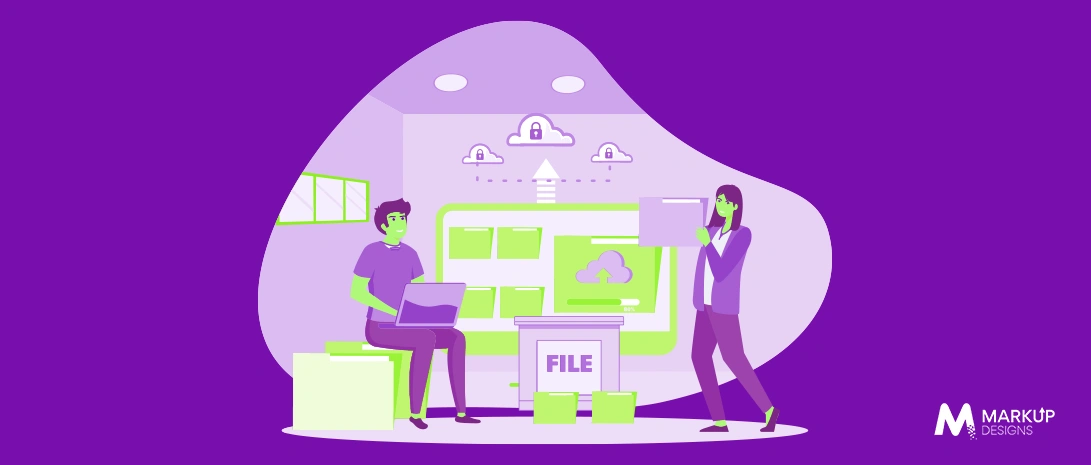
A SaaS platform’s overall architecture is crucial to its scalability, performance, security, maintenance requirements, and long-term costs. One of the most important architectural decisions made in SaaS development is whether to build on a “multi-tenant” or “single-tenant” infrastructure.
Multi-Tenant Infrastructure
Currently, the majority of SaaS solutions leverage the multi-tenant approach due to its ability to provide multiple tenants with a common infrastructure while continuing to allow them to operate independently of one another.
A Single-Tenant Architecture
In single-tenant architectures, every client/customer acts as if they are working from their own independent, isolated shared environment that consists of unique applications, databases, and infrastructure resources
Which Architecture Should You Choose?
There is no right answer to the question above. Because most startups and growth-stage SaaS businesses exist in multi-tenant architectures, they tend to prefer this model for their financial benefits (e.g., scalability) and its relative ease of maintenance. However, companies within regulated industries (e.g., healthcare and finance) often have significant advantages of using single-tenant architecture (e.g., secure data, customized solutions etc.).
Ultimately, the best architecture is the one that aligns with your business goals, customer expectations, security requirements, and long-term growth strategy.
Security and Compliance Considerations for SaaS Platforms
Security is often one of the most critical factors influencing SaaS adoption. Businesses trust SaaS providers with sensitive customer information, financial records, and operational data, making robust security measures essential. A security breach can lead to financial losses, reputational damage, and regulatory penalties, which is why security must be integrated throughout the development lifecycle.
Some of the key security measures every SaaS platform should implement include:
- End-to-End Encryption
- API Security
- Data Backup and Disaster Recovery
- Role-Based Access Control (RBAC)
- Security Audits and Vulnerability Assessments
- Continuous Threat Monitoring
Regulatory Compliance Requirements
Security is critical for many businesses when deciding whether to adopt Software as a Service (SaaS). This is because companies rely on SaaS providers to protect confidential information about customers, financial records and operational data. Therefore, effective security is essential for all SaaS providers due to the severe consequences of a security breach on SaaS providers including loss of revenue, damage to reputation and penalties imposed by law; this is why security must be embedded into the development process of all SaaS Products.
There are some basic security practices all SaaS Platforms should implement:
In addition to the above practices, there are also a number of compliance regulations every SaaS Platform will need to adhere to based on the type of industry they operate in and their target market. Some of the main compliance standards that will affect your SaaS business are:
– General Data Protection Regulation – Controls the collection, processing and safeguarding of personal data from individuals residing in the European Union.
– Health Insurance Portability and Accountability Act – Establishes standards for the confidentiality and security of Healthcare Information in the United States.
– System and Organization Control – 2 describes that the organization followed strict and effective measures to secure, ensure availability and protect all client’s data.
– ISO 27001 – Internationally recognized standard for establishing, operating, maintaining and continuously improving an Information Security Management System.
– Payment Card Industry Data Security Standards – All SaaS businesses must comply if they process, store mobile transactions.
By having security and compliance as a top priority from day one, SaaS Companies will build trust with their customers while minimizing risk and will also establish a stronger foundation upon which they can continue to grow for many years.
Artificial Intelligence and Automation Features in Modern SaaS Applications
Artificial Intelligence, often referred to as AI or machine learning, has transformed the software industry with its ability to create intelligent and adaptive service-based or SaaS (Software-as-a-Service) solutions. With traditional SaaS applications, companies simply used these applications to convert their processes into digital format; however, new AI-infused SaaS solutions also analyze information, identify patterns, recommend actions based on historical evidence and automate activities without needing any human involvement.
As a result of operating within a data-heavy environment, organizations have improved their productivity, reduced the amount of manual effort required to perform key tasks, provided better customer service and added value through improved insights when using AI-enabled applications.
Organizations continue generating vast amounts of data every day, leading to AI becoming a necessary element in developing SaaS products that provide measurable value for the organization.
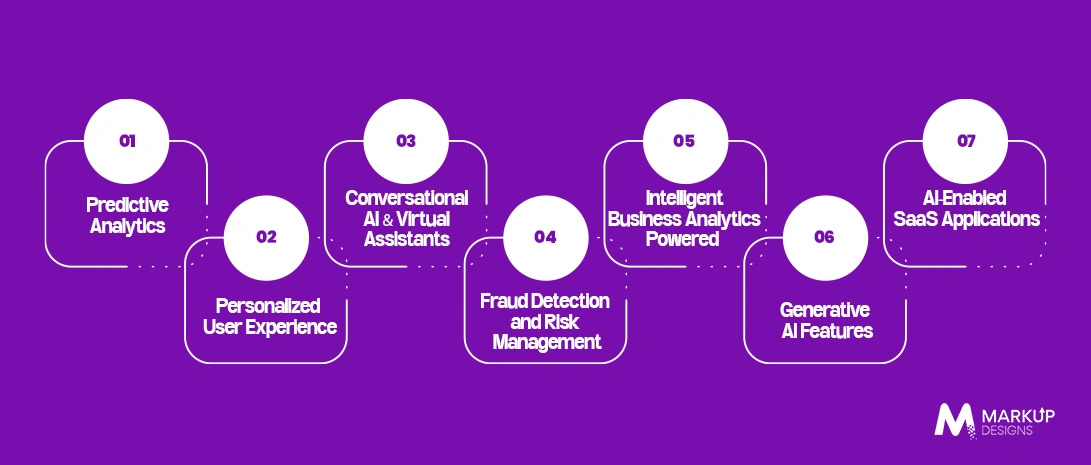
Predictive Analytics
Predictive analytics, which uses both past and present data, uses machine learning models to create forecasts about future activities. Predictive analytics looks at what has happened in the past and creates predictions for what will likely occur based on finding correlated relationships.
For example, using a SaaS based customer relationship management (CRM) application, an organization can track how many times existing customers have shopped at their site, how many times they have purchased and what products they have purchased to provide the sales team with a statistical analysis of which prospective customers are more likely to purchase based on the averages and medians of the previous customers’ purchases. Likewise, predictive analytics can assist financial SaaS solutions predict trends of future revenue, fluctuations of cash and potential risks to the organization’s financial wellbeing.
Some benefits of using predictive analytics include:
- Improving business forecasting
- Improving decision making
- Minimized operational risks
- More opportunities for sales
- Better resource allocation
As SaaS providers accumulate user data over time, predictive models continue to become more accurate at helping companies anticipate changes in the market and customer demand.
Intelligent Automation
The most important way to use AI in developing SaaS solutions is by utilizing intelligent automation. While traditional automation is strictly rule-based, AI-driven automation can learn from actual data, modify itself as environmental conditions change, and make decisions based on context or situational awareness.
Companies have begun using intelligent automation to help businesses streamline their repetitive processes that consume time and resources, including:
- Data entry and process
- Onboarding of customers
- Creation of invoices
- Scheduling of appointments
- Approval of workflows
- Classification of documents
- Routing and management of support tickets
For example, a SaaS-based project management solution would create and assign tasks automatically based on each team member’s workload, skill set, and priority level of the project prior to completing any assignment in the system. Administrative labor is greatly reduced, as well as overall productivity being increased.
Overall, the impact on a business is faster operations, fewer manual errors and savings in resources across all departments.
Personalized User Experience
Users of modern SaaS tools want to use software that understands and adapts to them based on their specific usage and behavior. By analyzing the way users interact with the application, how they use it over time, and what their historical data indicates, a SaaS application using AI will receive the intelligence needed to deliver two individualized user experiences:
- Dashboards
- Content recommendations
- Product recommendations
- Workflow setups
- Notifications/alerts
- Learning resources
- User journeys
The personalization of the user experience increases engagement, satisfaction, and retention for platforms and also helps businesses increase the value that users get out of their software.
Conversational AI & Virtual Assistants
Conversational Interfaces, like chatbot and virtual assistants, powered by AI, are becoming more prevalent as features of accepted modern-day SaaS products. Conversational Interfaces leverage natural language processing (NLP) and machine learning to interpret user inquiries so the systems are able to generate intelligent responses that are not dependent on human intervention (like the traditional support solution).
As such, Conversational Interfaces are able to perform many different functions including the ability to:
- Answer Customers’ Questions
- Help Users with Onboarding
- Resolve Technical Issues
- Recommend Products & Services
- Schedule Appointments
- Generate Reports
- Search the Platform
This functionality improves accessibility, decreases support costs, and creates a more intuitive end-user experience.
Fraud Detection and Risk Management
SaaS products process sensitive Customer data, Financial Transactions, and Business-Critical information therefore Security remains a primary focus among the industry.
These systems continuously monitor user behavior and transaction patterns to detect anomalies such as:
- Unauthorized login attempts
- Account takeovers
- Unusual spending activities
- Fake account creation
- Payment fraud
- Data breaches
Fraud detection that is driven by AI helps organizations better secure themselves, stay compliant, and keep customers’ trust by detecting things that can cause harm to the company before they do any damage.
Intelligent Business Analytics Powered by Artificial Intelligence
Business analytics tools are no longer just static dashboards and reports, as they now use Artificial Intelligence (AI) in a Software as a Service (SaaS) format to automatically uncover hidden trends and insights in data and recommend actions based on their analyses.
AI does not require users to manually analyse huge amounts of data. For instance, with an AI-based system you can:
- Identify performance bottlenecks
- Identify new market trends
- Spot revenue opportunities
- Suggest ways to improve operations
- Write executive summaries
So decision-makers are able to take action faster and make better strategic decisions without the need for extensive analysis or analytical skills.
Generative AI Features
Generative AI is the fastest growing innovation in SaaS platforms. A lot of businesses are using large language models (LLMs) and generative AI tools to increase their productivity and automate their content creation processes.
Examples of applications of generative AI include:
- Creating content
- Drafting emails
- Creating marketing copy
- Summarising reports
- Creating code
- Building knowledge bases
- Drafting responses for customers
By reducing the amount of manual work needed to accomplish these tasks, teams are able to be more efficient in their work processes.
AI-Enabled SaaS Applications
Autonomous use is the next generation of SaaS; automation is being replaced by AI-powered automated agents capable of performing tasks, managing workflow, suggesting enhancements, and optimizing business processes with little human input.
If you are among the many companies developing a SaaS solution today, you should think about how to apply artificial intelligence (AI) to your product offering as more than a secondary functionality or capability; AI represents a primary means by which your company can differentiate itself from the competition. SaaS platforms that effectively leverage both automation, personalization, predictive analytics, and user-friendly chat functions will have a greater likelihood over other providers to obtain new customers, maintain existing customers, and develop a long-lasting competitive edge in the ever-changing marketplace for online software-as-a-service.
Common Development Issues Faced by Developers of SaaS Applications
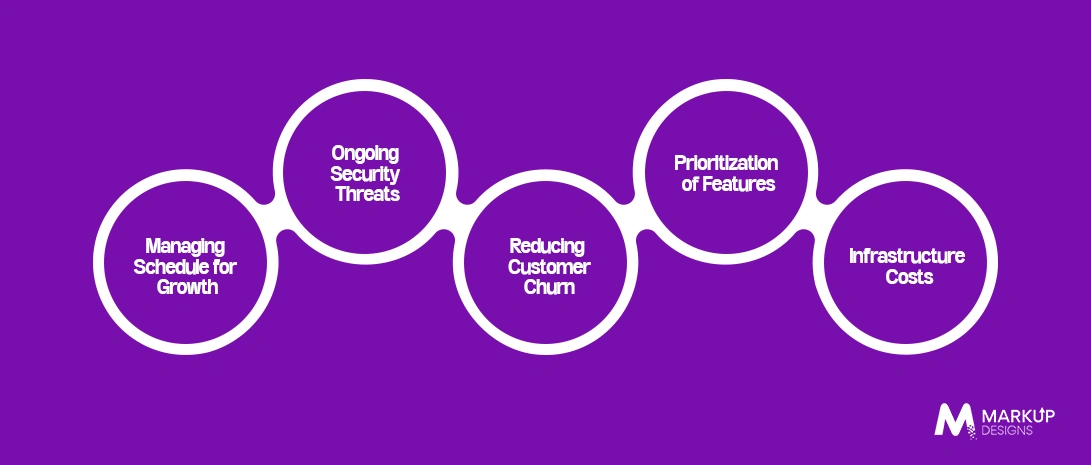
Managing Schedule for Growth
Quick Growth in the number of users will put significant stress on the system infrastructure being used.
Ongoing Security Threats
Cybersecurity threats do not stay still; they continually change and evolve.
Reducing Customer Churn
Customer Retention is one of the largest issues facing SaaS businesses.
Prioritization of Features
Too many features can hinder business growth by being added too quickly.
Infrastructure Costs
Cloud computing can result in unanticipated additional costs, unless it is managed properly.
Methods for Developing a Successful SaaS Product
Focus on Solving One Primary Problem
Products that are designed to solve a single primary problem, better than their competition’s multiple/similar products, will usually have a greater success rate than products that have as many features as possible.
Develop a Minimum Viable Product
Test all of your assumptions prior to spending significant amounts of total company, business, and technology resources.
User Experience
The user experience must be prioritized because no matter how innovative the solution may be, if a user interface doesn’t function well, then it will take away from the overall effectiveness of the solution.
Enable Security from Start
Security needs to be built in and not something that is added on later.
Use Data to Inform Decisions
To make product decisions, analytics should be used.
Build an Infrastructure that Can Scale
Building an infrastructure that can scale will provide for future growth.
Why Work with Markup Designs to Develop Your SaaS Application
We work with start-ups as well as small and mid-sized businesses (SMB) and large enterprises to help them turn their software idea into a successful and scalable SaaS application with measurable business value.
Markup Designs SaaS Development Services Include:
- Discovery and validation of your product (MVP)
- Consulting and strategy
- UI/UX design
- MVP development
- Building Cloud-Native Architecture
- Data APIs and Integrations
- AI-Powered Features
- Security and Compliance
- DevOps and Cloud Deployment
- Ongoing Maintenance and Improvement
What separates us from others is that we focus on the outcome, not just coding. By combining our technical skills, product strategy, and user-centric design, we will create a secure, scalable, and sustainable SaaS Platform that fuels long-term profitability.
Want to Develop Your SaaS Application?
If you would like assistance in developing a SaaS application for your new disruptive start-up, a SaaS application for a legacy enterprise application, or a SaaS application powered by artificial intelligence, Markup Designs can assist you with your project.
Final Thoughts
The Software as a Service (SaaS) industry is changing the way we create, deliver and use software. This means that companies in all industries are turning to subscription-based web-based services to become more productive and reduce the amount of work they have to do to operate their business. As a result of all of the above factors, it is becoming more and more important to have a well-developed SaaS business model.
Creating a successful SaaS business requires much more than merely developing technology. Creating a successful SaaS business also requires an organization to have an effective business strategy, a scalable technology architecture, strong security, an easy-to-use interface for users, and a thorough understanding of the target market.
Developing a successful SaaS platform includes identifying the key components of your product, choosing the appropriate technology solution, and implementing AI to enhance your product’s capabilities. Each stage in the development process will have a major impact on the long-term success of your SaaS platform. Companies that invest time and money into the planning phase, focusing on their customers as the main driver for their company, will be best positioned to succeed in the rapidly growing and highly competitive SaaS marketplace.
FAQs
1. What does it cost to build a SaaS platform?
The cost to build a SaaS platform generally ranges from $25,000-$300,000. There are many factors that can affect the total development cost, such as how complex your product is, how many integrations, scalability, security, and how much experience your development team has.
2. How long does the SaaS development process take?
For an MVP, the SaaS platform can typically be developed within 3-6 months. For an enterprise-level application, it may take 9 months or longer to develop your SaaS product.
3. The Most Important Features of Any SaaS Platform
Some of the key elements that will ensure a SaaS platform’s long-term success include user management, subscription billing, security, analytics, and scalability.
4. Should Startups First Build an MVP?
Yes, developing an MVP (minimum viable product) allows startup companies to validate market demand for their product by receiving feedback from real customers before investing heavy development or marketing budget into building out the advanced features.
5. What is the main difference Between SaaS and Traditional Software
Traditional software is installed on a local computer, whereas SaaS applications are hosted by a vendor (third party) in the cloud with access via the internet and generally charged on a subscription basis.
6. How Can AI Improve a SaaS Platform?
AI can improve a SaaS platform by providing enhanced performance through automation, personalization, customer support, predictive analytics, and fraud detection; cutting operating costs; and improving efficiency.
Author's Perspective
The SaaS marketplace has transitioned well beyond just delivering technology to end-users via the internet through a subscription-based model, as evidenced by the fact that the most successful SaaS organizations today are those that successfully integrate technology, business strategy, user experience, data intelligence, and continuous innovation into one product offering and are able to effectively solve real business challenges at scale. Companies entering the SaaS market need to focus on delivering value to users and building sustainable value into their organizations rather than solely focusing on developing new features.
By prioritizing scalability, security, customer-centric design, and future-ready technologies such as AI, businesses can establish a strong foundation for long-term growth and competitive advantage in the rapidly expanding SaaS ecosystem.
Discuss Your Project NowAjit Kumar Jha
VP - Business Operations
Related Posts

How to Build an Insurance Portal with CRM,...
Custom Software Development Services in Abu Dhabi for...
Custom Software Development Cost in Bahrain: Factors, Benefits,...
Insights Are Valuable & Execution is Priceless
You’ve read about the digital future. Now, let’s build the infrastructure to take you there. Move your strategy from the page to the product.
Design Your Solution Now
Contact Us
Schedule The Appointment At Your Convenience Date And Time.
30 Min
Web Conference
Time Zone
Indian standard time (08:30pm)

Thanks For Getting In Touch!
You’ve Taken The First Step Toward Transforming Your Digital Presence. Our Experts Will Reach Out Shortly To Take It Forward.
Launch Your Dream Project
Provide a brief overview of your project, and our specialists will evaluate your requirements. We will connect with you to explore how the right digital solutions can help you launch faster.