

In Brief
- The creation of a telehealth app similar to Teladoc will make it possible to provide consultations, mental health services, digital prescriptions, appointment scheduling, and patient care remotely.
- Important components will be patient registration, doctor profiles, appointment scheduling, consultations via audio and video, digital prescriptions, medical record management, payment processing, notifications, and an admin dashboard.
- App development will consist of defining business models, feature sets, technology stack, designing UI/UX, development of frontend and backend, integration of third-party services, security implementation, and testing.
- The budget for the project will be between $40,000 and $300,000+, while the time required for creating such an application can be anywhere from 2-3 months to 9+ months, depending on the complexity of the software to be developed.
- The appropriate technology stack will consist of Flutter, React Native, Swift, Kotlin, Node.js, Python, PostgreSQL, AWS, WebRTC, and payment services. MarkUp Designs can assist in developing telehealth apps via customization, integration, architecture scaling, and development & maintenance services.
The advancement of digital technology makes healthcare increasingly available. You do not necessarily have to go to the hospital for consultations anymore. It is now possible to consult a doctor, discuss your health issues, get prescriptions, and coordinate follow-up visits via telehealth applications. Teladoc has helped to simplify virtual healthcare as it has connected patients with healthcare providers via digital technologies.
However, the rise in the demand for telehealth platforms offers a number of chances for healthcare providers, startups, and businesses willing to develop their own applications. Nevertheless, developing an application similar to Teladoc is quite challenging and needs to be carefully planned since it includes making decisions regarding the features and technologies to be used, costs, and the development period.
In this blog, you will learn about how to develop a telehealth application like Teladoc, its necessary features, development process, and costs.
What is a Telehealth App Like Teladoc?
Telehealth applications are healthcare platforms through which patients are able to communicate with healthcare professionals remotely without the need to visit clinics. Through their mobile devices or personal computers, patients can make appointments, engage in consultations, share their health concerns, and obtain medical advice.
Telehealth platforms similar to Teladoc Health allow patients to access healthcare professionals from a number of medical specialties, offering a wide range of services like:
- Virtual Doctor Consultations: Patients have an opportunity to connect with healthcare specialists via video or phone calls.
- Mental Health Services: Patients can get mental health therapy and counseling services via telehealth.
- Prescriptions: Telehealth specialists can offer prescriptions and advice about treatment to patients.
- Appointment Scheduling: Patients can find suitable doctors and book appointments.
- Continuous Healthcare: Patients can access follow-up consultations on their health issues.
Developing a telehealth platform similar to Teladoc involves the development of a secure and scalable system that will facilitate healthcare services to both users and doctors.
Key Features to Include in a Telehealth App Like Teladoc
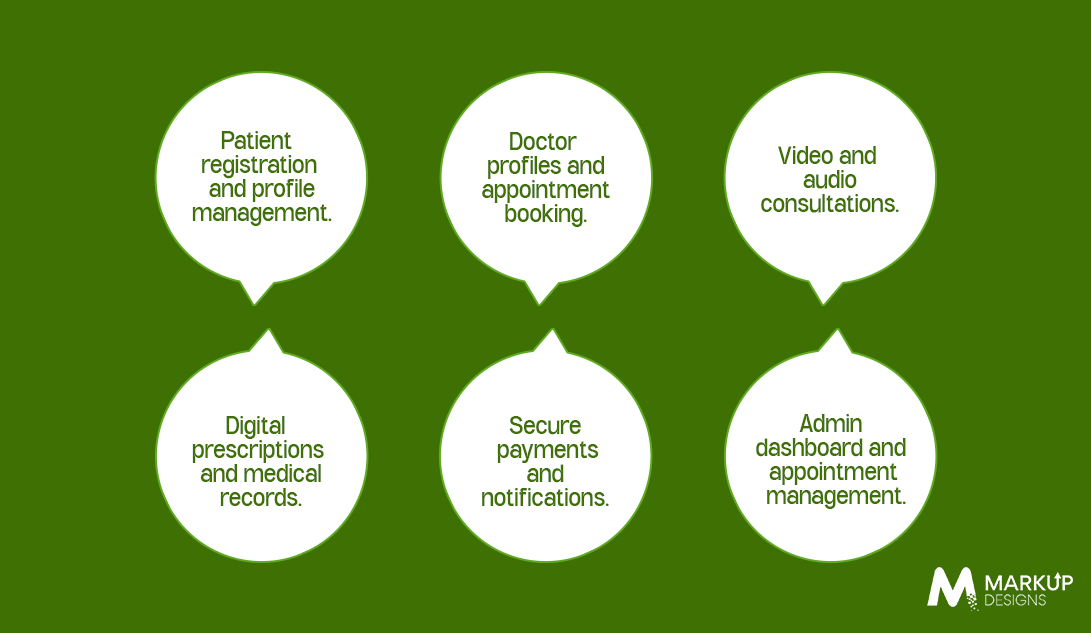
The design elements of a telehealth application determine the relationship between patients and doctors and how healthcare professionals carry out their daily activities. The app design should allow easy consultation while ensuring the confidentiality of the medical information. Below are some of the features that should be included:
Patient registration and profile management.
Enable patient registration using any preferred method, including email, phone number, or social media accounts. Patient profiles should have personal, medical history, allergies, and health preferences information.
Doctor profiles and appointment booking.
Design doctor profiles that contain qualifications, specialty, experience, consultation fee, and availability. This should enable patients to search for and book appointments with doctors according to their needs.
Video and audio consultations.
Implement secure video and audio calling facilities where patients can consult their doctors online. Various possibilities, like call scheduling, waiting rooms, and connection control, may enhance the consultation process.
Digital prescriptions and medical records.
Let doctors generate digital prescriptions and give them access to their patients’ medical records. It is important that patients get access to their medical records as well.
Secure payments and notifications.
Include digital payment systems to make payments for online consultations. You could use automated reminders and notifications to let patients know about appointments, payments, etc.
Admin dashboard and appointment management.
Create an admin dashboard that would enable you to handle patients, doctors, appointments, payments, etc. It would make managing the platform easier.
How to Build a Telehealth App Like Teladoc: Step-by-Step Process
A telehealth application development process goes beyond simply developing a mobile application. One needs to know about the healthcare processes, patient demands, technology requirements, and security. The following steps will be helpful in building one.
Step 1. Define Your Business Model and User Base
Begin by determining what kind of healthcare services your platform is supposed to provide. This could range from consulting, psychotherapy, specialist healthcare, or management of chronic diseases. Determine who your user base and revenue model would be.
Step 2. Identify Core Features and App Requirements
Write down the necessary functions for patients, doctors, and managers/administrators. These could include booking appointments, conducting virtual consultations, creating digital prescriptions, payment procedures, etc.
Step 3. Select Appropriate Technologies
Choose adequate programming languages, frameworks, databases, and cloud providers that will ensure good performance, safe data management, and scalability.
Step 4. Make the Application User-Friendly with UX/UI
Provide intuitive interfaces for both users and doctors. Pay attention to navigation simplicity, accessibility, booking process, consultation, and other aspects.
Step 5. Create Frontend and Backend
Construct the front-end and back-end parts of the system. The backend part will be responsible for managing accounts, appointments, patient histories, notifications, and other processes.
Step 6. Integrate Third-Party Applications
Integrate video conference APIs, payment gateway services, EHR systems, notifications, etc. This step will help to enhance your application without creating everything from scratch.
Step 7. Implementation of Security & Regulatory Compliance
Ensure that sensitive patient information is protected using measures such as encryption, secure authentication, role-based access, and audit trails. Determine which healthcare regulations apply to the target markets.
Step 8. Testing, Launching, and Maintaining the Application
The application needs to be tested in relation to functionality, performance, usability, and security before being launched. The application should then be maintained after deployment.
How Much Does It Cost to Build a Telehealth App Like Teladoc?
The average cost of developing a telehealth application like Teladoc ranges from $40,000 to $300,000, or even more, due to various factors like the functionality of the application, technology, etc. The cost of developing a simpler telehealth application with booking and video calls is lower than that of a complex application with advanced technologies.
| App Complexity | Estimated Cost |
| Basic Telehealth App | $40,000–$70,000 |
| Mid-Level Telehealth App | $70,000–$150,000 |
| Advanced Telehealth App | $150,000–$300,000+ |
1. Basic Telehealth Application
A basic telehealth application has basic functionality, including registration of patients, creation of doctors’ profiles, scheduling of appointments, video consultation, and online payment. It is ideal for startups or any other business that intends to create an MVP and launch it into the market.
2. Mid-level Telehealth Application
Mid-level applications have extra functionality, including digital prescriptions, medical records management, dashboards for doctors, appointment reminders, EHR integration, and enhanced security measures. They are ideal for any business intending to serve a larger number of patients in the market.
3. High-level Telehealth Application
A high-level telehealth application has many extra features, including AI-based healthcare assistants, remote monitoring systems, connectivity with wearable devices, advanced analytics, multi-specialty healthcare services, and complicated third-party integration systems. They are suitable for businesses aiming to create a scalable digital health ecosystem.
Factors That Influence Telehealth App Development Cost
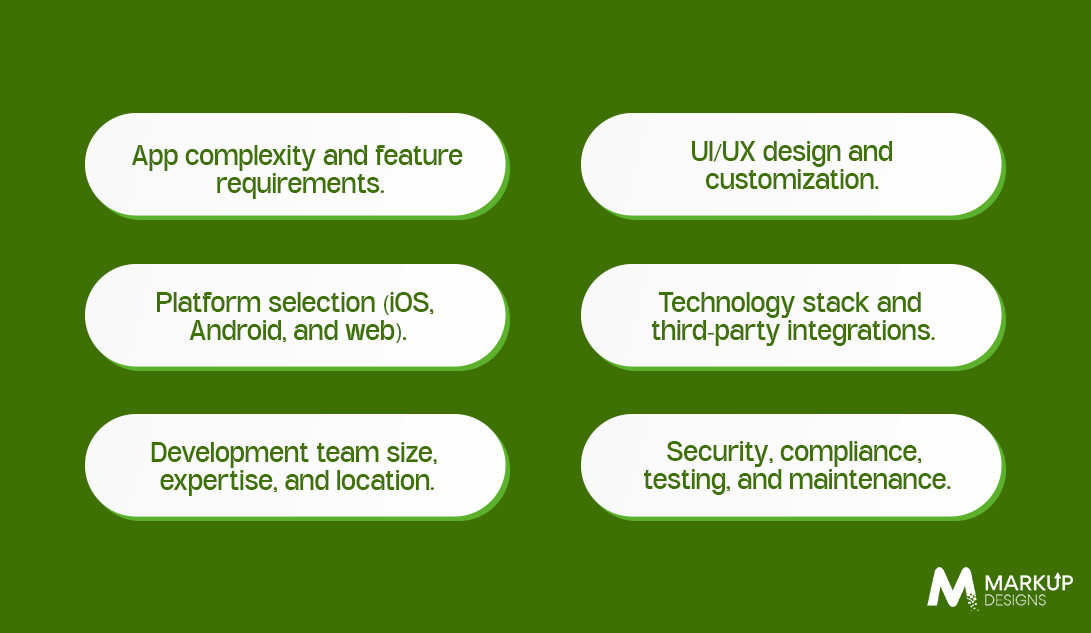
The cost of developing a telehealth application will depend on a range of technical and business requirements. The development budget will differ even for two apps providing the same services due to their features, integrations, platforms, and security requirements. Let’s look at the following six key factors affecting the cost of development.
App complexity and feature requirements.
The number and level of complexity of the app features will greatly influence its development cost. Simple features like registration and appointment booking don’t need much work done, while AI assistance, patient remote monitoring, and advanced analytics do.
UI/UX design and customization.
An intuitive interface will help both patients and doctors use the app without difficulty. Custom dashboards, interactive appointment flows, accessibility features, and personal interfaces will add up to design and development costs.
Platform selection (iOS, Android, and web).
The development cost of the app for a single platform will be lower than the cost of iOS and Android apps. A separate web platform for doctors and administrators will add more development requirements.
Technology stack and third-party integrations.
Programming language, frameworks, database management system, and cloud computing will determine the budget of the project. Additional integrations with EHR systems, payment gateways, videoconferencing apps, wearables, etc., might incur additional costs for development.
Development team size, expertise, and location.
The experience of the development team, its size, and location will affect hourly rates and the total cost of development. A typical telehealth project will need a team of UI/UX designers, front-end and back-end developers, QA engineers, security experts, and a project manager.
Security, compliance, testing, and maintenance.
As healthcare software works with personal health data, security becomes an important requirement during development. All these aspects also add up to the total price.
How Long Does It Take to Develop a Telehealth App?
The development time for creating a telehealth application is affected by the degree of complexity of the application, the requirements, and the testing process of that application. An application that contains some basic functions of consultation can be created more quickly than a complex application.
Here is an indicative development timeline based on different project scopes:
| App Complexity | Estimated Timeline |
| Basic Telehealth App | 2–3 Months |
| Mid-Level Telehealth App | 3–6 Months |
| Advanced Telehealth App | 9+ Months |
1. Basic Telehealth Application (2-3 Months)
A basic application that involves user registration, doctor profiles, appointment scheduling, video consultation, and payments would take about 2-3 months to develop. This time frame is usually relevant to cases when requirements are clearly defined, and there are few integrations needed.
2. Mid-level Telehealth Application (3-6 Months)
Mid-level application needs extra development for such features as digital prescriptions, health records, doctor dashboards, notifications, and EHR integrations. To design, develop, integrate, and test all these features takes about 3-6 months.
3. Advanced Telehealth Application (9+ Months)
An advanced telehealth platform would take nine months or even more due to its complicated architecture and many functionalities. Such features as AI-powered support, integrations with wearables, remote patient monitoring, multiple healthcare modules, and extra security requirements would take more time to develop and test.
Read Also: How Patient Scheduling Software Improves Healthcare Operations
Technology Stack Required to Build a Telehealth App
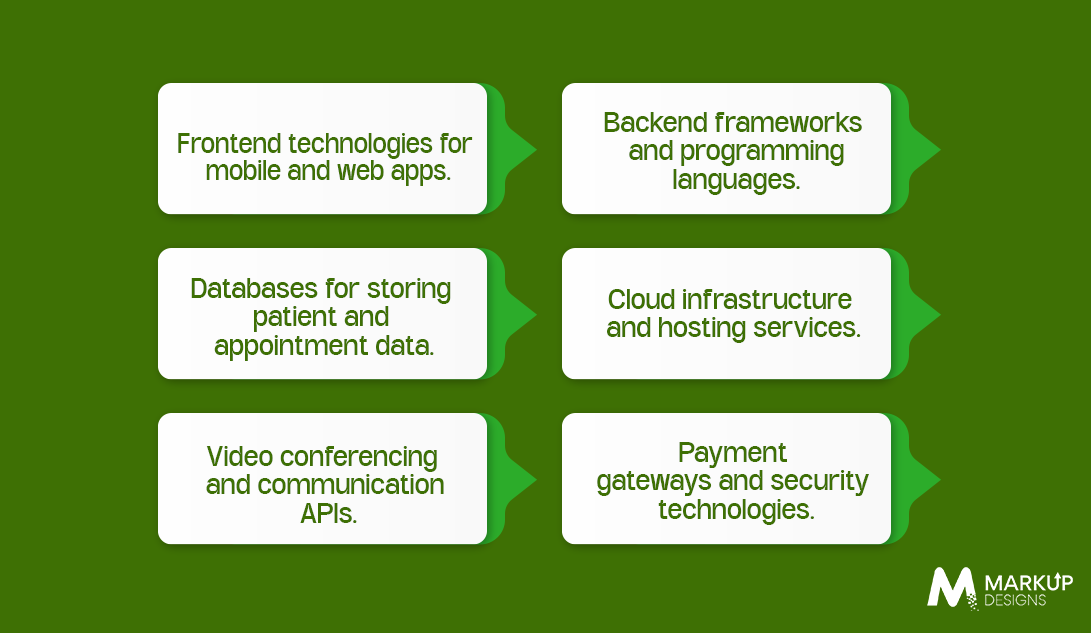
The choice of the technology stack is important for the development of a telemedicine application that will be efficient, secure, and scalable. It depends on many factors, including the complexity of the app and the chosen platforms.
Here are the key technologies commonly used in telehealth app development:
1. Frontend Technologies for Mobile and Web Apps
Frontend technologies help create the interfaces that patients, doctors, and administrators interact with.
Mobile: Swift for iOS and Kotlin for Android.
Cross-platform: Flutter and React Native.
Web: React.js and Angular.
2. Backend Frameworks and Programming Languages
Backend technologies manage application logic, user authentication, appointments, consultations, and data processing.
Languages: Java, Python, JavaScript, and PHP.
Frameworks: Node.js, Django, Spring Boot, and Laravel.
3. Databases for Storing Patient and Appointment Data.
Databases store and organize information such as user profiles, appointment details, medical records, and consultation history.
Relational databases: PostgreSQL and MySQL.
NoSQL databases: MongoDB and Firebase.
4. Cloud Infrastructure and Hosting Services
Cloud platforms provide the infrastructure required to host applications, manage databases, and handle growing user traffic.
Cloud providers: AWS, Microsoft Azure, and Google Cloud.
Services: Cloud storage, database hosting, backups, and content delivery networks (CDNs).
5. Video Conferencing and Communication APIs
These technologies enable real-time communication between patients and healthcare professionals.
Video APIs: Agora, Twilio, and Zoom Video SDK.
Communication: WebRTC, secure messaging services, and push notification tools.
6. Payment Gateways and Security Technologies
Payment and security solutions help manage transactions and protect sensitive healthcare information.
Payment gateways: Stripe, PayPal, and Razorpay.
Security: TLS encryption, AES-256 encryption, multi-factor authentication, and role-based access control.
Why Choose Markup Designs for Telehealth App Development?
To develop an effective telehealth app, it is important to have expertise in healthcare, technology, and user-centered solutions. Markup Designs assists companies in translating their ideas about the use of healthcare into tailor-made digital solutions according to their unique needs. Our team concentrates on designing apps that will streamline the process of providing healthcare services to patients.
In addition to the development of intuitive UI/UX, our services entail the inclusion of important components like video conferencing, payment gateway, and EHR system.
Our team enables businesses to create scalable application architecture so that their platforms are ready to cater to more users and additional healthcare service offerings. In addition to providing development services ranging from planning and design to development, testing, and launch, Markup Designs offers ongoing maintenance and optimization of the application.
Build a Telehealth App That Makes Healthcare More Accessible
Partner with Markup Designs to develop a secure, scalable, and user-friendly telehealth application. Turn your healthcare vision into a digital solution built around patient and provider needs.

Conclusion
Creating an app like Teladoc requires the analysis of healthcare requirements, selection of the proper features, and effective app development. From user sign-up, consultations, prescriptions, and payments to any other functionality, each element contributes to the overall experience of patients using healthcare services online.
It depends on the complexity of the project, chosen technology stack, integrations, and level of security, whether it is going to take much time and money to create such an app. Businesses can begin with an MVP version with necessary functionalities and then scale their apps according to user needs.
Selecting the proper development partner is one more step to make it easier to develop a telemedicine app. With the help of this approach, companies will be able to scale their apps and get maximum benefits from the usage of telemedicine.
FAQs
1. How much does it cost to build a telehealth app like Teladoc?
The cost of developing a telehealth app can range from $40,000 to $300,000 or more. The final budget depends on features, application complexity, integrations, platforms, and development team rates.
2. How long does it take to develop a telehealth application?
A basic telehealth application may take 2–3 months, while a mid-level platform can require 3–6 months. Advanced applications with complex integrations and AI-powered features may take nine months or longer.
3. What are the must-have features of a telehealth app?
Essential features include patient registration, doctor profiles, appointment scheduling, video consultations, digital prescriptions, medical records, online payments, notifications, and an admin dashboard.
4. Which technology is best for telehealth app development?
Technologies such as Flutter, React Native, Swift, Kotlin, Node.js, Python, PostgreSQL, and AWS are commonly used. The right combination depends on application requirements, scalability, and integration needs.
5. Does a telehealth app need to be HIPAA-compliant?
HIPAA compliance is required for covered entities and business associates handling protected health information under applicable US regulations. Applications targeting other regions must also follow their respective healthcare and data protection requirements.
Author's Perspective
Telehealth applications are changing how patients access healthcare and how providers deliver their services. However, building a successful platform requires more than adding video consultations and appointment booking features.
The real focus should be on creating a connected healthcare experience where patients can access services easily, and doctors can manage their workflows efficiently. Security, data privacy, regulatory compliance, and scalability should also be considered from the beginning.
For businesses planning to enter the digital healthcare market, starting with clearly defined requirements and an MVP can be a practical approach. With the right technology and development strategy, a telehealth application can become a valuable long-term digital healthcare solution.
Discuss Your Project NowJupinder Singh Arora
Founder and CEO
Related Posts

How to Build a Doctor On-Demand App: Features,...
Healthcare App Development Cost in 2026: Complete Pricing...
How to Build a Compliant HealthTech App in...
Insights Are Valuable & Execution is Priceless
You’ve read about the digital future. Now, let’s build the infrastructure to take you there. Move your strategy from the page to the product.
Design Your Solution Now
Contact Us
Schedule The Appointment At Your Convenience Date And Time.
30 Min
Web Conference
Time Zone
Indian standard time (08:30pm)

Thanks For Getting In Touch!
You’ve Taken The First Step Toward Transforming Your Digital Presence. Our Experts Will Reach Out Shortly To Take It Forward.
Launch Your Dream Project
Provide a brief overview of your project, and our specialists will evaluate your requirements. We will connect with you to explore how the right digital solutions can help you launch faster.