

In Brief
- Cloud Infrastructure enables companies in Saudi Arabia to handle increasing data volumes, workloads, and customer needs, and expand their businesses without depending on traditional IT infrastructure.
- The cloud services provider will help you scale quickly by leveraging the advantages of fast scalability, cost savings, rapid application delivery, business continuity, security, and the adoption of artificial intelligence.
- Key cloud services offered include cloud consultation and strategy, cloud migration and modernization, managed cloud services, hybrid and multi-cloud services, and cloud security, backup, and disaster recovery.
- Cloud solutions can be used in industries like retail, finance, healthcare, manufacturing, logistics, and government. Successful cloud implementation requires developing a comprehensive roadmap, which involves infrastructure evaluation, goal setting, security, migration, monitoring, and optimization.
- The common obstacles for cloud services are increasing cloud expenses, difficulties with migrations, security misconfigurations, legacy system integration, skills gaps, and vendor lock-in. Markup Designs offers custom-made, secure, and scalable cloud solutions tailored to your growth needs.
The businesses in Saudi Arabia are increasingly leaning towards adopting a digital environment for efficiency and enhanced customer service in order to venture into more markets. In line with the growth in business activities, there is an increased need for technological requirements. Traditional information technology infrastructures tend to fail at handling the growing load and demand for increased data. This is why cloud computing plays a significant role in such a scenario.
Cloud computing offers an easy and convenient way for businesses to access computing facilities, applications, and storage without having to invest a lot in hardware infrastructure. However, the adoption of cloud computing requires proper planning, technical skills, and management. Collaboration with a professional cloud services company in Saudi Arabia makes this process much easier.
This blog will discuss how cloud service providers can assist Saudi businesses in scaling fast, the services provided, some industry-specific applications of cloud technology, and also the considerations that go into choosing the right cloud service provider.
Why Businesses in Saudi Arabia Need Scalable Cloud Infrastructure
Digital transformation in sectors like finance, health care, retail, manufacturing, and governance is happening in Saudi Arabia. As the company embraces digital technologies, it requires an infrastructure that can deal with increased demands in terms of workload and users.
In the traditional form of infrastructure, as the business grows, it will require additional hardware and maintenance. Cloud-based infrastructure provides a flexible solution to this problem, as it can provide computing capacity according to requirements.
Here are some key reasons why Saudi businesses need scalable cloud infrastructure:
- Increased Need for Data Storage: Address growing needs for data storage and processing.
- Changing Customer Needs: Provide faster and more dependable digital services.
- Expansion of Business: Serve new branches, new markets, and new services.
- Operational Flexibility: Modify resources according to workload changes.
- Digital Transformation: Facilitate automation and modernization.
Scalable cloud infrastructure helps businesses manage growth while preparing for future demands.
How a Cloud Services Company in Saudi Arabia Helps Businesses Scale Faster
However, scaling a business requires adding more resources. Rather, it is about developing an IT infrastructure that will be capable of handling growing workloads and ensuring the continuity of operation. An information technology firm that offers cloud services in Saudi Arabia assists companies in building such an IT infrastructure.
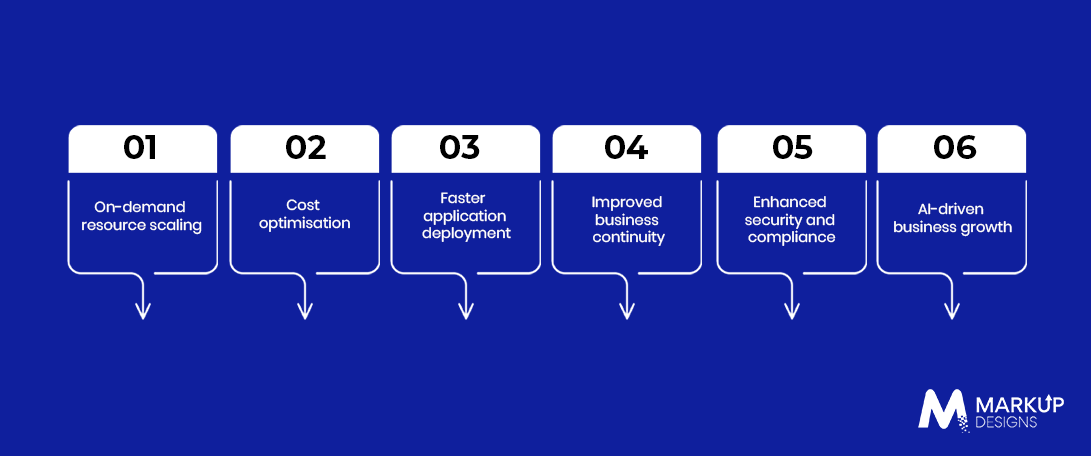
Some of the ways that cloud service providers assist businesses in their faster scaling include:
On-demand resource scaling
A company can scale its computing power, storage capacity, and network resources up and down in accordance with the level of demand. In this way, the company becomes capable of coping with unexpected growth in traffic and workloads without purchasing extra physical servers.
Cost optimisation
By using cloud services, a company will not need to make expensive initial investments in infrastructure. It can pay for the resources it uses and save money with resource optimization.
Faster application deployment
The cloud helps businesses deploy their applications quickly because the environment enables quick development, testing, and deployment of the applications using methods such as automation, containers, and DevOps techniques.
Improved business continuity
The cloud service provider offers automated backups, recovery, and disaster recovery services for business organizations. This minimizes the chances of data loss in the case of unexpected interruptions.
Enhanced security and compliance
Having an efficient cloud partner makes it easier to implement security services such as encryption, access control, threat detection, and assessments of security. It also becomes easy to know the security and data protection policies of the Kingdom of Saudi Arabia.
AI-driven business growth
The cloud platform is essential in implementing artificial intelligence and machine learning in order to analyze customer behavior and make decisions.
With the right cloud strategy and technical support, businesses can build flexible IT environments that grow alongside their operations.
Which Cloud Services Help Saudi Businesses Grow Faster?
Selecting the right cloud services is essential for improving organizational activities and ensuring sustainable development. A cloud services provider in Saudi Arabia assists organizations in choosing proper solutions in terms of infrastructure, security, and business goals.
There are five major cloud services that can facilitate business growth:
- Cloud Consultancy and Strategy: Assists in analyzing current infrastructure, determining requirements, and creating a cloud adoption strategy.
- Cloud Migration and Modernization: Allows migrating applications, databases, and workloads to the cloud and improving legacy infrastructure.
- Managed Cloud Services: Provides services related to infrastructure management, troubleshooting, monitoring, and optimization.
- Hybrid and Multi-Cloud Services: Allow combining various cloud services to achieve maximum flexibility when managing workloads and data.
- Cloud Security, Backup and Recovery: Ensures the safety of business data using encryption, access management, backup, and disaster recovery solutions.
These services allow building a flexible cloud environment and preparing infrastructure for further growth.
Industry-Specific Cloud Use Cases in Saudi Arabia
Cloud computing provides various advantages based on the nature of the particular industry and how it operates. By helping organizations create effective connections and manage customer data, cloud computing helps organizations create a more connected and efficient system.
Some of the industry-specific applications of cloud computing in Saudi Arabian businesses include:
1. Retail and E-commerce
With the help of cloud computing solutions, retail and e-commerce businesses can create websites and store their products and customer data in the cloud. Cloud-based computing resources will help them manage the high website traffic during promotional periods.
2. Banking and Financial Services
Through cloud computing solutions, banking institutions will be able to provide efficient and scalable digital banking solutions as well as manage customer information. With the help of cloud computing solutions, financial institutions can analyze transaction trends.
3. Healthcare
Cloud platforms may be employed by healthcare institutions to handle electronic medical records, telemedicine services, and facilitate effective information exchange within different departments of the institution. In addition, cloud technology may be employed by such organizations to facilitate coordination among healthcare professionals, provided there are adequate security measures.
4. Manufacturing and Logistics
Companies operating in the manufacturing industry can employ cloud platforms for connecting production systems, equipment monitoring, and analysis of operational information. Meanwhile, logistics firms can employ cloud-based solutions for shipment tracking and inventory management purposes.
5. Government and Public Services
Cloud-based technology can be used in government organizations in order to facilitate the provision of electronic public services, handling of information, as well as communications among departments.
The right cloud implementation depends on each industry’s requirements, existing systems, and regulatory responsibilities. A well-planned cloud strategy helps organisations use technology to improve efficiency and support business growth.
What to Look for in a Cloud Services Company in Saudi Arabia
A choice of a cloud partner is a crucial one since the partner will determine the performance and scalability of the cloud and its security measures. Companies need to consider more than just pricing when selecting a cloud partner.
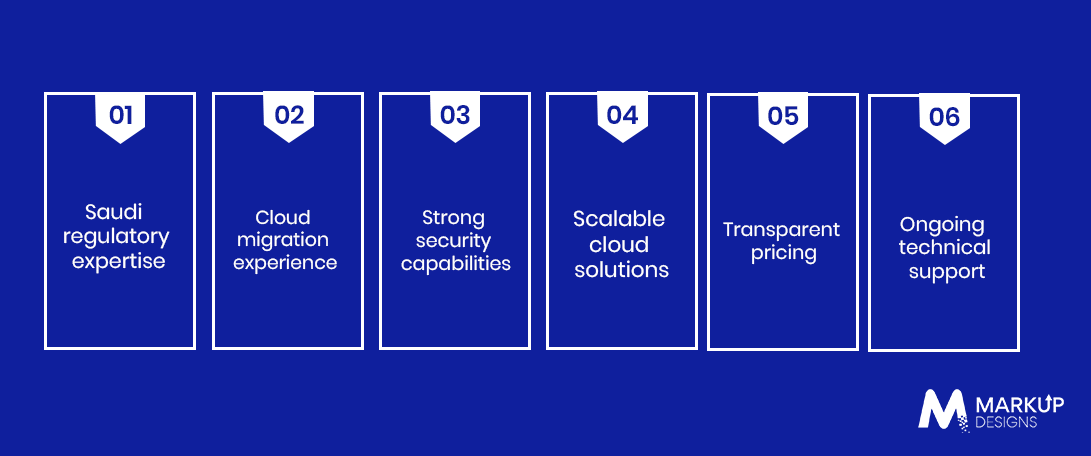
Here are six important factors to consider:
Saudi regulatory expertise
Select a service provider that is familiar with the data protection, cybersecurity, and cloud regulations in Saudi Arabia to help you develop an infrastructure that will comply with the applicable regulations.
Cloud migration experience
Ascertain whether the firm has previous experience in migrating applications, databases, and workloads to the cloud. An experienced provider will have a proven method of doing the migration and testing.
Strong security capabilities
Assess its capacity in data encryption, identity management, access control, security monitoring, and vulnerability management. Security issues must be taken into consideration at all stages of cloud computing.
Scalable cloud solutions
The cloud provider must know your existing infrastructure and your growth strategies. The architecture must be scalable to facilitate growth as your business requirements change.
Transparent pricing
It is essential to check whether the provider has transparent pricing models covering all costs associated with migration, infrastructure utilization, licenses, maintenance, and support.
Ongoing technical support
Cloud infrastructure needs regular monitoring and optimization. Therefore, select a company that offers continuous technical assistance and performance optimization of infrastructure.
A cloud services partner should understand your business goals and provide solutions that support them over time, rather than simply helping you move your existing systems to the cloud.
A Practical Roadmap for Scaling with Cloud Services
A transition to cloud computing needs proper planning in order for technology-related investments to reflect the business objectives. Such an approach will help businesses save money and avoid possible migration problems, and at the same time develop infrastructure capable of further development.
Below is a list of seven actionable steps businesses can follow:
1. Review IT Infrastructure
First, make sure to review the existing applications, databases, servers, storage, and network infrastructure. Find out the weak points and the things that can be improved.
2. Set Business and Technology Objectives
Set objectives for yourself. It could include lowering expenses related to infrastructure, improving the performance of the applications, supporting a mobile workforce, and others.
3. Select Appropriate Cloud Solutions
Determine whether you require a public cloud, private cloud, hybrid cloud, or multi-cloud according to your workloads, security needs, budget, and business operations.
4. Security and Compliance Planning
Determine the policies for protecting data, access permissions, the need for encryption, and monitoring processes. You should consider Saudi compliance laws and cybersecurity measures prior to migrating any workloads.
5. Migration in Stages
Migrate your applications, databases, and other business systems in phases. The testing process will help determine any compatibility problems.
6. Cloud Monitoring
Monitor resource utilization, application performance, storage utilization, and cloud expenditure. Monitoring will enable you to identify any inefficiencies within the system.
7. Continuous Optimization and Scaling
Continually assess the cloud environment depending on changes in the business environment. This will enable you to enhance the infrastructure through upgrading and automating processes.
Following these steps helps businesses create a cloud environment that supports immediate operational needs while remaining flexible for future expansion.
Common Cloud Scaling Challenges and How to Avoid Them
Even though there is high flexibility and scalability in cloud computing, there could be some challenges that businesses might experience when using it. Failure to plan appropriately may bring about some problems related to performance issues, cost increases, and security risks.
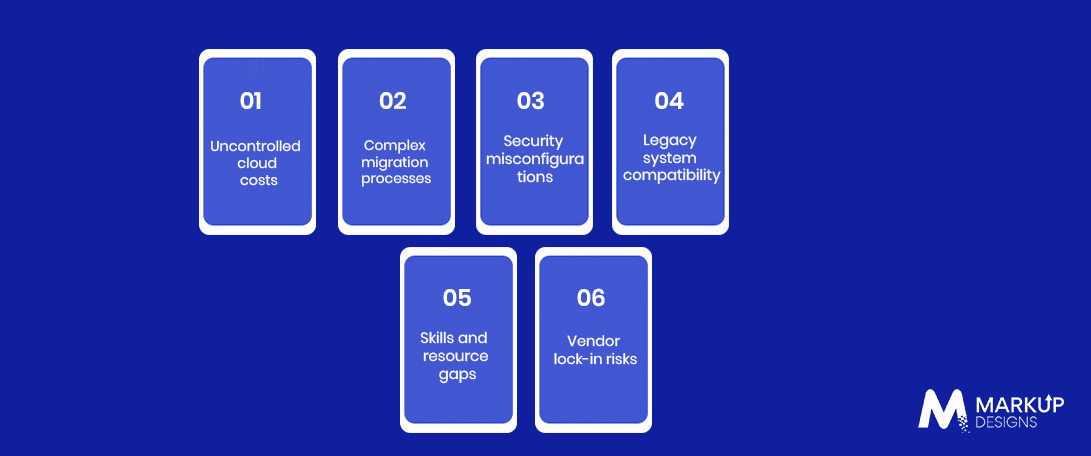
The following is a list of the six challenges together with how to handle each:
Uncontrolled cloud costs
There could be an increase in cost due to the overuse of resources or failure to manage consumption properly.
How to handle it: It would help to set limits for the consumption budget, configure alerts, and eliminate unnecessary consumption.
Complex migration processes
There could be issues related to the compatibility of large applications and databases when migrating to the cloud.
How to handle it: Assessment of the current infrastructure and identification of application dependencies before migration.
Security misconfigurations
Poorly configured permissions, open storage, and weak security measures might compromise sensitive data belonging to businesses.
How to handle it: Ensure that you have proper access control, encryption, security assessment, and constant monitoring measures in place.
Legacy system compatibility
Older applications might not be compatible with the cloud environment in terms of efficiency.
How to handle it: Assess your existing applications and determine what needs to be done – whether to rehost, refactor, replace, or modernize.
Skills and resource gaps
It is important to know how to maintain cloud infrastructure – to understand its architecture, security aspects, automation, and performance.
How to handle it: Train your employees and collaborate with professionals in cloud technology.
Vendor lock-in risks
Depending solely on one particular vendor’s services might pose challenges when switching platforms in the future.
How to handle it: Consider portability, use standard technologies, and develop a plan for exiting the cloud environment.
Addressing these challenges early helps businesses maintain better control over their cloud environments and achieve more consistent results as they grow.
Why Choose Markup Designs as Your Cloud Services Partner in Saudi Arabia?
Proper choice of technology partners enables businesses to use and maintain cloud infrastructure effectively. Markup Designs helps organizations by understanding their technical requirements and implementing customized solutions based on their business objectives and future growth.
Using a business-oriented approach, Markup Designs analyses current systems, difficulties, and needs of the organization to recommend proper solutions. Its expert team of more than 200 people helps develop advanced technologies by offering technical expertise.
However, security, reliability, and scalability are still crucial aspects of developing any technology. In particular, Markup Designs concentrates on implementing adaptive solutions which would be able to change according to workload and business needs.
With experience serving 500+ businesses, Markup Designs aims to help organisations make informed technology decisions and build reliable digital solutions for sustainable growth.
Ready to Scale Your Business with the Right Cloud Strategy?
Build a flexible and reliable cloud environment that supports your business goals. Partner with Markup Designs to explore cloud solutions that help simplify operations and prepare your organisation for future growth.

Conclusion
The use of cloud computing in Saudi Arabia has become an integral component of business growth and digital transformation. It enables companies to deal with growing workloads, increase operational flexibility, control costs associated with infrastructure, and introduce innovative digital solutions without being completely reliant on physical IT infrastructure.
However, to reach the above-mentioned goals, the transition to cloud solutions cannot be considered an easy task, and companies will have to find the right cloud computing strategy, create a secure architecture, plan the process properly, and optimize it regularly. Collaborating with a reputable cloud services provider in Saudi Arabia could help companies to make informed decisions and design infrastructure that meets its needs.
Continued investments in the digitalization of operations and business processes by Saudi companies could be assisted by the implementation of cloud solutions. The main thing is to select a cloud solution provider that knows your business well.
FAQs
1. How can a cloud services company in Saudi Arabia help businesses scale faster?
A cloud services company helps businesses build flexible IT infrastructure, migrate applications, manage cloud resources, and improve system performance. It also supports security, cost optimisation, and ongoing infrastructure management, allowing businesses to focus on growth.
2. Which cloud services do businesses in Saudi Arabia need?
Common cloud services include cloud consulting, migration, infrastructure management, cloud security, backup and disaster recovery, and hybrid or multi-cloud solutions. The right combination depends on business size, industry, workloads, and technology goals.
3. Is cloud computing cost-effective for small businesses in Saudi Arabia?
Yes, cloud computing can be cost-effective for small businesses because it reduces the need for large upfront investments in physical infrastructure. Businesses can start with the resources they need and increase capacity as operations grow. However, proper cost monitoring is important to avoid unnecessary expenses.
4. How do Saudi businesses ensure cloud security and regulatory compliance?
Businesses can implement encryption, identity and access management, security monitoring, regular assessments, and backup policies. They should also evaluate applicable requirements under Saudi data protection and cybersecurity frameworks, including relevant CST and NCA controls.
5. Which cloud deployment model is best for Saudi businesses?
The right model depends on business requirements. Public cloud offers flexibility, private cloud provides greater control over dedicated infrastructure, hybrid cloud combines both approaches, and multi-cloud uses services from multiple providers. Businesses should evaluate security, costs, workloads, and regulatory obligations before choosing.
Author's Perspective
Cloud computing is not just about moving business data and applications to online infrastructure. It is about creating a technology environment that can adapt as an organisation grows. For businesses in Saudi Arabia, the right cloud strategy can improve operational flexibility, support digital innovation, and make it easier to respond to changing market demands.
However, successful cloud adoption requires a clear understanding of business objectives, security requirements, and long-term infrastructure needs. Organisations that focus on these areas can make better technology decisions and build a stronger foundation for sustainable growth.
Discuss Your Project NowJupinder Singh Arora
Founder and CEO
Related Posts
How UAE Businesses Can Build a Compliance-Ready Azure...
Cloud Computing Solutions in Kuwait: Benefits, Challenges, and...

How Cloud Product Development Helps Businesses Build Faster...
Insights Are Valuable & Execution is Priceless
You’ve read about the digital future. Now, let’s build the infrastructure to take you there. Move your strategy from the page to the product.
Design Your Solution Now
Contact Us
Schedule The Appointment At Your Convenience Date And Time.
30 Min
Web Conference
Time Zone
Indian standard time (08:30pm)

Thanks For Getting In Touch!
You’ve Taken The First Step Toward Transforming Your Digital Presence. Our Experts Will Reach Out Shortly To Take It Forward.
Launch Your Dream Project
Provide a brief overview of your project, and our specialists will evaluate your requirements. We will connect with you to explore how the right digital solutions can help you launch faster.