

In Brief
- Scaling artificial intelligence solutions involves proper business strategy and operational goals.
- Having good data infrastructure and system compatibility is crucial in order to scale AI.
- Such technologies as generative AI, machine learning, and intelligent automation could be used for growing the business.
- Issues of data privacy, regulatory compliance, and responsible usage of AI should be taken into consideration.
- Monitoring, employee adaptation, and scaling could allow companies to get the most value out of artificial intelligence.
Firms in Dubai are starting to use artificial intelligence in order to optimise operations, increase the quality of the customer experience, and make decisions. This technology is being applied in industries including financial services, health care, real estate, retail, and logistics to create opportunities for automation, analyse large amounts of data, and build more responsive business models. However, it should be mentioned that implementation of AI is just the first step.
Scaling AI solutions is not only about purchasing new technologies. First of all, companies need to assess their existing systems, select appropriate cases for implementing AI, consider aspects related to data security, and ensure the proper functioning of employees in collaboration with artificial intelligence solutions. Taking into account the changes that occur in the
As the UAE develops a digital and regulatory landscape, businesses in Dubai need to follow a systematic approach to implementing AI solutions. The following blog aims to shed light on the approaches, technologies, challenges, and other factors that can be useful for businesses in scaling their AI integration.
Why Is AI Integration Accelerating for Businesses in Dubai?
The increasing trend in Dubai towards digital transformation leads to the use of AI by businesses. Organisations implement AI to automate routine operations, improve interaction with customers, analyze business data, and speed up decision-making. Given that the UAE National Strategy for Artificial Intelligence 2031 has been launched in the country, the implementation of AI is becoming an integral part of the country’s economic and technological progress.
What Are the Key Benefits of Scaling AI Integration for Dubai Businesses?
Scaling AI integration provides businesses an opportunity to enhance automation, data intelligence, and intelligent decision-making for different departments within an organization. Rather than integrating AI for standalone purposes, organizations will be able to leverage connected AI systems that can increase efficiency, productivity, and customer engagement.
Improved Operational Efficiency and Automation
Using artificial intelligence, businesses can automate processes such as data entry, document management, billing, and coordination of workflows. This leads to less workload on employees and minimizes process delays.
Better Customer Experiences Through AI-Powered Personalisation
Through AI, companies analyze customers’ preferences, browsing behavior, and interaction history to make personalized recommendations and provide assistance. Intelligent chatbots, personalized offers, and customer service through AI can be leveraged to engage customers better.
Data-Driven Business Decisions and Forecasting
Organizations can use machine learning and predictive analytics to analyze patterns in historical and real-time data and derive insights for demand forecasting, risk assessment, and resource allocation.
Reduced Operational Costs and Resource Optimisation
Processes can be automated to reduce operational costs and plan for resources effectively through AI. AI also helps organisations identify inefficiencies, optimise inventory levels, and allocate resources according to changing business requirements.
Competitive Advantage Across Dubai’s Key Industries
With effective integration of AI, businesses would be able to react more quickly to changes in the market, provide better service delivery, and create digital products. In highly competitive industries, such as finance, real estate, retail, healthcare, and logistics, the speed of operations and customer experience play a key role in business development.
What Are the Essential Steps to Scale AI Integration Successfully in Dubai?
In order to scale up AI integration effectively, companies need to take a step-by-step approach and ensure alignment of business goals, technical environment, and organisational readiness. Companies need to start with clear requirements and gradually scale their AI capabilities depending on the level of readiness of their systems and teams.
Identify Business Goals and High-Impact AI Use Cases
At first, one needs to define business needs and use cases where AI would bring tangible benefits. Those might include automation of customer support services, predictive maintenance, demand forecasting, or any other document processing.
Assess Existing IT Infrastructure and Data Readiness
It is important to conduct a comprehensive analysis of the existing enterprise applications, databases, cloud infrastructure, and data management processes.
Businesses should check data quality, accessibility, security, and compatibility to identify infrastructure gaps that could affect integration.
Develop a Scalable AI Integration Strategy
Develop an implementation roadmap outlining project priorities, budget, timeline, and expected results. Additionally, the strategy should factor in plans for business growth, increased amounts of data, and widespread use of AI across different departments.
Select the Right AI Models and Technology Stack
The choice of models and other technologies needed should be guided by the complexity of business needs. Considerations such as accuracy of models, scalability, ease of integration, infrastructure needs, and maintenance should influence the choice.
Integrate AI with Existing Enterprise Systems
Integrate AI-based solutions with existing enterprise applications such as ERP, CRM, HRMS, and business intelligence tools using APIs and integration software to allow exchange of data between applications and leverage AI-powered functionality within existing workflows.
Establish AI Governance and Compliance Frameworks
Formulate policies regarding data access, use of AI models, security, accountability, and human oversight. Businesses based in Dubai need to take into consideration any data protection laws of the UAE when developing AI governance strategies.
Test, Deploy and Monitor AI Applications
Perform testing of AI-based applications in a controlled environment prior to their deployment across businesses. Monitor the accuracy of models, quality of responses, performance, and security of the system to detect any problems and make adjustments accordingly.
Expand AI Adoption Across Business Operations
Once initial implementations demonstrate measurable value, extend AI capabilities to other departments and workflows. A phased expansion approach helps businesses manage technical complexity, train employees, and maintain consistent performance as adoption increases.
What AI Technologies Can Help Dubai Businesses Scale Their Operations?
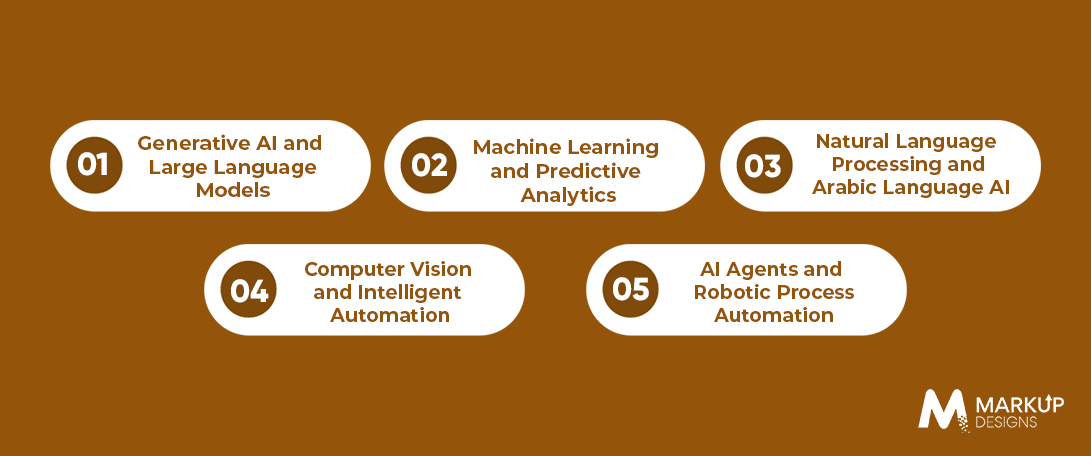
Various types of AI technologies have unique capabilities, ranging from customer communication automation to advanced data analysis. The ability to choose the right mix of tools provides companies with an opportunity to design solutions that meet the goals set by the organization.
Generative AI and Large Language Models
Generative AI and LLMs are capable of content creation, summarization of documents, answering customers’ questions, and helping the staff to search for information. Companies can use this toolset for integration into knowledge bases, customer support systems, and enterprise software to facilitate information access and automate communication processes.
Machine Learning and Predictive Analytics
Through machine learning algorithms, AI systems are able to recognize patterns in business data and develop forecasts. Predictive analytics is useful for sales forecasts, fraud detection, inventory management, and customer behavior analysis to help organizations make proactive business decisions.
Natural Language Processing and Arabic Language AI
Through natural language processing, AI systems are able to recognize, understand and process human language. Arabic language AI is especially important for businesses located in Dubai and targeting a multilingual audience because of its capabilities to implement Arabic chatbots, sentiment analysis, document processing, and customer communication.
Computer Vision and Intelligent Automation
Computer Vision can help AI-based systems analyze images and video streams, which is important for applications like quality control, surveillance and asset tracking. In combination with intelligent automation, computer vision can help minimize the need for manual inspection and increase efficiency.
AI Agents and Robotic Process Automation
AI agents can understand instructions, search for data and perform several tasks within multiple interconnected applications. When using Robotic Process Automation (RPA), AI agents can automate workflow processes, like invoice processing, customer onboarding and administrative work.
What Are the Key Challenges in Scaling AI Integration in Dubai?
Despite the fact that AI can bring many benefits to the business, there are certain challenges associated with scaling AI usage in the organization. Being aware of the potential obstacles can help in finding ways to implement AI efficiently.
Data Privacy, Security and Regulatory Compliance
AI systems typically have access to customer, employee, and company data, making the issue of data protection critical. It is necessary to provide appropriate access control measures, data encryption and security monitoring, as well as to make sure that data processing is performed in accordance with applicable laws.
Legacy System Integration and Data Silos
Some older business applications might not have the required API, architecture, and compatibility with modern AI technology. Inconsistent data formats and disconnected databases could further limit information exchange, thus making planning upgrades and integrations essential.
Shortage of Skilled AI Professionals
Scaling of AI requires skills in machine learning, data engineering, cloud infrastructure, cybersecurity, and AI governance. Businesses may find it hard to find workers with a blend of such skills, hence making training essential and requiring special technology partnerships.
High Infrastructure and Implementation Costs
Implementation of AI involves costs relating to building models, cloud computing, preparing the data, integration of systems, and maintenance. Without adequate planning, the costs will rise with the growing workloads in the implementation of more complex applications.
Managing AI Accuracy, Bias and Reliability
When training AI models, they might generate unreliable and inconsistent results because of using inadequate data. Regular testing, model validation, and human verification are needed to maintain accuracy and reliability and prevent wrong decision-making.
Employee Adoption and Organisational Change
Employees may face problems adapting to new processes facilitated by AI, especially if the implementation changes the responsibilities of the employees. Clear communication, practical training, and employee involvement can help businesses improve adoption and ensure that AI supports rather than disrupts daily operations.
How Can Dubai Businesses Ensure AI Compliance and Responsible Implementation?
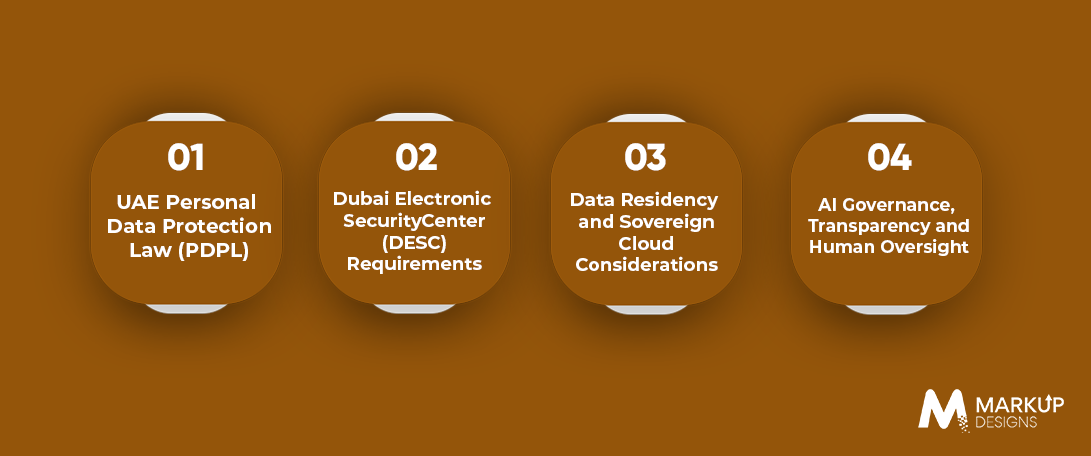
Proper AI implementation would require consideration of such aspects as data protection, cybersecurity, transparency, and accountability throughout the AI lifecycle. Organizations conducting operations in Dubai should examine the relevant legislation with respect to the type of activity and data processing, as well as the requirements for the particular industry before implementing any AI solutions.
UAE Personal Data Protection Law (PDPL)
Under UAE Personal Data Protection Law, certain rules on processing personal data apply. This includes lawful processing of personal data, data subject rights and necessary security measures. Businesses which use AI in order to analyze data on customers or employees should examine whether the process of collecting, storing, processing and disclosing the data complies with the requirements of this law.
Dubai Electronic Security Center (DESC) Requirements
When operating in a regulated environment in Dubai, businesses should also take into account the information security requirements set forth by Dubai Electronic Security Center (DESC). The relevant frameworks deal with cybersecurity governance, risk management, and information protection and can become relevant in AI integration into business processes.
Data Residency and Sovereign Cloud Considerations
It would be beneficial to know what kind of cloud storage, where, and how AI data will be stored and processed when third-party cloud services are used. Requirements regarding data residency, cross-border transfers, and contractual obligations must be estimated in advance before the decision about cloud infrastructure and third-party AI services provision is made.
AI Governance, Transparency, and Human Oversight
Set clear rules on how AI makes decisions, accesses data, and interacts with the end-user. Proper documentation, monitoring, communication of AI use if needed, and human supervision of sensitive decisions should be ensured.
How Much Does It Cost to Scale AI Integration for Businesses in Dubai?
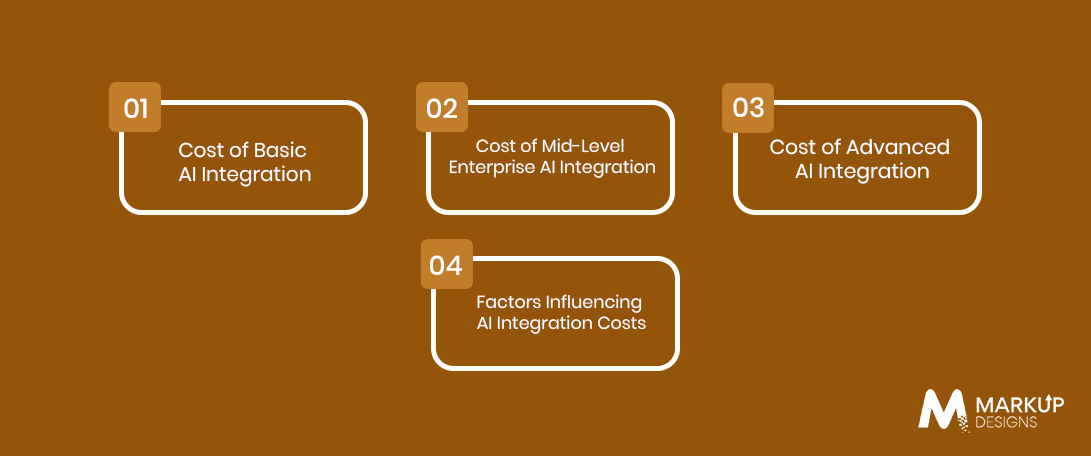
The costs of implementing AI depend on the complexity of a solution, infrastructure used, customisation, and other needs of the system. Simple integration involves small investments, while comprehensive enterprise-level AI solutions require more expenses on development and support.
Cost of Basic AI Integration
Basic AI integration can cost about AED 15,000-50,000. It usually involves off-the-shelf AI applications like chatbots, automated reporting, and document processing.
Cost of Mid-Level Enterprise AI Integration
Mid-level integration can cost AED 50,000-200,000. It includes custom workflows, prediction models, and integration with the current business applications.
Cost of Advanced AI Integration
Advanced AI integration may cost AED 200,000–700,000 or more. These projects involve custom AI models, enterprise-wide automation, complex integrations and advanced infrastructure.
Factors Influencing AI Integration Costs
AI integration costs are influenced by model complexity, data preparation, third-party integrations, cloud infrastructure, security requirements and ongoing maintenance. The number of systems involved and the level of customisation also affect the overall investment.
Which Industries in Dubai Can Benefit Most from Scalable AI Integration?
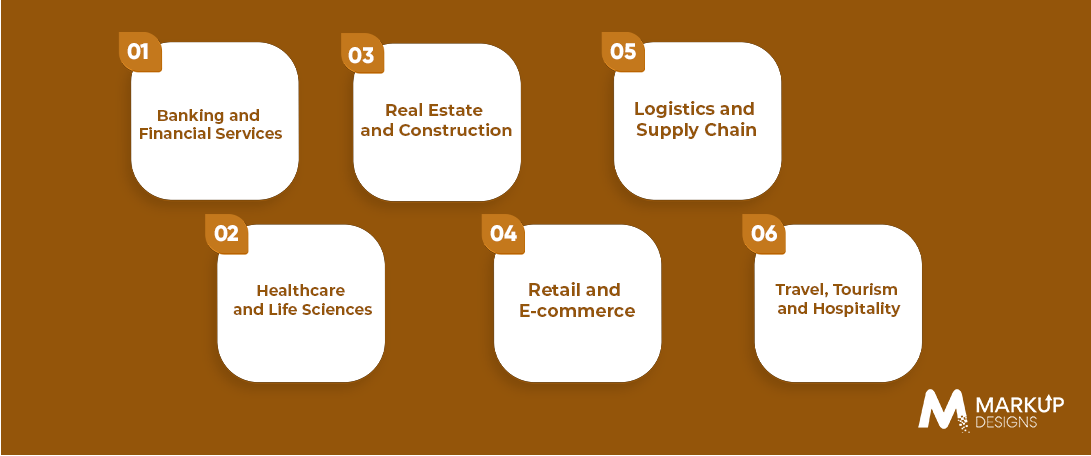
The incorporation of artificial intelligence can facilitate various industries through operational efficiency, customer interactions, and decision-making based on big data analytics. Certain industries in Dubai stand out regarding their ability to leverage these capabilities.
Banking and Financial Services
Banks can utilize AI for fraud detection, credit risk modeling, transaction analysis, and automating customer services. The application of predictive models enables financial companies to understand customer behavior and possible risks.
Healthcare and Life Sciences
The healthcare industry can incorporate AI into such processes as medical image processing, patient appointment scheduling, documentation, and general administration. All these applications contribute to improved operational efficiency and help healthcare professionals.
Real Estate and Construction
The use of AI allows for property valuations, market forecasting, lead generation, and personalized recommendations. Moreover, construction companies can use predictive analytics and computer vision to monitor projects and perform maintenance of equipment.
Retail and E-commerce
Retail companies can use AI to provide personalized product recommendations, inventory forecasting, customer behavior analysis, and marketing. Additionally, AI chatbots allow managing customer inquiries and optimizing retail.
Logistics and Supply Chain
AI-driven systems help logistics companies optimize routes, perform demand forecasting, and manage inventory. Besides, predictive maintenance reduces machine downtime and improves supply chain performance.
Travel, Tourism and Hospitality
Hotels, airlines, and companies engaged in tourism can utilise artificial intelligence in order to manage the booking process, dynamic pricing, personalized recommendations, and multilingual customer support. Such implementation can increase the effectiveness of service provision and customer engagement.
How Should Businesses Assess the Ideal AI Integration Partner in Dubai?
There are certain criteria for selecting an appropriate AI integration company. Firstly, it is necessary to consider the technical and professional competencies, as well as experience in a specific business area of an AI integration company. Secondly, one should consider the company’s approach to previous projects, AI development, security procedures, and post-integration activities.
How Does Markup Designs Assist Businesses in Scaling Their AI Integration Efforts?
Markup Designs assists businesses in implementing and scaling AI integrations, based on the needs and objectives of business development. We work in the sphere of AI development, machine learning, enterprise software, and system integration. We focus on developing appropriate solutions for business needs by means of AI integrations.
Scale Your Business with AI Solutions
Transform your business processes through scalable AI integration solutions centered on your objectives.

Conclusion
Implementation and scaling of AI require a proper mix of technology, infrastructure, and planning. AI has many applications, from workflow automation to improvements in customer experience that could help Dubai enterprises improve their operations and adapt to market demands. An implementation strategy and having the right technology partner could help organizations gain sustainability and value from this solution.
FAQ
1. What is AI integration for Dubai business?
AI integration is the process of integrating AI technologies with business applications and workflows in order to automate processes, analyse data and support decision-making.
2. How much time does it take to integrate AI into an enterprise?
The basic integration of AI takes some weeks, while more complex, customized integration of AI solutions for an enterprise would take several months.
3. Which AI technologies could be used for Dubai businesses?
There are many technologies, including generative AI, machine learning, predictive analytics, natural language processing, computer vision, and AI agents, that could be implemented based on the business goals.
4. Can AI be integrated with existing enterprise software solutions?
Sure, AI solutions could be integrated with such enterprise solutions as ERP, CRM, and HRMS.
5. How can companies scale AI without adding complexity?
Companies may begin by addressing high-impact use cases, using scalable infrastructure, and scaling up AI functionalities while ensuring that they have centralized data management.
Author's Perspective
Adopting AI isn’t simply about adopting cutting-edge technologies; it’s about implementing those technologies successfully within an organization’s operations. Dubai businesses must concentrate on real-world use cases, scalable infrastructure, and ethical AI implementation in order to deliver results. Through proper integration processes, organizations can reap the rewards of their AI investments.
Discuss Your Project NowAjit Kumar Jha
VP - Business Operations
Related Posts

AI Strategy Services in Dubai: Helping Enterprises Scale...

AI Virtual Health Assistants in Healthcare: Use Cases,...

Automated Decision-Making in Australia: Business Benefits, Risks, Regulations...
Insights Are Valuable & Execution is Priceless
You’ve read about the digital future. Now, let’s build the infrastructure to take you there. Move your strategy from the page to the product.
Design Your Solution Now
Contact Us
Schedule The Appointment At Your Convenience Date And Time.
30 Min
Web Conference
Time Zone
Indian standard time (08:30pm)

Thanks For Getting In Touch!
You’ve Taken The First Step Toward Transforming Your Digital Presence. Our Experts Will Reach Out Shortly To Take It Forward.
Launch Your Dream Project
Provide a brief overview of your project, and our specialists will evaluate your requirements. We will connect with you to explore how the right digital solutions can help you launch faster.