

In Brief
- Identify the Problem that Needs Solving First: Determine which problem your blockchain solution will address prior to selecting the technology.
- Selecting the Right Blockchain Is Critical: Access, control, and transparency differ between public, private, and consortium blockchains.
- Blockchain Application Development Involves Several Phases: Platform choice, smart contract development, testing, and deployment affect the reliability of the application.
- Complexity Defines Costs: Features, blockchain platform infrastructure, integration, security, and time spent on development determine the total cost of the blockchain application.
Trends are Evolving to Create New Opportunities: Tokenisation, layer 2 solutions, AI integration, and cross-chain interoperability are defining the future of blockchain applications.
The implementation of blockchain technology is changing the way firms work, giving solutions to various transactional, data validation, and digital service-related issues. Decentralized finance, digital wallets, supply chain tracking, and smart contracts are only a few of the possible ways in which blockchain applications can make a change to your firm’s processes.
However, implementing a successful blockchain application requires many more things than selecting a particular platform or writing a smart contract. Entrepreneurs should understand their needs, select the appropriate blockchain architecture, consider the cost, and think about aspects such as security, scalability, and regulation. This guide will help you better understand the process of blockchain app development, technologies to consider, cost estimation, and future directions.
What Is Blockchain App Development and How Does It Work?
Blockchain app development is the development of apps based on distributed ledger technology that records, verifies, and manages digital transactions. In contrast to ordinary applications relying on centralized database management systems, blockchain applications work on distributed networks, and their transactions are validated in a consensus-based manner. Cryptography and smart contracts are used in the development of such apps to ensure secure data exchange and transparent operations.
Understanding the Fundamentals of Blockchain Technology
Blockchain technology is a distributed digital ledger that records data in blocks chained to each other chronologically. Blocks include data about transactions, timestamps, and cryptographic hashes, which link a block to the previous one and make it impossible to change the recorded information without the consent of the network participants. This helps businesses maintain reliable records without relying on centralized entities.
How Blockchain Applications Store and Verify Transactions
When a user initiates a transaction, the blockchain application broadcasts the request to participating network nodes for validation. These nodes verify the transaction according to predefined rules and consensus mechanisms before adding it to a block. Once confirmed, the transaction becomes part of the blockchain’s permanent record, allowing authorised participants to verify its authenticity and history.
Key Components of a Blockchain Application
A blockchain application includes various features in order to organize transactions, ensure network safety, and help users interact. Some of the features are distributed ledger technology for maintaining records, nodes for verifying transactions, consensus algorithms for network agreements, smart contracts for executing predefined actions, and cryptographic algorithms for ensuring information protection. The user interface unites all technical aspects of the system with its users and business operations.
Public, Private, and Consortium Blockchains
There are three types of blockchains that can be distinguished according to their access and governance principles. Public blockchains like Bitcoin and Ethereum involve open participation, whereas private blockchains limit access and control to only one organization. Consortium blockchains are run by various selected organizations, making them a good choice for enterprises requiring collaboration in networks.
Why Should Entrepreneurs Invest in Blockchain App Development?
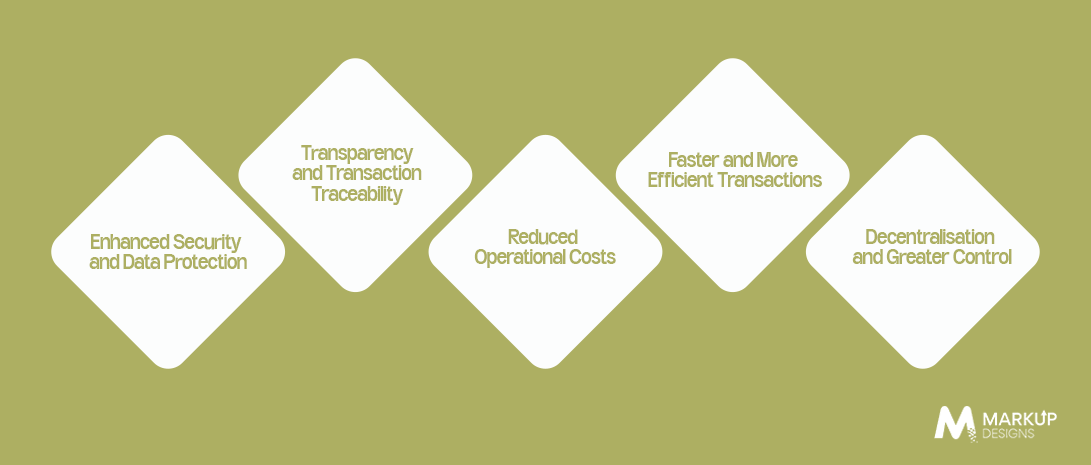
There are many reasons for developing blockchain-based apps because the technology provides various benefits to companies, including transaction management, enhanced data security, and creation of new digital products. Blockchain is not limited to cryptocurrency and finds practical use in industries from finance and healthcare to logistics and real estate.
Enhanced Security and Data Protection
Blockchain applies cryptography, distributed data storage, and consensus validations to secure transaction history from any unauthorized modifications. Blockchain’s distributed nature also decreases the reliance on a single point of failure, making it an effective solution for applications that need a dependable transaction history. These features can contribute to improving the security of data, but companies should also ensure secure access control, wallets, and applications.
Transparency and Transaction Traceability
Blockchain provides a shared transaction history that authorized parties of the network can check independently. Thus, it increases transparency of business operations and allows tracking payments, digital goods, and information during various phases of a transaction. Entrepreneurs can apply this feature to increase accountability, facilitate the auditing process, and build more trust between customers, suppliers, and partners.
Reduced Operational Costs
Blockchain-based applications can lower some operational costs through automation of transactions, reduction of manual validations, and reduced involvement of intermediaries. Smart contracts automate business processes according to predetermined rules and eliminate repetition of routine tasks. However, the effectiveness of such solutions depends on network fees, infrastructure, complexity of development, and applicability of blockchain technology compared to other systems.
Faster and More Efficient Transactions
The use of blockchain applications is likely to make transactions more efficient because it enables the parties involved to share and verify information using the same network. Such an approach could help to avoid any delays related to many intermediary organizations, manual reconciliation, and separate accounting systems. The efficiency depends on the architecture of the blockchain network and transaction processing volume. Companies would be able to enhance payment processing, asset transfers, and communication under different business environments.
Decentralisation and Greater Control
In blockchain networks, transaction verification and accounting happen not due to a central authority but at the level of many participants. It would help to minimize the need for third-party intermediaries and give companies more control over digital processes. Also, private and consortium blockchain networks could be used to set rules for accessing the network and participating in transactions according to the company’s needs.
What Are the Different Types of Blockchain Applications?
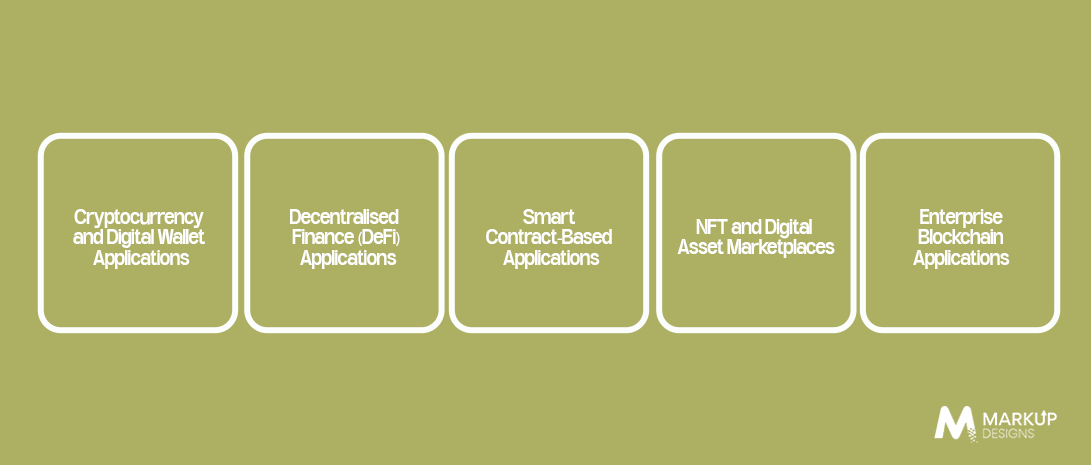
There are many application categories that could be used to solve various problems and needs of businesses using blockchain technology. Entrepreneurs can explore solutions ranging from cryptocurrency wallets and decentralised financial platforms to smart contract applications and enterprise systems. Understanding these application types helps businesses identify suitable development opportunities based on their target audience, operational needs, and long-term objectives.
Cryptocurrency and Digital Wallet Applications
Cryptocurrency applications allow their users to buy, sell, transfer, and manage their digital currencies. Digital wallets offer users access to their cryptoassets using public and private key management. The applications usually consist of components such as transaction processing, balance tracking, wallet integration, and security. Business entities can develop these applications for the purposes of digital payments, cryptocurrency exchange, asset management, and blockchain-based finance.
Decentralised Finance (DeFi) Applications
The DeFi applications leverage blockchain networks and smart contracts to deliver financial services without complete dependence on traditional intermediaries. The most popular applications include decentralized exchanges, lending platforms, borrowing applications, and staking. Entrepreneurs may apply DeFi development for the purpose of developing new financial products; however, security audits, liquidity, and regulations need to be taken into account.
Smart Contract-Based Applications
Smart contract applications automate certain business processes by performing specified instructions upon occurrence of certain conditions. Smart contracts may support various purposes, including digital agreements, payments, insurance claims, supply chain, and settlements. These applications allow businesses to increase workflow efficiency and maintain transparent records of all performed actions.
NFT and Digital Asset Marketplaces
NFT marketplaces are platforms where users can generate, buy, sell, and trade non-fungible tokens as a representation of unique digital or tokenised assets. The platforms may include digital art, collectibles, gaming items, concert tickets, and other digital items. Blockchain-based solutions can ensure reliable tracking of asset ownership and transaction history and assist marketplaces in managing asset transfers and ensuring the transparency of the buying and selling processes.
Enterprise Blockchain Applications
Enterprise blockchain applications are aimed at enhancing cooperation, accounting and information exchange within business networks. Supply chain management, identity management, financial settlement, document verification and inter-organisational work flows are some use cases for enterprise blockchain technologies. Private and consortium blockchain networks are often used in such cases due to their limited access and specific rules of participation.
How to Build a Blockchain App: Step-by-Step Guide
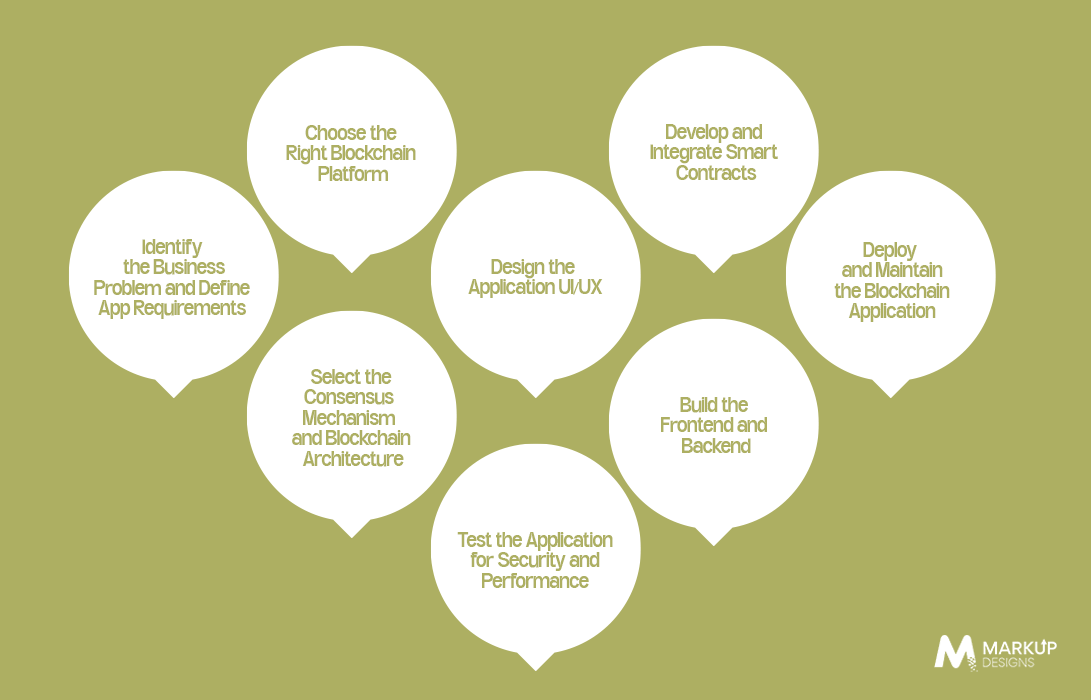
Blockchain app development implies a complex approach that includes business need identification, matching to the appropriate technologies, architecture, and security measures. Each step is critical for the development of a functioning blockchain app. A well-designed development process will also assist entrepreneurs in project management and cost savings.
Step 1: Identify the Business Problem and Define App Requirements
Start by understanding the business problem that your blockchain application is supposed to solve, as well as whether blockchain is better than existing technologies. You will need to define the target audience, necessary features, transactions, permissions, and results. The requirement will set boundaries for your project, give guidelines for technologies to use, and prevent unnecessary development costs.
Step 2: Choose the Right Blockchain Platform
This step involves selecting a blockchain platform according to the features required, scalability, security, transaction fees, and development considerations. Ethereum is known for its support of smart contracts, Hyperledger Fabric is good for permissioned enterprise networks, while Solana and Polygon are other platforms where to build blockchain applications. The right platform is the one that matches the business and technological requirements and not the one dictated by the market.
Step 3: Select the Consensus Mechanism and Blockchain Architecture
In this step, you will be choosing a consensus mechanism that determines how the participants in the network validate transactions and reach consensus about the state of the blockchain. Common options include Proof of Work (PoW), Proof of Stake (PoS), and Practical Byzantine Fault Tolerance (PBFT). You must also select a public, private, or consortium architecture based on network participation, transaction speed, security requirements, and the level of decentralisation needed.
Step 4: Design the Application UI/UX
Design user interface which is intuitive and helps to make blockchain capabilities usable without the need of knowledge about complicated technical processes. Depending on the application, some necessary screens would be registration, authentication, digital wallets, transaction details, asset management, and transaction confirmation screens. Navigation simplicity, transaction details visibility, and consistency in design should be the priority.
Step 5: Develop and Integrate Smart Contracts
Implement smart contracts to automate transactions and execute business logic right on the blockchain. It is necessary to determine conditions, permissions, execution logic, and the desired outcome before development. There are different programming languages for creating smart contracts (e.g., Solidity for the Ethereum network). However, there are different vulnerabilities in smart contracts that put applications at risk of financial and operational losses. That’s why code review and security audits are important parts of development.
Step 6: Build the Frontend and the Backend
Build frontend in order to handle user interactions and integrate it into the blockchain by using appropriate libraries and API. The backend is responsible for application logic, user authentication, notifications, off-chain data processing, and third-party integration depending on the requirements of a particular project.
Step 7: Test the Application for Security and Performance
Testing functionality, performance, compatibility, and security is necessary to confirm that transactions, smart contracts, wallets, and integrations work correctly. Smart contract audits, penetration testing, and testing on testnets of the blockchain make it possible to find potential vulnerabilities before any real asset or transaction takes place. Elimination of potential problems in advance minimises risks and improves application performance.
Step 8: Deploy and Maintain the Blockchain Application
Having completed all stages of application development and testing, perform deployment of the smart contracts and application infrastructure to the chosen blockchain network and hosting services. Post-deployment tasks include monitoring of network performance, maintaining infrastructure, solving technical problems, improving application functionality, and performing security checks. Such maintenance guarantees that your application will work properly in changing circumstances.
How Much Does Blockchain App Development Cost?
The price of blockchain application development depends on application complexity, chosen blockchain platform, smart contracts, integration with third-party applications, and security. A simple digital wallet will definitely require a different level of investment than an enterprise blockchain application with a complex transaction process and several participants. Entrepreneurs should assess both initial development and future maintenance costs before making budgets.
Estimated Blockchain App Development Cost by Complexity
The cost of developing blockchain apps depends on various aspects, which include the number of features required, the nature of technology needed, and how custom the development process will be. As a rough estimate, basic applications will cost between 20,000 and 50,000, mid-level solutions will cost 50,000 to 120,000, and enterprise apps will cost above 120,000 to 250,000.
Cost of Basic, Mid-Level, and Enterprise Blockchain Applications
Basic blockchain applications will feature important functionalities like wallet connectivity, simple transaction processing and networking, and other important aspects that do not require much development effort. For mid-level applications, smart contract automation, dashboards, API integrations, and other advanced security functionalities may be required, while enterprise applications require custom architecture and a lot of testing and integration.
Factors Affecting Blockchain App Development Costs
Several factors impact the budget of a blockchain development project and these include complexity of the application, choice of the platform, smart contracts, UI/UX, and third-party integrations.
Security audits, regulatory compliance, testing, and infrastructure also contribute to project expenses. Additionally, development team size, technical expertise, location, and project duration affect the final cost, making a detailed requirement assessment essential before estimating the investment.
Development Costs Based on Blockchain Platform and Features
The choice of the blockchain platform and certain features can influence development costs. The use of public networks will entail some transaction fees and smart contract deployment fees, whereas private or consortium blockchains can bring some additional costs related to building extra infrastructure, network access management, and network administration. Token creation, multi-wallets feature, cross-chain capability, advanced analytics, and automatic transactions are also among features increasing complexity and costs of development.
Ongoing Maintenance and Infrastructure Expenses
The cost of development does not end with launching the product; the entrepreneur will have to consider such factors as cloud computing hosting, management of nodes, network fees, security audits, updating smart contracts, and tech support. Some extra costs can come from the need for network upgrades, scaling, and maintenance of third-party integrations. Considering them will help entrepreneurs keep high levels of performance and deal with potential security threats and business needs.
What the Latest Blockchain App Development Trends in 2026?
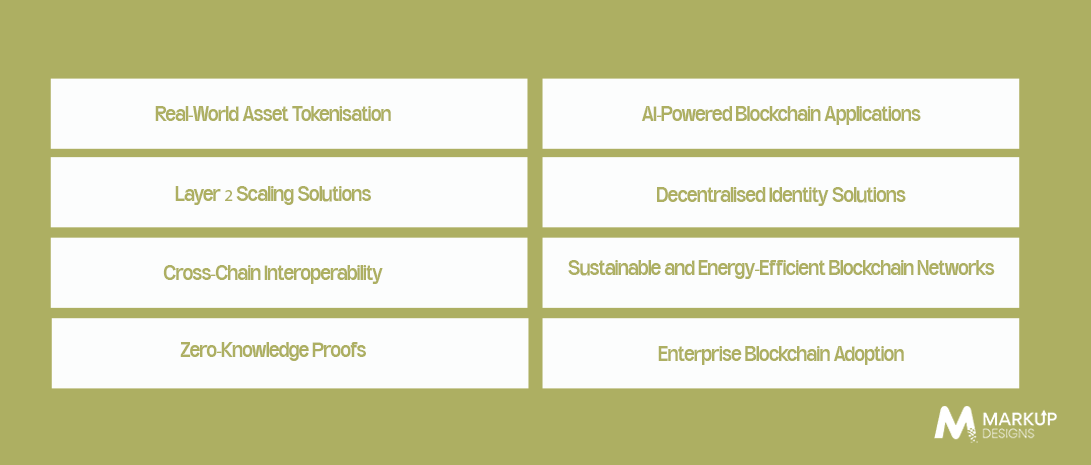
Blockchain application development in 2026 is developing toward practical solutions, better scalability, higher data privacy, and increased enterprise use. Emerging technologies such as asset tokenisation, Layer 2 networks, AI integration, and cross-chain interoperability are expanding how businesses use blockchain. Entrepreneurs should understand these developments to identify relevant opportunities and make informed technology investments.
Real-World Asset Tokenisation
RWA tokenization refers to the conversion of ownership rights in tangible and intangible assets, including real estate, bonds, and commodities, into digital tokens on blockchain. The process can facilitate fractional ownership, transparency in recording assets, and smooth transfer processes. Businesses can adopt the technology to create investment platforms, digital asset exchanges, and new financial instruments.
Layer 2 Scaling Solutions
Layer 2 solutions enhance the performance of blockchain by facilitating transactions off-chain but on the underlying blockchain through final settlement. Optimistic and zero-knowledge rollups can be helpful in reducing congestion, costs, and processing time of transactions. Layer 2 solutions can be especially valuable for applications that require numerous transactions, such as DeFi platforms, gaming, and digital payments.
Cross-Chain Interoperability
Cross-chain interoperability is the process whereby different blockchain networks can exchange data and assets. It removes the restrictions in separate blockchain networks by allowing applications to communicate on different networks. Entrepreneurs can leverage the cross-chain interoperability protocol to create applications that have more access to different networks.
Zero-Knowledge Proofs
A zero-knowledge proof (ZKP) allows information to be confirmed without making the underlying data accessible. Zero-knowledge proofs can enable private transactions, confirm identities, and offer secure authentication in blockchain applications, but with a minimum of data being revealed. It is an important technology for the finance industry, health care, and business applications where private transactions are required.
AI-Powered Blockchain Applications
AI and blockchain can be integrated to bring together intelligent automation and data analysis along with the verification of decentralised data. This could be used by businesses to detect fraud, analyse predictions, perform automatic transactions, and manage workflows. While AI-based applications could analyze operational data, blockchain would help in providing verifiable transactions.
Decentralized Identity Solutions
Decentralised identity solutions will make it possible for individuals and organizations to manage and verify their identities without relying completely on identity providers. Credentials and cryptographically secured authentication, access, and controlled disclosure of information would be provided by this technology. Decentralized solutions are beneficial for the finance industry, health care platforms, and digital businesses.
Sustainable and Energy-Efficient Blockchain Networks
Sustainable blockchain development aims at minimizing the energy usage and infrastructure needed for blockchain network operation. Proof of Stake systems and other energy-efficient consensus algorithms can be used as alternatives to energy-consuming Proof of Work systems. Organizations can take this into account when choosing suitable blockchain platforms according to their performance, scalability, and sustainability goals.
Enterprise Blockchain Adoption
Firms are increasingly seeking to apply blockchain for actual purposes like supply chain monitoring, financial transactions, tokenization of assets, and secure record-keeping. Enterprises will also have to deal with permissioned blockchain, increased interoperability, and integration with business infrastructure, providing a chance to implement blockchain technology within the business infrastructure and not build one separately.
How Can Entrepreneurs Select a Proper Blockchain Technology Stack?
The technology stack defines how a blockchain application will be developed, implemented, and maintained. Entrepreneurs need to analyze various platforms, programming languages, development environments, APIs, and infrastructure according to their business needs.
Blockchain Platforms and Frameworks
The blockchain platform specifies how transactions will be executed, smart contracts will be run, and how different network participants will collaborate. Smart contracts can be utilized on Ethereum and Polygon platforms; Solana has great capabilities when it comes to processing transactions, and Hyperledger Fabric is used for permissioned enterprise networks. Entrepreneurs have to compare capabilities, transaction costs, scalability, security, and developer support offered by different platforms.
Smart Contract Development Languages
The languages for developing smart contracts are responsible for creating rules and conditions of automated transactions on the blockchain. Examples of smart contract languages are Solidity, which is the most popular language for Ethereum-compatible networks, Rust used in ecosystems like Solana, and Go in some enterprise blockchain environments. It all depends on the chosen platform, the complexity of the app, and developer experience.
Frontend and Backend Technologies
Frontend technologies are responsible for the UI of the application, whereas the backend frameworks handle business logic, authentication, APIs, and data processing. Popular frontend options are React, Angular, and Vue.js frameworks, and there are several options for backend development, including Node.js, Python, and Java. Chosen technologies should ensure blockchain connectivity and responsive application performance.
Blockchain APIs and Integration Tools
Blockchain APIs and integration tools are the solutions connecting applications to networks, smart contracts, digital wallets, and other external services. Web3.js, Ethers.js, and various SDKs allow entrepreneurs to use the data from the blockchain, make transactions, and communicate with smart contracts. It is necessary for entrepreneurs to choose the tools compatible with their platform and easy to work with.
Cloud Infrastructure and Database Solutions
Cloud computing platforms such as AWS, Microsoft Azure, and Google Cloud are used to host, process, and monitor blockchain applications. Databases like PostgreSQL and MongoDB can help manage off-chain data, user profiles, and application records. The choice of infrastructure depends on data storage, availability, security, and scalability needs.
What Challenges Should Entrepreneurs Consider Before Developing a Blockchain App?
Blockchain applications give an entrepreneur new possibilities and business opportunities; however, there are many technical and financial challenges of developing such an application. Entrepreneurs need to consider all possible obstacles and prepare for them in advance to prevent unexpected costs, security threats, and operational limitations.
Scalability and Network Performance
Blockchains can be prone to problems like network congestion, high latency in transaction processing, and inflated transaction fees whenever there is an increase in demand beyond their capacity. Such limitations could affect blockchain applications with many users or those that require multiple transactions. It would be important for entrepreneurs to review the network’s performance, transaction fees, and Layer 2 solutions in selecting the right blockchain technology.
Security Vulnerabilities and Smart Contract Risks
There are security threats that might affect any blockchain application, including private key compromise, weaknesses in smart contract programming, attacks on wallets, and other means of access without authorisation. Any bugs in the smart contract code could also cause irreversible transactions or monetary losses. Entrepreneurs should apply measures like safe coding, independent smart contract audits, and penetration testing.
Regulatory Compliance and Data Privacy
A blockchain application dealing with financial transactions, digital assets, or private information will require compliance with regulations within various regions. Such considerations include data privacy and protection, anti-money laundering, know your customer requirements, and any financial services regulation.
Integration With Existing Business Systems
The integration of blockchain applications with current ERP, CRM, payment, and database systems can result in problems with compatibility and data transfer. Differences in the API, security protocol, and infrastructure can make communication between systems difficult. The business will have to plan its architecture ahead of time to guarantee proper data transfer.
High Development and Maintenance Costs
The development of a blockchain application requires a significant amount of capital because of development, smart contract audits, infrastructure creation, and other costs. Moreover, the cost can be higher if the project involves custom network architecture, special security measures, and cross-chain operations. Before initiating the development of an application, entrepreneurs have to define the scope of the project.
How Can Entrepreneurs Maximise ROI From Blockchain App Development?
When investing in a blockchain application, entrepreneurs have to see actual business benefits rather than just implement the technology. It means that they have to find appropriate use cases, control the cost of development, and choose the required features. A well-defined strategy can optimize spending on resources and allow scaling the application later.
Start With a Clear Business Use Case
Look for a business issue that can be solved using blockchain technology better than other technologies. Assess whether decentralised storage of data, automation of processes, tokenization of assets, or improved traceability can provide some operational gains. Having a concrete use case is helpful when setting development priorities, making technology choices, and avoiding excessive investments.
Prioritise Essential Features Through an MVP
Create an MVP with key features needed to test the functionality of the application and its demand among potential customers. By developing a basic version of the platform with core capabilities, entrepreneurs can avoid high expenses associated with immediate development of a full-scale platform. Entrepreneurs may start with such core features as wallet integration, transactions, or chosen smart contracts.
Choose a Scalable Blockchain Architecture
Select an architecture that meets current requirements of the business, but leaves room for growth in terms of number of users, transactions, or features. Take into account network capacity, interoperability, security, costs of infrastructure, and integration prior to building platform architecture. Scalable architecture allows avoiding costly adjustments later on.
Optimise Smart Contracts and Transaction Costs
Implement effective smart contracts and avoid performing unnecessary operations on-chain in order to lower the transaction costs and increase its efficiency. Businesses can estimate the right blockchain network to use, layer 2 solutions, and transaction batching to control their network fees. Periodic code reviews and tests will help detect possible inefficiencies in advance.
Plan for Security, Maintenance, and Future Upgrades
The security audit, infrastructure monitoring, technical support, and software upgrades need to be planned in terms of future application development cost estimates. Since the blockchain networks and security demands change over time, constant support is necessary to provide the security of transactions and good performance of the application. The preparation for upgrades from the start allows entrepreneurs to avoid unexpected expenses.
How Can Markup Designs Help Entrepreneurs With Blockchain App Development?
Markup Designs assists entrepreneurs in translating ideas concerning blockchain into functional applications corresponding to their business needs. From the analysis of requirements and choosing the right platform for application development to the implementation of smart contracts, integration, and testing, the team is ready to assist entrepreneurs through all stages of the development process.
Develop Your Blockchain Application With the Right Technology Partner
Transform your business idea into a secure and scalable blockchain application using a development approach tailored to your goals.

Conclusion
Blockchain application development is opening up exciting possibilities for entrepreneurs looking to create secure and transparent digital solutions. However, successful blockchain app implementation involves proper planning, choosing the right technology stack, cost estimation, and security considerations. Beginning with a specific business case and using scalable technology tools, businesses can create blockchain apps that solve real-world problems.
FAQ
1. What is the cost of developing a blockchain application?
The cost of developing a blockchain app may range from 20,000–50,000 for a simple solution to 50,000–120,000 for a mid-level application, 120,000-250,000 and above for an enterprise application.
2. What time does it take to build a blockchain app?
Development of a simple blockchain app will take about 2-4 months, and a mid-level one will take 4-8 months. In the case of complex enterprise blockchain apps, development may take up to 8-12 months, or even more.
3. Which blockchain is best for app development?
It will depend on what purposes you need a blockchain application for. Ethereum and Polygon have good capabilities for developing applications with smart contracts, Solana can be useful for high-throughput applications, and Hyperledger Fabric will fit best for permissioned enterprise blockchain solutions.
4. Can blockchain apps work with business systems?
Yes, it is possible to integrate your blockchain app with business systems like ERP, CRM, payment gateways, databases, and others using API and middleware technologies.
5. Is blockchain app development good for startups?
Blockchain development is good for startups when it solves specific business problems, like transaction verification, digital asset management, or any other process automation. It is better to start by creating an MVP.
6. Which programming languages are utilized for developing blockchain apps?
Solidity is extensively used for Ethereum-based smart contracts, but Rust is used for building apps on the Solana platform, while Go is applied for enterprise blockchain software. JavaScript, TypeScript, Python, and Java are other programming languages that are often used for front-end, back-end, and application development.
Author's Perspective
Blockchain needs to be viewed as an investment opportunity, not just the latest technology. An entrepreneur must find out how decentralization, transparency, and automation can add value in specific applications before starting. The right choice of technology stack and development budget is more important than implementing all the latest features into the project.
Discuss Your Project NowJupinder Singh Arora
Founder and CEO
Related Posts

Crypto Trading Bot Development: Architecture, Features & Cost...
Cost to Develop a Cryptocurrency Exchange App Like...
How to Build a Secure Crypto Payment Gateway...
Insights Are Valuable & Execution is Priceless
You’ve read about the digital future. Now, let’s build the infrastructure to take you there. Move your strategy from the page to the product.
Design Your Solution Now
Contact Us
Schedule The Appointment At Your Convenience Date And Time.
30 Min
Web Conference
Time Zone
Indian standard time (08:30pm)

Thanks For Getting In Touch!
You’ve Taken The First Step Toward Transforming Your Digital Presence. Our Experts Will Reach Out Shortly To Take It Forward.
Launch Your Dream Project
Provide a brief overview of your project, and our specialists will evaluate your requirements. We will connect with you to explore how the right digital solutions can help you launch faster.