

In Brief
- Interest in healthtech investments is growing because healthcare providers are starting to use technology to enhance their service provision and operations.
- Healthcare technologies such as AI-based diagnostics and predictive analytics are emerging as attractive areas for investment.
- Telemedicine, wearables, and other healthcare technologies allow access to healthcare to expand outside of the conventional clinical environment.
- High costs of healthcare and prevalence of chronic conditions create an increasing demand for efficient solutions to address this challenge.
- In addition to the clinical value and the ability to deliver the solution effectively, healthtech businesses need to comply with regulations, data security standards, and show revenue potential.
Healthcare technology is becoming a topic of interest for investors as a way of improving the effectiveness of the work in the healthcare sector, addressing the problem of increasing costs, and making healthcare service provision more effective. Healthcare technologies such as AI-based diagnosis and decision-making or remote patient monitoring are changing the way healthcare organizations provide services and handle their information. However, there is more to healthtech investments than just adopting a technology. Businesses need to prove that their product will be useful and safe while delivering sustainable growth potential for themselves.
Why Is Healthtech Attracting More Investor Interest?
Healthtech is becoming an increasingly popular target of investments among healthcare providers who seek out technologies capable of improving patient outcomes, alleviating workload, and increasing accessibility. Higher costs of providing healthcare, higher demand for digital services, and advancements in artificial intelligence give rise to the number of investment opportunities in clinical care, diagnostics, patient monitoring, and healthcare management. The opportunity to invest in the resolution of healthcare problems that have not been solved yet and continue to change in the face of new requirements is provided by the sector.
Growing Demand for Digital Healthcare Services
Today, patients increasingly rely on the availability of healthcare services that are available via online appointment scheduling, telemedicine, e-prescription, and electronic medical records. As a result of that, healthcare providers are moving towards implementing digital platforms to meet the demands of the customers and increase collaboration and communication within the departments. That creates opportunities to invest in patient engagement platforms, healthcare management systems, and digital healthcare services that will allow meeting those expectations in a way that is convenient for all parties involved.
Rising Adoption of AI and Machine Learning in Healthcare
The emergence of artificial intelligence and machine learning makes medical information analysis, decision-making processes, and automation of routine healthcare activities more feasible. Such innovations can be used in medical imaging, risk prediction, clinical documentation, and resource management when properly developed for their respective purposes. Potential investors are looking for solutions that are created to solve particular issues, integrate into the current processes, and bring a specific advantage to the users or patients. The commercial potential of AI depends on the quality of data, clinical validation, regulation, and responsible implementation of AI into healthcare settings.
Shift Toward Preventive and Personalized Care
Healthcare is becoming more focused on detecting health risks at an early stage and providing individualized health care. Digital health monitoring devices, predictive analytics, and personalized medicine services will help healthcare professionals detect changes in patients’ health conditions and make better decisions regarding further medical assistance. This provides opportunities for those companies that are creating health risk detection services, chronic illness management software, or individual treatment planning solutions. Investors become more and more interested in such solutions.
Expansion of Telemedicine and Remote Patient Monitoring
Telemedicine and remote patient monitoring have the potential to extend healthcare services outside the scope of conventional hospitals and clinics. Patients may be able to reach out to doctors through virtual consultations without having to visit healthcare facilities and use connected devices to send health readings to medical professionals. In essence, these technologies will be very useful for patients who require constant monitoring. Some of the investment opportunities related to telemedicine and remote patient monitoring include virtual care solutions, connected medical devices, and technology to assist doctors in reviewing remote information and incorporating it in their processes.
Increasing Demand for Healthcare Automation
Healthcare organizations deal with various processes such as appointment scheduling, billing, insurance claims, documentation, and other forms of interaction with patients. Performing these activities manually will only add to the workload of the workers, slow down the processes, and provide a chance for mistakes. Therefore, automated tools will help simplify the process and speed it up. Investors should pay attention to automation of certain aspects that will lead to increased efficiency or effectiveness in the organization.
What Are the Top Healthtech Investment Opportunities in 2026?
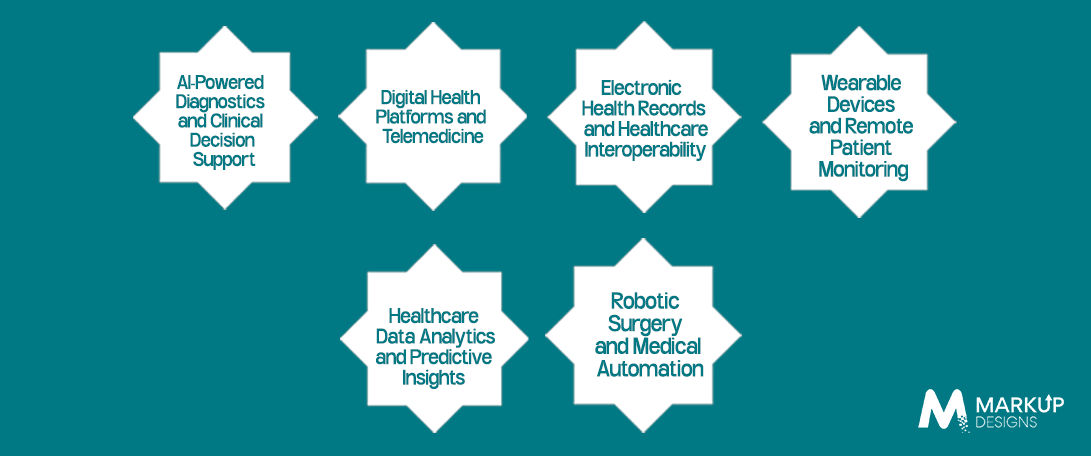
Investment in healthtech ranges from technologies assisting with clinical decisions to telemedicine services and connectivity solutions between healthcare facilities to increase efficiency. Nevertheless, not all innovative technologies imply a promising business opportunity for investors. They have to take into account the problem, evidence of the effectiveness of the solution, the size of the targeted audience, and requirements for implementation of technologies. Business models that combine a clear use case and a business-oriented strategy might have a competitive advantage.
AI-Powered Diagnostics and Clinical Decision Support
Artificial intelligence solutions for diagnostics could help clinicians to analyze images, test results, and find patterns that could indicate the need for a detailed examination. Tools of clinical decision support also allow sorting patient data and presenting evidence supporting the process of diagnosis and treatment for healthcare professionals. Examples of investments could be a specialized diagnostic tool or a screening application using AI algorithms and a platform for clinical processes. The success of such solutions depends on clinical efficacy, validation among appropriate patients, regulatory requirements, and healthcare system integration. It is crucial for investors to differentiate clinical decision support tools and products that make diagnostic claims.
Digital Health Platforms and Telemedicine
Platforms for digital health and telemedicine integrate the activities of patients, healthcare practitioners, and administration teams via functions like appointment scheduling, virtual consultation, electronic record keeping, prescriptions, and follow-up correspondence. The platform of telemedicine can help healthcare providers extend their capabilities, while specialty-focused platforms will be able to support certain paths of care, such as psychological consultations or treatment of chronic conditions. For investors, there is a good chance of finding an opportunity in a platform that solves a particular issue and provides value to providers or patients. The key factors to consider in investing are patient acquisition cost, provider involvement, security measures, interoperability, and ability to create recurring revenue without complicating access to the service.
Electronic Health Records and Healthcare Interoperability
Electronic health records give healthcare organizations an option to keep digital patient files, where diagnoses, medications, test results, and other data on treatment will be stored. Interoperability solutions go beyond EHR and help various healthcare systems exchange and interpret the data, thus eliminating redundant data entry and creating fragmented records. There are investment opportunities in modern EHR platforms, integration middleware, data exchange solutions, and provider consolidation tools. As healthcare organizations
As healthcare organizations modernize their infrastructure, solutions that connect existing systems without requiring complete replacement may offer practical value. Investors should assess data standards, implementation complexity, security, and the product’s ability to fit into established clinical workflows.
Wearable Devices and Remote Patient Monitoring
Wearable technologies and remotely connected medical devices allow the gathering of health measurements and making selected information accessible to either patients or clinicians. This might comprise heart rate, physical activity, blood glucose, or oxygen saturation, depending on the devices used. Remote patient monitoring systems may help care teams analyze trends and detect changes that need further attention, especially for patients with certain chronic illnesses. The opportunities for investment may include clinically approved devices, monitoring systems, patient apps, and analytics solutions enabling the gathered data to be turned into actionable insights. Accuracy of measurements, usability of the device, data security, clinical relevance, and costs of post-deployment support should be assessed by investors.
Healthcare Data Analytics and Predictive Insights
A significant amount of clinical, operational, and financial data is generated by healthcare organizations, but it is often spread among separate systems. The function of analytics solutions is to gather necessary data in order to detect certain trends, measure performance, estimate future demand, and plan resources accordingly. Predictive tools can also help providers estimate patient risk or identify operational issues that require attention, provided the underlying data and models are suitable for the task. Investment opportunities include healthcare business intelligence, population health analytics, clinical data platforms, and forecasting tools. Commercial viability depends on data quality, model reliability, privacy protections, and whether the insights produce measurable improvements in care delivery or organizational performance.
Robotic Surgery and Medical Automation
Robotic systems can help trained surgeons perform certain operations. In turn, automation technology can assist in laboratory tests, medications, and other medical tasks. These tools can enhance efficiency, accuracy, and other aspects in some cases, but they will depend on the specific procedure, technologies, scientific data, and training. Opportunities for investment include surgical robotics, laboratory automation, and solutions to make the process less manual. This industry can involve considerable initial investment in development, hardware, maintenance, and training. As a result, investors should consider the performance of clinical procedures, demand for purchasing, service, and the time period needed for healthcare organizations to make money back from adoption.
What Factors Are Driving Healthtech Market Growth?
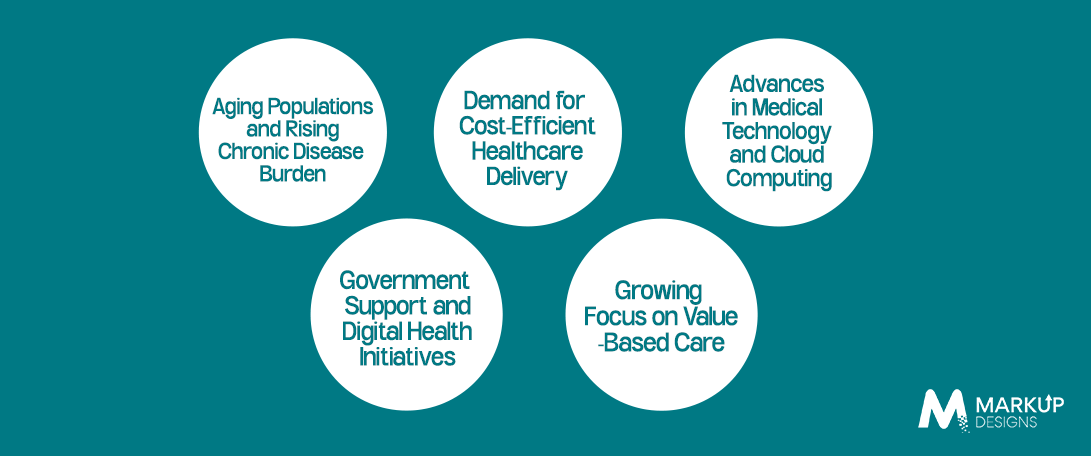
There are some interrelated trends that drive healthtech market growth, such as demographic shift, increasing pressure on healthcare funding, digital infrastructure development, and expectations regarding outcomes of treatments. They motivate healthcare facilities to rethink their services and data management. Nevertheless, there are differences in adoption in different countries and healthcare systems because of the availability of resources, infrastructure, regulation, and willingness to adopt innovations.
Aging Population and the Need for Long-Term Chronic Condition Management
With an aging population where there is a need to provide long-term management of diseases such as diabetes and cardiovascular diseases, healthcare systems have to cope with higher demands for constant monitoring, check-ups, and coordination of care. In conventional care systems, the need for such constant management of patients can put a lot of pressure on both the patients and the caregivers because the process can rely heavily on frequent visits and unconnected data. Remote monitoring technology, care management technology, and patient engagement technology are some of the solutions that can be used for such cases, and therefore there are opportunities for healthtech companies to provide solutions in the area.
Increasing Needs for Efficiency in the Delivery of Healthcare Services
Healthcare organizations have to balance increased costs and the need to maintain quality services, patient safety, and efficient delivery of services. Technology such as scheduling software, documentation software, virtual consultation, and resource planning can assist in reducing costs and optimizing the use of resources. There are opportunities for healthtech companies in this sector if they can show measurable gains from their solutions.
Investors should assess the full financial impact, including implementation, training, integration, and maintenance, rather than assuming that digital adoption automatically reduces expenditure.
Advances in Medical Technology and Cloud Computing
Technologies such as cloud computing, artificial intelligence, Internet of Things, and data analytics will allow healthcare companies to create more advanced digital products and deliver them through different channels. Cloud computing can provide the infrastructure for data sharing, collaboration, and scalable delivery of applications, whereas modern APIs may serve as the means to integrate software into different healthcare systems. Artificial intelligence and data analytics can provide decision-making tools, workflow optimization capabilities, and information analysis functions. Such technologies reduce some development and deployment hurdles, yet impose additional requirements related to cybersecurity, dependability, and regulation. Healthcare-focused platform design may enable businesses to respond to provider expectations and expand sustainably.
Government Support and Digital Health Initiatives
Policies and strategies of government, investment funds, digital health initiatives, and healthcare modernization initiatives can affect the speed of technological adoption. Investments in digital infrastructure and the development of policies aimed at secure data sharing can create possibilities for business development in the field of healthcare software, connected devices, and clinical technology. Government procurements can lead to access to large projects yet require thorough assessment and a lengthy sales cycle.
Because government priorities and funding mechanisms differ across markets, investors should assess the specific policies, eligibility criteria, procurement timelines, and regulatory requirements relevant to a proposed investment rather than assuming that public support guarantees demand.
Growing Focus on Value-Based Care
Value-based care emphasizes patient outcomes and the quality of services delivered, rather than focusing exclusively on the number of consultations or procedures performed. This model increases the importance of tracking outcomes, coordinating treatment, managing patient risk, and understanding the overall cost of care. Healthtech tools can support these goals through clinical analytics, remote monitoring, care coordination, and performance reporting. For investors, opportunities may exist in solutions that help providers measure results and identify areas for improvement. However, demonstrating value requires credible metrics, reliable data, and alignment between the technology’s capabilities and the incentives used by healthcare organizations.
What Challenges Should Investors Consider Before Investing in Healthtech?
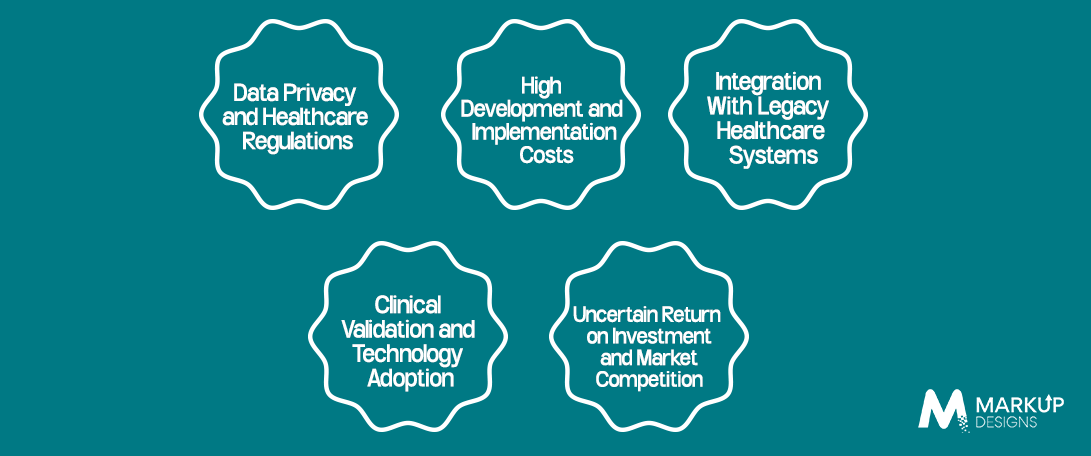
While there is much potential in the health tech sector, there are obstacles that can create issues with product development, market access, uptake, and even profitability. In order to satisfy the expectations of patients, healthcare professionals, regulatory bodies, and sometimes even insurance companies or public sector purchasing agencies, there is a need to invest time, expertise, and funding into developing the healthcare technology and sustaining it in the long run.
Data Privacy and Healthcare Regulations
Healthcare technologies deal with sensitive personal and medical data, which is why privacy and security are key factors to take into account during the design and implementation. Depending on the market and the nature of the product, there might be certain regulatory requirements concerning patient consent, data storage, data exchange, medical devices, and software used in the field of healthcare. Breaches of such regulations can result in legal penalties, damage to the reputation, and the loss of customers’ trust. Investors should look at how the company manages data and how they are planning to adhere to changing laws and guidelines in the markets where the company intends to operate.
High Development and Implementation Costs
The development of a healthtech solution might involve more than just software development. The cost might comprise clinical knowledge, special hardware, testing, validation, regulatory submissions, security issues, integration, training, and support of the product after its release. Some products that affect diagnosis or treatment might require extra data and attention from the regulator, which extends the time of development and increases the capital required for development. Such costs can be hard to control for young companies that have not yet clearly identified what product they develop and how they are going to implement it commercially. Investors should evaluate the total cost of development and deployment of the solution, the milestones required for achieving the point of commercialization, and the financing for the company at the validation stage and early customer adoption.
Integration With Legacy Healthcare Systems
Hospital systems, clinics, and laboratories might have an existing system for handling patients’ records, billing, diagnostic procedures, scheduling, and clinical procedures. Those systems use different data formats and methods of integration, which complicates introducing new technologies without extra development or changing the processes. Poor integration can create duplicate records, inconsistent information, and unnecessary work for clinical staff. Healthtech companies need to demonstrate how their solutions will exchange data securely, fit into existing workflows, and minimize disruption during implementation. Investors should assess integration capabilities, compatibility with relevant standards, implementation resources, and the cost of supporting different customer environments.
Clinical Validation and Technology Adoption
Healthcare providers must be confident in a technology’s safety, reliability, and appropriateness for clinical use. For certain products, technical evaluation, clinical trials, usability assessments, and regulatory approval may be necessary. However, even if all these requirements are satisfied, the adoption might be slow because clinicians find the product hard to use or do not see any significant benefit compared to their current practices. Investors should pay attention to the evidence base of the product, the regulatory strategy, and plans for engagement of healthcare practitioners. A good strategy for adoption should include aspects such as training, integration into workflows, regular feedback, and time for building trust.
Uncertain Return on Investment and Market Competition
A healthtech product may solve an important problem yet fail in commercialization. Purchasing processes may take much time for healthcare organizations; their budgets are usually tight, there are complex decision-making processes, and there are certain reimbursement requirements. A healthtech company may face competition from established technology vendors, in-house solutions, and other new companies with similar capabilities. All these issues may impact pricing, acquiring customers, revenue growth, and time to profitability. Investors should examine the target market, competitive differentiation, customer retention, revenue assumptions, and expected sales cycle. They should also consider whether the company has a realistic plan to scale without allowing implementation and support costs to erode its margins.
How Can Healthtech Companies Attract Investors in 2026?
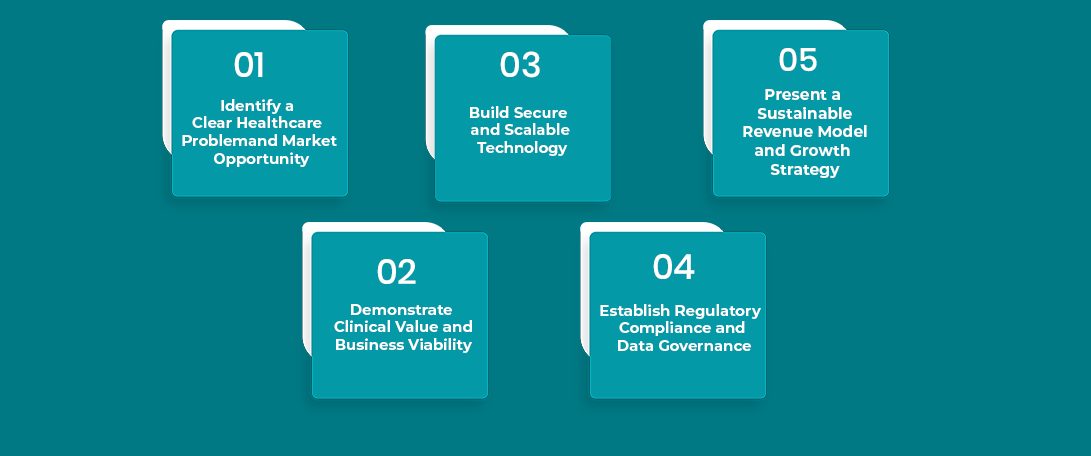
Healthtech companies can attract investors by demonstrating how their solutions address real healthcare challenges while offering measurable value and long-term growth potential. A strong investment case combines clinical relevance, reliable technology, regulatory readiness, and a business model that can scale sustainably.
Identify a Clear Healthcare Problem and Market Opportunity
Investors look for healthtech solutions that address specific gaps in healthcare delivery, such as limited access to care, inefficient workflows, delayed diagnoses, or rising operational costs. Companies should define their target audience, assess market demand, and explain how their solution stands out from existing alternatives.
Demonstrate Clinical Value and Business Viability
A promising idea needs evidence of its practical value. Healthtech companies should present clinical validation where applicable, pilot results, user adoption, and measurable improvements in care delivery or operational efficiency. Clear evidence helps investors assess both the solution’s impact and its commercial potential.
Build Secure and Scalable Healthcare Technology
Investors are more likely to consider solutions built on reliable, scalable technology. Healthtech companies should demonstrate strong data security, system interoperability, dependable performance, and the ability to support growing users and workloads. Technologies such as cloud infrastructure, AI, and healthcare APIs can support scalability when implemented appropriately.
Establish Regulatory Compliance and Data Governance
Healthcare solutions must address applicable regulations, patient privacy, and data protection requirements. Companies should explain how they manage sensitive health information, control access, maintain data integrity, and meet relevant compliance standards across their target markets. A clear governance framework can reduce regulatory uncertainty and strengthen investor confidence.
Present a Sustainable Revenue Model and Growth Strategy
Investors need to understand how a healthtech company will generate revenue and achieve long-term growth. Businesses should outline pricing, revenue streams, customer acquisition plans, operating costs, and expansion opportunities. Realistic financial projections supported by market research and measurable milestones can make the investment opportunity more credible.
How Can Markup Designs Help Businesses Build Healthtech Solutions?
Markup Designs assists businesses in bringing their healthcare technology products to fruition in the form of digitally oriented products that will suit the operational processes and the goals of the business. Whether it is the development of healthcare applications, software, or any other form of AI and technology-related features or integrations, it aims at ensuring that there is a development of highly secure, scalable, and user-friendly technology. Understanding of business needs, its users, and the required integrations will help businesses plan the development process and develop solutions that will benefit the healthcare process.
Build Your Next Healthtech Solution
Develop a healthcare technology solution that aligns with your business goals, supports users, and is built for long-term growth.

Conclusion
Investors’ interest in the healthtech sector has been prompted by factors such as the demand for affordable healthcare, innovations in AI, growth in the use of telemedicine, and the necessity of improved efficiency of clinical and administrative procedures. The opportunities include digital health platforms, predictive analytics, connected devices, and automation in medicine. However, the success in this market requires a lot more than innovation. Businesses should deal with data protection issues, compliance requirements, clinical validation, system integration, and the profitability of the product.
FAQ
1. Why are investors attracted to healthtech in 2026?
Investors are interested in healthtech because healthcare providers require more technologies to solve problems like improving access, streamlining operations, and reducing costs. Technologies such as AI, telemedicine, remote monitoring, and healthcare analytics create investment opportunities in this space. Still, the decision to invest will be made based on market demand, regulatory compliance, product validation, and sustainability.
2. In which healthtech sectors is there the greatest investment?
The key sectors of interest include AI-based diagnostics, digital health technologies, telemedicine, remote patient monitoring, health care analytics, and medical automation. Electronic health records and interoperability technologies present another area to consider since providers are updating their technological capabilities. The market demand, competitive environment, effectiveness, and sustainability of the business will determine the attractiveness of each sector.
3. What are the major risks involved in the investment in healthtech?
Main risks are data privacy violations, regulatory issues, high costs of development, complexity of integration, and slow adoption of technology by health care providers. In addition, clinical validation and the purchasing cycle will impact the timing of revenue generation. Investors should assess these risks alongside the company’s funding needs, competitive position, and ability to demonstrate measurable value.
4. How does AI offer investment opportunities in healthcare?
Investment opportunities are offered by AI through its use in the analysis of medical images, clinical decision support, predictive analytics, automation of administrative work, and personalized care. Companies may create products to solve problems of processing information and optimizing workflow that will be useful for healthcare professionals. Nevertheless, to invest in such products, there should be good data, clinical validation, compliance with regulations, and evidence of benefits for practice.
5. How can startups in the healthtech industry attract investors?
Startups in the healthtech industry may attract investors when they find out what problem in the sphere of healthcare needs to be solved, show what market demand is and provide a realistic and clinically valuable solution with a business model. Proof of value, proper regulation, safety of patient data, and a skilled team will be helpful. Moreover, startups need to show their plans for customer acquisition, financial prospects, development, and needed funding.
Author's Perspective
Innovation is an important element of healthtech investments, but there are other factors that influence the attractiveness of projects in this sphere. From AI-powered diagnostics to remote patient monitoring, the strongest opportunities lie in solutions that demonstrate clinical value, protect patient data, and fit existing healthcare workflows. As the sector evolves in 2026, businesses and investors should prioritize practical applications, regulatory readiness, and sustainable business models to turn technological potential into long-term healthcare and commercial value.
Discuss Your Project NowAjit Kumar Jha
VP - Business Operations
Related Posts

Healthcare 4.0 Explained: Technologies Driving the Next Era...

Healthcare IT Outsourcing: A Strategic Guide for Modern...

AI in UK Healthcare: Real-World Applications Driving Better...
Insights Are Valuable & Execution is Priceless
You’ve read about the digital future. Now, let’s build the infrastructure to take you there. Move your strategy from the page to the product.
Design Your Solution Now
Contact Us
Schedule The Appointment At Your Convenience Date And Time.
30 Min
Web Conference
Time Zone
Indian standard time (08:30pm)

Thanks For Getting In Touch!
You’ve Taken The First Step Toward Transforming Your Digital Presence. Our Experts Will Reach Out Shortly To Take It Forward.
Launch Your Dream Project
Provide a brief overview of your project, and our specialists will evaluate your requirements. We will connect with you to explore how the right digital solutions can help you launch faster.