
In Brief
- Generative AI creates content, summaries, code, and other outputs based on user prompts and provided context.
- Agentic AI can plan tasks, use tools, make decisions, and execute multi-step workflows with limited human intervention.
- Generative AI implementation in Australia can cost around AUD 70,000–200,000, while agentic AI can range from AUD 150,000–700,000+ depending on complexity.
- Australian businesses can apply both technologies across industries such as banking, healthcare, retail, mining, logistics, agriculture, and professional services.
- The right approach depends on business goals, workflow complexity, integration requirements, risk controls, and the level of autonomy required.
Artificial intelligence is moving beyond simple automation and content generation, giving Australian businesses new ways to improve productivity, customer experiences, decision-making, and operational processes. Two approaches receiving increasing attention are Generative AI and Agentic AI. While both use advanced AI models, they differ in how they respond to tasks, interact with business systems, and contribute to workflows.
Generative AI primarily creates content and provides information in response to prompts, while Agentic AI pursues defined goals through planning, reasoning, tool use, and multi-step execution. Understanding these differences is important when evaluating implementation costs, business benefits, use cases, security requirements, and long-term AI strategy in Australia. This guide compares Agentic AI and Generative AI across these areas to help businesses identify where each approach may fit within their operations.
Generative AI vs. Agentic AI: What Is the Difference?
Generative AI creates content and information based on prompts, while Agentic AI can plan and execute tasks toward a defined goal. The key difference is the level of autonomy and action each system can support.
What Is Generative AI?
Generative AI uses trained AI models to create text, images, code, summaries, and other outputs. It typically responds to user prompts and is widely used for content creation, customer support, knowledge retrieval, and analysis.
What Is Agentic AI?
Agentic AI is designed to achieve goals by reasoning through tasks, using tools, and executing multi-step workflows. It can connect with APIs, databases, and business systems to perform actions with defined levels of autonomy.
Generative AI vs. Agentic AI: Key Differences
| Factor | Generative AI | Agentic AI |
| Purpose | Generates content and information | Completes goals and workflows |
| Autonomy | Prompt-driven | Goal-driven and more autonomous |
| Human role | Usually reviews outputs | Can oversee or approve actions |
| Tasks | Individual or limited tasks | Multi-step workflows |
| Output | Content or information | Content plus actions |
| Integration | Moderate | Usually extensive |
| Risk | Output accuracy and data privacy | Actions, permissions, privacy, and accountability |
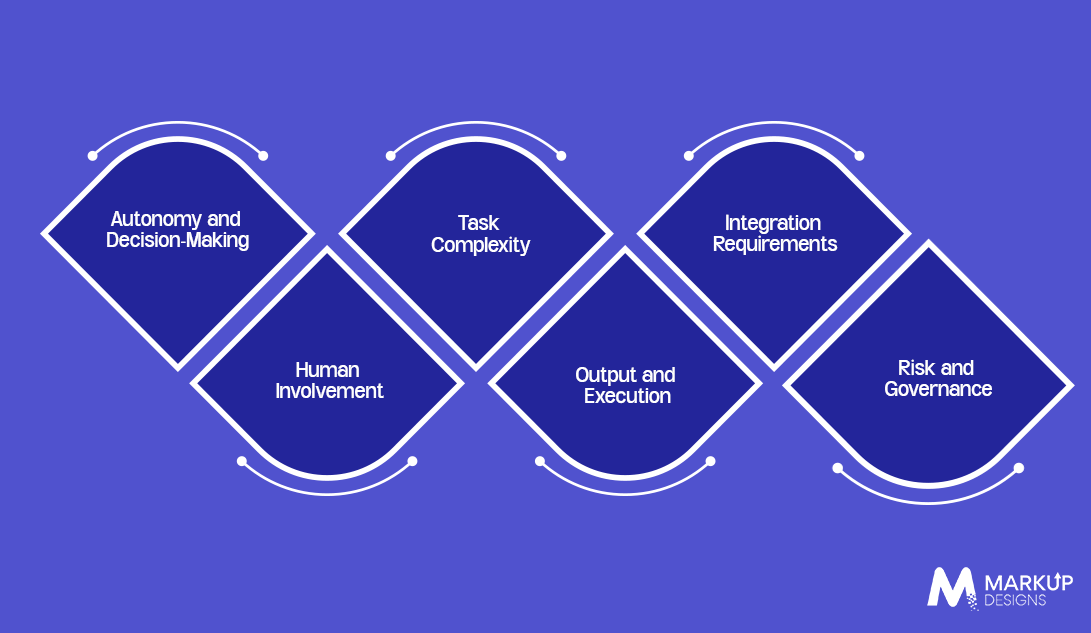
Autonomy and Decision-Making
Generative AI responds to instructions, while Agentic AI can plan tasks and determine the actions needed to achieve a defined objective.
Human Involvement
Generative AI generally requires users to prompt and review outputs. Agentic AI can operate with less intervention while retaining human approval for sensitive actions.
Task Complexity
Generative AI works well for content creation, summarisation, and question answering. Agentic AI is suited to complex workflows involving multiple steps and systems.
Output and Execution
Generative AI primarily produces information or content. Agentic AI can also use connected tools to retrieve data, update systems, or trigger workflows.
Integration Requirements
Generative AI may require access to selected data sources, while Agentic AI often needs deeper integration with APIs, databases, ERP, CRM, and other business systems.
Risk and Governance
Both require privacy, security, and accuracy controls. Agentic AI also needs stronger permissions, monitoring, audit trails, and human-approval mechanisms because it can take actions.
Generative AI vs. Agentic AI in Australia: How Do They Work?
Generative AI focuses on understanding inputs and producing outputs. Agentic AI combines AI models with planning, tools, memory, and integrations to complete defined tasks.
How Generative AI Works
Generative AI processes a prompt through an AI model and generates a relevant response. RAG can be added to retrieve information from business documents or databases before generating the output.
How Agentic AI Works
Agentic AI receives a goal, breaks it into tasks, selects available tools, performs actions, and evaluates the results. Human approval can be added at specific stages where required.
What Technologies Power Generative and Agentic AI?
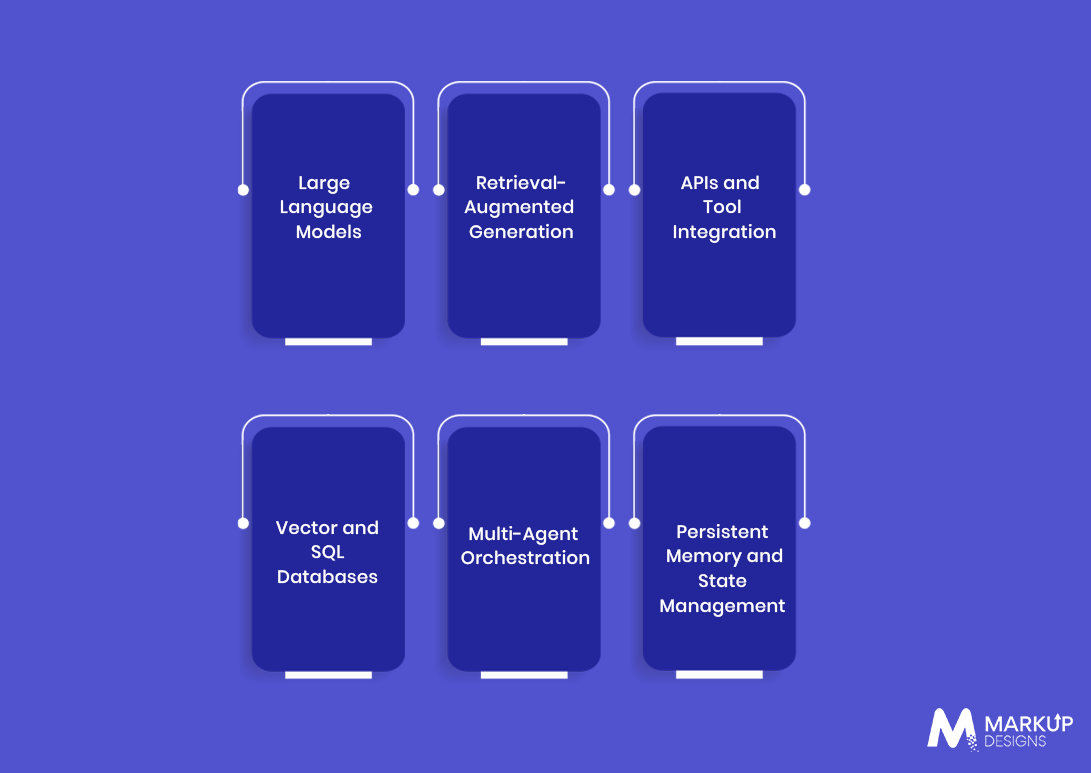
Both systems can use LLMs, RAG, APIs, databases, and cloud infrastructure. Agentic AI additionally relies on orchestration, memory, and state-management components.
Large Language Models
LLMs provide the language understanding, generation, and reasoning capabilities behind many AI applications.
Retrieval-Augmented Generation
RAG connects AI models with external knowledge sources to provide responses based on relevant business data.
APIs and Tool Integration
APIs allow AI systems to access external applications and perform permitted actions across business workflows.
Vector and SQL Databases
Vector databases support semantic information retrieval, while SQL databases manage structured business data such as transactions and customer records.
Multi-Agent Orchestration
Multi-agent orchestration coordinates specialised AI agents so they can work together on complex tasks.
Persistent Memory and State Management
These components help AI systems retain relevant context, track completed tasks, and maintain workflow state.
Generative AI vs. Agentic AI: Cost in Australia
The cost depends on application complexity, integrations, AI models, security requirements, and customisation. Agentic AI generally requires greater investment because of its workflow execution and orchestration requirements.
How Much Does Generative AI Cost in Australia?
Generative AI implementation can cost around AUD 70,000–200,000, depending on the application’s features, integrations, data requirements, and level of customisation.
How Much Does Agentic AI Cost in Australia?
Agentic AI implementation can range from around AUD 150,000–700,000+. Multi-agent systems, enterprise integrations, memory, monitoring, and safety controls can increase the overall cost.
What Factors Affect Generative AI Development Cost?
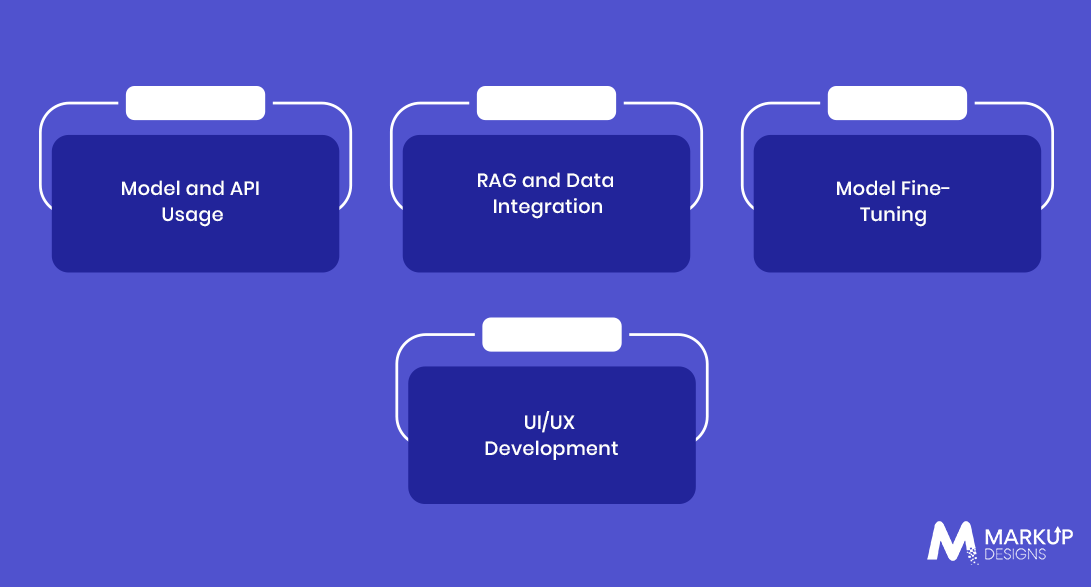
Model and API Usage
The selected AI model, API usage volume, and processing requirements influence ongoing costs.
RAG and Data Integration
Connecting AI with business data requires data preparation, retrieval systems, integrations, and access controls.
Model Fine-Tuning
Fine-tuning adds costs for dataset preparation, training, testing, and model optimisation.
UI/UX Development
Custom interfaces, dashboards, and user workflows can increase development effort.
What Factors Affect Agentic AI Development Cost?
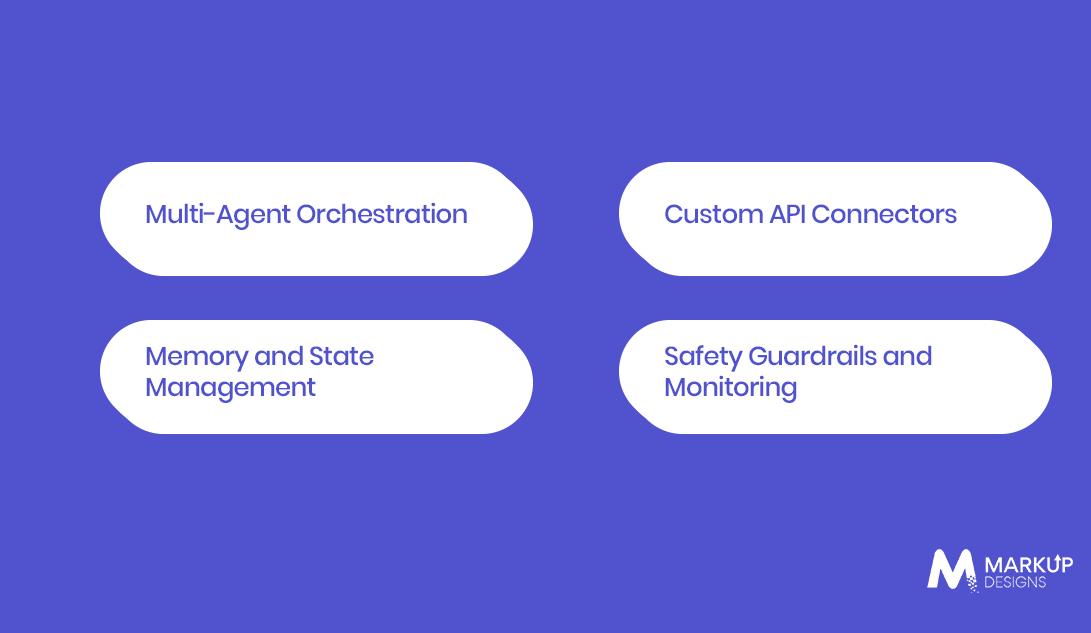
Multi-Agent Orchestration
Multiple agents require additional architecture for coordination, task management, and communication.
Custom API Connectors
Connecting agents with ERP, CRM, finance, or other enterprise systems can increase development complexity.
Memory and State Management
Complex workflows may require systems to retain context and track tasks across multiple steps.
Safety Guardrails and Monitoring
Permissions, approval workflows, activity logs, monitoring, and action limits add to development and operational costs.
Generative AI vs. Agentic AI: Cost Comparison
| Cost Area | Generative AI | Agentic AI |
| Implementation | AUD 70K–200K | AUD 150K–700K+ |
| Main complexity | Models, RAG, data | Agents, orchestration, integrations |
| Autonomy | Lower | Higher |
| Integrations | Varies | Usually extensive |
| Governance | Standard AI controls | Additional action and monitoring controls |
Benefits of Generative AI and Agentic AI for Australian Businesses
Generative AI can help businesses create, analyse, and access information faster, while Agentic AI can automate workflows and execute tasks across connected systems. The business impact depends on how each technology is applied to specific operational needs.
Benefits of Generative AI
Faster Content and Knowledge Creation
Generate content, reports, summaries, documentation, and internal knowledge resources faster while reducing repetitive manual work.
Improved Customer Support
AI-powered assistants can handle common customer queries, provide relevant information, and support service teams with faster responses.
Developer and Employee Productivity
Generative AI can assist with coding, documentation, research, drafting, and other repetitive tasks, helping employees focus on higher-value work.
Data Summarization and Analysis
AI can process large volumes of information and turn complex documents, reports, and datasets into concise insights.
Benefits of Agentic AI
Automated Multi-Step Workflows
Agentic AI can coordinate multiple tasks across systems, reducing the need for manual intervention in repetitive workflows.
Autonomous Decision Support
Agents can analyse information, evaluate predefined conditions, and provide recommendations or initiate approved actions.
Process Optimization
By monitoring workflows and identifying bottlenecks, AI agents can help businesses improve processes and resource utilisation.
Real-Time Business Operations
Agents can continuously monitor business events and respond to defined conditions across areas such as logistics software development, customer service, and operations.
How Generative AI and Agentic AI Can Improve Business Productivity
Generative AI primarily improves productivity by assisting employees with information and content-based tasks. Agentic AI extends this capability into workflow execution, allowing businesses to automate connected processes while retaining human oversight where needed.
Generative AI Use Cases in Australia
Banking and Financial Services
Use Generative AI for customer assistance, document processing, financial knowledge retrieval, reporting, and internal support.
Healthcare
Support clinical documentation, patient communication, medical knowledge retrieval, administrative tasks, and summarisation.
Retail and E-commerce
Generate product descriptions, personalise customer interactions, analyse feedback, and support marketing teams.
Legal and Professional Services
Summarise documents, retrieve relevant information, draft content, and assist with research and knowledge management.
Mining and Resources
Analyse operational documents, generate reports, support technical knowledge retrieval, and assist teams with data interpretation.
Education
Support personalised learning content, administrative work, research assistance, and student support.
Agriculture
Analyse agricultural data, generate insights, and support planning around crops, resources, and farm operations.
Energy and Utilities
Assist with reporting, knowledge management, customer support, and analysis of operational information.
Agentic AI Use Cases in Australia
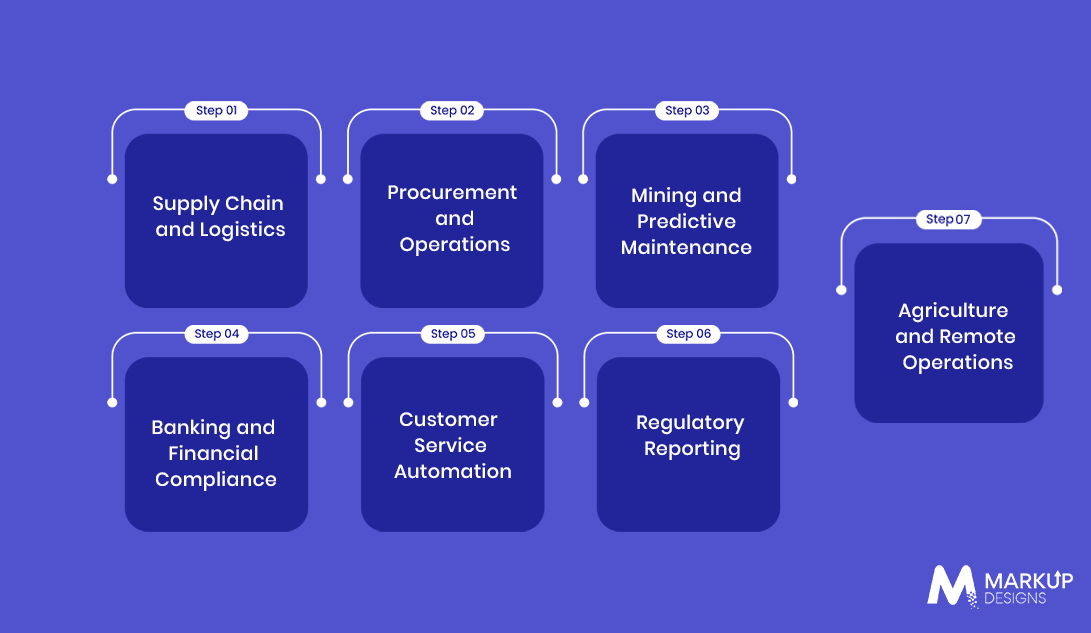
Supply Chain and Logistics
Agents can monitor orders, inventory, shipments, and disruptions while coordinating actions across connected systems.
Procurement and Operations
Automate supplier checks, purchase workflows, approvals, and routine operational tasks based on predefined rules.
Mining and Predictive Maintenance
Agents can monitor equipment data, identify maintenance requirements, and trigger approved maintenance workflows.
Banking and Financial Compliance
AI agents can support transaction monitoring, compliance checks, document reviews, and escalation processes.
Customer Service Automation
Agents can manage multi-step service requests by retrieving information, updating records, and escalating complex cases.
Regulatory Reporting
Agents can collect relevant data, prepare reports, identify missing information, and route outputs for human review.
Agriculture and Remote Operations
AI agents can monitor remote conditions, analyse operational data, and initiate predefined responses with limited manual intervention.
Generative AI vs. Agentic AI: Which Industries Benefit Most?
The choice depends more on the type of business process than the industry itself. Generative AI is generally suited to knowledge and content-intensive tasks, while Agentic AI is relevant where businesses need automated decision-making and workflow execution.
Industries Suited to Generative AI
Industries with high volumes of documents, customer interactions, research, or knowledge work can use Generative AI for content creation, summarisation, and information retrieval.
Industries Suited to Agentic AI
Businesses with complex, repetitive workflows across multiple systems can apply Agentic AI to process coordination, monitoring, and automated execution.
When to Combine Generative AI and Agentic AI
Businesses can combine both approaches when workflows require AI-generated information as well as automated actions. For example, Generative AI can interpret information while an agent uses that output to execute an approved workflow.
Generative AI vs. Agentic AI: Security and Compliance in Australia
AI consulting in Australia needs to account for privacy, data protection, security, access controls, and sector-specific requirements. Agentic systems require additional safeguards because they can interact with business systems and perform actions.
Privacy Act 1988 and AI Systems
Businesses handling personal information should consider their obligations under Australia’s Privacy Act 1988 when collecting, processing, storing, or sharing data through AI systems.
APRA Requirements for Financial Services
Financial institutions using AI need to consider applicable APRA requirements around operational risk, technology, information security, and third-party arrangements.
ASIC and AI Governance Considerations
Organisations operating in regulated financial markets should consider applicable ASIC expectations and maintain appropriate oversight of AI-supported processes and decisions.
Data Residency and Data Protection
Businesses should establish where AI data is processed and stored and apply appropriate controls based on the sensitivity of the information.
PII Masking and Access Controls
Sensitive personal information should be protected through measures such as data minimisation, masking, authentication, and role-based access.
Audit Trails and Activity Logging
Logging AI interactions, decisions, and system actions can help organisations monitor activity, investigate issues, and maintain accountability.
Human-in-the-Loop Controls
Human review can be required for sensitive decisions, exceptions, or actions that carry significant business, financial, or compliance implications.
Safety Guardrails for Agentic AI
Agentic systems should operate within defined permissions, action limits, approval workflows, monitoring mechanisms, and escalation procedures.
How to Choose Between Generative AI and Agentic AI
The right approach depends on whether the primary requirement is generating information or executing connected business processes.
Choose Generative AI When
Use Generative AI when the goal involves content creation, summarisation, knowledge retrieval, research, or employee assistance.
Choose Agentic AI When
Agentic AI is suitable when the business needs AI to plan, coordinate, and execute multi-step tasks across connected systems.
Choose a Hybrid AI Approach When
A hybrid approach can combine Generative AI’s content and reasoning capabilities with Agentic AI’s workflow execution for more complex business processes.
How to Build a Generative AI Strategy in Australia
Define Business Objectives
Identify the business problem, expected outcomes, target users, and measurable objectives before selecting an AI solution.
Identify High-Value Use Cases
Prioritise use cases where AI can address clear productivity, customer experience, or operational requirements.
Prepare and Govern Business Data
Assess data quality, access permissions, privacy requirements, and governance controls before connecting business data to AI models.
Select the Right AI Models
Choose models based on performance, cost, data requirements, security, deployment options, and business use cases.
Integrate AI With Existing Systems
Connect AI applications with relevant databases, knowledge sources, CRM, ERP, or other business platforms where required.
Establish Security and Governance
Define policies for data protection, access control, monitoring, human oversight, and responsible AI use.
Measure Performance and ROI
Track adoption, accuracy, productivity improvements, operating costs, and other business metrics to evaluate results.
How to Build an Agentic AI Strategy in Australia
Identify Processes Suitable for Autonomous Execution
Start with structured workflows where tasks, rules, inputs, and expected outcomes can be clearly defined.
Define Agent Roles and Responsibilities
Specify what each agent can access, decide, and execute to prevent unnecessary autonomy.
Connect Business Systems and APIs
Provide agents with controlled access to the applications, databases, and tools required to complete their assigned tasks.
Establish Human Oversight
Define when human approval is mandatory and create escalation paths for exceptions or uncertain decisions.
Implement Guardrails and Monitoring
Use permissions, action limits, logging, monitoring, and policy controls to keep agent activity within defined boundaries.
Test Agent Decisions and Workflows
Test agents against normal, unexpected, and failure scenarios before deploying them to production environments.
Scale Agentic AI Across Operations
Expand gradually by measuring performance, improving workflows, and adding new use cases once the initial implementation is stable.
Generative AI vs. Agentic AI: Implementation Challenges
Data Quality and Availability
Poor-quality, incomplete, or inaccessible data can reduce AI accuracy and limit the value of both approaches.
Integration With Legacy Systems
Older enterprise systems may require additional APIs, middleware, or custom integration work before AI can interact with them.
Security and Privacy Risks
AI systems must protect sensitive business and personal information through appropriate access, encryption, monitoring, and AI governance controls.
Hallucinations and Incorrect Outputs
Generative AI can produce inaccurate information, while agentic systems may also act on incorrect information if appropriate validation is not in place.
AI Governance and Accountability
Businesses need clear ownership, policies, monitoring, and approval mechanisms to manage AI-supported decisions and actions.
Cost and Infrastructure Management
Model usage, cloud infrastructure, integrations, monitoring, and ongoing maintenance can increase the total cost of AI implementation.
Generative AI vs. Agentic AI: What Is the Future for Australian Businesses?
AI adoption is moving from standalone assistance toward deeper integration with business workflows. As organisations build stronger data, cloud service, and governance foundations, both Generative AI and Agentic AI can become part of broader enterprise technology strategies.
Growth of Enterprise AI Adoption
Businesses are increasingly exploring AI across customer service, operations, analytics, software development, and knowledge management.
AI-Powered Workforce and Productivity
Generative AI can support employees with information and content-based tasks, while AI agents can automate selected workflows.
Increasing Demand for AI Infrastructure
Growing AI workloads are increasing the need for scalable cloud infrastructure, data platforms, model management, security, and monitoring.
Shift From AI Assistance to AI-Driven Execution
The focus is gradually expanding from AI that generates responses toward systems that can coordinate and execute defined business processes under appropriate controls.
Build the Right AI Solution for Your Business
Explore Generative AI and Agentic AI solutions designed around your business workflows, data, and operational requirements.

Conclusion
Generative AI and Agentic AI offer different approaches to applying artificial intelligence across Australian businesses. Generative AI can support content, knowledge, and employee productivity, while Agentic AI can extend AI capabilities into workflow automation and system-level actions. The right approach depends on business objectives, data, integrations, risk requirements, and the level of autonomy needed.
FAQs
1. What is the difference between generative AI and agentic AI?
Generative AI focuses on creating content and information from prompts, while Agentic AI can plan, use tools, and execute multi-step tasks toward a defined goal.
2. Is agentic AI more expensive than generative AI?
Generally, Agentic AI requires a higher investment because it involves workflow orchestration, system integrations, memory, monitoring, and additional safety controls.
3. How much does generative AI cost in Australia?
Generative AI implementation can cost around AUD 70,000–200,000, depending on features, AI models, integrations, data requirements, and customisation.
4. How much does agentic AI cost in Australia?
Agentic AI implementation can range from around AUD 150,000–700,000+, depending on the number of agents, workflow complexity, integrations, infrastructure, and governance requirements.
5. Which is better for Australian businesses, generative AI or agentic AI?
The choice depends on the business requirement. Generative AI suits content, knowledge, and analysis-based tasks, while Agentic AI is designed for multi-step workflows that require planning and execution.
Author's Perspective
Businesses should define the workflow they want to improve before choosing an AI technology. Generative AI can be a practical starting point for knowledge and productivity use cases, while Agentic AI can be considered when processes require multi-step execution and system integration. A phased approach can help validate value before expanding AI across larger operations.
Discuss Your Project NowJupinder Singh Arora
Founder and CEO
Related Posts
Enterprise AI Agents: Practical Use Cases Driving Business...
LLM-as-a-Judge Explained: Improving Enterprise AI Governance and Evaluation
Enterprise AI Outsourcing: How to Choose the Right...
Insights Are Valuable & Execution is Priceless
You’ve read about the digital future. Now, let’s build the infrastructure to take you there. Move your strategy from the page to the product.
Design Your Solution Now
Contact Us
Schedule The Appointment At Your Convenience Date And Time.
30 Min
Web Conference
Time Zone
Indian standard time (08:30pm)

Thanks For Getting In Touch!
You’ve Taken The First Step Toward Transforming Your Digital Presence. Our Experts Will Reach Out Shortly To Take It Forward.
Launch Your Dream Project
Provide a brief overview of your project, and our specialists will evaluate your requirements. We will connect with you to explore how the right digital solutions can help you launch faster.