

In Brief
- Responsible AI has become a necessity: companies require AI systems that function effectively, securely, transparently, and responsibly.
- The regulations to follow are actually forming: local laws for AI’s practice, privacy, and compliance need to be updated, keeping pace with regulation changes across the Middle East in this sphere.
- Risks that could cause different troubles arise along with AI: bias, privacy issues, inaccuracy of outcomes, and poor governance could lead to financial and reputation troubles.
- Ethics need to be integrated into AI: AI ethics consulting can advise companies on how to deal with risks at the stages of strategy, development, and implementation.]
- Trust is an essential part of long-term AI adoption: with responsible AI practices one can gain trust for their customers thus scaling the use of AI effectively.
In recent times, artificial intelligence has transitioned at an incredible pace from just being a subject of research to becoming the most vital component of enterprises in different parts of the world. Businesses are applying AI technologies to automate their business processes, enhance customer experience, use information gained from their data, and facilitate business decision-making. The growing impact of AI forces companies to start considering how it works for them and whether it operates fairly, securely, transparently, and responsibly.
It is the case when the need for AI ethics consulting appears. The efficient operation of AI systems requests from organizations solving different ethical issues connected with data confidentiality, algorithmic bias, human oversight, explanation of the decisions made by the AI system, and complianc e with the regulations. The companies in the Middle East encounter additional challenges due to the regional legislation, issues connected with providing services in several languages, and sector-specific regulations. AI ethics experts can guide the organizations with identifying the risks associated with his technology at the early stages of its implementation and help them come up with ethical frameworks ensuring the AI systems functionality is efficient but ethical.
Why Responsible AI Matters for Middle East Enterprises
Artificial intelligence is increasingly making an impact on customer interactions, business decisions and operational processes in the Middle East. As the technology adoption is growing, companies are looking for opportunities to respond to AI-related questions.
AI Adoption Is Accelerating Across the Region
Businesses in various sectors are employing AI for different purposes such as automation, analytics and customer service. The increased usage of AI technologies demonstrates that adequate management of the AI model development process is becoming more important.
Moving From AI Innovation to Responsible AI
Innovation in AI alone is not sufficient for the success of the business. Enterprises must also pay attention to other parameters such as fairness, transparency, privacy, responsibility and human oversight, apart from taking into account the issues of efficiency.
The Business Risks of Uncontrolled AI Adoption
AI systems used in the wrong way might cause bad decisions, violations of personal data, lack of accuracy, problems with safety and compliance. The mentioned risks can ruin consumer confidence in the businesses and lead to more costs.
What Is AI Ethics Consulting?
AI ethics consulting helps businesses to understand the ethical, legal and operational risks posed by AI technologies. Consultants assess AI use cases, data practices, models and governance processes to help businesses build more responsible AI systems.
AI Ethics vs Responsible AI
While AI ethics centers on principles such as fairness, transparency, accountability and privacy, responsible AI implements these principles in practice through governance, technical safety measures, testing and audits.
What an AI Ethics Consultant Does
An AI ethics consultant is able to evaluate the risks of AI, set up a governance framework, review the data and the models being utilized, uncover biases present, make the AI system interpretable and set up a system of continuous monitoring of the AI technology.
When Enterprises Need AI Ethics Consulting
Consulting becomes necessary when AI is at stake in processes that entail sensitive decisions made, places under its use personal data, works in a regulated industry or is being applied in an enterprise scale manner.
Why Middle East Enterprises Face Unique AI Ethics Challenges
The uniqueness of the region that includes its diversity in markets, regulation, languages or industries creates its own specific features that may not be taken into consideration in global AI regulations.
Regional Regulations and Compliance Requirements
Enterprises must consider applicable data protection, AI governance and sector specific requirements across the markets where they operate. Regulations can differ between countries, making regional expertise important.
Multilingual and Arabic AI Systems
Artificial Intelligence solutions engaging Arabic-speaking customers have to take into account the features of the language, dialects and cultural context. Badly trained models can lead to incorrect, unfair or unfit results.
Cultural and Social Considerations
AI applications need to consider the social and cultural environment of target customers. This is especially critical for applications dealing with customers, hiring, healthcare, or public services.
Data Privacy Across AI Systems
AI applications are often based on large data sets with personal or business data. Companies have to have the proper control over the data collection, processing, storing, leaving.
AI Adoption Across Regulated Industries
Finance, healthcare, government, and telecommunication are the industries where sensitive data is handled and serious decisions can be made. Therefore, AI applications in such fields should have more governance, risk management, and monitoring.
Read Also: Is Your Business Ready for AI Adoption? AI Readiness Assessment Guide
Key AI Ethics Risks Facing Middle East Enterprises
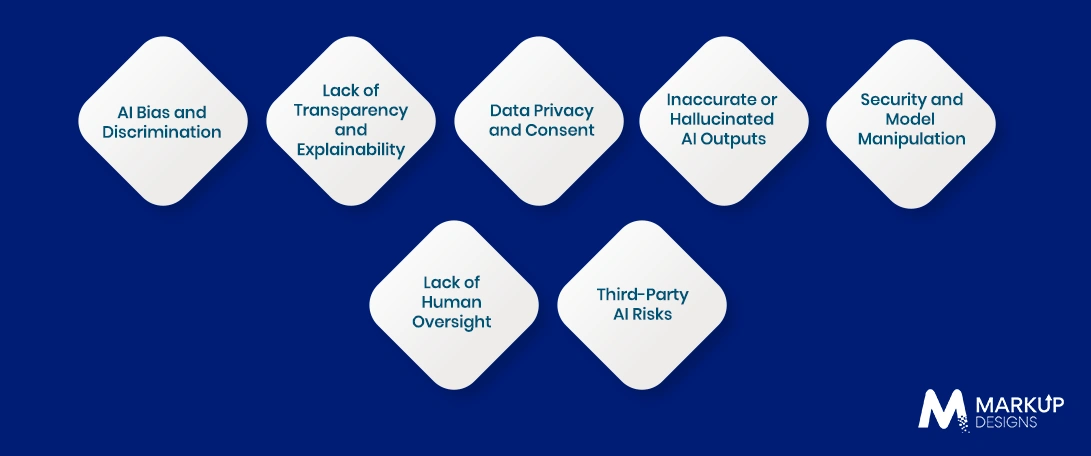
Introducing responsible AI requires companies to discover risks before they can cause operational or legal implications.
AI Bias and Discrimination
AI will replicate any discrimination found in the initial data or at the development stage, which ensures unfair results for specific client groups and customers.
Lack of Transparency and Explainability
Organizations may not be able to give explanation of the decisions made as users are unable to comprehend the rationale behind the particular decision made.
Data Privacy and Consent
When personal data are used without proper safeguards, approvals, and limitations of purpose, privacy and compliance issues may arise.
Inaccurate or Hallucinated AI Outputs
Generative AI models are capable of producing convincing but faulty information. Without a prerequisite of thorough validation, the false output can lead to a variety of decisions made by businesses.
Security and Model Manipulation
AI systems can become prey to attacks trying to manipulate models and disclose sensitive information, therefore issues of security becomes an important aspect of appropriate usage of AI.
Lack of Human Oversight
AI system must not act solely without the involvement of humans especially when it comes to decisions with strong implications.
Third-Party AI Risks
Using external AI models, APIs or platforms introduces additional risks around data handling, security, model reliability, compliance, and vendor dependency. Enterprises need to assess these risks before integrating third-party AI into critical business processes.
How AI Ethics Consulting Helps Enterprises
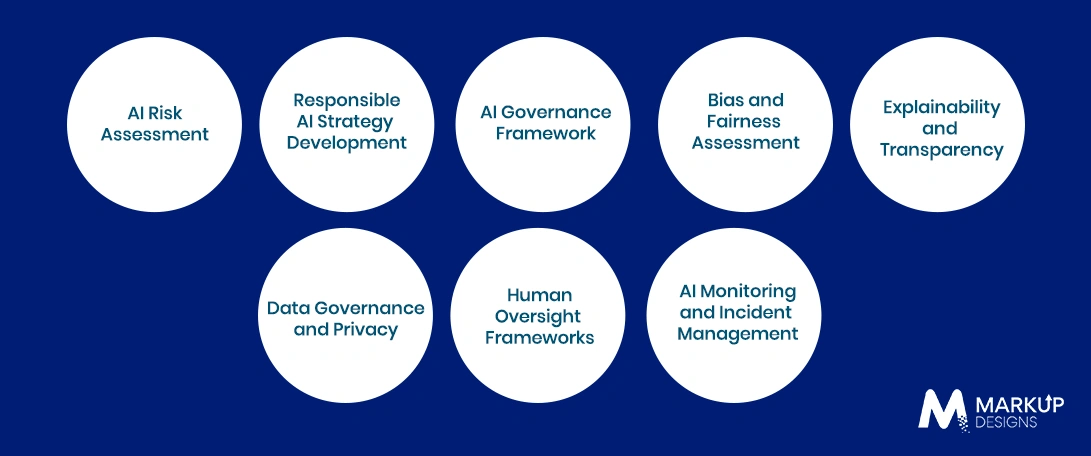
AI ethics consulting assists organizations in transitioning from high-level responsible AI principles to concrete procedures that can be utilized during the AI life cycle. It consists of technical evaluation, governance, risk management, and continuous monitoring of how organizations can safely implement AI.
AI Risk Assessment:
The consultants determine the ethical, operational, security, and compliance implications for various AI applications, data, models, and environment settings.
Responsible AI Strategy Development:
A responsible AI strategy explains how a company wants to utilize AI based on its business goals, available resources, and ethical considerations.
AI Governance Framework:
Governance is responsible for setting rules, duties, and procedures for the process of developing, implementing, and monitoring AI systems.
Bias and Fairness Assessment:
Bias checking of AI systems and their training data helps figure out if certain users or groups might suffer because of unfair outcomes.
Explainability and Transparency:
The consultants assist organizations in making AI choices more comprehensible and preparing necessary documentation and explanations.
Data Governance and Privacy:
Effective data governance guarantees that the data required by AI systems are gathered, processed, and used according to the relevant laws and regulations.
Human Oversight Frameworks
Human review mechanisms can be established for high-impact AI decisions, ensuring people can question, override, or intervene when necessary.
AI Monitoring and Incident Management
Continuous monitoring helps identify model drift, unexpected behaviour, bias or security incidents after deployment and provides processes for responding to them.
AI Regulations and Responsible AI in the Middle East
AI regulation across the Middle East is developing alongside rapid adoption. Enterprises therefore need to consider both existing privacy requirements and emerging AI governance expectations when designing their responsible AI frameworks.
UAE AI Governance and Regulations
The UAE has established national AI strategies and governance initiatives focused on responsible and effective enterprise AI adoption. Businesses operating in the country should monitor applicable federal and sector-specific requirements as the regulatory landscape develops.
Saudi Arabia AI Governance and Regulations
Saudi Arabia has introduced AI governance principles and initiatives through organisations such as the Saudi Data and AI Authority (SDAIA). Enterprises should consider responsible AI, data governance and risk management requirements when deploying AI solutions in UAE.
Data Protection and Privacy Requirements
AI systems that process personal information must account for applicable data protection laws, including requirements around consent, data processing, security and individual rights.
Industry Specific AI Compliance
Financial services, healthcare, government and other regulated sectors may have additional requirements governing how data and automated systems can be used.
Preparing for Evolving AI Regulations
Enterprises should build flexible governance processes that can adapt as AI regulations and industry standards evolve rather than treating compliance as a one time exercise.
AI Ethics Across Key Middle East Industries
The ethical risks associated with AI vary depending on how and where the technology is used. High-impact industries require particularly strong controls around data, fairness, transparency and human oversight.
AI Ethics in Banking and Financial Services
AI used for credit assessment, fraud detection and financial decisions should be monitored for bias, explainability, data privacy and regulatory compliance.
AI Ethics in Healthcare
Healthcare AI can influence diagnosis, treatment and patient management, making accuracy, patient privacy, transparency and human clinical oversight critical.
AI Ethics in Government
Government AI systems can affect public services and citizen decisions. Strong accountability, transparency, data protection and human oversight are therefore essential.
AI Ethics in Retail and E-commerce
Retailers using AI for recommendations, pricing, customer profiling or marketing need to consider privacy, fairness and transparency in how customer data is used.
AI Ethics in Telecommunications
Telecom companies can use AI for network optimisation, customer service and fraud detection while managing large volumes of customer and operational data.
AI Ethics in Energy and Utilities
AI applications in energy and utilities can support forecasting, infrastructure monitoring and operational optimisation. Responsible deployment requires attention to reliability, security and human oversight, particularly where AI influences critical infrastructure.
Building a Responsible AI Framework for Your Enterprise
A responsible AI framework gives enterprises a structured way to manage ethical, technical and regulatory risks. It should be built into everyday AI operations rather than treated as a separate compliance exercise.
Establish AI Governance and Accountability
Define clear ownership for AI systems, including who approves, manages, monitors and is accountable for their outcomes.
Define AI Risk Classification
Classify AI use cases based on factors such as data sensitivity, business impact and potential harm to determine the level of oversight required.
Create Data and Model Governance Policies
Establish policies for data quality, access, usage, model development, validation, documentation and ongoing management.
Implement Bias and Fairness Testing
Regularly test training data and AI models for potential bias and assess whether outputs produce unfair outcomes.
Establish Human Oversight
Define when human review is required and ensure people can intervene, challenge or override AI decisions where appropriate.
Maintain AI Audit Trails
Keep records of data sources, model versions, decisions, changes, testing and incidents to support accountability and investigations.
Continuously Monitor AI Systems
Monitor AI performance, accuracy, fairness, security and unexpected behaviour after deployment to identify issues early.
The Role of AI Ethics Consulting Throughout the AI Lifecycle
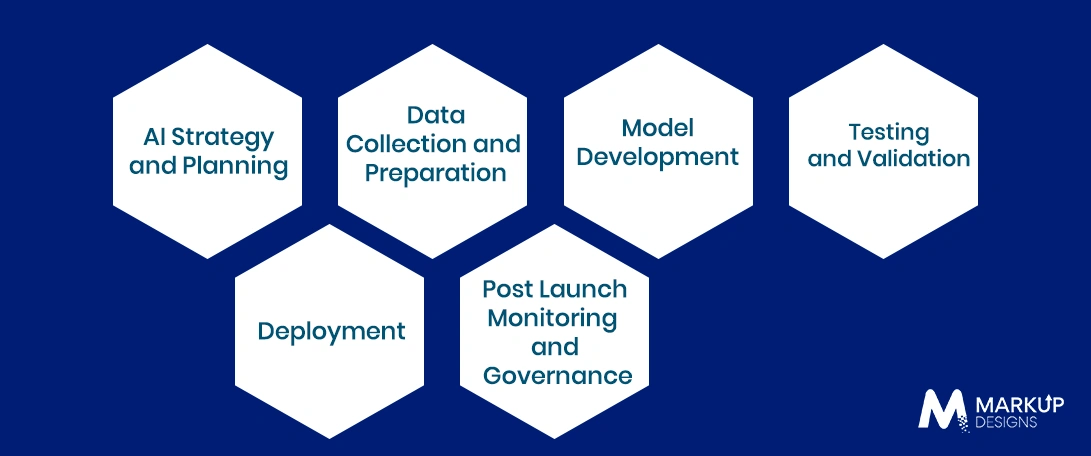
AI ethics should be considered from the earliest planning stage through deployment and ongoing operation. Consultants can help organisations identify and address risks at each stage.
AI Strategy and Planning
Assess proposed AI use cases, business objectives and potential risks before development begins.
Data Collection and Preparation
Review data sources, quality, privacy, consent and suitability for the intended AI application.
Model Development
Help teams incorporate responsible AI principles into model selection, training, testing and documentation.
Testing and Validation
Evaluate AI systems for accuracy, bias, security, explainability and other risks before they reach production.
Deployment
Ensure appropriate governance, access controls, human oversight and monitoring are in place when the AI system goes live.
Post Launch Monitoring and Governance
Monitor performance and risks continuously while updating governance controls as models, data and business requirements change.
Business Benefits of Responsible AI Consulting
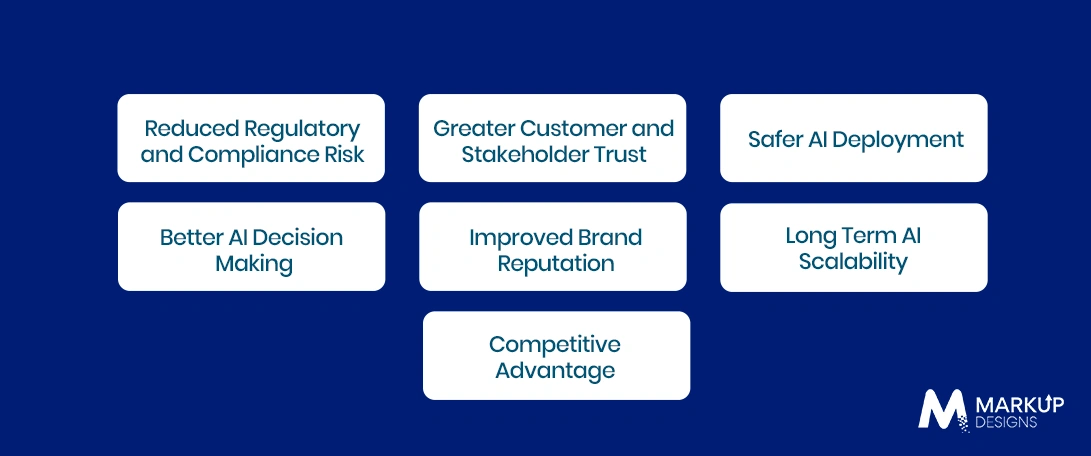
Responsible AI is not only about avoiding risks. A well-governed AI environment can support safer adoption and create greater confidence among customers, employees and stakeholders.
Reduced Regulatory and Compliance Risk
Strong governance helps organisations identify compliance issues earlier and maintain appropriate controls as requirements evolve.
Greater Customer and Stakeholder Trust
Transparent and responsible AI practices can strengthen confidence in how organisations use automated systems and personal data.
Safer AI Deployment
Risk assessment, testing and human oversight help reduce the likelihood of harmful or unreliable AI outcomes.
Better AI Decision Making
Reliable data, tested models and appropriate oversight can improve the quality and consistency of AI-supported decisions.
Improved Brand Reputation
Demonstrating responsible use of AI can help protect an organisation’s reputation and differentiate it in increasingly AI-driven markets.
Long-Term AI Scalability
A strong governance foundation makes it easier to expand AI across departments and use cases without losing control over risks.
Competitive Advantage
Businesses that can adopt AI responsibly may be better positioned to innovate while maintaining customer trust and regulatory readiness.
What Happens When Enterprises Ignore AI Ethics?
Ignoring AI ethics can create problems that extend well beyond individual AI systems. Poor governance can expose enterprises to regulatory, financial, operational and reputational consequences.
Regulatory Penalties and Legal Exposure
Non-compliance with applicable privacy, data protection or industry requirements can result in investigations, penalties and legal challenges.
Customer Trust and Reputation Damage
Unethical or poorly managed AI decisions can reduce customer confidence and create long-lasting reputational damage.
Biased Business Decisions
Unchecked bias can influence recruitment, lending, customer segmentation, pricing and other important business decisions.
Data Privacy Incidents
Weak controls over AI data can increase the risk of unauthorised access, misuse or exposure of sensitive information.
AI System Failures
Poorly tested or monitored AI can produce inaccurate outputs, unexpected behaviour or unreliable decisions that disrupt business operations.
Increased Cost of AI Remediation
Fixing governance, data and model problems after deployment is often more expensive than addressing them during the early stages of AI development.
How to Choose an AI Ethics Consulting Partner in the Middle East
Choosing the right AI consulting partner requires evaluating both strategic and technical capabilities. Enterprises should look for a partner that understands regional requirements while also having the expertise to implement responsible AI practices across real business environments.
Regional Regulatory Expertise
Choose a partner familiar with AI governance, data protection and compliance requirements across the Middle Eastern markets where your business operates.
Technical AI Knowledge
The consultant should understand AI models, data pipelines, machine learning, generative AI, and the technical factors that can create ethical or operational risks.
Industry Experience
Experience within your industry helps the consultant understand the specific risks associated with your customers, data, processes and regulatory environment.
Responsible AI Frameworks
Look for practical frameworks covering governance, accountability, risk assessment, fairness, transparency and human oversight.
Bias and Explainability Capabilities
The partner should have the ability to assess AI systems for bias and help organisations make important AI decisions more transparent and understandable.
Security and Data Governance Expertise
Strong knowledge of data governance, privacy and AI security is essential when systems process sensitive customer or business information.
AI Monitoring and Audit Experience
A capable partner should support ongoing monitoring, documentation and audit trails rather than treating AI ethics as a one-time assessment.
Long Term Support
AI systems evolve after deployment. Choose a partner that can continue supporting governance, risk management, monitoring and optimisation as your AI environment grows.
How Markup Designs Can Help With Responsible AI
Markup Designs helps businesses build and adopt AI solutions with security, governance and responsible AI principles considered from the start. Our expertise covers AI strategy, risk assessment, custom AI development, integration, data protection and ongoing monitoring, helping businesses address potential risks while developing scalable AI solutions. By combining AI engineering with responsible development practices, Markup Designs helps enterprises move from AI strategy to implementation with greater control, transparency and long-term reliability.
Build Responsible AI With Confidence
Develop AI solutions that balance innovation, security, governance and business value with Markup Designs.

Conclusion
For Middle East enterprises, responsible AI is no longer simply an ethical consideration. As organisations integrate AI into customer services, business operations and high impact decision making, issues such as fairness, privacy, transparency, security and accountability can directly influence business performance and customer trust. AI ethics consulting provides the expertise needed to identify these risks early, establish practical governance frameworks and integrate responsible practices throughout the AI lifecycle. Enterprises that build responsible AI into their strategy from the beginning can adopt new technologies with greater confidence while remaining better prepared for evolving regulations and stakeholder expectations. The goal is not to slow down AI innovation, but to create the governance and safeguards that allow organisations to scale it responsibly.
FAQs
1. What is AI ethics consulting?
AI ethics consulting helps organisations identify and manage the ethical, technical and regulatory risks associated with developing and using AI systems. It typically covers areas such as fairness, transparency, privacy, accountability and governance.
2. Why is responsible AI important for Middle East enterprises?
Responsible AI innovations helps Middle East enterprises manage risks associated with data privacy, bias, security, transparency and evolving regulations while building greater trust in AI systems.
3. What are the main AI ethics risks for businesses?
Common risks include algorithmic bias, privacy violations, inaccurate outputs, lack of transparency, security vulnerabilities, inadequate human oversight and third party AI risks.
4. How do AI ethics consultants help with compliance?
Consultants assess AI systems and processes against applicable requirements, identify gaps and help establish governance, documentation, data controls and monitoring processes to support compliance.
5. How does AI ethics apply to generative AI?
Generative AI introduces additional concerns such as hallucinations, data leakage, copyright, bias, transparency and misuse. Responsible AI practices help organisations establish appropriate safeguards before and after deployment.
Author's Perspective
Responsible AI should not be treated as a final compliance checkpoint after an AI solution has already been developed. The biggest value comes from addressing ethical and governance considerations during strategy, data preparation, development, testing and deployment. For Middle East enterprises operating across diverse markets and regulatory environments, this approach becomes even more important. Businesses that combine AI innovation with strong governance will be better positioned to build trust, manage risk and scale AI sustainably rather than dealing with expensive problems after deployment.
Discuss Your Project NowJupinder Singh Arora
Founder and CEO
Related Posts

How Artificial Intelligence Is Changing Mobile Game Development
How to Build Production-Ready Applications with AI Coding...
Cost, Benefits & Business Impact: Generative AI vs....
Insights Are Valuable & Execution is Priceless
You’ve read about the digital future. Now, let’s build the infrastructure to take you there. Move your strategy from the page to the product.
Design Your Solution Now
Contact Us
Schedule The Appointment At Your Convenience Date And Time.
30 Min
Web Conference
Time Zone
Indian standard time (08:30pm)

Thanks For Getting In Touch!
You’ve Taken The First Step Toward Transforming Your Digital Presence. Our Experts Will Reach Out Shortly To Take It Forward.
Launch Your Dream Project
Provide a brief overview of your project, and our specialists will evaluate your requirements. We will connect with you to explore how the right digital solutions can help you launch faster.