
In Brief
- Unlike standard software that is available on the market, custom software development allows companies to create solutions that meet their operating needs, goals, and objectives, which is the main reason for its popularity.
- The use of bespoke software means better scalability, security, and efficiency, thus allowing companies to automate their business processes and allow them to offer better customer services.
- By using a structured software development life cycle (SDLC), it is possible to ensure the successful implementation of a project thanks to proper project planning, design, development, testing, and maintenance.
- Factors affecting the price and length of the development process are the complexity of the project, the technology used, the integration of systems, the compliance requirements, and the skills of specialists involved.
- The year 2026 will be characterized by the use of emerging technologies, such as Artificial Intelligence (AI), cloud technologies, low-code platforms, DevSecOps, and others.
Today’s companies function in a world that is progressively becoming more digital; in such cases, flexibility, creativity, and consumer interaction with the brand are crucial for maintaining the competitive edge in business. Though ready-to-use programs can be useful in fulfilling primary operational needs, but they still fail when an organization requires a solution developed specifically for their operational process, industry standards, and future plans. As a result, the demand for custom software development emerged, allowing companies to create applications with flexibility, a high degree of security, diversity in functions, and complete alignment with companies’ goals and promotion of digital transformation.
With advances and influences of technologies such as Artificial Intelligence, cloud computing, automation, and data processing, custom software has turned from a means of gaining a competitive advantage to a vital strategic requirement. As a startup designing a brand new digital product or an established organization implementing old systems, it is necessary to understand software development, its costs and trends for making wise investments.
What is Custom Software Development?
In today’s world, organizations need technology that aligns with their specific goals, instead of changing the way they work in order to accommodate a one-size-fits-all application. The reason for that is custom software development. Unlike a general-purpose application, custom software is a tailor-made program that can solve an organization’s business challenges. This solution is much more efficient, adaptable, and cost-effective in the long run.
Custom software is the answer whether you’re looking to simplify processes, enhance customer satisfaction, or build a system that encompasses several existing systems.
What is Custom Software Development?
Custom software development is the process of creating, developing, and maintaining tailored software solutions for a specific organization. Each component of the software, from the way the solution looks to its security features, is made according to the company’s needs, while the universal applications provide similar options for every user.
Unlike standard applications, custom software is tailored to solve a particular business problem and allow the customer to innovate and develop the business in the future.
How It Differs from Standard Software
Commercial software is produced by companies for various industries. This type of software consists of well-known features that can meet different requirements. Although this software can be put into use really quick and has relatively a low cost, companies often have to rearrange their business processes due to the limitations of the commercial software.
Custom software is designed according to the business processes so that the company may carry out its operations without losing effectiveness. This type of software provides flexibility in data processing, the availability of reliable integrated systems, security, and new features appearing if needed.
The reasons for the popularity of custom software solutions:
Companies understand that technologies should promote business development rather than prevent it from making progress.
Custom software enables companies to:
– To automate the processes that repeat over and over again
– To optimize the processes of different departments
– To give the possibility to customers to enjoy individual services
– To integrate various applications into one system
– To get improved security and adherence to rules and regulations
– To widen the software as the business develops
– To receive all rights for the software and its material.
Why Custom Software Matters in 2026
With the advancement of technology, businesses across multiple sectors need technology that keeps up with the expectations of customers, markets, and technological advancements. In 2026, using custom software is no longer considered as an investment, but as a tool for facilitating innovation, efficiency, and sustainable business development.
Changing Customer Expectations
The modern customer demands personalized, fast, and smooth digital experiences every time. Custom software is helpful in creating customer-centric solutions rather than generic software.
Digital First Business Models
Companies today use digital tools such as mobile applications, cloud services, and artificial intelligence. Custom software allows businesses flexibility in performing their daily operations with digital-first business models.
Competitive Differentiation
Companies employing the same commercial program are likely to create the same customer experience. Custom software helps organizations to implement their own features, automate production processes, and thus stay ahead of competitors.
Long Term Scalability
As companies grow, they face more complex operational requirements. Custom software is designed with scalability in mind, allowing organisations to add new functionalities, integrate emerging technologies, support increasing user volumes, and enter new markets without rebuilding their systems from scratch.
Custom Software vs. Off-the-Shelf Software
Business organisations need to make one of the fundamental choices in deciding either to implement a custom software solution or go for an off-the-shelf solution. Custom software and off-the-shelf software both have their own sets of merits, but the right choice depends on factors such as the objectives of a business, the complexity of operations, budgetary allocation for the software, and future growth objectives.
Having clarity on the difference between the two helps organisations make intelligent decisions regarding technology purchase.
What is Off-the-Shelf Software?
Off-the-Shelf Software refers to the generic applications that have been made for general use. These solutions are ready to use without any minimal development effort and are usually available either on a subscription basis or on a licensing.
Examples include typical CRM systems, accounting applications, etc.
What is Custom Software?
Custom software is developed for a specific requirements of an organisation.
Every feature, integration, and functionality is carefully designed to address unique business challenges while supporting future scalability.
Unlike commercial software, businesses retain complete ownership of the application and have full control over future enhancements, security standards, and technology upgrades.
Custom Software vs Commercial Off-the-Shelf Software
| Comparison Parameter | Custom Software | Commercial Off-the-Shelf Software |
| Purpose | Developed to solve specific business requirements | Designed for general use across multiple industries |
| Customisation | Fully customised to business processes | Limited configuration and customisation options |
| Ownership | Complete ownership of the source code and intellectual property | Vendor retains ownership and licensing rights |
| Security | Security measures designed specifically for organisational requirements | Standard security features shared across all users |
| Scalability | Easily scales with business growth and evolving requirements | May require additional subscriptions or migration as business expands |
| Integration | Seamlessly integrates with existing enterprise systems | Integration capabilities may be limited or require third party tools |
| Initial Investment | Higher upfront development cost | Lower initial licensing or subscription cost |
| Long Term Cost | Better return on investment over time due to ownership and flexibility | Ongoing licensing, subscription, and upgrade costs can accumulate |
| Maintenance | Controlled by the business or development partner | Managed according to the vendor’s release schedule |
| Vendor Dependency | Minimal dependency after deployment | High dependency on vendor support and product roadmap |
| Performance | Optimised specifically for business operations | Performance designed to accommodate a wide range of users |
Which Option is Best for Your Organisation?
The decision of whether to opt for custom software or off-the-shelf software for your organisation is based on present and future business requirements.
If you need a solution in quick time and at a lower cost, then an off-the-shelf software will suffice. For organisations with complicated processes, compliance issues, and integration needs, custom software will yield better returns in the long run.
Custom software is the best option for organisations looking at long-term gains from investment in software.
Why Businesses are Investing in Custom Software Development
As more and more companies are going digital, the popularity of custom software development is growing. Generic software is built keeping in mind the requirements of a large number of customers. Custom software, on the other hand, is built according to the specific requirements of the business.
Here are the key reasons why organisations are increasingly investing in custom software development.
Enhanced Security
Cybersecurity threats are constantly evolving, thus securing data has become one of the most important things for any business. Custom software comes with security features specifically designed for the organization’s infrastructure, compliance standards, and risk profile. Utilizing features such as role-based access, data encryption, secure authentication, and continuous monitoring helps minimize risks to sensitive business data.
Business Process Automation
Manual operations take lots of time and increase the chances of human errors. Custom software helps automate business processes according to defined rules, such as approval rules, reporting, inventory management, customer onboarding, and document processing.
Seamless System Integration
The majority of companies operate using different software solutions for managing their businesses. Custom software can seamlessly connect with already-existing applications such as CRM, ERP, payment systems, cloud services, marketing tools, or third-party applications.
Better Customer Experience
Customers have increasingly high expectations when it comes to the personalization and ease of use of digital services.
Customized software gives companies the chance to create applications oriented to the needs of clients, such as personal dashboards, self-service portals, recommendations based on AI, real-time assistance, and user-friendly interfaces.
Higher Operational Efficiency
Despite the fact that one business uses commercial software, each organization has its own individual approaches as far as workflows are concerned. Custom-made programs help organizations to adapt their business processes, thus eliminating unnecessary steps, boosting cooperation, and allowing teams to work in a more effective way. All these factors lead to swift decision-making, increased productivity, and lowered operational costs.
Scalability for Future Growth
Businesses change over time, and custom software is built to keep up with that growth. It can be updated and expanded as your operations, customers, and requirements increase.
Complete Ownership of Intellectual Property
Custom software gives organizations complete IP rights, unlike commercial software. Organizations may introduce improvisations on their own and not depend on the vendor.
Competitive Advantage
Using the same software as competitors does not allow for differentiation.
Custom software allows businesses to come up with new functionalities, automate workflows that are specific to their industries, and give their customers a unique digital experience that makes an impact on their market position and ensures long term sustainability of company development.
Better Business Intelligence and Analytics
Today, data is one of the most valuable assets in business. Custom software can gather, analyze and visualize information from different sources, allowing companies to track their performance, establish patterns in customer behavior, predict trends and make smart business decisions based on advanced analysis and dashboard reports.
Types of Custom Software Development
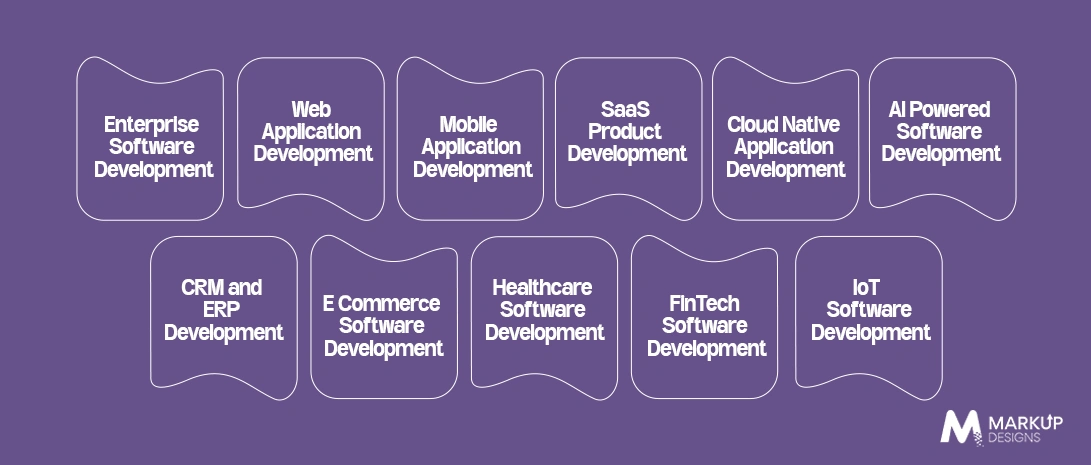
Each company has its own unique needs and which means that various kinds of custom software will be used in different scenarios. Businesses may require custom software to improve their business processes, provide digital services and create intelligent platforms.
The list below contains the most common types of custom software development that companies invest in.
Enterprise Software Development
Enterprise software is a solution intended to suit companies with a great number of processes. Enterprise software development servcies facilitate workflow processes, improve communication, unify data processing, and completely automate complex business workflows. Business solutions include HR management systems, supply chain systems, procurement.
Web Application Development
Web applications provide direct access to software through internet browsers, eliminating the requirement for installation. Companies use web application development to create custom applications which include customer management systems, appointment scheduling platforms, online education systems, business intelligence dashboards, online content management systems, and service delivery platforms that can be used on many different devices.
Mobile Application Development
Due to an increase in mobile usage, companies develop custom mobile applications for improved customer experience and higher productivity of their employees. Depending on the unique needs of companies, mobile applications can be developed for Android, iOS or both platforms using cross-platform technologies with features such as geolocation, push notifications, mobile payment solutions, and offline operation.
SaaS Product Development
Software as a Service (SaaS) products help businesses create cloud-based apps using subscription-based models. SaaS product development aims to create secure, scalable platforms allowing customers access to the app from any location.
Cloud Native Application Development
Cloud-based applications are specifically designed for cloud environments, employing technology such as containers, microservices, serverless architecture, and orchestration tools. These applications make the business processes more scalable, easily available, faster to deploy, and more efficient in resource consumption, all while easing the process of modern digital transformation.
AI-Powered Software Development
Artificial Intelligence is changing the way businesses work with the ability of software to learn, foresee, and automate processes. AI-based software includes technologies such as machine learning, natural language processing, computer vision, predictive analytics, and intelligent automation, making the process much easier.
CRM and ERP Software Development
Customer Relationship Management (CRM) and Enterprise Resource Planning (ERP) systems are used by companies to centralise customer information and business activities in one place. Custom CRM and ERP systems allow a company to control its sales data, marketing efforts, finance, procurement, inventory, production processes, and customer relations.
eCommerce Development
Custom eCommerce solutions provide businesses with control over online shopping. Custom eCommerce platforms have a range of features, including product recommendations, secure payment options, inventory tracking, order tracking, customer loyalty programs, and omnichannel payment systems.
Healthcare software development
To handle the management of patient care, clinical operations, and medical records securely and compliantly, the healthcare sector needs software solutions. Custom healthcare systems cover such types as electronic health records software, telemedicine platforms, hospital management systems, appointment scheduling apps, remote patient monitoring tools, and healthcare analytics software, and provide compliance with the legislation in the specified area.
FinTech Software Development
The finance sector and financial organizations depend highly on custom software for providing secure and effective financial services. Such software may involve digital banking software, payment gateway software, investment management systems, lending software, insurance software, fraud detection systems, and financial analytics tools, which comply with numerous standards in terms of both regulations and security.
IoT software development
IoT software is responsible for making the physical devices communicate with digital systems for real-time monitoring and automation. For businesses, custom IoT solutions can be of primary importance for smart manufacturing, logistics, healthcare monitoring, connected cars, energy management, smart buildings, agriculture, and industrial automation.
Custom Software Development Process
Custom software development must be managed in a specific way to ensure that it complies with the needs of customers, fulfills their objectives, and works efficiently.
Stage 1 – Requirements Gathering and Analysis
The development team collaborates with key project stakeholders to clearly define the project goals and objectives.
Stage 2 – Market Research and Feasibility Study
The team conducts market research to find out if there is a need for the product being developed and if the implementation of this project is financially viable.
Stage 3 – Project Planning and Selection of Technologies
The team determines the project deliverables, project timeline, and required technology.
Stage 4 – UX Design
The design team then prepares the wireframes, prototypes, and user interface of the product.
Stage 5 – Software Architecture Design
The architecture of the software, including its database and security systems, is designed to ensure that it can work effectively and efficiently.
Stage 6 – Development
During this stage, software development takes place. The developers start programming based on the requirements of the project.
Frontend Development: Deals with user interface creation and overall user experience.
Backend Development: Is responsible for server-side programming, business processes and functionality of application software.
Database Development: Responsible for setting up the storage and retrieval of data system.
API Development: Responsible for establishing the connection of application with different platforms and other business systems.
Step 7: Testing and Quality Assurance
Software is tested in order to check if it fulfills its purposes, has high uptime and is reliable after the launch. Functional testing is required to check if everything works as it should.
Performance testing helps to identify the speed, level of stability and scalability of software. Security testing helps to find any possible vulnerabilities and check if security procedures are implemented well. UAT confirms if the software meets the requirements of the business and the users.
Step 8: Deployment
Software is implemented in the production environment and made available to users.
Step 9: Constant monitoring and support
After being implemented, software requires monitoring and updating in order to work properly and meet users’ requests.
Software development methodologies
Selecting the most appropriate software development methodology is crucial to ensure the smooth operation of a project, successful teamwork, and timely delivery. The best option can be determined by several factors, such as the difficulty level of the project, company goals, budget, timeline, and need for flexibility.
Each software development methodology has a unique process for overall development, which provides some merits depending on the objectives of the project. Here are some of the most commonly used software development methodologies.
Agile
An approach that allows developers to create programs in steps, which means that they can receive feedback and improve them during the creation process.
Scrum
A well-known framework of Agile. It breaks the process into sprints, which enables the specialists to complete their job efficiently and respond to possible changes.
DevOps
A combination of development and operations that is aimed at enhancing teamwork, automating delivery, and implementing CI and CD.
Waterfall
A conventional model for developing software that presupposes the completion of a certain phase before beginning another. This makes it suitable for projects with definite requirements.
Lean Production
An approach aimed at getting rid of unnecessary stages of production and making the best use of resources.
RAD (Rapid Development)
The process of development, in which prototyping is the first step. After that, the users give feedback that allows them to undergo the development process quickly.
Spiral Model
A risk-averse method of development that offers iterative improvement and continuous planning. This method is suitable for complicated projects.
Which Method Should Be Used?
The choice of the method depends on the objectives of a certain project, the budget, and the deadlines.
Agile and Scrum approaches are best suited to projects that are subject to evolution. On the contrary, Waterfall is suitable for projects that require adherence to fixed specifications. In case of corporate applications, businesses usually combine Agile methodology with DevOps for faster software availability.
Technologies Used in Custom Software Development
Recent custom software entails the incorporation of a variety of technologies that enable the creation of applications that are safe for use, scalable, and with great performance.
Frontend technologies
Technologies like React, Angular, Vue.js, HTML, CSS, and JavaScript are used for creating user-friendly and responsive interfaces.
Backend technologies
Java, .NET, Python, Node.js, and PHP are among the many frameworks and programming languages used for building the business logic of applications.
Mobile Technologies
Swift, Kotlin, Flutter, and React Native are technologies that develop mobile applications (native and hybrid).
Databases
The most popular databases used for storing and managing data are MySQL, PostgreSQL, MongoDB, SQL Server, and Oracle.
Cloud technologies
Companies such as AWS, Microsoft Azure, and Google Cloud provide systems with their infrastructures, which allow business organizations to use the best available cloud technologies.
Artificial intelligence
AI technologies can enable specific functions, such as automation, predictive analytics, and chatbot operation.
DevOps Tools
Tools like Docker, Kubernetes, Jenkins, GitHub Actions, and Terraform streamline development, testing, and deployment.
Cybersecurity Technologies
Security solutions including encryption, identity management, firewalls, and threat detection help protect applications and sensitive data.
APIs and Third Party Integrations
APIs enable seamless integration with payment gateways, CRM systems, ERP platforms, cloud services, analytics tools, and other business applications.
How Much Does Custom Software Development Cost in 2026?
The cost of custom software development varies depending on the project’s scope, complexity, technology requirements, and business objectives. While there is no fixed price, understanding the major cost drivers helps businesses plan their investment effectively.
Average Cost Breakdown
| Software Type | Estimated Cost* |
| Simple Software | USD 20,000 to USD 50,000 |
| Medium Complexity Software | USD 50,000 to USD 150,000 |
| Enterprise Grade Software | USD 150,000+ |
*Actual costs vary depending on business requirements and development approach.
Elements that Impact Development Cost
Complexity of the Project
Applications with intricate workflows and business logic necessitate higher development efforts.
Functionality and Features
Complexity and the number of features contribute to development’s duration and cost.
Number of Integrations
Integrating with 3rd party technologies, APIs, and enterprise applications adds to the development effort and cost
Tech Stack
Selecting the right programming language(s), framework(s), cloud platforms, and tools contributes to the total cost.
Team Size
Larger teams with multiple specialists are needed for larger projects (designers, developers, project managers, etc.).
Development Location
The cost of development varies by region due to the availability of talent and the operating costs in that region.
Compliance Requirements
Some industries have special legislation (healthcare, finance), which means extra development and safety measures are required to be performed.
Security Requirements
Complex security solutions (e.g., multi-factor verification, encryption, compliance, and testing solutions) add to the cost of the project.
Timeline
Projects with aggressive timelines can require larger teams working in parallel with each other.
Maintenance Cost
The total budget should include post-launch maintenance, patches, and updates.
Estimated Development Timeline
| Project Complexity | Estimated Timeline |
| Simple Software | 2 to 4 Months |
| Medium Complexity Software | 4 to 8 Months |
| Enterprise Grade Software | 8 to 18+ Months |
Common Challenges in Custom Software Development
Creating software that meets specific requirements can prove to be tricky. Recognising these challenges can help in avoiding unnecessary costs and complications as the project proceeds.
Changes in Requirements
Alterations of needs can lead to changes in the project’s tasks and schedule.
Keeping an Eye on the Budget
Planning and tracking costs will help you avoid overspending.
Security Issues
In order to secure your software from cyber-attacks and data leaks, you need to have strong security protocols in place.
Technical Debt
Poor coding or cutting corners can turn the maintenance process into a nightmare.
Finding Talent
Hiring talented programmers possesses lots of difficulties.
Integration Issues
Integrating new software with existing systems can be complicated.
Optimising Performance
Optimising the application helps it function better and faster.
Regulatory Compliance
You should take steps to ensure that your software complies with all the applicable laws.
Latest Custom Software Development Trends for 2026
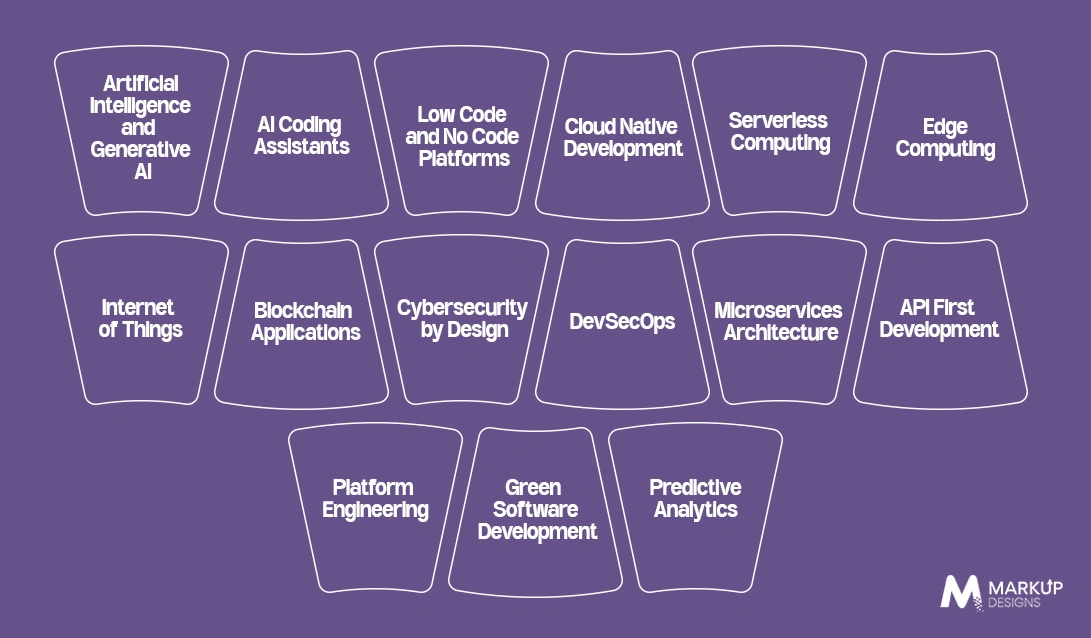
As technologies are constantly evolving, it affects the way software is created. Knowing the trends will allow the implementation of cutting-edge technological solutions for your business.
- Artificial Intelligence and Generative AI
- AI Coding Assistants
- Low Code and No Code Platforms
- Cloud Native Development
- Serverless Computing
- Edge Computing
- Internet of Things (IoT)
- Blockchain Applications
- Cybersecurity by Design
- DevSecOps
- Microservices Architecture
- API First Development
- Platform Engineering
- Green Software Development
- Predictive Analytics
How to Choose the Right Custom Software Development Company
Choosing an appropriate company for software development is key to ensuring success in your project. The best software vendor should demonstrate practical experience in the industry, possess strong technology skills, and adhere to a defined development methodology that fits your requirements. It’s also advisable to review their portfolio, ratings, and approach to communication.
Apart from programming ability, companies must look out for things such as safety regulations, clarity of pricing policy, after-launch support, and the issue of expansion of solutions. A reliable partner in software development provides high-quality software, offers recommendations and ideas, and assures support to its partners regarding the quality of software products.
Why Markup Designs for Custom Software Development?
Choosing the right technology partner is as important as choosing the right solution. Our company approaches custom software development from a business-centric perspective. Our experience, combined with technical skills, allows us to create custom software that helps move forward and prosper.
Complete Software Development Lifecycle Management
We handle the entire cycle of software product development, starting from the strategy and consultation to the design, development, and delivery of the software as well as providing support afterwards.
Experienced Development Professionals
As a team of experts in software development, we possess numerous years of experience in all the phases of the software development cycle.
Customized Solutions for Industries
We offer tailor-made software solutions for industries as healthcare, finance, retail, production, education, and transport & more.
Innovative AI-based Approach
Implementing modern technologies such as artificial intelligence, automation, and advanced analytics, we contribute to the development of advanced digital products.
Agile Project Management
By using agile project management techniques, we ensure a quick delivery and flexibility of changes.
Security Standards for Companies
We pay utmost attention to security issues in the process of software engineering and ensure that security policies and regulations are fulfilled.
Transparency of the Process
We communicate well and keep our clients informed about all progress in every step of the development.
Full Support After Delivery
Our support does not end after software product delivery but continues with the monitoring and maintenance process.
Whether you’re looking to modernise legacy systems, develop a new digital product, or accelerate your digital transformation journey, Markup Designs can help. Connect with our experts to build secure, scalable, and future-ready software tailored to your business goals.
Transform Your Vision into Future-Ready Software
Build secure, scalable, and high performing custom software designed around your unique business needs. From strategy and development to deployment and ongoing support, Markup Designs helps you accelerate innovation and drive long term business growth.

Conclusion
Custom software development has become a strategic investment for businesses looking to improve operational efficiency, strengthen security, and support long term growth. Unlike off-the-shelf solutions, custom software provides the flexibility to adapt to changing business requirements, integrate emerging technologies, and deliver personalised user experiences that create a competitive advantage.
As businesses continue to embrace AI, cloud computing, automation, and data-driven innovation, investing in the right custom software solution will play a critical role in future success. Equally important is selecting an experienced technology partner who understands your business objectives and can deliver scalable, reliable, and high-performing software that evolves with your organisation.
FAQs
1. What is custom software development?
Custom software development is the process of designing, building, and maintaining software solutions tailored to the specific needs and objectives of a business or organisation.
2. What is the difference between custom software and off-the-shelf software?
Custom software is developed specifically for a business and offers greater flexibility, scalability, and ownership, while off-the-shelf software is designed for a broad audience with standard features and limited customisation.
3. How much does custom software development cost in 2026?
The cost depends on factors such as project complexity, features, technology stack, integrations, development team, and timeline. Simple projects typically cost less than enterprise-grade software solutions.
4. How long does it take to build custom software?
Development timelines vary based on project scope and complexity. Simple applications may take a few months, while large enterprise solutions can require several months or longer.
5. Which industries benefit most from custom software?
Custom software benefits almost every industry, including healthcare, finance, retail, manufacturing, logistics, education, real estate, and eCommerce, by addressing unique operational challenges and supporting business growth.
Author's Perspective
Custom software is no longer just a tool for automating business operations. It has become the foundation for innovation, customer engagement, and sustainable business growth. Organisations are increasingly leveraging technologies such as Artificial Intelligence, cloud computing, automation, and predictive analytics to build intelligent applications that improve decision-making and operational agility.
As digital transformation accelerates across industries, businesses that invest in scalable, future-ready software will be better positioned to respond to market changes, enhance customer experiences, and achieve long-term success. The key lies in combining the right technology with a strategic development partner capable of turning business challenges into digital opportunities.
Discuss Your Project NowGaurav Goyal
Global Sales- VP
Related Posts

How to Build an Insurance Portal with CRM,...
Custom Software Development Services in Abu Dhabi for...
Custom Software Development Cost in Bahrain: Factors, Benefits,...
Insights Are Valuable & Execution is Priceless
You’ve read about the digital future. Now, let’s build the infrastructure to take you there. Move your strategy from the page to the product.
Design Your Solution Now
Contact Us
Schedule The Appointment At Your Convenience Date And Time.
30 Min
Web Conference
Time Zone
Indian standard time (08:30pm)

Thanks For Getting In Touch!
You’ve Taken The First Step Toward Transforming Your Digital Presence. Our Experts Will Reach Out Shortly To Take It Forward.
Launch Your Dream Project
Provide a brief overview of your project, and our specialists will evaluate your requirements. We will connect with you to explore how the right digital solutions can help you launch faster.