

In Brief
- Shariah-compliant fintech platforms are digital financial systems built on Islamic finance principles, avoiding interest (Riba), excessive uncertainty (Gharar), and unethical investments while promoting ethical, asset-backed transactions.
- The sector is growing rapidly, driven by rising demand for ethical finance, with Islamic finance assets expected to reach trillions globally and strong growth in Islamic fintech adoption across banking, payments, and investments.
- These platforms include services like digital banking, Islamic payments, Shariah-compliant investments, P2P financing, Takaful (insurance), Zakat management, and wealth management solutions.
- Core features and technology involve secure digital wallets, compliance engines, AI-based fraud detection, blockchain for transparency, cloud infrastructure, and strong security frameworks with continuous Shariah supervision.
- Development requires a structured process (research, compliance planning, design, development, testing, deployment) and can cost from MVP-level builds to enterprise platforms depending on complexity, features, and integrations.
The global financial industry is undergoing a major transformation, and Islamic finance is leading a significant part of this change. As businesses embrace digital banking, AI-powered financial services, and cashless transactions, there is a growing demand for fintech platforms that not only deliver innovation but also adhere to Shariah principles. According to industry reports, Islamic finance assets are expected to surpass USD 7 trillion by 2028, creating new opportunities for startups, financial institutions, and enterprises to build ethical, transparent, and compliant digital financial solutions.
However, developing a Shariah-compliant fintech platform goes beyond creating a standard banking or payment application. It requires a deep understanding of Islamic financial principles, regulatory requirements, secure technology architecture, and user-centric experiences that build trust.
In this post, we’ll explore everything you need to know about Shariah-compliant fintech platform development in 2026-from its core principles and key features to technology stack, development process, costs, and best practices-helping you build a future-ready platform that meets both business objectives and compliance standards.
What is a Shariah-Compliant Fintech Platform?
A Shariah-compliant fintech platform is a digital financial solution that follows the principles of Islamic finance while offering modern banking and financial services. Unlike traditional fintech platforms that may involve interest-based lending or speculative investments, these platforms operate according to Islamic rules. They focus on ethical, transparent, and asset-backed financial transactions that benefit all parties involved.
These platforms can offer services such as digital banking, payments, investments, lending, insurance (Takaful), and wealth management while ensuring every financial product complies with Shariah guidelines. To maintain compliance, many platforms work with Shariah scholars and use built-in compliance checks. This helps businesses earn customer trust while serving the growing global Islamic finance market.
Why Businesses are Investing in Shariah-Compliant Fintech in 2026
Shariah-compliant fintech is no longer a niche market-it is becoming a major growth opportunity for businesses worldwide. As more consumers look for ethical, transparent, and interest-free financial services, companies are investing in digital platforms that meet both customer expectations and Islamic finance regulations.
According to Standard Chartered, global Islamic finance assets reached USD 5.5 trillion in 2024 and are expected to grow to USD 7.5 trillion by 2028, representing a 36% increase in just four years. Islamic banking alone accounts for more than 70% of the industry’s total assets.
At the same time, the global Islamic fintech market is projected to grow from USD 250.6 billion in 2026 to USD 619.2 billion by 2033, with a 13.8% CAGR, driven by increasing adoption of digital payments, Islamic lending, wealth management, and Takaful solutions.
These trends show that businesses investing in Shariah-compliant fintech today are well-positioned to tap into a fast-growing market while building secure, ethical, and future-ready financial platforms.
Key Principles of Shariah-Compliant Financial Platforms
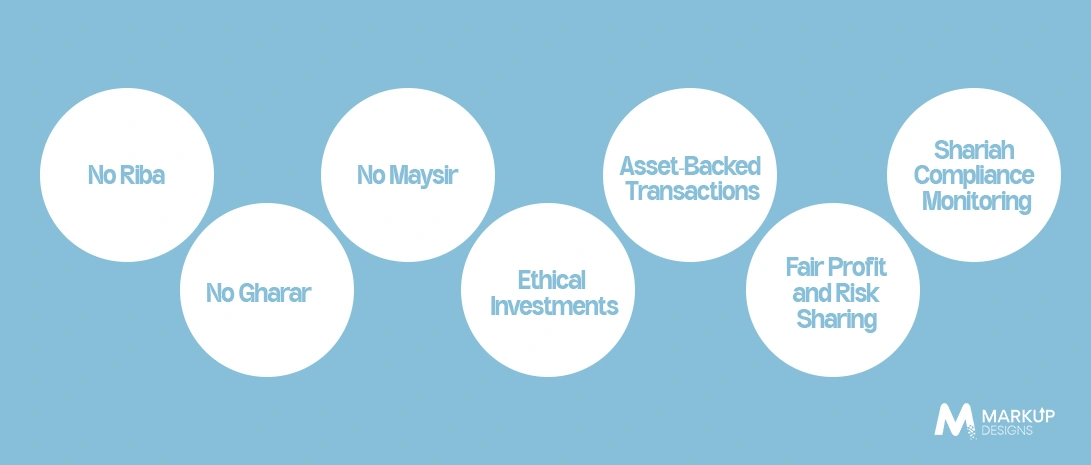
Every Shariah-compliant fintech platform is built around a set of Islamic financial principles. These principles ensure that financial transactions are fair, transparent, and ethically conducted.
No Riba (Interest)
The platform must not charge or pay interest on loans or financial transactions. Instead, it uses profit-sharing or trade-based financing models.
No Gharar (Excessive Uncertainty)
All contracts and agreements should be clear and transparent. Hidden terms, unclear pricing, or uncertain conditions are not allowed.
No Maysir (Gambling or Speculation)
The platform should avoid high-risk or speculative financial activities that resemble gambling.
Ethical Investments
Users can only invest in businesses and industries that comply with Islamic values. Investments in alcohol, gambling, tobacco, and similar sectors are prohibited.
Asset-Backed Transactions
Every financial transaction should be linked to a real asset or genuine business activity instead of purely financial speculation.
Fair Profit and Risk Sharing
Both parties should share profits and risks fairly, creating a balanced financial relationship rather than benefiting only one side.
Shariah Compliance Monitoring
Regular audits and reviews by qualified Shariah scholars help ensure that all financial products and services continue to follow Islamic principles.
Types of Shariah-Compliant Fintech Platforms
Shariah-compliant fintech covers a wide range of financial services. Depending on your business goals and target audience, you can build different types of platforms that follow Islamic finance principles.
- Islamic Digital Banking Platforms: Offer digital banking services such as savings accounts, money transfers, and financing without involving interest-based transactions.
- Islamic Payment Platforms: Enable secure online and mobile payments while ensuring every transaction complies with Shariah guidelines.
- Islamic Investment Platforms: Help users invest in Shariah-approved stocks, mutual funds, Sukuk, and other halal investment opportunities.
- Peer-to-Peer (P2P) Financing Platforms: Connect investors and borrowers through profit-sharing or asset-backed financing models instead of traditional interest-based loans.
- Takaful Platforms: Provide Islamic insurance services based on mutual cooperation and shared responsibility among participants.
- Zakat and Waqf Platforms: Make it easy for individuals and organizations to calculate, manage, and distribute Zakat or contribute to Waqf projects digitally.
- Islamic Wealth Management Platforms: Offer financial planning, portfolio management, and retirement solutions that align with Islamic financial principles.
Essential Features of a Shariah-Compliant Fintech Platform
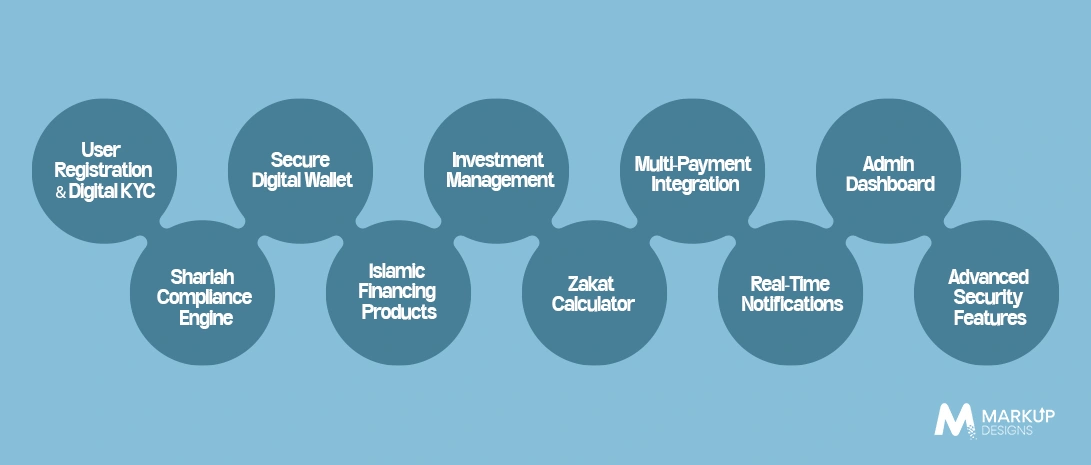
To build a successful Shariah-compliant fintech platform, businesses need more than a simple banking or payment app. The platform should combine modern fintech capabilities with built-in compliance, security, and a smooth user experience. Here are the key features every platform should include:
User Registration & Digital KYC
Allow users to sign up securely and verify their identity through digital KYC processes.
Shariah Compliance Engine
Automatically checks whether financial products and transactions follow Islamic finance principles.
Secure Digital Wallet
Enables users to store, send, and receive money safely while maintaining transaction transparency.
Islamic Financing Products
Supports financing models such as Murabaha, Musharakah, Mudarabah, and Ijarah instead of interest-based lending.
Investment Management
Gives users access to Shariah-approved investment options, including Sukuk and halal mutual funds.
Zakat Calculator
Helps users calculate and manage their Zakat contributions accurately.
Multi-Payment Integration
Supports online payments, bank transfers, mobile wallets, and other secure payment methods.
Real-Time Notifications
Keeps users informed about transactions, payments, account activity, and compliance updates.
Admin Dashboard
Allows administrators to manage users, monitor transactions, generate reports, and oversee platform performance from one place.
Advanced Security Features
Includes multi-factor authentication (MFA), data encryption, fraud detection, and secure APIs to protect sensitive financial information.
Including these features ensures the platform is secure, compliant, user-friendly, and ready to meet the growing demand for ethical digital financial services.
Build a Future-Ready Shariah-Compliant Fintech Platform
Launch a secure, scalable, and fully compliant fintech solution tailored to your business goals. From strategy and UI/UX design to development, compliance, AI integration, and post-launch support, our experts help you build digital financial platforms that inspire trust and drive growth.

Technology Stack Required for Shariah-Compliant Fintech Development
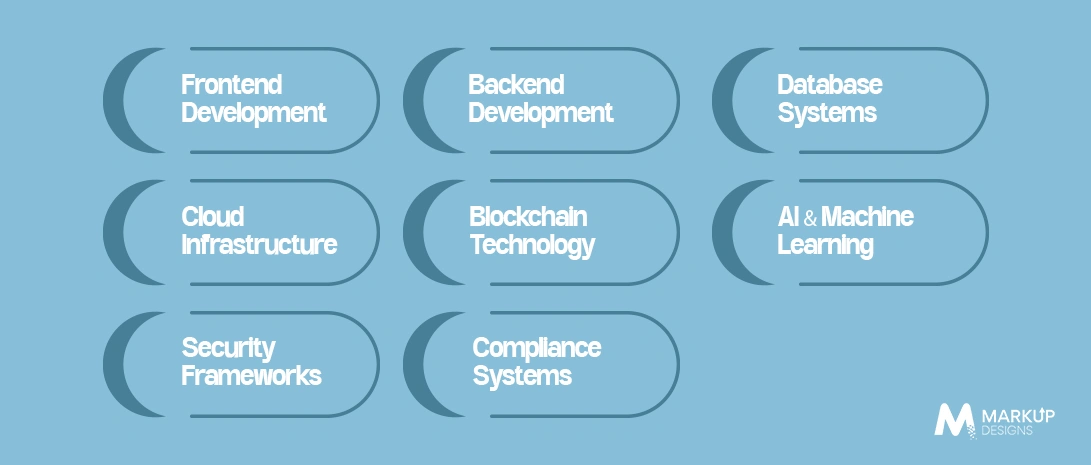
Building a Shariah-compliant fintech platform requires a strong, secure, and scalable technology foundation. The right tech stack ensures smooth performance, data security, and seamless compliance integration.
Frontend Development
Modern frameworks like React.js, Angular, or Flutter are used to build responsive and user-friendly interfaces for web and mobile applications.
Backend Development
Technologies such as Node.js, Java, Python, or .NET help manage business logic, transactions, and platform operations efficiently.
Database Systems
PostgreSQL, MySQL, and MongoDB are commonly used to store and manage financial data securely and at scale.
Cloud Infrastructure
AWS, Microsoft Azure, and Google Cloud provide scalable hosting, high availability, and global access.
Blockchain Technology
Hyperledger or Ethereum can be used for transparent and tamper-proof financial transactions.
AI & Machine Learning
AI tools help in fraud detection, customer support automation, risk analysis, and personalized financial recommendations.
Security Frameworks
OAuth 2.0, JWT, SSL encryption, and multi-factor authentication ensure strong data protection and secure access control.
Compliance Systems
Integrated Shariah compliance modules and audit systems ensure that all financial operations follow Islamic finance rules in real time.
A well-structured technology stack not only improves performance but also ensures long-term scalability and regulatory compliance.
Why Do Enterprises Need Consulting for AI Development in Dubai, UAE
Discover how AI is reshaping the fintech landscape. Explore real-world use cases, adoption trends, and proven growth strategies that are helping financial institutions innovate, scale, and stay competitive

Step-by-Step Shariah-Compliant Fintech Platform Development Process
Building a Shariah-compliant fintech platform requires a structured and well-planned development approach. Each step ensures the product is secure, scalable, and fully aligned with Islamic finance principles.
Step 1: Requirement Gathering & Market Research
Understand business goals, target audience, and regulatory requirements. Identify the type of Shariah-compliant fintech solution you want to build.
Step 2: Shariah Compliance Planning
Collaborate with Islamic finance experts to define compliance rules, financial models, and approved transaction flows.
Step 3: UI/UX Design
Create simple, user-friendly, and trust-driven interfaces that make financial services easy to use for all customer segments.
Step 4: Architecture & Tech Stack Setup
Design a scalable system architecture and choose the right technologies for frontend, backend, database, and cloud infrastructure.
Step 5: Core Development
Build key modules such as user onboarding, payments, financing systems, investment features, and compliance engine.
Step 6: Integration of Shariah Compliance Engine
Embed automated compliance checks to ensure every transaction follows Islamic finance principles in real time.
Step 7: Testing & Quality Assurance
Perform functional, security, performance, and compliance testing to ensure a stable and error-free platform.
Step 8: Deployment & Launch
Deploy the platform on secure cloud infrastructure and launch it for users with proper monitoring systems.
Step 9: Post-Launch Support & Updates
Continuously monitor performance, fix issues, and update compliance rules as regulations evolve.
Cost of Developing a Shariah-Compliant Fintech Platform in 2026
The cost of building a Shariah-compliant fintech platform in 2026 depends on multiple factors such as platform complexity, feature set, compliance requirements, technology stack, and integration needs. Since these platforms require both advanced fintech capabilities and strict Islamic finance compliance, the development cost is generally higher than that of standard fintech apps.
On average, a basic MVP version can start from a lower investment range, while enterprise-grade platforms with AI, blockchain, and full compliance modules require significantly higher budgets. The involvement of Shariah experts, security layers, and regulatory approvals also adds to the overall cost.
| Platform Type | Estimated Cost | Timeline | Key Inclusions |
| MVP Fintech Platform | $40,000 – $80,000 | 3–5 months | Basic payments, onboarding, limited compliance |
| Mid-Level Platform | $80,000 – $180,000 | 6–9 months | Investment features, compliance engine, wallet, analytics |
| Enterprise Platform | $180,000 – $500,000+ | 10–18 months | AI integration, blockchain, full Shariah compliance, advanced security |
Key Cost Factors
- Feature Complexity: More advanced features like AI advisory, P2P lending, and investment modules increase cost.
- Shariah Compliance Integration: Continuous validation systems and expert consultations add to development effort.
- Technology Stack: Blockchain, AI, and cloud-native architecture require higher investment.
- Security Requirements: Fintech-grade encryption, fraud detection, and regulatory compliance systems increase cost.
- Third-Party Integrations: Payment gateways, banking APIs, and identity verification services add licensing and integration costs.
- Maintenance & Upgrades: Ongoing updates for compliance, security, and performance optimization are essential for long-term success.
Overall, investing in a well-built Shariah-compliant fintech platform ensures long-term scalability, user trust, and strong market positioning in the growing Islamic finance ecosystem.
Read also: How to Develop Successful English-Arabic Apps for the Middle East
Common Challenges and Effective Best Practices in Islamic Fintech
Building a Shariah-compliant fintech platform comes with unique challenges because it must balance modern technology, strict regulatory requirements, and Islamic finance principles at the same time. However, with the right approach, these challenges can be managed effectively.
1. Regulatory Complexity: Different regions follow different Islamic finance rules and financial regulations.
Best Practice: Work closely with local regulators and certified Shariah advisors from the start.
2. Ensuring Continuous Shariah Compliance: Rules must be applied not only at launch but throughout platform operations.
Best Practice: Integrate an automated compliance engine with regular audits by Shariah scholars.
3. User Trust and Adoption: Users may hesitate to adopt new digital Islamic finance platforms.
Best Practice: Focus on transparency, clear communication, and simple user experiences.
4. Integration with Legacy Banking Systems: Many financial institutions still rely on outdated systems.
Best Practice: Use APIs and middleware solutions for smooth integration.
5. Data Security Risks: Fintech platforms are high-value targets for cyberattacks.
Best Practice: Implement strong encryption, multi-factor authentication, and continuous monitoring.
6. Scalability Issues: Rapid user growth can impact performance.
Best Practice: Use cloud-native architecture with auto-scaling capabilities.
7. Lack of Skilled Talent: Finding developers with both fintech and Shariah compliance understanding can be difficult.
Best Practice: Partner with experienced fintech development companies with domain expertise.
By addressing these challenges early in the development process, businesses can build secure, compliant, and scalable fintech platforms that perform well in the long run.
Your Fintech Growth Partner for Shariah-Compliant Digital Transformation
Choosing the right technology partner is critical when building a Shariah-compliant fintech platform. At Markup Designs, we combine deep fintech expertise with a strong understanding of Islamic finance principles to deliver secure, scalable, and compliant digital solutions.
We specialize in building end-to-end fintech platforms that include digital banking, payment systems, investment solutions, and Islamic finance modules. Our approach is focused on compliance-first architecture, ensuring every feature aligns with Shariah guidelines while maintaining modern user experience standards.
With experience in AI, blockchain, cloud engineering, and secure financial system development, we help businesses build platforms that are not only innovative but also future-ready. From initial consulting and UI/UX design to development, testing, deployment, and post-launch support, we provide complete lifecycle services.
Build Your Shariah-Compliant Fintech Platform with Experts
Turn your fintech idea into a secure, scalable, and fully compliant digital product designed for long-term success.

Conclusion
Shariah-compliant fintech platforms are becoming a key part of the global financial ecosystem. As demand for ethical and transparent financial services continues to grow, businesses that invest early in this space can gain a strong competitive advantage.
However, success depends on the right balance between innovation, compliance, and user trust. A well-designed platform not only follows Islamic financial principles but also delivers seamless digital experiences, strong security, and scalable performance.
By working with the right development partner and adopting the right technology strategy, businesses can build future-ready fintech solutions that serve a growing global audience.
FAQs
1: What is a Shariah-compliant fintech platform?
A Shariah-compliant fintech platform is a digital financial system designed according to Islamic finance rules. It avoids interest-based transactions, excessive uncertainty, and unethical investments while promoting fair, transparent, and asset-backed financial activities.
2: Is Shariah-compliant fintech profitable?
Yes, it is highly profitable due to rising global demand for ethical financial solutions. With increasing adoption in Muslim-majority regions and growing interest in value-based investing, the sector is experiencing strong and steady growth.
3: What technologies are used in such platforms?
These platforms typically use modern technologies such as AI for automation, blockchain for transparency, cloud computing for scalability, and secure backend frameworks like Node.js, Java, or Python for reliable performance.
4: How long does it take to build such a platform?
Development usually takes between 3 to 18 months depending on complexity, features, compliance requirements, and integrations like payment gateways, AI systems, and Shariah compliance modules.
5: Why is Shariah compliance important?
Shariah compliance ensures all financial operations are ethical, transparent, and aligned with Islamic principles. It builds user trust, ensures legal adherence in Islamic markets, and supports responsible financial behavior.
Author's Perspective
Shariah-compliant fintech is not just a financial trend-it represents a shift toward more ethical, transparent, and inclusive financial systems. As digital transformation accelerates, the real opportunity lies in building platforms that combine innovation with responsibility.
From a development perspective, success in this space requires more than just technical execution. It demands a deep understanding of compliance, user trust, and long-term scalability. Businesses that invest in this direction today are likely to shape the future of ethical digital finance tomorrow.
Discuss Your Project NowAjit Kumar Jha
VP - Business Operations
Related Posts

Building NPP-Enabled Digital Payment Platforms in Australia: A...

Complete Guide to Forex Trading App Development in...
Insights Are Valuable & Execution is Priceless
You’ve read about the digital future. Now, let’s build the infrastructure to take you there. Move your strategy from the page to the product.
Design Your Solution Now
Contact Us
Schedule The Appointment At Your Convenience Date And Time.
30 Min
Web Conference
Time Zone
Indian standard time (08:30pm)

Thanks For Getting In Touch!
You’ve Taken The First Step Toward Transforming Your Digital Presence. Our Experts Will Reach Out Shortly To Take It Forward.
Launch Your Dream Project
Provide a brief overview of your project, and our specialists will evaluate your requirements. We will connect with you to explore how the right digital solutions can help you launch faster.