

In Brief
- Artificial Intelligence is reshaping fintech by accelerating decisions, improving customer experiences, strengthening fraud detection, and automating financial processes across banking, lending, payments, and wealth management.
- Fintech firms increasingly use machine learning, natural language processing, predictive analytics, computer vision, and generative AI to boost efficiency and personalize services.
- AI benefits include stronger security, better risk management, lower costs, regulatory support, predictive insights, scalability, and faster customer service.
- Common applications include personalized recommendations, fraud prevention, dispute resolution, financial reporting, algorithmic trading, credit scoring, customer support, portfolio optimization, and smart contracts.
- Success requires quality data, responsible governance, scalable infrastructure, customer focus, and continuous improvement.
AI technology is currently undergoing fast development within the fintech segment, allowing organizations to provide better financial products and services in a more efficient manner. AI is transforming the financial sector by helping businesses detect fraud, assess risks, deliver personalized customer experiences, and automate customer support, making financial services faster, smarter, and more efficient.
This blog post aims to examine the main use cases of artificial intelligence in fintech, its adoption, advantages and disadvantages, and how it can be used to ensure sustainable growth.
AI in Fintech
The concept of Artificial Intelligence in fintech is associated with the application of innovative technologies that allow financial companies to automate their procedures, manage huge amounts of information, and make smart decisions.
There are several innovative tools used for developing AI in fintech. First, Machine Learning allows machines to learn from previous experience and make more efficient decisions. Another important technology is Natural Language Processing (NLP), which can be used in building chatbots.
Another technology commonly applied for building fintech innovations is Computer Vision. This technology is helpful in verifying customers’ identities and managing documentation. Another technology that may help improve fintech innovation is Predictive Analytics. It allows predicting customer behavior and market trends. Finally, Generative AI is also an innovative tool used in fintech.
The Growing Role of AI in Transforming Fintech
Another area where AI technology is transforming fintech is through its ability to provide real-time data analytics capabilities that play an important role in operations such as fraud prevention and risk assessment. AI technologies have the capacity to recognize suspicious transactions immediately and raise alerts in case of any fraud.
The other application of AI in the fintech space involves the use of chatbots and virtual assistants. These systems are capable of offering customers immediate assistance in terms of responding to their queries, performing financial transactions, and even giving personalized financial advice.
Furthermore, with respect to the field of credit scoring, the inclusion of artificial intelligence technologies enables fintechs to analyze data from various sources apart from the credit history of the borrowers.
Read: Also: Future of AI in Digital Transformation in the Next Decade
Key Statistics and Trends Highlighting AI Adoption in Fintech
The adoption of AI in fintech continues to accelerate as financial institutions seek new ways to improve efficiency, strengthen security, and deliver better customer experiences. Recent industry reports highlight how AI is becoming a core driver of innovation across the financial ecosystem.
- According to Gartner’s 2025 Finance AI Survey, 59% of finance leaders reported actively using AI within their finance functions. The study also found that 67% of AI adopters are more optimistic about the technology than they were a year earlier, reflecting growing confidence in AI’s business value.
- McKinsey’s 2026 fintech report revealed that the global fintech industry generated approximately $650 billion in revenue in 2025, growing by 21% year-over-year. AI-powered innovation, automation, and digital financial services are among the key factors contributing to this growth.
- Gartner’s Hype Cycle for AI in Finance identifies Generative AI as one of the technologies expected to achieve mainstream adoption within the next two years. Gartner also predicts that 80% of independent software vendors will embed GenAI capabilities into enterprise applications, accelerating AI adoption across financial services.
- Recent KPMG findings show that 73% of insurance CEOs now consider AI their top investment priority. Additionally, 67% of financial organizations expect meaningful returns from their AI investments within the next one to three years, signaling strong confidence in AI’s long-term business impact.
Benefits of AI in the FinTech Industry
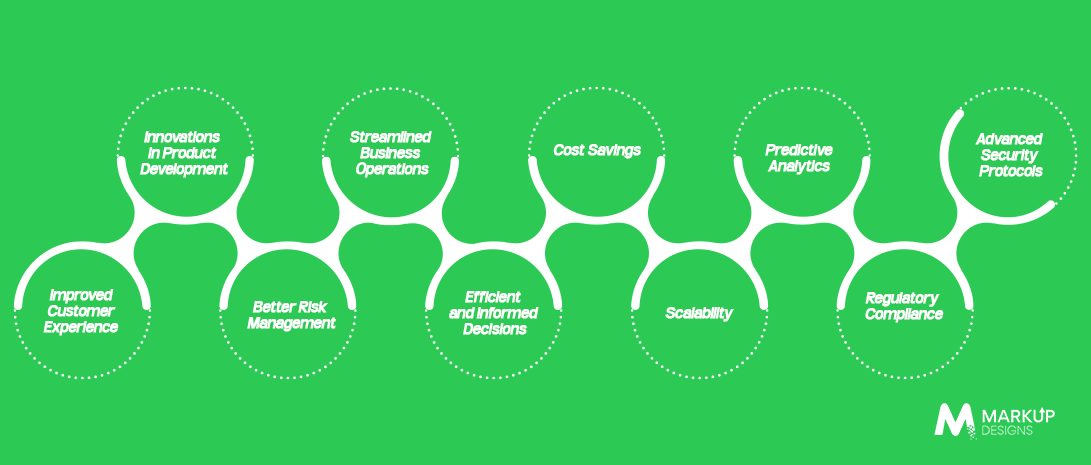
It is clear that the integration of AI in Fintech is much more than just automation. Indeed, it brought about a revolution in productivity levels, personalization, being customer-oriented, risk management, and even decision-making in the Fintech space.
But what role does AI play in increasing the productivity levels of the Fintech industry? You can find the answer in its ability to automate processes which include, among others, documentation, compliance checking, onboarding customers, and detecting frauds.
Improved Customer Experience
AI improves accessibility, personalization, and service delivery, enabling fintech companies to offer better customer experiences while reducing operational costs. AI provides personalized experiences by analyzing data and using ETL (extract, transform, and load) techniques. With this, companies will be able to personalize their products, customize their investments, and provide round-the-clock support services.
Innovations in Product Development
Using AI technologies, FinTech companies will be able to prototype their products in a virtual setting where they can easily test out different scenarios. This is essential for remaining relevant amid changing market dynamics and customer preferences.
Better Risk Management
With its ability to process large volumes of data within seconds, AI makes it easy to determine and mitigate risks. It is capable of identifying patterns of fraud and suspicious transactions, which are crucial in ensuring security of financial institutions’ resources and reputation.
Streamlined Business Operations
The most effective way to leverage AI involves its use to automate the mundane activities such as data input and compliance checking. It allows improving performance, eliminating any errors, enabling autonomous operations, and saving money. Through AI implementation, businesses will be able to improve resource management and facilitate strategic and customer interactions with their employees.
Efficient and Informed Decisions
Using artificial intelligence, it will be possible to gain important insight about the market environment, client interactions, and future financial forecasts. As a result, decision-makers will be provided with the necessary information for smart decisions based on business goals.
Cost Savings
FinTech agencies can save considerable amounts by minimizing any human involvement in processes related to operations. AI enables faster execution of tasks, helping businesses achieve more in less time while increasing overall productivity and revenue potential.
Scalability
AI-based systems are scalable. They can be scaled as the business grows and increases its workload. As a result, businesses can scale their services without being constrained in terms of product or service diversification.
Predictive Analytics
Using historic data, AI can predict future trends and customer behavior, which is beneficial for the FinTech sector as it allows optimizing their resource use and personalizing their marketing.
Regulatory Compliance
Through automation, FinTech businesses can easily meet complicated compliance requirements. AI-based systems makes it easier to report regularly and stay up to date on regulatory changes while avoiding sanctions.
Advanced Security Protocols
AI solutions provide businesses with enhanced security protocols. AI uses advanced anomaly detection, behavioral biometrics, and network traffic monitoring to detect any threats in real time and respond to them immediately.
Most Impactful AI Use Cases in Modern FinTech Businesses

AI has multiple applications in FinTech, which vary from improving chats between customers and chatbots to creating artificial data, detecting fraudulent behavior, forecasting results, and assessing risks. All FinTech companies, including InsurTechs and PayTechs, can benefit financially by integrating AI into their operations. Here is an overview of the most significant uses of AI in FinTech:
Personalized Financial Recommendations
This allows fintech companies to deliver customized financial guidance and recommendations, helping customers make more informed financial decisions. For instance, AI technology can help users receive custom-made advice about budgeting, investments, and saving, hence making them feel that their needs have been catered to and satisfying them in the process. This way, their needs will be met and the organisation will be able to retain their loyal customers.
Fraud Detection and Prevention
The FinTech firms can also leverage the AI technology to detect the patterns and anomalies, thereby detecting any form of fraud being committed. The AI algorithms have been developed in such a way that they can easily distinguish between normal and suspicious behavior. This makes the use of AI in detecting fraud an effective process.
There are a number of benefits that the AI systems provide compared to the other AI-based and traditional techniques in detecting real-time bank fraud detection and prevention. One of the emerging payment processes online is that of voice-enabled payments. With the help of AI, voice payments have become a reality.
Automated Dispute Resolution in Payments
There is a constant occurrence of disputes in the fin-tech industry that need immediate attention. This is made possible through automation of the entire process where cases such as fraud, incompleteness, or lack of satisfaction are sorted out automatically, followed by extraction of information from transactions and communications.
AI facilitates cooperation between clients, retailers, and processors while offering transparent updates instead of piecemeal communication. This helps keep expenses down and makes audits simpler.
Automated Financial Reporting
AI performs the task of financial reporting entirely because of its capacity to develop reliable reports and retrieve information. It produces accurate reports in natural language very quickly, saving time and ensuring there is no human error. The automation of mundane and time-consuming tasks allows employees to concentrate on other operations that are more important.
Algorithmic Trading Strategies
The power of AI lies in the efficient recognition of anomalies in vast amounts of data. Through the analysis of data pertaining to the markets, it becomes possible to create signals that will guide investment decision-making processes. Such signals will make it possible for the trades to be executed at the opportune moment using market trends.
Risk Assessment and Credit Scoring
AI algorithms are helping make better borrowing decisions by minimizing default cases and making loans easy to obtain. While conventional credit scoring systems depend on data provided by a few data points only, the AI algorithms take into account a broad range of data sets.
Portfolio Optimization and Asset Allocation
AI can use the risk profile and financial objectives to give optimal portfolio solutions for the purpose of managing investment. AI is used by investors to ensure they allocate their funds effectively and optimally to maximize their returns while minimizing risk. AI does this by using past data and correlations between different assets. FinTech firms are currently using this technology to offer customized portfolio solutions to their clients.
Smart Contract Implementation
The implementation of AI in the blockchain system enables smart contract generation and execution. Through the use of artificial intelligence, boilerplate code is automatically generated after analyzing contracts to ensure that they do not have security flaws and that they are developed within the minimum possible time frames.
AI-Growth Strategies for Fintech Companies
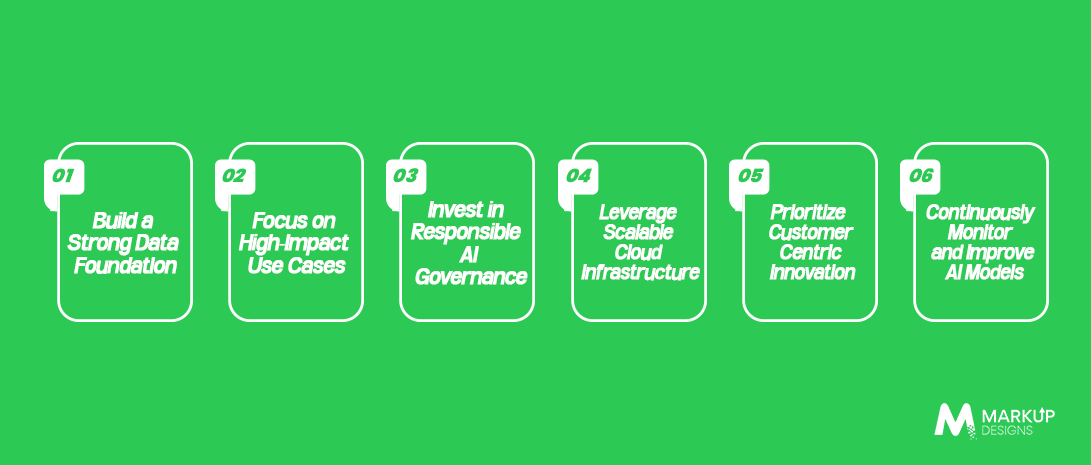
Successfully adopting AI is not just about implementing new technology; it requires a strategic approach that aligns innovation with business objectives. Fintech companies that leverage AI effectively can improve customer experiences, reduce operational costs, strengthen security, and unlock new revenue opportunities.
Build a Strong Data Foundation
AI systems rely on high-quality data to generate accurate insights and predictions. Fintech companies should invest in robust data collection, management, and governance practices to ensure data reliability and compliance.
Focus on High-Impact Use Cases
Rather than attempting large-scale transformation at once, businesses should begin with AI applications that offer measurable value, such as fraud detection, customer support automation, and credit risk assessment.
Invest in Responsible AI Governance
Establishing clear governance frameworks helps organizations address regulatory requirements, data privacy concerns, and AI transparency. Responsible AI practices build trust among customers and stakeholders.
Scalable Cloud Infrastructure
Cloud-based AI platforms enable fintech companies to deploy, manage, and scale AI solutions efficiently while minimizing cloud infrastructure costs and improving operational flexibility.
Customer-Centric Innovation
AI should be used to solve real customer challenges. Personalized financial recommendations, intelligent virtual assistants, and proactive support can significantly improve customer satisfaction and retention.
Monitor and Improve AI Models
Financial markets, regulations, and customer behaviors constantly evolve. Regular model monitoring, retraining, and optimization ensure that AI systems remain accurate, secure, and aligned with business goals.
Real-World Examples of AI Innovation in Fintech

Let’s explore some real-life success stories of Fintech companies that have effectively implemented AI to reinforce the use cases highlighted earlier.
Morgan Stanley
Morgan Stanley has collaborated with OpenAI to gain early access to AI products for personalized financial insights. Projects like Next Best Action and Genome showcase their commitment to AI-driven personalization in client communication.
Bloomberg
Bloomberg is leading the charge with Bloomberg GPT, a language generation model. It is revolutionizing financial analysis and reporting with its speed and personalization capabilities. This AI tool helps the company generate high-quality financial content, personalize news and alerts, engage in conversations, and conduct risk analysis and forecasting.
Nedbank
Nedbank leverages Microsoft Copilot Generative AI to create a chatbot called Electronic Virtual Assistant (EVA) that offers quick and easy self-service options for customers. EVA now handles 80 percent of the financial institution’s inquiries at a fraction of the cost. Machine learning and advanced data analytics are deployed to guide intelligent data-centric decisions to enhance productivity, streamline processes, mitigate risks, and foster innovation.
Stripe
Stripe uses GPT-4 to streamline the user experience and better understand users’ businesses so they can provide the right type of support. It also uses Stripe Docs, which acts as a virtual assistant for developers, so they spend less time reading and focus more on building.
How Can Markup Designs Help You Integrate AI in Your Fintech Business?
As AI continues to reshape the financial services landscape, businesses need a technology partner that understands both artificial intelligence and the complexities of the fintech industry. At Markup Designs, we help fintech companies leverage AI to improve operational efficiency, strengthen security, deliver personalized customer experiences, and unlock new growth opportunities. Our team works closely with businesses to identify the most impactful AI use cases and implement solutions that align with their goals, compliance requirements, and existing infrastructure.
Our AI-powered fintech services include:
- Custom AI Solution Development: Build intelligent applications for lending, payments, wealth management, insurance, and digital banking.
- Fraud Detection and Risk Management: Deploy machine learning models that identify suspicious activities and reduce financial risks in real time.
- AI-Powered Customer Experiences: Implement chatbots, virtual assistants, and recommendation engines that improve customer engagement and satisfaction.
- Predictive Analytics and Financial Forecasting: Use advanced analytics to support better decision-making, forecasting, and investment planning.
- Secure and Scalable Implementation: Develop AI solutions with strong security controls, regulatory compliance, and cloud-native scalability.
From strategy and development to deployment and optimization, Markup Designs helps fintech businesses adopt AI confidently and transform innovative ideas into measurable business outcomes.
Looking to Modernize Your Financial Services Platform?
Leverage advanced AI technologies to automate operations, enhance decision-making, reduce fraud risks, and create personalized financial experiences that drive long-term success.

Conclusion
Artificial intelligence is rapidly becoming a driving force behind innovation in the fintech industry. From fraud detection and personalized banking experiences to automated financial reporting and intelligent risk assessment, AI-powered banking apps are helping financial institutions improve efficiency, enhance security, and deliver greater value to customers.
As adoption continues to grow, fintech companies must move beyond experimentation and focus on strategic implementation. Success depends on selecting the right use cases, maintaining strong data governance, ensuring regulatory compliance, and continuously optimizing AI systems. As technology advances, AI will continue to shape the future of fintech, creating new opportunities for growth, innovation, and long-term business success.
FAQs
1. How is AI used in fintech?
AI is used in fintech for fraud detection, credit scoring, customer service automation, financial forecasting, algorithmic trading, compliance management, and personalized financial recommendations.
2. What are the key benefits of AI in financial services?
AI helps improve operational efficiency, reduce costs, enhance security, automate repetitive tasks, provide personalized customer experiences, and support faster decision-making.
3. How does AI help prevent financial fraud?
AI analyzes transaction patterns in real time and identifies unusual activities that may indicate fraudulent behavior. This enables organizations to detect and respond to threats much faster than traditional methods.
4. What challenges do fintech companies face when implementing AI?
Common challenges include data privacy concerns, regulatory compliance requirements, integration with legacy systems, AI bias, talent shortages, and implementation costs.
5. What is the future of AI in fintech?
The future of AI in fintech includes agentic AI, hyper-personalized financial services, intelligent compliance systems, autonomous financial assistants, and advanced predictive analytics that support smarter business decisions.
Author's Perspective
AI is no longer a future trend in fintech; it is becoming a core component of how financial services are delivered, secured, and optimized. While many organizations initially adopted AI to automate routine tasks, the technology is now driving deeper transformation across customer engagement, fraud prevention, lending, investment management, and compliance. The most successful fintech companies are those that view AI not as a standalone tool but as a long-term business enabler. As regulations evolve and customer expectations continue to rise, businesses that invest in responsible, scalable, and customer-focused AI solutions today will be better equipped to lead the next generation of financial innovation.
Discuss Your Project NowJupinder Singh Arora
Founder and CEO
Related Posts

Mobile App Development Cost in Abu Dhabi: Pricing...

Cost to Build a Healthcare App in Saudi...

Restaurant Mobile App Development in Dubai: Cost, Features...
Insights Are Valuable & Execution is Priceless
You’ve read about the digital future. Now, let’s build the infrastructure to take you there. Move your strategy from the page to the product.
Design Your Solution Now
Contact Us
Schedule The Appointment At Your Convenience Date And Time.
30 Min
Web Conference
Time Zone
Indian standard time (08:30pm)

Thanks For Getting In Touch!
You’ve Taken The First Step Toward Transforming Your Digital Presence. Our Experts Will Reach Out Shortly To Take It Forward.
Launch Your Dream Project
Provide a brief overview of your project, and our specialists will evaluate your requirements. We will connect with you to explore how the right digital solutions can help you launch faster.