

In Brief
- The average development cost for an application in the United Kingdom will vary from £25,000 all the way up to over £200k, depending on the project’s size and complexity as determined by several factors like: Design requirements, features and functionality, platform selection/requirements & integrations.
- After the initial cost of developing your app, other factors such as ongoing maintenance of the product, cloud infrastructure, and security updates will also need to be taken into account on an ongoing basis.
- Developing a minimum viable product (MVP) can significantly mitigate both risks associated with developing a new product and overall costs associated with creating a new product.
- Working with an experienced app development company or /developer when developing your application will provide you with the ability to maximise your return on your investment and avoid costly development mistakes.
Mobile apps have quickly become a vital part of many UK businesses’ digital assets by 2026, including start-ups developing an innovative product, retailers improving customer engagement, or enterprises streamlining their operations.
Before jumping into development, though, companies often want to know, “How much does it cost to build an app in the UK?” Unfortunately, there is no quick answer. The cost of developing an app differs greatly depending on how complicated the application is – the technology used, the security level, the integration with other technologies, and how scalable it will need to be in the future.
This guide outlines the true costs associated with developing mobile apps in the UK, including many influencing factors around these costs & the practical strategies to help companies maximise their investment.
What is the Cost to Build an App in the UK?
There is no ‘fixed’ price for an app’s development since all apps have their own unique requirements. For example, a simple booking app has a very different resource cost than a fintech app processing millions of transactions daily or a healthcare app that handles a patient’s sensitive data on daily basis.
Typically, businesses should budget for the following ranges:
| App Type | Estimated Cost |
| Basic App | £12,000 – £25,000 |
| Medium Complexity App | £25,000 – £50,000 |
| Complex App | £80,000 – £120,000 |
| Enterprise App | £140,000 –£220,000+ |
These figures provide a starting point, but the final budget depends on several important variables.
Presentation of Differences in Estimates of App Development Cost
The price discussed often surprises business owners as they may have gotten very different estimates for the cost of the exact real, physical application, and see little or no major difference in the construction of it. The prices charged for app development are not standardised and therefore can vary greatly depending on the experience of the developer and the business activity the app will be designed to support.
The difference in the price of a £40,000 app versus. £200,000 app can therefore often be attributed to functionality, scalability, and level of technical sophistication built into the application.
As an example, an application that is simply used as a repository of information and provides users with the ability to book appointments can be built using basic, formal methods of app development. An application that provides users with the ability to access AI-based “social” recommendations, communicate in real-time with other app users, process credit card payments, and provide the commercial business with the analytics of its use and usage under multiple conditions requires significantly more work than building that repository of information.
Therefore, as the cost of providing users with higher levels of service continues to grow, businesses are allocating progressively larger amounts of capital to support their continuing demand to have the most advanced digital products available.
Key Factors Affecting App Development Costs in the UK
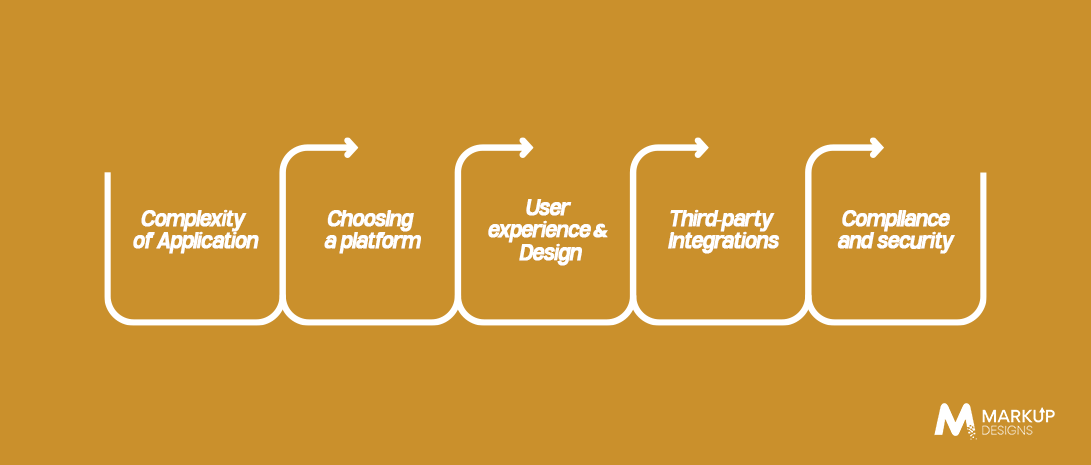
Complexity of Application
Application complexity is the single greatest contributor to application development cost. A simple application will consist of very few screens and limited kinds of user interaction with the application. More sophisticated applications will often require many more significantly customized workflows, real-time data capture and processing capabilities, and extremely well-developed/executed back-end systems to facilitate the functionality of the applications and the business processes.
Application developments require additional developer hours and, therefore, will have a significantly higher total application development cost than cooling applications will have.
Choosing a platform
Companies must choose to develop an app for either iOS or Android. Developing a dedicated native app separately for both platforms adds to the cost because each app will require separate development and testing resources.
Cross-platform Technologies such as React Native and Flutter have gained popularity because they help organizations reach both audiences and save development costs.
User experience & Design
Users today are looking for easy-to-use and visually attractive experiences when using an app. Designing an application with a professional look creates a positive impression on users and requires prototype development, wireframes, usability test results, and visual design of the interface. Custom-designed UX can also be more costly than using a standard design.
Although creating a custom-designed UX can increase your initial investment, providing a well-designed and easy-to-use UX for your customers will help improve customer satisfaction, increase customer retention, and improve long-term business performance.
Third-party integrations
Most applications today are designed to perform a function with other applications. Many businesses have to integrate their applications with existing applications like payment gateways, customer relationship management software (CRM), cloud storage, analytics software, marketing applications, and customer service software.
All of these integrations add to the cost of developing the application because there will be additional development and testing for each integration, which also makes the project more complex and costly.
Compliance and security
Following the GDPR regulations has become a mandatory requirement for all companies. If your application stores and processes private information, you must comply with the appropriate regulations regarding user data and privacy in the UK, as well as all applicable regulations in your region of operation.
Developing secure authentication systems, establishing encryption protocols, utilizing audit trails, implementing privacy controls, and more is usually a significant part of developing an app with appropriate security features; however, implementing these measures is often a significant financial investment, but do provide businesses with a level of assurance against both regulatory compliance penalties and losses due to security breaches.
Cost Breakdown Across the Development Process

App development consists of several stages, and the cost of building an app is the total cost of all of the stages. The first phase (discovery) is about defining the scope for the app and the business goals that the app will achieve. This phase also includes understanding the user needs in order to develop a target user that will ultimately lead to developing a successful app. If a developer does not invest properly in the discovery phase, then there are likely to be significant costs associated with reworking the app later in the project.
The second phase (design) converts the idea of an application into interactive prototypes and user-friendly interfaces; therefore, this phase of app development will confirm whether or not the application will provide an excellent user experience prior to proceeding with the development phase.
The third phase (development) typically represents the most significant number of hours and cost associated with developing an application. Developers are responsible for creating the frontend user interface, the backend application architecture, APIs, databases, and all necessary integrations that will allow the application to operate successfully.
Testing (including Quality Assurance, also known as QA) is essential in confirming that the final product will function as intended in all targeted environments, including all devices, operating systems, and user scenarios.
The final phase (deployment) is primarily the process of making the application available for download through the application stores, in addition to configuring the application in the production environments in which it will operate.
Each of the stages is critical to establishing the overall cost of developing an application.
The Costs Businesses Tend to Overlook
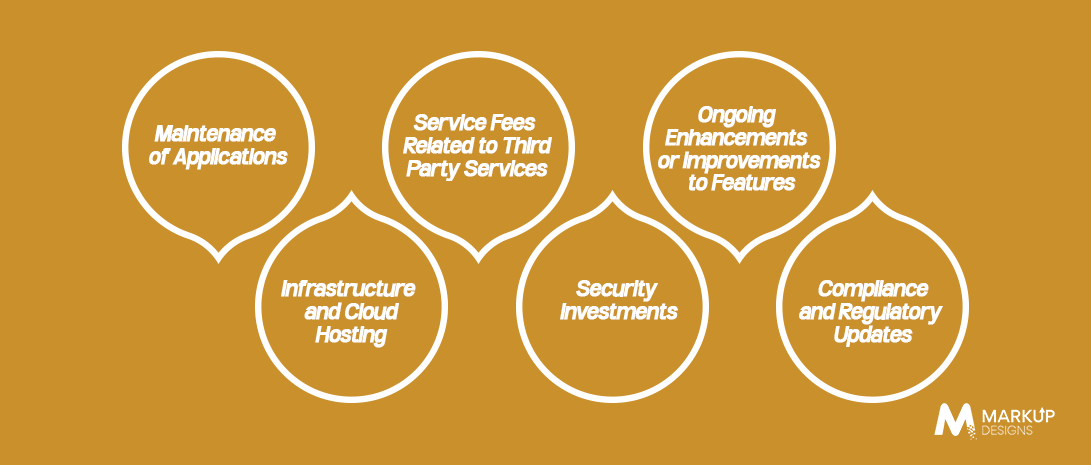
While many companies budget for application development, they under-evaluate the ongoing costs associated with keeping an application secure, scalable, and relevant in the current marketplace; therefore, the hidden cost of maintaining applications will generally affect the overall total cost of ownership throughout time.
Maintenance of Applications
Most applications will require continual updates after launching, which will include bug fixes, performance updates, security patches, and compatibility changes for the latest versions of Android/iOS.
Infrastructure and Cloud Hosting
Applications rely on a combination of servers, databases, and cloud-based services to effectively operate. As a company’s user base expands, both the infrastructure needs and hosting costs will typically increase.
Service Fees Related to Third-Party Services
Many applications rely heavily on third-party services, including payment gateways, SMS messaging, mapping programs, helpdesk/support systems, and analytical products. Most of these services have monthly or annual recurring fees.
Security Investments
Cybersecurity threats are constantly changing, so companies need to continuously make security investments. For many companies, continuous security investments involve regular vulnerability testing, penetration testing, encryption updates, and compliance audits.
Ongoing Enhancements or Improvements to Features
Over time, as users continue to use an application, their expectations change. Therefore, to remain competitive, companies will frequently make investments in new features, UI enhancements, and improvements to functionality after launching an application.
Compliance and Regulatory Updates
Companies that operate applications in a regulated environment will frequently have to update the application periodically to meet any changes in legislation and/or data protection regulations, which are driven by laws such as the UK General Data Protection Regulation.
Is It Better to Build an MVP or a Full-Scale Application?
A common misconception for many organisations is that they need to deliver a complete, end-to-end app on Day 1 of their project; this may seem like a quick way to achieve success, but will ultimately lead to significantly higher costs and prolonged project completion timelines, as well as increase the amount of risk associated with the project due to all aspects, e.g., app features, functions, etc.
The preferred approach would be to build only those components of the application that provide users with the core functionality needed to assist them in solving their problem (which ultimately leads to the successful completion of the task they are looking to achieve value from the application) and confirm concept validity in a live/test environment. By taking this approach, as part of your overall project delivery strategy, organisations can inject fewer hard costs up front and develop a working product that can be tested by potential users and give them immediate feedback to aid in determining/improving, and prioritizing future features to include in a final product.
By implementing a day one MVP approach, the business gains insight into what the users actually want, versus relying on internal opinions/beliefs about what the users will want. Additionally, this methodology allows a business to confirm the marketability of the app, refine the various app components, and identify potential app enhancements prior to making a substantial investment in the final product.
Additionally, for start-ups or businesses attempting to enter a new market, an MVP approach will provide the organisation with the least costly and least risky path to creating a successful product by significantly reducing wasteful spending, providing a shorter product time-to-market cycle, and providing valuable information to develop the ultimate product roadmap.
Once the concept has been validated and growth opportunities have been clearly identified, businesses can confidently invest in developing a full-scale application with advanced features, greater scalability, and enhanced functionality.
Ways to Decrease Your App Development Cost Without Sacrificing Quality
Cost-saving measures should not affect quality or customer satisfaction.
The best way to accomplish this is to concentrate on developing the right features, instead of developing all possible features.
Concentrating on priority features, using cross-platform development tools, developing with proven technologies, and launching in incremental phases will greatly improve development productivity.
It is also very important that you select a development partner that understands technology execution as well as business strategies. Experienced developers can find risks early on, create optimized workflows, and assist companies in eliminating costly mistakes.
Why You Should Choose the Right Partner for Software Development
There are reasons why software development is a business investment and not just a technical activity or undertaking.
When you select the right partner for software development, they will help you to validate your ideas, establish a realistic budget, choose the right technology to use, and create scalable solutions that will allow for future expansion.
Partnering with a strategic partner for software development can save businesses more money by way of better planning and execution than what they may save through the selection of the cheapest company to work with. For example, a company that provides the least expensive quote typically becomes their most costly option as a result of delays in development, incurring debt associated with technology used, and future costs associated with redevelopment.
How Markup Designs Can Assist You
At Markup Designs, we can assist businesses in turning their ideas into a high-quality and scalable mobile application that meets their business goals and budget.
Our company will provide end-to-end mobile application development services, including initial product discovery and UX design to software development, testing, deployment, and post-launch support, to ensure that the final application meets the business’s performance, security, and scalability objectives.
Do You Want to Start Developing Your Mobile Application?
With the assistance of talented mobile application developers, you can turn your mobile application concept or idea into a scalable, high-quality digital product.

Conclusion
The cost of building an app in the UK in 2026 depends on far more than development hours alone. Factors such as complexity, design requirements, integrations, security, scalability, and ongoing maintenance all contribute to the final investment.
Businesses that approach app development strategically are often able to achieve better results while maintaining greater control over costs. By prioritising essential features, adopting a phased development strategy, and partnering with an experienced development company, organisations can build applications that deliver long-term value and sustainable growth.
FAQ
1. How Much Will It Cost to Create A Basic Mobile App in the UK?
The price for a basic mobile application will vary between £25,000 and £50,000, but will be based on how functional it will be, the complexity of the design, and the platform it will run on.
2. What Will Be The Most Expensive Aspect Of App Development?
In 2026, the cost of creating a mobile application (APP) in the UK will vary greatly due to many factors other than the number of hours worked developing an APP. In general, IT costs will depend on all of the following factors, including but not limited to: complexities involved in developing an application, Application design requirements, the integration requirements associated with developing your new APP, Security Requirements, Scalability requirements, and ongoing maintenance associated with the application once it is developed and completed.
3. What are the primary costs associated with an app’s development?
Primarily, development and back-end infrastructure are the largest components of an overall app development project budget for complex applications.
4. How long generally does it take to create an app?
In general, creating a simple app takes about 3 to 4 months; creating an enterprise app takes between 6 and over 12 months.
5. What will an organization incur in terms of expenses after its application has been launched?
After launching an application, the organization will incur expenses related to the ongoing functional use of its application. Examples of typical post-launch expenses include ongoing maintenance (both app and back-end), cloud hosting or computing, security updates, feature adaptations and changes (upgrades), and subscriptions to third-party services.
Author's Perspective
The nature of mobile has changed so much that businesses must now approach app development from a long-term, strategic vantage point instead of viewing it simply as a short-term cost to develop. The most successful apps are not necessarily those with the highest development budgets, but rather those that were developed based on real user needs and have clearly defined objectives and a sustainable plan for growth.
In 2026, companies employing a phased, value-based approach to developing their apps will find themselves in an advantageous position to quickly realize the return on their digital investments, and adapt quickly to changing market conditions, control their development costs and maximize their digital investments.
Discuss Your Project NowGaurav Goyal
Global Sales- VP
Related Posts
Mobile App Development Cost in Abu Dhabi: Pricing...

Cost to Build a Healthcare App in Saudi...

Restaurant Mobile App Development in Dubai: Cost, Features...
Insights Are Valuable & Execution is Priceless
You’ve read about the digital future. Now, let’s build the infrastructure to take you there. Move your strategy from the page to the product.
Design Your Solution Now
Contact Us
Schedule The Appointment At Your Convenience Date And Time.
30 Min
Web Conference
Time Zone
Indian standard time (08:30pm)

Thanks For Getting In Touch!
You’ve Taken The First Step Toward Transforming Your Digital Presence. Our Experts Will Reach Out Shortly To Take It Forward.
Launch Your Dream Project
Provide a brief overview of your project, and our specialists will evaluate your requirements. We will connect with you to explore how the right digital solutions can help you launch faster.