

In Brief
- Investigate how the forex mobile app is developed in UAE, with special emphasis on regulatory preparation, structure of the trading platform, app deployment, and post-deployment optimization.
- Take a look at the trends that shape fintech in UAE, with particular reference to the rise of mobile trading, artificial intelligence in investment, and digital financial services.
- Discover different features and ground-breaking functions. Know about the legal requirements to create a reliable forex trading platform.
- Understand the cost estimation associated with developing the forex trading app in UAE, along with various aspects that determine the cost of the development process, infrastructure, licensing, and maintenance.
- Learn how, as an institution, you can benefit from the services of seasoned forex app development companies in launching a conforming trading platform.
United Arab Emirates, or UAE, successfully became one of the major fintech hubs in the Middle East with the help of good regulatory frameworks, good digital infrastructure, and confidence in investors. The financial free zones offered by the Abu Dhabi Global Market and the Dubai International Financial Centre offer good opportunities for fintech businesses since they are governed by the FSRA and DFSA.
During recent years, mobile investing and online trading have witnessed increasing demand, so businesses have invested in the development of forex trading apps in UAE. The forex market, with daily trading volume over 7.5 trillion dollars, is the largest market in the world, while UAE becomes the regional center for digital trading and financial services. A successful creation of a modern forex trading app requires more than just a simple user interface; it means meeting regulatory requirements, organizing a very efficient infrastructure characterized by ultra-low latency trading, integrating liquidity providers, connecting to MT4 and MT5, using modern risk management, and relying on good cybersecurity.
This blog explores every stage of forex trading app development, including market opportunities, compliance requirements, essential features, development costs, and best practices to help businesses build scalable and future-ready trading platforms.
How to Build a Forex Currency Trading App in UAE
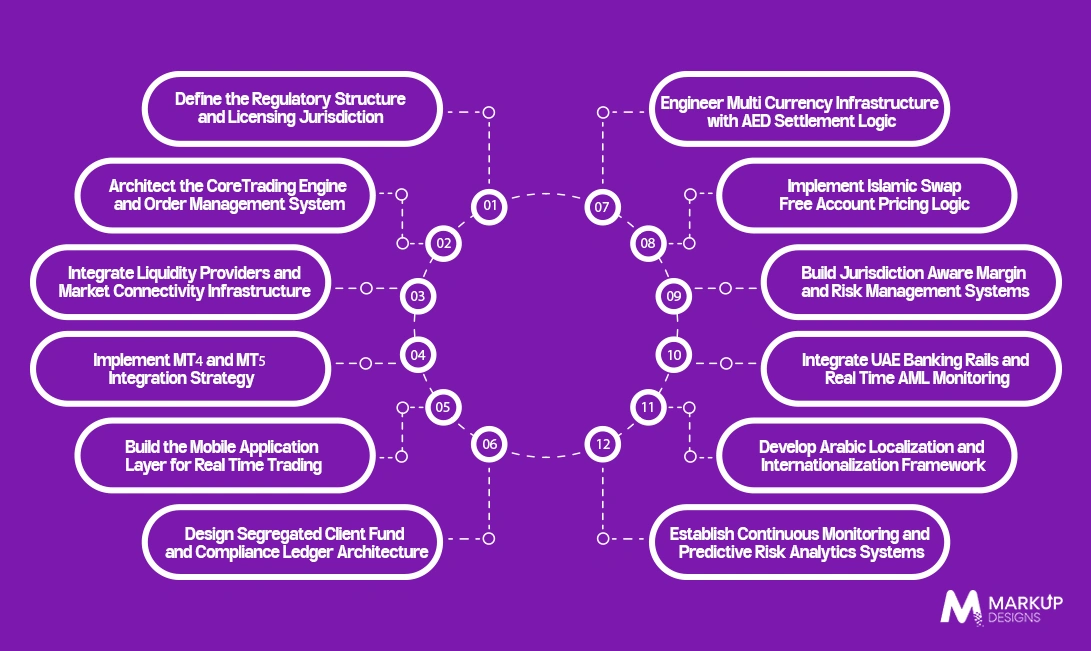
In UAE, there are various things to keep in mind while developing a successful forex trading app, such as regulatory compliance, robust infrastructure, real-time connectivity to markets, and user-friendly interface. Below are the steps one must follow while building a scalable forex trading app.
Step 1: Define Regulatory Structure and Licensing Jurisdiction
The nature of the business and the market you are targeting will determine the regulatory framework. To operate in UAE, a business can choose from DIFC, DFSA, ADGM, or FSRA.
Step 2: Create the CoreTrading Engine and Order Management System Architecture
Build a trading engine that has the capacity of processing an order with the lowest latency possible, while ensuring effective execution and management of trades, in addition to processing market data.
Step 3: Integrate Liquidity Providers and Market Connectivity System
Ensure the platform is connected with reliable liquidity providers and with the services providing market data feeds, in order to enable real-time pricing and efficient trading execution.
Step 4: Implement an Integration Strategy for MT4 and MT5.
Integrate MT4 or MT5 systems to provide the users with enhanced charting, execution, and trading options.
Step 5: Build the Mobile Application Layer for Real-Time Trading
Create both Android and iOS apps that provide end users the ability to review markets, make trades, and manage portfolios, in addition to getting alerts while on the go.
Step 6: Design Segregated Client Fund and Compliance Ledger Architecture
Create secure and transparent ledger systems that can segregate clients’ funds and ensure compliance with regulations.
Step 7: Engineer a Multi-Currency System With AED Settlement Logic
Provide support for different currencies while allowing users to effortlessly transfer money within UAE.
Step 8: Implement Islamic Swap Free Account Pricing Logic
Give Sharia-compliant trading accounts that will have no overnight swap charges while offering transparent pricing.
Step 9: Establish Jurisdiction Aware Margin and Risk Management Systems
Set margin requirements and other risk management rules based on the requirements of the jurisdictions in question.
Step 10: Integrate UAE Banking Systems and Real-Time AML Monitoring
Facilitate easy deposit and withdrawal of funds via UAE banking systems while implementing anti-money laundering controls and checks, as well as fraud detection.
Step 11: Develop an Arabic Localization and Internationalization System
Provide bilingual support with Arabic and English user interfaces, and localized information along with region-specific user experience.
Step 12: Establish Continuous Monitoring and Predictive Risk Analysis Systems
Establish real-time monitoring and use AI-based analysis and predictive models for identifying inconsistencies, enhancing platform performance, and developing trade security.
Forex Trading App Development in UAE: Market Opportunity
UAE has turned into a fintech center due to favorable legislation, increased digitalization, and optimal investments in financial technologies, which creates great opportunities for the market of forex apps in the country.
UAE FinTech Market Growth
Government-supporting initiatives, favorable legislation, and financial centers like DIFC and ADGM strengthen UAE’s status as a regional fintech leader.
Rising Adoption of Digital Trading Platforms
More and more investors are turning to online trade platforms having immediate access to the market, real-time execution, and trading tools.
Growing Demand for Mobile-First Forex Trading Solutions
With the increase in smartphone usage, traders require safe and feature-rich applications enabling trading anytime and anywhere.
Investment Opportunities for Enterprises and Financial Institutions
Banks, fintech companies, and brokerage firms can leverage forex trading platforms to expand digital services, attract new investors, and generate additional revenue streams.
Challenges in Forex Trading App Development in UAE
Creating an application for the forex market entails dealing with technical, technological, and operational constraints while ensuring that the overall experience of the customers using the app is fantastic.
Regulatory Alignment with DIFC and ADGM
All forex trading apps have to comply with the regulations set out by DFSA and FSRA.
Execution Accuracy During Volatile Markets
The forex app should be capable of processing many transactions with very low latency, even when the market is highly volatile.
Managing Continuous Real Time Market Data
In order to be able to provide updates on live prices, market feeds, and all transactions, your app should incorporate high tech infrastructure.
Integrating Multiple Liquidity Providers
Having several liquid providers makes it possible to reach higher precision in pricing, quality of operations, and overall efficiency of trading activities.
Balancing High Speed Execution with Security and Compliance
A forex trading app should be quick in its operations, but do not forget about comprehensive security systems being implemented.
Key Features to Have in Your Forex Trading App
A successful forex trading app should not only provide consumers with fast trading activities but also ensure that it complies with all regulations.
Real Time Market Data and Order Execution
Supply market data in real-time, execute orders instantaneously, and process transactions with minimal latency.
Multi Currency Wallet Managemen
Facilitate management of various currencies, including deposits, withdrawals, and exchanges within the same wallet.
Advanced Charting and Technical Analysis Tools
Provide traders with access to charts as well as dozens of technical tools.
Margin and Leverage Management
Enable management of the margin and leverage positions in real-time.
Secure User Onboarding and Compliance
Facilitate the real-time customer onboarding process using digital solutions.
Payment and Withdrawal Processing Infrastructure
Facilitate safe and secure withdrawals by using banks and cards from UAE.
Alerts, Notifications, and Risk Monitoring
Notify the customers whenever there is a price alert or confirmation of a deal.
Advanced Capabilities in Modern Forex Trading Platforms
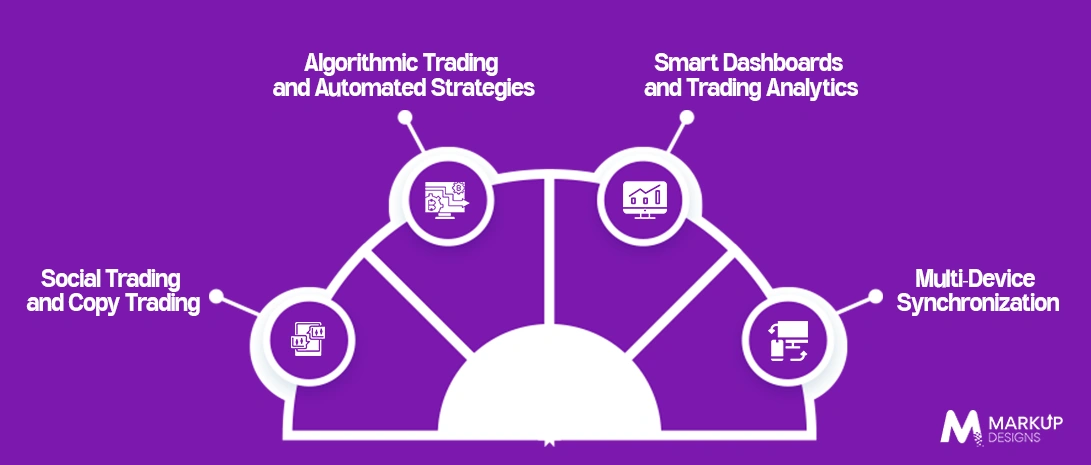
Today’s Forex trading tools enable traders to trade more efficiently, to make better decisions, and to enjoy the opportunity to experience a high level of service.
Social Trading and Copy Trading
Allow users to follow and automatically replicate the strategies of experienced traders.
Algorithmic Trading and Automated Strategies
Support automated trading using predefined rules, bots, and AI-driven trading algorithms.
Smart Dashboards and Trading Analytics
Provide personalised dashboards with portfolio insights, trading performance, and market analytics.
Multi-Device Synchronization
Synchronise accounts, watchlists, and trading activity seamlessly across mobile, web, and desktop platforms.
Regulatory Compliance for Forex Trading Apps in UAE
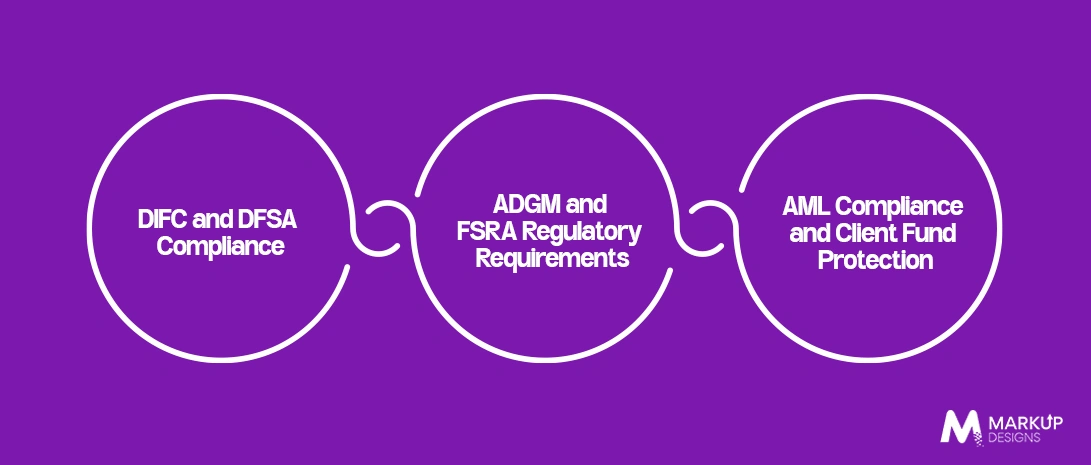
The importance of compliance in developing forex trading applications in UAE cannot be underestimated.
DIFC and DFSA Compliance
DIFC-based applications must comply with DFSA regulations regarding licensing, risk management, and investor protection.
ADGM and FSRA Regulatory Requirements
All the businesses based in the ADGM must comply with FSRA regulations in terms of financial services.
AML Compliance and Client Fund Protection
It is important to use all available approaches to set up AML monitoring, KYC verification, transaction screening, and segregation of clients’ funds to be compliant with regulations.
Cost to Develop a Forex Trading Platform in UAE
The cost of the mobile app development depends on the complexity of the platform, regulations that must be followed, systems that must be integrated, and the overall infrastructure. Developing a complicated platform requires more investment compared to developing a basic trading application.
Basic Trading Platform
Cost in the range of AED 180,000–350,000
Includes basic trading functionalities, user authentication, market data integration, and basic management of the portfolio.
Mid-Level Forex Trading Platform
Cost in the range of AED 350,000–800,000
Includes advanced charting functionalities, multi-currency wallets, payment integration, MT4/MT5 connectivity and better security.
Enterprise Forex Trading Platform
Cost in the range of AED 800,000–2,500,000+
Includes support of HFT, AI-driven analytics, aggregation of liquidity, advanced compliance automation, and enterprise-level scalability.
Cost Breakdown by Development Component
- Strategy, Compliance Planning, and System Architecture
Encompasses business analysis, regulatory strategy, solution development, and IT consulting.
- Trading Engine and Backend Infrastructure
Involves creating the trading software, order processing software, APIs, and backend systems.
- Frontend and Mobile Application Development
Involves creating responsive web solutions as well as Android and iOS trading apps.
- Liquidity and MT4 or MT5 Integration
Connecting liquidity firms, news feeds, and MetaTrader for smooth trading process.
- Security, AML, and Compliance Automation
Establish KYC, AML, fraud identification, protection, and compliance systems
- Cloud Infrastructure and Deployment
Includes tasks such as cloud hosting, monitoring, scalability, disaster recovery, and infrastructure management.
Read Also: AWS vs Google Cloud for Mobile Apps: Which is Better in 2026?
Best Practices for Building Multi-Currency Forex Trading Platforms
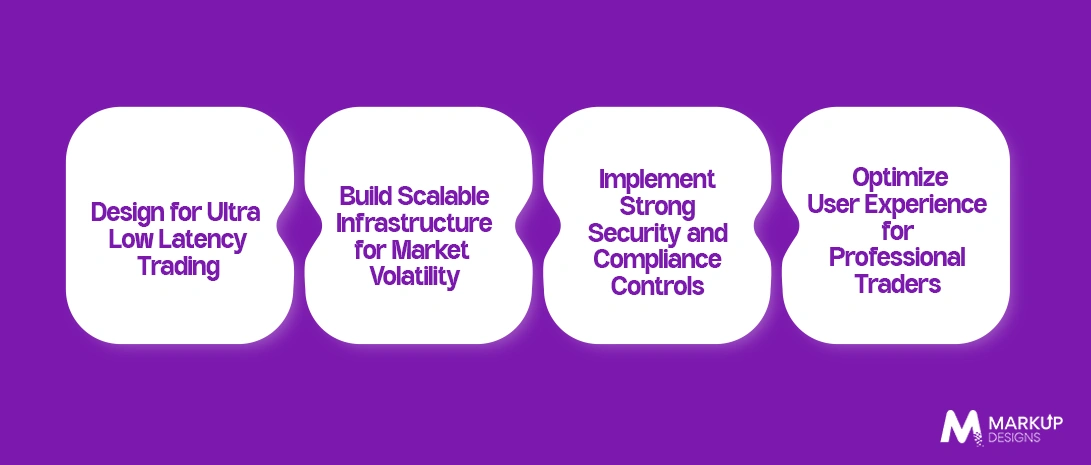
In order to create a successful forex trading platform with multiple currencies, number of things must be considered. These include performance, security, scalability of the service, and the way users interact with it.
Design for Ultra Low Latency Trading
Designing a reliable architecture capable of handling all market data and order execution with minimum delay is key to providing users with a good trading experience.
Build Scalable Infrastructure for Market Volatility
Creating a cloud-based service that is able to expand and increase its capacity when required will provide a seamless trading environment and enhance user experience.
Implement Strong Security and Compliance Controls
Encryption, two-factor authentication, fraud detection, and strict compliance with financial regulations must be implemented in order to secure customer data and transactions.
Optimise User Experience for Professional Traders
Introducing real-time charts, advanced logging facilities, and simple navigation will greatly improve the user experience.
Why Choose Markup Designs for Forex Trading App Development
Markup Designs specializes in creating secure, scalable, and regulatory-compliant forex trading software to accommodate the fast-developing requirements of financial technology (fintech) firms, brokerages, and financial institutions. Our specialists offer complete solutions covering all aspects from strategy and architecture to deployment and post-launch support by combining high-performance trading technology with strong compliance and security.
Expert in FinTech and Trading Platform Development
We develop advanced trading platforms utilizing the latest technologies and valuable industry experience.
Development Approach Focused on Regulatory Compliance
We develop software in accordance with the local regulations of the United Arab Emirates and best industry practices.
Custom Development of Trading Engines
We develop high-performance trading machines enabling fast and accurate execution of customer orders.
Integrations with Liquidity Providers and Banks
We integrate with payment processing systems and liquidity providers as well as banking systems interchangeably with our trading platforms.
Deployment of Scalable Cloud-Native Technologies
We create reliable cloud solutions based on unique technologies for cloud deployment.
Complete Development and Support
We provide full-cycle services from product idea to constant support.
Build a Secure and High-Performance Forex Trading Platform
Interested in creating a cutting-edge forex trading application in UAE? Collaborate with Markup Designs on building a secure and regulation-compliant application with multiple features, sophisticated market analytics, easy liquidity integrations, and advanced cloud infrastructure.

Conclusion
With the increasing significance of UAE as a global hub of fintech, it becomes clear that investing in forex trading application development in UAE may bring excellent prospects for banks and brokerage companies.
With the integration of secure infrastructure, regulatory compliance, advanced trading functions, and scalable cloud technology, companies are now able to create platforms that provide seamless trading experiences. When enterprises partner with a professional development company, they can be assured that their forex platform will be able to compete.
FAQs
1. What are the processes involved in building a forex trading mobile app in UAE?
The processes include regulatory planning, development of trading engines, integration of liquidity, and the development of mobile applications, while all the necessary regulations of UAE are taken into account.
2. What features are necessary when developing a forex trading application?
There are some essential features that need to be included in the forex application, such as live data from markets, execution of orders, multi-currency wallets, technical charts, verification in terms of KYC regulations, secure payments, and push notifications.
3. Which technologies are commonly used in forex trading platforms?
Nowadays, cloud computing, trading engines, APIs, MT4 or MT5 integration, artificial intelligence, and cybersecurity technologies are used in the work of forex platforms.
4. Which regulations need to be adhered to when creating a forex trading platform?
Forex trading applications should comply with regulations determined at DIFC, FSRA, and others.
5. Does the forex application possess any security?
Yes, the safety of the platform is ensured thanks to encryption, reliable APIs, and fraud protection.
6. Is forex trading regulated in UAE?
Forex trading is indeed regulated, depending on which authority one falls under, either DFSA or FSRA.
7. How much does it cost to build a forex trading app?
The average and standard cost to develop the forex trading application can range anywhere between AED 180,000 to AED 2.5 million+, depending on the features, infrastructures, integrations, and compliance requirements.
Author's Perspective
The future of forex trading will hinge upon intelligent, mobile-first, and compliant platforms that provide speed, security, and great user experience. The right regulatory framework and digital transformation initiatives have made UAE an attractive hub for fintech innovations that provide a business with an advantage over competitors in the global financial market.
Discuss Your Project NowGaurav Goyal
Global Sales- VP
Related Posts

Building NPP-Enabled Digital Payment Platforms in Australia: A...

Shariah-Compliant Fintech Platform Development: Complete Guide for 2026
Insights Are Valuable & Execution is Priceless
You’ve read about the digital future. Now, let’s build the infrastructure to take you there. Move your strategy from the page to the product.
Design Your Solution Now
Contact Us
Schedule The Appointment At Your Convenience Date And Time.
30 Min
Web Conference
Time Zone
Indian standard time (08:30pm)

Thanks For Getting In Touch!
You’ve Taken The First Step Toward Transforming Your Digital Presence. Our Experts Will Reach Out Shortly To Take It Forward.
Launch Your Dream Project
Provide a brief overview of your project, and our specialists will evaluate your requirements. We will connect with you to explore how the right digital solutions can help you launch faster.