

In Brief
- Choosing the right CRM helps improve customer relationships, streamline operations, and support long-term business growth.
- A CRM should integrate seamlessly with your existing tools, including ERP systems, marketing platforms, customer support software, and eCommerce applications.
- Features such as automation, omnichannel communication, customization, security, and scalability are essential when evaluating CRM platforms.
- No-code and low-code customization options allow businesses to adapt CRM workflows without extensive development resources.
- Successful CRM implementation requires proper planning, data migration, employee training, and thorough testing before full deployment.
- Investing in a scalable CRM solution today can improve productivity, increase customer retention, and help your business adapt to future growth opportunities.
CRM stands for Customer Relationship Management. It refers to a technology, process, and software that organizations employ in order to facilitate their relationship with their clients. It helps in organizing all customer information in one place, improving the sales of a firm.
Some entrepreneurs find themselves in situations where CRM applications have high promises but bring more trouble than benefit. If the wrong CRM system is used, it may create chaos and frustration among employees and a loss of potential benefits. Conversely, the use of the appropriate CRM application may simplify the business process, enhance customer interactions, and facilitate growth in the future.
It is therefore important for businesses to choose the right CRM application because it will be highly beneficial for managing customer relationships and conducting sales transactions.
According to the reports by WebFX:
- Conversion rates for businesses have been known to rise up to 300% when CRM software Development is effectively integrated into operations.
- There have been instances where revenues of firms using proper CRM solutions have been reported to grow up to 245%.
- Upto 92% of businesses think CRM integration is important in meeting their customer-focused objectives.
- CRM solutions have enabled 47% of businesses to increase their customer retention rate.
- A good CRM solution helps improve sales forecasts by up to 42%.
In this post, we will show you what factors must be considered in the process of selecting a CRM solution for your organization. We will provide some useful tips on how to choose a good CRM by considering business requirements and other necessary aspects of this software. At the end of this post, you will learn how to pick a CRM that helps manage your customers effectively.
Best CRM Systems to Streamline Your Operations
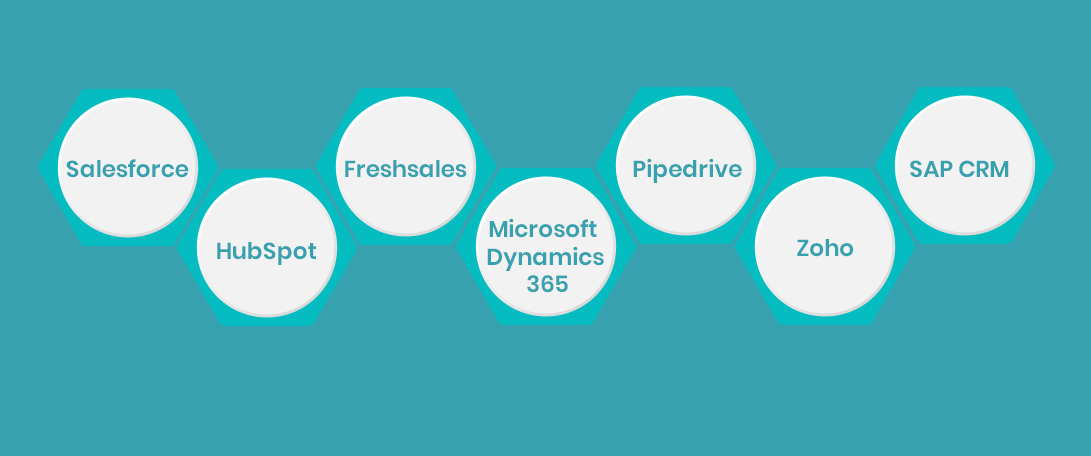
In case you plan to step up the pace of your enterprise in 2026, selecting the appropriate CRM software development services for integration is no longer optional but essential to your success. If you don’t know how to choose the right software development company to build mordern CRM system for your business, then check out the things we’ve prepared right below, which include the best CRM platforms available for integration into your company’s system.
There are numerous CRM systems in the modern market, each providing some special features to cater to the various requirements of organizations.
Salesforce: One of the most popular CRM applications is Salesforce. It is renowned for its high level of flexibility, superior analytics, and scalability to help organizations manage their customer interactions, lead sales opportunities, automate processes, and analyze customers’ information. Companies often employ the Salesforce software application in areas like finance, healthcare, retail, and IT.
HubSpot CRM: HubSpot CRM software is a customer relationship management tool that offers solutions for sales, marketing, and customer service activities in one platform. Due to its easy-to-use interface and integration capabilities, it is widely used by startups and mid-size companies. HubSpot CRM helps organizations manage leads, execute marketing campaigns, track customer engagement, and enhance the customer experience.
Freshsales: The Freshsales system is a cloud-based CRM solution that assists companies in managing leads, customer communications, and sales transactions through one interface. It makes it possible for organizations to monitor prospects, manage customer details, analyze sales funnels, and coordinate communication across the entire customer lifecycle.
Microsoft Dynamics 365: Microsoft Dynamics 365 is a business management software based on cloud computing technology, used for automating and improving business activities like sales, services, finance, and operations. Through expert Microsoft Dynamics 365 CRM Consulting, businesses can integrate the two most important concepts, CRM and ERP, ensuring all customer-related activities as well as other business operations run smoothly and efficiently.
Pipedrive: Pipedrive CRM is popular for its ease of use and efficient sales pipeline management, which makes tracking the progress of deals more comfortable. Pipedrive CRM provides an easy-to-understand visual overview of sales funnel stages that makes it easy to manage and process all deals. Customizations are plenty, providing room for personalizing the CRM system according to business requirements.
Zoho CRM: Zoho CRM is a widely used CRM software that can help manage negotiations, marketing operations, and customer service in collaborative settings. Creating and configuring the appliance according to your company’s needs and integrating your requirements in terms of data flow will help you take full advantage of all the great features of Zoho CRM.
SAP CRM: SAP CRM is one of the main modules in the SAP Business Suite used to manage the process of customer relationship management. SAP CRM is utilized in order to manage all aspects related to customer business areas, including sales, marketing, and services, etc. The Sales process starts with a sales quotation to sell the product, selling the products and services, delivery of the products, and invoicing of the products.
Way to Choose the Right CRM for Your Business Needs
As per Capterra, almost 30% of companies say that they have a bad CRM experience because their CRM does not integrate well with other business applications. Getting the right CRM helps companies operate efficiently and satisfy customers; the decision process goes beyond simply finding out which CRM has better features than others. A company needs to know whether its selected CRM software development services will integrate well with the rest of the business operations. The standalone version of CRM might appear to be a good option at first, but it will actually hinder the growth of the company.
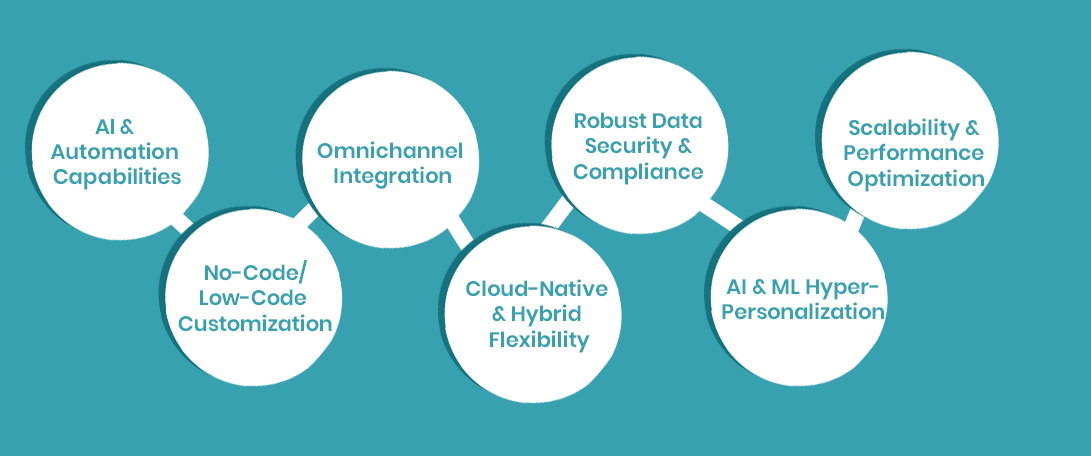
With a million possibilities, how to select a CRM according to industry requirements? The answer lies in exploring the core functionalities of these CRM applications to figure out which application will get the job done. Here are some key factors in selecting a CRM application.
1. AI & Automation Capabilities
Before committing to integrating using any particular platform, it is important to find out whether such a platform boasts artificial intelligence capabilities or not. If it has AI, how intense are its automation capabilities? Artificial intelligence within CRM changes the way businesses engage customers. Below are key considerations when integrating into your CRM.
- Predictive Analytics for Better Decision Making: When AI integrates into CRM software with AI capability, the integration must involve using predictive analytics. This artificial intelligence capability uses historical data to produce trend data that will help your organization make the right decision.
- AI-powered Chatbots & Virtual Assistants: Chatbots & virtual assistants start customer interactions instantly. That way, your sales team will be able to manage queries round-the-clock, qualify leads, and even upsell their products all through CRM.
- Automation of Tasks: At times, repetitive actions such as data entry and following up on e-mails every day become so irritating to do that they may drain your sales force. So, find a platform that automates the boring things and frees them up to do what really matters
2. No-Code/Low-Code Customization
Not all companies have a huge number of developers to work on complex customization and integration of their CRM. This is where no-code and low-code platforms come into play. Using such platforms, companies can perform all needed actions within CRM, namely make changes to workflow, automate some actions, and implement new features without writing any lines of code.
- Drag-and-Drop Interface: The simplicity of point-and-click integrates workflows, forms, and dashboards in seconds.
- Custom API Connectors: There are numerous random apps that your CRM system needs to interact with. Therefore, opting for CRM software that offers custom API connectors.
3. Omnichannel Integration
Consumers nowadays want the same experience regardless of the platform through which they contact the business, whether it is via social media platforms, emails, messages, or even voice calls. It becomes imperative to opt for a CRM that provides omnichannel integration.
- Seamless Communication Via Channels
A CRM system that supports omnichannel integration integrates different communication platforms like Instagram, X, Emails, SMS, WhatsApp, and even VoIP into one system.
- Unified Customer Profiles
Owing to omnichannel integration, all customer interactions are documented in a single database. It helps organizations to get a comprehensive picture of the customer’s experience and enables better customer service.
- Real-Time Data Synchronization
In the case where a customer completes a transaction, reaches out for help, or communicates using another channel, the data is updated instantly within the CRM system. This guarantees that up-to-date customer information is immediately accessible to all teams.
4. Cloud-Native & Hybrid Flexibility
Deployment flexibility is one thing to consider when selecting the most suitable CRM. The ideal CRM will enable you to strike a balance between performance, cost, security, and compliance considerations.
- Multi-Cloud Capability
When selecting the best CRM for your business, ensure that the selected CRM supports cloud solutions such as AWS, Microsoft Azure, and Google Cloud. It will provide the flexibility you need to make your decision based on financial considerations.
- Hybrid Deployment Capability
Some companies require on-premises hosting of specific information while enjoying cloud service benefits. Hybrid deployment capability allows you to comply with all security and other regulations while enjoying the benefits of scalable systems.
- Edge Computing Capability
Modern CRM systems also offer edge computing capability, meaning data is processed at the edge of the network. It ensures that there is minimal latency, making the interaction of customers and employees in real time possible.
5. Robust Data Security & Compliance
There have been huge spikes in data breaches lately. In a case involving a major security vulnerability in Chinese IoT firm Mars Hydro, an estimated 2.7 billion data sets were compromised, including passwords, IP addresses, and device ID numbers, leaving many connected devices open for hacking. In such cases, security is not optional; it is the key.
- Features of Security & Compliance
Security and compliance are vital factors when selecting custom software development services.
. Information stored within a CRM system is valuable and confidential, and therefore it needs to be kept safe.
- Advanced Security and Encryption
The leading CRM software providers have some of the best security systems and technologies that include data encryption and threat detection.
6. AI & ML Hyper-Personalization
Hyper-personalized marketing” means the end of generic outreach. The customers won’t stand for anything but personalized marketing.
- Segmentation by AI: AI automatically launches highly segmented marketing efforts, which were created according to the customers’ behavior patterns, demographics, etc.
- Real-Time Customer Behavior: Show relevant offers and recommendations based on a customer’s current interests, such as a specific product they’re browsing.
7. Scalability & Performance Optimization
Your CRM software integration platform must be scalable without compromising when the pressure gets intense.
- Microservices Architecture: Modular architecture helps in scaling individual services (such as customer support).
- Serverless Computing: Minimize costs and complexities through automation of scaling based on needs.
Process to Integrate a CRM Platform into Your Business
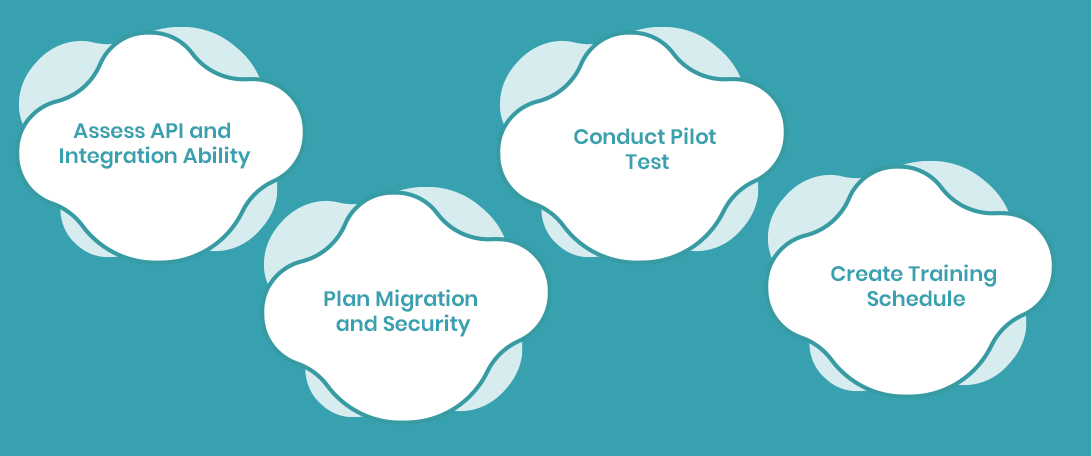
Now that you understand how to choose the right CRM, the next crucial step is ensuring its seamless integration into your business operations.
Integrating CRM into your business is not just a process where you randomly implement something without thinking it through. It can be viewed as the intelligent process where you bring all members of the team together, collect data, and ensure that you get results. If done right, the integration will help your business succeed. However, if done wrong, then money is wasted.
- Assess API and Integration Ability: Review and assess integration abilities in terms of how CRM integrates with your company’s system or tools. Make sure information flows freely among sales, marketing, and support teams.
- Plan Migration and Security: Make plans to ensure safe migration without losing your data. You need to know exactly what you’ll do before implementing your strategy.
- Conduct Pilot Test: Do not directly integrate CRM into your company without doing pilot testing. Conduct a test run using the actual environment.
- Create Training Schedule: Arrange training programs where team members get proper training to fully understand how CRM can be implemented.
Costs to Integrate CRM into Your Businesses
CRM implementation requires some initial costs to incur, but the subsequent benefits can make it worth it. The CRM system will be helpful in increasing sales efficiency and building customer relationships.
The cost of integrating CRM generally varies between $30,000 and $270,000. This is determined by factors like the company’s demands, level of customization, difficulty of the process, and the number of systems included in the process. Knowing the costs involved will enable you to make an informed decision while planning your budget.
| Cost Component | Estimated Cost Range |
| CRM Software Licensing | $5,000 – $50,000+ |
| CRM Integration | $10,000 – $80,000 |
| Customization & Development | $5,000 – $60,000 |
| Data Migration | $2,000 – $25,000 |
| Third-Party Integrations | $3,000 – $30,000 |
| Testing & Quality Assurance | $2,000 – $15,000 |
| Ongoing Maintenance & Support | $2,000 – $20,000+ per year |
How Markup Design Helps You Integrate with Leading CRM Platforms?
Markup Design makes sure that our clients can maximize the benefits of their CRM implementation through seamless CRM integration solutions according to their specific needs. If you have decided to implement the system or if you need to integrate CRM system into your system, we can help you.
We work with the best CRM software like Salesforce, HubSpot, Microsoft Dynamics 365, Zoho CRM, Freshsales, Pipedrive, and others. We assist you in integrating your CRM with ERP, marketing automation, customer support software, ecommerce, and other third-party software for a cohesive ecosystem.
We handle everything from the strategic planning phase through customization, data migration, automation of workflows, and beyond, taking full responsibility for your entire process of integration. The result? We aim to assist our clients in optimizing customer management and improving their overall business efficiency.
Simplify Customer Management with the Right CRM
A well-integrated CRM helps you connect teams, automate workflows, and create better customer experiences. Choose a platform that fits your business needs today while giving the flexibility to scale in the future.

Conclusion
The selection of CRM software is one of the most important considerations a company will make. It is more than just a database for storing customer information. It can help in streamlining your business processes and creating lasting connections with customers. Selecting the right CRM solution will depend on various considerations such as company objectives, ease of integration, scalability needs, and security requirements.
A successful CRM initiative will be based upon many factors and the ability to plan accordingly. Regardless of whether you operate a small business or a large multinational corporation, choosing a CRM solution that is suited for your business processes and goals will be highly beneficial for your organization. With proper planning, you can take advantage of CRM technology effectively.
FAQs
1. What is the most important factor when choosing a CRM?
The most important factor is how well the CRM aligns with your business requirements. It should support your workflows, integrate with existing systems, and scale as your business grows.
2. Which CRM is best for small businesses?
Popular options for small businesses include HubSpot CRM, Zoho CRM, Freshsales, and Salesmate because they are user-friendly, affordable, and easy to customize.
3. Why is CRM integration important?
CRM integration connects your CRM with other business tools such as ERP software, marketing platforms, customer support software, and eCommerce applications, ensuring smooth data flow and improved efficiency.
4. How much does CRM integration cost?
CRM integration costs typically range from $30,000 to $270,000, depending on customization requirements, data migration needs, third-party integrations, and overall project complexity.
5. What features should a modern CRM have?
A modern CRM should offer automation capabilities, omnichannel communication, customizable workflows, strong security controls, reporting tools, cloud flexibility, and integration support.
6. How long does CRM implementation take?
The timeline depends on project complexity. Small implementations may take a few weeks, while enterprise-level CRM integrations can take several months.
7. Can a CRM improve customer retention?
Yes. CRM systems help businesses track customer interactions, personalize communication, respond faster to customer needs, and build stronger long-term relationships, leading to improved retention rates.
Author's Perspective
As per my view, the decision about which CRM to use should not depend on its functions alone or its current level of popularity. The ideal CRM will always be the one that suits your needs, integrates well into your existing systems, and helps you reach your future growth. Most businesses indeed tend to be guided by their immediate needs, but they would benefit much more from making the right choice when it comes to scalability. The successful implementation of a CRM solution involves choosing appropriate technology and integrating it properly.
Discuss Your Project NowJupinder Singh Arora
Founder and CEO
Related Posts

How to Build an Insurance Portal with CRM,...

Custom Software Development Services in Abu Dhabi for...

Custom Software Development Cost in Bahrain: Factors, Benefits,...
Insights Are Valuable & Execution is Priceless
You’ve read about the digital future. Now, let’s build the infrastructure to take you there. Move your strategy from the page to the product.
Design Your Solution Now
Contact Us
Schedule The Appointment At Your Convenience Date And Time.
30 Min
Web Conference
Time Zone
Indian standard time (08:30pm)

Thanks For Getting In Touch!
You’ve Taken The First Step Toward Transforming Your Digital Presence. Our Experts Will Reach Out Shortly To Take It Forward.
Launch Your Dream Project
Provide a brief overview of your project, and our specialists will evaluate your requirements. We will connect with you to explore how the right digital solutions can help you launch faster.