
In Brief
- AI is evolving from being an assisting pilot to being an autonomous AI co-worker that will be capable of executing multiple complex workflows.
- Most companies have a gap in their readiness to adopt AI due to many reasons, including strategy, governance, employee adoption, and operational model readiness.
- AI will require redesigning your workflows and processes, not just adding new tools to your existing processes.
- AI will allow humans to spend less time executing routine tasks and more time performing oversight of the execution of tasks, orchestrating efforts among team members, and making timely decisions.
- Organizations that build a culture that embraces AI, including establishing a suitable governance framework and a strong data foundation, will have a tremendous competitive advantage over other organizations.
Earlier, the enterprise AI space centre of gravity has been heavily based on deploying Copilot-type systems, enterprise virtual assistants, and chat-based interfaces. These systems have provided productivity improvements, but all of these systems are still reliant on the human operator to provide decision-making, coordination, and execution.
As we stepped in 2026, we are seeing the emergence of significant transformation in the enterprise landscape due to the emergence of highly sophisticated generative AI, autonomous agents, and multi-agent systems. This new breed of enterprise AI solutions has the capability of independently executing workflows, analysing data, making recommendations, and coordinating tasks, all while communicating with all other systems.
The transformation taking place has both opportunities and challenges.
Organizations must reconsider how their work is structured, how their teams work and the optimal method for individuals and machines/AI to work with each other. Organizations that do not have a plan for introducing AI into their business will likely experience multiple challenges, such as fragmentation of their adoption, governance risk, and employee push-back; in contrast, organizations that are able to proactively build the appropriate environment to welcome AI will have the opportunity to achieve significant productivity and innovation benefits.
What are AI Co-Workers?

AI co-workers are intelligent software systems that can perform many business processes independently or in collaboration with human employees. They differ from traditional automation technologies, which only operate based on pre-defined rules, because AI co-workers are capable of
- Analyzing more complex data
- Making decisions in context
- Completing multi-step processes
- Communicating with both humans and other computer systems
- Learning from past experiences
- Adapting to changes in business requirements
Examples of AI co-workers include:
- AI customer support representatives functioning as a single point of contact for the end-to-end resolution of a customer question
- AI financial analysts producing monthly reporting and forecasting of trends
- AI HR assistants pre-screen candidates and schedule interviews
- AI project coordinators oversee project timelines and allocate resources
They provide the same utility as an employee (co-worker), while giving organizations a large increase in productivity.
Factors Supporting the Enterprises’ Use of AI Co-Workers
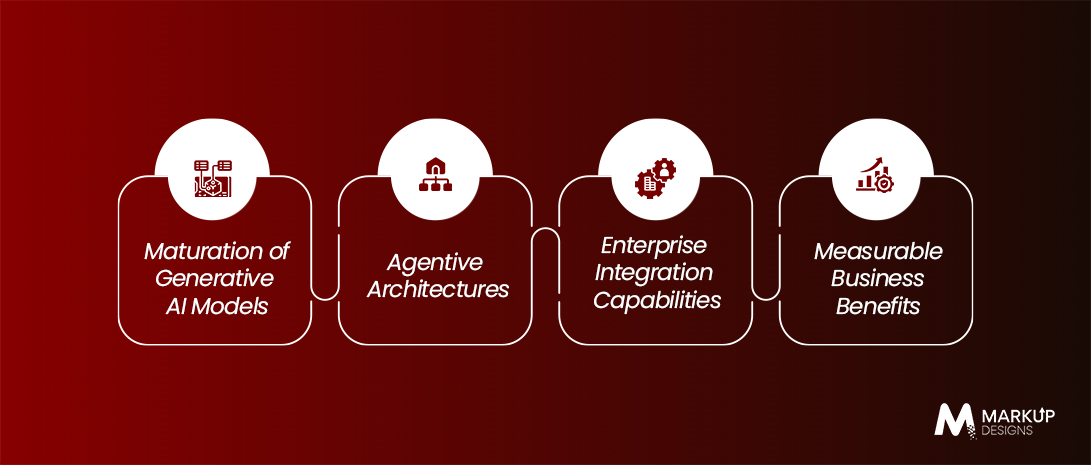
Several technological advances are coming together to accelerate the enterprise adoption of AI co-workers.
Maturation of Generative AI Models
The recent generative AI systems have much more robust reasoning skills, better contextual understanding, and are generally more reliable than their predecessors.
Agentive Architectures
Systems built around agents can perform tasks by planning, executing, and coordinating with them across different tools and platforms without any human intervention.
Enterprise Integration Capabilities
Artificial Intelligence is now able to be connected to not only CRMs but also to ERPs, databases, talking systems, and productivity programs.
Measurable Business Benefits
More organizations are starting to recognize the measurable benefits of AI in efficiencies, operating costs, and employee productivity.
AI is changing from being a source of experimentation to being one of the central business drivers for most organizations.
Readiness Gap within an Enterprise for Artificial Intelligence
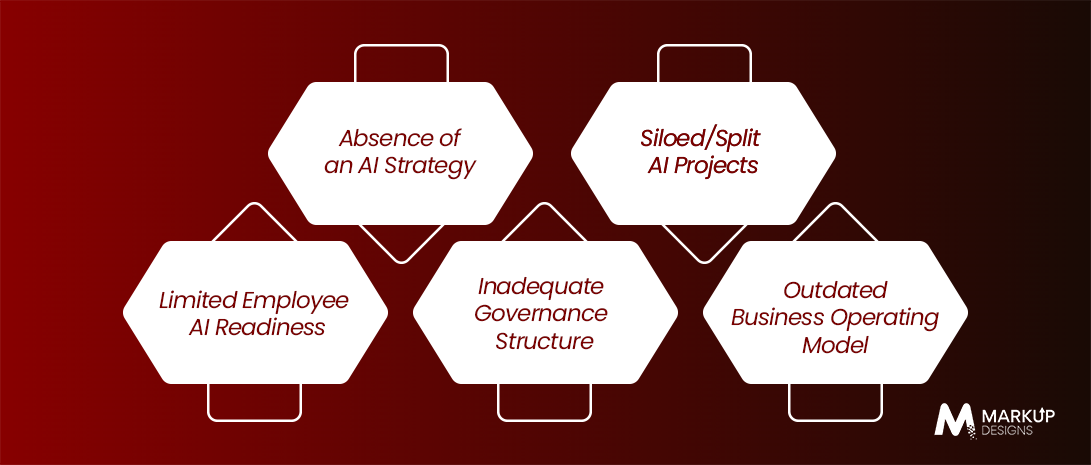
Despite the growing interest within enterprises towards AI-based business operations, many enterprises still have not been adequately prepared for their AI-based business operations.
Absence of an AI Strategy
Many organizations deploying AI do not do so in alignment with the overall organization’s strategic objectives.
As such, without having a tactical plan, AI investments frequently become something that is an isolated experiment and will never generate a sustainable return on investment.
Siloed/Split AI Projects
Often, individual business areas will have some type of AI application, but they are all doing so within their own respective areas, thus creating different systems, inconsistent processes, and duplicate work.
Limited Employee AI Readiness
The average worker has not developed the skill sets, experience or confidence to work effectively with AI.
As a result, many workers will resist using AI, will not use AI, or are concerned that AI will take their jobs away.
Inadequate Governance Structure
Many organizations do not have governance policies in place to adequately govern the use and accountability of AI, nor to ensure that AI uses good data, nor to conduct itself ethically.
Outdated Business Operating Model
Many of the operating models that many organizations have utilized are designed to support a human-only workforce and do not have the ability to support a human and AI combined workforce.
Best Strategies to Hire ML Engineers for AI Solutions
Strategy to hire machine learning engineers for scalable AI solutions. Explore hiring models, ML engineer skills, MLOps practices, deployment expertise, and enterprise AI development strategies.
AI Adoption Failure Examples
One way many organizations have experienced failure with their AI initiatives is through poor planning:
- Chatbot customer service systems are not providing accurate responses, thus damaging customer trust.
- AI recruiting systems are unintentionally presenting results with bias due to poor training data.
- Automation is solely used as a cost-cutting solution, without concern for employee adoption of the system.
- Pilot programs, which were unable to scale because the necessary infrastructure and governance requirements were not in place.
The above failures emphasize the need for enterprise-wide readiness.
7 Enterprise Readiness Pillars for an AI Co-worker
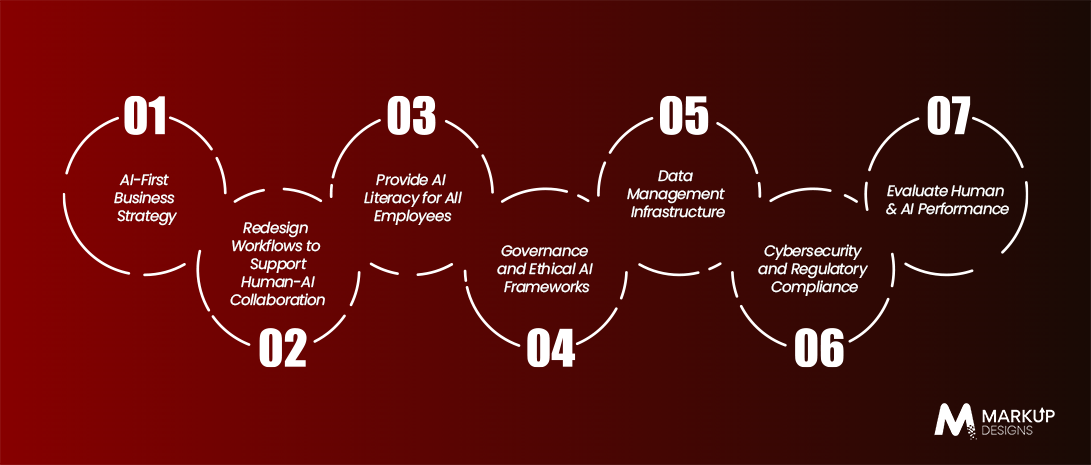
AI-First Business Strategy
Businesses must identify where the AI will create measurable or quantifiable value, and align their strategy with initiatives to develop it.
Some questions leaders should answer include;
- What workflows are AI best suited for?
- What outcomes do we want to achieve?
- How do we measure success?
Redesign Workflows to Support Human-AI Collaboration
Rather than simply placing the AI in the old process, enterprises should create completely new workflows that have both humans and intelligent systems working together to accomplish tasks.
Successful companies work to define.-
- Human Roles
- AI’s Roles
- Where Will We Escalate?
- Who Will Own the Decision?
Provide AI Literacy for All Employees
The adoption of AI is not only a technology issue, but also an issue for the employee base. Therefore, provide training to employees so that they understand-
- What is the AI capable of doing?
- What are some limitations of the AI?
- How to prompt the AI to provide what they want?
- What ethical obligations do we have?
- How will we exercise human oversight?
Governance and Ethical AI Frameworks
Successful ethical AI implementation requires solid governance. Governance encompasses a range of competing priorities, such as:
- Risk Management
- Transparency
- Accountability
- Data Protection
- Combating Bias
- Regulatory Compliance
Data Management Infrastructure
The effectiveness of an AI system is based on the quality of data that gets feed into it. Companies should invest in:
- Quality of Data
- Accessibility of Data
- Integration of Data
- Governance of Data
Cybersecurity and Regulatory Compliance
AI technology introduces new security concerns that require greater preemptive attention. Companies should strengthen:
- Access Controls
- Measures to Protect Data
- Monitoring of AI Models
- Compliance with Regulatory Requirements
Evaluate Human & AI Performance
Traditional methods of measuring employee performance may not represent the complete impact of working with AI. Consider developing new performance measurements to assess:
- Improvement in Productivity
- Quality of Decisions
- Efficiency of Workflows
- Satisfaction of Employees
- Results Achieved by Business
Change in Organizational Roles Due to AI Co-Working
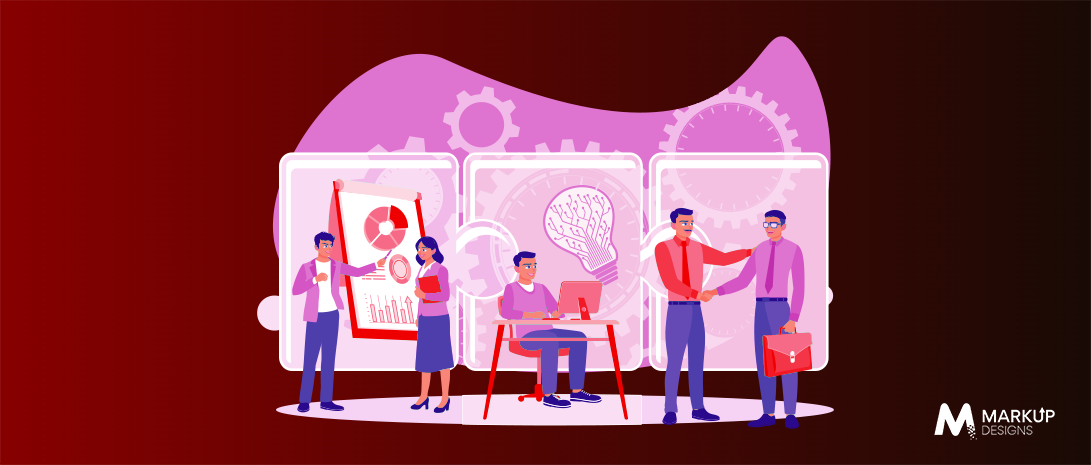
1.Management
Leading Hybrid Human-AI Teams
Managers will be responsible for overseeing both employees and AI as part of hybrid team management.
2.Employee
From Task Execution to AI Oversight and Optimization
Employees will spend less time completing repetitive processes and more time managing, verifying, and enhancing AI-generated outputs.
3.Information Technology Departments
Building and Governing Enterprise AI Ecosystems
IT departments will take on responsibilities for managing AI platforms, integrating them into existing processes, determining their level of governance, and ensuring they operate reliably.
4.Human Resources
Preparing the Workforce for Human-AI Collaboration
As organizations develop workforce strategies, HR must consider the organization’s use of AI and how it can complement and partner with human talent.
A Human-Centric AI Workplace
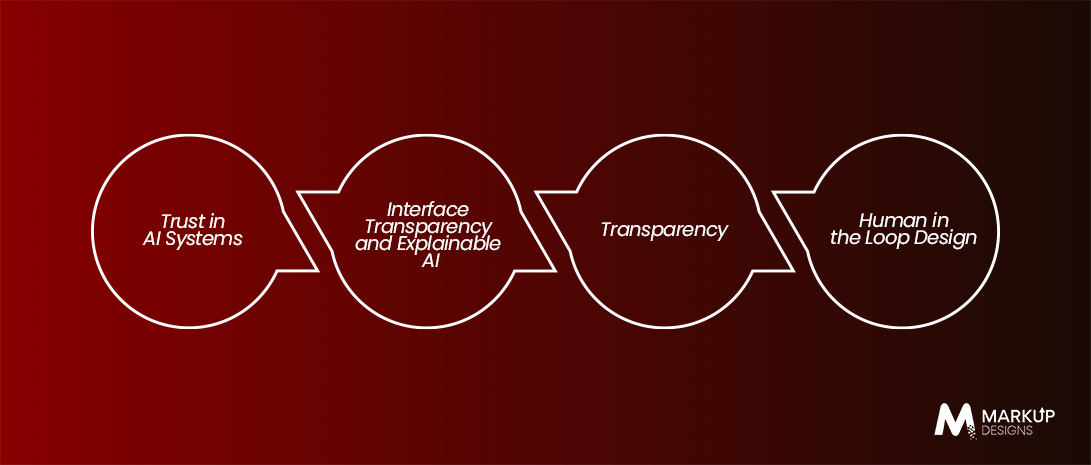
The effectiveness of AI initiatives is determined not only by technology, but also by how organizations integrate, govern, and leverage it. Equally important is creating an environment where employees feel confident working alongside AI systems, enabling greater trust, collaboration, and adoption across the organization.
Trust in AI Systems
Employees want to feel confident that AI-produced recommendations are accurate and advantageous to their role within the organization.
Interface Transparency and Explainable AI
Users must clearly understand how AI arrives at its recommendations.
Technology should facilitate employee experience by making work more accessible vs. more complex.
Transparency
Clearly communicate to employees where and how AI is being utilized.
Human in the Loop Design
Humans must maintain oversight and accountability on all essential decision-making involved with AI.
The role organizations will find value in is partnering with Markup Designs: providing AI-enabled digital solutions with a focus on usability, trust, and transparency of experience.
AI Co-Workers Across Enterprise Functions
AI co-workers can deliver value virtually across every department.
| Function | AI Co-Worker Applications |
| Customer Service | Automated support, ticket resolution |
| Sales | Lead qualification, pipeline management |
| Marketing | Content generation, campaign optimization |
| HR | Candidate screening, employee onboarding |
| Finance | Reporting, forecasting, and fraud detection |
| Operations | Workflow automation, resource planning |
| IT | Monitoring, incident management |
Are You Ready to Bring AI to Work?
What Businesses Should Evaluate Before Hiring AI Consultants
Planning to hire AI consultants? Learn how to evaluate expertise, industry experience, costs, engagement models, and red flags before choosing the right AI consulting partner for your business.
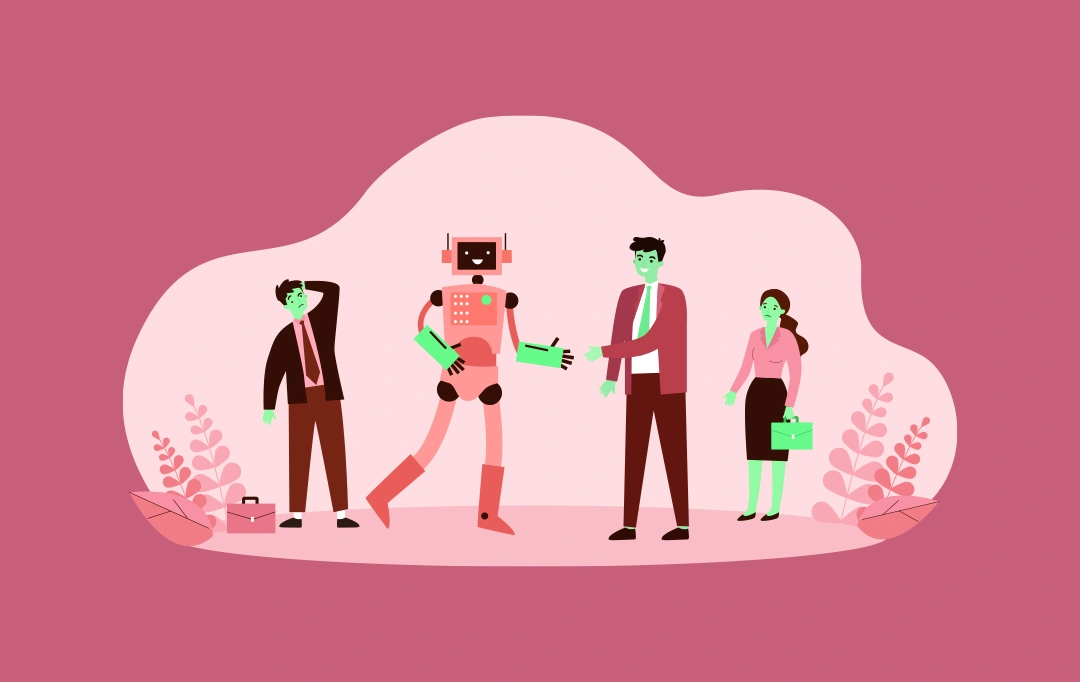
An Enterprise AI Readiness Checklist
Before diving headfirst into a massive change associated with bringing AI into the workplace, it’s highly recommended that organizations ensure that they’re fully prepared to bring AI into their operations.
Organizations should check whether they’ve accomplished the following pre-requisites:
- Have a written AI strategy
- Have executive sponsorship
- Have formal governance policies defined
- Have a proper data infrastructure
- Have developed employee training programs
- Have security and compliance frameworks
- Have projects in place to redesign workflows
The number of completed pre-requisites is an indication of how prepared an organization is for AI.
Common areas Organizations Fall Short in Their Preparation to Use AI Co-Workers

1. Consider AI to be a Tool Rather than a Team Member
AI should be incorporated into the Workflow as a collaborative entity instead of being treated as a separate technology solution.
2. Ignoring Employees’ Concerns About AI
Insufficient communication can lead employees to be resistant and not adopt to an organization’s AI implementation.
3. Scaling AI Deployments Without Proper Governance
Not having individuals or organizations in charge of monitoring an AI Solution can lead to risk exposures from a business and regulatory standpoint of operation.
4. Ignoring Organizational Culture During Transitions Utilizing AI
The success of an organization’s transformation will be determined by people as well as technology.
5. Poor Change Management Utilized in Implementing AI Solutions
Organizations will not successfully build new processes without putting effort into establishing development for People Operating in New Environments.
The Future of Work is AI Co-Workers Working along with Humans
The future of the office will NOT be Human VS. Machine, but it will be Human and Machine’s collaborative efforts to complete tasks.
AI systems will increasingly perform:
- Repetitive execution
- Data analysis
- Workflow coordination
Humans will continue to focus on:
- Creativity
- Critical Thinking
- Leadership
- Strategic decision-making
Companies that proactively embrace this shift will be in a better position to increase productivity, accelerate innovation, and establish sustainable competitive advantages.
How Markup Designs Can Help Businesses Build AI-Ready Digital Experiences
It is not enough to deploy technology for successfully integrating AI co-workers, but also to responsibly design, redesign workflows, create governance, and user adoption programs.
At Markup Designs, we help organizations prepare themselves for AI native operations through the following services:
- AI Strategy Consulting
- AI Product Development
- Human / AI Workflow Design
- Enterprise Software Modernization
- UX Design for AI Applications
- Data / AI Readiness Assessment
- Governance / Compliance Consulting
- AI Integration Services
We focus our efforts on creating AI experiences for employees that they trust, that they understand, and that they will adopt.
Ready to Build an AI-Ready Workplace?
The rise of AI co-workers is transforming how enterprises operate, collaborate, and create value. Organizations that invest in AI readiness today will be better positioned to unlock productivity gains, improve decision-making, and drive long-term innovation.
Summary
Transforming from an AI Assistant to an AI Co-Worker is one of the largest transformations in the workplace in modern times. As the ability for AI systems to complete complex workflows autonomously continues to expand, businesses must redesign their strategies, governing processes, supporting employee development, and operating models.
Preparing for the future requires more than a technology investment; it requires a comprehensive approach that includes aligning leadership, employee preparation, responsible AI usage, and designing with humans in mind. Organizations that adopt these principles today will have the greatest opportunity to thrive in the future workplace, which is AI-native.
FAQ
1. How does an AI Co-Worker differ from an AI Assistant?
An AI Assistant generally offers support to the user by offering recommendations and assistance with completing a specific task. An AI Co-Worker is able to complete an entire workflow autonomously, including completing the tasks, making decisions, and assisting in the collaboration of activities related to the workflow.
2. Are they replacing human employees?
No. AI Co-Workers were developed to enhance human ability by automating repetitive tasks so humans can spend more time performing higher-value tasks.
3. What are the difficulties in adopting AI?
Common obstacles to AI adoption in the enterprise are: unclear business strategies, lack of governance, uncoordinated initiatives, employees are not prepared to utilize the technology, and lack of change management.
4. What competencies do workers need to thrive in an AI-focused workplace?
Employees will require skills such as AI proficiency, critical thinking skills, the ability to orchestrate workflows, good interpretation of data, and strong collaboration skills.
5. How do organizations get ready for co-working with AI?
Organizations should have an AI strategy, modernize their workflows, build strong governance structures, improve data infrastructures, educate their teams, and practice responsible AI use.
Author's Perspective
The discussion about AI has progressed far beyond just automation. We have entered a time when AI systems will take part in companies’ day-to-day operations (or basically be digital co-workers) and can complete work effectively with more autonomy, providing value to the organization. Those organizations that will be successful will not necessarily have the most effective AI technology but will have put together a plan to prepare their people for successful human-to-AI interaction.
The future of work will be owned by organizations that see AI as a strategic part of their workforce rather than just another piece of software. By investing in being prepared today, organizations can create resilient, creative, and productive workplaces where humans and AI can work together to accomplish things they could not do separately.
Gaurav Goyal
Global Sales- VP
Related Posts
How AI is Revolutionising Industrial Automation in Australia
How UK Enterprises Can Build an Effective AI...

AI Voice Agent for Real Estate: Features, Benefits,...
Insights Are Valuable & Execution is Priceless
You’ve read about the digital future. Now, let’s build the infrastructure to take you there. Move your strategy from the page to the product.
Design Your Solution Now
Contact Us
Schedule The Appointment At Your Convenience Date And Time.
30 Min
Web Conference
Time Zone
Indian standard time (08:30pm)

Thanks For Getting In Touch!
You’ve Taken The First Step Toward Transforming Your Digital Presence. Our Experts Will Reach Out Shortly To Take It Forward.
Launch Your Dream Project
Provide a brief overview of your project, and our specialists will evaluate your requirements. We will connect with you to explore how the right digital solutions can help you launch faster.