
In Brief
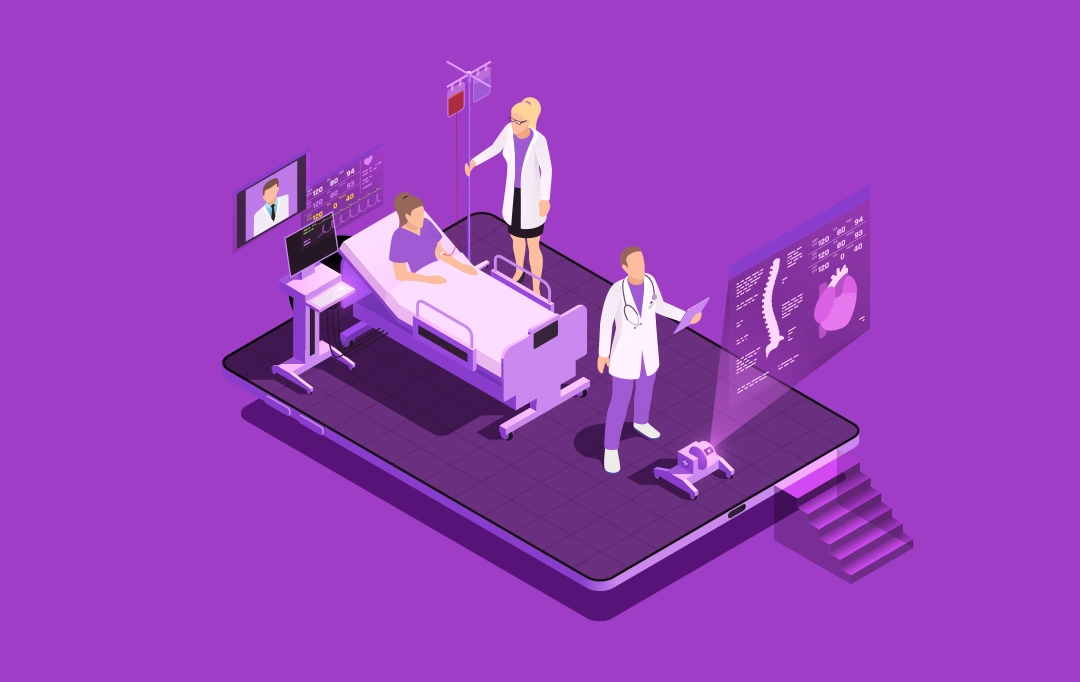
- AI-powered smart hospital systems are transforming healthcare across GCC countries through intelligent, connected, and data-driven healthcare infrastructure.
- GCC nations like the UAE, Saudi Arabia, and Qatar are investing in AI healthcare technologies as part of their digital transformation and smart city initiatives.
- Technologies such as AI, IoT, cloud computing, robotics, predictive analytics, and blockchain are driving the evolution of smart hospitals in the Middle East.
- Smart hospitals improve patient care through AI-based diagnostics, remote patient monitoring, telemedicine, predictive healthcare, and robotic-assisted surgeries.
- AI-powered healthcare systems help hospitals increase operational efficiency, reduce healthcare costs, improve accessibility, and strengthen data security.
- Despite challenges like cybersecurity risks, high implementation costs, and integration issues, GCC countries are rapidly moving toward a future of intelligent and fully connected healthcare ecosystems.
The healthcare industry across GCC countries is undergoing digital transformation. Nations such as UAE, Saudi Arabia, Qatar, Kuwait, Bahrain, and Oman are rapidly adopting advanced technologies to improve healthcare accessibility, operational efficiency, and patients’ experiences. Among these innovations, AI-powered smart hospital systems are emerging as one of the most transformative developments shaping the future of healthcare in the region.
Healthcare providers are no longer relying solely on traditional hospital infrastructures. Instead, they are integrating artificial intelligence, Internet of Things (IoT), cloud computing, robotics, predictive analytics, and automation into healthcare ecosystems to create intelligent, connected, and patient-centric hospitals.
As GCC governments continue investing heavily in digital transformation initiatives and smart city projects, AI-powered healthcare systems are becoming a strategic priority. These technologies are helping hospitals reduce costs, optimize resources, improve diagnostics, enable remote care, and deliver highly personalized healthcare experiences.
This blog will explore how AI-powered smart hospital systems are transforming healthcare in GCC countries, the technologies driving this revolution, the benefits and challenges involved, and what the future holds for smart healthcare in the Middle East.
AI-Powered Smart Hospital Systems
AI-powered smart hospital systems refer to healthcare environments where advanced digital technologies are integrated into hospital infrastructure, clinical workflows, and patient management systems to improve efficiency, decision-making, and healthcare delivery.
Unlike conventional hospitals, smart hospitals operate using interconnected systems that collect, analyze, and share data in real time. These hospitals leverage AI algorithms, automation tools, cloud platforms, and intelligent medical devices to create a seamless healthcare ecosystem.
The objective of smart hospitals is to provide proactive, personalized, and data-driven healthcare services while minimizing operational inefficiencies.
Key Characteristics of Smart Hospitals
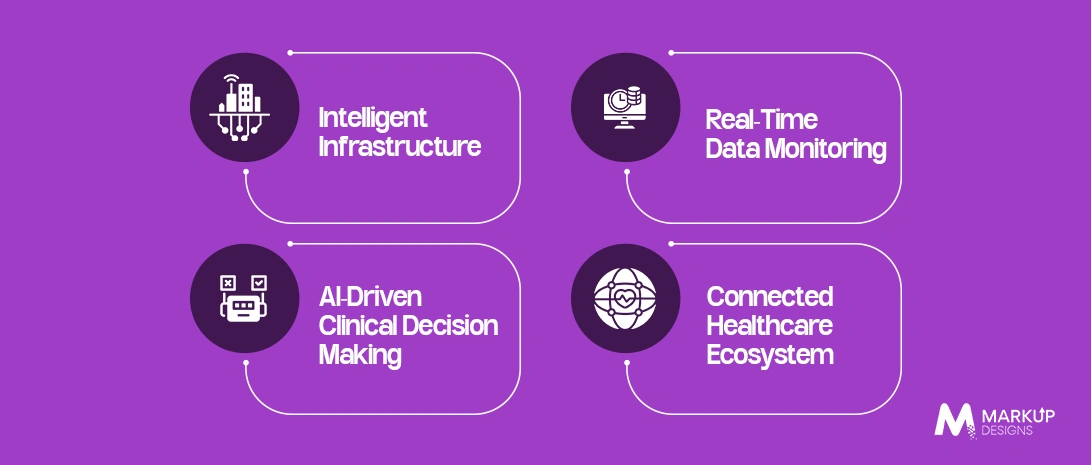
Intelligent Infrastructure
Smart hospitals use connected technologies to automate routine operations such as patient admissions, appointment scheduling, asset tracking, and emergency response systems.
AI-Driven Clinical Decision Making
Artificial intelligence assists doctors in diagnosing diseases, analyzing medical images, predicting patient risks, and recommending personalized treatment plans.
Real-Time Data Monitoring
IoT-enabled devices continuously monitor patient health metrics such as heart rate, blood pressure, glucose levels, and oxygen saturation.
Connected Healthcare Ecosystem
Smart hospitals integrate:
- Electronic Health Records (EHR)
- Cloud-based databases
- Remote monitoring systems
- AI-powered diagnostics
- Telemedicine platforms
This interconnected ecosystem ensures better communication among healthcare professionals and improves patient care coordination.
Need for Adopting Smart Healthcare Technologies
The Gulf Cooperation Council (GCC) region is facing several healthcare challenges that are increasing the demand for digital transformation and smart healthcare technologies. Some of the major reasons driving this shift:
Rising Cases of Chronic Diseases
- Non-communicable diseases (NCDs) such as diabetes, obesity, and heart disease are rapidly increasing across GCC countries.
- A large percentage of deaths in the region are linked to chronic health conditions.
- Nearly 23% of adults in Saudi Arabia are affected by diabetes.
- Smart wearables and remote patient monitoring systems help doctors track patient health continuously.
- Early monitoring and preventive care help reduce health risks and improve treatment outcomes.
Reducing Operational Costs
- GCC governments invest in public healthcare systems, increasing financial pressure on healthcare infrastructure.
- Growing patient demands are driving the need for cost-efficient healthcare operations.
- AI-powered automation helps hospitals reduce unnecessary medical tests and paperwork.
- Smart hospital systems improve patient flow and reduce waiting times.
- Digital technologies help optimize resource allocation and improve overall operational efficiency.
Addressing Workforce Shortages
- Many hospitals in the GCC rely on healthcare professionals to manage rising patient volumes.
- Increasing healthcare demands are creating pressure on medical staff and hospital operations.
- AI-assisted diagnostics help doctors make faster and more accurate decisions.
- Automated administrative systems reduce manual workloads for healthcare teams.
- Smart hospital technologies allow doctors and nurses to focus more on patient care and critical treatments.
Technologies Powering Smart Hospital Systems
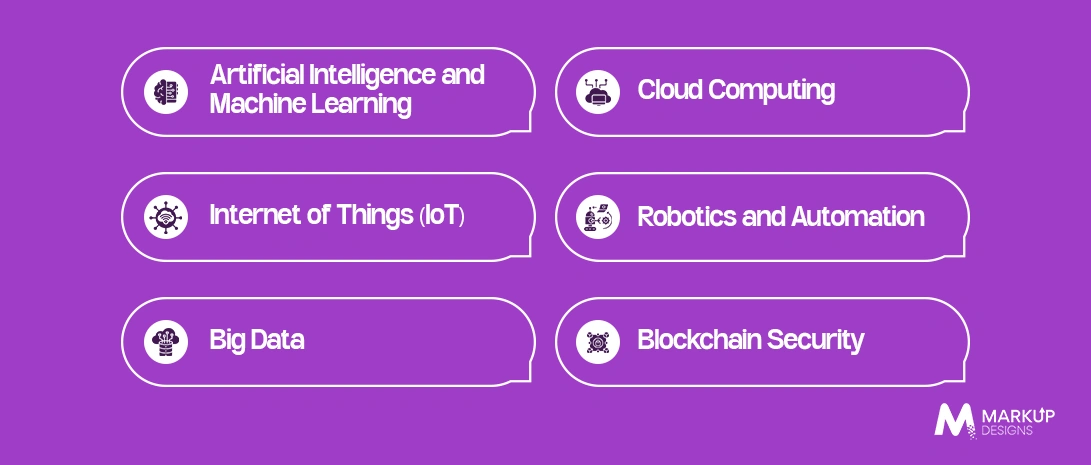
The foundation of smart hospitals lies in advanced digital technologies working together to create intelligent healthcare ecosystems.
Artificial Intelligence and Machine Learning
Artificial intelligence is the brain behind smart hospital systems. AI algorithms analyze vast amounts of healthcare data to improve diagnostics, treatment planning, and operational management.
AI Applications in Hospitals
- Disease prediction
- Clinical decision support
- Medical imaging analysis
- Drug discovery
- Personalized treatment recommendations
Machine learning models continuously improve their accuracy by learning from patient data and clinical outcomes.
Internet of Things (IoT)
IoT enables medical devices and hospital systems to communicate with each other in real time.
Examples of IoT in Smart Hospitals
- Smart patient monitoring systems
- Connected ICU devices
- Wearable health trackers
- Smart beds
- Remote monitoring tools
IoT devices help doctors monitor patients continuously, reducing emergency risks and improving response times.
Big Data
Healthcare organizations have an enormous volume of patients’ data on a daily basis. Big data analytics helps hospitals convert the information into actionable insights.
- Predicting disease outbreaks
- Identifying high-risk patients
- Forecasting hospital resource demand
- Improving treatment outcomes
Predictive healthcare models are particularly valuable in managing chronic diseases such as diabetes and cardiovascular conditions, which are prevalent in GCC countries.
Cloud Computing
Cloud-based healthcare systems allow hospitals to securely store, access, and share medical data across departments and locations.
Benefits of Cloud Healthcare Solutions
- Scalability
- Improved collaboration
- Real-time data accessibility
- Enhanced disaster recovery
- Lower infrastructure costs
Cloud computing also enables telemedicine and remote healthcare services.
Robotics and Automation
Robotics is playing a growing role in smart hospitals across GCC nations.
Common Robotic Applications
- Robotic surgeries
- Automated medicine dispensing
- Hospital delivery robots
- Rehabilitation robots
- AI-powered patient assistants
Robotic-assisted surgeries improve surgical precision while reducing recovery times and complications.
Blockchain Security
Blockchain technology helps secure sensitive healthcare data and improve transparency in medical record management.
Blockchain Benefits
- Secure patient records
- Tamper-proof healthcare data
- Improved interoperability
- Enhanced cybersecurity
As cyber threats increase globally, GCC healthcare providers are investing in secure digital infrastructures.
Read Also: Healthcare App Development: Features, Cost & Trends 2026
Benefits of AI-Powered Smart Hospital Systems
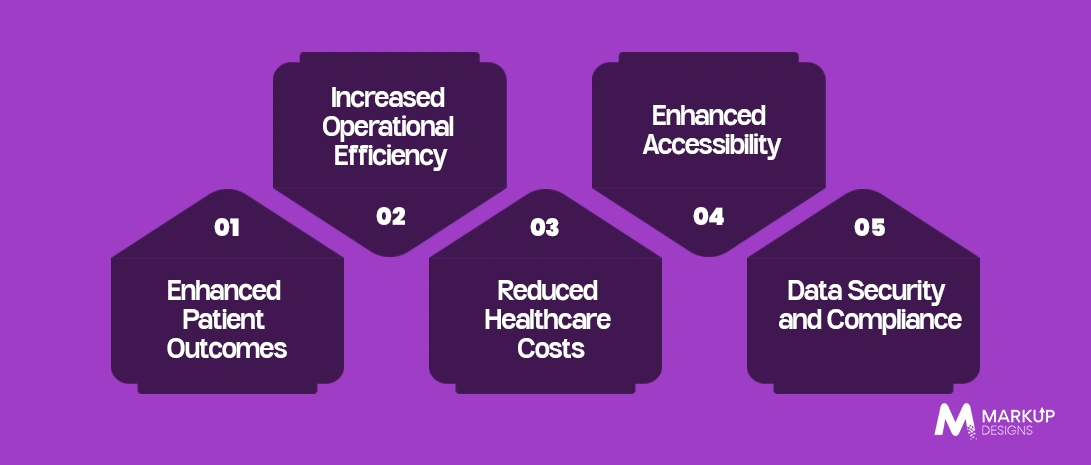
The adoption of AI-powered app healthcare systems offers many benefits to patients and healthcare providers, including
Enhanced Patient Outcomes
AI enhances diagnostic accuracy and enables personalized treatment plans.
Benefits
- Faster diagnosis
- Reduced medical errors
- Better treatment precision
- Continuous health monitoring
Patients receive more proactive and individualized care experiences.
Increased Operational Efficiency
Hospital automation reduces manual workloads and improves workflow management.
Benefits
- Faster patient processing
- Reduced waiting times
- Efficient resource utilization
- Better staff productivity
AI helps hospitals manage growing patient volumes more effectively.
Reduced Healthcare Costs
Smart hospital systems optimize resource allocation and reduce unnecessary expenses.
Areas Where Smart Healthcare Solutions Help Reduce Costs
- Lower administrative costs
- Reduced hospital readmissions
- Predictive equipment maintenance
- Efficient inventory management
Governments and private healthcare providers benefit from long-term operational savings.
Enhanced Accessibility
Telemedicine and remote monitoring technologies improve healthcare access for patients in remote or underserved regions. This is especially important for GCC countries with geographically dispersed populations.
Data Security and Compliance
Advanced cybersecurity technologies help protect sensitive patient information. AI-powered security systems can:
- Detect unusual network activity
- Prevent cyberattacks
- Monitor access control
- Improve compliance management
Healthcare organizations can maintain patient trust while meeting regulatory standards.
The Future of AI-Powered Smart Hospitals
AI, automation, and connected technologies drive the future of healthcare in GCC countries.
Personalized and Precision Medicine
AI will enable highly personalized treatment plans based on:
- Genetic data
- Patient history
- Lifestyle patterns
- Predictive risk analysis
Precision medicine will significantly improve treatment effectiveness.
Expansion of Smart Cities and Smart Healthcare
GCC nations are investing heavily in smart city initiatives.
Future smart hospitals will integrate seamlessly with:
- Smart transportation
- Emergency response systems
- Digital identity platforms
- Connected public health systems
Healthcare will become more accessible, connected, and data-driven.
Rise of Autonomous Healthcare Systems
Future hospitals may use autonomous AI systems for:
- Real-time diagnostics
- Robotic surgeries
- Automated patient management
- Predictive emergency response
AI-driven healthcare ecosystems will improve efficiency while reducing human workload.
Digital Twins and Metaverse Healthcare
Emerging technologies such as digital twins and metaverse healthcare environments could revolutionize medical training and remote treatment.
Doctors may soon use virtual simulations for:
- Surgical planning
- Remote collaboration
- Personalized patient modeling
These innovations are expected to reshape the future of healthcare delivery in the GCC.
Why Partner with Markup Designs?
Markup Designs helps healthcare businesses across the GCC region build intelligent and secure digital healthcare solutions customized for modern patient needs. With expertise in AI, cloud computing, IoT, and healthcare automation, we develop smart hospital systems that improve operational efficiency, enhance patient experiences, and support long-term digital transformation goals.
Our team understands the rapidly evolving healthcare landscape in GCC countries and delivers customized healthcare applications that align with regional compliance standards, smart city initiatives, and future healthcare trends. From telemedicine platforms to AI-powered healthcare ecosystems, we focus on creating future-ready solutions that help healthcare providers stay competitive.
Ready to Revolutionize Healthcare With AI?
Empower your healthcare business with intelligent automation, enhanced patient experiences, and data-driven clinical decision-making. Build secure, scalable, and future-ready AI-powered healthcare solutions tailored for the GCC market.

Conclusion
AI-powered smart hospital systems are redefining the future of healthcare across GCC countries. By integrating artificial intelligence, IoT, cloud computing, robotics, and predictive analytics, healthcare providers can deliver faster, safer, and more personalized patient care.
Governments across the UAE, Saudi Arabia, Qatar, Oman, Kuwait, and Bahrain are investing in digital healthcare transformation to build intelligent healthcare ecosystems capable of meeting future healthcare demands.
Although challenges such as cybersecurity, integration complexity, and implementation costs remain, the long-term benefits of smart hospitals far outweigh the obstacles. As technology continues to evolve, GCC countries are well-positioned to become global leaders in AI-driven healthcare innovation.
Businesses looking to capitalize on this transformation should partner with an experienced healthcare app development company to build scalable, secure, and future-ready smart healthcare solutions customized for GCC market.
FAQs
1. What are AI-powered smart hospital systems?
AI-powered smart hospital systems are advanced healthcare environments that use technologies such as artificial intelligence, IoT, cloud computing, robotics, and predictive analytics to improve patient care, hospital operations, diagnostics, and healthcare management.
2. How is AI transforming healthcare in GCC countries?
AI is transforming healthcare in GCC countries by enabling faster diagnostics, predictive healthcare, robotic surgeries, remote patient monitoring, telemedicine, and intelligent hospital management systems that improve operational efficiency and patient outcomes.
3. Which GCC countries are investing heavily in smart healthcare?
Countries such as the UAE, Saudi Arabia, Qatar, Oman, Kuwait, and Bahrain are actively investing in smart healthcare technologies as part of their digital transformation and smart city initiatives.
4. What technologies are used in smart hospitals?
Smart hospitals use several advanced technologies, including:
- Artificial Intelligence (AI)
- Machine Learning (ML)
- Internet of Things (IoT)
- Cloud Computing
- Big Data Analytics
- Robotics
- Blockchain
- Telemedicine Platforms
5. What are the benefits of AI-powered smart hospitals?
AI-powered smart hospitals offer multiple benefits, including:
- Improved patient outcomes
- Faster and more accurate diagnostics
- Reduced operational costs
- Better resource management
- Enhanced healthcare accessibility
- Real-time patient monitoring
- Increased hospital efficiency
6. How does AI improve patient care in hospitals?
AI improves patient care by analyzing medical data, assisting doctors in diagnostics, enabling personalized treatment plans, monitoring patients in real time, and predicting health risks before conditions become severe.
7. Are AI-powered smart hospitals secure?
Yes, smart hospitals implement advanced cybersecurity technologies such as data encryption, blockchain, AI-driven threat detection, and secure cloud infrastructure to protect sensitive patient information and maintain regulatory compliance.
8. What role does IoT play in smart hospitals?
IoT enables connected medical devices to communicate and share real-time patient data. This helps hospitals monitor patients remotely, automate workflows, track medical equipment, and improve emergency response times.
9. What challenges do GCC countries face in implementing smart hospitals?
Some major challenges include:
- High implementation costs
- Cybersecurity risks
- Integration with legacy systems
- Lack of skilled AI professionals
- Regulatory and ethical concerns
10. What is the future of smart healthcare in GCC countries?
The future of smart healthcare in GCC countries includes AI-driven personalized medicine, autonomous healthcare systems, digital twins, metaverse healthcare environments, and fully connected smart hospital ecosystems integrated with smart cities.
Author's Perspective
The future of healthcare in GCC countries is no longer centered solely around expanding hospital infrastructure; it is now about building intelligent healthcare ecosystems powered by data, automation, and AI.
As governments across the Middle East accelerate digital transformation initiatives, healthcare providers must adapt to evolving patient expectations, increasing operational demands, and the growing need for accessible, personalized care. AI-powered smart hospital systems are not simply a technological trend; they are becoming the foundation of modern healthcare delivery.
From predictive diagnostics and remote patient monitoring to robotic surgeries and intelligent hospital administration, AI is enabling healthcare institutions to deliver faster, safer, and more efficient medical services. GCC countries are uniquely positioned to become global leaders in smart healthcare innovation due to their strong investments in smart cities, AI strategies, and healthcare modernization programs.
Discuss Your Project NowAjit Kumar Jha
VP - Business Operations
Related Posts
Healthcare 4.0 Explained: Technologies Driving the Next Era...
Healthcare IT Outsourcing: A Strategic Guide for Modern...
AI in UK Healthcare: Real-World Applications Driving Better...
Insights Are Valuable & Execution is Priceless
You’ve read about the digital future. Now, let’s build the infrastructure to take you there. Move your strategy from the page to the product.
Design Your Solution Now
Contact Us
Schedule The Appointment At Your Convenience Date And Time.
30 Min
Web Conference
Time Zone
Indian standard time (08:30pm)

Thanks For Getting In Touch!
You’ve Taken The First Step Toward Transforming Your Digital Presence. Our Experts Will Reach Out Shortly To Take It Forward.
Launch Your Dream Project
Provide a brief overview of your project, and our specialists will evaluate your requirements. We will connect with you to explore how the right digital solutions can help you launch faster.