
In Brief
- Healthcare cybersecurity is designed to safeguard patient information, electronic health records, telehealth platforms, medical equipment, and any other digital platform used for healthcare purposes. Cybersecurity plays an important role in ensuring privacy, data accuracy, clinical continuity, and trust in healthcare services.
- Major cybersecurity threats in healthcare include ransomware, malware, phishing, insider threats, third-party threats, vulnerable cloud environments, outdated medical equipment, and risks related to artificial intelligence.
- The following practices may enhance the safety of healthcare organizations: multi-factor authentication, access controls based on roles, data encryption, network segmentation, continuous monitoring, proper data backup, employee training, and frequent security testing of applications.
- Efficient cybersecurity in healthcare needs an incident response plan, regular risk assessment, safe system integration, and regulatory compliance (HIPAA, GDPR, and India’s data protection law). The organization must also evaluate the security of third parties and develop recovery procedures to protect patients’ interests in case of any disruption.
- Cybersecurity in healthcare involves a combination of preventive measures and ongoing monitoring, testing, and improvement. Markup Designs assists healthcare organizations in building a secure, efficient, and scalable solution that includes data security and cybersecurity.
Healthcare has become increasingly digital. Healthcare establishments use electronic health records to store patients’ information, doctors use telehealth platforms to communicate with patients, and health applications allow people to receive medical assistance without leaving their homes. All these tools facilitate the process of accessing healthcare, but raise new issues of security.
Cybersecurity in healthcare is what allows organizations to protect patient data, maintain the security of digital platforms, and ensure that all systems operate without any risk to the safety of the information. However, the protection of a healthcare system cannot be ensured by the installation of any kind of security software only. Access management, constant monitoring, staff awareness, and an incident response plan are crucial for maintaining good cybersecurity.
In this blog, we will talk about the importance of cybersecurity in the healthcare industry, various types of threats organizations may encounter, and some solutions to address cybersecurity challenges in healthcare.
What is Cybersecurity in Healthcare?
Cybersecurity in the field of healthcare consists of a set of practices and technologies designed for the protection of the healthcare industry, patient data, and digital platforms from cyberattacks, intrusions, and data breaches. Cybersecurity makes sure that healthcare providers can have their digital platforms protected while providing them with precise and accessible medical information.
Nowadays, there is a range of digital technologies that healthcare organizations use, such as EHR systems, telemedicine software, patient portals, hospital management systems, cloud computing, and connected medical devices. Each platform deals with some important information that requires appropriate protection.
Healthcare cybersecurity focuses on three key areas:
- Confidentiality: Guaranteeing that only those who have been granted access may view patient information.
- Integrity: Maintaining the accuracy of medical records and protecting patient information from any changes by unauthorized personnel.
- Availability: Making sure healthcare professionals have access to critical information at all times.
A robust cybersecurity strategy is composed of technology, security policy, staff training, and risk assessment. The combination of these elements helps healthcare facilities ensure patient confidentiality and reliability.
Why is Cybersecurity Important in Healthcare?
The health sector deals with some of the most confidential personal information, which includes patient history, testing results, prescriptions, insurance information, and patient identification. With the increasing digitization of healthcare services, it is crucial to ensure the protection of this information. A security attack not only threatens patients’ confidentiality but also normal business operations and decision-making processes in healthcare institutions.
The following points explain why cybersecurity is vital in the health industry.
1. Protection of Personal Medical Data
Personal information stored in patient files should not be accessed by anyone other than those authorized to do so. Good cybersecurity practices prevent any information from being stolen and used unethically.
2. Keeping Patients Safe and Providing Continuous Healthcare Services
In order to have access to patients’ medical records, schedule appointments, and provide treatment, hospitals require digital technology. Any attacks may cause delays in service provision and a lack of access to critical information for the medical staff.
3. Reducing Financial and Operational Damage
Any cyber attack may result in the disruption of services, financial losses connected with recovery, and legal actions. Effective preventive methods allow minimizing such negative effects for the organization.
4. Building Patient Trust and Meeting Compliance Obligations
The patients require that their personal information be handled carefully. Efficient cybersecurity measures contribute to meeting their expectations and complying with the regulations.
What are the Biggest Cybersecurity Threats in Healthcare?
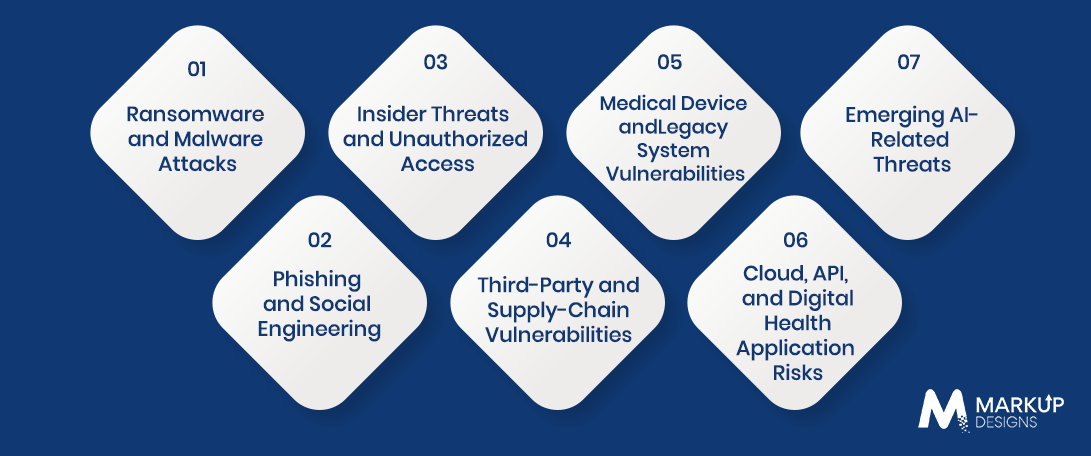
Healthcare organizations rely on connected systems to manage patient records, payments, and online consultations. However, these systems can expose sensitive information to cyber threats.
Ransomware and Malware Attacks
Ransomware may cause locking of critical files, whereas malware attacks may involve stealing, damaging data or disrupting operations within the hospital.
Phishing and Social Engineering
Spoofed emails, instant messages, or login screens may convince staff members to provide access credentials or download dangerous files.
Insider Threats and Unauthorized Access
Insiders may unintentionally compromise the personal information of patients or abuse their access rights.
Third-Party and Supply-Chain Vulnerabilities
Vendors with poor security controls may become a threat to a healthcare organization’s information assets and connected systems.
Medical Device and Legacy System Vulnerabilities
Legacy software and connected devices used in hospitals may be vulnerable to various attacks due to outdated software components.
Cloud, API, and Digital Health Application Risks
Poor authentication, insecure integrations and cloud misconfigurations may lead to exposure of patient information.
Emerging AI-Related Threats
Hackers may use AI technologies for phishing purposes or misuse poorly configured AI-based technologies.
Healthcare organizations need to understand these threats and adopt a layered security approach that protects people, applications, devices, and data.
How to Protect Patient Data and Digital Health Platforms
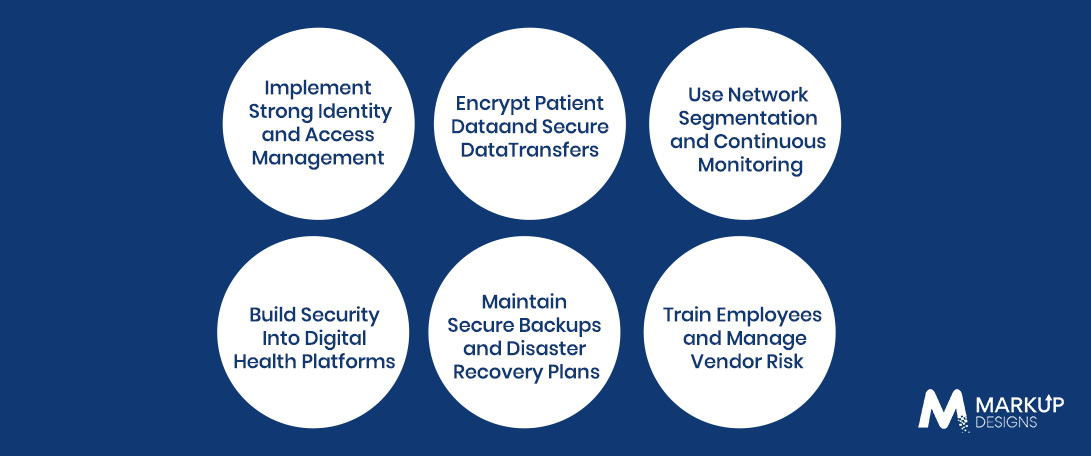
Patient data protection cannot be achieved through one security measure alone. It is important that healthcare organizations make use of various security measures and tools such that even when their system is being used in a hospital network, telehealth application, or a patient portal, their aim will still be to minimize security risks while maintaining high-quality care for their patients. There are some practical ways to strengthen healthcare cybersecurity.
Implement Strong Identity and Access Management
Grant access based on job functions and apply multi-factor authentication (MFA) to stop any unauthorized access to the records of patients.
Encrypt Patient Data and Secure Data Transfers
Protect the data of the patients by encrypting it in both states – while being in storage and during transfer. Properly manage keys and develop data storage and transfer policy.
Use Network Segmentation and Continuous Monitoring
Use a network segmentation strategy for isolating critical systems and medical devices. Also monitor your environment for unusual login attempts, data transfers, etc.
Build Security Into Digital Health Platforms
Adhere to secure coding standards, test APIs, patch all identified vulnerabilities, and implement proper cloud security controls.
Maintain Secure Backups and Disaster Recovery Plans
Store secure backups to protect your system against ransomware attacks, accidental deletion, or system crashes.
Train Employees and Manage Vendor Risk
Educate staff members about phishing attacks and encourage reporting of any suspicious behavior. Evaluate vendors’ security, restrict vendor access, and identify their responsibilities regarding data protection.
By combining these measures, healthcare organizations can reduce their exposure to cyber threats and create a safer environment for patients and healthcare professionals.
How Can Healthcare Organizations Respond to a Cybersecurity Incident?
All healthcare providers are not able to prevent all cyberattacks; hence the need to have an incident response plan. This will minimize the impact caused by such incidents.
- Identify and Contain the Incident
Detect the suspicious activity, identify the affected systems, and if necessary, quarantine the affected devices and networks. Maintain logs and other evidential material for analysis.
- Protect Patient Care during Recovery
Maintain patient safety using the defined processes in case of downtime of the information technology infrastructure.
- Restore Systems and Investigate the Cause
Understand how the incident took place and any underlying issues. Recover using reliable backups while confirming their integrity.
- Notify Stakeholders and Improve Security
Inform the relevant parties and the authorities as per the regulations and the organization’s contractual obligations. Analyze the incident and enhance security controls.
A well-tested response plan helps healthcare organizations manage incidents effectively, reduce operational disruption, and protect both patients and digital systems.
What Role Does Compliance Play in Healthcare Cybersecurity?
Healthcare facilities have the obligation of safeguarding confidential patient information, which calls for adherence to pertinent data protection and security regulations. The compliance framework provides directives for handling patient access rights, risk assessment, and data breaches. Nonetheless, regulatory compliance is not enough to stop all cyber-attacks on its own.
Key regulatory frameworks include:
- HIPAA and HITECH (United States): Set out requirements for certain patient information protection, as well as security and data breach notification.
- GDPR (European Union): Controls personal data processing, including health data, within its purview.
- Data Protection Framework in India: Healthcare facilities ought to consider the requirements of the Digital Personal Data Protection Act, 2023, rules, commencement, among other regulations.
In order to ensure compliance, it is recommended that healthcare organizations have security policies in writing, access control reviews, risk assessments, training for employees, and contingency plans in place.
Looking at compliance as a never-ending process would enable healthcare organizations to adapt to changing risks, improve security, and secure the safety of their patients’ data.
How to Build a Healthcare Cybersecurity Strategy: A Step-by-Step Approach
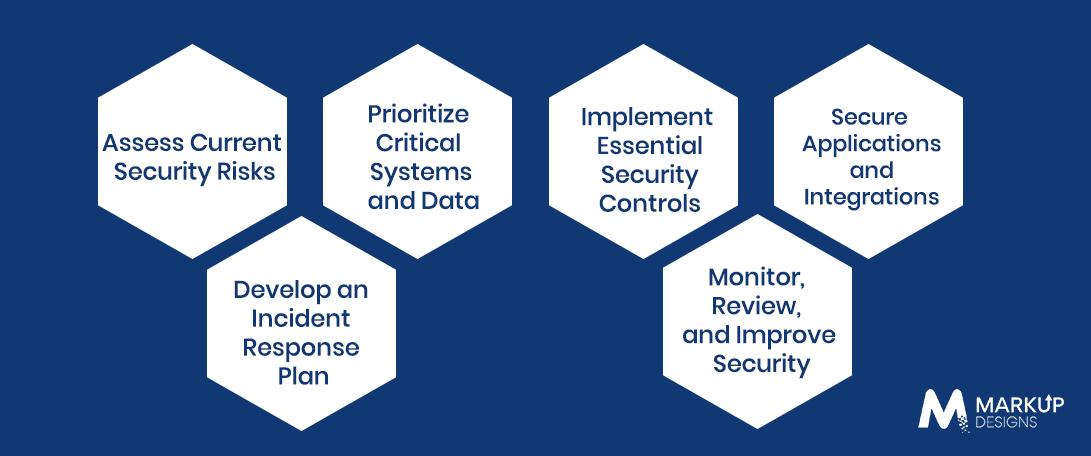
Building a healthcare cybersecurity strategy involves the development of a plan that ensures risk identification, the protection of sensitive information, and the delivery of reliable services.
Assess Current Security Risks
Determine important systems, information about patients, existing controls, and possible vulnerabilities.
Prioritize Critical Systems and Data
Consider platforms vital for the provision of care and sensitive information.
Implement Essential Security Controls
Utilize two-factor authentication, encryption, control of access, updates, and backups.
Secure Applications and Integrations
Test healthcare platforms, APIs, cloud environments, and third-party integrations for vulnerabilities.
Develop an Incident Response Plan
Establish response, containment, and recovery plans.
Monitor, Review, and Improve Security
Check alerts, identify risks, and improve security.
Following these steps helps healthcare organizations build a proactive cybersecurity strategy that protects patient information, supports clinical operations, and strengthens digital resilience. Regular assessments and continuous improvements are essential for maintaining effective protection over time.
How Can the Right Technology Partner Help Strengthen Healthcare Cybersecurity?
Development of a secure healthcare platform not only calls for technological prowess but also calls for a partner that appreciates the significance of confidentiality, reliability, and secure data handling. This partner will be able to recognize security threats and develop the protection measures within the system.
Here are some important factors to consider when choosing a healthcare technology partner.
1. Experience in the Development of Healthcare Platforms
Select a partner who has experience in the development of applications, patient portals, telemedicine platforms, or hospital management systems.
2. Security-Oriented Development Practices
The development process should take into account security issues, such as secure programming practices, vulnerability assessment, API testing, etc.
3. Knowledge of Data Protection Requirements
A competent partner will have an understanding of the relevant requirements and implement appropriate access control measures, encryption, audit trails, and other data protection measures.
4. Continuous Maintenance and Support
Updates, patching, vulnerability monitoring, and support are critical for the maintenance of the healthcare platform’s security.
5. Clear Communication and Accountability
Responsibilities in respect of security management, vulnerability management, support, access control, and maintenance should be clearly defined in order to work together effectively.
Technology partners can assist healthcare organizations in the creation of more secure platforms, yet it does not make security their sole responsibility. It is still necessary to manage access, educate staff, monitor risks, and enforce a sound security policy.
Healthcare Cybersecurity Checklist for Organizations
A healthcare organization could easily create a checklist of its existing security procedures and pinpoint the areas for further development. Although different organizations would have varying demands, some of the points listed below would serve as a good base for that.
- Keep an inventory of patients’ data, apps, devices, and important systems.
- Implement multifactor authentication and role-based access control as appropriate.
- Encrypt sensitive information in storage and transit.
- Patch known security issues and vulnerabilities quickly.
- Protect cloud infrastructure, APIs, patient portals, and third-party integrations.
- Identify and log suspicious activities and maintain proper auditing.
- Make backups of important information and test them periodically.
- Train employees about phishing and security breach reporting.
- Evaluate vendor security policies and reduce third-party access to the bare minimum.
- Develop and practice incident response and clinical downtime plans.
- Analyze legal compliance requirements and data protection regulations.
- Review cybersecurity risks periodically and revise controls accordingly.
Organizations should treat this checklist as an ongoing review rather than a one-time exercise. Regular assessments help teams identify gaps, prioritize improvements, and keep security practices aligned with changing operational needs.
Planning to Develop or Upgrade a Healthcare Platform?
Markup Designs helps organizations build digital solutions with a focus on security, reliability, and scalability. Whether you are developing a healthcare application or modernizing an existing platform, a security-conscious development approach can help address risks from the start.

Conclusion
The importance of cybersecurity in the healthcare sector lies in securing the confidential data of patients, facilitating operations in clinics and hospitals, and building trust in online healthcare services. In the process of implementing technology solutions, healthcare organizations should be prepared to tackle the following threats: ransomware, phishing attacks, and vulnerabilities in the medical devices used.
Continuous cybersecurity demands constant monitoring, risk assessment, and improvements. Through effective cybersecurity measures and a solid technology strategy, the organization will be able to provide protection for the confidential data of patients, build up reliable digital services, and offer a safe working environment for healthcare workers and patients.
FAQs
1. What is cybersecurity in healthcare?
Cybersecurity in healthcare protects patient data, medical devices, applications, and digital systems from cyberattacks, unauthorized access, and data breaches through security tools, policies, and employee training.
2. Why is cybersecurity important in healthcare?
It protects patient privacy, maintains accurate medical records, prevents service disruptions, reduces financial losses, and supports compliance with applicable data protection requirements.
3. What are the most common healthcare cybersecurity threats?
Common threats include ransomware, malware, phishing, stolen credentials, insider misuse, third-party vulnerabilities, insecure cloud configurations, and medical device weaknesses.
4. How can hospitals protect electronic health records?
Hospitals can use multi-factor authentication, access controls, encryption, regular updates, continuous monitoring, secure backups, employee training, and incident response plans.
5. How can telehealth platforms and healthcare apps be secured?
They can be secured through strong authentication, encrypted communications, protected APIs, secure cloud configurations, vulnerability testing, and regular software updates.
Author's Perspective
Healthcare cybersecurity is essential for safe and reliable digital healthcare. Protecting patient data requires more than security software; it involves people, processes, applications, and connected devices working together. Organizations should identify sensitive data, prioritize critical systems, strengthen access controls, monitor threats, and test recovery plans. While no system is completely risk-free, regular security assessments, clear responsibilities, and proactive improvements help healthcare providers reduce risks, protect patient privacy, maintain reliable services, and build lasting patient trust.
Discuss Your Project NowJupinder Singh Arora
Founder and CEO
Related Posts
Metaverse in Healthcare Industry: How Immersive Technologies Are...
AI in Telemedicine: 11 Use Cases, Benefits &...
Healthcare Data Security: Challenges, Best Practices & Compliance...
Insights Are Valuable & Execution is Priceless
You’ve read about the digital future. Now, let’s build the infrastructure to take you there. Move your strategy from the page to the product.
Design Your Solution Now
Contact Us
Schedule The Appointment At Your Convenience Date And Time.
30 Min
Web Conference
Time Zone
Indian standard time (08:30pm)

Thanks For Getting In Touch!
You’ve Taken The First Step Toward Transforming Your Digital Presence. Our Experts Will Reach Out Shortly To Take It Forward.
Launch Your Dream Project
Provide a brief overview of your project, and our specialists will evaluate your requirements. We will connect with you to explore how the right digital solutions can help you launch faster.