
Logistics Software Development in Oman: Features, Use Cases & Cost
In Brief
- Oman is emerging as a major logistics hub in the Middle East, supported by Vision 2040 and strong investments in ports, transport, and trade infrastructure.
- The logistics sector is growing rapidly but facing operational complexity due to higher shipment volumes and multi-channel supply chains.
- Manual processes and disconnected systems are no longer sufficient, creating a strong need for digital transformation in logistics.
- Logistics software development focuses on building systems that manage tracking, transportation, warehousing, inventory, and order processing in one platform.
- Key types of logistics software include transportation management systems, warehouse management systems, fleet management tools, and supply chain management systems.
- Common use cases in Oman include freight management, last-mile delivery optimization, fleet tracking, warehouse automation, cold chain logistics, and port operations.
- Future logistics trends in Oman include AI-driven analytics, IoT tracking, blockchain adoption, autonomous delivery systems, and a stronger focus on sustainability.
Oman is quickly becoming an important logistics hub in the Middle East. With its strong port network, growing trade routes, and government support under Vision 2040, the logistics sector is expanding at a steady pace.
But as the industry grows, operations are also becoming more complex. Managing deliveries, tracking shipments, handling warehouses, and coordinating fleets is no longer easy to manage with manual methods. Businesses now need smarter and more connected systems to keep everything running smoothly.
This is where logistics software development is making a real difference. Companies are now moving away from generic tools and investing in custom logistics software that fits their exact business needs. Whether it’s real-time tracking, route planning, or warehouse automation, tailored solutions help improve efficiency and reduce errors.
In this blog, we’ll break down how logistics software is being used in Oman, key use cases across the industry, and what it actually costs to build a solution that supports long-term growth.
Understanding the Logistics Industry in Oman
Oman’s logistics industry is not just growing, it’s becoming a core part of the country’s economic future.
Driven by Vision 2040, the government has positioned logistics as a key sector to reduce dependence on oil and build a diversified economy. The goal is bold and future-focused: the logistics sector is expected to contribute up to 14% of GDP by 2040 and generate around 300,000 jobs.
Today, the sector is already showing strong momentum. In 2021 alone, Oman’s transport and storage sector contributed around $4 billion to the economy, with steady year-on-year growth. At the same time, the country is investing heavily in ports, airports, road networks, and free zones to strengthen its position as a global logistics hub.
What makes Oman strategically important is its location. Positioned between Asia, Africa, and the Middle East, it acts as a gateway for international trade. A large portion of goods moves through sea routes (over 65%), supported by growing land and air logistics networks.
However, while infrastructure is improving, operations on the ground are becoming increasingly complex.
Logistics companies are now handling
- Higher shipment volumes
- Faster delivery expectations
- Multi-channel supply chains (sea, land, air)
- Growing demand for cold chain and last-mile delivery
This is where the gap begins to show.
Many businesses still rely on disconnected systems or manual processes, making it difficult to manage operations efficiently at scale. As the industry expands, the need for integrated and intelligent logistics software solutions in Oman is becoming more critical than ever.
To stay competitive, companies are not just investing in infrastructure but also in technology that can bring visibility, automation, and control across their entire logistics ecosystem.
What is Logistics Software Development?
Logistics software development refers to the process of designing and building digital systems that help businesses manage, automate, and optimize their logistics operations. Instead of relying on manual methods or disconnected tools, companies use software to bring everything from transportation to warehousing-into one unified system.
At its core, logistics software is built to handle key operations such as shipment tracking, fleet management, route planning, inventory control, and order processing.
These systems provide real-time visibility, allowing businesses to monitor every stage of the supply chain and make faster, data-driven decisions.
A major advantage of modern logistics software is automation. With the rise of logistics automation solutions, businesses can reduce manual effort and minimize errors. Tasks like route optimization, dispatch planning, inventory updates, and delivery notifications can be automated, saving time and improving accuracy.
As logistics operations in Oman continue to grow in scale and complexity, software development is no longer just a support function, it has become a critical investment.
Types of Logistics Software
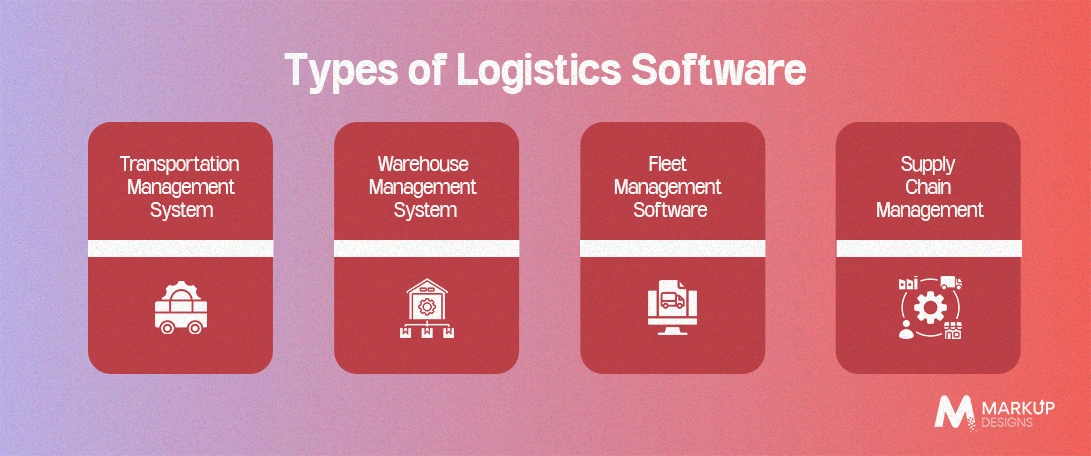
- Transportation Management System : Helps plan, manage, and optimize the movement of goods from one place to another.
- Warehouse Management System: Manages inventory, storage, and order processing inside warehouses.
- Fleet Management Software: Tracks vehicles, monitors drivers, and improves route efficiency.
- Supply Chain Management: Connects suppliers, logistics, and delivery processes for smoother operations.
Key Features of Modern Logistics Software
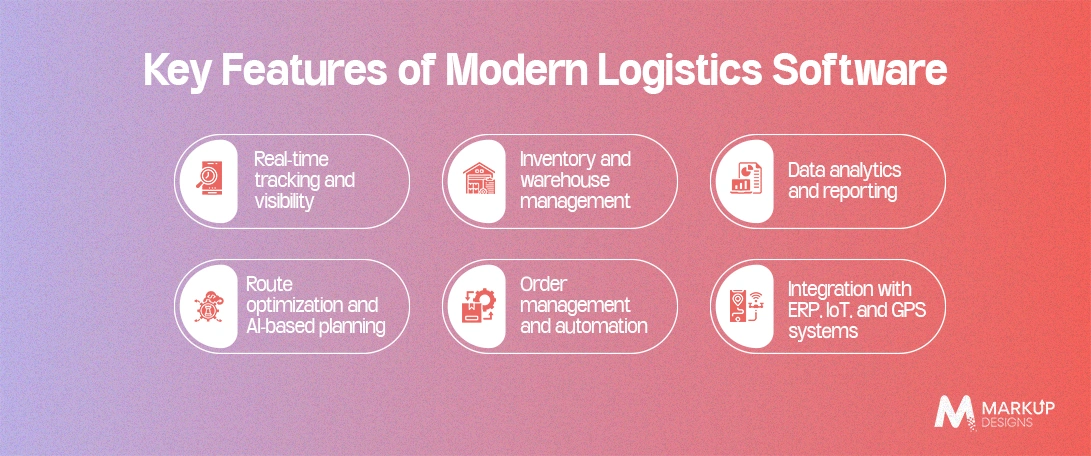
Modern logistics software comes with powerful features that help businesses manage operations better, reduce errors, and improve overall efficiency.
1. Real-time tracking and visibility
Businesses can track shipments, vehicles, and deliveries in real time. This helps reduce delays, improve customer communication, and gives complete visibility across the supply chain.
2. Route optimization and AI-based planning
Smart algorithms suggest the best delivery routes based on traffic, distance, and delivery priorities. This saves fuel, reduces delivery time, and improves overall efficiency.
3. Inventory and warehouse management
With advanced warehouse management software, companies can track stock levels, manage storage, and avoid overstocking or stockouts. It keeps warehouse operations smooth and organized.
4. Order management and automation
Orders can be processed automatically from start to finish. From order entry to dispatch and delivery updates, automation reduces manual work and minimizes errors.
5. Data analytics and reporting
Logistics software provides detailed insights into operations. Businesses can track performance, identify delays, and make better decisions using real-time data and reports.
6. Integration with ERP, IoT, and GPS systems
Modern systems easily connect with other tools like ERP software, IoT devices, and GPS tracking. This creates a connected ecosystem, especially useful in supply chain software development, where multiple systems need to work together seamlessly.
Top Use Cases of Logistics Software in Oman
Logistics operations in Oman are becoming more complex as trade grows, delivery expectations rise, and businesses scale across multiple regions. To handle this shift, companies are actively adopting digital systems that improve control, speed, and accuracy. Here are some of the real-world use cases.
Freight & Cargo Management
Logistics software helps companies manage large-scale freight movement across sea, air, and land. It simplifies booking, documentation, shipment tracking, and coordination between multiple stakeholders. This reduces delays and improves transparency across the entire cargo process.
Last-Mile Delivery Optimization
The final stage of delivery is often the most challenging. Software helps optimize routes, assign drivers efficiently, and provide real-time updates to customers. This improves delivery speed and customer satisfaction, especially in growing urban areas of Oman.
Fleet Tracking and Maintenance
With the help of fleet management software, businesses can monitor vehicle location, fuel usage, driver behavior, and maintenance schedules. This ensures better vehicle performance, lower operational costs, and fewer breakdowns during deliveries.
Warehouse Automation
Warehouses are becoming smarter with digital systems that inventory management operations, track stock movement, and automate order picking. This reduces manual errors and improves storage efficiency, especially for fast-moving goods.
Cold Chain Logistics
Temperature-sensitive goods like food and pharmaceuticals require strict monitoring. Logistics software ensures proper temperature tracking, alerts, and compliance throughout transportation and storage, reducing product loss and maintaining quality.
Port and Shipping Operations Management
Oman’s strong port infrastructure plays a key role in trade. Software helps manage container handling, scheduling, customs documentation, and shipping coordination, making port operations smoother and faster.
Across all these use cases, businesses are increasingly investing in logistics automation solutions to reduce manual work, improve efficiency, and build more scalable logistics networks.
Benefits of Logistics Software for Omani Businesses
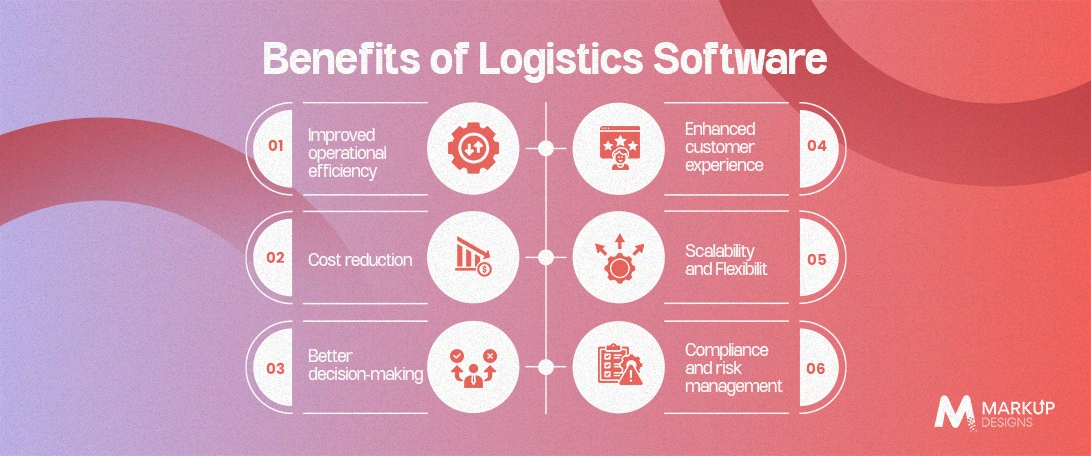
As businesses in Oman continue to modernize their operations, many are first evaluating the cost of logistics software development in Oman to understand the investment needed before moving toward digital transformation. Once implemented, the impact of logistics software becomes clearly visible across all areas of operations.
Improved operational efficiency
Logistics software helps streamline daily operations like dispatching, tracking, and inventory handling. Instead of relying on manual coordination, everything becomes more organized and faster, reducing delays and confusion.
Cost reduction
By optimizing routes, reducing fuel consumption, and minimizing manual errors, businesses can significantly lower operational costs. Over time, this leads to better profit margins and more efficient resource use.
Better decision-making
Real-time dashboards and reports give businesses a clear view of performance. From delivery delays to warehouse efficiency, data helps managers make smarter and faster decisions.
Enhanced customer experience
Customers today expect quick deliveries and real-time updates. Logistics software improves transparency, tracking, and communication, which leads to higher customer satisfaction and trust.
Scalability and Flexibility
As businesses grow, operations become more complex. Logistics software allows companies to scale smoothly without major disruptions, making it easier to handle higher order volumes and expand into new regions.
Compliance and risk management
In industries like logistics, compliance is critical. Software helps maintain proper documentation, track shipments, and reduce risks related to delays, losses, or regulatory issues.
Overall, digital transformation is becoming a necessity rather than a choice. Companies investing in supply chain software development in Oman are building stronger, more connected systems that support long-term efficiency, scalability, and sustainable business growth.
Logistics Software Development Cost in Oman
When businesses start exploring the cost of software development in Oman, one of the most important thing they realize is that there is no fixed price. It completely depends on what you want to build, how advanced the system is, and the features you need. In the case of logistics app development in Oman, costs can vary from a basic tracking system to a full enterprise-level platform.
Key factors affecting the cost
- Features and complexity: More features like real-time tracking, automation, and analytics increase cost
- Technology stack: Advanced tech like AI, IoT, and cloud systems can raise development effort
- UI/UX design: Simple design costs less, while custom and detailed UI increases budget
- Integration requirements: Connecting ERP, GPS, or warehouse systems adds extra development work
- Development team location: Cost varies based on whether the team is local or offshore
Rough cost breakdown
| Type of Solution | Estimated Cost Range | Outcome |
| MVP Version | USD 8,000 – USD 20,000 | Helps businesses start with basic shipment tracking, order management, and faster daily coordination. |
| Mid-Level System | USD 20,000 – USD 50,000 | Improves fleet handling, warehouse operations, and reduces manual work through automation. |
| Full-Scale Platform | USD 50,000 – USD 120,000+ | Delivers complete logistics automation, real-time visibility, AI-based planning, and long-term scalability. |
Ongoing costs
Even after development, businesses need to plan for:
- Regular maintenance
- System upgrades
- Cloud hosting
- Feature improvements
In most cases, companies realize that investing in a good system upfront saves more money in the long run by reducing delays, errors, and manual work.
Future Trends in Logistics Technology in Oman
Logistics in Oman is slowly moving towards smarter and more connected systems. In the coming years, technology will play a much bigger role in how goods are moved and managed.
AI and predictive analytics
Businesses will use AI-powered automation to predict delays, demand, and better delivery planning.
IoT-enabled logistics
Sensors will help track goods, temperature, and vehicle conditions in real time.
Blockchain in supply chain
It will improve transparency and reduce fraud in shipments and documentation.
Autonomous delivery and smart fleets
Self-driving tech and smarter vehicles will improve delivery speed and efficiency, especially with advanced fleet management software solutions.
Sustainability and green logistics
Companies will focus more on reducing fuel usage and carbon emissions.
Reasons Your Business Needs an Expert Logistics Software Development Partner
Working with the right development partner makes a big difference in results, ensuring better system performance, faster delivery, scalable solutions, reduced development risks, and long-term operational efficiency for your logistics business.
Tailored solutions vs generic tools
Custom-built systems work better than ready-made tools because they fit your exact requirement, like custom logistics software Oman.
Faster deployment and reduced risks
Experienced teams build and launch systems more smoothly without errors.
Access to latest technologies
You get modern tools like AI, automation, and real-time tracking built into your system.
Long-term scalability and support
Your software grows with your business without needing a full rebuild.
Why Markup Designs is the Right Logistics Software Development Partner
Choosing the right development partner for logistics software is not just about coding a system. It’s about finding a team that understands your business, your challenges, and how operations actually run on the ground in Oman.
We focus on building practical and scalable solutions that match real logistics needs, especially for growing businesses working with a transportation management system in Oman
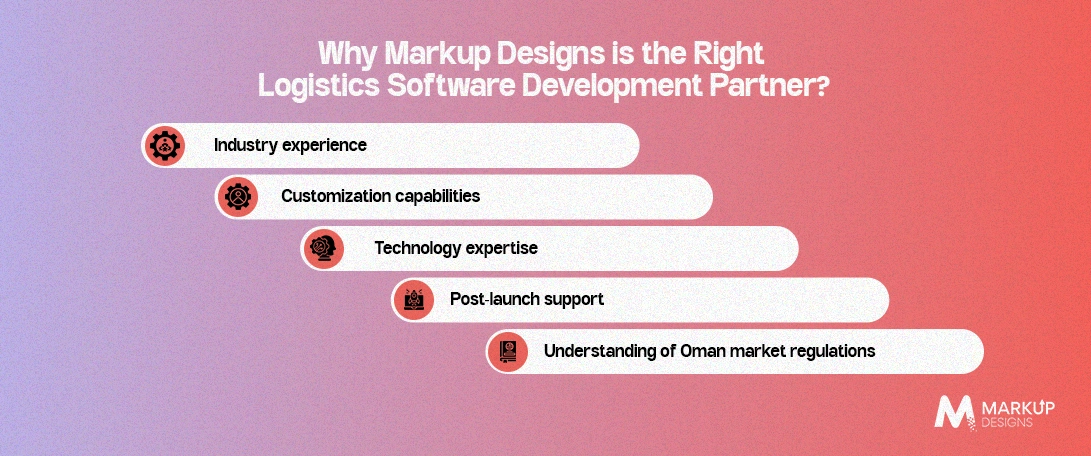
Industry experience
We understand how logistics companies operate from fleet movement to warehouse coordination. This helps us build systems that actually solve daily problems, not just look good on paper.
Customization capabilities
Every logistics business is different. That’s why we don’t offer one-size-fits-all tools. We build fully custom solutions based on your workflows and operations.
Technology expertise
From real-time tracking to automation and integrations, we use modern technologies that make your system faster, smarter, and more reliable.
Post-launch support
Our work doesn’t end after delivery. We provide ongoing support, updates, and improvements so your system keeps performing as your business grows.
Understanding of Oman market regulations
We design solutions that align with local compliance needs, logistics standards, and operational requirements in Oman, making sure your system is ready for real-world use.
Conclusion
Logistics in Oman is changing quickly, and businesses can no longer depend on manual systems. Whether it’s tracking shipments, managing warehouses, or planning deliveries, everything needs to be faster and more connected.
That’s where logistics software development plays an important role. It helps companies stay organized, reduce costs, and improve daily operations in a simple way.
From small businesses to large enterprises, the shift towards digital systems is already happening. Many are now adopting modern warehouse management system, tools and smarter logistics platforms to stay ahead.
In the end, it’s not just about software, it’s about making your entire logistics process smoother and more reliable. If you’re still relying on old systems, this is the right time to move towards better logistics software solutions in Oman and build something that actually supports your growth.
FAQs
1. What is the cost of logistics software development in Oman?
The cost depends on features, complexity, and scale. Basic systems are cheaper, while advanced solutions with automation cost more overall.
2. How long does it take to build logistics software?
It usually takes around 2 to 6 months depending on features, design requirements, integrations, and level of customization needed.
3. What features are essential for logistics software?
Core features include real-time tracking, inventory management, automation, reporting tools, and smooth communication across logistics operations.
4. Is custom logistics software better than ready-made solutions?
Yes, custom software fits your exact business needs, improves efficiency, and scales easily compared to fixed-feature ready-made tools.
5. Can logistics software integrate with existing systems?
Yes, modern logistics software can easily integrate with ERP, GPS, warehouse systems, and other business tools for better workflow.
Author's Perspective
From my experience, logistics businesses in Oman often focus too much on the initial development cost and overlook long-term value. But in reality, logistics software is not just a tool-it becomes the backbone of daily operations. If it is not built properly, issues like delays, tracking errors, and system limitations start showing very quickly. A well-planned solution always saves more time, money, and effort in the long run.
Discuss Your Project NowGaurav Goyal
Global Sales- VP
Related Posts

How to Build Production-Ready Applications with AI Coding...

Case Management Software Development: Enterprise Features & Implementation...

Farm Management Software Development in Australia: Features, AI...
Insights Are Valuable & Execution is Priceless
You’ve read about the digital future. Now, let’s build the infrastructure to take you there. Move your strategy from the page to the product.
Design Your Solution Now
Contact Us
Schedule The Appointment At Your Convenience Date And Time.
30 Min
Web Conference
Time Zone
Indian standard time (08:30pm)

Thanks For Getting In Touch!
You’ve Taken The First Step Toward Transforming Your Digital Presence. Our Experts Will Reach Out Shortly To Take It Forward.
Launch Your Dream Project
Provide a brief overview of your project, and our specialists will evaluate your requirements. We will connect with you to explore how the right digital solutions can help you launch faster.