

In Brief:
- React Native and Swift are two of the top choices for mobile app development. However, the technology you choose must depend on the objectives of your business, its target market, budget, and app requirements.
- React Native allows faster and cheaper development since it provides the opportunity to develop both Android and iOS apps through the same codebase. This makes React Native perfect for cross-platform apps.
- Swift is the native programming language for iOS devices that offers great performance, high integration with Apple features, higher security, and a smooth user experience.
- React Native is best suited for startups and for those who want to release their application faster. Swift, on the other hand, is used when high performance and rich functionality of the app are important.
- Using the right technology and collaborating with a professional mobile app development company will help businesses create scalable and future-proof mobile solutions.
Selecting the right technology for your mobile application development is one of the most crucial steps in the entire process. The chosen framework will determine the performance, speed of development, user experience, maintainability, and costs associated with developing the app. In today’s world of technologies where there is a multitude of tools that can be utilized for mobile app development, React Native and Swift are two of the most frequently used by companies that plan to release top-notch mobile apps.
Whereas React Native allows developers to build an application for both platforms – Android and iOS with the same source code, Swift is Apple’s programming language created specifically for high-performance iOS apps. Depending on the objectives of your business, each of the technologies will have its advantages and drawbacks.
In this blog post, we will provide you with an insight into the comparison between React Native vs Swift based on different factors like performance, development speed, costs, scalability, and use cases.
Understanding React Native
React Native is an open-source framework used for the development of mobile applications that can run on both Android and iOS. It is developed by Meta and enables developers to develop a single application that can be deployed on several different platforms. There is no need to develop two separate applications, as a result of which time as well as the cost of development becomes less.
This framework uses a combination of JavaScript as well as native components in order to provide applications with almost native performance. Some features which make this framework highly preferred among both startups as well as enterprise organizations include Hot Reload, reusability of code, and a huge number of available libraries.
Many popular brands have been using React Native for the development of feature-rich mobile applications.
Understanding Swift
Swift is a modern language used to create native apps on platforms like iOS, iPadOS, macOS, watchOS, and tvOS. It is created to ensure high speed, high performance, and a great user experience when working with Apple’s native frameworks.
As Swift is a native language, the developers have full access to all functions of iPhone and iPad, including the camera, GPS, Face ID, Apple Pay, ARKit, and Core ML. This makes Swift a perfect solution for the development of apps that have high requirements for performance and animation.
Swift is very popular among businesses creating iOS-only apps due to its fast performance, stability, and long-term compatibility with Apple. If the target users of your app mostly use Apple products, Swift will be a perfect choice.
React Native vs Swift: Key Differences
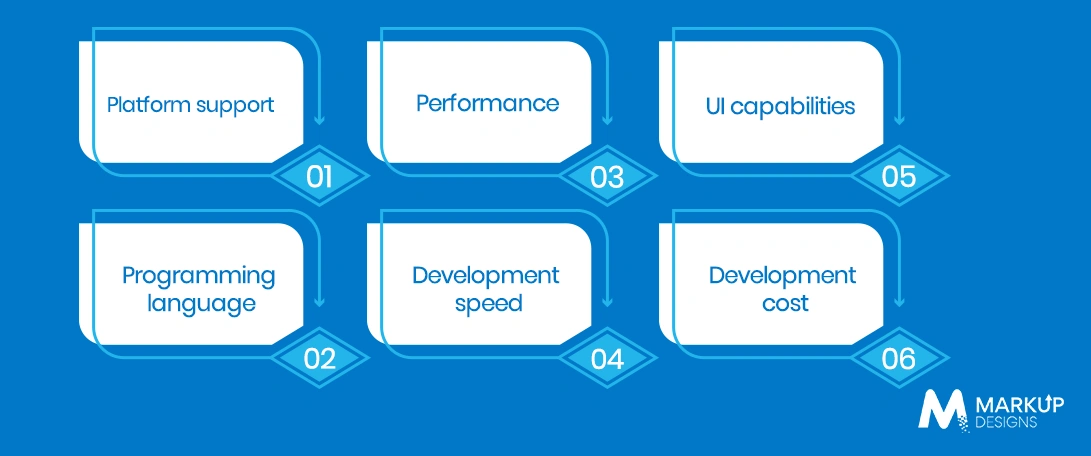
Choosing between React Native and Swift depends on your business objectives, audience, budget, and product strategy. Although these two technologies can be used to create good mobile apps, they differ in several important areas.
Platform Support
Using React Native enables developers to create applications for both Android and iOS platforms with one coding base, which makes it suitable for companies that intend to cover more than one platform. However, Swift can only be used to create native applications for Apple devices, such as iOS, iPadOS, watchOS, and macOS.
Programming Language
React Native is mostly written in JavaScript and the React programming language. Therefore, it is easy for web developers to adapt to mobile application development by using React Native. Swift is the native language that is used by Apple.
Performance
Swift offers excellent performance because it compiles natively into machine code and interacts directly with iOS hardware without any mediation. React Native offers great performance in most of the business application cases, except for those applications that require high graphic computations.
Development Speed
React Native offers faster development because developers can share the code among multiple platforms and therefore save on coding and testing efforts. With Swift, the business would have to separately develop for iOS and would require extra development time.
UI Capabilities
The iOS experience is made seamless because Swift gives full control of the native UI elements, animations, and other system capabilities. The React Native framework also creates appealing UI interfaces; however, at times it might need native modules to create advanced features exclusive to iOS.
Development Cost
As far as startups and companies with limited budgets are concerned, the React Native framework is usually the cheaper option since one team can develop applications for both platforms. On the other hand, Swift development usually costs more when the app needs to be developed for Android as well.
Performance Comparison: React Native vs Swift
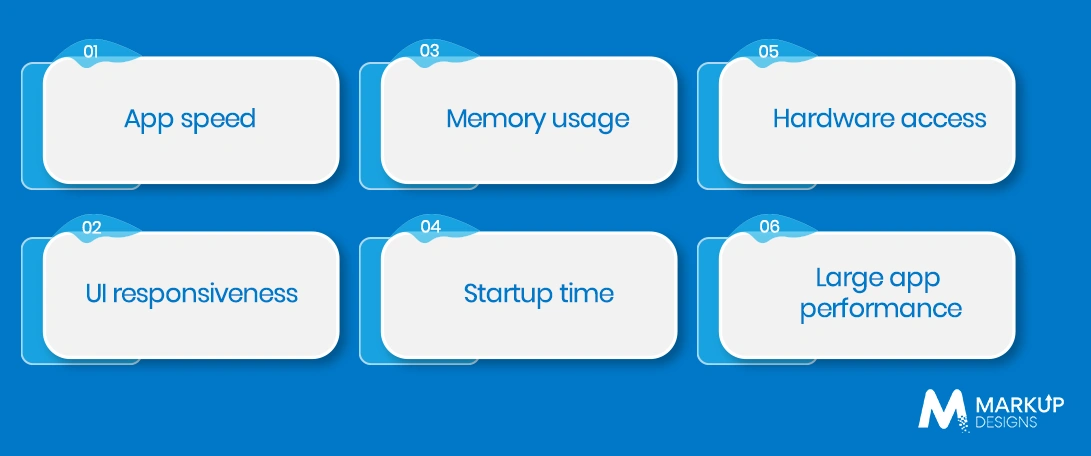
Performance remains one of the key elements when deciding between React Native and Swift, although both options allow you to build high-quality applications that provide a good user experience depending on their complexity and business needs.
1. App Speed
The advantage of Swift lies in its fast execution due to its compilation to machine code. React Native works well with any business application, but its performance may be slowed down by the communication between JavaScript and native code.
2. Ui Responsiveness
The UI responsiveness of Swift is very high due to its animation and transition capability, and therefore suitable for applications which demand a premium user experience. The UI responsiveness of React Native is also good; however, more complex animations might need some tuning.
3. Memory Usage
Native Swift applications are known to use less memory and better manage system resources. On the other hand, React Native applications are expected to use more memory than native applications.
4. Startup Time
Since Swift runs natively on the iOS operating system, applications written using Swift will start quickly. React Native apps may have a slightly longer startup time, especially as the application grows in size.
5. Hardware Access
The Swift programming language supports hardware features directly. This means that developers have access to hardware features provided by Apple, including Face ID, LiDAR, ARKit, Apple Pay, and camera features. React Native can also be used with these features, although it may be through third-party libraries or native modules.
6. Large App Performance
When it comes to apps with heavy processing, graphic processing, or real-time features, the Swift programming language is more suitable due to its native nature. React Native is still a good choice for other business-oriented applications where speed of development is a priority over performance.
Development Speed and Time-to-Market
When businesses want to get their mobile product launched quickly, the development speed becomes very important. React Native offers a great advantage, as developers can create Android and iOS applications at the same time through one codebase only. Therefore, companies will be able to save time on coding, testing, and maintenance and launch their product quicker while spending fewer development resources.
Swift, however, focuses solely on iOS development. It helps developers create iOS products that are optimized and have plenty of useful features, but the company will need separate development teams if it needs to launch its application on Android and iOS.
When quick launch and low development effort are your priorities for multiple platforms, React Native seems to be more effective. If you are developing an iOS application only, Swift is a great choice for you.
Ready to Build the Right Mobile App?
Whether you’re planning a cross-platform app with React Native or a high-performance Swift application for iOS, choosing the right technology is the foundation of a successful product.

Cost Comparison: React Native vs Swift
Development cost is one of the major elements to consider when choosing the technology for your mobile app. There are several aspects that will influence the final price of development, which include project complexity, functionality, team size, maintenance, and the number of platforms that you will target.
In the case of React Native, it usually proves to be more affordable when it comes to developing applications that will operate on Android and iOS. In the case of developers dealing with only one codebase, the process of development, testing, and maintenance takes less time and effort.
But Swift is great for creating native apps for iOS. Even though it performs very well and provides an excellent user experience, businesses trying to target both Android and iOS platforms should consider having two different development projects for each operating system, which means higher development and maintenance expenses.
Ultimately, if your business focuses exclusively on Apple users, then you would benefit more from Swift in the long term. But if your business needs to address various platforms in a cost-effective way, then React Native is your choice.
| Factor | React Native | Swift |
| Initial Development Cost | Lower | Higher |
| Codebase | Single for Android & iOS | iOS only |
| Team Requirement | One cross-platform team | Separate teams for Android & iOS |
| Development Time | Faster | Longer for multi-platform apps |
| Maintenance Cost | Lower | Higher for multiple platforms |
| Best For | Cross-platform applications | Native iOS applications |
There is no single answer to the cost comparison question. Your choice will depend on your target market, business goals, budget, and overall product strategy.
When to Choose React Native
React Native is an ideal option for companies that wish to develop quality mobile applications for both Android and iOS systems without creating separate development projects. This is due to its cross-platform nature, which contributes to saving development time and optimizing costs.
You should consider React Native if:
1. You Want to Release an App on Several Platforms
If the target audience uses both Android and iPhones, React Native allows creating a universal application that can be used on both platforms.
2. You Have a Limited Budget
React Native provides a convenient and affordable solution for startups and growing businesses wishing to create and maintain applications.
3. Faster Time-to-Market is Important
Using a shared codebase enables quicker development, testing, and deployment, helping businesses release their products sooner and respond to market demands faster.
4. Your Application Has Standard Business Functions
E-commerce apps, healthcare apps, learning apps, financial technology apps, travel apps, social media apps, and enterprise apps can function excellently in the React Native environment.
5. Easy Maintenance is a Priority
The fact that React Native and native apps have almost identical coding means that updates, bug fixes, and improvements will take less time to implement in the future, and therefore maintenance work will be much easier.
6. You Plan to Scale Gradually
The flexibility of React Native means that you can deploy the MVP version fast and constantly roll out new features to your app.
When to Choose Swift
For companies that seek to develop advanced applications for the Apple ecosystem only, Swift is the best option available. It will ensure the fastest speed, safety, and excellent integration with iOS devices since Swift is the native programming language of Apple Inc.
You should consider Swift if:
1. Your App is Only for iOS Users
If you have iOS users as your target audience, Swift will give you the ability to create an app that will leverage the entire Apple ecosystem and give users maximum satisfaction.
2. Maximum Performance is Essential
For applications that perform processing, data in real time, games, video editing, and animations, Swift’s native performance will be a good choice.
3. You Need Advanced Apple Features
Swift provides developers access to advanced iOS technologies like Face ID, Touch ID, Apple Pay, Siri, ARKit, Core ML, HealthKit, and advanced camera capabilities without using third-party solutions.
4. Premium User Experience Matters
With Swift, it is easy to produce an extremely responsive user interface, elegant animations, and intuitive navigation according to the Apple design requirements.
5. Long-Term iOS Development is Your Goal
Businesses committed to expanding within the Apple ecosystem can benefit from Swift’s long-term stability, regular updates, and strong support from Apple.
6. Security and Reliability are Top Priorities
Swift is a programming language designed for today’s high-security and reliability demands and can be considered perfect for such industries as finance and healthcare.
How to Choose the Right Technology for Your Mobile Product

There is no one-size-fits-all answer when it comes to choosing between React Native and Swift. Your choice should depend on the specific needs of your business and its objectives. Prior to making any decision, make sure you have thoroughly analyzed the product requirements.
Define Project Goals
Before moving to the next step, one should understand the objectives of the mobile app. React Native is a good choice for rapid app deployment on Android and iOS simultaneously. Swift will pay off in case the objective is developing an elite iOS app.
Consider Target Platform
Understanding where your target audience is located is very important. Businesses that aim at wide audiences tend to choose React Native. Swift is great for products aimed at Apple users exclusively.
Evaluate Budget
Cross-platform development involves lower costs than native development, which makes React Native a cheaper alternative. The cost of Swift development can be increased due to additional Android versions.
Check Timeline
When time matters, React Native can help you decrease the development and test period. Swift fits better when you need higher quality and optimization of the application for the particular platform and not its quick release.
Plan Future Scalability
Consider further updates and scalability of the app. Selecting the technology that corresponds to your future plans can save you much time and effort in the development process.
Assess Long-Term Maintenance
Consider not only the initial release but also further maintenance of your app. Selecting the technology that is favorable in terms of maintenance will save you much work in the future development process.
Why Partner with the Right Mobile App Development Company
Selecting appropriate technology for your future mobile application is just the first step toward success. The next one will be a collaboration with a qualified software development company that knows all about your business and can suggest to you an optimal way to go ahead.
Markup Designs can assist businesses in creating scalable and highly efficient mobile apps. Regardless of whether you decide to use React Native to develop a cross-platform app or Swift to develop a native iOS application, our developers use industry best practices in order to offer you a product that is reliable and user-friendly.
By offering you technology consultation, UX/UI design, development, and post-launch support, we can ensure you will have a mobile product that performs efficiently.
Ready to Build the Right Mobile App?
Whether you’re planning a cross-platform application with React Native or a high-performance native iOS app using Swift, choosing the right technology is the first step toward success.

Conclusion
React Native and Swift are advanced technologies that can help create high-quality mobile apps. React Native is perfect for those companies that aim to enter the market on both platforms as soon as possible, reducing expenses related to development. At the same time, Swift ensures incomparable performance, security, and seamless integration for companies interested in working exclusively in the Apple environment.
The choice depends entirely on the goals of your product, its budget, potential audience, and growth strategy. Taking into account these aspects and discussing them with experienced mobile app developers will help you make the right decision.
FAQs
1. Is React Native better than Swift?
It depends on your project requirements. React Native is ideal for cross-platform development, while Swift is better suited for building high-performance native iOS applications.
2. Which technology is more cost-effective?
React Native is generally more cost-effective because a single codebase can be used for both Android and iOS, reducing development and maintenance costs.
3. Can React Native deliver native-like performance?
Yes. React Native delivers near-native performance for most business applications. However, apps requiring intensive graphics or advanced processing may benefit from Swift.
4. Should startups choose React Native or Swift?
Many startups choose React Native because it enables faster development, lower costs, and quicker market entry. Swift is a better option if the product targets only iOS users.
5. Which is easier to maintain?
React Native is easier to maintain for cross-platform applications development companies since updates and bug fixes can often be made within a single shared codebase.
Author's Perspective
Now you have a clear understanding of the differences between React Native and Swift, along with the strengths each technology brings to mobile app development. Instead of choosing a framework based on popularity, focus on what best aligns with your business goals, target users, and long-term vision. A well-informed technology decision not only simplifies development but also lays the foundation for a scalable, high-performing mobile product that continues to deliver value as your business grows.
Discuss Your Project NowJupinder Singh Arora
Founder and CEO
Related Posts

Navigation App Development Guide: Building GPS Apps Like...

iOS vs. Android App Development in Abu Dhabi:...

How AI-powered App Development is Transforming Mobile Apps...
Insights Are Valuable & Execution is Priceless
You’ve read about the digital future. Now, let’s build the infrastructure to take you there. Move your strategy from the page to the product.
Design Your Solution Now
Contact Us
Schedule The Appointment At Your Convenience Date And Time.
30 Min
Web Conference
Time Zone
Indian standard time (08:30pm)

Thanks For Getting In Touch!
You’ve Taken The First Step Toward Transforming Your Digital Presence. Our Experts Will Reach Out Shortly To Take It Forward.
Launch Your Dream Project
Provide a brief overview of your project, and our specialists will evaluate your requirements. We will connect with you to explore how the right digital solutions can help you launch faster.