

In Brief
- In the UAE, the emergence of digital wallets is associated with a cashless economy, the proliferation of smartphones, the growth of e-commerce, and the need for convenient local and international transactions. Digital wallets such as Payit integrate many functions on one platform.
- Among the basic characteristics of Payit’s wallet are: user registration and KYC verification, wallet balance management, peer-to-peer payments, bill payments, mobile recharge, QR-code payments, transaction history, and real-time notifications.
- The development of a digital wallet presupposes such stages as market research, defining the business model, choosing the technology stack, UI/UX design, building and integration of payment systems, and security testing.
- The approximate development costs start from AED 100,000 up to AED 550,000+. The price of developing a simple wallet will be AED 100,000–250,000; the price of a more complex Payit-like app will range from AED 250,000–550,000, and the cost of the enterprise solution will be AED 550,000+.
- Key challenges include CBUAE regulations, KYC/AML compliance, payment fraud, bank integration, scalability, user trust, and market competition. Selecting an expert fintech development company like Markup Designs makes it easy to develop scalable and secure digital wallets for your users.
Digital wallets allow people to easily pay bills and transfer money, and it all becomes possible because of the advancement of payment systems. The United Arab Emirates (UAE) is no exception, and the popularity of digital wallets is increasing rapidly. Users are attracted to this innovative technology because of fast and safe transactions that can be used for paying utilities, shopping online, money transfers, and other purposes.
This makes digital wallets much more useful than simple payment apps because there is no need to use several applications at once in order to perform numerous financial transactions. In addition to the convenience that is provided to users, it is also a great chance for companies wishing to enter the UAE’s fintech market by developing digital wallets.
However, creating such an app is not as easy as it might seem. There are a number of technologies and regulations that should be considered. This blog will help you understand how to create a digital wallet app like Payit in the UAE, what features to include in it, the development process, the cost, and the main difficulties.
What is Payit and How Does It Work?
Payit is a digital wallet developed by First Abu Dhabi Bank (FAB). With Payit, users have the ability to control their payment operations through one mobile app. Payit offers you the ability to perform digital payments in a manner that does not rely on cash or traditional cards alone.
The users of this application can easily sign up using the app, verify their identities, fund their digital wallets, and use their services.
Here’s how Payit works:
- Account Registration: Users create an account using their mobile number and complete identity verification.
- Adding Money: Users can add funds to their wallets through supported payment methods.
- Money Transfers: They can send money to other users and make eligible transfers.
- Bill Payments: Users can pay utility bills and other supported service charges.
- Digital Payments: The wallet supports convenient payments through available online and merchant payment options.
- Transaction Tracking: Users can view their payment history and monitor their spending.
Why Payit is an interesting case study is that it emphasizes having many financial products available through the same application. This can be emulated by firms looking to create an application like this in order to create a wallet that would simplify transactions for UAE users.
Why Invest in Digital Wallet App Development in the UAE?
The United Arab Emirates (UAE) is emerging as an attractive market for digital financial services. The increasing popularity of smartphones, e-commerce, and cashless transactions is making individuals seek convenient methods for handling their finances. This creates new business prospects for those who want to develop digital wallet applications.
Here are some reasons why developing a digital wallet app in the UAE can be a promising business opportunity:
- Rise of Cashless Economy: The efforts to digitize payments in the UAE push towards the adoption of cashless transactions.
- Increasing Smartphone Usage: People start using mobile applications for making purchases, banking operations, paying bills, and transferring funds.
- High Demand for Digital Remittances: There is a significant number of expatriates in the UAE that increases the need for easy money transfer services.
- E-commerce Growth: Online shopping offers room for developing digital wallets for fast and safe transactions.
- Financial Services Innovation: Companies can implement new functions like virtual cards, automatic payments, and personal finance management.
- Business Expansion Opportunities: The developed wallet will be able to work not only with individuals but also with merchants and institutions, and to expand further in the GCC area.
The development of the digital wallet will open up not only an opportunity to launch yet another payment application, but will also give access to many financial services and form a long-term relationship with customers.
Essential Features to Include in a Digital Wallet App Like Payit
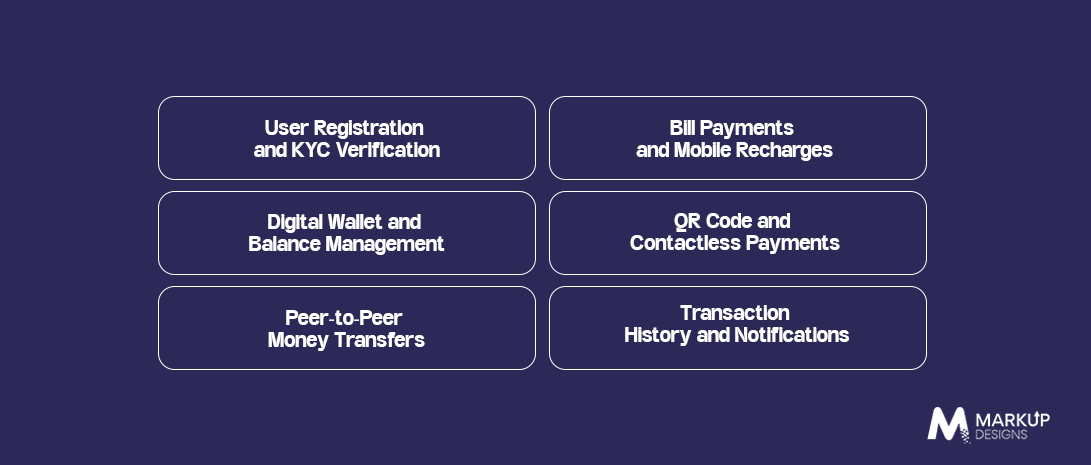
The success of the digital wallet application is determined by the ease with which users conduct their financial transactions. During the development of applications like Payit, the emphasis should be on features that would make the process easy, safe, and accessible to users. This is to ensure that all necessary financial transactions are done in one application.
Here are six important features to consider:
1. User Registration and KYC Verification
It will be good for the application to provide an easy way of registration that can be done via phone number, email address, or any other means. The KYC verification procedure is one in which users will be able to upload their identity cards and then get verified in order to access financial services.
2. Digital Wallet and Balance Management
The user must be able to deposit funds into the wallet, see his/her current balance, and manage their digital wallet funds. This can easily be done through a well-designed dashboard.
3. Peer-to-Peer Money Transfers
Users should be able to exchange money directly using the application. For example, it could include features like sending money based on contacts and making payment requests.
4. Bill Payments and Mobile Recharges
Integrate the bill payment process along with mobile recharge. It enables users to manage their recurring payments without having to move from one platform to another.
6. QR Code and Contactless Payments
QR code scanning and contactless payment facilities need to be integrated to make in-store and merchant transactions convenient.
7. Transaction History and Notifications
A history of all transactions needs to be kept for users, along with transaction dates, amounts, and statuses. Notification services for transactions made could also help in keeping the user up-to-date with their transactions.
Step-by-Step Process to Develop a Digital Wallet App Like Payit
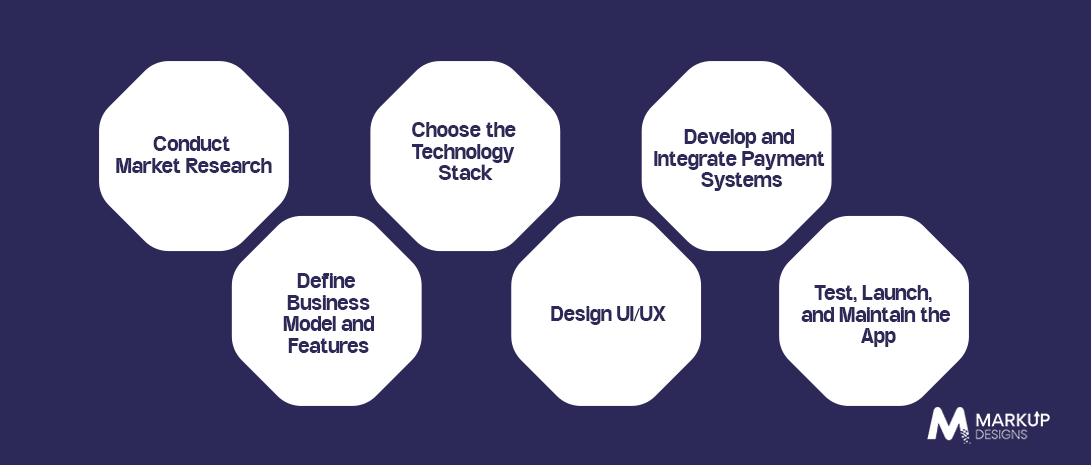
There are several factors that need to be considered when creating a payment app such as Payit, which include proper planning, appropriate use of technology, and awareness of user expectations. All these factors are vital at each and every phase of developing the application, ranging from identification of market opportunities to the actual release of the application.
Here are six important steps involved in the development process:
- Conduct Market Research
Explore the UAE fintech market, customers, competition, and preferences regarding payment systems. Analyze Payit to find opportunities for differentiation.
- Define Business Model and Features
Define your target customers, services related to payments, essential features, and business model, such as transaction charges or merchant fees.
- Choose the Technology Stack
Determine adequate frontend, backend, database, and cloud technologies. You can choose Flutter, React Native, Node.js, Java, or Python depending on your needs.
- Design UI/UX
Make sure that your application will have convenient navigation, easy-to-use payment options, and a clear dashboard. Create wireframes and prototypes to test it.
- Develop and Integrate Payment Systems
Create a frontend and backend, wallet, and transaction processing system. Integrate APIs of banks, payment gateways, and Know Your Customer (KYC) services.
- Test, Launch, and Maintain the App
Conduct functionality, security, performance, and payment testing. After the required approvals, launch the application and provide regular updates and maintenance.
Following these steps helps businesses create a digital wallet that can handle everyday transactions while remaining secure, reliable, and ready for future improvements.
How Much Does It Cost to Develop a Digital Wallet App Like Payit in the UAE?
Developing a mobile application for digital wallet such as Payit in the UAE will depend on the application’s functionality, security measures, and integration with third parties. A simple digital wallet application will involve lower costs compared to an advanced digital wallet that has services for international transactions, virtual cards, merchant payments, and financial management.
For initial budgeting, digital wallet development can be divided into three broad categories:
| App Complexity | Estimated Development Cost |
| Basic Digital Wallet | AED 100,000–250,000 |
| Advanced or Payit-Like Wallet | AED 250,000–550,000 |
| Enterprise-Level Digital Wallet | AED 550,000+ |
These are indicative planning ranges, not confirmed vendor quotations. Actual costs can vary significantly depending on the scope, licensing model, integrations, and security requirements.
Key Factors That Affect Digital Wallet App Development Costs
Several elements determine the final development budget:
- Features & Functionality: Basic functionalities and balance management will have lower costs than more advanced features such as multi-currency transactions, virtual cards, and fraud detection using artificial intelligence.
- UI/UX: Custom dashboards, user interface designs, and user experience will result in higher costs of development and design.
- Technology Stack: The programming languages, frameworks, database technologies, and cloud technologies used will influence the cost of development and deployment.
- Integration with Third-Party Services: Banking API services, payment gateways, KYC systems, and notification systems will need to be integrated with higher recurring costs.
- Security & Compliance: Encryption, authentication and identity verification, fraud protection, security audit, and regulatory compliance will add to the total costs of the project.
- Development Team: The level of expertise, team size, location, and engagement model will influence project costs.
Additional Costs to Consider
The initial development budget is not the only expense. Businesses should also plan for:
- Cloud computing hosting services and infrastructure
- Licensing fees
- Security testing and compliance
- Marketing and customer acquisition
- Third-party API licensing costs
- Maintenance and support
Annual maintenance can be planned for at 20% of the original cost of development as a first planning assumption, although costs will vary by application and support needs.
How to Estimate the Overall Development Budget
A simple starting formula is:
Development Cost = Total Development Hours*Hourly Rate
Add a contingency of approximately 15–20% to account for unexpected technical requirements, integration changes, and project adjustments.
To manage expenses, businesses can begin with an MVP that includes essential wallet and payment features. Once the application receives user feedback and validates its business model, advanced functionalities can be introduced in later development phases.
Challenges in Digital Wallet App Development
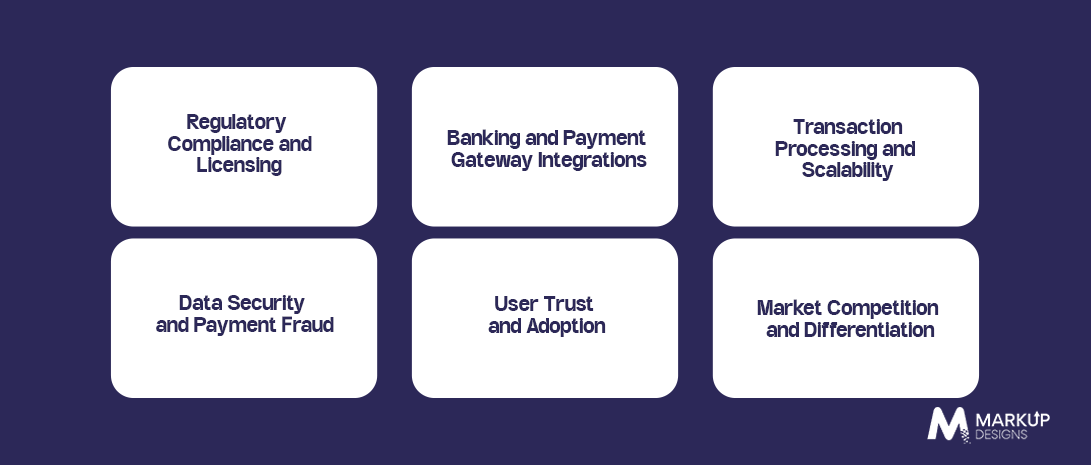
The development of a digital wallet app faces many problems that go far beyond the functionality of such a solution as an e-money transfer device. Businesses should take into account the aspects of security and compliance to create a working product.
Here is the list of six challenges that you may face while developing a digital wallet:
1. Regulatory Compliance and Licensing
Compliance with licensing requirements issued by the CBUAE and other legal acts might be challenging and require some previous knowledge of your business.
2. Data Security and Payment Fraud
As digital wallets process personal information of their users, the use of encryption, biometrics, multifactor authentication, and anti-fraud systems is necessary.
3. Banking and Payment Gateway Integrations
API and thorough testing will help you connect your application with banks and gateways.
4. User Trust and Adoption
Onboarding difficulties, failed payments, and lack of payment information may prevent users from using your wallet.
Transaction Processing and Scalability
Higher transactions can impact application performance. It is necessary to have scalable cloud-based systems and efficient databases to ensure performance.
Market Competition and Differentiation
To stand out, companies need more than just payment capabilities. It is important for companies to provide value-added services like remittances, rewards, and financial insights.
How to Choose the Right Digital Wallet App Development Company in the UAE?
Choosing the right development partner is a key step in creating a reliable and safe digital wallet. You need to look for a company that will have fintech development experience, technical knowledge, and an understanding of UAE market requirements.
Here are six factors to consider:
Fintech Development Experience
It’s important to choose a company with extensive experience in developing digital wallets, banking applications, and payment systems.
UAE Regulatory Experience
Make sure your development team knows all about relevant CBUAE, KYC, AML and data protection regulations.
Payments Integration Experience
Check if the company has a track record of working with banking APIs, payment gateways, card networks, and identity verification solutions.
Good Security Practices
Look for a company that has strong expertise in such areas as encryption, secure authentication, fraud prevention, and security testing.
Scalable Development Approach
Choose a company that will be able to create applications and able to support growing numbers of users and transactions.
Post-Launch Services
Make sure your development partner will provide regular maintenance, security, performance monitoring, and other support services.
Ready to Build a Digital Wallet App for the UAE Market?
Partner with Markup Designs to develop a secure, scalable, and user-friendly digital wallet that supports your business goals. From planning and design to development and deployment, our team can help bring your fintech idea to life.

Conclusion
The development of the Payit mobile wallet application in the UAE gives businesses an option to become part of the rising digital payments industry. Nevertheless, there are certain steps that should be taken in order to create a successful application. Firstly, it is necessary to know about user expectations, use the proper technology, provide secure financial services, and solve the issues of security and regulations.
Defining the business model, choosing necessary features, calculating the cost of the development process, and finding a professional development company are some decisions that will determine the success of the application. One more step should be taken into account – beginning with the creation of an MVP and adding additional features.
Thus, with the help of the proper development strategy and technologies, it will be possible to create a convenient mobile wallet application.
FAQs
1. How much time is needed to develop a digital wallet application such as Payit?
It takes several months to develop a basic minimum viable product, which will work properly. If the app is more complex with many functions, it may take 9–12 months or even longer for its full development.
2. What are the must-have features for a digital wallet application in the UAE?
Among the must-have features, there should be user registration, KYC verification, balance management, transfers, payment of bills, QR-code payments, transaction history, and real-time notifications. Additionally, businesses can add some other features according to their audience’s needs.
3. Is there a requirement for a CBUAE license for launching digital wallet apps in the UAE?
That will depend on the financial services offered by your application and the way it functions. Payment processing services, money transfer, and stored-value services may be subject to different regulatory measures from CBUAE. Consultation with legal and compliance experts is necessary to ascertain the relevant licensing requirements.
4. What technologies are required to develop digital wallet applications?
Some technologies that can be employed for developing digital wallets include Flutter and React Native for cross-platform mobile apps and Node.js, Java, and Python for backends. Other technologies include databases, cloud platforms, payment APIs, encryption software, and authentication technologies.
5. How can a digital wallet app generate revenue?
Digital wallets earn revenue through transaction fees, merchant commissions, subscription packages, currency exchange, and financial institution partnerships. There are other ways to earn revenue as well.
Author's Perspective
Digital wallets offer growing opportunities in the UAE fintech market. However, building an app like Payit requires more than adding payment features. Businesses must focus on user experience, secure transactions, reliable integrations, and regulatory compliance. Starting with essential features and expanding gradually can help manage costs and meet user expectations. With the right technology strategy and development partner, businesses can create a secure, scalable digital wallet that supports long-term growth.
Discuss Your Project NowGaurav Goyal
Global Sales- VP
Related Posts
How Much Does It Cost to Build a...

AI in FinTech Australia: Use Cases, Benefits &...
How Much Does It Cost to Develop a...
Insights Are Valuable & Execution is Priceless
You’ve read about the digital future. Now, let’s build the infrastructure to take you there. Move your strategy from the page to the product.
Design Your Solution Now
Contact Us
Schedule The Appointment At Your Convenience Date And Time.
30 Min
Web Conference
Time Zone
Indian standard time (08:30pm)

Thanks For Getting In Touch!
You’ve Taken The First Step Toward Transforming Your Digital Presence. Our Experts Will Reach Out Shortly To Take It Forward.
Launch Your Dream Project
Provide a brief overview of your project, and our specialists will evaluate your requirements. We will connect with you to explore how the right digital solutions can help you launch faster.