
In Brief
- Cost of Development: The cost will depend on whether you develop a simple delivery app, a multi-vendor platform or an advanced multi-service delivery system.
- Core Features: Customer apps, merchant panels, delivery partner apps and administration dashboards determine a significant part of the development work scope.
- Technology/Integration: Real-time tracking, payment gateways, maps, notifications and cloud computing technology contribute to total cost of development.
- Development Timeframe: MVP development takes shorter period than full-fledged platform development with several service categories and heavy order volume.
- Additional Investment: Hosting, maintenance, security, feature updates and customer support increase the cost.
On-demand delivery platforms have revolutionized the way customers get food, groceries, medicines, and various other necessities. Companies have been looking into developing multi-service delivery apps that integrate different vendors, delivery partners and customers using one platform. An example of such platform is Glovo which combines food delivery with several other convenience services.
However, developing an app like Glovo involves more than building a customer-facing ordering interface. It requires a connected ecosystem of customer applications, merchant panels, delivery partner apps and an administrative dashboard. Features such as real-time tracking, payment integration, order management and location-based services also influence the technical complexity. Understanding these requirements helps businesses estimate the development budget, choose the right features and plan a scalable food delivery platform.
What Is a Glovo-Like Food Delivery App and How Does It Work?
The company operates by means of a multi-category business model instead of operating only with restaurant deliveries. The service works via connected interfaces for customers, merchants, delivery partners and admins. Customers view products, place orders and pay, merchants deal with incoming orders while delivery partners deliver orders from restaurants and other businesses. The admin interface is used for managing all activities on the platform like users’ accounts, payments, commission management and deliveries.
How Much Does It Cost to Create a Glovo-Like Food Delivery App?
The cost to build an app like Glovo for delivering food may be from $25,000 to $250,000+ depending on the number of services provided by the platform, complexity of the app, its design and technology stack. The price to develop a basic food delivery app will be lower than that to develop a multi-service delivery platform.
Cost to Develop a Basic Food Delivery App (MVP)
Estimated cost: 25,000–50,000
Basic features of the food delivery application are customer registration, restaurant listing, menu browsing, shopping cart and order management, order placing and payment management.
It may also include a simple merchant panel, an admin dashboard, and basic delivery status updates. This version is suitable for startups testing their business model in a limited market. Development generally takes around three to five months, depending on the project scope.
Cost to Develop a Mid-Level Food Delivery Platform
Estimated cost: 50,000–100,000
A mid-level platform supports multiple restaurants, merchants and delivery partners through more advanced management features. It can include real-time GPS tracking, multiple payment options, promotional offers, customer reviews, order scheduling and automated delivery assignments. This version suits businesses planning to expand their customer base and delivery coverage. Development may take approximately five to eight months, depending on customisation and integration requirements.
Cost to Develop an Advanced Multi-Service Delivery App
Estimated cost: 100,000–250,000+
An advanced platform supports several service categories, including food, groceries, pharmacy products and other local deliveries. It may include AI-powered recommendations, route optimisation, dynamic pricing, loyalty programmes, multilingual functionality and advanced analytics. Such applications require scalable infrastructure and more complex backend architecture to manage high transaction volumes. Development can take eight to twelve months or longer, depending on the platform’s scale and functionality.
What Factors Affect the Cost of Developing an App Like Glovo?
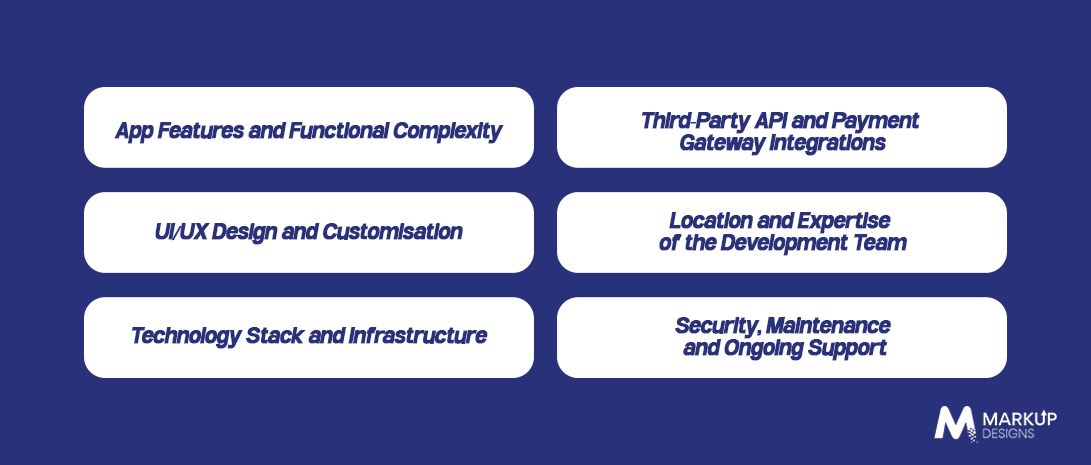
There are several factors that define the cost of developing a Glovo app-like platform. It is important to estimate the number of features, their complexity, technology, and integrations that should be taken into account. Businesses should also think about developers’ costs, security aspects and platform’s maintenance after its release.
Number of Features and Functional Complexity
Number and complexity of features impact the amount of time and money needed for development of the Glovo app clone. Basic features such as registration, listing products and placing orders are simpler to develop in comparison with tracking orders in real time, automated dispatching, routing optimization and recommendation system. Moreover, developing separate interfaces for customers, merchants, delivery providers and administration panel adds up to the total scope of the project.
UI/UX Design and Customization
The cost of UI/UX design of the application depends on number of screens, user journeys and custom elements of the interface. A basic application can rely on standard interface layout whereas a more advanced application requires customized dashboards, maps and personalized user experience. Cost of wireframes, prototypes, usability testing and accessibility should also be estimated.
Technology Stack and Infrastructure
The chosen technology stack influences the performance, scalability, and maintenance needs of an app. A business may opt for Flutter or React Native as a cross-platform development tool, Node.js or Python for back-end operations, and PostgreSQL or MongoDB as database solutions. Infrastructure services provided by cloud platforms like AWS, Microsoft Azure, or Google Cloud allow app hosting, storage, and deployment. The total cost is contingent upon server capacity, data needs, traffic, and architectural complexity.
Third-Party API and Payment Gateway Integrations
A Glovo-inspired platform will need third-party services for geolocation features, payment processing, and user notifications. Geolocation services can be provided via Google Maps Platform or Mapbox, while payment services are offered by payment gateways such as Stripe and PayPal. Third-party services for sending text message and push notifications will assist in sending information about order statuses to users and delivery personnel. Complexity of integration, limitations of API usage, subscription costs, and transaction fees impact the total cost.
Location and Expertise of the Development Team
The cost of development differs based on the location, experience, and specialization of the development team. High costs may be charged by developers specializing in mobile application, back-end development, real-time tracking, and third-party integration. The engagement model, team size and project duration also affect the final budget.
Security, Maintenance and Ongoing Support
After the deployment of the application, security and maintenance costs will continue to be incurred. The security costs will involve the incorporation of secure login, secure data transfer, payment security, access control, and continuous security evaluations. Maintenance costs will cover bugs fixing, server monitoring, database tuning, and compatibility upgrades.
What Features Are Needed to Create an Application like Glovo?
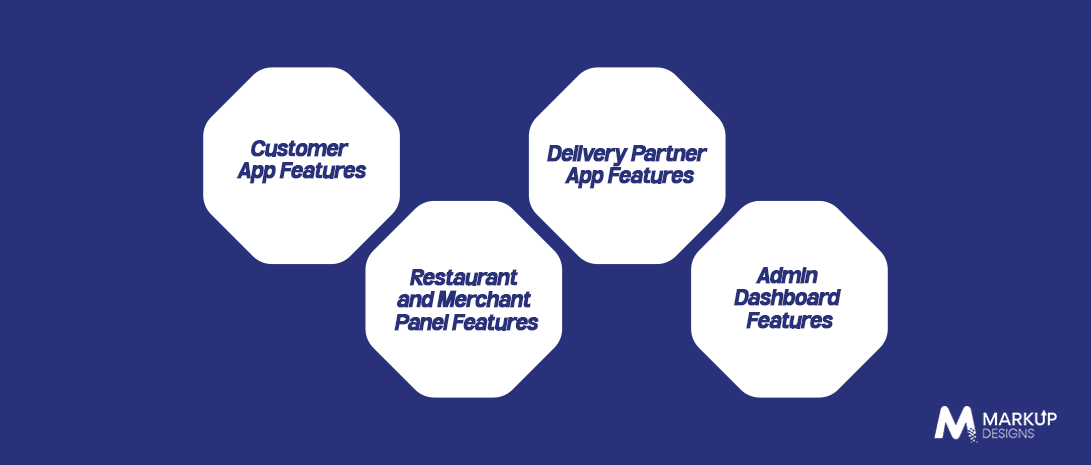
Several feature groups will be needed for a Glovo-like app in order to manage customers, merchants, delivery partners, and platform administrators. Each interface provides support for a particular step of the ordering and delivery process, while the backend ensures synchronization of the information. The choice of the feature set will depend on the chosen business model, target audience, and services provided through the platform.
Customer App Features
The customer app will help users get information about the services available and make orders. Important features include user registration, user profile management, geolocation detection, filtering options, product listing, shopping cart, and payments. Customers must have access to order tracking, notifications, order history, and rating/reviews. Extended apps will have recommendation systems, discounts, and loyalty programs implemented.
Restaurant and Merchant Panel Features
This module allows businesses like restaurants to update their information as well as keep track of the orders coming in. Merchant registration, profile management, menu/catalogue updating, pricing and inventory management are some of the features needed in this section. The ability to either accept or reject an order, change order status, and manage sales is important for the merchant. Commission, promotion, and performance reporting may enable other business functions.
Delivery Partner App Features
This section allows delivery partners to update the information about the order as well as make the delivery successfully. Some of the features in this area include partner registration, identity confirmation, availability status, assignment of orders, GPS navigation and directions on how to pick up the order. The delivery partner needs to update order status and communicate with the customer/merchant if needed. Some of the additional features may include earning dashboards, delivery history and performance reporting.
Admin Dashboard Features
The admin dashboard allows central control of all the operations of the delivery platform. This area will have functionalities like managing the customers, merchants, delivery partners, service categories, orders, payment structure and commissions. Administrators can manage customers, merchants, delivery partners, service categories, orders, payments and commission structures. Additional features include dispute management, promotional controls, customer support tools and access permissions. Analytics and reporting capabilities help businesses monitor order volumes, revenue, delivery performance and overall platform activity.
What Technology Stack Is Used to Develop a Glovo-Like App?
The technology stack must support mobile applications, backend operations, real-time communication and secure transaction processing. Flutter or React Native can be used for cross-platform mobile development, while Swift and Kotlin are options for native iOS and Android applications. Node.js, Python or Java can power backend services, with PostgreSQL or MongoDB managing application data. Mapping APIs, payment gateways and cloud platforms such as AWS, Azure or Google Cloud complete the infrastructure, depending on the project’s requirements.
How to Develop a Food Delivery App Like Glovo?
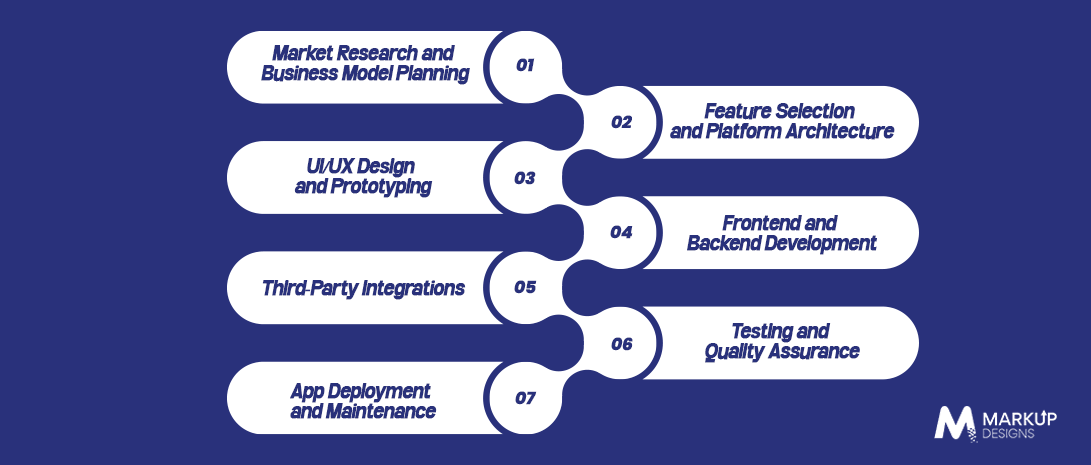
Food delivery application platform development involves a structured process where business research, application development and software implementation and deployment processes are involved. This structured development process ensures effective requirements for each step and ensures the interaction between various elements of the application platform. Moreover, a structured development process also enables businesses to keep control over costs and technical issues related to future growth.
Market Research and Business Model Planning
One needs to conduct market research to find out customer expectations, target customers, the availability of similar platforms in the market and the availability of various delivery services. One also needs to find out whether the application will be used for food delivery purposes alone or it will involve the delivery of grocery products and other categories of products. It is important to set locations of operations, merchant partners, pricing structure, and revenue model.
Feature Selection and Platform Architecture
After having identified the requirements of the business, one identifies the core features for each interface. Customer ordering feature, management interface for merchants, dispatching feature, and administrative feature should take priority. After this, the architecture is determined for the application and its interaction with the backend, database, and external interfaces.
UI/UX Design and Prototyping
In the design phase, the task is to come up with intuitive designs that will help users navigate through the interface. This includes coming up with wireframes and layouts as well as interactive prototypes showing user journeys. The process should consider navigability, product information, and effective checkouts. Testing of the prototypes should highlight any usability issues before moving into development.
Frontend and Backend Development
Frontend development is associated with the mobile applications and the interfaces used by various platform participants. Backend development covers user authentication, product catalogues, order processing, payments, delivery, and database activities. APIs are used to connect these different aspects, making it possible to pass information from one application to another. This means that frontend and backend development need to be synchronized.
Third-Party Integrations
Third-party integrations are critical in ensuring the proper operation of the platform. They include payment gateways, maps and navigation APIs, SMS services, push notifications, and communication methods. Each third-party service should be set up based on the business requirements. At the same time, businesses should consider the pricing for API calls and transaction fees, among others.
Testing and Quality Assurance
Testing ensures that the application works correctly across different devices, operating systems and network conditions. Quality assurance teams should verify registration, ordering, payments, notifications, GPS tracking and delivery workflows. Security testing helps identify vulnerabilities, while performance and load testing assess how the platform handles increasing traffic and order volumes. Any identified issues should be resolved before the application is released.
App Deployment and Maintenance
Once development and testing are complete, the application can be deployed to the relevant app stores and production infrastructure. The launch process includes final configuration, database setup, monitoring and verification of essential workflows. Post-launch maintenance involves fixing bugs, updating software components, monitoring server performance, and improving features. Regular maintenance helps keep the platform reliable as customer demand and business requirements evolve.
How Can a Glovo-Like Food Delivery App Generate Revenue?
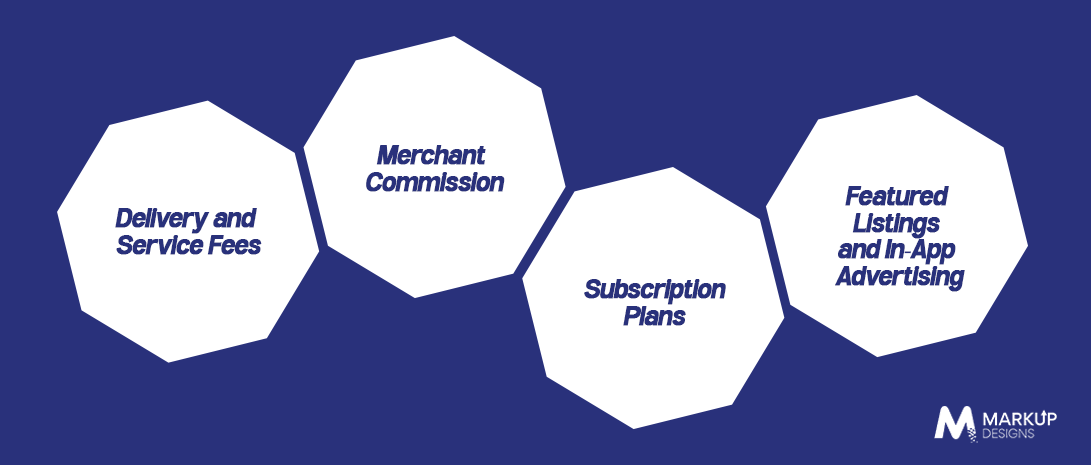
A business similar to Glovo can earn revenue through various revenue models in relation to customer orders, merchant partnerships, and promotions. By using several models together, businesses will be able to earn money through diversified means rather than relying only on the delivery charge. The best approach is dependent on customer demand, merchant contracts and cost of operation.
Delivery and Service Fees
Delivery charges refer to the charges levied on customers for delivering their orders from restaurants and stores to the preferred destination. The charge may vary depending on various factors such as delivery distance, order size, location, and demand. It is important that customers know what the price will be before placing an order.
Merchant Commission
Merchants like restaurants will be paying a commission per completed order sent to their business through the platform. The percentage to be charged may be dependent on the merchant contract, service type, and level of assistance by the platform. With this model, the platform will earn revenue as more orders are placed to the business.
Subscription Plans
Subscription plan gives extra benefits to customers by charging a monthly or yearly fee to customers. Extra benefits may be a reduction in delivery charges, special
Featured Listings and In-App Advertising
The platform can offer paid promotional placements to restaurants, retailers, and other participating merchants. Featured listings, sponsored search results, promotional banners and targeted advertisements provide opportunities to increase merchant visibility.
What Challenges Should Businesses Consider When Developing a Glovo-Like App?
Creating a multi-service delivery application poses certain challenges to businesses. Companies need to guarantee that different platform components are integrated while the process of order processing, delivery coordination, and payment is conducted reliably.
Managing Real-Time Orders and Delivery Tracking
Real-time management of orders necessitates constant communication between the client, merchant, and delivery partner. Any delays in the process of order status updates or incorrect GPS data will cause confusion and affect the delivery schedule. A reliable tracking system, real-time notifications, and order synchronization should be implemented in the process.
Coordinating Multiple Vendors and Delivery Partners
Managing multiple vendors, such as multiple restaurants, retailers, and delivery partners via one platform may become challenging as the company is developing. Different merchants might have different preparation times, stock management, and order processing techniques. All these issues need to be coordinated by the application.
Handling High Order Volumes and Platform Scalability
While the company is gaining more users and opening new territories for operation, the platform should process high volume of orders and transactions and respond to requests simultaneously. While the initial infrastructure might cope with the process, high demands might slow down its performance.
Maintaining Data Security and Payment Reliability
Food delivery platforms process personal information, location details and sensitive payment-related data. Weak security controls can expose users to data breaches, unauthorised access and fraudulent transactions. Developers should implement secure authentication, encryption, role-based access controls and trusted payment gateway integrations.
How Can Markup Designs Help Develop a Food Delivery App Like Glovo?
Markup Designs provides custom software and mobile application development services to help businesses build digital platforms around their operational requirements. Developing a Glovo-like application involves connecting multiple interfaces, integrating third-party services and creating a backend capable of managing orders, payments, and delivery operations. Our development team can help plan the application architecture, select suitable technologies, and build customer, merchant, delivery partner and admin interfaces.
Build a Scalable Food Delivery App for Your Business
Turn your food delivery business idea into a functional digital platform with the right technology, features and development strategy. Partner with Markup Designs to create a customised application that connects customers, merchants and delivery partners.

Conclusion
The development of the Glovo-like food delivery app requires proper planning of its cost, functionality, technology, and platform architecture. Companies should consider various interfaces, real-time order management, payment integration and scalable infrastructure while setting up the budget. The MVP is a good way to start the process and validate the business model before developing advanced functions and other types of services. Hiring a professional development team can also be helpful in managing the technical aspect and preparing the platform for further scaling.
FAQ
1. How expensive is the development of a food delivery app like Glovo?
The development of a food delivery application similar to Glovo can cost about 25,000-250,000 and above. Development of an MVP will need a lesser amount of money than an advanced multi-service application.
2. How much time is needed for the development of a Glovo-like app?
The time taken to develop a food delivery app MVP will be about three to five months. The time required for a mid-level platform will be about five to eight months, and that of an advanced multi-service application will be from eight to twelve months or even longer.
3. What are the key features of a multi-service delivery app?
Key features that a multi-service delivery application should have include user registration, service listing, searching, orders placement, secure payment and delivery tracking features, merchant management, delivery partner module, and admin panel.
4. Can I start with an MVP and then add advanced features in the future?
Certainly, an MVP will allow you to create a business with minimum functionality and see how the demand in the market looks like before going for a bigger deal.
5. Which tech stack should be chosen for a food delivery app?
Cross-platform mobile solutions can be built using Flutter and React Native, while Swift and Kotlin are good choices for creating native iOS and Android apps. The back end of such platforms can be developed with the help of Node.js, Python and Java, and PostgreSQL and MongoDB can be used for storing data.
Author's Perspective
A food delivery app is not determined by its advanced features but by its efficiency in connecting customers, merchants and delivery partners. Companies should focus on reliable order processing, intuitive user experience, and delivery management before adding more functionality to the platform.
Discuss Your Project NowJupinder Singh Arora
Founder and CEO
Related Posts
Hire Mobile App Developers in Abu Dhabi to...
How to Build a Women’s Fitness App: Features,...

How to Build a Chat App Like Arattai:...
Insights Are Valuable & Execution is Priceless
You’ve read about the digital future. Now, let’s build the infrastructure to take you there. Move your strategy from the page to the product.
Design Your Solution Now
Contact Us
Schedule The Appointment At Your Convenience Date And Time.
30 Min
Web Conference
Time Zone
Indian standard time (08:30pm)

Thanks For Getting In Touch!
You’ve Taken The First Step Toward Transforming Your Digital Presence. Our Experts Will Reach Out Shortly To Take It Forward.
Launch Your Dream Project
Provide a brief overview of your project, and our specialists will evaluate your requirements. We will connect with you to explore how the right digital solutions can help you launch faster.