

In Brief
- Fintech startups are rapidly growing due to increasing demand for digital banking, online payments, AI-powered financial services, and seamless customer experiences. Technologies like cloud computing, blockchain, and artificial intelligence are driving fintech innovation globally.
- Developing fintech software is highly complex because these platforms must manage real-time transactions, sensitive financial data, strict security measures, and regulatory compliance while maintaining speed and reliability.
- Regulatory compliance and cybersecurity are major challenges for fintech startups. Businesses must follow regulations such as GDPR, PCI DSS, and KYC while protecting platforms from fraud, cyberattacks, data breaches, and financial risks.
- Scalability, performance, and user trust play a critical role in fintech success. Platforms must handle growing user traffic, maintain uninterrupted performance, and provide secure, transparent, and user-friendly experiences to build long-term customer confidence.
- Budget limitations and a lack of skilled developers create additional pressure for startups. Fintech development requires advanced infrastructure, experienced developers, continuous monitoring, and long-term maintenance, which can significantly increase operational costs.
The fintech industry has transformed the global financial ecosystem by making banking, payments, lending, investing, and insurance services more accessible, efficient, and user-friendly. Over the last decade, fintech startups have emerged as major industry leaders, introducing innovative digital solutions that challenge traditional financial institutions.
For startups, challenges become even more significant due to limited budgets, tight timelines, and competition from established fintech brands and traditional banks. Many startups struggle to balance innovation, compliance, scalability, security, and customer expectations.
Why are Fintech Startups Growing Rapidly?
The fintech industry has experienced remarkable growth because consumers increasingly prefer digital-first financial experiences. Traditional banking systems often involve lengthy processes, limited accessibility, and outdated user experiences. Fintech startups are solving these issues by offering faster financial services through digital platforms.
The widespread adoption of smartphones, cloud computing, artificial intelligence, and blockchain technology has accelerated fintech innovation globally.
Consumers now expect instant money transfers, digital wallets, automated investment platforms, and seamless online payment experiences. Businesses also rely on fintech solutions to simplify accounting, payroll, invoicing, and financial management operations.
Additionally, governments and investors worldwide are supporting fintech innovation through funding programs, regulatory frameworks, and digital transformation initiatives. Open banking regulations and API-driven ecosystems have created new opportunities for startups to integrate directly with financial institutions and offer innovative financial products.
Key Challenges in Developing Fintech Software
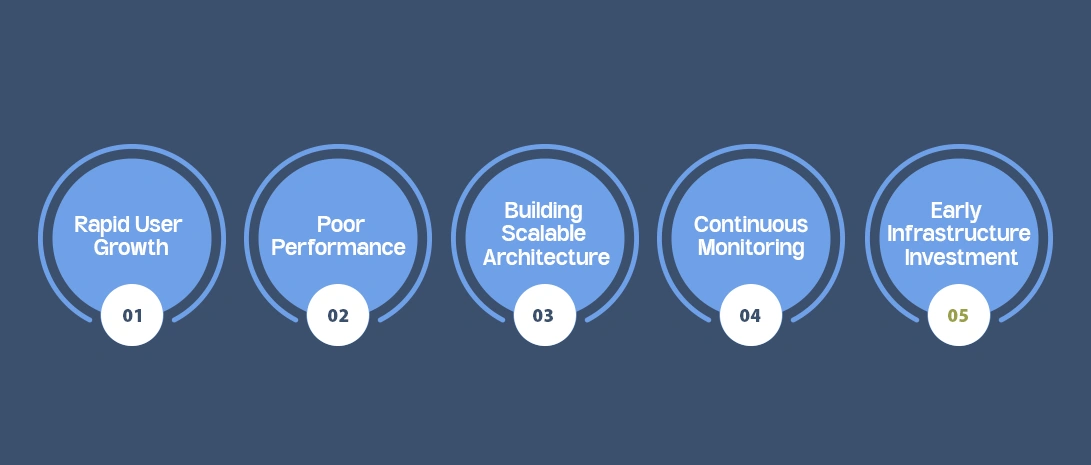
Scalability is one of the most critical factors that determine the long-term success of fintech software. As startups grow, their platforms must be capable of handling increasing user traffic, higher transaction volumes, and complex financial operations.
Rapid User Growth
Many fintech startups begin with a limited customer base, but rapid market adoption can quickly put pressure on poorly designed systems. Applications such as digital wallets, payment gateways, investment platforms, and mobile banking solutions must support thousands of simultaneous transactions in real time. Without scalable infrastructure, systems can become unstable and lead to operational disruptions.
Poor Performance
Performance issues can severely damage the reputation of a fintech startup. Slow transaction processing, failed payments, application crashes, and unexpected downtime create frustrating user experiences and reduce customer confidence. Since fintech applications deal with financial transactions, users expect speed, reliability, and uninterrupted accessibility at all times.
Building Scalable Architecture
To support future expansion, fintech startups must invest in flexible and scalable system architecture from the beginning. Cloud-native infrastructure, microservices architecture, distributed databases, load balancing, and containerized deployment environments help businesses manage growing workloads efficiently while maintaining high system performance.
Continuous Monitoring
Scalability is not a one-time implementation process. Fintech companies must continuously monitor application performance and conduct regular testing under high-traffic conditions to identify bottlenecks and system vulnerabilities. Real-time monitoring tools and automated performance testing help ensure smooth operations and uninterrupted service delivery.
Early Infrastructure Investment
Investing in scalable infrastructure during the initial stages of development can save startups from expensive redevelopment and migration costs in the future. A well-optimized fintech platform not only improves operational efficiency but also supports sustainable business growth and better customer experiences.
Concept of Complexity for Fintech Software Development
- Fintech software development requires advanced architectures that can securely process real-time financial transactions while maintaining speed, accuracy, and uninterrupted performance.
- Unlike traditional applications, fintech platforms handle sensitive customer and financial data, making security, reliability, and compliance critical from the initial development stage.
- A single transaction failure, system error, or security breach can result in financial losses, legal complications, and a significant loss of customer trust.
- Different fintech solutions come with unique technical requirements, such as fraud prevention for payment gateways, secure account management for digital banking apps, and risk assessment systems for lending platforms.
- Cryptocurrency and blockchain-based fintech platforms require specialized blockchain integration, decentralized transaction handling, and advanced wallet security mechanisms.
- The integration of technologies like Artificial Intelligence, machine learning, blockchain, and predictive analytics further increases development complexity and infrastructure demands.
How Regulatory Compliance Impacts the Fintech Startup?
- Higher Operational Costs and Resource Pressure
Fintech compliance often requires startups to hire legal experts, compliance specialists, and cybersecurity professionals. In addition, businesses must invest in monitoring tools and secure infrastructure, which can put significant pressure on the budgets of early-stage startups. - Compliance Must Be Built from the Start
Regulatory requirements cannot simply be added after development is complete. Fintech startups need to integrate compliance measures directly into their software architecture, security systems, and user onboarding processes from the very beginning. - Slower Product Launch Timelines
Strict financial regulations and security standards such as PCI DSS, GDPR, and SOC 2 require detailed testing and verification. This often slows down the development process and delays product launches compared to traditional software startups. - Continuous Risk Monitoring and Reporting
Fintech companies are required to monitor transactions in real time and identify suspicious activities. They must also report fraudulent or unusual transactions to regulatory authorities, making risk management an ongoing operational responsibility. - Compliance Helps Build Customer Trust
Following industry regulations not only helps startups avoid legal penalties but also improves credibility. Customers, investors, and financial partners are more likely to trust fintech platforms that demonstrate strong security and compliance practices. - Managing Different Regulations Across Regions
For fintech startups offering services in multiple countries, navigating different legal and compliance frameworks can be extremely challenging. Each region may have unique financial regulations, data protection laws, and reporting requirements that businesses must follow.
How to Build User Trust While Developing Fintech Platforms?
Trust is the foundation of every successful fintech platform. Unlike entertainment or social media apps, fintech applications manage users’ money and personal financial information. Consumers are naturally cautious about adopting new financial platforms, especially when dealing with startups that lack established reputations.
Trust Is Critical in Fintech Applications
Building customer trust is often one of the hardest challenges for emerging fintech companies. Users expect transparency, secure onboarding processes, reliable customer support, and flawless transaction experiences. Any issue related to failed payments, delayed transactions, or poor security can quickly erode trust.
User Experience in Customer Confidence
User experience also plays a major role in fintech adoption. Complicated interfaces, lengthy verification procedures, and confusing navigation can discourage customers from using fintech platforms. At the same time, startups must balance simplicity with strong security measures, which is often difficult to achieve.
Key Factors That Help Build User Trust
Positive customer reviews, transparent privacy policies, secure authentication systems, and responsive support services can significantly improve user confidence. Consistent performance and clear communication are equally important for long-term customer retention.
Building Long-Term Brand Credibility in Fintech
Fintech startups that focus on customer-centric experiences and prioritize transparency are more likely to build strong brand credibility in competitive markets.
Budget Constraints and Development Costs
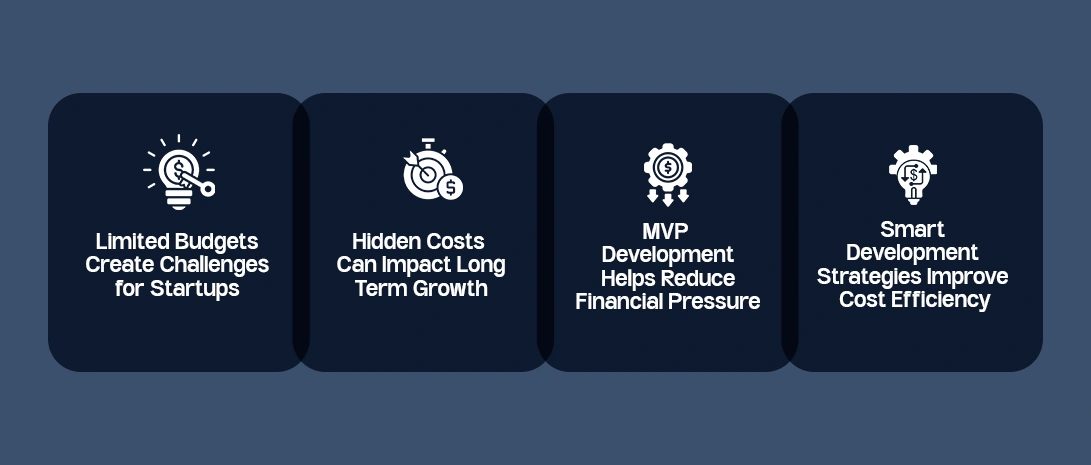
Fintech software development is often more expensive than traditional software development projects. Since fintech applications deal with sensitive financial data and real-time transactions, they require advanced security systems, regulatory compliance, and highly scalable infrastructure. For startups with limited budgets, managing these costs can become a major challenge.
Limited Budgets Create Challenges for Startups
Early-stage fintech startups often struggle to maintain the right balance between product quality and available resources. While startups want to launch innovative financial solutions quickly, limited funding can restrict development speed, feature implementation, and infrastructure planning.
Hidden Costs Can Impact Long-Term Growth
Apart from initial development expenses, there are several ongoing costs that startups must manage. Regulatory audits, cloud hosting, software maintenance, security monitoring, compliance updates, and customer support systems require continuous investment even after the product is launched.
MVP Development Helps Reduce Financial Pressure
To manage costs more effectively, many fintech startups choose to begin with a Minimum Viable Product (MVP). Instead of developing a feature-heavy application from the start, we can focus on launching core functionalities first and improving the platform gradually based on customer feedback and market demand.
Smart Development Strategies Improve Cost Efficiency
Using agile development methods, phased implementation strategies, and scalable cloud infrastructure can help startups control development expenses. Partnering with an experienced fintech software development company also helps reduce operational risks, improve efficiency, and accelerate product delivery while staying within budget.
Why Should Businesses Hire Skilled Developers?
Hiring skilled developers is essential for businesses that want to build secure, scalable, and high-performing digital products. Experienced developers not only improve the quality of software solutions but also help businesses reduce long-term risks, accelerate development, and stay competitive in the market.
Strong Technical Expertise
Skilled developers have deep knowledge of programming languages, frameworks, databases, cloud infrastructure, and modern development tools. Their expertise helps businesses build reliable and future-ready software solutions that perform efficiently under real-world conditions.
Faster and More Efficient Development
Experienced developers understand development workflows, coding standards, and problem-solving techniques. This allows them to complete projects more efficiently, reduce development delays, and speed up product launches without compromising quality..
Improved Software Quality and Performance
Professional developers write clean, optimized, and maintainable code. This improves application performance, reduces bugs, and ensures a smoother user experience across web and mobile platforms.
Build Scalable Solutions
As businesses grow, their software systems must handle increasing users, transactions, and data loads. Skilled developers can design scalable architectures that support future business growth without requiring complete system redevelopment.
Expertise in Latest Technologies
Experienced developers stay updated with emerging technologies such as Artificial Intelligence, Blockchain, Cloud Computing, IoT, and Machine Learning. This helps businesses adopt innovative solutions and stay ahead of competitors.
Efficient Problem-Solving Skills
During software development, technical challenges and unexpected issues are common. Skilled developers can quickly identify problems, troubleshoot errors, and implement effective solutions to minimize downtime and project disruptions.
Better User Experience
A well-developed application is not only functional but also user-friendly. Skilled developers work closely with UI/UX teams to ensure the software delivers seamless navigation, fast performance, and an engaging customer experience.
Fraud Detection and Risk Management
Financial fraud remains one of the biggest threats in the fintech industry. Cybercriminals constantly develop sophisticated techniques to exploit vulnerabilities in digital financial systems, making fraud prevention a continuous challenge for startups.
Traditional fraud detection methods are no longer sufficient for modern fintech ecosystems. Startups increasingly rely on AI and machine learning technologies to identify suspicious activities in real time. Behavioral analytics, transaction scoring, and predictive risk models help improve fraud detection accuracy.
However, implementing intelligent fraud prevention systems requires advanced technical expertise and significant computational resources. False positives can also negatively impact customer experiences by blocking legitimate transactions unnecessarily.
Fintech startups must continuously update fraud prevention strategies to adapt to evolving cyber threats. Combining automation with human oversight often provides the most effective balance between security and customer convenience.
Why Should Startups Partner with Markup Designs for Fintech Software Development?
Choosing the right development partner can significantly impact the success of a fintech startup. Developing secure, scalable, and compliance-focused fintech software requires specialized expertise that many early-stage startups may not have internally.
Markup Designs offers end-to-end fintech software development solutions tailored to the unique needs of startups and growing businesses. With expertise in digital transformation, cloud infrastructure, cybersecurity, UI/UX design, and scalable software architecture, the company helps businesses build reliable fintech platforms that meet modern industry standards.
From custom fintech application development and payment gateway integration to compliance-focused architecture and post-launch support, Markup Designs provides comprehensive development services designed to accelerate fintech innovation.
Their agile development approach enables startups to launch products faster while maintaining flexibility for future scalability and feature enhancements. By focusing on security, compliance, performance optimization, and customer-centric design, Markup Designs helps fintech startups reduce development risks and improve long-term business growth.
The Future of Fintech Software Development
The fintech industry will continue evolving rapidly as technologies such as artificial intelligence, blockchain, embedded finance, and open banking become more mainstream. Consumers increasingly expect personalized, automated, and real-time financial experiences, pushing startups to innovate continuously.
AI-powered financial assistants, decentralized finance platforms, digital-only banking ecosystems, and predictive financial analytics will likely shape the future of fintech development. Startups that adopt flexible and future-ready architectures will be better positioned to adapt to changing customer expectations and technological advancements.
At the same time, cybersecurity threats and regulatory complexities will continue growing. Fintech companies must remain proactive in implementing secure infrastructures and compliance-driven development practices.
The future of fintech belongs to businesses that successfully combine innovation, security, scalability, and exceptional customer experiences.
FAQs
1. Why is fintech software development more complex than traditional software development?
Fintech software development involves handling sensitive financial data, real-time transactions, regulatory compliance, cybersecurity, and fraud prevention systems. Unlike regular applications, fintech platforms must maintain high security, accuracy, scalability, and uninterrupted performance at all times.
2. What are the biggest challenges fintech startups face during software development?
Some of the biggest challenges include regulatory compliance, cybersecurity threats, scalability issues, high development costs, fraud detection, third-party integrations, and building customer trust while maintaining seamless user experiences.
3. How can fintech startups reduce software development costs?
Startups can reduce costs by starting with an MVP (Minimum Viable Product), using agile development methodologies, adopting scalable cloud infrastructure, prioritizing essential features, and partnering with experienced fintech software development companies.
4. Why is cybersecurity important in fintech applications?
Fintech platforms store highly sensitive customer and financial data, making them major targets for cyberattacks and fraud. Strong cybersecurity measures such as encryption, multi-factor authentication, fraud detection systems, and secure APIs help protect user data and maintain customer trust.
5. Why should fintech startups partner with experienced software development companies?
Experienced fintech development companies provide expertise in security, compliance, scalability, cloud infrastructure, and financial software architecture. They help startups reduce development risks, accelerate product launches, improve operational efficiency, and build future-ready fintech solutions.
Conclusion
Fintech startups operate in one of the most competitive and technically demanding industries in the digital world. While the opportunities for innovation and growth are enormous, developing fintech software comes with significant challenges related to compliance, cybersecurity, scalability, integrations, user trust, and operational costs.
Startups must adopt strategic development approaches that prioritize security, performance, compliance, and customer-centric experiences from the beginning. Investing in scalable infrastructure, intelligent fraud prevention systems, and reliable development partnerships can help businesses reduce long-term risks and accelerate growth.

Author's Perspective
The fintech industry is evolving at an incredible pace, creating endless opportunities for startups to innovate and transform financial services. However, building successful fintech software requires much more than a great idea. Startups must focus equally on security, compliance, scalability, performance, and customer trust to create sustainable digital financial platforms.
From our perspective, businesses that invest early in strong architecture, experienced developers, and compliance-focused development strategies are more likely to succeed in the competitive fintech market. While challenges such as rising operational costs, fraud risks, and complex regulations may seem overwhelming, the right technology approach and development partner can help startups overcome these obstacles effectively.
As emerging technologies like Artificial Intelligence, Blockchain, and Embedded Finance continue to reshape the industry, fintech startups that remain adaptable and customer-focused will lead the next wave of digital financial innovation.
Discuss Your Project NowGaurav Goyal
Global Sales- VP
Related Posts

Custom Software Development Cost in the UK: Features,...

UK Online Safety Regulations: A Compliance Guide for...

Enterprise eCommerce Fraud Prevention: Best Practices for Secure...
Insights Are Valuable & Execution is Priceless
You’ve read about the digital future. Now, let’s build the infrastructure to take you there. Move your strategy from the page to the product.
Design Your Solution Now
Contact Us
Schedule The Appointment At Your Convenience Date And Time.
30 Min
Web Conference
Time Zone
Indian standard time (08:30pm)

Thanks For Getting In Touch!
You’ve Taken The First Step Toward Transforming Your Digital Presence. Our Experts Will Reach Out Shortly To Take It Forward.
Launch Your Dream Project
Provide a brief overview of your project, and our specialists will evaluate your requirements. We will connect with you to explore how the right digital solutions can help you launch faster.