
In Brief
- Digital asset ownership is possible because of blockchain: Players will be able to own and manage in-game assets using blockchain and NFTs.
- Smart contracts make transactions transparent: Automated rules will make transactions and the whole gaming process much more transparent and controlled.
- Security should be at the forefront: Smart contracts audit, secure integration of wallets, and transaction monitoring can protect players and their digital assets.
- Fun gameplay encourages adoption: Good gameplay, reward systems, and multiplayer aspects are key to encouraging players to stay involved.
- Choosing the right development partner makes a difference: Companies will have to find blockchain game development companies experienced in gaming, Web3, and other things.
Thus, blockchain offers a lot of possibilities to businesses for making games with digital asset ownership, transparency of transactions, and decentralization of the economy. Businesses can use these opportunities to create games where players can interact with blockchain-based assets, exchange collectibles, and be part of a reward system. When developing such games in Kuwait, businesses should combine blockchain capabilities with engaging gameplay.
However, the development of blockchain games is not just about integrating NFTs or cryptocurrency payment options. There is a lot of work to be done.
Businesses must select suitable blockchain networks, secure smart contracts, design balanced game economies, and ensure that Web3 features do not complicate the player experience. Partnering with an experienced blockchain app development company in Kuwait can help businesses address these requirements and build smart, secure, and engaging games that support their long-term goals.
Why is Blockchain Game Development Gaining Attention in Kuwait?
The increasing trend towards digital entertainment and innovative technologies in Kuwait gives businesses the chance to consider blockchain gaming. It will be possible to implement interactive gameplay, ownership of digital assets and transaction transparency in the process of creating a new gaming experience for those users who desire to have more involvement and control.
Growing Interest in Web3 and Digital Entertainment
The emergence of Web3 allows users to interact with games and digital assets in a new way. The development of blockchain-based games enables businesses to provide players with interactive experiences, digital collectibles, and new models of interaction. In Kuwait, the main task is to combine these opportunities with player preferences and business models.
Player Ownership Through NFTs and Digital Assets
It will be possible to implement non-fungible tokens for the representation of unique game assets like characters, skins, weapons, and collectibles. With respect to the game model and trading opportunities, it will be possible for players to keep and sell these assets beyond the game itself. It gives businesses the chance to develop games based on digital assets and asset utility.
Opportunities for Businesses in Kuwait’s Gaming Market
The concept of blockchain gaming could provide opportunities for companies in the gaming industry, including game developers, entertainment corporations, and technology startups operating in Kuwait. Collectible-based games, marketplaces, and communities could be considered to increase user engagement and monetisation. Nevertheless, the market demand, requirements, and sustainability of the game should be estimated prior to game development.
What Features Make a Blockchain Game Smart, Secure, and Engaging?
A successful game would combine practical Web3 features and convenient gameplay, as well as security of users’ assets. It is important not to complicate the gaming process with unnecessary functions and features to let the gamers have a good experience and business owners have a sustainable ecosystem of the game.
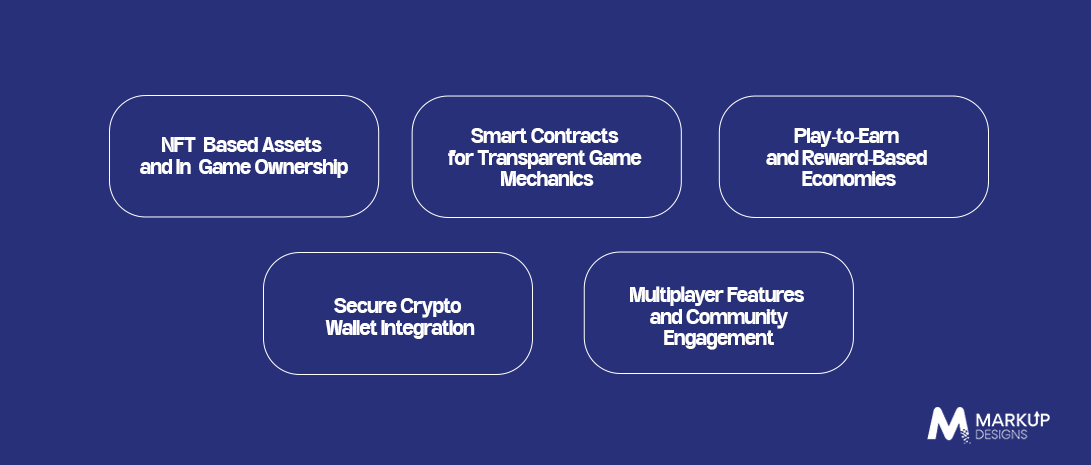
NFT-Based Assets and In-Game Ownership
NFTs could be used to prove the ownership of particular items, including characters, equipment, and other collectibles. The developers could implement NFT-based assets in the gameplay, progress, and marketplace systems depending on the needs of the game.
Smart Contracts for Transparent Game Mechanics
Smart contracts could automate the defined procedures related to transfers, payments, transactions, etc. Once deployed, their programmed rules can operate consistently without requiring manual processing for every transaction. Developers must test contract logic carefully and account for upgrade requirements, vulnerabilities, and transaction costs before launch.
Play-to-Earn and Reward-Based Economies
Reward-based economies reward players based on their achievement of objectives, milestones, or performance in-game. Blockchain technology can facilitate the creation of a reward system, but proper design is needed to prevent too many tokens from being released and the reward program becoming unsustainable. The rewards should not replace enjoyment of the gameplay.
Secure Crypto Wallet Integration
Players can integrate compatible crypto wallets and manage various digital assets that the game supports, as well as authorize blockchain transactions. In the onboarding process, it is important to inform users about the transaction fees, permissions, and signing requests in clear language. Authentication security, clear transaction messages, and blocking malicious requests are necessary to minimize user risks.
Multiplayer Features and Community Engagement
Multiplayer game modes, leaderboards, guilds, tournaments, and community events can motivate the players to continue playing. There may be additional benefits from integrating blockchain by adding tradable items or achievements, as well as from social features that will encourage players to keep coming back.
What Types of Blockchain Games Can Businesses Develop in Kuwait?
There are multiple approaches to implementing blockchain-based games that businesses can choose from based on their target audience, budget, and monetization strategies.
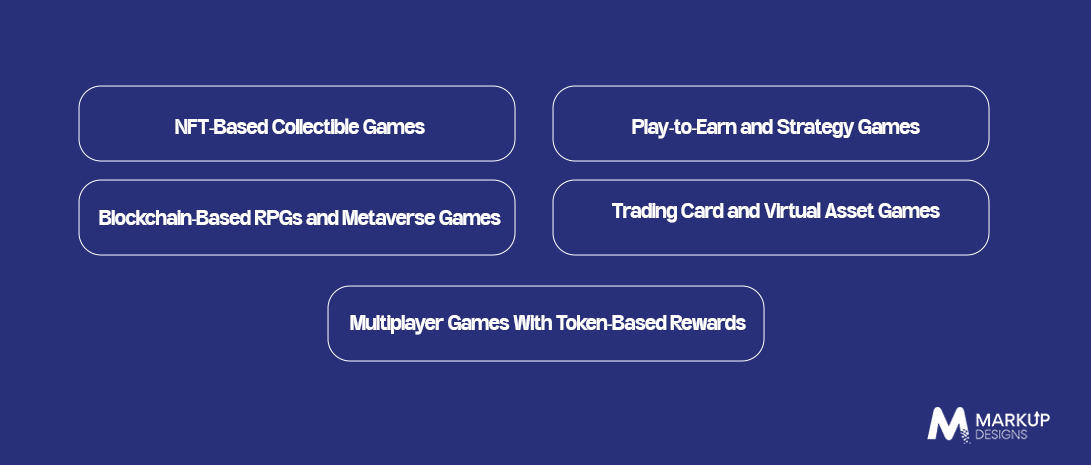
NFT-Based Collectible Games
In NFT-based collectible games, users can collect, customize, and manage their digital assets, which could be characters, creatures, equipment, or any other collectible elements. Progression systems and marketplaces for such assets should be developed only if these assets are useful for users and clearly belong to them.
Play-to-Earn and Strategy Games
In play-to-earn strategy games, users play through the game and complete tasks to earn some digital rewards linked to their actions. Users may complete missions, compete against each other, or manage their resources and receive some rewards. Developers should develop proper progression and reward systems that will make this game interesting, and its economy will not depend on unrealistic financial expectations.
Blockchain-Based RPGs and Metaverse Games
RPG games implemented with the use of blockchain technologies can use digital assets representing characters, equipment, lands or other virtual objects. The metaverse-style games could allow social interaction and customization as well. Complexity of such games makes performance, assets management, and player experience important aspects.
Trading Card and Virtual Asset Games
Blockchain-based trading card games can assign verifiable ownership to digital cards and allow players to build decks, compete, and collect rare items. Developers can establish card rarity, progression, and trading rules through a combination of game logic and blockchain records. Fair gameplay and protection against manipulation remain essential to maintaining player trust.
Multiplayer Games With Token-Based Rewards
Multiplayer games can incorporate tokens for selected activities, competitions, or community participation. Depending on the design, tokens may support in-game utility, access, or eligible reward systems. Businesses should define how tokens are earned and used, assess relevant regulations, and avoid presenting game rewards as guaranteed financial returns.
What Technologies Are Used in Blockchain Game Development?
Blockchain game development uses the traditional tools for game development alongside the use of blockchain infrastructure and Web3 integration. The choice of technology will be determined by the performance requirements of the game, the devices that the game will work on, the asset model used, transaction frequency, and security issues.
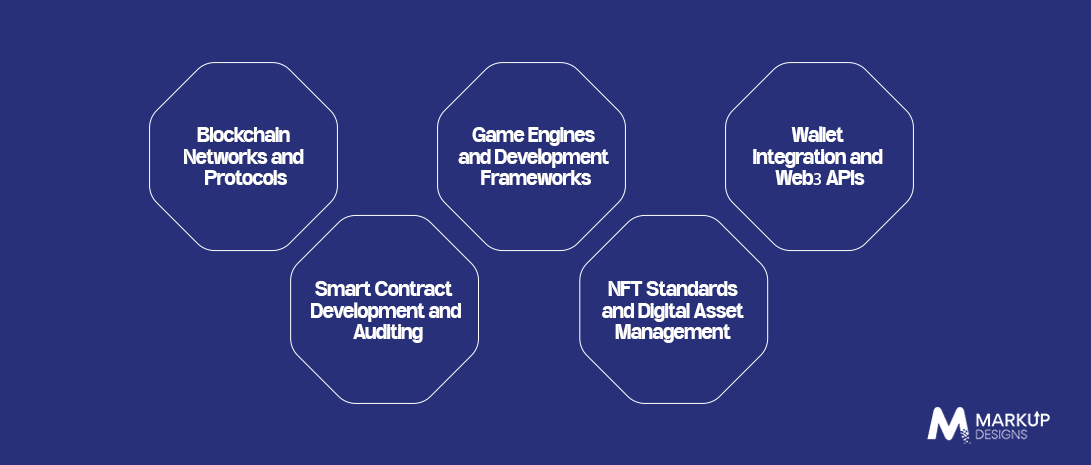
Blockchain Networks and Protocols
Blockchain networks offer the infrastructure for processing transactions, management of digital assets, and smart contracts. Developers might consider different blockchain networks such as Ethereum as well as Layer-2 solutions which complement the network in terms of transaction fees, speed, ecosystem, and security. This choice will depend on the technical and business requirements of the game.
Smart Contract Development and Audits
Smart contracts dictate the logic behind all blockchain game features such as the minting, transfer and rewarding process. Developers might use the proper programming language and framework for developing and testing of the smart contract code. The use of independent audits will enable developers to identify potential bugs in the contract although auditing does not guarantee the absence of all risks.
Game Engines and Development Frameworks
Unity and Unreal game engines offer different tools for implementing gameplay, rendering, physics, and cross-platform deployment, among other functionalities. Blockchain SDKs and Web3 libraries can connect these environments to wallet services and smart contracts. Choosing the right engine depends on the game’s visual complexity, platform requirements, and the development team’s expertise.
NFT Standards and Digital Asset Management
NFT standards define how unique digital assets are represented and transferred on supported blockchains. Developers must also determine where artwork, metadata, and other asset information will be stored. Reliable asset hosting, metadata consistency, and clear ownership rules help ensure that digital items remain usable and identifiable.
Wallet Integration and Web3 APIs
Wallet tools and Web3 APIs connect the game interface with blockchain networks, allowing players to approve transactions and interact with their assets. Developers should select compatible providers, handle failed transactions gracefully, and minimise unnecessary blockchain interactions. These integrations should also support clear error messages and secure handling of user permissions.
How Much Does Blockchain Game Development Cost in Kuwait?
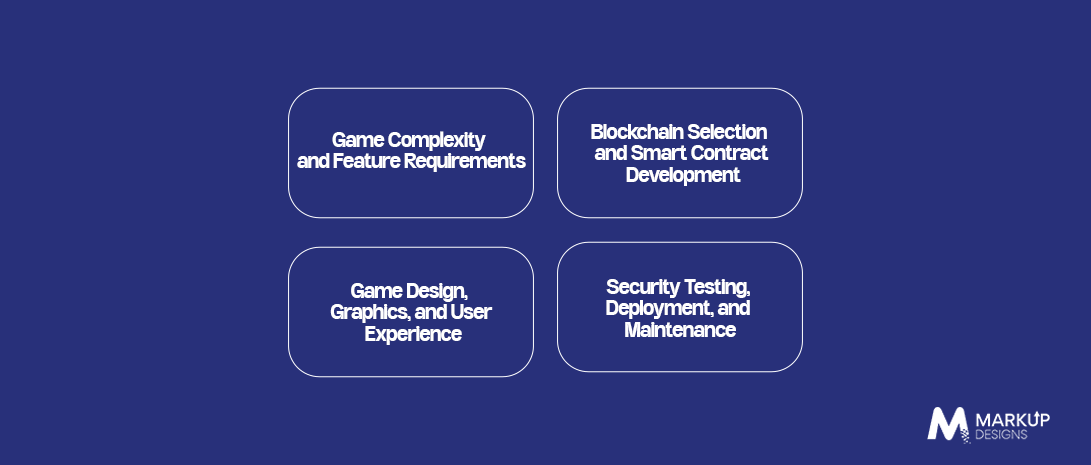
Blockchain game development cost depends on the complexity of the gameplay, the quality of visuals, functionality of the blockchain used, and security needs. Collectible games usually require less effort compared to multiplayer games with multiple smart contracts and token economies.
Game Complexity and Feature Requirements
The number of modes, interactivity, multiplayer options, and player progress systems influence the development process. The more custom mechanics and complicated backend are involved, the more effort and programming are needed. Setting up the minimum viable scope can help companies determine the necessary cost of the project.
Blockchain Selection and Smart Contract Development
Development cost will depend on the blockchain platform chosen, number of smart contracts, assets’ functionality, and transactions. Custom tokens, marketplaces for NFT, and even cross-chain options may increase the time of implementation and testing processes. Companies should consider the fees and infrastructure costs when choosing the blockchain network.
Game Design, Graphics, and User Experience
If the company wants to create unique art, animations, 3D environments, and interfaces, this process may require a significant portion of money. Also, companies have to keep in mind that the amount of details and assets required may
Security Testing, Deployment, and Maintenance
Testing costs include gameplay validation, performance checks, smart contract testing, and security reviews. After launch, businesses may need to budget for hosting, updates, monitoring, bug fixes, and contract maintenance. Planning for these recurring expenses helps provide a more realistic view of the game’s total cost of ownership.
What Challenges Do Businesses Face in Blockchain Game Development?
However, blockchain games face additional issues that do not arise from conventional games. There is a need to handle asset safety, economic stability, performance, usability, and relevant regulations to develop an entertaining game that will be enjoyed by its players.
Protecting Smart Contracts and Digital Assets
Any vulnerabilities in smart contracts or wallet connections can put your assets at risk. It is necessary to follow secure development practices, perform sufficient testing, use proper access control mechanisms, and conduct independent audits for significant smart contracts. Monitoring is also an integral part of the process after the release.
Balancing Tokenomics and In-Game Rewards
Incorrectly implemented token economics may lead to inflation, speculation, or unmanageable rewards. Businesses need to clarify how tokens will be used, what the limit of issuance is, how rewards will be distributed, and what kind of spending there will be.
Improving Scalability and Transaction Speeds
Too many transactions can raise costs and delays of blockchain interactions. It is possible to analyze layer-2 solutions, transaction batching, and other architectural options that will allow avoiding unnecessary operations on the blockchain. It is best for time-dependent gameplay to avoid slow or expensive blockchain interactions.
A Beginner-friendly Approach to Web3 Game Creation
The wallet, the costs of transactions, and signing requests might complicate gaming on the blockchain. App developers can streamline the onboarding process, make the transactions clear, and select appropriate account abstraction or custodial methods if necessary.
Addressing Regulatory Issues in Kuwait for Blockchain Games
If blockchain games include token trading, token usage, digital money transfer, or any financial elements, they can cause regulatory issues based on their construction. Any business developing blockchain games must get professional legal assistance in Kuwait in advance of choosing a monetization method or including tokens in the game.
How Should Businesses Create Safe Blockchain Games?
The creation of a blockchain game should be a structured process with business goals, gameplay development, blockchain architecture, and security as its components. Each of those stages should be verified before proceeding with the project to avoid unnecessary expenses and ensure smooth running of the game in the future.
Describe Your Game Idea and Business Model
Firstly, you need to determine your target audience, gameplay, and the problem that you wish to address with the game. Establishing the monetisation model and project scope early helps guide technical decisions and budget planning.
Choose the Right Blockchain and Technology Stack
Compare suitable blockchain networks, game engines, development frameworks, and wallet solutions against the project’s requirements. Consider transaction costs, performance, developer support, integration complexity, and security. A well-matched technology stack reduces unnecessary complexity and supports future expansion.
Design Balanced Game Economies and Reward Systems
Define how digital assets and rewards enter the game, how players earn them, and how they can be used. Model different player behaviours and economic scenarios to identify potential imbalances before launch. Rewards should reinforce progression and participation without making the game dependent on speculative demand.
Conduct Smart Contract Audits and Security Testing
Test contract logic for access-control issues, faulty transactions, and unexpected edge cases. Use automated testing, code reviews, and independent audits for critical contracts, alongside security checks for wallets and backend systems. Establish monitoring and incident-response procedures to manage risks after deployment.
Test Gameplay and Optimise User Experience
Test the game across supported devices, network conditions, and player scenarios. Evaluate loading times, controls, onboarding, transaction flows, and multiplayer performance. Feedback from usability testing and beta releases can help teams identify friction points before a wider launch.
Launch, Monitor, and Improve the Game
Release the game with clear support channels, performance monitoring, and a plan for updates. Track player retention, session activity, technical issues, transaction failures, and feedback to understand how the game performs. Use these insights to improve gameplay, strengthen security, and adjust features as player needs evolve.
How Can Businesses Choose the Right Blockchain Game Development Company in Kuwait?
Selecting a development partner requires more than comparing quotes or blockchain experience. Businesses should assess whether the company can deliver a complete gaming experience, integrate Web3 features securely, communicate clearly, and support the product after launch.
Evaluate Blockchain and Game Development Expertise
Look for experience in game mechanics, game engines, smart contracts, and blockchain integrations. A capable team should explain why particular technologies suit the project and how blockchain features will improve the player experience. Relevant project examples can help validate its technical expertise.
Review Smart Contract Security Practices
Ask how the company handles code reviews, automated testing, audits, access controls, and post-launch monitoring. The team should be able to explain how it identifies vulnerabilities and responds to security incidents. For games involving valuable digital assets, security practices should be a core selection criterion.
Assess Game Design and Web3 Integration Capabilities
A strong partner should understand both engaging gameplay and the technical requirements of Web3. Evaluate its approach to onboarding, wallet connectivity, asset management, transaction handling, and game economy design. These elements should work together without making the experience unnecessarily complicated for players.
Examine Previous Projects and Client Experience
Review case studies, live games, and examples of blockchain integrations the company has delivered. Ask about project scope, technical challenges, timelines, and the team’s role in each engagement. Client feedback and transparent delivery processes can provide additional insight into reliability.
Consider Post-Launch Support and Scalability
Blockchain games need ongoing updates, security monitoring, infrastructure maintenance, and gameplay improvements. Confirm whether the provider offers post-launch support and can accommodate future features or growing user demand. A long-term partner should help the game evolve while maintaining performance and security.
How Can Markup Designs Help Businesses With Blockchain Game Development in Kuwait?
Markup Designs helps businesses turn blockchain gaming concepts into functional, secure, and engaging digital experiences. Our team can support game development through tailored software solutions, blockchain integration, smart contract implementation, and user-focused design. By aligning technology choices with project goals, we help businesses plan scalable gaming solutions that balance Web3 functionality with enjoyable gameplay.
Build Your Next Blockchain Game With Markup Designs
Turn your gaming idea into an engaging blockchain-powered experience with the right development strategy. Partner with Markup Designs to explore secure blockchain integration, immersive gameplay, and scalable solutions tailored to your business goals.
Conclusion
Blockchain game development offers businesses opportunities to introduce digital ownership, transparent game mechanics, and new player engagement models. However, success depends on more than blockchain integration. Strong gameplay, secure smart contracts, balanced reward systems, and a user-friendly experience are essential to building a sustainable product. By choosing the right technology stack and development partner, businesses in Kuwait can create blockchain games that meet player expectations and support long-term growth.
FAQ
1. What is blockchain game development?
Blockchain game development involves building games that use blockchain technology for features such as digital asset ownership, NFT collectibles, smart contract-based transactions, and token-based rewards. These features can give players new ways to interact with and manage eligible in-game assets.
2. How much does it cost to develop a blockchain game in Kuwait?
The cost depends on gameplay complexity, graphics, blockchain selection, smart contract requirements, multiplayer functionality, and security testing. A basic blockchain game generally costs less than a complex multiplayer title with an NFT marketplace or token economy. Businesses should also account for maintenance and infrastructure expenses.
3. How long does it take to build a blockchain game?
A simple blockchain game may take a few months to develop, while a feature-rich game with advanced graphics, multiplayer functionality, and complex smart contracts may require six months or longer. The timeline depends on project scope, integrations, testing, and team size.
4. Which blockchain is best for game development?
The best blockchain depends on transaction costs, speed, security, scalability, and ecosystem support. Ethereum and compatible layer-2 networks are options for games requiring smart contracts and digital asset ownership. Developers should compare suitable networks against the game’s specific technical and commercial requirements.
5. Are blockchain games legal in Kuwait?
The legal position depends on the game’s features, token structure, payment mechanisms, and business model. Games involving cryptocurrency, token trading, or financial incentives may raise additional regulatory considerations. Businesses should seek qualified legal advice in Kuwait and verify applicable requirements before launching.
Author's Perspective
In my view, successful blockchain game development depends on finding the right balance between innovative technology and engaging gameplay. Businesses in Kuwait should prioritise security, player experience, and sustainable game economies rather than adding blockchain features simply to follow a trend. A clear strategy and the right development partner can help turn a gaming concept into a scalable product built for long-term player engagement.
Discuss Your Project NowJupinder Singh Arora
Founder and CEO
Related Posts

How Much Does Smart Contract Development Cost in...

Blockchain App Development: A Step-by-Step Guide for Entrepreneurs,...
Crypto Trading Bot Development: Architecture, Features & Cost...
Insights Are Valuable & Execution is Priceless
You’ve read about the digital future. Now, let’s build the infrastructure to take you there. Move your strategy from the page to the product.
Design Your Solution Now
Contact Us
Schedule The Appointment At Your Convenience Date And Time.
30 Min
Web Conference
Time Zone
Indian standard time (08:30pm)

Thanks For Getting In Touch!
You’ve Taken The First Step Toward Transforming Your Digital Presence. Our Experts Will Reach Out Shortly To Take It Forward.
Launch Your Dream Project
Provide a brief overview of your project, and our specialists will evaluate your requirements. We will connect with you to explore how the right digital solutions can help you launch faster.