
In Brief
- Automated decision-making enables Australian businesses to make faster, data-driven decisions by using predefined rules, algorithms, and AI technologies.
- Industries such as banking, healthcare, retail, insurance and logistics use automated systems to improve operational efficiency and decision accuracy.
- Businesses can reduce manual workloads, control operational costs, identify risks and deliver more consistent customer experiences through automation.
- Australian organisations must consider privacy, transparency, fairness and accountability requirements when implementing automated decision-making systems.
- Emerging technologies such as agentic AI, predictive analytics and explainable AI are shaping the future of automated decision-making across Australian industries.
Automated decision-making is changing how businesses process information, evaluate options and manage everyday operations. By combining predefined rules, algorithms, machine learning and artificial intelligence, organisations can automate decisions that would otherwise require manual analysis. From approving financial applications to identifying potential risks and managing supply chains, these systems help businesses handle large volumes of data and respond to operational requirements more efficiently.
In Australia, the adoption of automated decision-making is gaining importance as businesses focus on improving productivity, managing costs and delivering better customer experiences. However, implementing these systems also involves addressing concerns around data privacy, algorithmic bias, transparency and regulatory compliance. Understanding the business benefits, potential risks, applicable Australian regulations and emerging technology trends can help organisations make informed decisions about adopting automation.
What Is Automated Decision-Making and How Does It Work?
Automated decision-making involves using computers, algorithms, and artificial intelligence to assess information and make decisions with little human intervention. The systems are used by businesses to process applications, analyze risk, manage transactions, and make routine business decisions.
Rule-Based Decision-Making vs AI-Powered Decision-Making
The rule-based system will follow specific conditions to achieve a particular end, for instance, approving applications with certain eligibility conditions. On the other hand, the AI system will use machine learning techniques to analyze data, learn patterns and make predictions.
How Automated Decision-Making Systems Process Data
The ADM systems get information from different business applications and databases and process the information by applying predetermined rules and analyzing relevant conditions before making a particular decision. The system may take some action following the decisions made such as approving or declining a request.
Key Technologies Behind Automated Decision-Making
A number of technologies are used in automated decision making including artificial intelligence, machine learning, predictive analytics and robotic process automation (RPA). Business rules engine and NLP are also used to analyze information and assist in business decision making.
Why Are Australian Businesses Adopting Automated Decision-Making?
Australian companies have been employing automated decision-making techniques to handle the rising amount of data and improve their processes. The tools used by businesses assist in minimizing human interference, improving the rate of information processing, and ensuring consistency throughout business operations.
Rising Need for Fast Decision-Making in Businesses
The fast-paced business environment requires businesses to act promptly when handling customers’ requests, deals, and other issues. Automating the decision-making process allows the company to process tasks like loan application approval, deal assessment, and customer verification more efficiently and avoid delays caused by human involvement.
Data Complexity and Increasing Operational Needs
A variety of sources are used by businesses to acquire their information. CRM, ERP, and finance systems are examples of these sources. ADM tools analyze datasets provided by the companies and make the necessary decisions without fully relying on manual decision-making processes.
Consistency, Accuracy, and Scalability Requirements
Automated processes minimize variability in manual decision-making by using the same rules and evaluation criteria throughout similar situations. Additionally, ADM helps businesses handle rising workloads without requiring proportional increases in staff numbers.
What Are the Business Benefits of Automated Decision-Making?
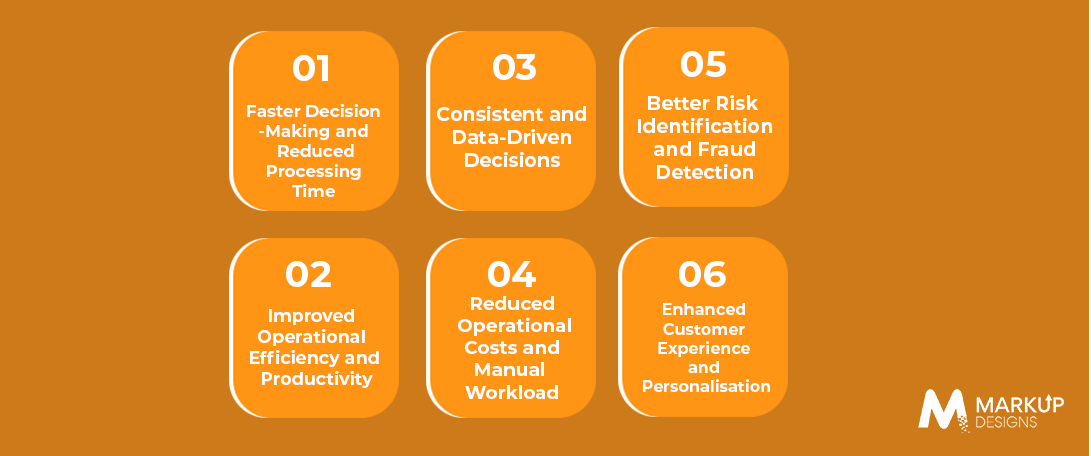
Automated decision-making helps businesses improve productivity, reduce repetitive work, and make informed operational decisions. With reliable data and appropriate oversight, these systems can also strengthen risk management and customer service.
Faster Decision-Making and Reduced Processing Time
Automated systems evaluate applications, transactions and requests faster than many manual processes. This helps businesses reduce approval delays, handle higher request volumes and respond to customer requirements more efficiently.
Improved Operational Efficiency and Productivity
Automating routine evaluations allows employees to focus on strategic tasks and complex decisions. It also reduces administrative work and improves coordination between connected business processes.
Consistent and Data-Driven Decisions
ADM systems use predefined rules and analytical models to evaluate information consistently. This helps businesses reduce subjective variations and make decisions supported by relevant data.
Reduced Operational Costs and Manual Workload
Automating repetitive processes reduces the time and resources required for manual reviews. Businesses can manage larger workloads, minimise avoidable errors and control operational expenses.
Better Risk Identification and Fraud Detection
Automated systems analyse transaction records, customer behaviour and historical data to identify unusual patterns. Financial institutions and retailers can use these insights to flag suspicious activities and support fraud prevention.
Enhanced Customer Experience and Personalisation
Businesses can analyse customer preferences and interactions to deliver relevant recommendations, personalised offers and faster services. Automated processes also help reduce response times and improve customer engagement.
Where Can Australian Businesses Use Automated Decision-Making?
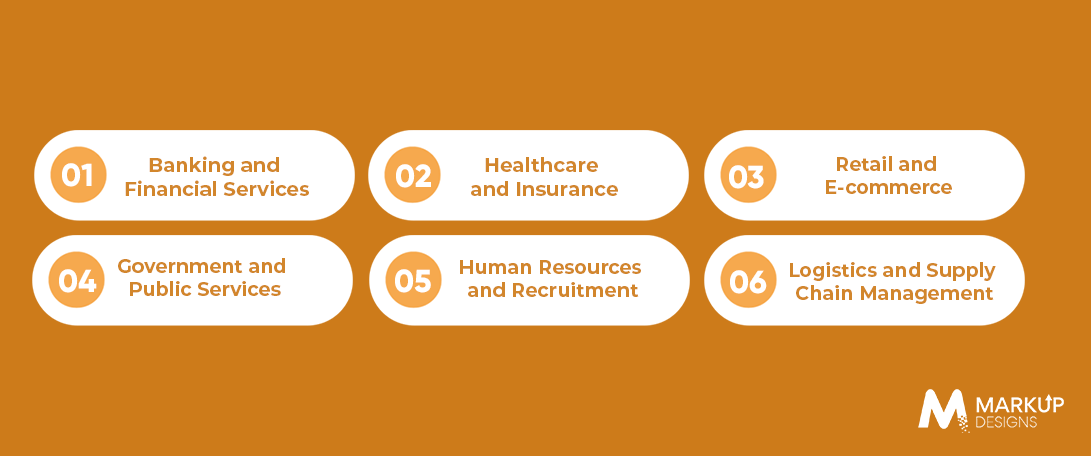
Automated decision-making supports various industries by simplifying information processing, improving workflows and reducing manual evaluations. Its applications depend on business requirements, available data and the complexity of decisions.
Banking and Financial Services
Banks use ADM systems for credit assessments, loan approvals, transaction monitoring and fraud detection. These applications help evaluate financial information and process customer requests more efficiently.
Healthcare and Insurance
Healthcare providers use automation for appointment management, patient data analysis and administrative workflows. Insurance companies apply ADM to assess claims, verify policy eligibility and identify inconsistencies.
Retail and E-commerce
Retailers use automated systems for inventory management, product recommendations, demand forecasting and payment verification. These applications help improve purchasing experiences and manage stock more effectively.
Government and Public Services
Government agencies can automate application processing, eligibility assessments and administrative decisions. Such systems require appropriate transparency and human review, particularly when decisions affect individual rights or access to public services.
Human Resources and Recruitment
HR teams use automated tools to screen applications, organise candidate information and support workforce planning. Regular assessments are important to prevent biased outcomes in recruitment and employee evaluation.
Logistics and Supply Chain Management
Logistics businesses use ADM to optimise delivery routes, forecast demand and manage inventory. Automated alerts can also help identify shipment delays and potential supply chain disruptions.
How Can Businesses Implement Automated Decision-Making Systems?
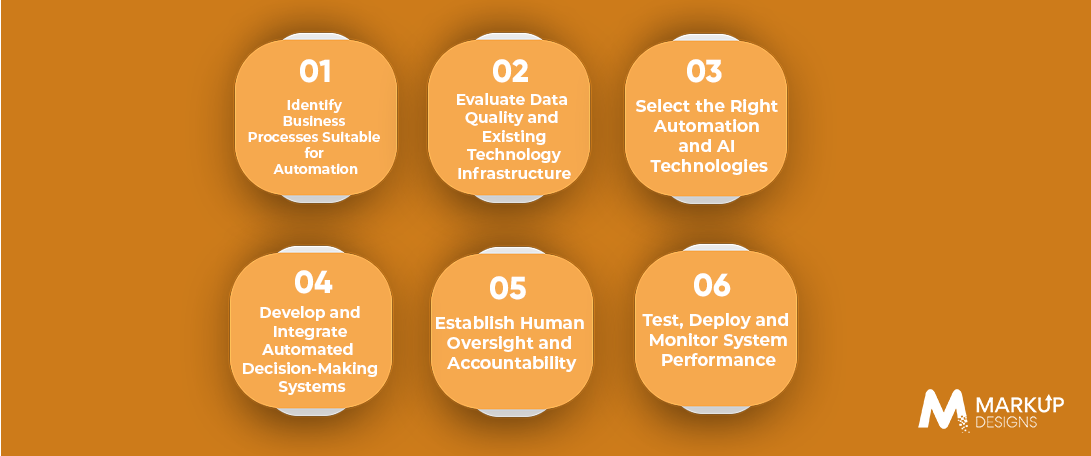
Successful ADM implementation requires clear business objectives, reliable data and suitable technology. A structured approach helps organisations integrate automation while maintaining system accuracy and accountability.
Identify Business Processes Suitable for Automation
Identify repetitive decisions involving clear criteria, such as application screening, transaction verification and inventory management. Prioritise processes where automation can deliver measurable improvements.
Evaluate Data Quality and Existing Technology Infrastructure
Assess the accuracy, availability and consistency of existing business data. Review databases, software applications and integration requirements to ensure the infrastructure can support automated processes.
Select the Right Automation and AI Technologies
Choose technologies based on decision complexity and business requirements. Rule-based engines suit predefined conditions, while machine learning supports predictive analysis and complex pattern recognition.
Develop and Integrate Automated Decision-Making Systems
Develop or customise the solution and connect it with existing business applications through APIs and data pipelines. Proper integration ensures accurate information exchange and efficient workflows.
Establish Human Oversight and Accountability
Define which decisions can be automated and which require human approval. Clear review procedures and escalation mechanisms help address incorrect or unusual outcomes.
Test, Deploy and Monitor System Performance
Test the system for accuracy, security and reliability before full deployment. Continuous monitoring helps identify errors, assess performance and maintain the effectiveness of automated decisions.
What Are the Risks of Automated Decision-Making and How Can Businesses Mitigate Them?
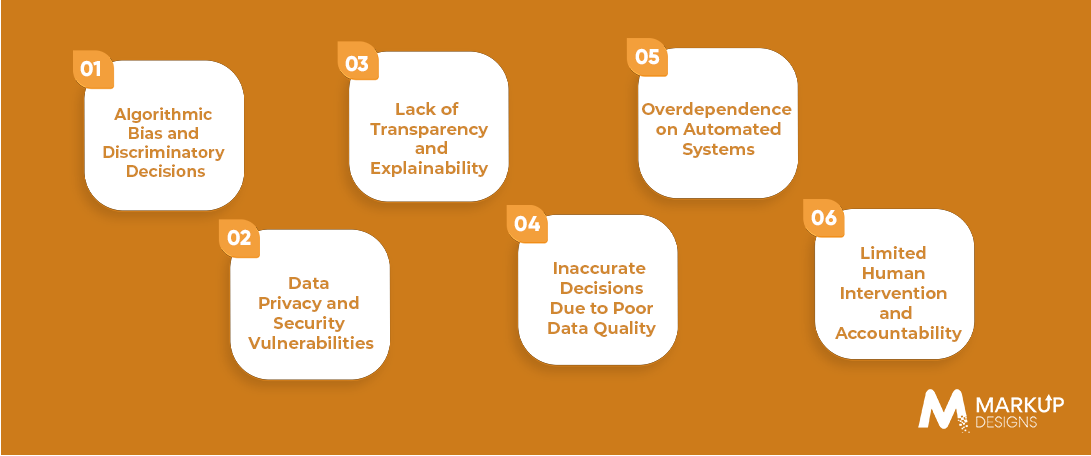
Despite its benefits, automated decision-making can introduce privacy, security, fairness and accountability challenges. Businesses must establish appropriate safeguards to ensure reliable and responsible system performance.
Algorithmic Bias and Discriminatory Decisions
Biased training data or unsuitable evaluation criteria can produce unfair outcomes in recruitment, lending and other processes. Businesses should conduct regular bias assessments, use representative datasets and maintain human review mechanisms.
Data Privacy and Security Vulnerabilities
ADM systems may process sensitive personal and financial information, creating risks of unauthorised access and data breaches. Encryption, access controls, secure storage and regular security assessments help protect this information.
Lack of Transparency and Explainability
Complex algorithms can make it difficult to understand how decisions are generated. Businesses should maintain decision records, document evaluation criteria and use explainable AI techniques wherever appropriate.
Inaccurate Decisions Due to Poor Data Quality
Incomplete or outdated information can affect system accuracy and produce incorrect outcomes. Regular data validation, database audits and quality checks help maintain reliable decision-making.
Overdependence on Automated Systems
Excessive reliance on automation can create problems when systems fail or encounter unusual situations. Businesses should maintain manual alternatives and ensure employees can review automated recommendations.
Limited Human Intervention and Accountability
Without clear oversight, responsibility for incorrect automated decisions may become difficult to establish. Organisations should assign decision ownership, maintain audit trails and provide appropriate human review procedures.
Which Australian Regulations and Compliance Requirements Apply to Automated Decision-Making?
Australian businesses using automated decision-making must consider privacy, consumer protection and cybersecurity requirements. The applicable obligations depend on the organisation, the type of information processed and the impact of automated decisions on individuals. Understanding these requirements helps businesses implement automation responsibly and reduce regulatory risks.
Privacy Act 1988 and Australian Privacy Principles (APPs)
The Privacy Act 1988 regulates how covered Australian organisations collect, use, store and disclose personal information. Its Australian Privacy Principles (APPs) require businesses to maintain appropriate data protection, transparency and access practices. Organisations using personal information in automated decisions should ensure their systems follow applicable privacy obligations.
Automated Decision-Making Transparency Requirements Effective December 2026
From 10 December 2026, new requirements under APP 1.7–1.9 will require covered entities to explain in their privacy policies when computer programs make or substantially assist decisions that could significantly affect individuals’ rights or interests using personal information. Businesses should review their automated processes, identify relevant decisions and update their privacy disclosures before the requirements commence.
Privacy and Responsible Information Sharing Act 2024 (Western Australia)
Western Australia’s Privacy and Responsible Information Sharing Act 2024 introduces specific automated decision-making requirements for public sector entities and relevant contracted service providers. Under Information Privacy Principle 10, applicable entities must assess the impact of automated decisions, consider potential harm and bias, and provide appropriate transparency and opportunities for human intervention. These provisions commenced on 1 July 2026.
Australian Consumer Law and Fair Trading Obligations
The Australian Consumer Law (ACL) applies to business conduct involving automated products and services. Organisations must avoid misleading representations, unfair practices and conduct that breaches consumer protection requirements. Automated pricing, recommendations and customer eligibility decisions should be designed to support transparent and fair business practices.
Cybersecurity and Critical Infrastructure Compliance
Businesses must protect automated decision-making systems against cyber threats, unauthorised access and data breaches. The Security of Critical Infrastructure Act 2018 imposes additional obligations on organisations responsible for covered critical infrastructure assets, including certain requirements for cyber incident reporting and risk management. Applicable organisations should incorporate these obligations into their security frameworks.
What Are the Future Trends in Automated Decision-Making in Australia?
Advancements in artificial intelligence, machine learning and connected technologies are expanding how Australian businesses automate decisions. Future developments will focus on more adaptive systems, better data analysis and stronger collaboration between human decision-makers and intelligent technologies.
Agentic AI and Autonomous Business Decisions
Agentic AI systems can plan tasks, use tools and execute multi-step workflows with varying levels of human supervision. Businesses may increasingly use these systems to manage customer requests, coordinate operations and support complex decisions while retaining appropriate approval controls.
Predictive Analytics and Advanced Machine Learning
Predictive analytics will help businesses use historical and real-time data to anticipate customer behaviour, market demand and operational risks. Advanced machine learning models can identify patterns and generate insights that support more informed business decisions.
Explainable AI and Responsible Automation
As automated decisions become more influential, businesses will place greater emphasis on understanding how AI systems reach their conclusions. Explainable AI tools can help identify decision factors, detect potential bias and make automated outcomes easier to review.
Human-AI Collaboration and Decision Intelligence
Future decision-making systems will increasingly combine AI-generated insights with human expertise. Automation can handle routine evaluations and data analysis, while employees review complex cases, assess exceptions and make decisions requiring professional judgement.
Real-Time Decision-Making Through Connected Data
Integration with cloud platforms, IoT devices and business applications will enable systems to process information as it becomes available. This can support faster decisions in areas such as inventory management, logistics, fraud monitoring and resource allocation.
Industry-Specific AI Solutions and Intelligent Automation
Businesses will increasingly adopt AI solutions designed around specific industry requirements. From automated financial assessments to healthcare administration and supply chain optimisation, specialised systems can address operational challenges while supporting relevant industry standards.
How Much Does It Cost to Develop an Automated Decision-Making System in Australia?
The cost of developing an automated decision-making system in Australia depends on its complexity, technology requirements and integration needs. A basic rule-based solution generally requires fewer resources than a custom AI-powered platform involving machine learning, multiple data sources and advanced analytics.
Key Factors Affecting ADM Development Costs
Development costs depend on factors such as system complexity, data preparation, AI model requirements, security controls and third-party integrations. The number of automated workflows, testing requirements and ongoing maintenance arrangements also influence the overall investment.
Custom Development vs Ready-Made Automation Solutions
Ready-made automation platforms can reduce initial development time and suit businesses with standard requirements. Custom-built systems offer greater flexibility, allowing organisations to address specific workflows, integrate existing applications and develop decision models around their operational needs.
Integration, Maintenance and Ongoing Operational Costs
Beyond initial development, businesses should account for API integrations, cloud infrastructure, software updates and system monitoring. AI-powered solutions may also require model retraining, performance assessments and security maintenance to remain reliable as business requirements and data change.
How Can Markup Designs Help Australian Businesses Build Automated Decision-Making Solutions?
Markup Designs helps businesses turn automation requirements into practical software solutions through custom development, AI integration and application engineering. From identifying suitable processes and selecting technologies to developing, integrating and testing systems, the team can support businesses in building solutions that align with their operational goals. A focus on scalability, data security and system performance helps organisations prepare for evolving automation requirements.
Build Smarter Business Decisions with AI-Powered Solutions
Automate complex workflows, improve operational efficiency and make data-driven decisions with intelligent software solutions designed around your business needs.

Conclusion
Automated decision-making is becoming an important part of how Australian businesses manage operations, analyse information and improve customer experiences. While it offers benefits such as faster processing, reduced manual work and more consistent decisions, organisations must also address data privacy, algorithmic bias and regulatory compliance. By selecting suitable technologies, maintaining human oversight and adopting responsible development practices, businesses can build automated systems that support long-term operational growth.
FAQ
1. What is automated decision-making in business?
Automated decision-making uses software, predefined rules and AI algorithms to evaluate information and generate decisions with minimal human involvement.
2. Is automated decision-making legal in Australia?
Yes. Automated decision-making is permitted in Australia, provided organisations comply with applicable privacy, consumer protection, discrimination and other relevant legal requirements.
3. Which industries benefit most from automated decision-making?
Banking, healthcare, insurance, retail, recruitment, government and logistics benefit from automated decision-making through faster processing, improved data analysis and streamlined operations.
4. How does AI improve automated decision-making?
AI analyses large datasets, identifies patterns and generates predictions that help businesses evaluate information and support complex decisions.
5. What are the main risks of automated decision-making?
The main risks include algorithmic bias, data privacy breaches, inaccurate outcomes, limited transparency and inadequate human oversight.
Author's Perspective
Automated decision-making is not simply about replacing manual processes with AI. Its real value lies in helping businesses make informed decisions, manage growing data requirements and improve operational efficiency. For Australian organisations, successful adoption will depend on choosing the right technologies while maintaining transparency, data privacy and human oversight. Businesses that balance automation with responsible implementation will be better positioned to achieve sustainable results.
Discuss Your Project NowGaurav Goyal
Global Sales- VP
Related Posts

Integrating AI into ERP Systems: A Complete Business...

Geopatriation and Sovereign AI in the Middle East:...

Build vs Buy RAG Solutions: Choosing the Right...
Insights Are Valuable & Execution is Priceless
You’ve read about the digital future. Now, let’s build the infrastructure to take you there. Move your strategy from the page to the product.
Design Your Solution Now
Contact Us
Schedule The Appointment At Your Convenience Date And Time.
30 Min
Web Conference
Time Zone
Indian standard time (08:30pm)

Thanks For Getting In Touch!
You’ve Taken The First Step Toward Transforming Your Digital Presence. Our Experts Will Reach Out Shortly To Take It Forward.
Launch Your Dream Project
Provide a brief overview of your project, and our specialists will evaluate your requirements. We will connect with you to explore how the right digital solutions can help you launch faster.