
In Brief
- ERP integration links accounting, HR, sales, inventory, and operations into a unified system.
- It saves time and effort by automating routine business procedures.
- Real-time information allows Australian companies to make decisions faster and with more precision.
- Integrated ERP solutions make the scaling process easier and avoid excessive complexity in business processes.
- Data compliance becomes much simpler when all information is gathered and managed centrally.
Digital transformation has become the priority of Australian businesses that seek greater efficiency, reduced operational costs, and competitiveness in dynamically changing markets. However, there are still many organizations that utilize various software for their financial activities, inventory management, customer relationship management, and operations, which causes inefficiencies and increases administrative burden. An ERP integration is the solution for this problem, as it unifies business systems.
No matter whether you are a manufacturer, retailer, healthcare facility, or logistics company – with an integrated ERP system, you will be able to boost productivity, collaborate more effectively, and gain real-time insights into your business. In this article, we discuss what benefits ERP integration brings to Australian companies and how to get ready for implementation.
What Is ERP Integration and Why Is It Important for Australian Businesses?
ERP integration is the connection of ERP software with other enterprise applications such as CRM, accounting, inventory, and HR management. The process allows for exchanging information between different departments through one platform, thereby eliminating unnecessary workload and enhancing coordination among the various parts of the organization. In Australia, this enhances operational efficiency as well as facilitates business growth.
Understanding ERP Integration and Its Core Functions
ERP integration involves connecting software applications to automate data exchange as well as workflow processes. Some of the major functions of ERP integration include data synchronization, process automation, application connectivity, and centralized reporting. Through ERP integration, businesses can ensure consistency in record-keeping while reducing the number of repetitive administrative tasks.
The Role of ERP Integration in Connecting Business Operations
In most cases, businesses use separate applications to manage their finances, sales processes, inventory, and purchasing functions. ERP integration brings all these functions together, enabling departments to have access to updated information without having to go through the manual data transfer process.
Why Australian Businesses Are Implementing ERP Systems
Australian businesses implement ERP systems to increase visibility, streamline processes, and cope with increasing business needs. These systems enable companies to coordinate their dispersed operations, respond to customers’ demands, and keep more control over their resources. Also, these systems provide an appropriate platform for digital transformation.
How Does ERP Integration Make Australian Businesses More Efficient?
ERP integration facilitates daily operations because it connects business applications and automates information exchange. This means that it decreases the amount of manual work and increases efficiency.
Automating Recurring Business Processes and Workflows
ERP integration automates recurring processes, including invoice creation, purchase orders, payroll changes, and order management. In other words, it eliminates the need for manual intervention, minimizes processing errors, and allows staff members to concentrate on more important business processes.
Eliminating Data Silos in Business Departments
Disconnected applications often hinder departments from using consistent information. ERP integration creates a single information space where the finance, sales, HR, and operations teams can have access to updated information. This improves collaboration and reduces duplicate data entry.
Improving Inventory and Supply Chain Management
Integration of ERP software with inventory, procurement, and warehouse systems makes it possible for a company to have visibility of its stock levels and supplier activity. The company is able to manage inventory movement, replenish stock levels, and manage purchase orders better, thus making fewer mistakes related to these processes.
Streamlining Financial Management and Reporting
ERP integration with accounting, payroll, and billing software allows a company to have an easier time managing financial data. This includes tracking expenses, cash flows, reconciliation of transactions, and generating reports.
Boosting Employee Productivity and Resource Allocation
ERP integration means that all information related to workflow processes is centralized, and employees do not need to switch between several programs to complete their tasks. In addition, managers can allocate and track resources and performance.
What Growth Opportunities for Businesses Are Generated by ERP Integration in Australia?
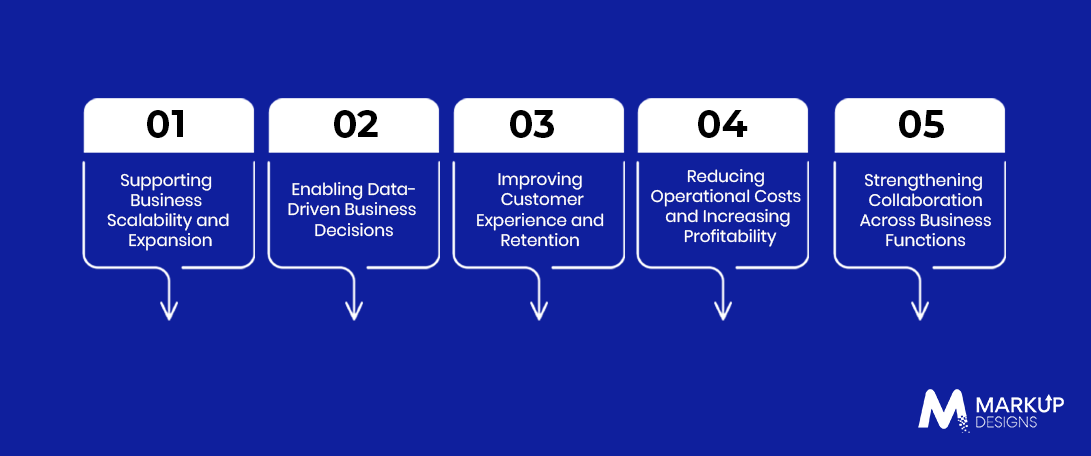
Apart from improving everyday operations of companies, ERP integration allows a company to create scalable IT infrastructure for future business growth. This includes not only support of business expansion, but also improvement of customer relations and gathering of data required to find new business opportunities.
Supporting Business Scalability and Expansion
As business grows, handling increased numbers of customers, transactions, and even working locations becomes challenging. ERP integration is a means to connect new apps and departments without making operations too complicated.
Enabling Data-Driven Business Decisions
ERP integration enables to unite all data collected in different departments of the company. It provides management with the possibility to receive a clearer picture of the company’s performance. Real-time reporting helps to spot sales trends, track down expenditures, analyze demand, and look for possible ways of improvement.
Improving Customer Experience and Retention
ERP integration with CRM and order management systems will provide the front desk workers with up-to-date information about customer data, order status, and inventory. Thus, it will facilitate a better response to customer needs and ensure the reliability of the customer experience.
Reducing Operational Costs and Increasing Profitability
ERP integration lowers costs such as the cost of manual entries, duplicating procedures, and incorrect allocation of resources. With automated workflows and improved inventory control, companies get an opportunity to manage their operating costs and improve profitability.
Strengthening Collaboration Across Business Functions
ERP integration connects departments through shared records and coordinated workflows. Sales, finance, procurement, and operations teams can access relevant updates, reducing communication gaps and helping employees work toward common business objectives.
Which Australian Industries Benefit Most from ERP Integration?
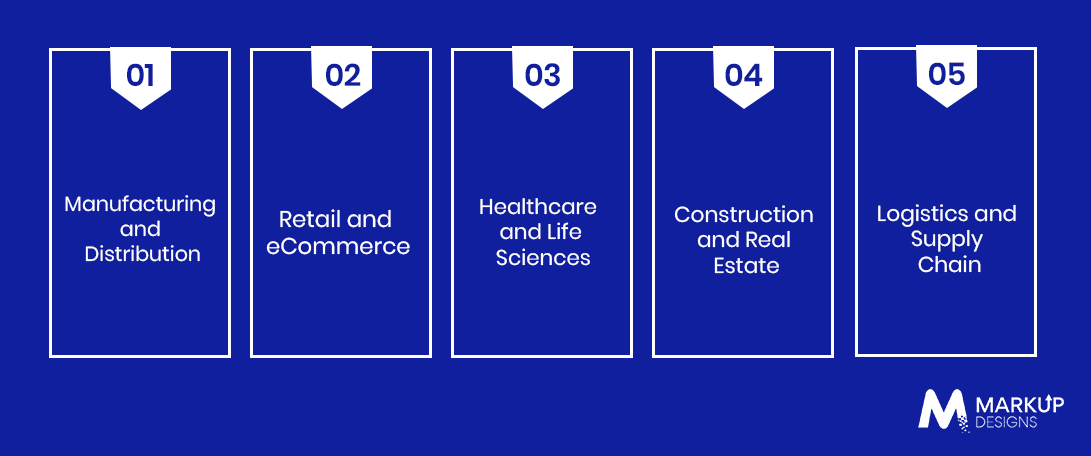
ERP Integration is useful for those industries where coordinated operations, accurate records, and proper communication are required. Integrated systems will be helpful for industries like manufacturing, retail, healthcare, construction, and logistics in Australia in terms of improving the level of operational control.
Manufacturing and Distribution
ERP integration will enable production, inventory, purchasing, and warehouse systems to communicate properly. The manufacturers will be able to coordinate their production schedules, raw material tracking, and supplier activities.
Retail and eCommerce
The retailers will be able to integrate ERP systems with eCommerce websites, payment gateways, and inventory systems to achieve the synchronization of orders, product information, and stock levels.
Healthcare and Life Sciences
The organizations in the healthcare industry can connect their ERP systems with hospital management systems, pharmacy, laboratory, and financial systems. This way, the companies will be able to improve coordination of their administrative, procurement, and resource management activities as well as to ensure appropriate security and data protection measures.
Construction and Real Estate
The construction industry will find the ERP integration with project management, procurement, accounting, and human resources applications beneficial. In addition, the real estate business can also integrate the systems.
Logistics and Supply Chain
ERP integration connects transportation, warehouse, fleet, and order management systems. Businesses gain better shipment visibility, delivery coordination, and inventory tracking, helping them manage supply chain activities more efficiently.
What Are the Key Challenges of ERP Integration for Australian Businesses?
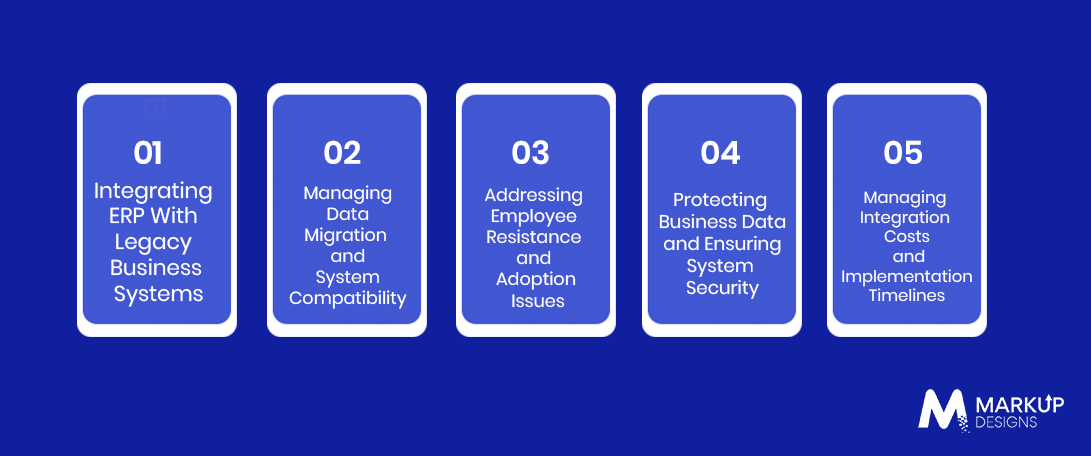
Careful planning is needed for integration to prevent issues with data synchronization and operations. Knowledge about common problems will enable companies to develop solutions before implementing integration.
Integrating ERP With Legacy Business Systems
Some business applications may not have API compatibility with the newest ERP. Companies will need additional tools to facilitate the process of creating the connection.
Managing Data Migration and System Compatibility
Problems with format, duplicates, and outdated data can be an issue during the migration process. Companies should analyze the existing data and make it compatible with the system.
Addressing Employee Resistance and Adoption Issues
Employees might experience difficulties with adapting to the new environment. Special training, proper communication, and engagement will help to increase adoption.
Protecting Business Data and Ensuring System Security
Integration of multiple applications creates more points for possible data access. Encryption, security measures in API, access control by role will help to protect the business.
Managing Integration Costs and Implementation Timelines
The cost of integration depends on several factors like application complexity, level of customization, and data migration requirements. Businesses should define project priorities, establish realistic budgets, and consider phased implementation to manage costs and timelines.
How Can Australian Businesses Implement ERP Integration Successfully?
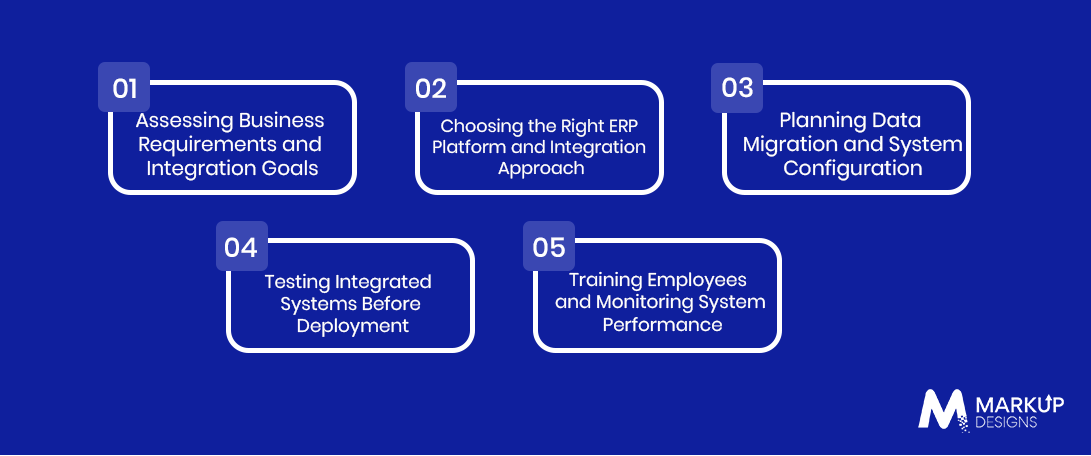
An implementation strategy for the company is critical to ensure the proper alignment of ERP system integration according to the requirements of businesses. The planned implementation strategy will also eliminate any possible risks and improve the performance of the system.
Assessing Business Requirements and Integration Goals
It is important to analyze existing problems, determine applications that will be integrated, and set goals for this process. The objectives may include reduction of the processing time, improvement of accuracy in inventories, etc.
Choosing the Right ERP Platform and Integration Approach
The chosen ERP system should be appropriate for a particular business size, industry-specific demands, current infrastructure, and further development. Additionally, the company has to choose the best integration strategies.
Planning Data Migration and System Configuration
In order to prepare data migration, it is necessary to analyze which data should be migrated and to develop appropriate formats. Proper field mapping, validation, workflow configuration, and access management are also necessary to ensure data integrity.
Testing Integrated Systems Before Deployment
Functional, performance, integration and security testing can help to detect potential issues in advance. Also, user acceptance testing has to be conducted to check whether connected systems satisfy operational needs.
Training Employees and Monitoring System Performance
Employees should receive practical training based on their roles and updated workflows. After deployment, businesses must monitor system performance, data synchronization, integration errors, and user adoption to identify areas requiring improvement.
Which Australian Compliance Requirements Should Businesses Consider During ERP Integration?
It is important to consider compliance requirements related to privacy, taxation, and industry-related rules when integrating ERP software solutions in Australia.
Australian Privacy Principles Under the Privacy Act 1988
Australian Privacy Principles (APP) define how organizations bound by the Privacy Act 1988 should manage personal information that falls under its regulation. Businesses using integrated ERP solutions should use proper access controls, data handling practices, and secure data storage procedures.
Australian Taxation Office (ATO) Reporting and Record-Keeping Requirements
Integration of ERP with accounting, invoicing, and payroll applications could allow for maintaining consistency of records. Appropriate ERP solution could help businesses to comply with GST reporting, payroll requirements, and record-keeping obligations regarding taxation issues.
Notifiable Data Breaches (NDB) scheme
According to the NDB scheme, covered entities should notify affected individuals and the Office of the Australian Information Commissioner (OAIC) about eligible data breaches, which are likely to cause serious harm to the affected individuals. Businesses should create incident response procedures, access monitoring, and security controls.
Industry-Specific Data Security and Compliance Obligations
There could be some other regulatory obligations according to industry. Healthcare organizations should consider health information privacy requirements; financial institutions – APRA regulations and businesses handling payment card information should consider PCI DSS.
What Emerging Technologies Are Shaping the Future of ERP Integration in Australia?
Advanced technologies are revolutionizing ERP integration by adding intelligence, adaptability, and responsiveness to evolving business needs. Australian enterprises have the ability to leverage these technological innovations for automating business operations, increasing data visibility, and enhancing technological environment connectivity.
AI-Powered Automation and Predictive Analytics
Integration of AI solutions allows ERP systems to automate processes, uncover patterns in business operations, and generate predictive insights. Enterprises can leverage AI technologies to predict inventory needs, detect financial anomalies, and balance resources.
Cloud-Based ERP and Real-Time Data Access
Cloud-based ERP solutions allow employees to access business data irrespective of their geographical location without relying on on-site infrastructure. Cloud application integration helps synchronize data and enables enterprises to scale operations according to their evolving needs.
IoT Integration for Connected Business Operations
Integration of IoT devices in ERP systems helps enterprises to gather operational data directly from IoT-connected devices and machinery. Manufacturers can monitor equipment performance, production process conditions, and maintenance needs through such integration.
Advanced Analytics for Business Intelligence
Integration of an ERP system with business intelligence software enables businesses to derive useful information from their operational data. They will be able to analyze the performance of their sales activities, financial data, movement of their inventory, and efficiency of their employees using dashboards.
How Can Markup Designs Help Australian Businesses With ERP Integration?
At Markup Designs, we help our customers create and integrate technology systems in line with their operational needs and goals. We concentrate on connecting existing applications, workflow management, and enhancing data accessibility within businesses.
Whether you need us to develop your APIs or integrate other third-party systems, develop custom ERP solutions, or go for cloud solutions, we can help Australian businesses create an interconnected and scalable technology environment.
Connect Your Business Systems With Smarter ERP Integration
Eliminate disconnected workflows, improve operational visibility, and build a technology infrastructure that supports sustainable business growth.

Conclusion
ERP integration assists companies in Australia with connecting vital applications, automating business processes, and increasing efficiency. From financial management and inventory management to customer experience and business intelligence, integrated systems offer more insight into the activity within the company.
Nevertheless, the benefits will not be obtained without the proper integration strategy, secure architecture, and system optimization. Through proper alignment of technology needs with business needs, a company can establish scalable operations, effective resource management, and better foundations for future growth.
FAQ
1. What is the cost of ERP integration in Australia?
The cost of ERP integration in Australia depends on the amount of applications to be integrated, system complexity, customization, data migration, and other factors that determine the process of implementation. Relatively simple integration projects might require a modest budget, whereas complex enterprise integration projects would entail greater spending. All expenses should be considered in order to prepare a budget.
2. How long does ERP integration take in Australia?
ERP integration can take anything from a couple of weeks to several months, depending on the number of systems, data migration requirements, customization, testing, and other factors that determine the project scope. A straightforward integration may be completed faster, while large enterprise projects require more extensive planning and deployment.
3. Are there possibilities to integrate ERP systems with existing CRM and accounting applications?
Sure, ERP systems are able to integrate with existing CRM and accounting applications via APIs, middleware, and other methods. As a result, businesses are capable of synchronizing their customer information, financial transactions, sales, and reports within integrated systems.
4. What is the difference between ERP implementation and ERP integration?
The process of ERP implementation refers to the introduction of the ERP system aimed at managing business processes. ERP integration, in turn, involves the connection of an ERP system with different applications like CRM, accounting, inventory, and HR.
5. How can small and medium businesses gain benefits from ERP integration?
With the help of ERP integration, small and medium-sized enterprises can automate administrative tasks, eliminate duplication of information, increase financial visibility, and optimize inventory. Moreover, ERP integration assists SMEs in linking applications and scaling business processes.
Author's Perspective
Today, ERP integration is not only a connection of applications but a creation of the united business environment where information will be used during each decision-making process. Australian companies, paying attention to system compatibility, automation, and data security, may improve their efficiency and prepare for further expansion.The real value lies in choosing an integration strategy that solves existing business challenges and remains adaptable as organizational needs evolve.
Discuss Your Project NowJupinder Singh Arora
Founder and CEO
Related Posts

Supply Chain Automation Software Development: Modernizing Australian Enterprises
BLE System Integration: Enterprise Applications, Architecture & Implementation...
Custom Enterprise App Development powering Dubai’s 2040 Vision
Insights Are Valuable & Execution is Priceless
You’ve read about the digital future. Now, let’s build the infrastructure to take you there. Move your strategy from the page to the product.
Design Your Solution Now
Contact Us
Schedule The Appointment At Your Convenience Date And Time.
30 Min
Web Conference
Time Zone
Indian standard time (08:30pm)

Thanks For Getting In Touch!
You’ve Taken The First Step Toward Transforming Your Digital Presence. Our Experts Will Reach Out Shortly To Take It Forward.
Launch Your Dream Project
Provide a brief overview of your project, and our specialists will evaluate your requirements. We will connect with you to explore how the right digital solutions can help you launch faster.