

In Brief
- Australia’s open banking system works on the Consumer Data Right (CDR) model, where consumers have the right to share their financial data with eligible organizations in a secure manner.
- The enterprises can leverage open banking for improving lending & credit decision-making, digital banking, payments, cash flow management, wealth management, and embedded finance.
- There are certain prerequisites required for an effective implementation of open banking that include secure APIs, consent management, data privacy, regulatory compliance, integration, and financial data.
- The development of open banking solutions in Australia could range from AUD 70,000 to 700,000+ depending on the complexity, which can take anywhere between 3-6 months for basic solutions, 6-9 months for mid-level platforms, and 10-12 months+ for enterprise-level solutions.
- The enterprises need to first identify their objective, evaluate their CDR needs, tackle security and integration challenges, and adopt the solution in a phased manner.
Australians’ management and distribution of financial data is shifting. Consumers have high demands when it comes to speed and convenience in financial services, as well as an improved personal experience. In order to cope with these demands, enterprises are looking into open banking in order to provide better financial services using secure sharing of data.
Open banking in Australia works according to the Consumer Data Right (CDR), a policy that enables consumers to share their data with accredited entities with their consent. Through open banking, enterprises can improve their decisions regarding lending and make financial transactions easier and more efficient.
But apart from API integrations, there are many other things that businesses have to consider when implementing open banking, such as data security, customer consent, compliance with regulations, cost of integration, and scalability.
In this blog, we will take a look at how open banking is implemented in Australia, the importance of open banking for enterprises in 2026, its use cases, and the entire process of open banking implementation.
What is Open Banking in Australia?
Australia’s open banking policy enables clients to exchange their financial information with eligible parties. The process is conducted under the Consumer Data Right regime that enhances consumer data control through regulation of the access and use of the client’s data.
For example, a client can authorize an eligible financial service organization to access their bank account transactions to review a loan request.
In addition, the process allows firms to integrate financial data into their systems and applications. With a client’s consent, organizations can use the exchanged data for financial planning purposes, expenditure analysis, account management, among other services.
However, open banking is not about having the freedom of access to the financial data of customers by any organization; the sharing of data should comply with CDR requirements.
Open banking allows Australian companies to create better financial connectivity and give their customers increased transparency and control over their financial data.
Why is Open Banking Important for Australian Enterprises in 2026?
Australian companies should find efficient, secure, and connected methods of managing their financial information in 2026. Open banking helps organizations enhance their business processes and create new possibilities by sharing customers’ financial information with eligible providers securely.
Here is why open banking is important for enterprises.
1. Financial Information Processing
Financial information from customers will allow financial institutions to analyze their income and expenses, as well as existing liabilities.
2. Enhance Customers’ Experience
Customers will be able to share their financial information without providing documents and data on multiple platforms.
3. Faster Business Processes
With automatic exchange of information, organizations can streamline manual data input, streamline verification, and improve the efficiency of processing applications.
4. Better Tailored Services
By leveraging financial insights, enterprises can offer tailored solutions, budgeting tools, and other services.
5. New Revenue Opportunities
Open banking can facilitate digital innovations and partnerships to expand financial services for enterprises to reach more customers.
6. Stronger Digital Competitiveness
Enterprises can adapt to changing market needs faster by implementing secure and integrated financial services.
To gain these benefits, organisations must plan their implementation carefully, with clear consent processes, reliable integrations, and appropriate security and compliance controls.
How Does Open Banking Work in Australia?
In Australia, open banking operates on the basis of safe data exchange within the CDR framework. The approach permits a customer to exchange chosen financial details with an authorised third party without having to collect and submit all banking papers manually.
Here is how the process works.
Customer Grants Permission
A customer selects the service and permits to exchange some financial details. It is important for the person to know what kind of data will be exchanged, its purpose, and other aspects.
Customer’s Identity is Authenticated
The identity of the customer is authenticated in the process established by a certain data holder.
Provider Requests Data
The information request is made by the accredited data recipient, asking for the information approved by the client’s existing financial institution or other data source.
Information Exchange via APIs
Information is transmitted electronically using secure APIs in a structured, machine-readable form. It eliminates the necessity to input data manually.
Enterprise Uses the Information
The enterprise makes use of the authorised information to provide its service. For instance, a financial entity might want to examine transaction history while performing a loan evaluation.
Customer Manages Consent
Customers have control over their consent according to CDR rules. Enterprises need to observe the rules and delete or retain information accordingly.
For business purposes, it becomes imperative to know this process before initiating development. The answer should make sure that the systems are integrated properly while keeping the privacy and security of all transactions as a core part of the process.
Read Also: Enterprise Mobile Banking App Development: Features, Security & Best Practices
Key Components of Australia’s Open Banking Ecosystem
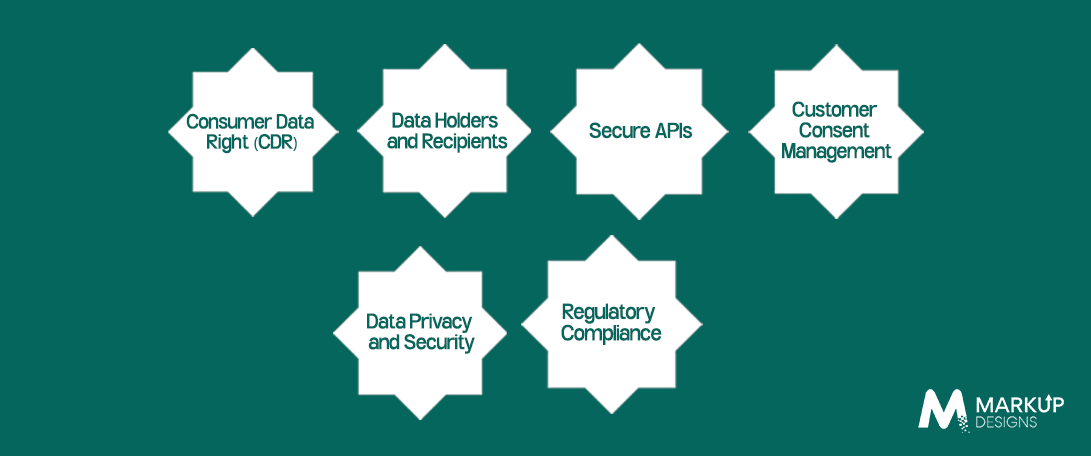
Australian open banking consists of multiple interrelated elements that facilitate the process of financial information exchange between businesses. Knowledge of them will aid in developing a proper technological solution, adhering to the regulations, and providing reliable financial services.
Consumer Data Right (CDR)
Consumer Data Right is the Australian regulatory regime for consumer-led data sharing, which provides eligible consumers with more access to their data and enables them to share it with accredited recipients in accordance with applicable regulations.
Data Holders and Recipients
Data holders, including participating banks, provide consumer data to the market using the CDR regime. Data recipients are accredited and use the provided data for certain purposes according to relevant regulations and consumers’ consent.
Secure APIs
Application Programming Interfaces allow exchanging information between various financial systems. Standardized APIs will help to integrate banking data with lending platforms and other financial applications.
Customer Consent Management
Customer consent management is essential in ensuring that customers are able to understand the processes involved in their consent as well as the way in which their financial data is being shared. It is important that enterprises have proper consent management processes in place that are compliant with the relevant regulations regarding consent period, withdrawal, and usage of data.
Data Privacy and Security
Data security is of paramount importance as financial data needs to be properly protected from any sort of unauthorised access or exploitation. Proper access control, encryption, authentication, monitoring, and other necessary data security measures should be implemented by the enterprises.
Regulatory Compliance
It is important for organizations to realize which CDR responsibilities are incumbent upon them depending on the role and activities they perform. In accordance with the implementation model, it may include accreditation, privacy, technical requirements, and more.
Together, all these elements constitute the backbone for open banking implementation in a secure manner. Organizations need to evaluate each of them in advance to prevent possible problems with integration.
Planning Your Open Banking Implementation?
Build a secure, scalable open banking solution with the right technology partner. Markup Designs can help you plan integrations, develop financial applications, and prepare for enterprise requirements.

Key Enterprise Use Cases of Open Banking in Australia
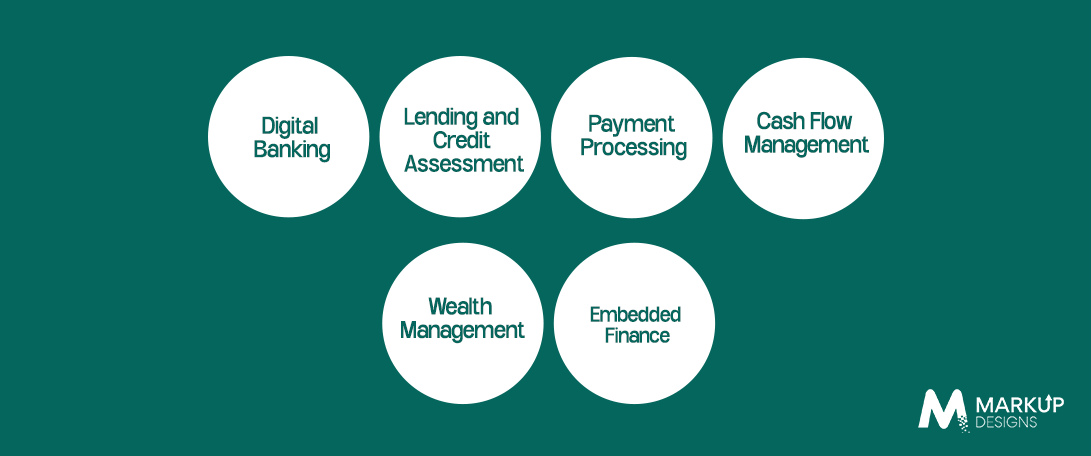
Open Banking offers Australian businesses innovative approaches for using customer-permitted financial information to enhance services and make processes easier. In industries including lending and payments management, it may prove helpful when done with the proper consents and compliance measures in place.
Digital Banking
Financial organizations and AI in fintech companies can link up accounts and provide information about finances in a single view so that customers have an easy time managing their accounts, transactions, and finances overall without having to jump across applications.
Lending and Credit Assessment
Open banking can help lenders assess the finances of borrowers through transaction history approved by the customer, minimizing the need to collect paper documents in making assessments of loans.
Payment Processing
Open banking can facilitate an account-based payments processing experience and linked payments workflows. Enterprises can look into improving the payments journey with the proper CDR regulation and payment regulations in mind.
Cash Flow Management
Enterprises and financial institutions are able to use the permitted account data to better understand the inflows and outflows. This can lead to better visibility, budgeting, and financial planning for them.
Wealth Management
Financial advisors and wealth management platforms are able to use the approved financial data to better understand their clients’ financial state and make better plans and recommendations for them.
Embedded Finance
Retailers, online marketplaces, and other enterprises are able to incorporate the permitted financial services into their customer experience flows. For instance, the platform is able to help its customers apply to a financial institution.
The most appropriate use case depends on the goals of the enterprise, customer needs, and the organization’s responsibility. Before developing the solution, organizations have to determine whether open banking solves some problems for them and how it adds value to the business.
Challenges of Open Banking Implementation and How to Overcome Them
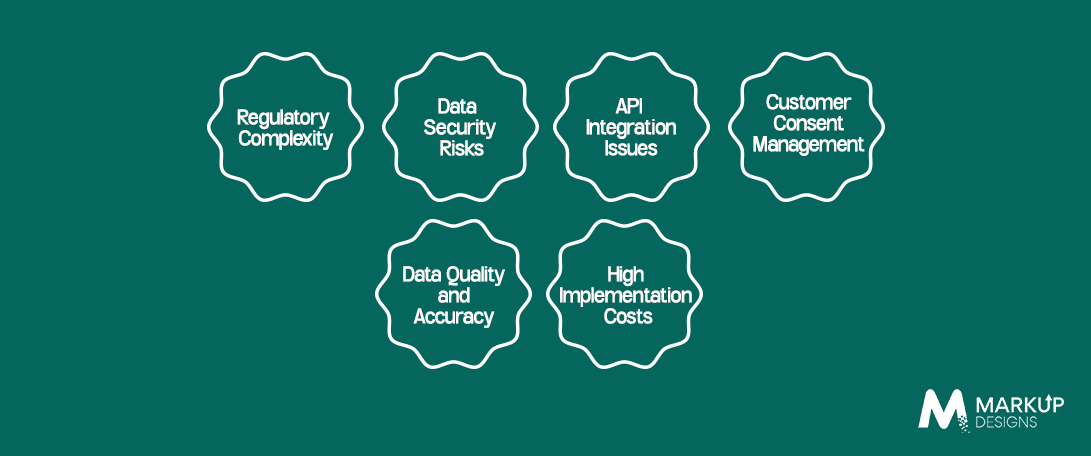
Open banking can enable organisations to enhance their financial services, but there are certain technical, operational, and regulatory obstacles that arise during the process. Recognising these barriers allows enterprises to save money, protect customer information, and develop flexible solutions.
Regulatory Complexity
It may be difficult for an enterprise to understand the Australian regulations related to the Consumer Data Right (CDR), especially when they deal with various providers or financial services.
How to overcome: Study all the relevant CDR regulations before beginning development. Include experts on compliance and assign responsibilities concerning data access, consent, and regulatory reports.
Data Security Risks
Information of a financial nature is highly sensitive, and inadequate security measures can lead to the leakage of customer data.
How to overcome: Use encryption, reliable authentication mechanisms, access control, good API security practices, and continuous monitoring.
API Integration Issues
Integration of APIs with existing banking systems, enterprise software applications, and third parties can lead to difficulties in terms of compatibility.
How to overcome: Ensure that an assessment of current infrastructure is done prior to the development process. Leverage standard APIs, integration layers, and testing to minimise mistakes and ensure the reliability of the system.
Customer Consent Management
Users may not fully comprehend the nature of the data they are providing or its storage period. Ineffective consent journeys may lead to a loss of trust and engagement.
How to overcome: Provide transparent information regarding access and use of the provided data. Ensure that customer consent management is user-friendly, provides appropriate controls, and allows for withdrawal as per the CDR requirements.
Data Quality and Accuracy
The absence of complete, accurate, and up-to-date financial data can impact reporting, insights, and decision-making automation.
How to overcome: Apply data validation, error handling, reconciliation, and monitoring mechanisms. Specify missing data and refrain from making decisions using inaccurate information.
High Implementation Costs
Implementing open banking initiatives may require investing in API development, security, compliance, infrastructure, testing, and maintenance.
How to overcome: Define a use case and focus on core functionalities at the beginning. Estimate costs for integration and compliance, leverage already available compliant solutions, and build the solution in iterations.
Open Banking Implementation Cost in Australia (2026)
The development cost for an open banking solution in Australia can be as low as AUD 70,000 or as high as AUD 700,000 and beyond, based on the scale and complexity of the project. An open banking solution with just a few APIs would be cheaper than one with several integrations, security measures, and compliance requirements.
Estimated Open Banking Development Cost:
| Solution Type | Estimated Cost (AUD) | Estimated Timeline |
| Basic platform | $70,000–$150,000 | 3–6 months |
| Mid-sized solution | $150,000–$350,000 | 6–9 months |
| Enterprise platform | $350,000–$700,000+ | 10–12+ months |
Read Also: Enterprise Mobile Banking App Development Cost: Features, Timeline & Pricing
Why Choose Markup Designs for Open Banking Development?
Development of the open banking system involves choosing appropriate technologies, secure integration, and comprehending business needs. Markup Designs will assist organizations in developing digital products according to their needs and plans. Our experts will develop custom applications, integrate various APIs, and connect existing systems to optimize data exchange and decrease manual activities.
We will also take into consideration security, performance, and scalability when creating applications, which may facilitate the creation of more robust applications. We assist enterprises in all phases of development,ment starting from comprehension of project requirements and solution design up to development, testing, and maintenance. Every project starts with understanding the problems, objectives, and requirements of the particular project.
It facilitates our experts in recommending an appropriate solution that suits the objectives and budget of the organization. For Australian projects related to open banking, enterprises must also evaluate the need for compliance with Consumer Data Right requirements and collaborate with appropriate specialists.
Ready to Build Your Open Banking Solution?
Planning an open banking platform for your enterprise? Connect with Markup Designs to discuss your requirements, explore integration options, and plan a secure, scalable financial solution.

Conclusion
The rise of open banking in Australia presents possibilities for businesses to enhance the quality of their financial services, facilitate data sharing, and provide a better experience to customers. The development of such services under the Consumer Data Right (CDR) involves leveraging customer-approved financial data to assist with lending, account management, financial planning, and many other use cases.
However, in addition to integrating APIs into an enterprise’s services, there is a need to comply with the regulations, put in place proper consent procedures, ensure the safety of sensitive data, and develop a strategy for regular maintenance.
The best way to proceed would be to first define the business goal and then pick an appropriate implementation framework and implement the solution in phases. This ensures that the organisation manages its costs and risks and gains full value for its investment.
Through proper planning and the right technological partner, enterprises can implement open banking solutions that address their current requirements and have enough flexibility to handle any future growth.
FAQs
1. What is Open Banking in Australia?
Open banking in Australia allows consumers to share their financial data securely with eligible organisations under the Consumer Data Right (CDR) framework. Customers control the sharing of their data through consent processes established under the applicable rules.
2. Is Open Banking Mandatory for Australian Enterprises?
Open banking obligations depend on the organisation’s role, sector, and activities under the CDR framework. Not every enterprise is automatically required to participate. Organisations should check whether specific data-sharing, accreditation, or other regulatory requirements apply to their proposed service.
3. What is the Consumer Data Right (CDR)?
The Consumer Data Right is an Australian framework that gives consumers greater control over their data. It allows eligible consumers to authorise the sharing of certain information with accredited data recipients, subject to applicable rules and safeguards.
4. How Much Does Open Banking Implementation Cost in Australia in 2026?
The process of implementing open banking can be quite costly, and the costs can range from AUD 70,000 to AUD 700,000 or more. The amount will vary greatly depending on the type of solution used – simple solutions will have a lower price tag, whereas sophisticated platforms will cost much more.
5. How Much Time Is Needed to Implement Enterprise Open Banking?
It will take about 3-6 months to implement open banking for simple solutions, 6-9 months for mid-level platforms, and 10-12 months or even more for sophisticated enterprise systems.
Author's Perspective
Open banking represents an important step towards more connected and customer-focused financial services in Australia. However, its success depends on how well enterprises balance innovation with security, transparency, and regulatory responsibilities. A clear implementation strategy helps organisations choose the right use cases, manage integration costs, and build services that customers can trust. Rather than treating open banking as a one-time technology project, enterprises should view it as an ongoing investment in digital capabilities. With careful planning, the right technical expertise, and a focus on customer needs, organisations can build flexible financial solutions that support long-term growth.
Discuss Your Project NowAjit Kumar Jha
VP - Business Operations
Related Posts

Building NPP-Enabled Digital Payment Platforms in Australia: A...

Complete Guide to Forex Trading App Development in...

Shariah-Compliant Fintech Platform Development: Complete Guide for 2026
Insights Are Valuable & Execution is Priceless
You’ve read about the digital future. Now, let’s build the infrastructure to take you there. Move your strategy from the page to the product.
Design Your Solution Now
Contact Us
Schedule The Appointment At Your Convenience Date And Time.
30 Min
Web Conference
Time Zone
Indian standard time (08:30pm)

Thanks For Getting In Touch!
You’ve Taken The First Step Toward Transforming Your Digital Presence. Our Experts Will Reach Out Shortly To Take It Forward.
Launch Your Dream Project
Provide a brief overview of your project, and our specialists will evaluate your requirements. We will connect with you to explore how the right digital solutions can help you launch faster.