

In Brief
- Developing enterprise mobile banking applications will range from $100,000 to $500,000+ based on factors like app complexity, app features, security, integrations, compliance requirements, technology, and development location.
- Factors that make the application expensive include banking functionality, security measures, banking systems integration, KYC, payment system integration, AI capabilities, scalability, and regulatory compliance.
- The development process normally takes about 6 to 15 months for all processes like planning, UI/UX design, development of the backend and mobile application, integrations, security testing, quality assurance, and launch.
- Enterprise organizations can reduce the cost through proper planning of the core features, developing an MVP first, use of APIs for secure integration, scalable architecture, automation of testing, and partnering with an experienced banking technology solution provider.
- Choosing the correct partner for the project should consider having a banking and fintech expert, a security and compliance expert, integration capabilities, proper cost estimation, and post-launch support.
Mobile banking has moved far beyond checking account balances and transferring money. The new wave of enterprises is creating applications that allow payments, card management, custom banking services, fraud detection, artificial intelligence help, and real-time transactions. This increasing list of functionalities necessitates increasing investments into creating and maintaining a secure banking platform.
So, what is the cost of developing an enterprise mobile banking app? It can be answered on the basis of many things like app complexity, security requirements, banking integration, compliance requirements, technology stack, and location of developers.
In this blog, we’ll discuss how much it really costs to develop an enterprise mobile banking application and what customers pay for this process. Also, you will find out more about the factors that affect the cost of development, how to estimate the cost of your project, calculate its duration, and even how to reduce costs without affecting security and performance.
If you are a traditional bank, fintech company, or any financial enterprise that is thinking about creating a new digital banking platform, then this post will be helpful for you.
How Much Does It Cost to Develop an Enterprise Mobile Banking App?
The price of creating a mobile banking app varies from $100,000 to $500,000+ depending on the complexity of the app and its features. A simple app designed for an enterprise will take less money to create, while a complex system that involves AI and fraud detection will require more resources.
Here’s a general estimate:
| Enterprise Banking App Type | Estimated Cost | Development Time |
| Basic | $100,000–$150,000 | 4–6 months |
| Medium Complexity | $150,000–$300,000 | 6–10 months |
| Advanced Enterprise | $300,000–$500,000+ | 10–15+ months |
In the following sections, we’ll look at the factors that can move this cost up or down.
Key Factors Affecting Enterprise Mobile Banking App Development Cost
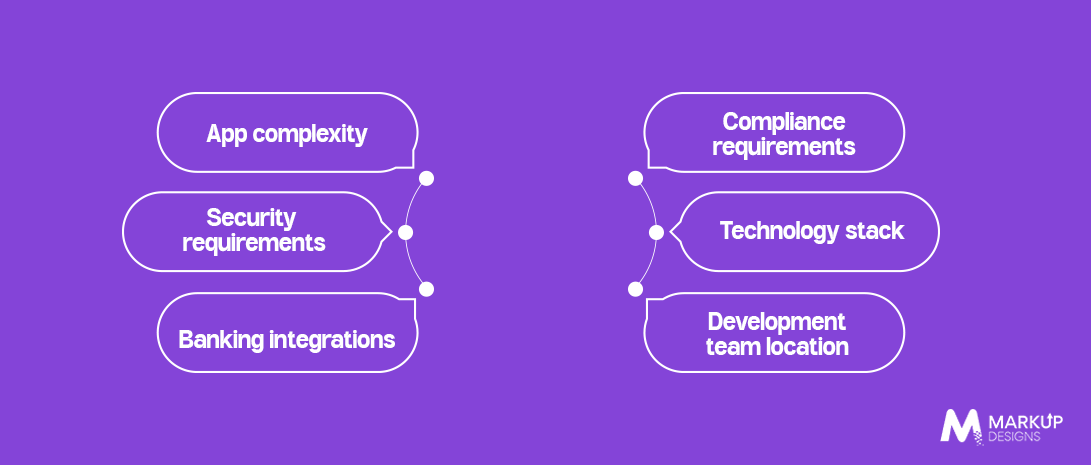
Enterprise-level banking applications entail more than just creating an interface. They should be able to deal with sensitive data, manage many transactions, integrate with other systems, and ensure high security levels. All of these aspects may influence the final cost of development significantly.
1. App complexity
The amount and level of complexity of features will determine the number of development hours needed. A simple banking app is cheaper than one that involves investment, international payments, financial management, and artificial intelligence.
2. Security requirements
Such security features as encryption, biometric authentication, multi-factor authentication, anti-fraud mechanisms, and secure APIs take additional time for development.
3. Banking integrations
Integration of the app with core banking software, payment gateways, KYC tools, CRM solutions, and other third-party financial services may entail additional costs and delays.
4. Compliance requirements
Banking applications need to comply with relevant financial, privacy, and security regulations, which will take some additional effort and cost.
5. Technology stack
Native apps, cross-platform mobile apps, cloud technologies, APIs, and microservices may have different cost implications.
6. Development team location
The developer rate varies from country to country. Nevertheless, enterprises should take into account their expertise in the banking domain, their security capabilities, and delivery experience together with the developer rate.
Enterprise Mobile Banking App Development Cost Breakdown
While having knowledge about the total cost is valuable, businesses also have to know how the budget will be spent. Development of a banking application involves several phases, including research and design, backend development, security testing, and deployment. All these phases add up to the cost of the project.
A typical enterprise budget can be distributed as follows:
| Development Stage | Estimated Cost Share |
| Business Analysis & Planning | 5–10% |
| UI/UX Design | 10–15% |
| Mobile App Development | 25–35% |
| Backend & API Development | 20–30% |
| Security & Compliance | 10–15% |
| Testing & Quality Assurance | 10–15% |
| Deployment & DevOps | 5–10% |
- Business Analysis and Planning: This stage involves requirements analysis, user research, technical planning, and architecture of the project.
- UI/UX Design: In enterprise banking applications, ease of navigation must be balanced against considerations of security and accessibility.
- Development and Backend: Mobile UI, backend, APIs, database management, and integrations form a substantial part of the budget.
- Security, Testing, and Deployment: Security audits, performance testing, compliance testing, cloud integration, and deployment are key in making sure the application is functional and fit for the banking business.
Read Also: Cybersecurity in Banking
Build Your Enterprise Banking App With the Right Strategy
Planning an enterprise banking app but unsure about the development budget, technology, or features? Our experts can help you define the right scope, architecture, and development approach.

Mobile Banking App Features and Their Development Costs
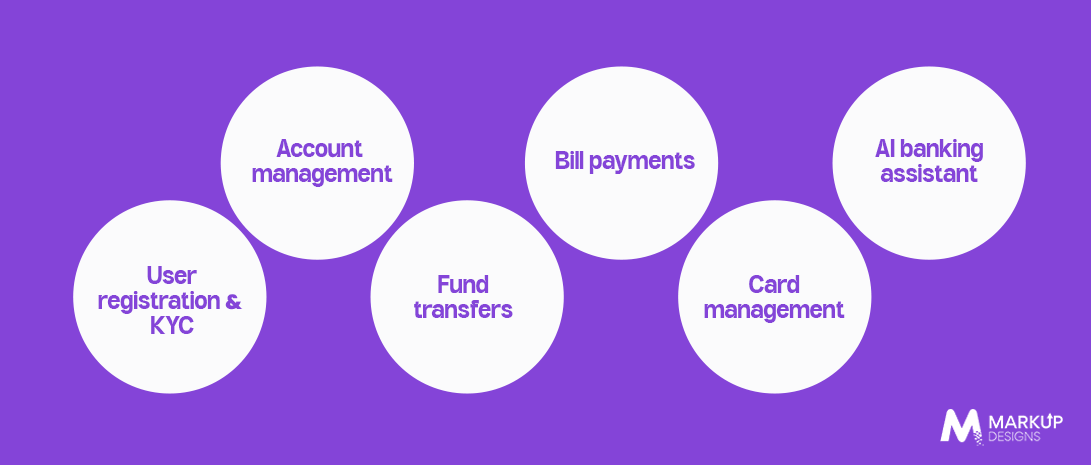
The features you select will play a significant role in influencing how much it is going to cost you to develop your mobile banking application. Corporate applications often require greater functionality compared to simple banking applications, as they have to handle security, personalization, and transactions.
| Feature | Complexity | Cost Impact |
| User Registration & KYC | Medium | Moderate |
| Account Management | Medium | Moderate |
| Fund Transfers | High | High |
| Bill Payments | High | High |
| Card Management | High | High |
| AI Banking Assistant | High | High |
Customer account registration and KYC process involve the verification of the identity and the secure onboarding of the client. The account management feature allows the user to access the account balance, account statements, and transaction history. Bill payments and fund transfers involve secure processing and integration with third-party applications, and hence they are somewhat complex. The card management includes activation, blocking, and limiting card transactions.
An AI assistant for an enterprise could extend the scope of features available to customers even further by helping customers with their queries, transactions, and personalized guidance regarding finances.
How to Calculate Enterprise Mobile Banking App Development Cost
To determine the cost of creating an enterprise banking application, one should take into account not only the cost of individual features but also many additional factors, such as development time, developer salary, integration, testing, etc. There are two methods that can help you to estimate the costs effectively.
1. Feature-Based Cost Calculation
The approach involves estimating the development hours required for each feature and then multiplying them by the hourly wage of the development team.
Formula:
Total Cost = Development Hours × Hourly Rate
For example, if the development hours needed for a project are 5,000 and the hourly rate is $50, the total cost of development will be $250,000.
2. PERT Estimation
Enterprise projects come with uncertainty, particularly when dealing with banking systems and third-party integration. PERT estimation involves three different estimates that produce a realistic forecast.
Formula:
Expected Time = (Optimistic + 4 x Most Likely + Pessimistic) ÷ 6
Using these techniques helps enterprises plan a more practical budget before starting their development. However, the final estimate should also include security, compliance, infrastructure, maintenance, and post-launch services.
Enterprise Mobile Banking App Development Timeline
The development of an enterprise mobile banking application is a complex process, and its timing will depend upon the complexity of the app, integrations, security, and platforms involved. A basic application will require several months of time, whereas a feature-packed application will require even more than a year to develop.
Here is a typical development timeline:
| Development Stage | Estimated Timeline |
| Discovery & Requirement Planning | 2–4 weeks |
| UI/UX Design | 3–6 weeks |
| Backend & API Development | 8–16 weeks |
| Mobile App Development | 10–20 weeks |
| Banking Integrations | 4–12 weeks |
| Security & Compliance Testing | 3–6 weeks |
| QA & Performance Testing | 4–8 weeks |
| Deployment | 1–2 weeks |
Overall, it might take from 6 up to 15 months to develop a corporate mobile banking app, depending on the scope of the project. If the app will be more complicated (i.e., use AI, have multi-banking support, support international transactions, etc.), it will require additional time to develop. Correct planning will help save money and development time.
How to Reduce Enterprise Mobile Banking App Development Costs
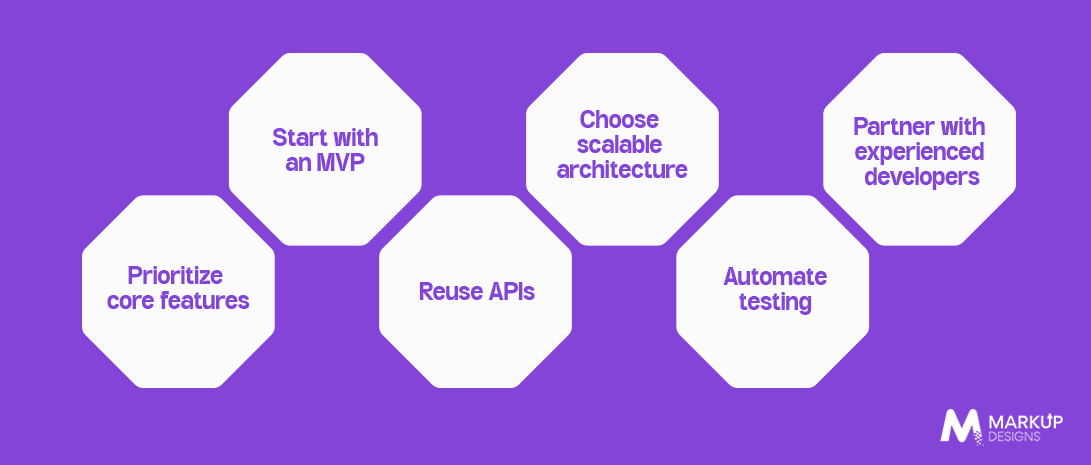
The development of enterprise banking software is associated with high expenses; however, if well planned, these expenses can be handled by enterprises. It is important to avoid making unnecessary compromises in terms of quality or security, but rather to use all the available resources efficiently.
Prioritize core features
Focus on the core functionalities of the software and add other functionalities to later versions.
Start with an MVP
Developing an MVP will help businesses test their ideas and receive feedback from users.
Reuse APIs
The use of APIs and banking integrations will reduce the development process time in comparison to writing everything from scratch.
Choose scalable architecture
Scalable architecture will help in adding new features to the project without rebuilding the entire application.
Automate testing
Automated testing will save us from carrying out some QA processes and will find bugs during the initial stage of development.
Partner with experienced developers
Experience in working with banks and fintech companies will prevent us from making technical, integration, and other errors.
The cost savings in an enterprise banking solution should be achieved through more effective planning and development, rather than cutting down on security, reliability, or performance that such a platform is supposed to deliver.
How to Choose an Enterprise Mobile Banking App Development Company
Choosing a suitable development partner will determine the cost of developing the app, the level of security it offers, its quality, and performance. When creating a banking app for businesses, it will not be enough just to have the skills.
Consider these factors when evaluating a development company:
- Experience with project solutions: Consider their experience with banking solutions, payments, or fintech projects.
- Security Experience: See how they approach encryption, authentication, secure APIs, and security testing challenges.
- Integration Experience: Find out whether they have the ability to integrate with core banking systems, payment systems, KYC service providers, and APIs.
- Compliance Experience: Learn how they manage to address financial and data compliance challenges.
- Technical Experience: Discover their experience with cloud, mobile, backend, API, AI, and scalable architectures.
- Support After Launch: Check what kind of services they provide after launching a solution.
The right partner would also give you a clear quote, not pricing that depends only on the number of your app screens.
Ready to Build Your Enterprise Banking App?
From secure transactions to AI-powered banking experiences, the right development strategy can help you control costs while preparing your app for future growth.

Conclusion
While mobile banking application development for businesses is a rather big investment, on the other hand, it could also be an excellent piece of digital property for banks and financial institutions. This will depend on numerous factors, including the level of complexity of the application, its features, and other aspects.
The price of basic business banking applications would vary within $100,000-$300,000, whereas more advanced applications could cost up to $500,000 and even more due to their multiple capabilities.
The best possible approach would be to determine what the core requirements of an individual are, identify the most essential characteristics, choose the right scalable architecture, and hire the services of an efficient banking application development company. It is better not to focus on the development expenses alone but on all costs associated with the ownership and scalability of one’s application.
With the help of appropriate planning, enterprises can develop a secure and dependable mobile banking system without letting additional features and bad technical choices raise costs.
FAQs
1. How much does it cost to develop an enterprise mobile banking app?
An enterprise mobile banking app can cost approximately $100,000 to $500,000+, depending on features, integrations, security requirements, technology, and development location.
2. How long does it take to develop an enterprise banking app?
An enterprise banking app generally takes around 6–15 months to develop. More complex platforms may require additional time for integrations, testing, compliance, and deployment.
3. What factors affect mobile banking app development costs the most?
The biggest factors include app complexity, security, banking integrations, compliance requirements, technology stack, number of platforms, and development team rates.
4. How much does it cost to add AI to a banking app?
AI costs vary based on the use case. A simple AI chatbot will generally cost less than advanced fraud detection, predictive analytics, AI-powered credit assessment, or personalized financial recommendations.
5. Is it cheaper to build a banking app using cross-platform technology?
Cross-platform development can reduce development time when the same codebase is used across platforms. However, the best approach depends on the app’s performance, security, integration, and enterprise requirements.
Author's Perspective
Enterprise banking app development goes beyond design and coding. Security, compliance, backend infrastructure, integrations, scalability, and maintenance all influence the final cost. Choosing the cheapest option can create costly problems later. A clear scope, realistic budget, scalable architecture, and experienced development team help enterprises manage costs effectively. With the right strategy from the start, businesses can build a secure, reliable banking experience that supports future growth.
Discuss Your Project NowAjit Kumar Jha
VP - Business Operations
Related Posts

How Much Does It Cost to Build a...

How to Build a Secure Payment Gateway Integration...

Cost to Build a Mobile App in Qatar...
Insights Are Valuable & Execution is Priceless
You’ve read about the digital future. Now, let’s build the infrastructure to take you there. Move your strategy from the page to the product.
Design Your Solution Now
Contact Us
Schedule The Appointment At Your Convenience Date And Time.
30 Min
Web Conference
Time Zone
Indian standard time (08:30pm)

Thanks For Getting In Touch!
You’ve Taken The First Step Toward Transforming Your Digital Presence. Our Experts Will Reach Out Shortly To Take It Forward.
Launch Your Dream Project
Provide a brief overview of your project, and our specialists will evaluate your requirements. We will connect with you to explore how the right digital solutions can help you launch faster.