

In Brief
- The Middle East is a fast-growing fintech market, where there are many opportunities in digital payments, wallets, neobanking, lending, investments, money transfers, open banking, and other AI-based financial services in UAE, Saudi Arabia, Bahrain, Qatar, Kuwait, and Oman.
- There are several crucial capabilities required for the development of a successful fintech application besides its convenient UI/UX design. These capabilities include such things as secure onboarding and KYC, digital payments, banking integration, transaction tracking, AI analytics, fraud detection, and a compliance dashboard.
- The development of a fintech application in the Middle East may cost about $40,000 to $300,000+ per project, depending on its complexity and advanced technologies that will be used (for example, AI).
- Organizations need to prepare for regional problems, such as varying financial regulations, security and privacy issues, banking integration, support of Arabic language and RTL, cross-border payments, and consumer trust. An MVP solution may be useful in order to mitigate risks from the beginning and grow the product gradually.
- An appropriate fintech approach involves defining the business model, understanding the local market, having reliable technology, planning regulations, developing scalable architecture, and partnering with experienced developers in order to build finance apps.
The Middle East is rapidly developing into a fintech hotbed of innovation. Digital wallets, mobile payments, neobanking, digital lending, and artificial intelligence in finance are just some of the examples of how businesses have started to deliver financial services faster and more effectively using technology.
UAE, Saudi Arabia, Bahrain, Qatar, Kuwait, and Oman are among the countries where strong efforts are being made to accelerate digitalization and fintech ecosystem development. As a result, there are new opportunities for startups, banks, financial institutions, and businesses wishing to develop their own digital financial products.
Yet, while developing a fintech app, you cannot focus only on payment capabilities and mobile UI/UX design. Fintech apps’ security and compliance, bank connectivity, scaling potential, and other issues should be considered.
In this blog post, we will discuss fintech opportunities in the Middle East, necessary fintech app features, development costs and timeframes, challenges to overcome, and all the steps needed to build a fintech app that will succeed in the region.
Why is Fintech App Development Growing in the Middle East?
The development of fintech applications is rapidly gaining traction throughout the Middle East region as individuals and businesses are gradually favoring digital financial services. Mobile banking, digital wallets, contactless payments, and online investment platforms are becoming an integral part of financial transactions. It motivates companies, startups, and banks to develop mobile-friendly financial services that would be easy to use.
Digital transformation led by governments is another critical factor driving this trend. Countries in the region are developing fintech strategies, regulatory structures, digital payment policies, and open banking projects to promote innovation. For instance, UAE and Saudi Arabia have established thriving fintech ecosystems, while Bahrain, Qatar, Kuwait, and Oman are also providing a favorable environment for fintech firms.
There is also an increasing need for rapid and tailored financial services. Financial assistants powered by AI, automated fraud detection, digital lending, wealth management, and embedded finance are enabling firms to offer more convenient services. Simultaneously, the large population of expatriates in the region opens up prospects in digital money transfer and cross-border payments.
From the perspective of businesses, this turns app development into more than an issue of technology. It presents a chance to acquire new clients, optimize financial processes, offer innovative products, and operate in the emerging digital economy.
Which Middle Eastern Countries Offer the Biggest Fintech Opportunities?
The Middle East is not one fintech market; there are different markets within it because each country is characterized by different regulations, financial environments, customer behavior, and opportunities. It is as vital for companies interested in developing fintech applications to choose the right market as it is to choose the right technology. UAE and Saudi Arabia have more mature ecosystems of digital finance, while other GCC markets create opportunities in some fintech niches.
UAE: There are excellent prospects for digital payments, neobanks, embedded finance, wealth management, and digital lending in UAE. Both Dubai and Abu Dhabi have created fintech ecosystems.
Saudi Arabia: Saudi Arabia is growing its digital financial ecosystem fast via Vision 2030 and financial sector modernization. Digital payments, open banking, lending, investment platforms, and fintech solutions for SMEs are attractive development areas here.
Bahrain: Bahrain has established a fintech ecosystem that presents good prospects in the following areas: payments, open banking, Islamic fintech, and financial services.
Qatar: There are possibilities for digital banking, payments, wealth management, and other financial services arising from the digital transformation of the country.
Kuwait: With its established banking industry, Kuwait offers demand for digital banking apps, payment solutions, lending platforms, and mobile-first financial services.
Oman: Oman is building its own digital finance infrastructure, which offers possibilities in digital payments, SME financing, mobile banking, and financial inclusion.
Ultimately, the choice will come down to the fintech business model, user base, licensing needs, and future expansion plans.
Read Also: How to Build a Secure Crypto Payment Gateway in UAE
Essential Features of a Fintech App
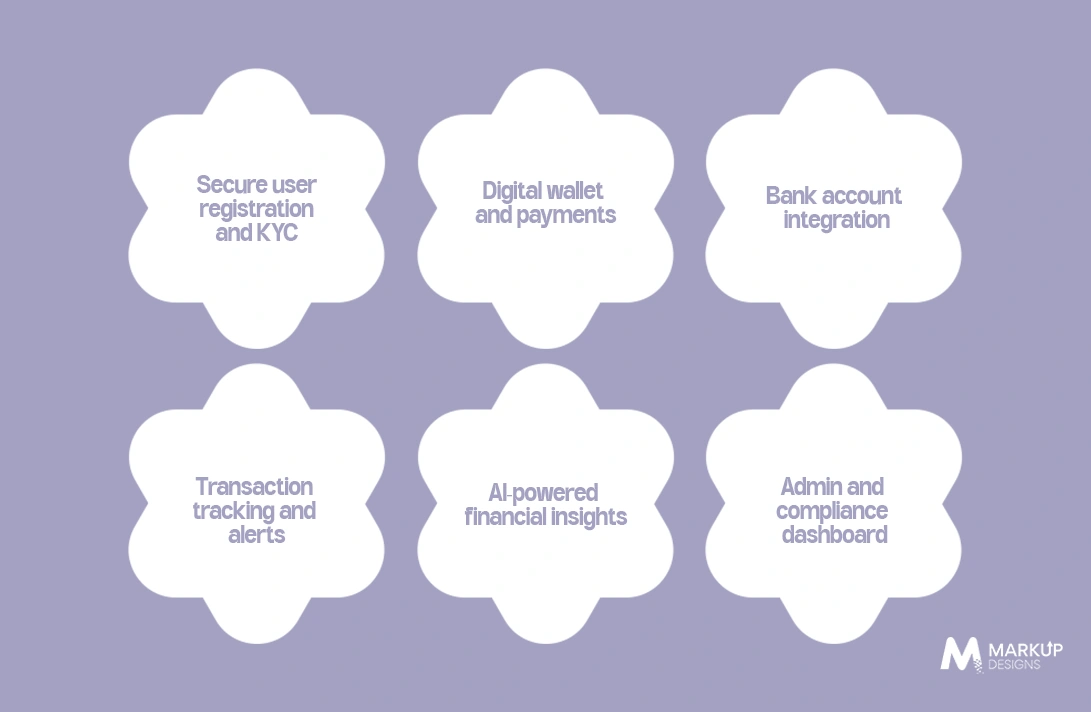
A successful fintech app is not only supposed to facilitate financial transactions. The user wants an app that works fast, is easy to use, and ensures safety, and the business requires good controls in order to ensure compliance, avoid fraud, and manage finances. It all depends on which area of fintech the app is aimed at.
1. Secure user registration and KYC
The users need to register accounts through a streamlined onboarding procedure that includes authentication and verification of identification documents.
2. Digital wallet and payments
A digital wallet may enable users to store money, pay for goods or services, transfer money, manage cards, and perform other transactions using various modes of payment.
3. Bank account integration
By connecting bank accounts through secure APIs, users can monitor account balances and perform transactions without using various websites.
4. Transaction tracking and alerts
Real-time transaction tracking, spending history, payment confirmation, and suspicious activity alerts keep users informed about their finances.
5. AI-powered financial insights
AI can analyze financial activities and give insights into spending, suggestions, fraud alerts, and automatic financial aid.
6. Admin and compliance dashboard
An enterprise Fintech app needs a dashboard for transaction tracking, customer management, reporting, risk management, compliance, and auditing.
How Much Does Fintech App Development Cost in the Middle East?
The cost for creating a fintech app in the Middle East region may vary greatly based on the application type, features, integration, security, and targeted audience. A simpler MVP that includes only basic functions such as payment/wallet, for example, will be cheaper compared to a complete neobank, investment platform, or financial ecosystem solution.
On average, it may cost between $40,000 and $300,000+ to develop a fintech app, whereas the more complicated enterprise app development may need a bigger budget.
| Fintech App Type | Estimated Development Cost |
| Basic Fintech MVP | $40,000–$80,000 |
| Mid-Level Fintech App | $80,000–$150,000 |
| Advanced Fintech Platform | $150,000–$300,000 |
| Enterprise Fintech Ecosystem | $300,000+ |
When it comes to businesses that are trying to enter the Middle Eastern market, it is equally important to consider the costs of maintenance, infrastructure, security, regulations, and improvement of features post-launch. A planned MVP can help you keep your costs low while expanding your product according to customer needs.
Planning to build a secure and scalable fintech app for the Middle East?
Markup Designs can help you turn your fintech idea into a market-ready digital solution with the right technology, features, integrations, and security approach.

Factors That Affect Fintech App Development Cost
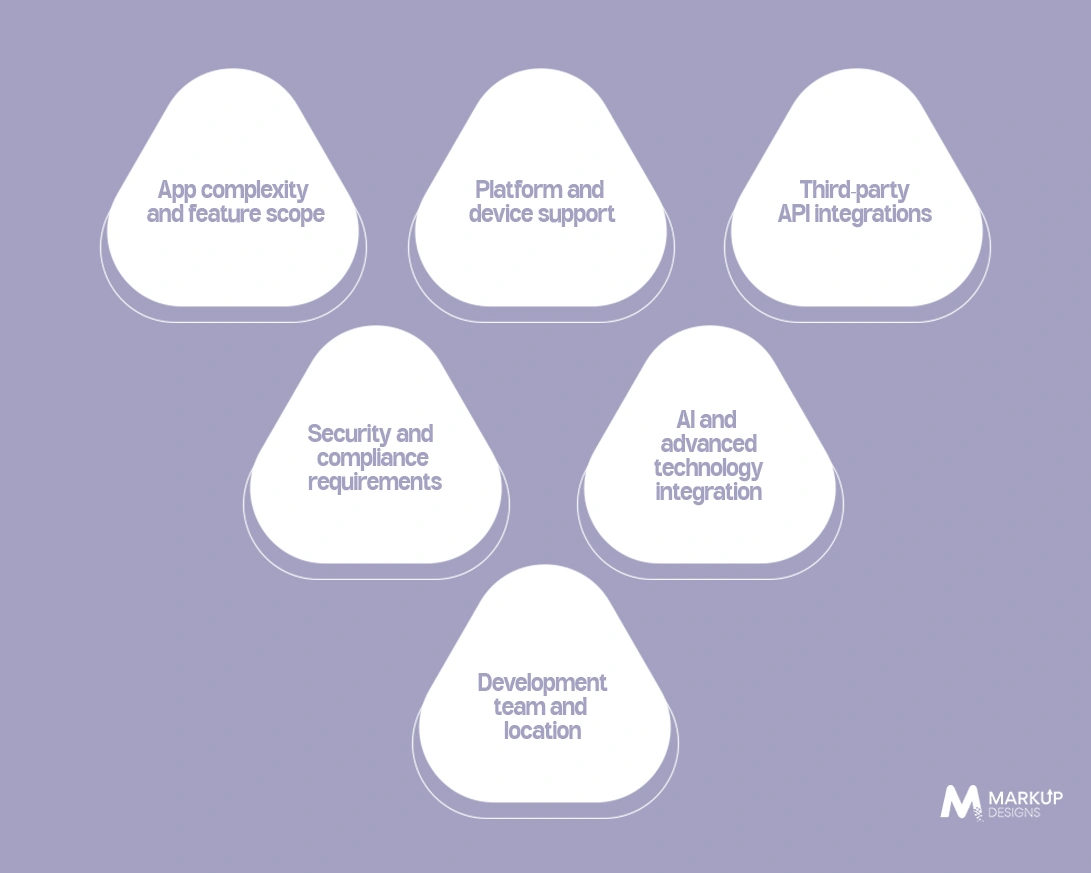
The cost of developing fintech applications is not solely based on the number of features required. Due to the fact that such applications involve handling financial information and transactions, the other things that need to be taken into account are the following:
App complexity and feature scope
Simple payment apps will be cheaper to build compared to neobanks, lending, or investment applications with complex functionalities.
Platform and device support
The development process for iOS, Android, web, or cross-platform development will impact the total development costs.
Third-party API integrations
The need to integrate with banks APIs, payment gateways, KYC services, credit bureaus, and open banking APIs can increase development costs.
Security and compliance requirements
Functions such as encryption, multi-factor authentication, fraud detection, KYC, AML compliance, audit logs, and regulatory needs will cost more in development efforts.
AI and advanced technology integration
Functions such as AI financial assistants, automated fraud detection, predictions, and intelligent credit scoring will add more development costs.
Development team and location
The skills of the development team, complexity of the project, development methodology, and development team location might impact final costs.
Fintech App Development Timeline in the Middle East
The time needed for the development of fintech applications depends on many factors, including complexity, functionality, integration, security, and regulatory requirements. The development of a simple fintech minimum viable product will take several months, but the creation of a sophisticated platform will require more time.
| Development Stage | Estimated Timeline |
| Research & Planning | 2–4 weeks |
| UI/UX Design | 3–6 weeks |
| MVP Development | 3–5 months |
| API & Banking Integrations | 4–8 weeks |
| Testing & Security | 4–8 weeks |
| Deployment | 2–4 weeks |
| Enterprise Development | 8–15+ months |
Typically, development is preceded by market research and business planning, as well as UI/UX design, application development, integration of APIs, testing, and release. The security testing and compliance are particularly significant when it comes to financial technology products, so they shouldn’t be compromised just because of the need to make a release within a certain period.
The duration might become even longer when there is a need for integration with banks, payment gateways, government identity services, credit agencies, or open banking solutions. Licensing requirements might impact the time to market as well.
For this reason, the company should concentrate on creating a clearly defined MVP initially, and then add advanced capabilities gradually.
How to Develop a Fintech App in the Middle East
Development of a fintech application in the Middle East needs an elaborate strategy that will involve technology, financial regulations, security, and local customer expectations. Instead of jumping into the process of development directly, one should first analyze the target market and figure out what the application should accomplish.
1. Define Your Fintech Business Model
First, determine if your application will deal with payments, banking, lending, investing, remittances, insurance, or some other financial services. Make sure that you clearly understand your target customers and the problem your application solves.
2. Identifying the Target Market
Identify the country in the Middle East region in which you want to deploy your product initially. Find out about customers’ behavior, competition, payment preferences, licensing, and finance laws.
3. Plan for Compliance and Security
Check for relevant KYC/AML, data protection, payment security, and licensing rules prior to development. Integrating these requirements at the beginning will save you from costly alterations down the road.
4. Select MVP Features
Choose the most important MVP features: user registration, identity verification, payments and transfers, transactions monitoring, and account management, among others.
5. Create the App
Create a simple and easy-to-use app that accommodates local requirements, such as support for the Arabic language. Once done, start developing the frontend, backend, APIs, and the necessary financial integrations.
6. Test, Deploy, and Expand
Run functional, performance, security, and compliance testing prior to deploying the app. Monitor user interactions and transactional processes once deployed, and gradually implement new features.
Challenges of Fintech App Development in the Middle East
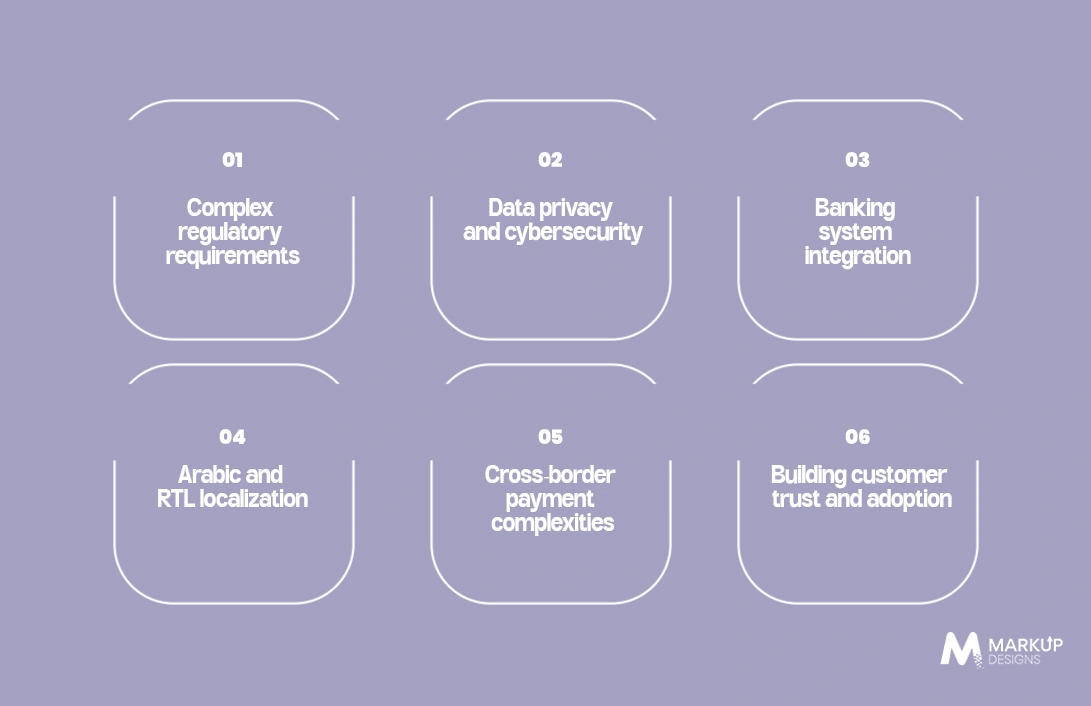
While there are a number of advantages for fintech companies in the Middle East, there are also some challenges to overcome when trying to develop and deploy a finance app in this region. Being aware of those challenges beforehand will help companies manage their development process better.
Complex regulatory requirements
Each Middle Eastern country has its own set of financial regulations, licensing, and compliance rules, making regional expansion quite complicated.
Data privacy and cybersecurity
Fintech applications deal with sensitive data and need robust encryption, authentication, fraud protection, and security features.
Banking system integration
Integrating a new fintech application with existing banking systems and financial institutions will be difficult.
Arabic and RTL localization
An application developed to cater to the Arab region requires more than mere translation; it needs right-to-left compatibility.
Cross-border payment complexities
Cross-border payments are often quite complicated, as they involve many aspects such as currency conversion, regulation, transaction tracking, and compliance.
Building customer trust and adoption
A user has to be sure that the money is safe and that their personal data is being taken care of.
Partner with Markup Designs for End-to-End Fintech App Development
Developing a fintech app for the Middle Eastern market involves more than good design and programming. It demands insight into finance-related processes, security, integrations, scalability, and the regulation of the target market. This is why it is important to choose the right tech partner to ease the process of developing.
At Markup Designs, we assist companies in implementing their fintech solutions in the form of secure and scalable digital products that will bring benefits both for users and the businesses themselves.
We can assist companies in creating solutions for digital payments, digital banking, lending, investments, wallets, money transfer, and many other fintech applications. Depending on the nature of the project, there may also be a need to include such technologies like artificial intelligence, automation, cloud computing, and advanced security measures.
However, our mission is not to develop just an app. Our goal is to create a fintech solution that will be able to handle larger volumes of transactions, changing customer needs, integration with other systems, and further growth in Middle Eastern markets.
With the right balance of technologies, security, and business processes, your fintech idea can become a reality.
Ready to Build Your Fintech App in the Middle East?
Whether you’re launching a digital wallet, payment platform, lending app, neobank, or another fintech solution, Markup Designs can support you from strategy and UI/UX to development, integrations, security, and deployment.
Conclusion
Fintech businesses are seeing promising prospects in the Middle East region since digital payments, online banking, open banking, artificial intelligence, and embedded finance solutions keep growing. Businesses have options to choose from a variety of markets in the Middle East, starting with UAE and Saudi Arabia, up to Bahrain, Qatar, Kuwait, and Oman.
However, a good fintech app development process entails not only a selection of appropriate features but also factors such as security, compliance, integration with banks, localization, scalability, and user experience. They all influence the end result of the project and its development costs.
An adequate MVP approach can allow businesses to save on initial investments while leaving space for further expansion. With the right technology stack and developer team, businesses will be able to create fintech apps that will be secure and scalable.
FAQs
1. How much does it cost to develop a fintech app in the Middle East?
Fintech app development can typically range from $40,000 to $300,000+, depending on complexity, features, integrations, security, compliance, and scalability requirements.
2. How long does it take to develop a fintech app?
A basic fintech MVP may take around 3–5 months, while complex enterprise fintech platforms can take 8–15 months or longer.
3. Which countries offer the best fintech opportunities in the Middle East?
UAE and Saudi Arabia are among the region’s strongest fintech markets. Bahrain, Qatar, Kuwait, and Oman also offer opportunities across payments, digital banking, lending, Islamic fintech, and other financial services.
4. What features should a fintech app have?
Common features include secure registration, KYC verification, digital wallets, payments, bank integrations, transaction tracking, notifications, fraud monitoring, and admin dashboards.
5. How can AI be used in fintech apps?
AI can support fraud detection, financial recommendations, customer service, credit assessment, transaction analysis, and personalized financial experiences.
Author's Perspective
Fintech in the Middle East is moving beyond basic digital payments toward AI-powered services, open banking, embedded finance, and connected financial platforms. For businesses, success depends on understanding local regulations, defining a clear business model, prioritizing essential features, and building a secure, scalable foundation. The strongest fintech products will compete not just through features, but through trust, convenience, security, personalization, and solutions that address real customer needs.
Discuss Your Project NowGaurav Goyal
Global Sales- VP
Related Posts

Cost to Build a Mobile App in Qatar...

How Much Does It Cost to Build an...

Digital Payment App Development: Everything Businesses Need to...
Insights Are Valuable & Execution is Priceless
You’ve read about the digital future. Now, let’s build the infrastructure to take you there. Move your strategy from the page to the product.
Design Your Solution Now
Contact Us
Schedule The Appointment At Your Convenience Date And Time.
30 Min
Web Conference
Time Zone
Indian standard time (08:30pm)

Thanks For Getting In Touch!
You’ve Taken The First Step Toward Transforming Your Digital Presence. Our Experts Will Reach Out Shortly To Take It Forward.
Launch Your Dream Project
Provide a brief overview of your project, and our specialists will evaluate your requirements. We will connect with you to explore how the right digital solutions can help you launch faster.