

In Brief
- An SMS is a system for managing students that consolidates admissions, attendance, academics, fee management, exams, and communications for Australian schools.
- A Student Management System has certain features like management of student details, attendance, timetable, fee management, grading, report generation, notifications, and secure and role-based access control.
- The process of developing an SMS is requirement analysis, market research, UI/UX design, choice of technology stack, development of features, third-party integration, testing, deployment, and maintenance.
- A cutting-edge technology stack consisting of React, Flutter, Node.js, PostgreSQL, AWS, AI, and secure authentication guarantees scalability, security, and readiness for future educational challenges of the platform.
- The cost of Student Management System development in Australia usually starts from AUD $30,000 to AUD $250,000+ or more depending on the complexity of the project, features, integration with third parties, security needs, and customization.
The education industry of Australia is fast becoming aware of the need for digital transformation, with schools, colleges, universities, and vocational institutes adopting technological advancements to ensure that they enhance the quality of their learning process as well as their operational efficiency. Keeping track of the admission process, attendance, academic performance, payment of fees, conducting tests, and communicating is quite a cumbersome task without the right technology.
The student management system will help in automating such tasks and integrating everything needed in one place. It will not only cut down on paper but also help in improving communication between students, teachers, parents, and administrative staff members.
In this blog, we will discover all the insights about creating a Student Management System in Australia, such as its advantages, critical features, development process, technology stack, approximate cost, and other essential aspects that define the total budget for building one. This blog post will be useful for both education institutions and EdTech startups looking to develop a student management system.
What is a Student Management System?
SMS stands for Student Management System, which is a software system that enables educational institutions to perform all daily activities related to academics and administration in one place. This means that there is no need to use several programs or paperwork in order to arrange everything. Educational institutions such as schools, colleges, universities, and training centers can make use of SMS.
The system retains important data like student profile details, admission details, attendance, timetables, marks, fees, and exam results within one single database. In turn, this makes it much easier for the administrators to obtain reliable information, the teachers to manage their classes effectively, the students to keep track of their academic performance, and the parents to be aware of their child’s performance.
Moreover, Advanced Student Management Systems have functionalities like online learning, management of documents digitally, automated reminders, and live reporting facilities. Most educational institutions are now incorporating artificial intelligence-based features like predictive analysis, automatic attendance monitoring, and personalized learning suggestions.
No matter whether it is a small private college or a big university in Australia, having an efficient Student Management System will help make all complicated tasks easier, decrease the amount of work done by administration, and minimize human errors.
Why Australian Educational Institutions Need a Student Management System
There are thousands of educational institutions in Australia that cater to millions of students within and outside the country each year. As these institutions grow in size, it becomes increasingly challenging for them to manage admission, academic record management, scheduling of classes, fee payments, and other related activities using conventional manual means. For this reason, many educational institutions are increasingly adopting Student Management Systems.
Using a digital platform allows the institutions to streamline their operations through automation of mundane tasks while providing students, teachers, parents, and administrators access to key information.
Some of the key reasons Australian educational institutions are adopting Student Management Systems include:
- Growing student enrollment requires efficient record management.
- Growing interest in blended learning among various educational institutions.
- Reducing administrative burden by automating processes.
- Enhanced communication among students, tutors, parents, and administrative staff.
- Accuracy of data and effective reporting for effective decision-making.
- Compliance with Australian legislation related to privacy and education.
As the educational sector grows and evolves, implementing the Student Management System has now become much more than an option; it has become a necessity to be better prepared for the future.
Benefits of Building a Student Management System
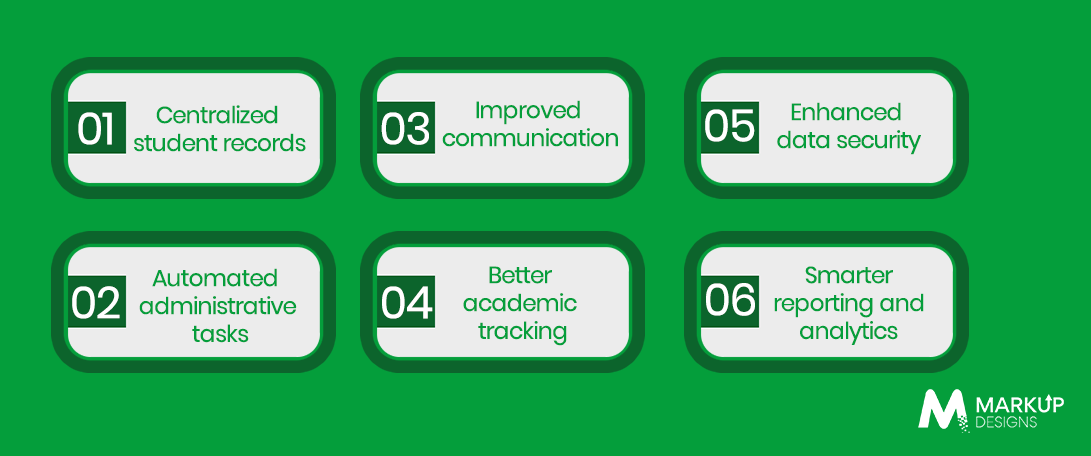
A Student Management System is not simply a means of digitized record-keeping. The system enables educational organizations to make their day-to-day activities easier, foster collaboration, and ensure quality teaching. Thanks to automation of various processes and the availability of information instantly, educational organizations can save their time, minimize operational costs, and concentrate on teaching instead of paperwork.
Here are some of the major benefits of building a Student Management System:
Centralized Student Records
In a Student Management System, all information pertaining to students-personal, attendance, academic record, fee record, and documents-can be stored in one place. Hence, there is always readily available and accurate information for administrators and teachers whenever required.
Automated Administrative Tasks
Functions like admissions, attendance, scheduling of classes, fee administration, reporting, and examination process management can be automated. This helps save time and prevents mistakes while giving staff more time to engage with students.
Improved Communication
There is an established communication process in the student management system among students, teachers, parents, and administrators. Any notifications related to assignments, attendance, examination schedules, fees, and other announcements can be communicated instantly using the system.
Better Academic Tracking
It is easy for educators to track the attendance, marks, homework, and overall academic performance of the learners. Such tracking helps to spot those learners who require more attention from educators.
Enhanced Data Security
Confidentiality is one of the most important aspects of students’ data. It is necessary to note that a good Student Management System provides encryption of data, regular backups, access control, and other measures to ensure that all data is kept secure and complies with the rules on privacy set in Australia.
Smarter Reporting And Analytics
Reporting features and built-in analytics allow generating useful reports on academic performance, attendance trends, enrollment statistics, financial reports, etc.
Essential Features of a Student Management System
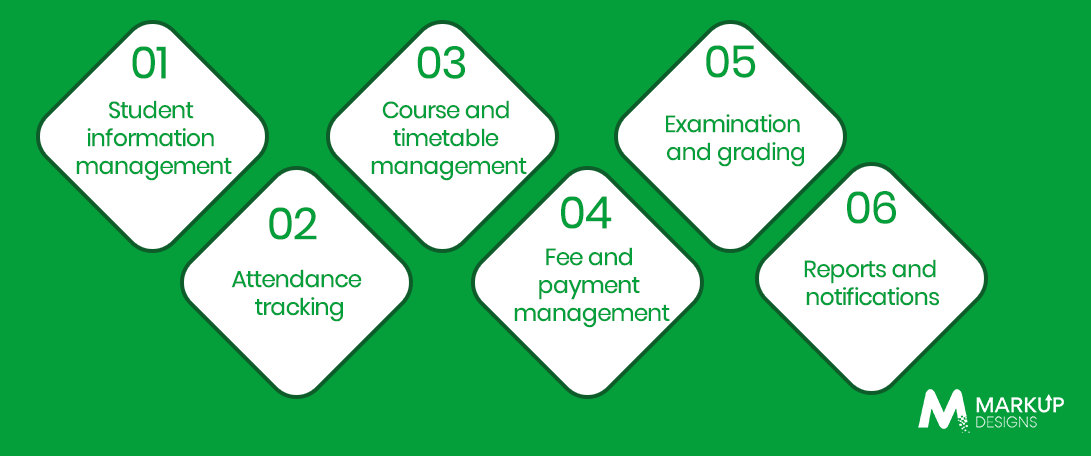
The effectiveness of a Student Management System is mostly determined by the features it provides. An efficient system will simplify administrative tasks while ensuring that all participants get the right means to manage learning activities. Some of the features that every Student Management System should provide are listed below.
Student information management
The management system is supposed to have the complete information of all the students, including their personal data, admission data, academic data, health data, and other documents. Keeping all the data in one place will make the process of managing the data easy.
Attendance tracking
It is possible for the teachers to keep the attendance of the students in digital form by using attendance management. The students and parents can get to know about the attendance of the students from the report that can be generated instantly.
Course and timetable management
It becomes easy for the teachers and the school authorities to manage the different courses and subjects when there is a timetable management system.
Fee and payment management
The system should automate the entire process of collecting fees, from generating invoices, recording payments, sending automatic payment reminders, and providing an online payment gateway. It helps increase financial visibility for the organization as well as parents.
Examination and grading
Teachers should be able to manage examinations, input grades, print report cards, and assess the performance of the students electronically. This ensures increased efficiency and increased accuracy at the same time.
Reports and notifications
A Student Management System should offer real-time reporting on admissions, attendance, finance, and academic performance. At the same time, automatic notifications would ensure that the students, parents, and faculty stay informed about various events and news from the institution.
Ready to build a secure and scalable Student Management System in Australia?
Markup Designs develops custom education software that simplifies administration, improves learning experiences, and supports the evolving needs of schools, colleges, and universities.

Step-by-Step Process to Build a Student Management System in Australia
Development of a Student Management System needs proper planning, suitable technology, and knowledge about how educational institutes work. From understanding the business requirement to releasing the product, each phase is important for developing a system that is secure, scalable, and easy to use. The following is a procedure that is followed in most successful projects of developing a Student Management System.
Step 1: Define Your Requirements
First of all, find out what kind of institution the system is being built for-schools, universities, colleges, or vocational training centers. The requirements will be based on the target users of the platform, issues to address, and features to include. Setting objectives will prevent additional expenses in development afterwards.
Step 2: Conduct Market Research
Do a study on Student Management Systems available in Australia and find out how they help and hinder. It is the only way you can create an effective product because knowing your customers, market trends, and your competitors is the only way to go.
Step 3: Design UI/UX
A simple interface is a requirement for everyone who will be using it – students, teachers, parents, and administrative staff members. Remember to create wireframes and interactive prototypes so you can have simple navigation on your web and mobile interfaces.
Step 4: Selecting The Technology Stack
Select technologies that can help sustain the scalability, security, and performance of your product over time. Be sure to include proper frameworks for the frontend and backend, databases, cloud services, APIs, and security systems to cater to your increasing number of users.
Step 5: Develop Core Features
Develop core modules such as student registration and admission, attendance management, timetable, fee management, examination management, grading and reporting, notifications, user roles management, and more.
Step 6: Integration of Third-Party Services
Enhance your platform by integrating third-party services such as payment gateways, communication tools, cloud storage, email service providers, video conferencing software, LMS, and analytics.
Step 7: Test The System
Run tests involving functional, security, usability, performance, and compatibility tests to make sure that the system works properly when used in different devices and web browsers.
Step 8: Implement And Maintain The Platform
Once you have tested your system, deploy it to a cloud environment for performance and security reasons. Maintenance is an important factor for efficiency.
Read Also: The Ultimate Guide to Hiring Mobile App Developers in Australia
Technology Stack Required for Student Management System Development
Choosing the right technology stack is one of the most important aspects when developing a Student Management System. This is because the technologies that are chosen will influence the performance, scalability, security, and maintenance of the system. The right technology stack should be able to ensure that user-friendly systems are created, and that there is room for growth.
Below are the key technologies commonly used for Student Management System development.
| Technology Layer | Recommended Technologies |
| Frontend | React.js, Angular, Vue.js |
| Mobile Development | Flutter, React Native, Swift, Kotlin |
| Backend | Node.js, Python (Django), Java (Spring Boot), .NET |
| Database | PostgreSQL, MySQL, MongoDB |
| Cloud Platform | AWS, Microsoft Azure, Google Cloud Platform |
| Authentication | OAuth 2.0, JWT, Multi-Factor Authentication (MFA) |
| Payment Integration | Stripe, PayPal, Square |
| Notifications | Firebase Cloud Messaging, Twilio, SendGrid |
| Storage | Amazon S3, Azure Blob Storage |
| Analytics & AI | Power BI, TensorFlow, OpenAI APIs, Azure AI Services |
The benefits of choosing a scalable technology stack include not only efficient everyday processes but also the capability of integrating advanced features like AI-based student analytics, performance prediction, chatbot assistance, attendance automation, and personalized learning suggestions.
Choosing the right technology for the future will allow educational establishments to develop a Student Management System that will function effectively as their needs change over time.
Cost to Build a Student Management System in Australia
The cost of student management systems in Australia varies based on the level of sophistication of the platform, its features, and the technology used for the development. There is a marked difference between the price of developing an entry-level platform and an enterprise-level platform with AI technology and mobile apps.
Below is an estimated cost breakdown:
| Development Level | Estimated Cost (AUD) | Timeline |
| Basic Level Solution | $30,000–$60,000 | 3–5 Months |
| Mid Level Solution | $60,000–$120,000 | 5–8 Months |
| Enterprise Level Solution | $120,000–$250,000+ | 8–12+ Months |
The estimates may differ according to the specifications of your project, degree of customization, development team, and the maintenance required. If you intend to develop a long-term solution, then opting for scalability from the very beginning can save you future upgrade costs.
Read Also: How to Develop an MVP App in Australia: Cost and Process
Factors Affecting Student Management System Development Cost
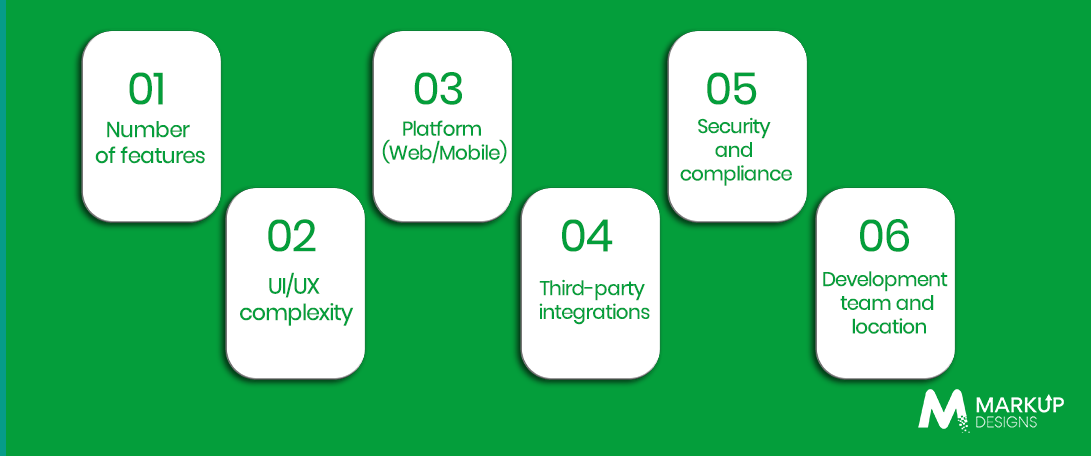
Costs associated with the development process do not depend on one particular aspect alone. Rather, there are a number of technical and business-related aspects involved. You need to know about these aspects in order to budget for your development process and give priority to those features that really matter.
Number of Features
With each additional module, such as admissions, attendance, exams, fee management, parents portal, analytics, and AI, the costs of development increase.
UI/UX Complexity
Designing a contemporary, flexible, and intuitive interface that meets the needs of students, teachers, parents, and administration will demand extra time and effort. Enhanced user experience normally means higher development expenses and higher adoption rates.
Platform (Web/Mobile)
The development of a web platform is typically less expensive than the creation of two mobile platforms (Android and iOS). Cross-platform solutions may be used to minimize development expenses without lowering performance.
Third-Party Integrations
Payment systems, video-conferencing software, email providers, cloud services, biometric attendance systems, and Learning Management Systems (LMS) add development complexity and increase the total cost of the project.
Security and Compliance
Education establishments deal with confidential data of students, which makes security necessary. Options such as database encryption, role-based access, multi-factor authentication, security audits, and compliance with privacy laws of Australia make part of the total package.
Development Team and Location
Experience, team size, and location of your development team play an important role in the pricing of your project. Using an experienced software development firm helps achieve quality architecture and good project management.
Why Choose Markup Designs for Student Management System Development in Australia?
In order to develop a reliable student management system, one needs a good understanding of educational processes, user experience, security issues, and scalability. At Markup Designs, we assist educational institutions and ed-tech businesses in creating custom systems that streamline administrative processes and improve the learning experience.
Starting from planning and UI/UX design up to development, deployment, and maintenance, our experts provide highly secure and scalable solutions. We utilize cutting-edge technologies including AI, cloud computing, and cross-platform development, as well as maintain a high level of security of data.
Regardless of whether you need to develop a student management system from scratch or upgrade the existing one, we provide solutions that can bring many benefits to your institution.
Looking to Build a Student Management System in Australia?
Partner with Markup Designs to develop a secure, scalable, and feature-rich Student Management System that streamlines academic operations and enhances the learning experience.

Conclusion
Student Management Systems are now very important for modern educational institutions as they facilitate administration processes, help to communicate better, and help to manage students’ information efficiently.
It is very important to plan your project correctly, use the proper technology stack, and provide adequate security and functionality to create a good system. As the Australian education industry continues to digitalize, investing in a good Student Management System can really benefit your business. Working with a professional software development company will help you to create a high-quality product.
FAQs
1. What is a student management system?
A Student Management System is the software that allows educational organizations to manage students records, admission, attendance, examinations, fees, communication, and educational activities from one central place.
2. What will be the cost to build a student management system in Australia?
It will be between AUD $30,000 and more than AUD $250,000, depending upon the complexity of the project, its features, integration with other systems, and customization.
3. How much time is required to develop a student management system?
A basic system requires about 3–5 months to be developed, while an enterprise system with advanced features requires 8–12 months or more time.
4. Which features should be there in a student management system?
Basic features are student record management, attendance tracking, timetabling, fee management, examinations, grades, reporting, notifications, and role-based access control.
5. Can we integrate AI into a student management system?
Yes. AI can help in attendance tracking, provide academic insights, customize learning experience, assist with a chatbot, and make predictions for student performance.
Author's Perspective
Educational institutions need to improve learning experiences while managing increasingly complex administrative tasks. A well-built Student Management System simplifies these operations by centralizing academic and administrative processes. By focusing on usability, scalability, and security from the start, institutions can adapt to evolving educational needs. As AI, cloud computing, and automation continue to transform education, investing in a future-ready Student Management System helps improve efficiency, collaboration, and long-term growth.
Discuss Your Project NowGaurav Goyal
Global Sales- VP
Related Posts

How Much Does Custom Accounting Software Development Cost...

How Much Does It Cost to Develop Property...

How to Build an Insurance Portal with CRM,...
Insights Are Valuable & Execution is Priceless
You’ve read about the digital future. Now, let’s build the infrastructure to take you there. Move your strategy from the page to the product.
Design Your Solution Now
Contact Us
Schedule The Appointment At Your Convenience Date And Time.
30 Min
Web Conference
Time Zone
Indian standard time (08:30pm)

Thanks For Getting In Touch!
You’ve Taken The First Step Toward Transforming Your Digital Presence. Our Experts Will Reach Out Shortly To Take It Forward.
Launch Your Dream Project
Provide a brief overview of your project, and our specialists will evaluate your requirements. We will connect with you to explore how the right digital solutions can help you launch faster.