

In Brief
- Understand what a remote development team is, how it operates, and why businesses are increasingly adopting remote hiring for software development.
- Explore the major benefits of hiring remote developers, including global talent access, cost efficiency, scalability, specialized expertise, and faster product delivery.
- Learn about the different remote hiring models, such as dedicated teams, staff augmentation, project-based outsourcing, and offshore development centers, to choose the right fit for your business.
- Follow a step-by-step process for hiring a remote development team, from defining project requirements and evaluating technical skills to onboarding and collaboration.
- Discover when to hire a remote development team, the key skills to look for, common remote hiring challenges, and best practices for building a successful long-term partnership.
Building a successful digital product starts with hiring the right development team. However, finding experienced software developers locally can be time-consuming, expensive, and often limited by talent availability. This is why businesses of all sizes-from startups to large enterprises-are increasingly turning to remote development teams to accelerate innovation while keeping costs under control.
Hiring a remote team of developers gives you access to a global talent pool, specialized technical expertise, and the flexibility to scale your team as your business grows. Whether you’re developing a mobile app, web platform, AI-powered solution, or enterprise software, remote developers can help you bring your vision to life without the overhead of maintaining a large in-house team.
In this blog, we’ll explain what a remote development team is, why businesses are embracing this hiring model, its key benefits, different hiring options, the step-by-step hiring process, cost considerations, common challenges, and practical tips to help you build a high-performing remote development team for your business.
What is a Remote Development Team?
A remote development team is a group of software professionals who work from different locations instead of a shared office. These teams typically include developers, designers, QA engineers, DevOps specialists, project managers, and other technical experts who collaborate using digital communication and project management tools to build software solutions.
Unlike freelancers who usually work independently on specific tasks, a remote development team functions as an extension of your business. They follow structured development processes, participate in regular meetings, share project updates, and work toward common business goals. This collaborative approach ensures better communication, higher accountability, and consistent project delivery.
Businesses can hire remote developers for short-term projects, long-term product development, or to expand their existing in-house team with specialized skills. Whether you need expertise in web development, mobile app development, cloud computing, AI, or enterprise software, remote teams provide the flexibility to access experienced professionals without geographical limitations.
As remote work continues to reshape the technology industry, hiring remote developers has become a strategic way for businesses to innovate faster, reduce operational costs, and build high-quality digital products efficiently.
How to Hire Software Developers in 2026:
As of 2026, AI automation is the driving force behind digital transformation in the UAE, build strong data foundations, and focus on strategic adoption will lead the future of the UAE’s digital economy.

Why Businesses Should Hire a Remote Team of Developers
The demand for remote development teams has grown significantly as businesses seek faster, more flexible, and cost-effective ways to build digital products. Instead of being restricted to local hiring markets, companies can now access skilled developers from around the world who bring specialized expertise and fresh perspectives to their projects.
Hiring a remote team also helps businesses overcome common challenges such as lengthy recruitment cycles, rising operational costs, and shortages of experienced technology professionals. Whether you’re launching a startup, modernizing legacy systems, or scaling an enterprise application, remote developers allow you to quickly build a capable team without the expenses associated with office infrastructure, equipment, and long-term hiring commitments.
Another major advantage is scalability. As your project requirements change, you can easily expand or reduce your remote team without disrupting ongoing development. This flexibility enables businesses to respond faster to market demands while maintaining productivity and development speed.
In today’s competitive digital landscape, hiring a remote development team is no longer just a cost-saving strategy-it’s a smart business decision that helps organizations accelerate innovation, improve time-to-market, and stay ahead of the competition.
Key Benefits of Hiring Remote Developers
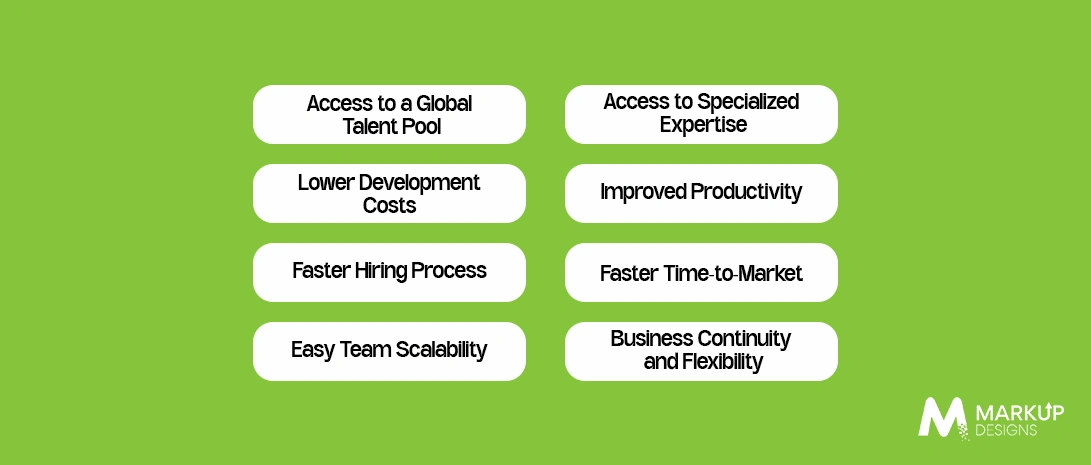
Hiring remote developers offers businesses far more than just cost savings. It provides access to skilled professionals, greater flexibility, and the ability to build high-quality digital products faster. Here are some of the biggest benefits of hiring a remote development team.
1. Access to a Global Talent Pool
Remote hiring removes geographical barriers, allowing you to recruit experienced developers with specialized skills from around the world and find the best talent for your project.
2. Lower Development Costs
By hiring remotely, businesses can significantly reduce expenses related to office space, infrastructure, recruitment, employee benefits, and operational overhead while maintaining excellent development quality.
3. Faster Hiring Process
Remote hiring enables companies to fill technical positions more quickly, reducing recruitment delays and helping projects start sooner without waiting for lengthy local hiring cycles.
4. Easy Team Scalability
As project requirements evolve, you can quickly add or reduce developers, designers, or QA engineers without the challenges of traditional hiring and onboarding processes.
5. Access to Specialized Expertise
Whether your project requires AI, cloud computing, blockchain, DevOps, or mobile app development, remote teams provide access to niche technical expertise that may not be available locally.
6. Improved Productivity
Remote developers often work in focused environments with streamlined workflows, resulting in better productivity, efficient collaboration, and consistent project delivery.
7. Faster Time-to-Market
With experienced professionals working across different time zones, businesses can accelerate development cycles, resolve issues quickly, and launch products faster than traditional teams.
8. Business Continuity and Flexibility
Remote teams help businesses maintain uninterrupted development regardless of location, making it easier to adapt to changing market demands and support long-term business growth.
How Blockchain Technology is Transforming UAE Businesses in 2026
Blockchain technology is rapidly transforming UAE businesses by improving security, transparency, efficiency, and trust across industries such as banking, healthcare, real estate, logistics, retail, and government services.
Different Models for Hiring Remote Developers
There is no one-size-fits-all approach to hiring remote developers. The right hiring model depends on your project scope, budget, timeline, and long-term business goals. Understanding the available options can help you choose a model that delivers the best value and flexibility for your organization.
| Hiring Model | Best For | Key Advantages |
| Freelance Developers | Small projects, bug fixes, or short-term tasks | Cost-effective, quick hiring, flexible engagement |
| Dedicated Remote Team | Long-term projects and product development | Full-time commitment, seamless collaboration, complete project ownership |
| IT Staff Augmentation | Expanding an existing in-house team | Access to specialized skills while retaining internal project control |
| Project-Based Outsourcing | Businesses with clearly defined project requirements | End-to-end development managed by an external technology partner |
| Offshore Development Center (ODC) | Large enterprises and ongoing software development | Scalable teams, lower operational costs, and dedicated long-term resources |
Each hiring model has its own advantages, and the best choice depends on your business needs. For example, startups often prefer dedicated remote teams for faster product development, while enterprises may benefit from staff augmentation or an offshore development center to support large-scale digital transformation initiatives. Carefully evaluating your project requirements will help you select the most suitable engagement model and maximize your return on investment.
Need a Skilled Remote Development Team for Your Next Project?
Whether you’re building a new digital product or expanding your existing team, Markup Designs provides experienced remote developers who deliver scalable, secure, and high-quality solutions tailored to your business goals.

Step-by-Step Process to Hire a Remote Team of Developers
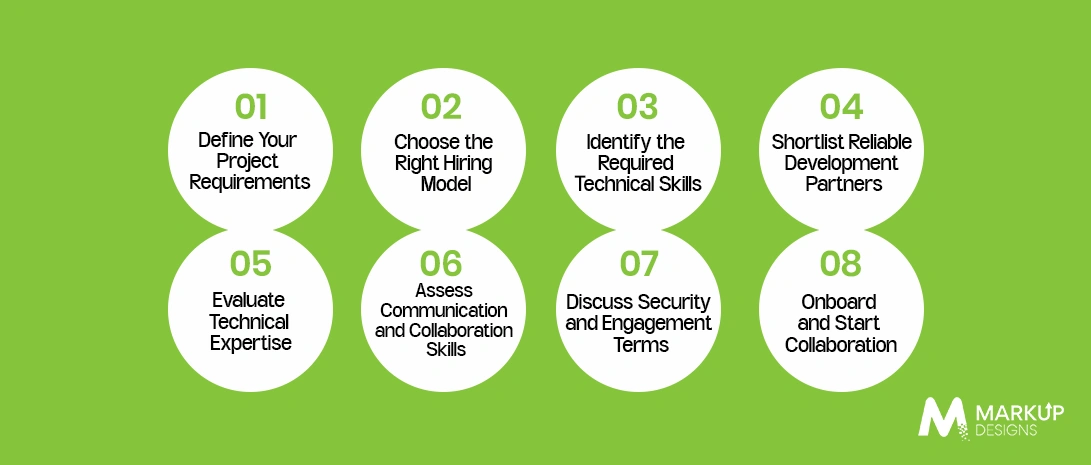
Hiring a remote development team becomes much easier when you follow a structured approach. From defining your project requirements to onboarding the right professionals, each step plays a crucial role in ensuring a successful collaboration. Here’s a step-by-step guide to help you hire the best remote developers for your business.
Step 1: Define Your Project Requirements
Start by outlining your business goals, project scope, required features, technology stack, timeline, and budget. Having clear requirements helps you identify the type of developers and expertise your project needs.
Step 2: Choose the Right Hiring Model
Decide whether you need freelance developers, a dedicated remote team, IT staff augmentation, or project-based outsourcing. Select a model that aligns with your project size, flexibility requirements, and long-term objectives.
Step 3: Identify the Required Technical Skills
List the technical skills your project demands, such as frontend, backend, mobile app development, cloud computing, AI, DevOps, or quality assurance. This helps narrow down candidates with the right expertise.
Step 4: Shortlist Reliable Development Partners
Research software development companies or remote hiring platforms with proven industry experience. Review their portfolios, client testimonials, case studies, and technical capabilities before creating a shortlist.
Step 5: Evaluate Technical Expertise
Assess candidates through technical interviews, coding tests, or live problem-solving sessions. Ensure they have experience working with relevant technologies, frameworks, and similar business projects.
Step 6: Assess Communication and Collaboration Skills
Strong communication is essential for remote work. Evaluate how effectively candidates communicate, respond to feedback, collaborate with teams, and adapt to your preferred workflow and time zones.
Step 7: Discuss Security and Engagement Terms
Before starting the project, finalize contracts, non-disclosure agreements (NDAs), intellectual property rights, payment terms, and project milestones to ensure complete transparency and data security.
Step 8: Onboard and Start Collaboration
Introduce the remote team to your business objectives, development processes, tools, and communication channels. Regular meetings, clear expectations, and continuous feedback help build a productive long-term partnership.
When Should You Hire a Remote Development Team?
Hiring a remote development team isn’t the right solution for every situation, but it can be a game-changer when your business needs specialized expertise, faster execution, or greater flexibility. Here are some common scenarios where bringing in a remote team makes the most sense.
1. When You Need to Launch a Product Quickly
If you’re working with tight deadlines, a remote development team can accelerate the hiring process and help you bring your product to market faster without compromising quality.
2. When Local Talent is Hard to Find
Finding experienced developers in your region can be challenging and time-consuming. Remote hiring gives you access to a global talent pool with expertise in the latest technologies.
3. When You Want to Reduce Development Costs
Hiring remote developers helps lower expenses related to office infrastructure, recruitment, employee benefits, and long-term operational costs while maintaining high development standards.
4. When Your Project Requires Specialized Skills
Whether you need experts in AI, cloud computing, blockchain, DevOps, or mobile app development, remote teams make it easier to find professionals with niche technical expertise.
5. When You Need to Scale Your Team Quickly
As project requirements evolve, remote teams allow you to add or reduce developers without the delays associated with traditional hiring, ensuring your business remains agile and efficient.
6. When Your In-House Team Needs Additional Support
If your internal developers are overloaded or lack expertise in specific technologies, a remote development team can seamlessly integrate with your existing workforce and accelerate project delivery.
Essential Skills to Look for in Remote Developers
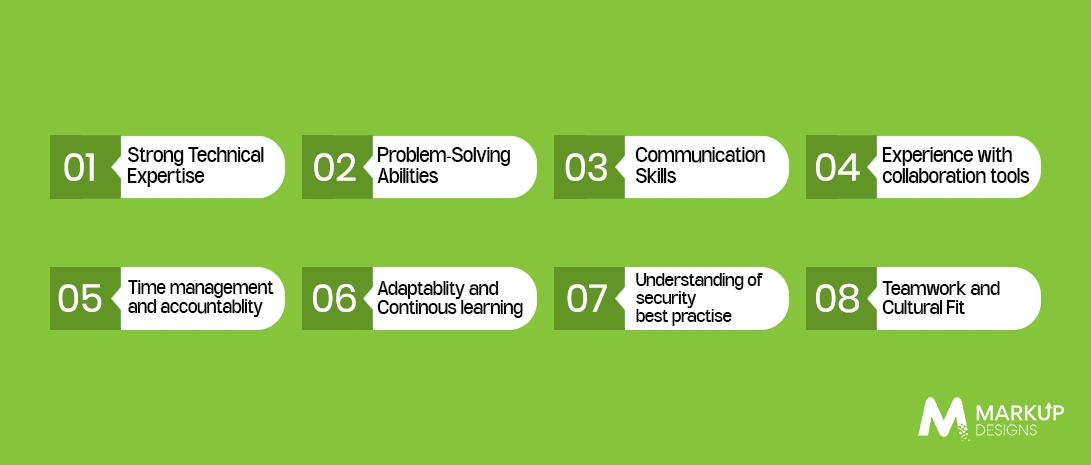
Hiring remote developers isn’t just about finding professionals with strong coding abilities. The best remote teams combine technical expertise with excellent communication, collaboration, and problem-solving skills. Evaluating both technical and soft skills ensures your project is completed efficiently and aligns with your business objectives.
1. Strong Technical Expertise
Developers should have hands-on experience with the programming languages, frameworks, and technologies required for your project, whether it’s web development, mobile apps, cloud platforms, AI, or enterprise software.
2. Problem-Solving Abilities
Remote developers should be capable of analyzing complex challenges, identifying root causes, and delivering effective solutions while maintaining code quality and project timelines.
3. Communication Skills
Clear and consistent communication is essential for remote collaboration. Developers should be able to explain technical concepts, share progress updates, and work effectively with distributed teams.
4. Experience with Collaboration Tools
Look for professionals familiar with tools like Jira, Trello, Slack, GitHub, Microsoft Teams, and other project management platforms that support smooth remote workflows.
5. Time Management and Accountability
Remote developers should be self-motivated, meet deadlines consistently, prioritize tasks effectively, and take ownership of their responsibilities without requiring constant supervision.
6. Adaptability and Continuous Learning
Technology evolves rapidly, so developers should be eager to learn new frameworks, adopt emerging technologies, and quickly adapt to changing project requirements.
7. Understanding of Security Best Practices
Developers should follow secure coding standards, protect sensitive business data, comply with industry regulations, and implement security measures throughout the software development lifecycle.
8. Teamwork and Cultural Fit
Even when working remotely, developers should collaborate well with designers, testers, project managers, and stakeholders while aligning with your company’s work culture and values.
Common Challenges of Hiring Remote Developers and How to Overcome Them
While hiring remote developers offers numerous advantages, businesses may encounter certain challenges during recruitment and project execution. Fortunately, these challenges can be effectively managed with the right strategies and tools.
| Challenge | How to Overcome It |
| Communication gaps | Schedule regular meetings, use collaboration tools like Slack or Microsoft Teams, and maintain clear documentation. |
| Time zone differences | Establish overlapping working hours and plan meetings in advance to ensure smooth collaboration. |
| Data security concerns | Sign NDAs, implement secure access controls, use VPNs, and follow cybersecurity best practices. |
| Maintaining code quality | Conduct regular code reviews, follow coding standards, and implement automated testing practices. |
| Project visibility | Use project management platforms like Jira, Trello, or Asana to monitor tasks and track project progress |
| Team collaboration | Encourage transparent communication, regular feedback sessions, and virtual team-building activities to strengthen collaboration. |
By proactively addressing these challenges, businesses can build productive, high-performing remote teams that deliver quality software consistently.
Why Choose Markup Designs to Hire Remote Developers
At Markup Designs, we help businesses build dedicated remote development teams that deliver innovative, scalable, and high-performance digital solutions. Whether you’re a startup developing an MVP or an enterprise expanding your technology capabilities, our experienced professionals seamlessly integrate with your team to accelerate development and drive business growth.
Here’s why businesses choose Markup Designs:
- Access to experienced developers across web, mobile, AI, cloud, and enterprise technologies.
- Flexible hiring models tailored to your project requirements.
- Agile development methodology for faster delivery and continuous improvement.
- Transparent communication and real-time project updates.
- Enterprise-grade security practices and complete IP protection.
- Easy team scalability as your project evolves.
- End-to-end development, testing, deployment, and maintenance support.
- Proven expertise across healthcare, fintech, logistics, eCommerce, education, travel, and other industries.
When you partner with Markup Designs, you gain more than remote developers-you gain a dedicated technology partner committed to your long-term success.
Ready to Build Your Remote Development Team?
Partner with Markup Designs to hire experienced remote developers who can turn your ideas into scalable digital solutions. From startups to enterprises, we provide dedicated teams tailored to your business goals, timeline, and budget.

Conclusion
Hiring a remote team of developers has become one of the most effective ways for businesses to access global talent, reduce operational costs, and accelerate digital transformation. With the right hiring strategy, businesses can build skilled, collaborative teams that deliver high-quality software while maintaining flexibility and scalability.
From selecting the right hiring model to evaluating technical expertise and managing remote collaboration effectively, every step contributes to the success of your project. By partnering with an experienced software development company like Markup Designs, you can simplify the hiring process and confidently build a remote team that aligns with your business objectives.
Whether you’re launching a new product or scaling an existing one, investing in the right remote development team can give your business the competitive advantage it needs in today’s digital-first world.
FAQs
1. What is a remote development team?
A remote development team is a group of software professionals who work from different locations and collaborate online to design, develop, test, and maintain software applications.
2. What are the benefits of hiring remote developers?
Remote developers provide access to global talent, reduce hiring costs, improve scalability, speed up product development, and offer specialized technical expertise.
3. How much does it cost to hire remote developers?
Costs depend on factors such as location, experience, technology stack, and hiring model. Rates typically range from $20 to $200+ per hour.
4. Which hiring model is best for long-term projects?
A dedicated remote development team is generally the best choice for long-term projects because it offers consistent collaboration, flexibility, and complete project ownership.
5. How can I ensure effective communication with a remote team?
Use collaboration tools, schedule regular meetings, maintain clear documentation, establish communication guidelines, and adopt Agile development practices.
Author's Perspective
Remote development is no longer just an alternative to traditional hiring-it’s a strategic business approach that enables companies to innovate faster and compete globally. However, success depends on hiring the right people, implementing efficient collaboration processes, and partnering with a reliable technology provider.
Businesses that treat remote developers as an extension of their internal teams often achieve better communication, stronger collaboration, and higher-quality software outcomes. As organizations continue embracing digital transformation, building capable remote development teams will remain a key driver of innovation, scalability, and sustainable business growth.
Discuss Your Project NowJupinder Singh Arora
Founder and CEO
Related Posts

Software Companies in Kuwait: Smart Choices for Long-Term...

AI Software Development Cost in UAE: Complete Pricing...

How Much Does It Cost to Build CRM...
Insights Are Valuable & Execution is Priceless
You’ve read about the digital future. Now, let’s build the infrastructure to take you there. Move your strategy from the page to the product.
Design Your Solution Now
Contact Us
Schedule The Appointment At Your Convenience Date And Time.
30 Min
Web Conference
Time Zone
Indian standard time (08:30pm)

Thanks For Getting In Touch!
You’ve Taken The First Step Toward Transforming Your Digital Presence. Our Experts Will Reach Out Shortly To Take It Forward.
Launch Your Dream Project
Provide a brief overview of your project, and our specialists will evaluate your requirements. We will connect with you to explore how the right digital solutions can help you launch faster.