
In Brief
- HRMS software development companies in Dubai, UAE, create custom-designed, automated human resources management solutions that streamline HR processes and allow businesses to manage all levels of their employee experience in compliance with current employment law.
- The HRMS software is incredibly flexible, scalable, and can integrate more easily than traditional off-the-shelf products, and provides organizations with more options to implement HRMS.
- When planning for an HRMS project in Dubai, the cost of the HRMS software will vary based on the combination of features, level of integration with your existing systems, deployment model, and the overall customisation needed for HRMS.
- Generally, HRMS platforms are built using advanced technologies with various forms of integrated solutions such as AI, Business Intelligence (BI), Analytics, Cloud Technology, and Self-service Portals.
- Utilising these features to create a custom-developed solution for your organisation will result in improved operational efficiencies, better business decision-making, and a reduction in your organisation’s administrative workload over the long-term.
It has become increasingly challenging for businesses in Dubai to manage Human Resources with the growth of Dubai’s competitive market. The various responsibilities of HR departments include, but are not limited to, recruiting and onboarding employees, processing payroll, managing performance, and compliance with laws and regulations. Each of these HR responsibilities adds to the already complex HR function and puts additional pressure on HR to operate effectively. Current manual processes, lack of integration of systems and procedures, create bottlenecks and increase the administrative workload of HR, as well as hinder the opportunity for an organisation to grow.
A custom-designed HRMS solution provides the functionality to centralise and automate repeatable HR processes, improve the level of employee engagement, and facilitate management’s ability to gain valuable insights through a workforce analytics solution throughout the lifecycle of the employee. Investing in a custom HRMS solution can be a smart investment for companies wanting to transform their business into a digital organization and create a highly responsive and high-performing workforce.
What Is HRMS Software Development?
An HRMS or Human Resource Management System is a complete digital system that enables the organization of AI Law and HR records and processes. The HRMS is used to manage employee data; track attendance; manage payroll; recruit employees; evaluate employee performance, provide training; and generate workforce analytics reports.
The process of developing custom HRMS software consists of creating and implementing a unique software solution to match your organization’s operational needs. With this approach, rather than changing or adapting how your company does business to fit into an existing HRMS, you create a solution that complements the current operational flow and can grow with your company.
Due to the diverse number of businesses in Dubai, there is a very broad range of companies, from one-person startups to small and medium-sized businesses to multi-national corporations; thus, customizing your HRMS software gives you significant business benefits since you will be able to meet the various industry requirements and local compliance laws for your local business area.
Why Are Companies in Dubai Investing in Custom HRMS Software?
Dubai has become a leader in becoming a global business hub for the various industries, including finance, healthcare, retail, logistics, construction, and technology. As the number of employees in every company increases and the regulatory environment continues to become increasingly complex, companies are looking for better and more sophisticated tools to effectively manage their workforce.
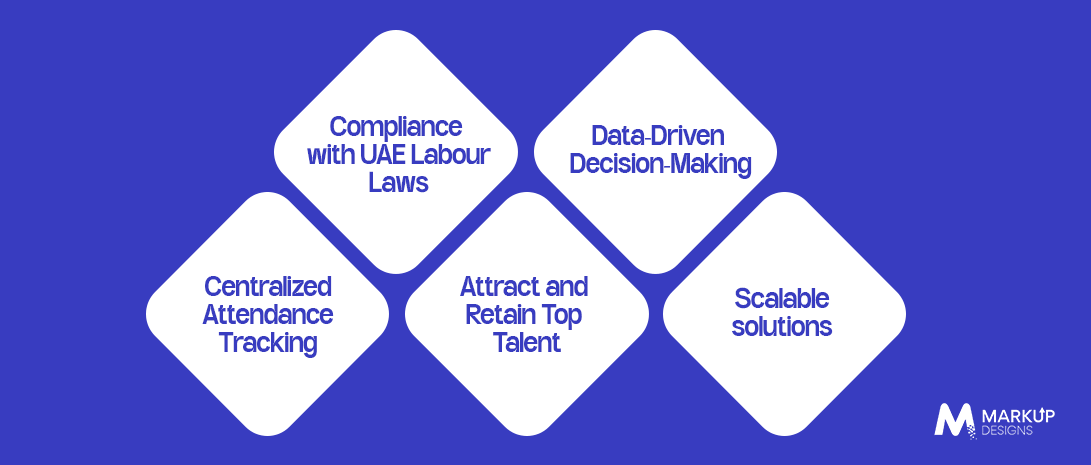
1. Centralized Attendance Tracking and Employee Communication
The rise of hybrid and remote working requires businesses to implement centralized systems to manage attendance tracking, monitor employee performance, and maintain open lines of employee communication.
2. Compliance with UAE Labour Laws
Employers in the UAE are required to comply with labour laws, visa regulations, payroll tax law, and record-keeping requirements. A modern HRMS provides companies with the tools necessary to meet these legal requirements.
3. Attract and Retain Top Talent
With increasing competition for top talent, employers need to provide an exceptional employee experience that includes modern tools and resources. The adoption of a digital HRMS can greatly enhance the employee experience and allow for talent acquisition and retention through improved employee satisfaction.
4. Improved Data-Driven Decision-Making
HR leaders use workforce analytics to generate data to support decision-making related to sourcing, screening, hiring, promoting, training, and developing employees, retaining employees, as well as workforce management and development. This enables HR teams and executives to make informed decisions about their human capital and the direction of their organizations.
5. Scalable solutions for growing businesses
For many businesses, the ability to scale up their operations as they grow will be a significant challenge when trying to manage a larger employee population. A custom-built HRMS offers scalability, allowing a business to add new departments, locations, and employees as well as HR functionality, without interrupting day-to-day operations. Whether an organization is expanding throughout the UAE or managing global employees from its headquarters, a custom-built HRMS can adapt to these changes as the business grows and continue to provide long-term flexibility and value for the organization.
- Advanced reporting and Analytics capabilities
Modern businesses depend on data-driven decisions. A custom-built HRMS has the ability to provide advanced reporting and analytic features, providing organizations with the ability to measure key workforce metrics (turnover rates, effectiveness of recruitment, patterns of attendance, training success, total cost of workforce). Having access to the data/metrics of a workforce allows HR leadership to uncover trends, identify proactive solutions before issues become major problems, and develop strategies that enhance organizational performance.
- Integration with existing systems
Most companies utilize multiple software programs to perform their business functions. A custom HRMS can easily integrate with existing systems (ERP, accounting software, payroll systems, CRM systems, learning management systems, & biometric time clocks). Integration of multiple systems reduces data silos, improves data accuracy, simplifies processes, and creates a unified digital ecosystem that fosters operational efficiency throughout the company.
Core elements of custom-built HRMS software
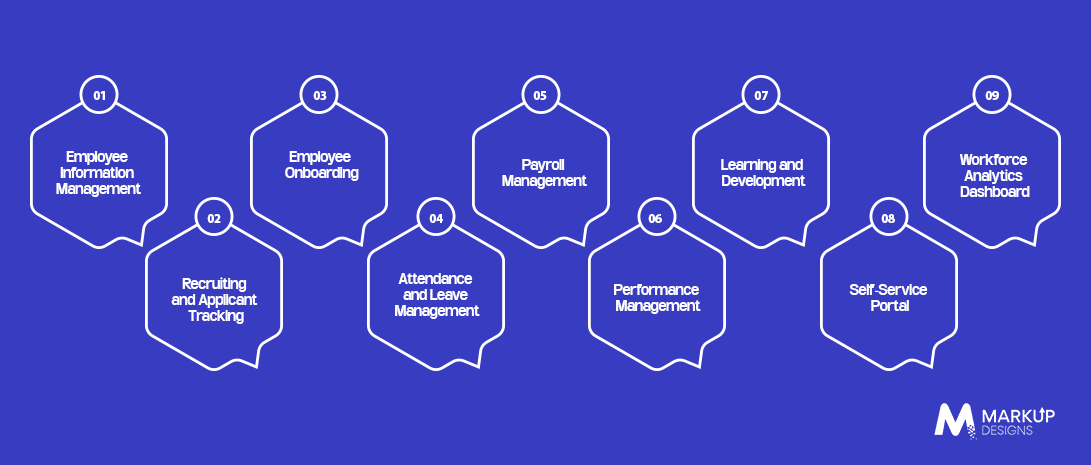
Employee Information Management
Employee information management is the primary component of the HRMS (Human Resource Management System) that stores all workforce-related data in a single location. This enables employers to keep employee profiles, employment history, contracts, documents, and the structure of reporting in one place rather than having them spread out across multiple spreadsheets or disparate systems, which enables HR teams to have access to accurate data at all times.
Recruiting and Applicant Tracking
Effective recruitment and applicant tracking solutions help organizations optimize their hiring process from the time an employer posts an opening to when a candidate has been selected. Recruitment and applicant tracking solutions allow HR teams to manage vacancies, monitor applicants and their resumes, automate hiring processes, schedule interviews, and track candidate direction through one system. By reducing manual efforts and improving visibility into candidates, organizations can fill their open positions faster and more efficiently attract high-quality employees.
Employee Onboarding
New job candidates have the ability to form their perspective of an organization through the onboarding process. By providing a clear and simple onboarding process, HRMS allows companies to digitize documents and automate the approval process, assign new hires specific training programs, and provide a documented structure surrounding onboarding. This helps new hires to transition into their roles more efficiently and reduces the HR department’s administrative burden during this transition period.
Attendance and Leave Management
Managing employee attendance and handling leave requests becomes more complex when the number of employees in an organization increases. Human resources management system (HRMS) can assist by automating the management of attendance through time-tracking systems, shift scheduling, approval of leave requests, holiday calendars, and attendance reporting. This provides organizations the opportunity to have improved visibility of their workforce, minimize scheduling conflicts, and have accurate records for payroll and compliance purposes.
Payroll Management
Payroll is one of the critical functions of any human resources (HR) department and requires a high degree of accuracy and adherence to regulations; thus, an HRMS will automate the payroll process by performing the calculation of salaries, tracking overtime, calculating any deductions, managing employee benefits, and generating payslips. This eliminates the need to perform manual payroll calculations, which reduces errors found during payroll processing; as a result, employees can expect to receive their wages on time and accurately while ensuring compliance with the governing laws at their location.
Performance Management
Performance management module functionality within an employee management system allows management to foster a culture of being accountable for one’s performance and continuing to improve oneself and the organization. Through performance management, employees and supervisors are able to create goals, monitor goal progress, conduct performance reviews, request and provide feedback, and report on key performance indicators. Through alignment of the employee’s objectives with the company goals, organizations can create an environment that improves the productivity of employees as well as supports the employee in their professional development.
Learning and Development
The ability to provide employees with opportunities for continuous learning is critical to organizations that are looking to remain competitive in today’s ever-changing business environment. Within an HRMS, the learning and development module provides the ability to manage structured training, provide certification tracking, conduct skills assessments, and develop individual learning plans for employees. Organizations are better able to narrow down where they need to improve through these abilities. Also, they will be able to provide employees with more resources to help them grow their careers as well as provide employers with an overall better-quality workforce.
Self-Service Portal
Enabling employees to perform a majority of HR functions independently will reduce the need for HR personnel to handle repetitive requests from employees. With the use of a dedicated single point of access (portal), employees can make changes to their records, request time off, view their pay stubs, access company policies, and monitor their own performance goals. This will ultimately lead to a higher level of employee satisfaction and lower administrative workload for HR personnel.
Workforce Analytics Dashboard
A workforce analytics dashboard is used by organizations to monitor specific areas of employee performance, recruitment results, retention trends, and the overall effectiveness of the HR department. Workforce data is converted into usable intelligence to help HR leaders notice trends, prepare for future workforce needs, and make data-driven decisions that support ongoing business growth and improve workforce optimization.
Emerging Technologies Impacting HRMS Solutions
Artificial Intelligence AI
The use of artificial intelligence (AI) is beginning to change how HR is run by allowing repetitive HR job functions to be automated and to allow for the use of more sophisticated methods to make decisions. AI is also giving HRMS platforms the ability to evaluate resumes, match candidates against job requirements, analyze employee sentiment, forecast workforce requirements, and to provide solutions through virtual assistants to HR staff. Using these capabilities will help improve HR efficiencies and also improve both candidate experience and employee experience.
Machine Learning
Machine learning technology provides HRMS systems with the capability to continuously learn from workforce data, thereby identifying some trends within the data that might not have been detected through other means. By performing analyses on both historical and real-time data, machine learning algorithms are able to anticipate employee turnover, predict performance results, and streamline recruiting strategies. This enables organizations to be proactive in their decision-making as opposed to reactive as a result of situations within the workforce.
Cloud Computing
The use of cloud technology has changed how human resource information systems (HRIS) are deployed and managed. Organizations using cloud-based HRIS can take advantage of the benefits of increased scalability, remote access, and lower infrastructure costs. In addition, cloud-based HRIS offers automatic software upgrades, enhanced data protection, and integration capabilities with other enterprise applications, making them attractive to growing businesses.
Mobile-First Experiences
As more employees are working from home or remotely, HRMS systems have evolved to deliver a mobile-first experience. Mobile-first HRMS applications enable employees and managers to have greater access to HR services from any location, for example, managing vacation requests, reviewing performance appraisals, accessing company information, or receiving notifications. The ability to provide this level of access will increase employee engagement, speed up the decision-making process, and facilitate modern flexible work environments.
Cost to Develop Custom HRMS Software in Dubai
There are multiple elements that contribute to the overall costs for HRMS Development.
1) Feature complexity
The cost of basic HRMS solutions with employee management and attendance tracking is significantly less than the cost of enterprise-level platforms that include AI, analytics and payroll automation.
2) UI/UX requirements
Building a custom user interface, dashboard and mobile experience will require more development work and increase development costs.
3) Integration Requirements
The number and complexity of third-party integrations will impact development timeframes and budgets.
4) Deployment Model
Organizations can choose to deploy their application:
- In the cloud
- On-premises
- Hybrid
Each deployment option will have different costs associated with the infrastructure and maintenance.
5) Security Requirements
The addition of security requirements such as:
- Role-based access to restricted areas of the application
- Data encryption
- Multi-factor authentication
- Compliance with regulatory requirements
- Could increase the level of development investment.
Estimated Development Costs
| HRMS Type | Estimated Cost Range |
| Basic HRMS | $20,000 – $40,000 |
| Mid-Level HRMS | $40,000 – $80,000 |
| Advanced Enterprise HRMS | $80,000 – $200,000+ |
Actual project costs depend on business requirements, integrations, user volume, and customization levels.
Best Practice Guidelines for a Successful Development of an HRMS
Identify Clear Objectives
Fully explain what will be accomplished before the start of any development efforts.
Put User Experience First
Easy-to-use interfaces make for easy-to-adopt systems.
Ensure that you are in compliance with all required regulations
Starting at the design stage, there should be consideration for all regulatory requirements.
Consider the solutions’ ability to grow
All of your current employees, as well as any additional employees needing to be hired in the future, will need to have access to the same systems that they have today.
Ensure that the Security of Your Employee Information Remains a Top Priority
Employee information security should remain a top consideration throughout the entire development process.
Are You Ready to Modernize Your HR Process?
Give your company a custom, scalable, and secure HRMS platform that will empower your workforce. Your HRMS can provide a wide variety of tools intended to improve efficiency and compliance, while enabling long-term organizational success. Build a custom HRMS from the ground up that will help you manage all of your HR tasks (e.g., hiring, payroll, performance, workforce analysis, etc.) and provide easy-to-use interfaces for all users in the organization.

Conclusion
While businesses and their employees’ experiences are being transformed through the use of digital technology, the continued reliance on HRMS has become more critical than ever. Organizations can automate many HR tasks and processes with custom HRMS Software Development, which will improve the overall employee experience, provide increased uniformity and efficiency, and gain important information about the organization. Generic HR management systems were created for “one size fits all,” but may not function for all organizations. The benefit of using a custom HRMS is that there are just as many different functions required as there are different organizational needs. Custom HRMS solutions can also grow with the organization.
Organisations can improve their workforce management by investing in an HRMS that is built to support the needs of their unique organisation. Implementing an HRMS solution tailored to your company and your industry, whether a startup or an established enterprise, will provide the basis for operational efficiency and long-term success in business.
FAQs
1. What is Custom HRMS Software?
Custom HRMS Software is a customised human resources management system (HRMS) solution that is built around your organisation’s workflows, business processes, and operations.
2. Why Should Companies in Dubai Invest in HRMS Software?
HRMS software allows organisations to automate HR processes, enhance compliance, improve employee experiences, and help facilitate the growth of the workforce.
3. What is the Cost of Custom HRMS Development in Dubai?
The average cost for custom HRMS software development is $20,000 to $200,000, based on the functionality, integrations, scalability requirements, and complexity of the solution.
4. What are the Top HRMS Features?
Top HRMS features include employee management, payroll processing, attendance tracking, recruitment, performance management, and workforce analytics.
5. Will Custom HRMS Software Integrate With Other Systems?
Yes. Custom HRMS software can integrate with ERP systems, accounting systems, payroll systems, CRM tools, and other enterprise applications.
6. Are cloud-based HRMS systems superior to their on-premises counterparts?
Cloud-based HRMS solutions typically provide greater scalability, accessibility, and lower upfront infrastructure investment than on-premises solutions, whereas traditional HRMS solutions have greater control of data.
7. How long does it generally take to develop HRMS software?
The time required to develop HRMS software will vary depending on many different factors, but typically, HRMS software development will take four (4) to twelve (12) months to complete, based on the complexity of the project and the degree of customization requested.
8. Is it possible to incorporate artificial intelligence into HRMS software?
Yes, it is possible to utilize AI capabilities in HRMS software applications. Some examples of how to leverage AI include automating the recruiting process through the use of predictive analytics; analyzing data for developing insights needed for managing your workforce effectively; monitoring employee engagement; providing predictive insights by analyzing historical employee performance data; and utilizing chatbots to assist with employee inquiries.
Author's Perspective
In today’s world of business, human resources is no longer viewed solely as an administrative function, but also as a strategic asset. Organizations now consider their employees to be one of their most critical assets and therefore use workforce management as a tool to create strategies to attract, retain, and manage employees successfully. Over the past several years, I have observed many digital transformation projects across various industries and have noted an obvious trend: companies that proactively invest in intelligent HR technology generally have a competitive advantage in attracting talent, driving operational efficiency, and adapting to changing market demands.
Developing custom HRMS applications represents more than just a technology investment; it is also an investment in the agility of an organization and in the success of its employees. While off-the-shelf HRMS solutions may provide a sufficient level of functionality for generic requirements, custom HRMS solutions provide the necessary level of flexibility to accommodate the unique challenges, legal obligations, and long-term goals of an organization.
Discuss Your Project NowJupinder Singh Arora
Founder and CEO
Related Posts
Case Management Software Development: Enterprise Features & Implementation...
Farm Management Software Development in Australia: Features, AI...
Knowledge Management System Development in Australia: Building AI-Ready...
Insights Are Valuable & Execution is Priceless
You’ve read about the digital future. Now, let’s build the infrastructure to take you there. Move your strategy from the page to the product.
Design Your Solution Now
Contact Us
Schedule The Appointment At Your Convenience Date And Time.
30 Min
Web Conference
Time Zone
Indian standard time (08:30pm)

Thanks For Getting In Touch!
You’ve Taken The First Step Toward Transforming Your Digital Presence. Our Experts Will Reach Out Shortly To Take It Forward.
Launch Your Dream Project
Provide a brief overview of your project, and our specialists will evaluate your requirements. We will connect with you to explore how the right digital solutions can help you launch faster.