

In Brief
- The Middle East is experiencing rapid growth in digital education, driven by increasing smartphone usage, internet accessibility, and government-led digital transformation initiatives across countries like Saudi Arabia, UAE, Qatar, and Bahrain.
- Arabian education app development is gaining momentum as schools, universities, and training institutions adopt mobile learning, virtual classrooms, AI-powered tutoring, and personalized learning experiences to enhance educational outcomes.
- Key trends shaping the sector include AI-powered learning, gamification, mobile-first platforms, hybrid learning models, and adaptive learning systems that improve engagement, accessibility, and student performance.
- Successful education apps require features such as Arabic and English language support, virtual classrooms, progress tracking, communication tools, content management systems, analytics dashboards, and secure, scalable infrastructure.
- The growing EdTech market presents significant opportunities for educational institutions and businesses, but success depends on addressing challenges like localization, student engagement, system integration, security, and scalability through the right development strategy and technology partner.
Education across the Middle East is undergoing a major digital transformation. From schools and universities to corporate training institutions, organizations are increasingly investing in technology-driven learning solutions to improve accessibility, engagement, and educational outcomes.
As internet connectivity, smartphone adoption, and digital literacy continue to rise across countries such as Saudi Arabia, UAE, Qatar, and Bahrain, the demand for innovative education platforms is growing at an unprecedented pace.
This shift has created significant opportunities for Arabian education app development, making it one of the fastest-growing segments within the regional technology ecosystem. Educational institutions are moving beyond traditional classroom models and embracing mobile learning, virtual classrooms, AI-powered tutoring, and personalized learning experiences.
In this blog, we will explore the key factors driving Middle East EdTech growth, emerging trends shaping the future of digital learning, essential features of successful education apps, development costs, challenges, and the strategies businesses can use to build impactful education solutions for the Arabian market.
Understanding the Middle East Education Technology Landscape
The Middle East is rapidly becoming a major hub for education technology adoption. Governments, schools, universities, and private organizations are investing heavily in digital learning solutions to modernize education and prepare students for a technology-driven future. This shift is creating significant opportunities for businesses entering the growing EdTech market.
Countries such as Saudi Arabia and UAE are leading the way through digital transformation initiatives, smart learning programs, and investments in advanced education platforms. At the same time, educational institutions are increasingly adopting digital tools to improve learning experiences and streamline operations.
The rise of online learning, mobile education, and hybrid classrooms is further driving demand for innovative education apps. Students now expect flexible and engaging learning experiences, while educators seek tools that simplify teaching, assessments, communication, and progress tracking.
As a result, education app development in UAE has evolved beyond virtual classrooms, incorporating AI, analytics, gamification, and personalized learning features to meet the changing needs of modern learners and institutions.
Why Arabian Education App Development is Accelerating
The rapid growth of EdTech in the Middle East is not happening by chance. It is being driven by a combination of government initiatives, rising digital adoption, and increasing demand for flexible learning experiences. As education systems continue to modernize, education apps are becoming a critical part of how students learn and institutions operate.
The numbers clearly reflect this momentum. The Middle East EdTech market reached approximately USD 12.3 billion in 2025 and is projected to grow to USD 27.3 billion by 2034, highlighting the region’s strong commitment to digital education. Meanwhile, the Middle East e-learning market was valued at USD 16.1 billion in 2025 and is expected to surpass USD 28.2 billion by 2034.
Countries such as UAE and Saudi Arabia are leading this transformation. UAE alone generated over USD 2.26 billion in EdTech revenue in 2024 and is forecast to reach USD 5.31 billion by 2030, growing at a CAGR of 15.1%. Additionally, internet penetration in UAE stands at approximately 99%, creating an ideal environment for digital learning adoption.
As schools, universities, and training institutions increasingly invest in AI-powered learning, virtual classrooms, and personalized education platforms, Arabian education app development is emerging as one of the most promising opportunities within the Middle East’s digital economy.
Key Trends Driving the Future of Education Apps in the Middle East
As the education sector continues to evolve, several emerging trends are shaping the next generation of learning applications across the Middle East. These trends are helping institutions deliver more engaging, accessible, and effective learning experiences.
AI-Powered Learning Experiences
- Personalized learning paths based on student performance and behavior
- AI tutors that provide instant assistance and guidance
- Smart recommendations for courses, lessons, and study materials
- Automated grading and assessment support
Gamification and Interactive Learning
- Reward systems that encourage student participation
- Interactive quizzes and challenges to improve knowledge retention
- Achievement badges and progress tracking features
- More engaging learning experiences for younger audiences
Mobile-First Education Platforms
- Learning anytime and anywhere through smartphones and tablets
- Easy access to educational resources on the go
- Increased convenience for students and educators
- Better accessibility in remote and underserved areas
Virtual and Hybrid Learning Models
- Seamless integration of online and classroom learning
- Live virtual classes and collaborative learning environments
- Improved communication between teachers, students, and parents
- Flexible learning schedules and formats
Personalized and Adaptive Learning
- Content adjusted according to individual learning needs
- Customized study plans and recommendations
- Better engagement through learner-focused experiences
- Improved learning outcomes through targeted support
Essential Features of a Successful Arabian Education App
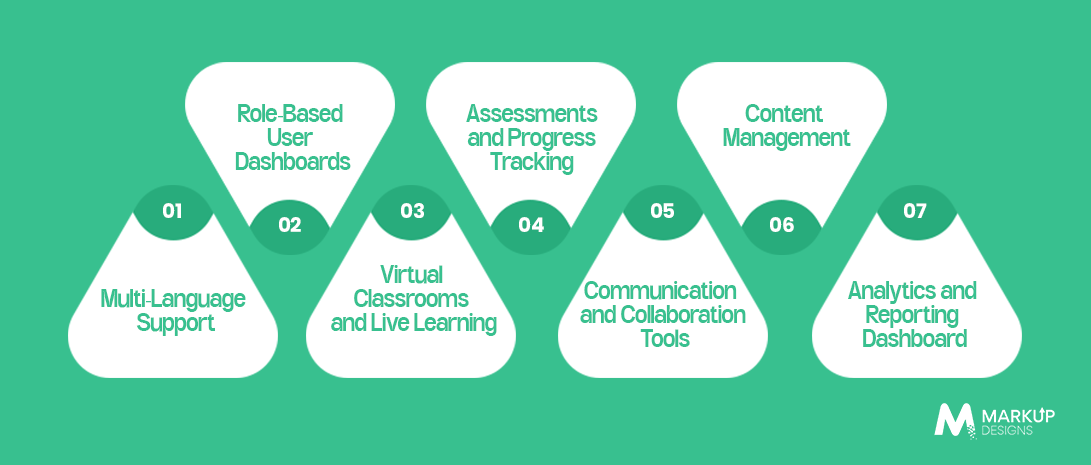
Building a successful education app for the Middle East requires more than just offering digital learning content. To meet the expectations of students, educators, institutions, and parents, education platforms must provide features that enhance engagement, simplify administration, and deliver personalized learning experiences. Here are some of the most important features every Arabian education app should include.
1. Multi-Language Support (Arabic and English)
Education apps should support both Arabic and English to serve diverse user groups across the Middle East. Proper localization, right-to-left (RTL) design compatibility, and culturally relevant content help improve accessibility and user adoption.
2. Role-Based User Dashboards
Dedicated dashboards for students, teachers, parents, and administrators allow users to access information relevant to their needs. This improves usability while simplifying learning management, communication, and performance tracking.
3. Virtual Classrooms and Live Learning
Integrated virtual classrooms enable real-time interaction between educators and students. Features such as video conferencing, screen sharing, digital whiteboards, and session recording create engaging and flexible learning environments.
4. Assessments and Progress Tracking
Online quizzes, assignments, examinations, and performance reports help educators monitor student progress effectively. These tools also provide learners with valuable insights into their strengths and areas for improvement.
5. Communication and Collaboration Tools
Built-in messaging, discussion forums, announcements, and notification systems help maintain seamless communication among students, teachers, parents, and administrators, creating a more connected educational ecosystem.
6. Content Management and Resource Libraries
A centralized content repository allows institutions to organize, update, and distribute educational materials efficiently. Students can access learning resources anytime, supporting self-paced and continuous learning.
7. Analytics and Reporting Dashboard
Advanced analytics provide valuable insights into student engagement, learning outcomes, attendance, and course performance. These data-driven insights help institutions make informed decisions and continuously improve educational experiences.
The Role of AI in Transforming Education App Development
Artificial intelligence is becoming a key driver behind the evolution of education technology in the Middle East. As educational institutions focus on improving learning outcomes and operational efficiency, AI is helping create smarter, more personalized, and engaging learning experiences.
One of the biggest advantages of AI in education apps is its ability to personalize learning. By analyzing student behavior, learning patterns, and performance data, AI can recommend customized lessons, study materials, and learning paths that match individual needs.
AI-powered virtual tutors and chatbots are also transforming student support. These tools can answer questions, provide instant assistance, and guide learners through educational content without requiring constant human intervention.
For educators, AI helps automate repetitive tasks such as grading assignments, evaluating assessments, generating reports, and tracking student progress. This allows teachers to spend more time focusing on instruction and student engagement.
Additionally, AI-driven analytics provide institutions with valuable insights into student performance, course effectiveness, and learning trends. These insights help schools and universities make data-backed decisions that improve educational outcomes.
As AI technology continues to advance, it is expected to play an even greater role in shaping the future of education app development in the Middle East, making learning more accessible, efficient, and personalized for students across the Middle East.
Benefits of Education Apps for Schools, Universities, and EdTech Businesses
The growing adoption of education apps is creating significant value for educational institutions and EdTech companies across the Middle East. These platforms are helping organizations improve learning experiences, streamline operations, and reach a wider audience while adapting to the evolving demands of modern education.
Improved Student Engagement
Interactive learning modules, gamified experiences, multimedia content, and personalized learning journeys help keep students actively involved in the learning process, resulting in better participation and knowledge retention.
Enhanced Learning Accessibility
Education apps allow students to access courses, assignments, and learning resources anytime and from anywhere. This flexibility supports both remote and hybrid learning models while making education more accessible to diverse learner groups.
Streamlined Administrative Operations
Digital platforms simplify routine administrative tasks such as attendance tracking, course management, scheduling, reporting, and communication, reducing manual workloads and improving operational efficiency.
Better Communication and Collaboration
Education apps create a centralized environment where students, teachers, parents, and administrators can communicate seamlessly, share updates, and collaborate more effectively throughout the learning journey.
Data-Driven Decision Making
Built-in analytics and reporting tools provide valuable insights into student performance, engagement levels, and learning outcomes. Institutions can use this information to improve educational strategies and optimize resource allocation.
New Revenue and Growth Opportunities
For EdTech businesses, education apps open doors to subscription models, online certifications, premium learning content, and corporate training programs, creating sustainable opportunities for long-term business growth and market expansion.
Challenges in Arabian Education App Development and Their Solutions

While the Middle East offers tremendous opportunities for EdTech growth, building a successful education app is not without its challenges. From language requirements to technology integration, businesses need to address several factors to create a platform that truly resonates with users.
Arabic Localization and User Experience
One of the biggest challenges is creating an experience that feels natural for Arabic-speaking users. Simply translating content is not enough. Education apps must support right-to-left layouts, culturally relevant content, and a user interface designed specifically for regional audiences.
Keeping Student Engagement High
Developing an app is one thing; keeping students engaged is another. Many learners lose interest when content becomes repetitive or difficult to follow. Features such as gamification, personalized learning paths, and interactive lessons can help maintain long-term engagement.
Integration with Existing Systems
Schools and universities often use multiple digital tools for learning management, attendance, and communication. Ensuring smooth integration with these systems is essential for creating a seamless learning experience.
Data Privacy and Security
Education platforms handle large amounts of sensitive student and institutional data. Strong security measures, secure cloud infrastructure, and compliance with regional regulations are critical for building trust among users.
Scaling as User Demand Grows
As more students join the platform, performance issues can arise if the app is not built for growth. Investing in scalable architecture from the beginning helps ensure smooth performance as the user base expands.
The good news is that with the right development strategy and technology partner, these challenges can be effectively managed, paving the way for long-term success in the Arabian EdTech market.
Cost of Developing an Education App in the Middle East
The cost of developing an education app in the Middle East can vary significantly depending on the app’s complexity, features, technology stack, integrations, and scalability requirements. A basic learning platform will naturally cost less than an advanced AI-powered education ecosystem with virtual classrooms and personalized learning capabilities.
Before estimating a budget, businesses should evaluate their target audience, learning objectives, compliance requirements, and long-term growth plans. Investing in the right features from the beginning can help avoid costly upgrades in the future.
Factors That Influence Development Cost
- App Complexity: Basic apps require fewer resources, while advanced platforms involve sophisticated functionalities and integrations.
- UI/UX Design: Arabic-first and bilingual interfaces often require additional design and localization efforts.
- AI and Automation Features: Personalized learning, chatbots, and predictive analytics can increase development scope.
- Third-Party Integrations: LMS, payment gateways, video conferencing, and CRM integrations add to overall costs.
- Platform Selection: Developing for Android, iOS, or both impacts project timelines and budgets.
- Security and Compliance: Strong security frameworks and data protection measures require additional investment.
| App Type | Estimated Cost Range |
| Basic Education App | $15,000 – $35,000 |
| Medium-Complexity Learning Platform | $35,000 – $80,000 |
| Advanced Education App with AI Features | $80,000 – $180,000+ |
| Enterprise-Grade EdTech Ecosystem | $180,000 – $500,000+ |
The best approach is to start with a scalable MVP, validate market demand, and gradually expand features based on user feedback and business goals. This helps control costs while reducing development risks.
The Complete Process of Building a High-Performing Arabian Education App
Effective education app development in GCC is not just about implementing the latest technologies. It involves understanding regional learning needs, user expectations, language preferences, and long-term business objectives. Following a structured development process can help ensure a successful launch and sustainable growth.
Step 1: Conduct Market Research and Define Objectives
Begin by identifying your target audience, whether they are schools, universities, corporate learners, or EdTech startups. Analyze market trends, user challenges, and competitor offerings to define clear business and learning objectives.
Step 2: Understand Regional and Localization Requirements
The Arabian market has unique requirements that should be addressed early in the planning phase. This includes Arabic language support, right-to-left (RTL) design, cultural considerations, and local educational standards.
Step 3: Define Core Features and Functionality
List the essential features your platform needs, such as user dashboards, virtual classrooms, assessments, progress tracking, communication tools, and content management capabilities. Prioritize features that deliver the most value to users.
Step 4: Design an Intuitive User Experience
Create a user-friendly interface that simplifies navigation for students, teachers, parents, and administrators. The design should be engaging, accessible, and optimized for both Arabic and English users.
Step 5: Develop and Integrate Key Technologies
Build the application using a scalable technology stack. Integrate features such as AI-powered learning, video conferencing, cloud storage, analytics dashboards, and third-party educational tools where required.
Step 6: Perform Testing and Quality Assurance
Conduct thorough testing to identify bugs, security vulnerabilities, and performance issues. Ensure the platform works seamlessly across devices, operating systems, and user roles.
Step 7: Launch, Monitor, and Continuously Improve
After deployment, track user behavior, gather feedback, monitor performance metrics, and regularly introduce new features and improvements to keep the platform competitive and relevant in the evolving EdTech landscape.
Why Markup Designs is the Right Partner for Your Education App Development Needs
The growing demand for digital learning solutions has created exciting opportunities for educational institutions, startups, and enterprises across the Middle East. However, building a successful education platform requires the right combination of technology expertise, industry knowledge, and user-focused design.
At Markup Designs, we help businesses transform their education ideas into scalable and engaging digital products. Our team combines expertise in mobile app development, AI implementation, cloud technologies, and digital product engineering to create future-ready learning solutions.
Here’s why businesses choose Markup Designs:
- Expertise in education-focused mobile and web application development
- Experience building AI-powered and data-driven digital platforms
- Strong understanding of Arabic-first and bilingual app experiences
- Scalable architecture designed for long-term growth
- User-centric UI/UX design that improves engagement and retention
- End-to-end development support from strategy to deployment and maintenance
- Agile development approach ensuring faster delivery and transparency
Whether you are launching a learning platform, virtual classroom solution, LMS, or corporate training application, Markup Designs can help you build a solution that aligns with your business goals and market requirements.
Ready to Build the Next Generation of Learning Experiences?
From AI-powered learning platforms to virtual classrooms, create an education app designed for the evolving needs of students, institutions, and businesses across the Middle East.

Conclusion
The Middle East is rapidly becoming a hub for educational innovation, driven by digital transformation initiatives, growing technology adoption, and evolving learner expectations. As schools, universities, and organizations increasingly embrace digital learning, the demand for advanced education applications continues to grow.
From AI-powered learning experiences and virtual classrooms to personalized education platforms, Arabian education app development is playing a vital role in shaping the future of learning. Businesses that invest in scalable, user-friendly, and localized education solutions today will be well-positioned to benefit from the region’s expanding EdTech ecosystem.
Success in this market requires a clear strategy, the right technology foundation, and a deep understanding of regional user needs. By focusing on innovation and learner-centric experiences, organizations can create impactful education platforms that drive long-term value.
FAQs
1. How much does it cost to develop an education app in the Middle East?
The cost can range from $15,000 for a basic application to over $500,000 for a large-scale enterprise education platform, depending on features, complexity, integrations, and technology requirements.
2. Why is Arabic localization important for education apps?
Arabic localization improves accessibility, user engagement, and adoption by providing culturally relevant experiences and support for right-to-left interfaces.
3. What technologies are commonly used in modern education apps?
Popular technologies include artificial intelligence, cloud computing, data analytics, virtual classrooms, machine learning, and mobile application frameworks.
4. How long does it take to build an education app?
Development timelines typically range from 3 to 12 months depending on project scope, complexity, features, and customization requirements.
5. Can AI improve learning outcomes in education apps?
Yes. AI can personalize learning paths, automate assessments, provide intelligent recommendations, and help institutions gain deeper insights into student performance.
Author's Perspective
The rapid growth of EdTech across the Middle East highlights how technology is reshaping the future of education. As institutions increasingly embrace digital learning, the demand for innovative, accessible, and localized education platforms will continue to rise. Businesses that invest in AI-powered, user-focused education apps today will be better positioned to support evolving learner needs and capitalize on the region’s expanding digital education ecosystem.
Discuss Your Project NowGaurav Goyal
Global Sales- VP
Related Posts

Navigation App Development Guide: Building GPS Apps Like...

iOS vs. Android App Development in Abu Dhabi:...

How AI-powered App Development is Transforming Mobile Apps...
Insights Are Valuable & Execution is Priceless
You’ve read about the digital future. Now, let’s build the infrastructure to take you there. Move your strategy from the page to the product.
Design Your Solution Now
Contact Us
Schedule The Appointment At Your Convenience Date And Time.
30 Min
Web Conference
Time Zone
Indian standard time (08:30pm)

Thanks For Getting In Touch!
You’ve Taken The First Step Toward Transforming Your Digital Presence. Our Experts Will Reach Out Shortly To Take It Forward.
Launch Your Dream Project
Provide a brief overview of your project, and our specialists will evaluate your requirements. We will connect with you to explore how the right digital solutions can help you launch faster.