
In Brief
- No more should retail software be just POS-based systems; modern retail infrastructures include retail software that unifies the elements of inventory, e-commerce, customer engagement, fulfilment, analytics, and payment processing systems into a single environment.
- As retail continues to transition to omnichannel operations, custom retail software is becoming a more relevant and strategic investment for retailers as they attempt to overcome challenges presented by multiple systems to manage their inventory, sales, customer engagement, and fulfilment.
- Fortunately, with the advancement of technology such as AI and Automation, improved cloud infrastructure, and real-time analytics, retailers are redefining their processes to manage their inventory, personalize their customers’ experience, and increase efficiencies in their operations.
- The costs to create custom retail software vary greatly with respect to application complexity, application integration, application security needs, application architecture, and application scalability. The costs can range from building out mid-level solutions to implementing large-scale enterprise-grade retail system frameworks.
- Retail software success is defined as the ability to use architectural models, application scalability components, and the implementation strategy as critical components of the software project based on the feature set. Companies must focus on their long-term use cases and be able to achieve their expected ROI with their retail platforms.
Over the past 10 years, the retail industry has changed significantly. Consumers now expect retailers to provide a seamless shopping experience, whether they are shopping at a website, using a mobile application, using a social commerce app, or shopping in a traditional retail store. As customers’ expectations have evolved throughout retail, retailers have discovered that they cannot continue to use multiple disconnected systems and manual processes to manage their retail business.
Therefore, there has been a rapid growth in the demand for the development of retail software. Retailers need sophisticated, intelligent cloud-based retail platforms that can integrate their inventory management, customer engagement, order fulfilment, payment processing, analytics, and supply chain functions into a cohesive ecosystem.
In today’s competitive marketplace, retail software isn’t just a supporting function; it’s a vital enabling component of business activity. Retail software development enables businesses to provide enhanced customer experiences while streamlining backend processes, thereby enabling them to gain scalability, operational efficiencies, and ultimately achieve long-term profitability.
This guide provides a comprehensive overview of retail software market trends, software features, software development methodology, costs, and other strategic considerations when evaluating retail technology solutions.
What Is Retail Software Development?
Retail software development encompasses the design, development, and deployment of digital applications that support the management, automation, and optimization of retail operations across multiple sales channels and customer touchpoints. Unlike traditional systems, which were developed primarily for transaction processing and basic inventory management, modern retail software applications comprise an end-to-end integrated business ecosystem that connects all aspects of retail operations, including customer engagement and sales operations through to inventory management, supply chain visibility, and business intelligence.
With rapidly changing and evolving consumer expectations, the need to provide seamless shopping experiences across physical stores, eCommerce websites, mobile devices, social commerce, and online marketplaces is more critical for retailers now than ever.
In order for this transition to occur, a modern-day retail software solution provides an integrated system that can synchronize all channels with their respective data, processes, and workflows in real-time. Retail software solutions offered in the marketplace today generally consist of:
- Point-of-Sale (POS) systems used for managing in-store transactions.
- Inventory/Warehouse Management tools give the ability to view stock levels in real-time.
- Order Management Systems, which streamline the order fulfilment process from beginning to end.
- Customer Relationship Management (CRM) platforms enable retailers to engage with their customers on a personal level.
- Loyalty/Rewards program management, allowing for the creation of incentive-based loyalty programs for repeat customers.
- Secure payment gateway integrations to protect customer data during credit card transactions.
- Supply Chain and Vendor Management capabilities to allow for the management of suppliers, vendors, and shipper activities in a dynamic environment.
- Advanced analytics and Business Intelligence (BI) dashboards that provide insight into business performance.
- Mobile commerce and retail applications that allow customers to shop via their smartphones or other mobile devices.
- Omnichannel customer experience management.
In terms of the true value of retail software, the benefits extend well beyond mere automation. Modern-day retail platforms create a fully-connected digital ecosystem where data can be shared across departments, locations, and systems with no boundaries. For example, when a customer purchases an item online, the inventory is updated immediately across all of the retailer’s warehouses and physical locations, fulfilment teams are alerted in real-time, and customer profiles will have new purchase data added to them. This integrated model of business eliminates data silos, minimizes operational inefficiencies, and allows retailers to make quicker and more informed business decisions.
Why Retailers are Investing in Custom Software Solutions
Retailers initially adopt off-the-shelf software because it is faster to implement and cheaper up front, but as their operations expand, they’ll typically run into challenges around scalability, integrations, and customizations of this type of software.
A few common challenges include:
- Siloed systems
- Duplicate customer records
- Inconsistency in the visibility of inventory
- Manual reconciliation of data
- Limited reporting functionality
- Challenges with integrating legacy systems
Custom retail software can solve those types of challenges by providing a solution that is customized to the specific business workflow. In this way, rather than the business adapting its processes to fit the limitations of the software, the organization is able to build a system designed to fit its specific business model and growth objectives.
Key Market Trends Affecting Retail Software Development
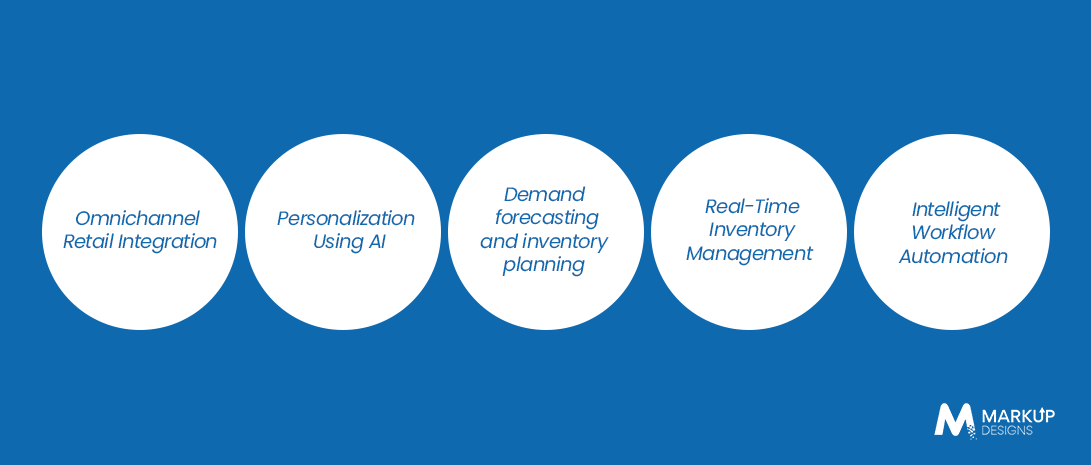
1. Omnichannel Retail Integration
The retail operating environment has changed; today’s retailers interact with their customers across multiple channels, including their website, mobile app, social media, online marketplaces, and offline locations, and therefore need to provide a seamless and consistent experience to their customers across all of these channels.
As a result of this increase in demand, retailers are increasingly adopting omnichannel retail software solutions, which will simplify and unify their customer experience and operations. The modern retail platform also focuses on building a central ecosystem in which all data, inventory, and customer information will be in sync, regardless of the location of the transaction.
Several omnichannel capabilities are required for a retailer to achieve success in the realms of selling online and selling from physical locations. The capabilities required are: unified inventory visibility across all sales channels, order processing and fulfillment across all sales channels, and shared customer details and purchase history across all sales channels. By leveraging integrated loyalty and rewards programs and real-time synchronization of promotional and operational activities, retailers can eliminate data silos and provide a seamless shopping experience for their customers. Retailers can improve customer satisfaction, build brand loyalty, and expand revenue opportunities via omnichannel integration.
2. Personalization Using AI
The retail industry is rapidly evolving due to the influence of artificial intelligence (AI). Retailers now have the ability to collect large quantities of information from their customers through various methods, including capturing individual customer preferences, shopping patterns, and purchasing habits. Retailers have the ability to replace the one-size-fits-all approach with highly tailored and individualized shopping experiences utilizing AI in their retail solutions.
Based on information collected in real-time via AI technology from consumer data, retailers will be able to make better-informed decisions, creating more relevant shopping experiences for their customers.
The most common applications will include:
- Personalized product recommendations
- Predictive consumer behavior
- Smart customer segmentation
- Optimizing pricing dynamically
3. Demand forecasting and inventory planning
Retailers using personalization through AI have the opportunity to engage customers more frequently, convert customers at higher rates, retain customers longer, maximize their total lifetime value (TLV), and create a competitive advantage in highly competitive marketplaces.
Widespread adoption of Cloud-based retail software has led to greater flexibility, scalability, and accessibility, with cloud native solutions giving businesses access to critical systems anytime, eliminating the costs and complexity of owning a physical infrastructure.
Key benefits include:
- On-demand scalability when there is an increase in demand during seasonal spikes
- Lower infrastructure and maintenance costs
- Faster deployment and implementation timelines
- Improved system uptime and reliability
- Improved ability to upgrade and enhance features.
Retailers are also able to quickly adapt to changes in the marketplace, as well as create long-term growth strategies for their business and build resilient operations due to the use of Cloud solutions.
4. Real-Time Inventory Management
Inventory management continues to be one of the most important aspects of being successful in retail, as poor stock data can lead to stockouts, too much or too little inventory, delayed fulfilment of orders, and loss of revenue opportunities as a result of inaccurate stock levels. Modern retail software now addresses these challenges with the ability to have real-time visibility of your inventory and the use of intelligent stock management capabilities.
Modern inventory management systems allow for constant visibility of stock movements through the use of warehouses, distribution centers, and retail stores throughout the supply chain, ensuring that accurate inventory levels exist at all times. The most important capabilities to have include: automated tracking of inventory and updating of inventory, integration with RFID and barcode, synchronized to warehouse and store, predictive replenishment recommendations, and real-time visibility of inventory across all channels.
Businesses utilize a variety of capabilities to improve their customer experience through improved accuracy in inventory, cost savings in inventory carrying, enhanced replenishment strategies and ensuring reliable product availability.
5. Intelligent Workflow Automation
Many of the processes involved in retail operations are repetitive and time-consuming, which has an effect on operational efficiency when performed manually. To solve this issue, many retailers are now utilizing automation technology to help simplify workflows and lessen the number of administrative activities.
Many retailers are looking to modern retail software with AI automation to help improve operational efficiency and allow employees to spend their time on higher-value activities.
Examples of intelligent automation in retail include:
- Automated order routing and fulfillment assignments.
- Low-stock alerts and inventory notifications.
- Automated purchase orders.
- Customer communication and marketing workflows.
- Automated returns and refunds.
By reducing or eliminating manual intervention and reducing the likelihood of human error, automation enables retailers to improve productivity levels, speed up processes, reduce operational costs, and ultimately improve their overall business efficiency.
Key Features of Retail Software
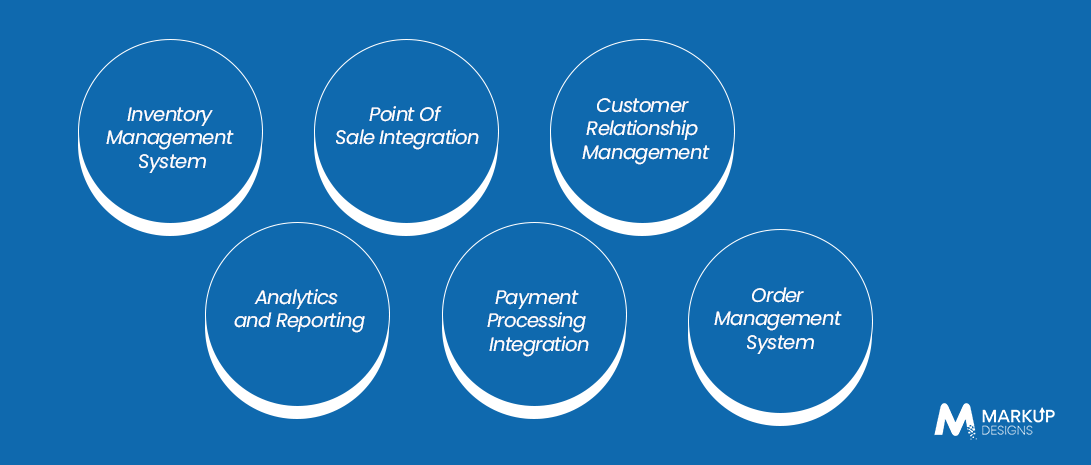
Inventory Management System
The key to successful retailing is an effective Inventory Management System. It provides organizations with the ability to accurately maintain optimal inventory levels, track their products throughout the supply chain, and improve overall inventory accuracy across all locations.
A full-featured inventory management system should include:
- Ability to view and monitor stock levels in real-time.
- Ability to manage inventory across multiple locations.
- Automated replenishment workflow.
- Ability to manage vendors and purchase orders.
- Ability to forecast demand and plan for inventory levels.
Retailers can enhance their supply chain efficiency and lessen stock shortages and overstock by having full visibility into inventory performance.
Point Of Sale Integration
The point of sale system offers so much more than just a means of processing transactions. Modern POS systems combine sales, inventory, customer data, and payment processing into one area of business.
Key functionalities of a POS system include:
- Reliably process transactions securely
- Integrate sales across multiple channels
- Support mobile and contactless payments
- Manage returns and exchanges
- Synchronize customer data
The combination of integrated POS solutions improves customer service and provides consistency throughout the business, both in-store and online, as well as improving operational efficiency.
Customer Relationship Management
It usually costs less to retain customers than to acquire new customers. CRM functionality has become a vital part of new-age retail software.
The retail CRM system can help companies form better relationships with customers by providing them with an overarching overview of how the customer has interacted with their business and how the customer has purchased from them in the past.
The major functions of a retail CRM are:
- Tracking customer profiles and interactions
- Managing loyalty and reward programs
- Creating personalized marketing campaigns
- Customer segmentation and targeting
- Analytics for retention and engagement
Through understanding how customers think and act, retailers will create a more meaningful experience for their customers that will drive loyalty and repeat purchases.
Order Management System
As retailers expand into more than one sales channel, order management becomes more complicated. Because of this, an Order Management System centralizes the order process by giving businesses the visibility they need throughout the entire fulfillment life cycle.
A modern OMS should include the following:
– Complete end-to-end order processing
– Tracking all shipments and delivery dates
– Order fulfillment workflow management
– Refunds and Returns
– All channels of orders could be tracked
By managing their order management process efficiently, retailers will reduce fulfillment delays and improve their operational efficiency, as well as improve customer satisfaction through the order fulfillment process.
Analytics and Reporting
Data-driven decision-making is necessary for the success of retail operations; therefore, through advanced analytics and reporting, retail resources can gain meaningful insights that will allow for better business decisions through identifying trends related to operational optimizations and profitability.
Some of the key reporting features to consider in analyzing data may include:
- Reviewing the performance of sales
- Understanding the customer’s preferences and patterns
- Analyzing inventory and then demand trends in the business through sales and purchasing activity
- Reviewing profits and revenue generated
- Forecasting demand to allow for inventory purchases
Retail companies can utilize the information gained from operational data to create meaningful business intelligence that they can use to strategically make decisions in their companies so they can respond more effectively to changes in the marketplace.
Payment Processing Integration
With more consumers using digital payment options, retail software must provide secure and reliable payment processing solutions for retailers.
The main features that a payment processor solution should have will include:
- Integration with multiple payment gateways
- Integration with digital wallets
- Integration with contactless payment methods
- Fraud detection and prevention
- Secure transaction processing and compliance
A secure, seamless payment experience enhances customer confidence, conversion rates and overall satisfaction.
Best-Practice Architecture for Retail Software
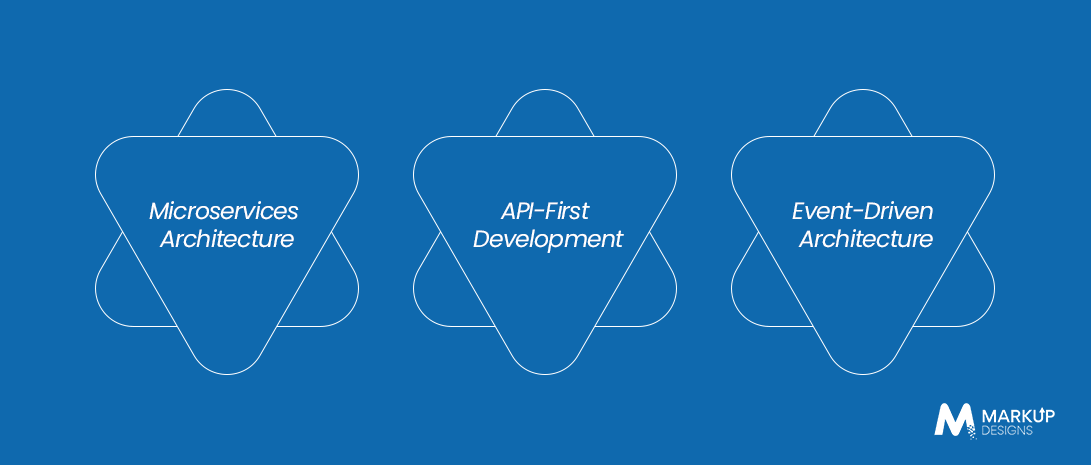
The success and scalability of retail software depend heavily on the architecture that supports it. As retailers expand across multiple channels, locations, and customer touchpoints, their software must be capable of handling increasing transaction volumes, integrating with diverse systems, and adapting to changing business requirements. To achieve this, leading retailers are increasingly adopting modern architectural approaches that prioritize flexibility, scalability, and performance.
Microservices Architecture
Modern retail platforms often rely on microservices architecture, where individual business functions operate as independent services rather than being tied together in a single application. This approach allows retailers to develop, deploy, and manage components such as inventory management, payment processing, order fulfillment, and customer management separately.
Benefits of microservices architecture include:
- Scaling individual components based on demand
- Deploying updates independently without disrupting the entire system
- Improving system reliability and resilience
- Accelerating development and innovation cycles
By enabling greater flexibility and agility, microservices architecture helps retailers support long-term growth while maintaining operational stability.
API-First Development
Retail businesses depend on a wide range of technologies to manage operations, customer interactions, payments, logistics, and inventory. An API-first development approach ensures these systems can communicate seamlessly with one another from the outset. An API-first strategy simplifies future integrations, improves interoperability between systems, and reduces technical debt, making it easier for businesses to adopt new technologies as they grow.
APIs facilitate integration with:
- ERP systems
- Point-of-sale (POS) platforms
- CRM solutions
- Third-party applications and services
- Online marketplaces
Event-Driven Architecture
Retail operations generate a constant flow of events, from customer purchases and inventory updates to payment confirmations and order fulfillment activities. Event-driven architecture enables systems to react to these events in real time, ensuring that information is instantly updated across the entire retail ecosystem. This approach improves responsiveness, enhances operational efficiency, and ensures customers receive accurate and up-to-date information across all channels.
Common event triggers include:
- Inventory changes
- Order status updates
- Payment processing events
- Customer interactions
Retail Software Development Process
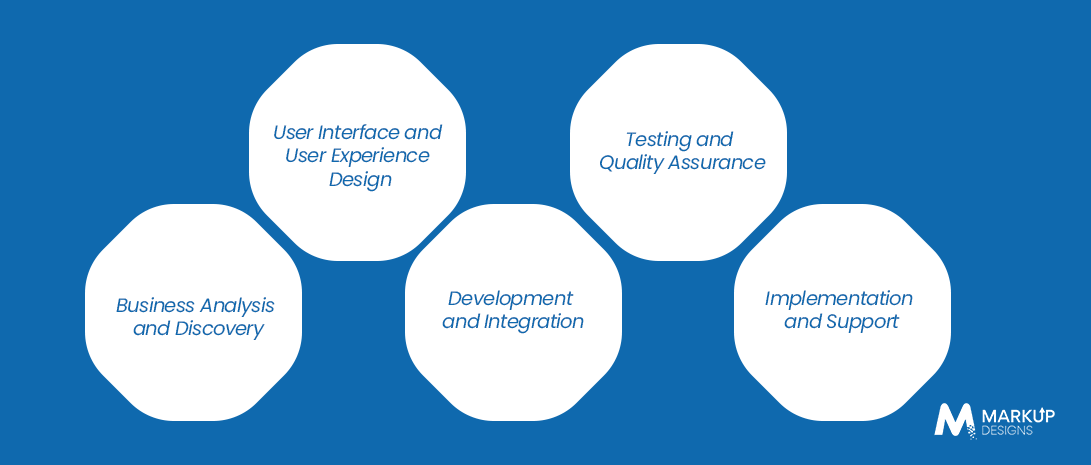
Business Analysis and Discovery
The initial phase of the project will include the following three components:
- Requirement Gathering
- Stakeholder Interviews
- Process Mapping
- Technical Assessments
This stage is to define the project objectives and the development priorities.
User Interface and User Experience Design
Developing retail software requires an easy-to-use interface that provides the best shopping experience for:
- Consumers
- Store Employees
- Operations Teams
- Administrators
A user-centric design will help enhance user adoption and usability.
Development and Integration
The development process will be focused on three main areas of development:
- Core Functionality
- Third-Party Integration
- Data Migration
- Security Implementation
Testing and Quality Assurance
All areas of the project will receive extensive testing, including:
- Functional Testing
- Security Testing
- Performance Testing
- Integration testing
Implementation and Support
The implementation process must be controlled and monitored through four key areas: Rollout control, Employee training, Performance monitoring, and Continuous optimization of the software.
The objective of a phased implementation approach is to ensure operational risk minimization during the implementation.
Factors Affecting Retail Software Development Costs
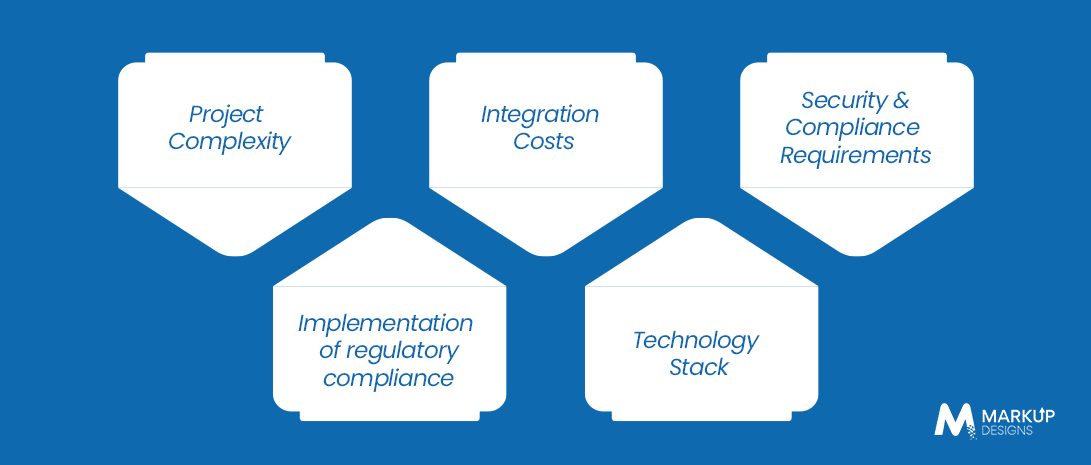
Retail software development costs are highly variable across a Retail Software Development project due to a wide variety of factors such as complexity, business needs, and future scalability plans. For example, a standard retail management solution typically requires a low capital investment; however, an Enterprise-level platform designed to support multi-channel selling, advanced analytics capabilities, and a large customer base will have a substantially higher cost than standard systems.
Because all retail businesses have unique operational processes, integration needs, and growth goals, the pricing structure for retail software development is unique to the Retail Business being served. By understanding the factors that factor into the cost of development projects, retailers can create realistic budgets that will guide their development decision-making.
1. Project Complexity
Amongst the most significant influences on development costs is the complexity of the project itself. Generally speaking, the more advanced the required functionality, business workflows, and logic that are required for a given project, the more involved the development work will be.
For instance, developing a relatively basic retail application for a retailer that needs basic inventory and general sales management functionality will typically take less time than will the development of an Enterprise-grade Retail Platform that may include such non-traditional retailer requirements: multi-channel retailing, an AI-based recommendation engine, predictive analytics, customer loyalty solutions, warehouse management systems, and Real-time reports.
Several factors contribute to the complexity of a project, including:
- How many modules/features exist
- What types of people are using the different types of applications
- How many business processes will be processed using the application
- How will data be processed and reported through the applications
- Are there multiple locations or stores that need support
- What level of scalability is required
As functionality increases throughout the life cycle of a project, the development team will have to allocate more resources for architecture, code development, testing approval, deployment and ongoing maintenance, resulting in higher project cost.
2. Integration Costs
Today, modern retailers no longer operate with just one piece of software. Therefore, they need multiple systems to complete operational areas such as sales, inventory, customer relationship, logistics, accounts, and marketing. In addition, when integrating existing software with new retail software, the amount of time spent on developing this integration is often one of the most costly aspects of a development project.
The degree of complexity involved in integrating with existing systems (legacy), third-party APIs, and custom enterprise applications can dramatically affect the overall project costs.
- Typical third-party integrations:
- Enterprise resource planning (ERP) systems
- Payment processors and large banks
- Customer relationship management (CRM) tool
- Logistics & shipping firms
- Warehouse management system (WMS)
- E-commerce platforms and/or online marketplace
- Marketing automation tools
- Accounting and/or financial software solutions
Each integration will have its own level of complexity, which will require extensive planning, API development, data synchronization, extensive testing, and security validation to ensure seamless data exchange between systems.
The level of customization has a big impact on how much developing retail software will cost. While companies can choose a retail software package that provides generic functionality, most companies do not want to have to use functionality that doesn’t match how they do business. Customized software provides companies with more flexibility and a competitive advantage than standard software but requires additional effort to develop.
Typically, these types of custom software solutions will include:
- Unique presentation/interface and customer journey
- Custom reporting dashboard
- Workflow specific to that industry
- Inventory and fulfilment processes that are customer-specific
- Unique customer engagement features
- Advanced automation capabilities
Since the functionality of custom-built retail software solutions must be designed, built, tested, and optimized from scratch, the more custom-built functionality that is included in the project will require a larger budget and longer period to implement.
3. Security and Compliance Requirements
Since retailers handle large volumes of sensitive information about their customers (for example, personal information and payment methods), it is important to protect that information not only for business reasons but also for regulatory compliance reasons in many countries.
As the number of cyber threats continues to grow, modern retail software must incorporate rigid security measures starting from the initial stages of software development.
Some of the major costs associated with security include:
- Encryption of all data travelling through the system e.g., end-to-end encryption
- Multi-Factor Authentication (MFA)
- Role-Based Access Control (RBAC)
- Management of all APIs (Application Programming Interfaces) securely
- Compliance with standard Payment Security Standards
- Conducting both Vulnerability Assessments and Penetration Testing
4. Implementation of regulatory compliance
Companies that operate across a variety of areas or regions might also be obligated to adhere to industry regulations, as well as data protection regulations, which could increase their development and maintenance costs as a result.
5. Technology Stack
The technology stack you choose for a retail software solution will have a material impact on your software’s development costs, performance and scalability, maintenance requirements, and ability to accommodate additional future growth.
Your technology stack may include: programming languages, frameworks, databases, cloud services, and any other development tools that are necessary to create and operate the solution.
When selecting your technology stack, you should consider how the decisions you make may affect:
- Development speed and efficiency
- The number of qualified developers available
- Long-term support requirements
- Costs associated with infrastructure and hosting
- Performance and scalability of your system(s)
- Future upgrade and integration capabilities
Even though modern cloud-hosted technologies can require a higher upfront planning expense, in many instances, they will lead to better scalability, reliability, and operational efficiency over the long haul.
Additional factors that can affect retail software development cost:
In addition to the primary cost drivers listed above, there are some additional factors that can affect your total project budget:
- Complexity of UI/UX Design: Retail software that is designed for ease of navigation, personalization, and visual appeal requires more design and testing effort.
- Development of mobile applications: Companies developing a dedicated retail mobile application for either iOS or Android will incur additional design, development, testing, and support costs.
- Artificial Intelligence and Advanced Analytical Features: To develop things like recommendation engines, predictive analytics, and customer behavioural analysis/demand forecasting increases the complexity and overall development costs.
- Cloud Hosting Costs: Depending on the necessity of the data storage and the amount of traffic flowing through the server, as well as the availability of the system, and the use of 3rd party services.
- Continuing Support and Maintenance: After deployment, retail systems require continual monitoring, updating, performance tuning, security patching, and enhancement of features. Therefore, you need to consider the long-term support and maintenance costs as well when planning your overall investment.
Cost Estimation of Retail Software Development
Developing retail systems can cost significantly less or more depending on how large or small your business is and your specific technical requirements, but when evaluating costs for retail systems, they generally fall within four main categories.
| Project Type | Estimated Cost Range |
| Basic Retail Application | $30,000 – $50,000 |
| Mid-Scale Retail Solution | $50,000 – $200,000+ |
| Advanced Omnichannel Platform | $200,000 – $400,000+ |
| Enterprise Retail Ecosystem | $400,000 – $500,000+ |
Costs of enterprise-level or sophisticated solutions can exceed $400,000 based on factors including the number of features needed to create the system and other factors that can affect the cost of the project (e.g., Integration efforts, required infrastructure, and complexity of the business).
Larger retail technology projects can also have similar cost ranges (i.e., $50,000 to $500,000 +) based on project complexity and the level of customization the retailer desires to implement into the system(s). Retailers should consider their retail software as a long-term, ongoing, strategic investment in their organization, which generates efficiencies in operations, increases customer satisfaction, provides scalability, and sets the stage for future growth; rather than simply viewing it as one isolated expense.
By selecting a suitable partner for development and including features that provide measurable business value (return on investment), retailers can improve their return on investment and prepare to be successful over time.
Why Choose Markup Designs for Custom Retail Software Development?
Developing retail software is not simply about adding features, it is about creating a scalable digital ecosystem that supports long-term business growth. At Markup Designs, we help retailers build intelligent, future-ready software solutions that streamline operations, enhance customer experiences, and adapt to evolving market demands.
Retail-Focused Development Expertise
Our team understands the complexities of modern retail operations, from inventory management and order fulfillment to customer engagement and omnichannel commerce. We develop solutions tailored to the unique requirements of retailers, helping businesses overcome operational challenges and unlock new growth opportunities.
Customized Solutions for Unique Business Needs
Every retail business operates differently. That’s why we avoid one-size-fits-all approaches and build software solutions that align with your specific workflows, processes, and business objectives. Whether you require a custom POS system, inventory management platform, retail mobile application, or a complete omnichannel ecosystem, we create solutions designed around your goals.
Scalable and Future-Ready Architecture
Retail technology must evolve alongside your business. Our development approach focuses on building scalable platforms using modern technologies, cloud infrastructure, and flexible architectures that can accommodate future growth, additional sales channels, and emerging technologies.
Seamless Integration Capabilities
Modern retail environments rely on multiple systems working together. We help businesses integrate their retail software with ERP systems, CRM platforms, payment gateways, logistics providers, accounting tools, and third-party marketplaces to create a connected and efficient operational ecosystem.
Data-Driven Retail Innovation
We incorporate advanced analytics, automation, AI-powered insights, and reporting capabilities that help retailers make informed decisions, improve operational efficiency, optimize inventory management, and enhance customer engagement.
End-to-End Development and Support
From initial consultation and business analysis to development, deployment, and ongoing maintenance, Markup Designs provides comprehensive support throughout the entire software lifecycle. Our goal is to ensure that your retail software continues to deliver measurable value as your business grows.
By partnering with Markup Designs, retailers gain access to technology solutions that not only solve today’s operational challenges but also prepare them for the future of retail. Whether you’re modernizing legacy systems, building a new retail platform, or scaling omnichannel operations, our team can help transform your vision into a powerful digital solution.
Ready to Future-Proof Your Retail Business?
Transform your retail operations with a custom software solution built for growth, efficiency, and exceptional customer experiences. From omnichannel commerce and inventory management to AI-powered retail innovations, Markup Designs helps businesses stay competitive in an evolving digital marketplace.
Conclusion
Retail software development has become a strategic necessity for businesses looking to thrive in an increasingly digital and customer-centric marketplace. From omnichannel integration and AI-powered personalization to real-time inventory management and intelligent automation, modern retail software enables organizations to streamline operations, enhance customer experiences, and drive sustainable growth. As retail continues to evolve, businesses that invest in scalable, future-ready software solutions and align technology with long-term business goals will be better positioned to improve efficiency, adapt to changing consumer expectations, and maintain a competitive edge in the years ahead.
FAQ
1. What is retail software development?
Retail software development is creating digital platforms and applications that enable retailers to manage their inventory, sales, customer relationships, payments, fulfillment, analytics, and other aspects of retail operation.
2. How long does it take to develop retail software?
It depends on the complexity of the solution being developed; typically, simpler solutions will take 3-6 months, and enterprise-grade retail platforms will take 6-12 months or longer.
3. What types of technology are commonly used in developing retail software?
Common types of technology utilized in retail software development include: Cloud platforms, AI, Machine Learning, APIs, Microservices architecture, Analytics tools, Mobile devices, and Automation technology.
4. How much does it cost to develop retail software?
Depending on complexity and requirements, retail software development costs typically range between $30,000 for mid-size projects to upwards of $400,000 for enterprise-level retail environments.
5. Which features are critical in retail software?
Key features of retail software include: Order Management, Inventory Management, CRM Integration, Point of Sale Integration, Payment Processing, Analytics, Reporting, and Omnichannel Capabilities.
Author's Perspective
The development of retail software has shifted focus from individual digital processes to developing innovative connected retail environments that leverage the ability for organizations to operate intelligently at an enormous scale. Many successful retailers have already abandoned legacy disparate technology stacks in favor of integrated platforms that provide total business visibility, agility of operations, and control of operations at every customer touchpoint.
The architecture of software is one example in which the long-term impacts are frequently underestimated by businesses. Although conversations regarding new development are generally dominated by annotations of a list, the true differentiator of the retailer’s ability to compete over time is achieved through scalability, data consistency, sustainable integration capabilities, and adaptability. Retailers who emphasize success through these foundational components will be better able to respond to changing consumer expectations and will be positioned to embrace new technologies while sustaining long-term success.
As the industry continues to transform through the advancements of artificial intelligence and the creation of omnichannel experiences, software will become more expected than just one of the costs of doing business. Organizations implementing the view through mentally of being a strategic asset will develop the next generation of retail.
Discuss Your Project NowGaurav Goyal
Global Sales- VP
Related Posts

Custom Software Development Cost in the UK: Features,...

UK Online Safety Regulations: A Compliance Guide for...
Enterprise eCommerce Fraud Prevention: Best Practices for Secure...
Insights Are Valuable & Execution is Priceless
You’ve read about the digital future. Now, let’s build the infrastructure to take you there. Move your strategy from the page to the product.
Design Your Solution Now
Contact Us
Schedule The Appointment At Your Convenience Date And Time.
30 Min
Web Conference
Time Zone
Indian standard time (08:30pm)

Thanks For Getting In Touch!
You’ve Taken The First Step Toward Transforming Your Digital Presence. Our Experts Will Reach Out Shortly To Take It Forward.
Launch Your Dream Project
Provide a brief overview of your project, and our specialists will evaluate your requirements. We will connect with you to explore how the right digital solutions can help you launch faster.