

In Brief
- The fintech industry in the Middle East is growing rapidly due to increasing digital banking adoption and cashless economy initiatives.
- Businesses are investing heavily in fintech applications to improve customer experience, transaction speed, and financial accessibility.
- UAE and Saudi Arabia are emerging as major fintech hubs with strong government support and rising fintech investments.
- Security, compliance, scalability, and seamless user experience are some of the most important elements of a successful fintech app.
- Businesses often face challenges like cybersecurity risks, regulatory compliance, legacy system integration, and scalability issues during fintech development.
- Fintech app development costs vary depending on app complexity, security requirements, integrations, and advanced technologies like AI and blockchain.
- Technologies like AI, cloud computing, APIs, blockchain, and advanced analytics are shaping the future of fintech applications in the Middle East.
The fintech industry in the Middle East is growing rapidly, but building a successful fintech app is not as simple as launching a mobile application. Financial businesses today are facing multiple challenges at once.
Customers expect instant transactions, seamless digital experiences, and high-level security, while businesses struggle with strict compliance regulations, cyber threats, outdated banking infrastructure, and rising competition from digital-first fintech startups.
On top of that, many companies find it difficult to balance innovation with user trust. Even a small delay in transactions, weak security system, or poor user experience can lead to customer dissatisfaction and financial risks. This is one of the biggest reasons why the demand for fintech app development in UAE is increasing as businesses look for smarter, secure, and scalable financial solutions.
In this blog, we will discuss the challenges, development process, features, costs, and more about fintech app development in the Middle East.
Why Fintech is Booming in the Middle East
The Middle East is quickly becoming one of the fastest-growing fintech markets in the world. Countries like UAE and Saudi Arabia are heavily investing in digital transformation initiatives to build cashless and technology-driven economies. As consumers become more comfortable with mobile banking, digital wallets, and contactless payments, businesses are under pressure to deliver faster, smarter, and more secure financial experiences.
The numbers clearly reflect this growth. The Middle East digital banking platform market was valued at around USD 2.65 billion in 2025 and is projected to reach nearly USD 9.72 billion by 2033, growing at a CAGR of 17.8%. Additionally, the Middle East fintech market is expected to grow from USD 1.7 billion in 2025 to USD 3.9 billion by 2034.
UAE is also emerging as a regional fintech leader. According to a report by Emirates NBD and PwC, 89% of UAE consumers now use digital-first bank accounts, while UAE fintech startups raised around USD 265 million in funding in 2024 alone.
This rapid digital shift is one of the biggest reasons why businesses are investing in custom fintech app development. Companies no longer want generic solutions. Instead, they are focusing on scalable, secure, and user-centric fintech applications designed specifically for their operational goals, compliance requirements, and customer expectations.
Read Also: Mobile App Development: Complete Guide for Businesses
The Fintech Growth Story in the Region
The fintech industry in the Middle East is no longer in its early growth phase. It is rapidly becoming a core part of the region’s financial ecosystem. Over the last few years, countries across the GCC, especially UAE and Saudi Arabia, have witnessed significant growth in fintech investments, digital banking adoption, and technology-driven financial services.
According to MAGNiTT’s MENA Fintech Venture Report, fintech remained the most funded startup sector in the MENA region, attracting more than USD 1.9 billion in investments between 2020 and 2024. UAE and Saudi Arabia together accounted for the majority of these investments, highlighting their position as regional fintech leaders.
Digital payment adoption is also growing at an exceptional pace. In UAE, cashless transactions are expected to account for over 73% of all payments by 2028, driven by increasing smartphone usage and government-led digital economy initiatives. Saudi Arabia has also crossed its Vision 2030 target ahead of schedule, with more than 70% of retail transactions now happening through digital payments instead of cash.
UAE is also experiencing rapid adoption of cashless and mobile-first financial services due to strong government support for digital economy initiatives and high smartphone penetration. Consumers now increasingly prefer mobile banking apps and digital wallets over traditional branch visits because of faster transactions, accessibility, and convenience.
At the same time, the fintech startup ecosystem is expanding rapidly across the GCC region. Hundreds of startups are entering the market every year with solutions focused on digital banking, buy-now-pay-later services, AI-powered finance, insurtech, and blockchain-driven transactions.
These numbers clearly show that fintech is no longer just a technology trend in the Middle East. It has become a long-term structural shift that is reshaping the future of banking, payments, and financial services across the region.
Now that we have understood how rapidly the fintech ecosystem is expanding across the Middle East, the next important question is -what exactly does fintech app development involve, and why is it becoming such a critical investment for modern financial businesses?
What is Fintech App Development?
Fintech app development refers to the process of building digital financial applications that help businesses and consumers manage financial activities more efficiently. These applications combine advanced technologies with financial services to offer secure, fast, and user-friendly experiences.
Today, fintech applications are transforming how people send money, apply for loans, invest, manage insurance, and access banking services. Instead of relying on traditional banking systems, users now prefer digital platforms that provide instant access and convenience directly from their smartphones.
Businesses across the Middle East are increasingly investing in fintech software solutions to improve operational efficiency, strengthen customer engagement, and stay competitive in a rapidly evolving market. Depending on business goals, fintech apps can include:
- Digital banking applications
- Mobile payment and wallet apps
- Peer-to-peer lending platforms
- Investment and trading apps
- Insurtech solutions
- Cryptocurrency and blockchain-based platforms
Modern fintech applications also integrate technologies like AI, blockchain, cloud computing, and data analytics to improve security, automate processes, and deliver personalized financial experiences. This is why fintech app development is now considered a key part of digital transformation strategies for financial institutions and startups alike.
Core Features of a Successful Fintech App
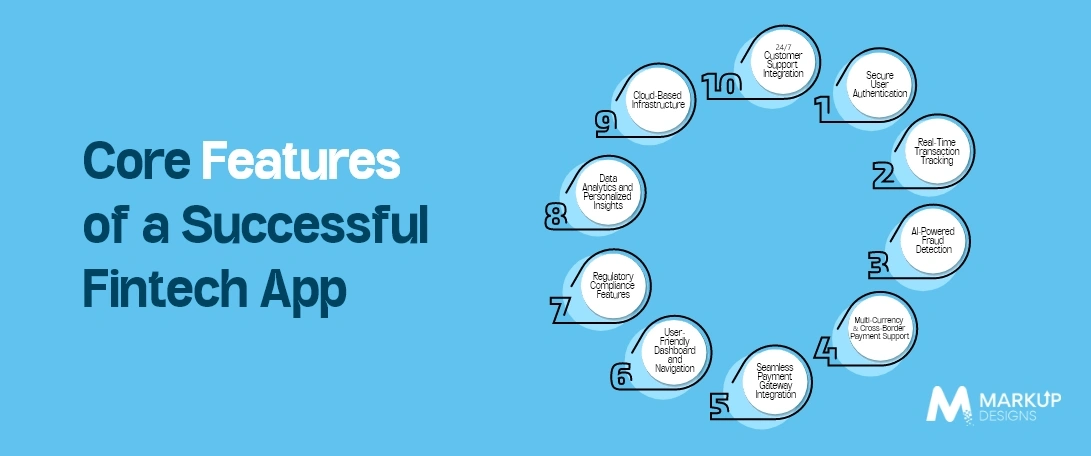
Building a fintech application is not only about creating a digital payment platform or banking interface. Users today expect speed, security, convenience, and a seamless experience in every financial interaction. To meet these expectations, businesses must focus on integrating the right set of features into their fintech software solutions.
Here are some of the most important features every successful fintech application should include:
- Secure User Authentication
Security is the foundation of every fintech application. Features like biometric login, multi-factor authentication, facial recognition, and OTP verification help protect sensitive financial data and reduce the risk of unauthorized access.
- Real-Time Transaction Tracking
Users expect instant visibility into their transactions. Real-time payment updates, balance tracking, and transaction notifications improve transparency and enhance customer trust in the platform.
- AI-Powered Fraud Detection
Modern fintech apps use artificial intelligence and machine learning algorithms to identify suspicious activities and prevent fraudulent transactions. This helps businesses improve security while minimizing financial risks and supporting secure fintech app development.
- Multi-Currency and Cross-Border Payment Support
The Middle East has a large expatriate population and global business network. Supporting multiple currencies and international transactions allows users to send and receive payments more conveniently across borders.
- Seamless Payment Gateway
A fintech application should easily integrate with payment gateways, banking APIs, and third-party financial services to ensure smooth and secure digital transactions.
- User-Friendly Dashboard and Navigation
No matter how advanced a fintech app is, users will leave if the interface feels complicated. A clean dashboard, easy navigation, and simplified financial insights improve user engagement and retention.
- Regulatory Compliance
Fintech applications must comply with financial regulations like KYC and AML (Anti-Money Laundering). Integrating compliance management systems helps businesses avoid legal complications and maintain customer trust.
- Data Analytics and Personalized Insights
Advanced analytics features help users track spending habits, investment performance, and financial goals. Personalized recommendations also improve customer experience and engagement.
- Cloud-Based Infrastructure
Cloud integration improves scalability, data storage, application performance, and operational flexibility. It also helps fintech businesses manage growing user demands more efficiently.
- 24/7 Customer Support
Features like AI chatbots, live chat support, and automated query systems ensure users can quickly resolve issues anytime, improving overall customer satisfaction.
Challenges in Fintech App Development in the Middle East
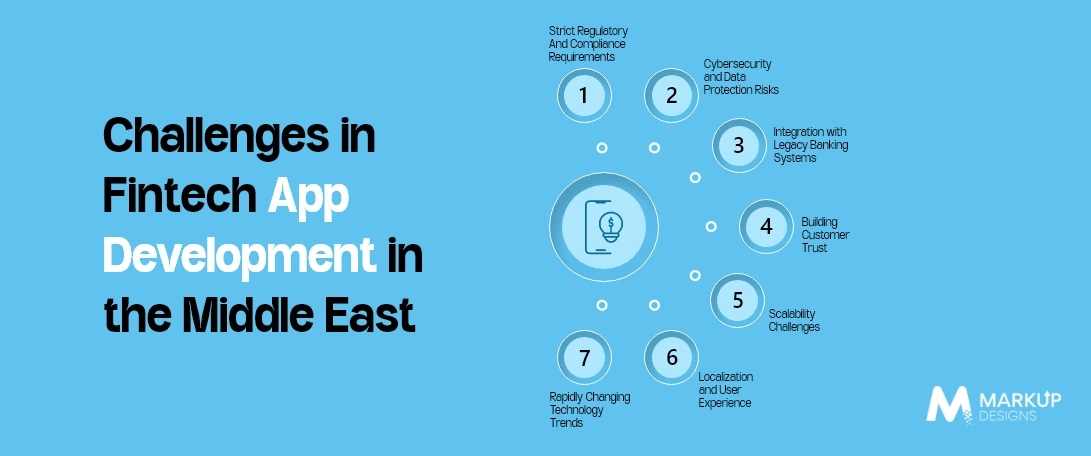
While the fintech industry in the Middle East is growing rapidly, developing a successful fintech application still comes with several challenges. Businesses are not only expected to deliver seamless digital experiences, but they also need to maintain strong security, compliance, and scalability standards. This is why choosing the right fintech software development company becomes extremely important for long-term success.
Here are some of the biggest challenges businesses face during fintech app development:
- Strict Regulatory and Compliance Requirements
Financial applications must comply with regional and international regulations such as KYC (Know Your Customer), AML (Anti-Money Laundering), and data privacy laws. Different Middle Eastern countries may also have their own banking and fintech regulations, making compliance management more complex.
- Cybersecurity and Data Protection Risks
Fintech apps handle highly sensitive financial and personal information. Even a minor security vulnerability can result in data breaches, financial fraud, and loss of customer trust. Businesses must invest in encryption, fraud detection systems, and secure authentication mechanisms.
- Integration with Legacy Banking Systems
Many traditional banks still operate on outdated infrastructure. Integrating modern fintech applications with older banking systems can become technically challenging, time-consuming, and expensive.
- Building Customer Trust
Users trust fintech platforms with their money and personal data. If the application has slow performance, technical glitches, or security concerns, customers may quickly switch to competitors.
- Scalability Challenges
As fintech platforms grow, they must handle increasing transaction volumes, user traffic, and data processing requirements without affecting performance. Poor scalability planning can lead to downtime and operational inefficiencies.
- Localization and User Experience
The Middle East has a diverse customer base with different languages, currencies, and financial preferences. Fintech applications must provide localized experiences, including Arabic language support, regional payment systems, and culturally relevant interfaces.
- Rapidly Changing Technology Trends
The fintech industry evolves very quickly with innovations like AI-driven banking, blockchain payments, embedded finance, and open banking ecosystems. Businesses must continuously upgrade their applications to remain competitive in the market.
Despite these challenges, fintech businesses that focus on strong technology infrastructure, compliance, and customer-centric experiences can build successful digital financial platforms in the Middle East.
Fintech App Development Cost
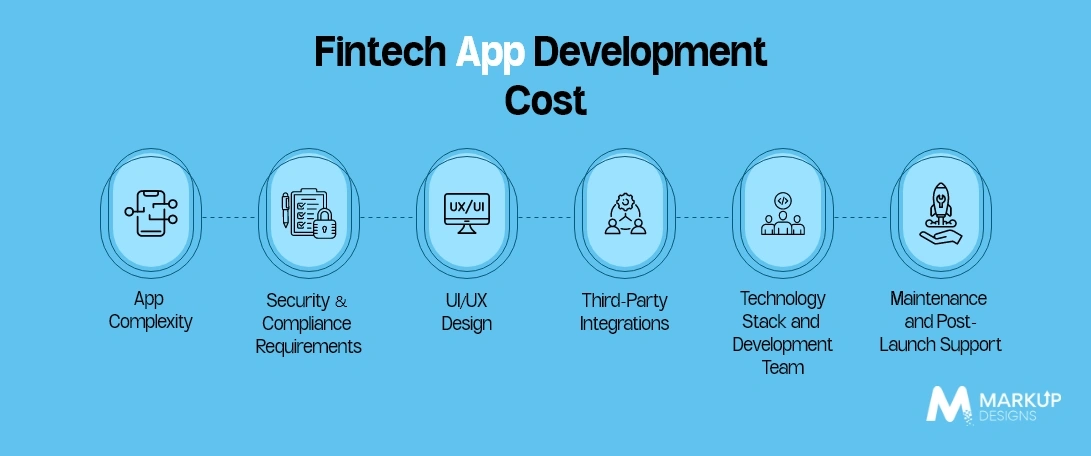
The cost of developing a fintech application in the Middle East can vary depending on the app’s complexity, features, security requirements, and technology stack. A simple digital payment app will naturally cost less than an advanced AI-powered banking platform or blockchain fintech solutions designed for enterprise-level financial operations.
Businesses often make mistakes by just focusing only on the initial development budget. However, fintech app development is a long-term investment that also includes compliance management, cloud infrastructure, cybersecurity, maintenance, and future scalability.
Major factors that influence fintech app development costs
- App Complexity
The more advanced the application is, the higher the development cost. Features like AI-based fraud detection, real-time analytics, multi-currency payments, investment tracking, and blockchain integration require additional development effort and expertise.
- Security and Compliance Requirements
Fintech apps require strong security systems to protect sensitive financial data. Implementing encryption, biometric authentication, KYC/AML compliance, and fraud prevention systems can significantly increase development costs.
- UI/UX Design
A fintech application must provide a seamless and user-friendly experience. Custom dashboards, interactive interfaces, financial visualization tools, and accessibility optimization require experienced UI/UX designers and additional development time.
- Third-Party Integrations
Most fintech applications integrate with banking APIs, payment gateways, cloud platforms, and analytics tools. These integrations improve functionality but also increase development and maintenance expenses.
- Technology Stack and Development Team
The choice of frontend frameworks, backend technologies, cloud infrastructure, and development expertise directly impacts project costs. Hiring experienced fintech developers may require a higher upfront investment but often ensures better security and scalability.
- Maintenance and Post-Launch Support
The development process does not end after launch. Fintech apps require regular updates, bug fixes, security monitoring, feature enhancements, and compliance updates to maintain performance and user trust.
Estimated Fintech App Development Cost Breakdown
| Fintech App Type | Estimated Development Time | Estimated Cost Range |
| Basic Payment or Wallet App | 3–5 Months | USD 20,000 – USD 50,000 |
| Mid-Level Fintech Application | 6–9 Months | USD 50,000 – USD 120,000 |
| Advanced Banking App | 9–12 Months | USD 120,000 – USD 250,000 |
| AI-Powered Fintech Solution | 10–14 Months | USD 150,000 – USD 300,000+ |
| Blockchain-Based Fintech Platform | 12+ Months | USD 200,000 – USD 500,000+ |
Additional Operational Costs to Consider
| Cost Component | Estimated Monthly/Yearly Expense |
| Cloud Hosting & Infrastructure | USD 500 – USD 5,000/month |
| Security Monitoring | USD 1,000 – USD 10,000/year |
| Compliance & Legal Audits | USD 5,000 – USD 50,000/year |
| App Maintenance & Updates | 15%–20% of total development cost annually |
| Third-Party API Services | Based on usage and integrations |
In the rapidly evolving Middle Eastern fintech market, businesses that invest in scalable and secure fintech solutions are more likely to achieve long-term growth and customer retention. Instead of viewing development costs as an expense, companies should see them as an investment in digital transformation and future business expansion.
Fintech App Development Process
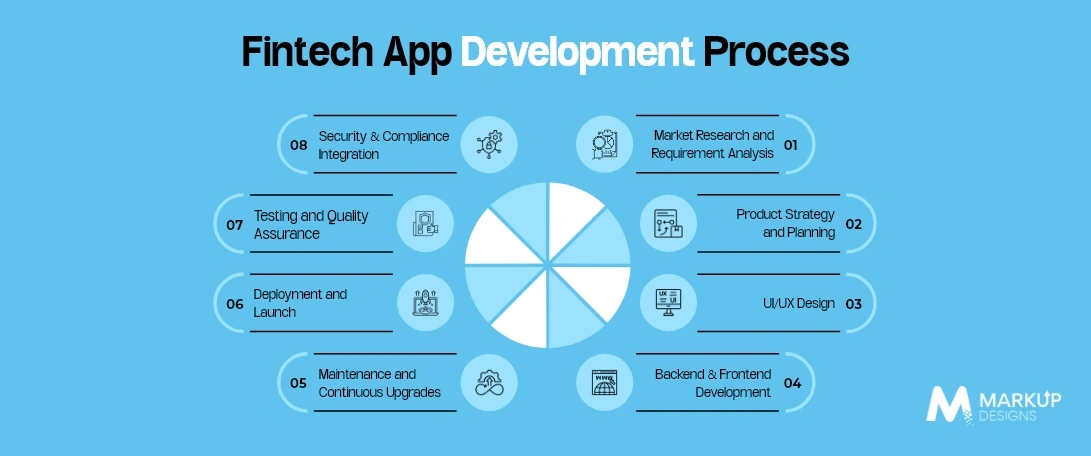
Developing a successful fintech application requires much more than coding and UI design. Businesses need a structured development approach that focuses on security, compliance, scalability, and customer experience from the very beginning. This is especially important for companies investing in Fintech app development in Dubai, where regulatory standards and customer expectations continue to evolve rapidly.
- Market Research and Requirement Analysis
The first step is understanding the target audience, market trends, competitors, and regulatory requirements. Businesses must clearly define their goals, pain points, and the financial services they want to cater through their
application.
This phase also includes:
- Identifying the target customer base
- Understanding regional compliance requirements
- Selecting the right monetization model
- Defining core app functionalities
- Product Strategy and Planning
Once the research is complete, businesses create a detailed roadmap for development. This includes deciding app architecture, feature priorities, timelines, budget estimation, and scalability planning.
At this stage, many businesses also evaluate digital banking app development services to ensure the platform aligns with modern banking and payment ecosystem requirements.
- UI/UX Design
Fintech applications must provide a smooth and intuitive user experience. Designers focus on creating easy navigation, interactive dashboards, secure onboarding flows, and visually clean interfaces that simplify financial operations for users.
The design process usually includes
- Wireframing
- User journey mapping
- Prototype development
- Responsive interface design
- Backend and Frontend Development
This is the core development phase where the application is built using suitable frontend and backend technologies. Developers integrate APIs, payment gateways, databases, cloud infrastructure, and security systems to ensure seamless functionality.
- Security and Compliance Integration
Security is one of the most critical parts of fintech development. Developers implement:
- End-to-end encryption
- Multi-factor authentication
- Fraud detection systems
- KYC and AML compliance protocols
- Secure payment processing systems
This stage is essential for building customer trust and regulatory compliance.
- Testing and Quality Assurance
Before launch, the application undergoes extensive testing to identify bugs, security vulnerabilities, and performance issues. Testing ensures the app performs smoothly across devices, operating systems, and varying transaction loads.
Common testing methods include:
- Functional testing
- Security testing
- Performance testing
- API testing
- User acceptance testing
- Deployment and Launch
After successful testing, the fintech application is deployed on app stores and cloud servers. Businesses also monitor launch performance, user behavior, and transaction activity during the initial rollout phase.
- Maintenance and Continuous Upgrades
Fintech applications require ongoing improvements to stay secure and competitive. Regular updates, security patches, feature enhancements, and scalability optimization are necessary for long-term success.
This is why many businesses prefer investing in custom fintech app development solutions that allow future flexibility, advanced integrations, and continuous innovation as the fintech market evolves.
Tech Stack Used in Fintech App Development
Choosing the right technology stack plays a major role in the success of any fintech application. A strong tech stack helps businesses build secure, scalable, high-performing, and future-ready financial platforms. Since fintech applications deal with sensitive financial data and real-time transactions, businesses must select technologies that support strong security, seamless integrations, and smooth user experiences.
Here are the major technologies commonly used in fintech app development:
- Frontend Technologies
Frontend technologies are responsible for the app’s interface and overall user experience. They help create responsive and interactive financial applications across web and mobile platforms.
Common Frontend Technologies:
- React.js
- Angular
- Vue.js
- Flutter
- React Native
These frameworks help developers build smooth and visually appealing fintech interfaces with faster performance.
- Backend Technologies
Backend technologies manage business logic, APIs, databases, authentication systems, and transaction processing. A strong backend ensures the application remains stable and scalable under heavy user traffic.
Popular Backend Technologies:
- Node.js
- Python
- Java
- .NET
- Ruby on Rails
- Database Management Systems
Fintech apps process and store large amounts of financial and customer data. Secure and efficient databases are essential for handling transactions and maintaining performance.
Commonly Used Databases:
- PostgreSQL
- MySQL
- MongoDB
- Oracle Database
- Cloud Infrastructure
Cloud computing improves scalability, flexibility, and operational efficiency. It also helps fintech businesses manage high transaction volumes without investing heavily in physical infrastructure.
Popular Cloud Platforms:
- AWS (Amazon Web Services)
- Microsoft Azure
- Google Cloud Platform
- Payment Gateway and API Integrations
Fintech applications rely on third-party integrations for payment processing, banking services, analytics, and financial operations.
Common Integrations Include:
- Stripe
- PayPal
- Plaid APIs
- Banking APIs
- Currency exchange APIs
- Security Technologies
Security is one of the most critical aspects of fintech development. Advanced security technologies help protect customer data and prevent cyber threats.
Key Security Technologies:
- End-to-end encryption
- Biometric authentication
- AI-based fraud detection
- Tokenization systems
- Multi-factor authentication (MFA)
- Blockchain and AI Technologies
Modern fintech applications are increasingly integrating AI and blockchain to improve transparency, automation, and fraud prevention.
Use Cases Include:
- Smart contracts
- AI-powered financial insights
- Automated fraud detection
- Cryptocurrency transactions
- Predictive financial analytics
Selecting the right combination of technologies helps businesses build scalable fintech applications that can handle growing user demands, evolving compliance standards, and future digital banking innovations.
Future Trends Shaping the Fintech Industry
The future of fintech in the Middle East looks extremely promising as governments, financial institutions, and startups continue investing in digital transformation initiatives. The region is rapidly moving toward a cashless economy where digital banking, AI-driven finance, and automated financial services will become a standard part of everyday life.
- One of the biggest trends shaping the future of fintech is the rise of AI-powered financial services. Businesses are increasingly using artificial intelligence for fraud detection, risk assessment, customer support automation, and personalized financial recommendations. AI is helping fintech companies deliver faster, smarter, and more efficient customer experiences while improving operational efficiency.
- Another major transformation is the growth of blockchain fintech solutions. Blockchain technology is improving transparency, transaction security, and cross-border payment efficiency across financial ecosystems. Many businesses are now exploring blockchain-based payment systems, digital asset management platforms, and decentralized financial services to reduce operational complexity and enhance trust.
- Open banking is also expected to reshape the financial sector in the coming years. Financial institutions are increasingly adopting API-driven ecosystems that allow secure data sharing between banks, fintech providers, and third-party applications. This creates opportunities for faster innovation and more personalized banking experiences.
- At the same time, the demand for digital-only banking platforms and embedded finance solutions is continuing to rise across the GCC region. Consumers now expect instant access to financial services through mobile applications without relying on traditional branch-based banking systems.
- As fintech adoption grows, businesses will also need stronger cybersecurity frameworks, scalable cloud infrastructure, and regulatory compliance systems to manage evolving market demands. This is why partnering with an experienced financial technology app development company is becoming essential for organizations aiming to build future-ready fintech platforms.
Build Future-Ready Fintech Applications with Markup Designs
Building a fintech app is not just about developing a mobile application with payment features. It is about creating a platform that people can actually trust with their money, personal data, and daily financial activities. That’s exactly where Markup Designs can help.
As an experienced fintech software development company, we understand the real challenges businesses face while entering the digital finance market. From security concerns and compliance requirements to scalability and user experience, fintech development involves multiple layers that need the right technical and strategic approach.
Whether you want to build a digital banking app, payment platform, lending solution, or investment application, our team works closely with your business goals to deliver solutions that actually support long-term growth.
We also give high priority to secure fintech app development by integrating advanced security systems, encrypted transactions, multi-factor authentication, and compliance-focused frameworks into every project. Instead of offering one-size-fits-all solutions, we build platforms that match your operational needs, customer expectations, and market requirements.
Ready to Build Your Fintech Application?
The fintech industry in the Middle East is entering a completely new phase of digital growth. From mobile banking and AI-powered financial services to cashless payments and blockchain-driven transactions, businesses are rapidly transforming the way financial services are delivered and experienced.
However, building a successful fintech platform requires much more than adding payment features to an app. Businesses need to focus on security, compliance, scalability, performance, and customer experience at every stage of development. As customer expectations continue to evolve, companies that fail to modernize their financial services may struggle to stay competitive in the market.
This is exactly why fintech app development has become a strategic investment for startups, banks, and enterprises across the region. Businesses that adopt innovative and future-ready fintech solutions today will be better positioned to scale faster, improve customer trust, and lead the next wave of digital financial transformation in the Middle East.
FAQs
1. How much does fintech app development cost in the Middle East?
The cost usually ranges from USD 20,000 to USD 200,000+ depending on app complexity, features, and security requirements.
2. How long does it take to develop a fintech app?
A fintech app can take anywhere between 3 to 12 months based on the project scope and functionalities.
3. What security features should a fintech app have?
Important security features include encryption, multi-factor authentication, biometric login, fraud detection, and KYC/AML compliance.
4. Which technologies are used in fintech app development?
Common technologies include React Native, Flutter, Node.js, Python, AWS, AI/ML, and blockchain platforms.
5. Why is fintech growing in the Middle East?
Growing digital payment adoption, smartphone usage, and government-led digital transformation initiatives are driving fintech growth across the region.
Author's Perspective
Many businesses entering the fintech industry focus mainly on launching their app quickly, but often underestimate the importance of security, scalability, and compliance. In fintech, even a small technical gap can impact customer trust and overall business growth. A successful fintech platform is not just about advanced features-it is about creating a seamless, secure, and reliable financial experience for users. Businesses that invest in the right development strategy from the beginning are usually the ones that scale faster and stay competitive in the long run.
Discuss your Project NowJupinder Singh Arora
Founder and CEO
Related Posts

How Much Does It Cost to Develop an...

How to Build a Car Wash App: Development...

How Fintech Development Outsourcing Helps Businesses Scale Faster
Insights Are Valuable & Execution is Priceless
You’ve read about the digital future. Now, let’s build the infrastructure to take you there. Move your strategy from the page to the product.
Design Your Solution Now
Contact Us
Schedule The Appointment At Your Convenience Date And Time.
30 Min
Web Conference
Time Zone
Indian standard time (08:30pm)

Thanks For Getting In Touch!
You’ve Taken The First Step Toward Transforming Your Digital Presence. Our Experts Will Reach Out Shortly To Take It Forward.
Launch Your Dream Project
Provide a brief overview of your project, and our specialists will evaluate your requirements. We will connect with you to explore how the right digital solutions can help you launch faster.