

In Brief
- Restaurant Inventory management software can provide assistance in monitoring ingredients, stock levels, procurement, suppliers, and stock movement from the same central interface.
- Benefits include reduced waste, improved cost management, precise stock management, efficient purchasing, efficiency improvement, and increased profits.
- Required features include stock tracking, purchase order management, supplier management, tracking of recipes and ingredients, expiration tracking, and inventory reports. The system integrates with POS software, accounting software, ERP, supplier portals, and kitchens.
- The process of development consists of requirement definition, solution selection, architecture design, UI design, feature development, integration, testing, and deployment. Costs start at $10,000 for a basic version and can go up to $200,000+ for a complex enterprise solution.
- Some of the common challenges are inaccurate inventory data, complicated recipe management, integration difficulties, staff buy-in, security concerns, and scalability problems. Markup Designs provides assistance to restaurants in developing their own inventory system with all the necessary components.
Inventory management at a restaurant extends beyond mere tracking of goods and supplies. This includes monitoring the availability of stock, the need for reordering items, the level of food wastage, and financial spending areas. Most restaurants, if not all, experience some difficulties when these operations are done manually, as it causes low stock levels, over-purchasing, wastage, and high operating costs.
As technology integration becomes increasingly prominent in restaurant operations by 2026, most companies are switching to using software to make this happen easily. A quality inventory management solution allows the restaurant owner to manage stock levels, suppliers, the amount of ingredients used in each menu, and purchase items easily from a single platform.
In this blog, we will talk about the concept of a restaurant inventory management system, why restaurants need it, its features, the development process, integrations, and the cost of development.
What is a Restaurant Inventory Management System?
Restaurant inventory management software refers to the software that is used by restaurants to control their stocks. Such programs will offer the restaurant owners and managers a centralized way through which they can monitor and control their stocks of ingredients, foods, drinks, and other items.
For example, whenever there is a delivery of a particular ingredient to the restaurant, the software is able to update the stock. Again, in case of preparation of a particular order using some specific ingredients, such ingredients can be deducted from the existing stock. This way, the restaurant manager will have information on the stock available.
As opposed to the use of manual stock sheets or manual spreadsheets, inventory management software can automate various processes. This software will also help in keeping the restaurant processes organized.
Whether it is a small restaurant, a cloud kitchen, or a multi-location restaurant chain, this system helps maintain better inventory control and supports smoother daily operations.
Why Do Restaurants Need an Inventory Management System in 2026?
Restaurant operations include managing food products, their suppliers, purchase orders, and stock requirements on a day-to-day basis. The varying demands of customers and fluctuating costs of food products may make manual management of the activities quite challenging. Restaurant inventory management systems assist organizations in handling all such activities effectively.
There are a number of factors that make inventory management systems necessary for restaurants in 2026. The escalating prices of food make the tracking of expenses very important. Also, improper stock management may lead to wastage of food. Changing demands of customers make the prediction of demand imperative. Moreover, inaccurate tracking due to manual records and multiple suppliers poses problems with respect to purchasing and deliveries.
Inventory management systems provide an overview of current stock, help eliminate repetitive tasks, and assist in making quick purchasing decisions.
Key Benefits of Building a Restaurant Inventory Management System
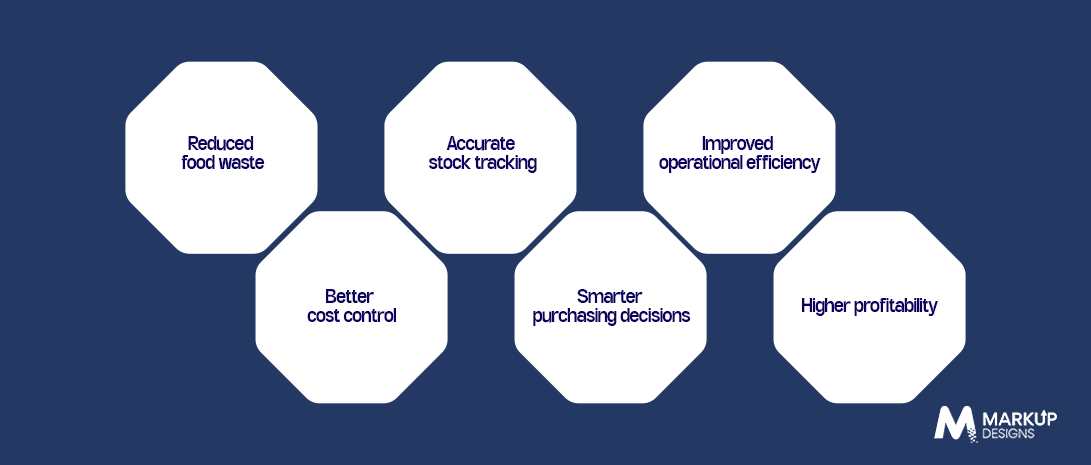
Building an inventory management system for a restaurant ensures that the restaurant can effectively maintain its stock without having to incur additional costs. In addition, rather than using manual record-keeping, restaurant managers will be able to utilize a common platform for inventory and other operations.
Here are some key benefits of developing a restaurant inventory management system:
Reduced food waste
This process ensures that the restaurant keeps track of ingredient quantities and expiration dates, thereby allowing the restaurant to use up the ingredients while they last.
Better cost control
Owners of restaurants will be able to keep tabs on their cost of purchasing, ingredient utilization, and value of inventory.
Accurate stock tracking
Real-time monitoring of inventory allows managers to keep track of their inventory levels.
Smarter purchasing decisions
The information on past sales and past usage will allow the restaurant to make a more informed decision about its needs.
Improved operational efficiency
Automation of stock and purchase entry, as well as generation of inventory reports, saves time for the staff.
Higher profitability
This system will ensure better control of costs and hence profit.
Overall, an inventory management system gives restaurant owners better control over daily operations and helps them use their resources more efficiently.
Essential Features of a Restaurant Inventory Management System
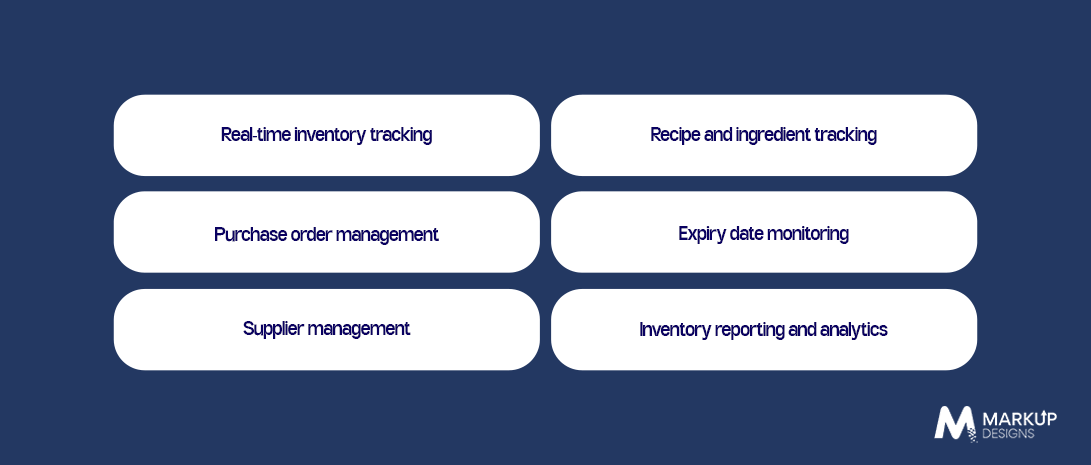
The efficiency of a restaurant inventory management software is based on the set of its functions. The well-designed system should handle all aspects related to inventory management, including tracking incoming ingredients, monitoring their use, and creating reports.
The following are six crucial features to take into account:
Real-time inventory tracking
It allows monitoring stock availability, tracking the flow of ingredients both in and out of the warehouse, and viewing inventory status.
Purchase order management
This function enables the creation of tracking purchase orders and allows the restaurant to keep its purchasing process organized.
Supplier management
The supplier management module contains relevant data about vendors, including their contact information, prices of products offered by them, and purchase history.
Recipe and ingredient tracking
This function links each item in the menu to its necessary ingredients along with the quantity. In the case of the preparation and sale of dishes, the software can determine how many ingredients were used and reduce stock appropriately.
Expiry date monitoring
Restaurant businesses work with many perishable ingredients that have to be utilized within a certain time frame. By tracking expiry dates, employees will be able to monitor the life cycle of the products and avoid spoilage.
Inventory reporting and analytics
Such reporting functions will allow restaurant managers to receive information about stock utilization, cost of purchases, food losses, valuation of inventory, and discrepancies in stock.
A blend of these factors provides a solid base for restaurant inventory management software. Restaurants can also incorporate additional functionalities, including artificial intelligence-based demand forecasting and automated ordering, as their needs become more complex.
Read Also: AI Demand Forecasting: Improving Inventory Accuracy with Predictive Intelligence
How to Build a Restaurant Inventory Management System: Step-by-Step Process
Building an inventory management system for a restaurant involves proper planning, understanding of business requirements, and application of correct technologies. The whole development process must concentrate on resolving current inventory issues while at the same time helping the company grow.
The following are the main aspects of the development process:
1. Defining Business Requirements
This step includes identifying current inventory problems, such as stock management, food wastage, purchasing, coordinating with suppliers, and others. The definition of the system users, goals, and basic functionalities is also needed at this stage.
2. Select the Development Strategy
Whether to go for off-the-shelf software, tailor-made development, or even a combination depends on how your restaurant functions.
3. Plan the System Architecture
This will depend on the choice of database, back-end programming languages, and architecture, etc.
4. Design the User Interface
Develop easy-to-use dashboards for restaurant owners, managers, kitchen staff, and buyers to have access to the inventory data.
5. Build Core Features
Implement core modules for stock control, supplier management, order creation, recipe control, expiration management, and reporting.
6. Integration with External Systems
Integrate external systems such as POS, accounting software, ERP systems, and supplier systems to keep the data consistent.
7. System Testing
Run functional, integration, security, and performance tests to guarantee precise stock counting and functionality of the system.
8. Deployment and Maintenance
Deploy the system, transfer data from the previous inventory database, train users, and provide ongoing support.
Following these steps helps restaurants develop an inventory management system that fits their operational needs and supports efficient inventory control.
Integrations Required for an Efficient Inventory Management System
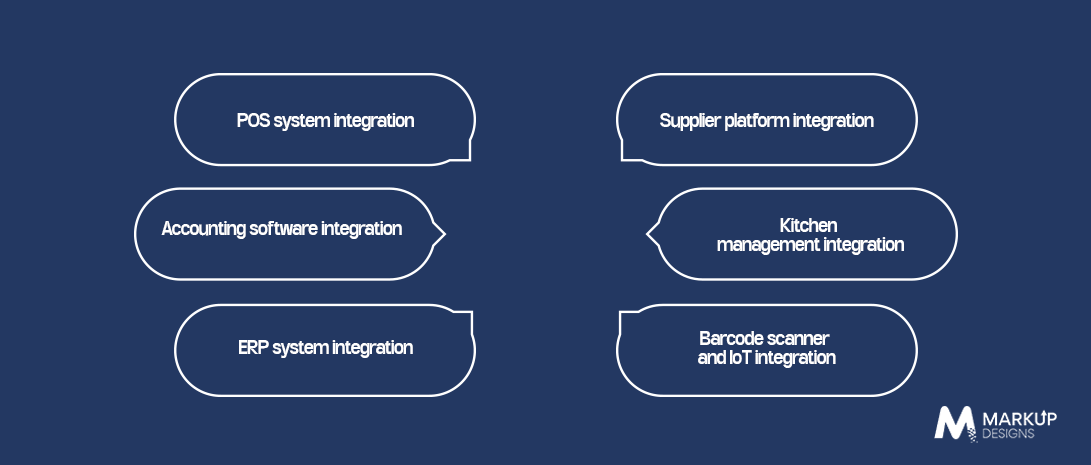
Integration of a restaurant inventory management system with other technologies can increase its efficiency by automating data flow and improving record-keeping. There are six key integrations to implement:
POS system integration
Stock levels are automatically updated by sales made, and usage of ingredients is recorded.
Accounting software integration
Purchasing history, supplier invoices, accounting costs, and expenditures are synchronized.
ERP system integration
Inventory is linked with purchasing, accounting, warehousing, and reporting functions, especially for restaurant chains.
Supplier platform integration
Purchase orders, product availability, and deliveries are managed.
Kitchen management integration
Connects food production processes with the consumption of ingredients and helps coordinate kitchen and service staff.
Barcode scanner and IoT integration
Helps speed up the process of stock counting and identification of products, while IoT devices aid in monitoring storage parameters like temperature.
These integrations ensure that an ecosystem for restaurant management is established and improve inventory management processes. Through integrating these systems, restaurants are able to establish a coherent technology ecosystem in which inventory data is smoothly transferred.
How Much Does It Cost to Build a Restaurant Inventory Management System in 2026?
The cost of developing a restaurant inventory management system varies based on the functionality, complexity of the system, integration options, and method of development. A simple system that can track the inventory and manage purchases will have a different price than a complex one, which includes AI-based forecasts and multi-location support.
For planning purposes, restaurants can consider the following broad budget categories. These are indicative planning ranges, not fixed market quotations.
Estimated Development Budget | |
|---|---|
| System complexity | Estimated development cost |
| Basic inventory system | $10,000–$25,000 |
| Mid-level inventory platform | $25,000–$50,000 |
| Advanced inventory management system | $50,000–$100,000+ |
| Enterprise multi-location platform | $100,000–$200,000+ |
Actual investment depends on the scope of the project, the location where it will be developed, integrations, and technical requirements. The restaurant should start with basic needs and extend the system based on its needs.
Common Challenges in Restaurant Inventory System Development
Building an inventory management system for restaurants entails more than designing the software. The restaurants should think about the workflow process, data precision, staff considerations, and integration. Tackling these issues early on will help prevent issues that could arise during the implementation of the system.
Here are some common challenges to consider:
Inaccurate Inventory Data
Errors can happen due to incorrect information, missing updates, and inconsistent measurements of the stock. A good data validation process and stock updates can help mitigate this issue.
Complexity in Ingredients and Recipes
A restaurant will have different amounts of ingredients, different measurement methods, and different recipes. This means the software should be able to handle this issue well.
Integration with Existing Systems
The integration of the inventory management software with other existing systems, such as point-of-sale systems, accounting software, and suppliers’ systems, could pose difficulties owing to the differences in their API.
Employee Adoption and Training
For employees used to manual inventory management, adapting to inventory management through automated software could be quite difficult. Simple software and proper training on how to use the software can solve this problem.
Data Protection and Access Control
Inventory management software may hold some confidential data of your business, including suppliers’ data, buying history, and financial data. This could be safeguarded through proper access control measures.
System scalability and reliability
A software designed for the needs of a single restaurant may not be able to meet the needs of other restaurants in the future. This calls for careful selection of a scalable and reliable infrastructure.
By identifying these challenges during the planning stage, restaurants can make better development decisions and build software that works effectively in real operating conditions.
Build a Smarter Restaurant Inventory Management System with Markup Designs
The process of creating restaurant inventory software is characterized by the need to know about purchasing, stock flows, usage of ingredients, and other aspects of the work. Markup Designs takes into account all requirements and helps create unique inventory management systems.
The software development company is ready to help you build a system with required elements such as real-time inventory tracking, supplier management, purchase orders, recipe management, and inventory reports. Our company also helps with third-party integration, scalability, testing, and support.
Regardless of whether you need to create a new inventory system or update the old one, Markup Designs can help you with this.
Have an idea for a restaurant inventory management system?
Let’s turn it into a practical digital solution. Connect with Markup Designs to discuss your requirements and explore the right development approach.

Conclusion
Development of an inventory management system in a restaurant is one of the ways of ensuring better control over stocks, minimizing wastage, and improving overall restaurant operations. There are certain features that need to be developed in order to ensure better control of inventory.
However, the development will depend on a number of factors, such as the identification of needs and the choice of the right technologies to develop the system. The system that is going to be developed should cater to the present and future needs of the business.
With the right development approach and choice of technology, restaurants can have an inventory management system that caters to their needs and enables them to make sound decisions.
FAQs
1. What is a restaurant inventory management system?
A restaurant inventory management system is software that helps restaurants track ingredients, monitor stock levels, manage suppliers, record purchases, and control food waste through a centralized platform.
2. How long does it take to build a restaurant inventory management system?
Development time depends on the features, integrations, and complexity of the platform. A basic system may take a few months, while an advanced enterprise solution can require significantly more time.
3. What are the essential features of restaurant inventory software?
Essential features include real-time stock tracking, purchase order management, supplier management, recipe tracking, expiry monitoring, and inventory reporting.
4. Can restaurant inventory software integrate with POS systems?
Yes. Integration with POS systems allows restaurants to update inventory based on completed sales and ingredient consumption. It also helps maintain consistent information between sales and stock records.
5. How does AI improve restaurant inventory management?
AI can analyze historical sales, seasonal patterns, and ingredient consumption to support demand forecasting, purchasing recommendations, and stock planning. It can also help identify unusual inventory patterns.
Author's Perspective
Restaurant inventory management is no longer just about knowing how much stock is available. It is about understanding how ingredients move through daily operations, where resources are being wasted, and how purchasing decisions affect profitability. In 2026, restaurants need systems that connect inventory with sales, procurement, suppliers, and kitchen operations. However, adding more features does not always make a solution better. The real value comes from building software that addresses actual operational problems and makes everyday tasks easier for restaurant teams. A well-planned inventory management system can help restaurants move towards more organized, efficient, and data-driven operations while creating a strong foundation for future growth.
Discuss Your Project NowGaurav Goyal
Global Sales- VP
Insights Are Valuable & Execution is Priceless
You’ve read about the digital future. Now, let’s build the infrastructure to take you there. Move your strategy from the page to the product.
Design Your Solution Now
Contact Us
Schedule The Appointment At Your Convenience Date And Time.
30 Min
Web Conference
Time Zone
Indian standard time (08:30pm)

Thanks For Getting In Touch!
You’ve Taken The First Step Toward Transforming Your Digital Presence. Our Experts Will Reach Out Shortly To Take It Forward.
Launch Your Dream Project
Provide a brief overview of your project, and our specialists will evaluate your requirements. We will connect with you to explore how the right digital solutions can help you launch faster.