
In Brief
- The creation of Remote Patient Monitoring (RPM) apps allows medical professionals in the UAE to observe patients’ conditions remotely and enhance healthcare outcomes while minimizing needless medical visits.
- A feature-laden RPM software offers real-time monitoring of health, integration with tracking devices, the use of AI analysis, a secure communication network, and connection to EHR.
- UAE healthcare regulations such as DHAs, DOH, MOHAP, as well as international regulations like HL7 and FHIR, ensure compliance with data security and regulatory issues.
- The price of RPM app development in the UAE depends on parameters like application difficulty, connectivity options, use of AI, security, and the model used for application deployment.
- Assuring cooperation with a top healthcare app development firm helps organizations make scalable, secure, and up-to-date RPM solutions.
Through the adoption of digital technologies by hospitals and healthcare providers, remote healthcare is an essential part of the healthcare sector in the UAE. With the gradual increase of diseases, an aging population, and the need for personal health assessment, the demand for RPM applications is growing.
These solutions provide healthcare professionals with real-time health data, allowing early intervention while reducing unnecessary hospital admissions and improving overall care delivery.
In creating a Remote Patient Monitoring solution, it is not enough to merely put together wearables or collect data from a patient. The application must provide precise information about patients’ health, integrate well with the other technological solutions in the healthcare sphere, adhere to the medical regulations of the UAE, and guarantee a secure experience for the clinical staff and patients. This article describes key information every stakeholder must understand about RPM development in the UAE, including essential characteristics of such applications, the process of development, compliance requirements, costs incurred for the development, as well as best strategies for the creation of a digital healthcare solution.
Understanding Remote Patient Monitoring App Development
Remote Patient Monitoring App Development allows healthcare professionals to monitor patients from remote locations via mobile applications and medical devices. By allowing instant access to patients’ health information, these solutions facilitate clinical decision-making, promote preventive care, and help make healthcare available to many more people in the UAE.
What is a Remote Patient Monitoring (RPM) App?
Remote Patient Monitoring App is designed for remote health monitoring of patients. By collecting data from wearable devices and medical equipment, the app enables continuous monitoring, helping doctors detect health changes early and deliver timely care without requiring frequent hospital visits.
How Does an RPM App Work?
An RPM app collects patient health information from various connected devices, including smartwatches, blood pressure monitors, blood glucose meters, and pulse oximeters. The health data is stored in a specific location from where it is made available to health professionals through a central platform in such a way that they can access it and make decisions regarding the patients’ treatment.
Why Remote Patient Monitoring is Growing in the UAE
Remote Patient Monitoring is gaining a lot of popularity in the UAE due to the digital transformation taking place in the healthcare space. Government initiatives, rising numbers of patients suffering from chronic diseases, increased usage of telehealth by healthcare institutes, smart hospitals, and AI-based healthcare solutions are paving the way for healthcare providers to invest in technologies that help improve patient care.
Benefits of Remote Patient Monitoring Apps for Healthcare Providers and Patients
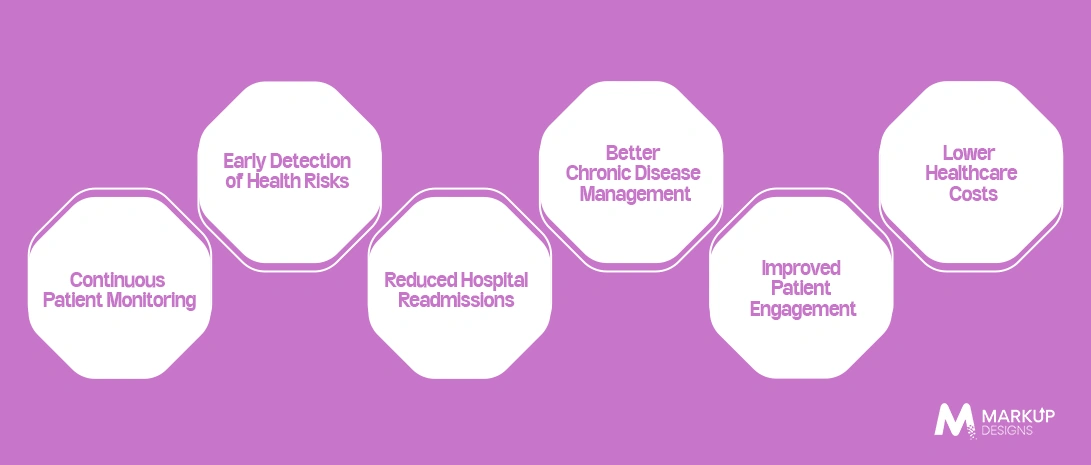
Remote Patient Monitoring applications create win-win situations for patients and healthcare professionals by minimizing operational challenges and ensuring effective delivery of care.
Continuous Patient Monitoring
Healthcare professionals receive continuous access to patient health data, allowing them to monitor conditions remotely and respond quickly whenever medical attention is required.
Early Detection of Health Risks
Monitoring in real-time enables us to detect abnormal health behaviour before the situation becomes critical, which provides an opportunity for a healthcare provider to act in advance and avoid major complications.
Reduced Hospital Readmissions
Monitoring of patients after discharge helps reduce the number of unnecessary hospital readmissions and contributes to better recovery of patients.
Better Chronic Disease Management
Patients suffering from conditions such as diabetes, hypertension, cardiovascular issues, and other chronic diseases benefit from constant health monitoring that enables better treatment compliance and long-term management of disease.
Improved Patient Engagement
The availability of health reminders, health monitoring features, and communication with the medical staff motivates patients to become more engaged in managing their health.
Lower Healthcare Costs
The possibility of minimising unnecessary visits to hospitals and emergency treatments enables hospitals to optimise their operations in terms of expenses.
Essential Features of a Remote Patient Monitoring App
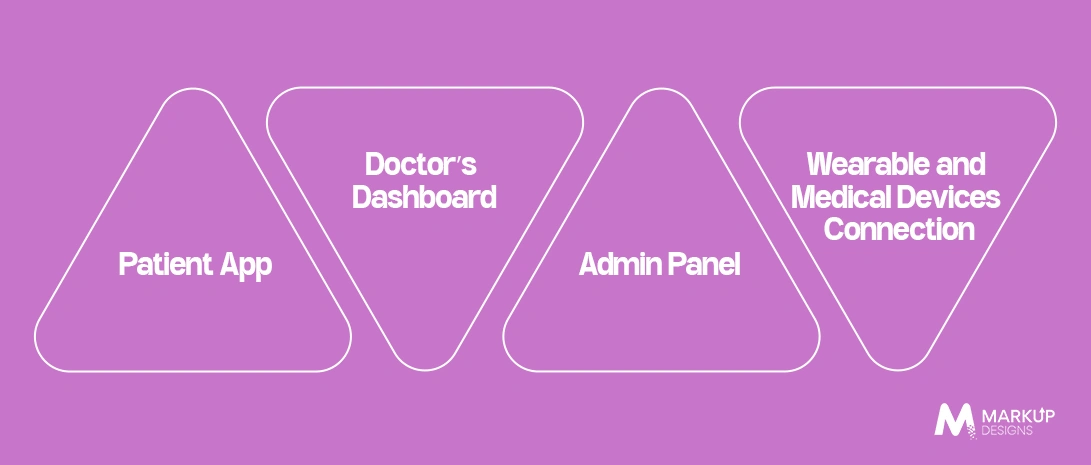
An effective RPM app possesses both patient-friendly features and robust provider management abilities, which guarantee the safe transmission of medical data and precise monitoring of the patient’s health condition.
Patient App
The patient app must serve the purpose of being able to monitor health while remaining connected with medical professionals. The functionalities should include secure sign-up, health profile management, real-time monitoring of vital signs, drug reminders, appointment booking, health reports, notifications, as well as language support for Arabic and English speakers.
Doctor’s Dashboard
The doctor’s dashboard allows medical personnel to see the patient’s health completely. The dashboard should include such features as live patient monitoring, patient medical history, health analytics, secured messaging, video consultations, and electronic prescriptions.
Admin Panel
Health organizations are able to control users, their devices, system efficiency, compliance, and reporting through the management panel. Among other features, the admin panel should have audit logs and analytics dashboards.
Wearable and Medical Devices Connection
The integration with smartwatches, blood pressure gauges, glucose meters, ECG devices, pulse oximeters, and others in the Internet of Medical Things system should allow automated collection of information and provision of medical specialists with timely and accurate patients’ data without any human intervention.
Compliance Requirements for Remote Patient Monitoring Apps in the UAE
Healthcare apps must conform to the UAE healthcare compliance regulations and internationally recognized security standards for patients’ safety and data protection in accordance with laws. Introducing compliance in the development stages helps healthcare companies avoid regulatory troubles and creates trust among patients.
DHA Healthcare Regulations
Mobile applications serving health facilities in Dubai must meet Dubai Health Authority (DHA) guidelines, especially in relation to maintaining patient records, telehealth services, and secure provision of services.
DOH Abu Dhabi Requirements
Healthcare applications operated in Abu Dhabi must comply with the Abu Dhabi Health Authority Department (DOH) norms that dictate the operations of electronic health care.
MOHAP Guidelines
In the case of nationwide medical services, developers should follow the Ministry of Health and Prevention (MOHAP) conditions to provide uniform health services throughout the country.
Patient Data Privacy & Security
RPM needs to ensure the protection of sensitive data by using encryption mechanisms, secure authentication, access control by roles, and continuous monitoring.
HIPAA & GDPR Considerations
Even though UAE regulations are to be followed first, individuals or organizations working with patients or partners abroad often tend to use the HIPAA and GDPR principles to boost safety and data protection.
HL7 & FHIR Integration Standards
Supporting healthcare interoperability standards such as HL7 and FHIR enables seamless communication between RPM apps, hospital information systems, electronic health records, and medical devices.
Technologies Used in Remote Patient Monitoring App Development
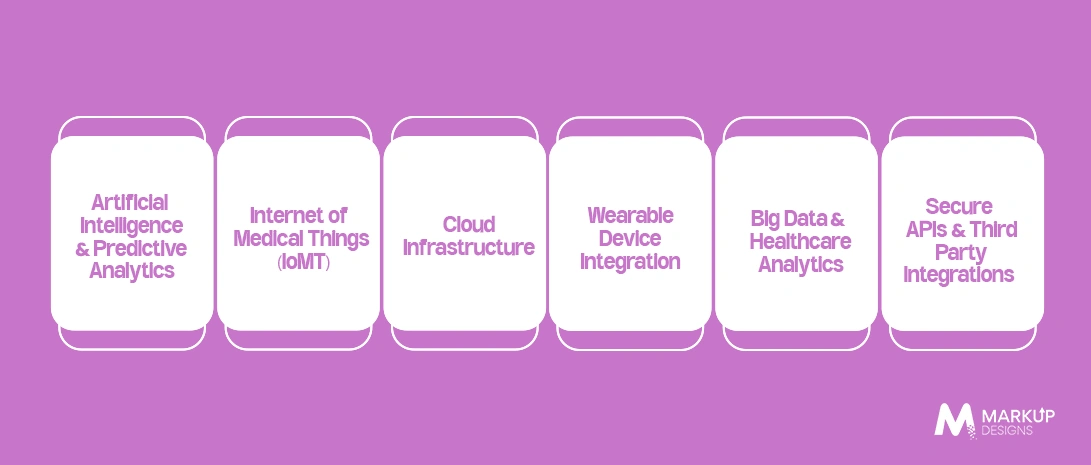
Recent advances in RPM systems have led to solutions that use connected devices, advanced analytics, and safe cloud computing to ensure patient monitoring in real time and better healthcare delivery.
Artificial Intelligence & Predictive Analytics
AI technology allows analyzing patterns in patients’ health over time, identifying irregularities and informing doctors about possible health hazards in advance.
Internet of Medical Things (IoMT)
IoMT is a term used to refer to any medical equipment or wearable sensor that is used in conjunction with a software application that allows for continuous medical data retrieval and transfer.
Cloud Infrastructure
Through the use of cloud technologies, it becomes possible to ensure data protection, scalability, and easy accessibility for clinicians across numerous locations.
Wearable Device Integration
Using smartwatches and devices such as glucometers, blood pressure monitors, ECG machines, or pulse oximeters means that it becomes possible to obtain patients’ health data automatically.
Big Data & Healthcare Analytics
Big data technology takes huge amounts of medical information and turns it into actionable insights and informed decisions.
Secure APIs & Third Party Integrations
API is a set of commands allowing the integration of the RPM platform with patients’ data and making connections between cloud machines.
Remote Patient Monitoring App Development Process
In order to achieve successful rpm solutions, a systematic approach is necessary, which properly addresses user needs, user experiences, regulations, and technical feasibility.
Discovery/Requirement Analysis
Initially, it is crucial to examine healthcare procedures, business goals, compliance requirements, and client expectations.
UI/UX Design
A user-friendly interface is created to facilitate navigation by the end-users of the application.
App Development
Developers create secure applications for monitoring patients, medical doctors and administrators and include basic features for monitoring and the exchange of messages.
The platform is integrated with devices, medical equipment, EHR systems, and other health services so that data can be exchanged without any interruptions.
Testing and Validation of Compliance
When the application is complete, it should undergo thorough testing in order to ensure its functioning, safety, compatibility with devices, and compliance with laws.
Deployment and Ongoing Support
If the testing is successful, the solution will be implemented, and its functioning will be monitored continuously.
Remote Patient Monitoring App Development Cost in the UAE
The overall cost depends on the platform’s functionality, integrations, compliance requirements, and level of customisation. While basic monitoring solutions require lower investment, enterprise-grade platforms demand advanced technologies and extensive integrations.
| Solution Type | Estimated Cost |
| Basic RPM App | AED 90,000 – AED 180,000 |
| Mid-Level RPM App | AED 180,000 – AED 450,000 |
| Enterprise RPM Platform | AED 450,000+ |
Factors Affecting Development Cost
Several factors influence the final investment, including application complexity, AI capabilities, wearable device integrations, regulatory compliance, third-party integrations, platform selection, and the size and expertise of the development team.
Read Also: Healthcare App Development Cost in 2026
Challenges in Building a Remote Patient Monitoring App
Creating an RPM system is much more than having an application built. The healthcare industry will have to overcome technical, operational, and regulatory obstacles to achieve long-term success.
Data Security & Privacy
In order to protect private patient data, one must have effective safety measures in place, constantly monitor, and comply with healthcare regulations.
Device Compatibility
Working with numerous devices and wearable technologies presents significant technical challenges in terms of providing ongoing functionality and efficiency.
Regulatory Compliance
With healthcare rules and regulations changing constantly, ensuring compliance with them has become a key component in the development of a product.
User Adoption
The platform must be easy to use and intuitive so that patients and doctors can operate it successfully after a minimal training period.
Integration with Existing Hospital Systems
Connecting the application to the EHR systems, hospital management systems, and laboratory systems demands careful planning to achieve seamless integration.
Scalability and Performance
With the growth in patient numbers, the platform must be able to provide real-time monitoring without compromising on speed or reliability.
Future Trends in Remote Patient Monitoring in the UAE
As the United Arab Emirates keeps investing in digital health, remote health monitoring is making strides in technology, connectivity, and tailor-made care. Modern technologies enable healthcare professionals to provide patients with proactive services that result in better care outcomes.
AI-Assisted Remote Care
Artificial intelligence is helping medical professionals process patients’ information faster, categorizing cases on the basis of seriousness and supporting quicker decision-making with smart health data.
Predictive Healthcare
Advanced analytics can detect potential health-related problems before patients start experiencing serious symptoms, which makes it possible to intervene early and decrease the number of unnecessary hospital visits.
Smart Wearables
Novel wearable gadgets constantly monitor patients’ vital signs, and the data is transmitted automatically for the purposes of remote care.
Digital Therapeutics
Digital health solutions create an additional layer for standard treatments, providing people with a customized approach to their health care.
5G Enabled Remote Monitoring
The features of 5G technology enable fast data transmission, online consultations, and overall tracking of connected medical devices.
Personalised Healthcare
Using AI and being aware of a patient’s medical history and current data, systems for remote monitoring provide clients with treatment options suitable for their cases.
Why Choose Markup Designs for Remote Patient Monitoring App Development?
Markup Designs combines 12+ years of software development experience with a team of 300+ technology experts to build secure, scalable, and compliant healthcare solutions. From AI-powered analytics and IoMT integration to intuitive patient apps and clinician dashboards, we develop end-to-end Remote Patient Monitoring platforms aligned with UAE healthcare regulations. Our focus on security, interoperability, and long-term support ensures healthcare providers can confidently deliver connected and future-ready patient care.
Build a Secure Remote Patient Monitoring App for Modern Healthcare
Develop an intelligent, compliant, and scalable Remote Patient Monitoring solution with Markup Designs to improve patient care and healthcare outcomes across the UAE.
Conclusion
Remote Patient Monitoring is a very effective method of healthcare delivery that helps give continuity of care, enhances patient engagement, and improves healthcare outcomes. However, the implementation of such platforms is not possible without fulfilling some important requirements, such as regulatory compliance, security, easy integration with medical devices, etc. By partnering with an experienced healthcare technology provider like Markup Designs, healthcare organisations can develop secure, AI-powered RPM solutions that are ready for the future of connected healthcare.
FAQs
1. What are Remote Patient Monitoring apps?
Remote Patient Monitoring apps are mobile apps that help medical specialists monitor patients’ health statuses remotely with the help of portable devices that are connected through mobile applications.
2. How much money should one spend to create an RPM app in the United Arab Emirates?
Investment in the development of these applications starts from AED 90,000 for a basic solution and begins from AED 450,000 for an enterprise-grade application, depending on many factors including the features and functionalities of the app, type of integrations, AI capabilities, and compliance requirements.
3. How long does the development of an RPM app take?
It takes from 4 to 9 months to develop an RPM app, depending mainly on the complexity of the project, the number of integrations needed, testing processes, and compliance with regulations.
4. Which wearable devices can be used together with RPM apps?
RPM apps can be integrated with health apps in smartwatches, blood pressure measuring tools, glucose dispensers, ECG devices, pulse oximeters, fitness trackers, and other IoMT-connected medical instruments.
5. What healthcare regulations must an RPM app follow in the UAE?
Remote Patient Monitoring applications should comply with relevant DHA, DOH Abu Dhabi, and MOHAP guidelines while implementing strong data security measures and supporting interoperability standards such as HL7 and FHIR where required.
Author's Perspective
In the UAE, the healthcare sector is adopting connected care, where Remote Patient Monitoring is the method for providing healthcare services. Hospitals and clinics are inclined towards investing heavily in new technology in order to achieve better health outcomes for patients.
For providing dependable RPM solutions, it is not enough for organizations to use just any medical software. It should include AI as well as connections with different medical devices, safety, and regulatory compliance. At Markup Designs, we create custom RPM software that is able to expand and fulfill the requirements of UAE-based healthcare organizations.
Discuss Your Project NowGaurav Goyal
Global Sales- VP
Related Posts
How to Build a Compliant HealthTech App in...
Complete Guide to Healthcare App Development in Saudi...
Complete Cost Breakdown of Telemedicine App Development in...
Insights Are Valuable & Execution is Priceless
You’ve read about the digital future. Now, let’s build the infrastructure to take you there. Move your strategy from the page to the product.
Design Your Solution Now
Contact Us
Schedule The Appointment At Your Convenience Date And Time.
30 Min
Web Conference
Time Zone
Indian standard time (08:30pm)

Thanks For Getting In Touch!
You’ve Taken The First Step Toward Transforming Your Digital Presence. Our Experts Will Reach Out Shortly To Take It Forward.
Launch Your Dream Project
Provide a brief overview of your project, and our specialists will evaluate your requirements. We will connect with you to explore how the right digital solutions can help you launch faster.