

In Brief
- Regulatory technology (RegTech) platforms assist businesses in the UK with their compliance, risk management, reporting, and monitoring of regulations.
- The platform’s primary characteristics may include Know Your Customer (KYC), anti-money laundering (AML), compliance management, keeping up with compliance changes, risk assessment, reporting, and audit logs.
- While creating RegTech software, various phases are required, including requirement analysis, user interface and experience design, software development, integrations, security measures, testing, and deployment.
- The specific regulations in the UK, data protection mandates, security regulations, as well as integration requirements can play an important role in the scope of development.
- The cost of the development of RegTech software in the UK in 2026 will depend on required features and complexity of the project, including AI capabilities, integrations and security requirements.
In the UK, the regulatory landscape is getting more intricate, especially for companies in financial services, banking, payments, insurance, and lending sectors. Compliance processes can lead to lost productivity and reduced capacity to deal with changes in regulatory frameworks if handled manually. RegTech platforms help to alleviate such problems with efficient solutions such as artificial intelligence and automation, data analytics, and cloud computing.
Building a RegTech platform involves a lot more than just putting compliance features into existing software. Companies must choose the right use case, design a secure workflow, ensure integration with relevant data sources, implement UK compliance and data protection requirements, and create a scalable architecture. This guide will answer questions like how to develop a RegTech platform in the UK, what its basic and more advanced features are, how long it can take, and how much it can cost.
What Is a RegTech Platform and How Does It Work?
RegTech is short for the term regulatory technology, and it indicates the application of technology in order to assist businesses with meeting compliance requirements through automation and analytics. RegTech solutions are often applied to tasks such as compliance monitoring, risk management, reporting, KYC, AML, and many others.
How Does RegTech Work?
The functioning of RegTech relies on efficient gathering of information from internal systems, regulatory official information sources, and third parties. After that, these systems use rules of compliance and analytics methods in order to conduct identification of risks, monitor regulations, automate procedures, and create reports.
Who Are Users of RegTech in the UK?
Businesses operating in spheres such as finance, insurance, payment processing, lending, as well as others are usually among the users of RegTech.
Why Create RegTech in the UK?
Increasing Complexity of Regulations
Regulatory updates are frequent and exact, thus making automating compliance monitoring a must for many businesses.
Rising Demand for Automatic Compliance
Full automation decreases the amount of manual labour and allows for more effective duties and processing of a great amount of data.
Real-Time Risk Monitoring
An additional benefit of RegTech implementation is the possibility of continuous risk monitoring and reporting.
AI-Powered Regulatory Compliance
AI can help analyse regulatory documents, identify patterns, classify compliance information, and support faster decision-making across compliance workflows.
What Features Should a RegTech Platform Have?
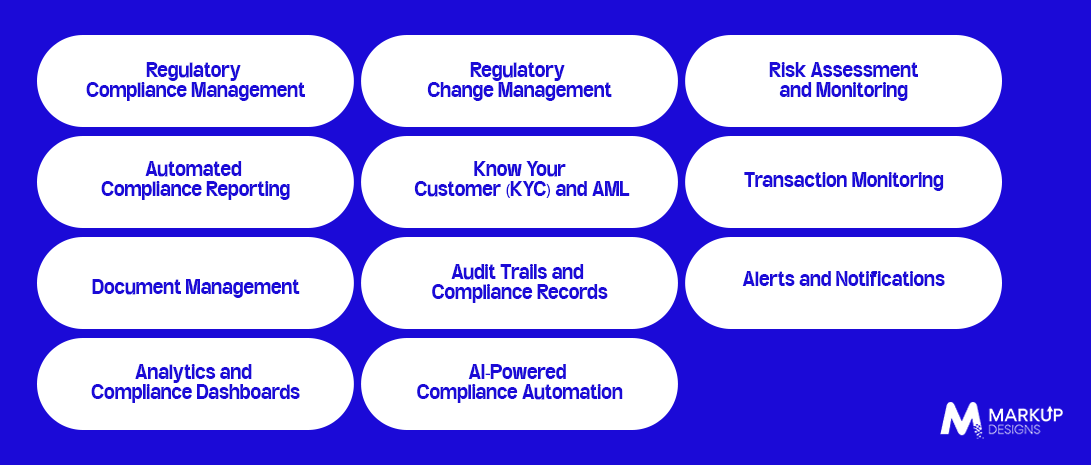
Regulatory Compliance Management
Keep all compliance policies, regulations, workflow processes, and tasks in one platform to use them effectively.
Regulatory Change Management
Keep track of changes in regulations and understand their impact on business processes and obligations regarding compliance.
Risk Assessment and Monitoring
Identify, analyze, and monitor compliance risks based on rules and automated workflows.
KYC, AML, and Transaction Monitoring
Assist in customer verification, suspicious activity identification, transaction checking, and ongoing monitoring of customers.
Automated Compliance Reporting
Create compliance reports without putting too much effort into collecting and preparing the data needed for the purpose.
Document Management and Audit Trails
Securely store compliance documents and maintain records of actions taken, approvals given, and changes made.
Alerts and Notifications
Send automated alerts when there are risks, compliance issues, or regulatory changes that need to be paid attention to.
Analytics and Dashboards for Compliance
Get a clear understanding of compliance indicators and any tasks that still have to be completed.
Advanced Features to Add to a RegTech Platform
AI-Based Risk Detection
Use AI models to identify unusual patterns and potential compliance risks across large datasets.
Natural Language Processing for Regulatory Data
Analyse regulatory documents and extract relevant requirements, changes, and compliance obligations.
Intelligent Document Processing
Automate the extraction, classification, and validation of information from compliance documents.
Predictive Compliance Analytics
Analyse historical and current data to identify emerging risks and support proactive compliance management.
How to Build a RegTech Platform in the UK?
Step 1: Define the Compliance Use Case and Requirements
Identify who the users will be and what the compliance needs and business processes are, as well as what compliance regulations the platform will cover.
Step 2: Conduct Regulatory and Market Research
Understand and analyse applicable regulations in your country, available solutions, industry requirements, and how the platform should integrate with clients’ systems.
Step 3: Plan the RegTech Platform Architecture
Determine what architecture, data systems, cloud services, API, security technology, etc will be used for developing a platform.
Step 4: Design the UI/UX
Develop intuitive dashboards and processes for managers of the compliance team to work with risks effectively, track processes, and generate reports.
Step 5: Develop the Core Platform
Create core compliance workflows, dashboards, user management, reporting, and other functionalities for the platform.
Step 6: Integrate Data Sources and Third-Party Systems
Connect the platform to the company systems, regulatory databases, KYC AML services, payment systems, and other APIs.
Step 7: Implement Security and Compliance Controls
Apply required measures for data security, access control, encryption, authentication, audit logging, etc.
Step 8: Test the RegTech Platform
Perform functional, integration, performance, security and compliance testing before launching the platform.
Step 9: Deploy and Monitor the Platform
Deploy the platform to the chosen cloud or infrastructure environment and continuously monitor performance, security, regulatory updates, and user activity.
What Technology Stack Is Used to Build a RegTech Platform?
Frontend and Backend Technologies
Use scalable frontend and backend technologies to build responsive compliance dashboards, secure workflows, and high-performance platform functionality.
AI, Machine Learning, and Data Technologies
AI and machine learning technologies can support risk detection, regulatory analysis, predictive insights, and automated compliance workflows.
Databases and Data Storage
Choose secure and scalable databases to manage customer, transaction, regulatory, and compliance data while supporting high-volume processing.
APIs and Third-Party Integrations
Integrate KYC/AML providers, regulatory databases, financial systems, identity verification services, and other third-party platforms through secure APIs.
Cloud and DevOps Infrastructure
Cloud and DevOps technologies help support secure deployment, continuous monitoring, automated testing, scalability, and reliable platform performance.
What UK Regulations and Compliance Standards Should a RegTech Platform Support?
UK GDPR and Data Protection Act 2018
RegTech platforms handling personal data should implement appropriate data protection, privacy, access control, and data management practices.
Financial Conduct Authority (FCA) Requirements
Platforms designed for regulated financial businesses should account for relevant FCA requirements based on their specific services and use cases.
Anti-Money Laundering Regulations
AML capabilities can help businesses monitor customer activity, identify suspicious transactions, and maintain required compliance records.
Know Your Customer (KYC) Requirements
KYC functionality can support customer identity verification, screening, onboarding, and ongoing monitoring.
Payment Services Regulations
RegTech platforms supporting payment businesses may need to address applicable payment service requirements and related compliance workflows.
ISO 27001
ISO 27001 provides a framework for managing information security risks and protecting sensitive business and customer information.
SOC 2
SOC 2 controls can help demonstrate how a technology platform manages security, availability, confidentiality, and other relevant trust principles.
PCI DSS
PCI DSS may be relevant when the platform stores, processes, or transmits payment card data.
Key Factors Affecting RegTech Development Cost
Features and Platform Complexity
Both the total number and complexity of workflows like compliance, dashboards, and feature automation may directly influence development efforts.
AI and Automation Requirements
The use of artificial intelligence, use of predictive analytics, novel information comprehension, and automated workflows can result in increased costs of development.
Data Integration
Implementation of various systems in one place can complicate the process of development.
Security and Compliance
Many factors enhance the scope of development, such as encryption, authentication, access control, auditing, data protection, and compliance.
Development Team Location
The location, expertise, and engagement model influence the overall cost of development.
Third-Party APIs and Services
The presence of KYC, AML, identity confirmation facilities, regulatory information provision, and cloud solutions may contribute to additional costs.
Scalability Requirements
Investment in the development of solutions to provide support for large amounts of data will require advanced infrastructure solutions.
How Long Does It Take to Build a RegTech Platform?
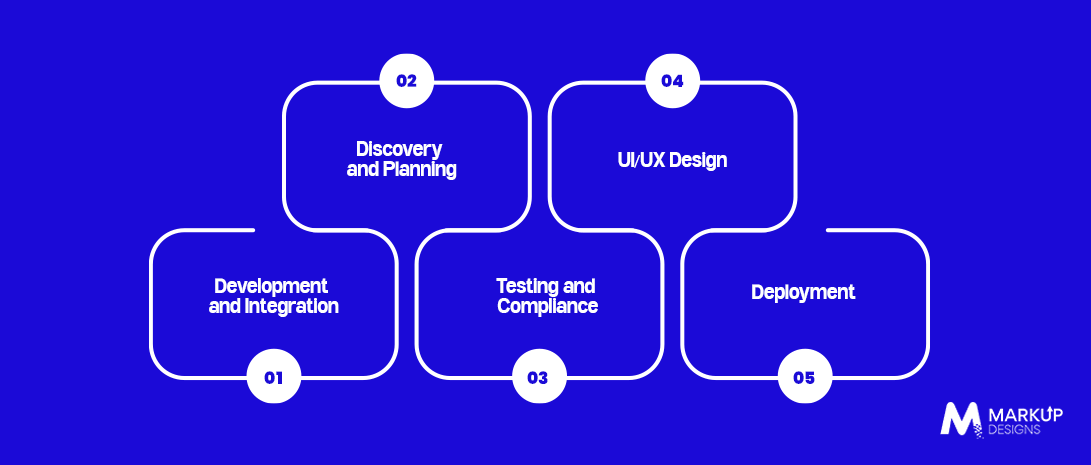
The development timeline will depend on the features, integrations, compliance requirements, and customization of the platform.
Planning and Design
The process of requirements analysis, regulatory research, architectural planning, and UI/UX design will provide the basis for the development.
Development and Integration
The core platform, compliance workflows, APIs, databases, data dashboards, and third-party integrations will be developed at this stage.
Testing and Compliance
The platform will be subjected to functional, security, performance, integration, and compliance testing before the launch.
Deployment and Launch
The finished platform will be introduced into the production environment and prepared for operation.
What Are the Ongoing Costs of Running a RegTech Platform?
Building the platform is just the first step; companies have to consider infrastructure, maintenance, security, and updates.
Cloud and Infrastructure
Cloud hosting, storage, computing resources, backup plans, and monitoring will add to the ongoing operating cost.
Third-Party APIs and Services
Ongoing use of APIs, KYC/AML procedures, identity verification, regulatory data, and AI services and solutions can also lead to ongoing expenditures.
Security and Compliance
Regular security tests and compliance audits might be needed as the platform evolves.
Maintenance and Updates
Bug fixes, performance improvements, feature updates, and infrastructure maintenance help keep the platform reliable.
AI Model Monitoring
AI-powered RegTech platforms may require model monitoring, performance evaluation, retraining, and optimisation over time.
Regulatory Updates
Changes in regulations may require updates to compliance rules, workflows, reporting mechanisms, and platform functionality.
How to Reduce RegTech Platform Development Costs Without Compromising Security?
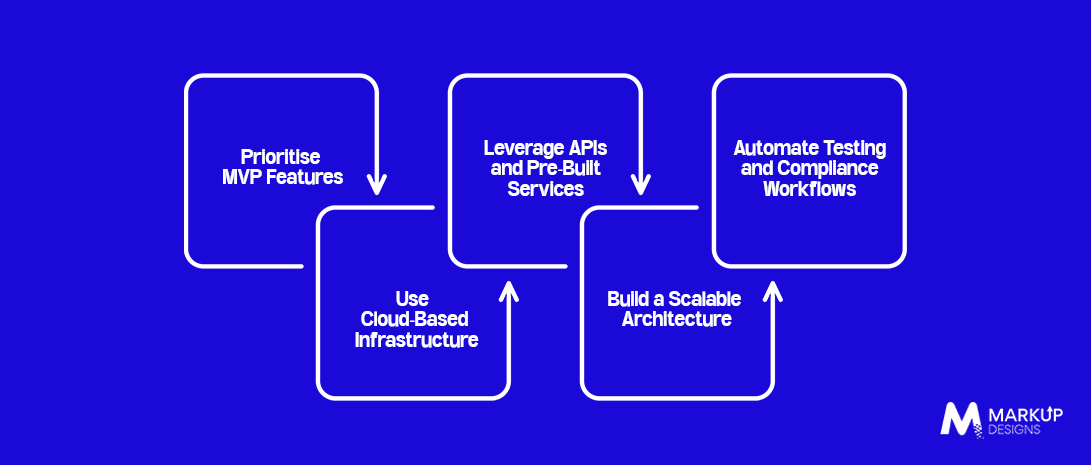
Start With an MVP
Focus the first release on essential compliance workflows and features before investing in advanced functionality.
Use Cloud and Pre-Built APIs
Cloud infrastructure and reliable third-party APIs can reduce the time and resources required to build certain capabilities from scratch.
Prioritise High-Value Automation
Automate repetitive, high-volume compliance tasks first to maximise the value of the initial development investment.
Build for Scalability
A scalable architecture allows businesses to expand features and user capacity without rebuilding the entire platform.
Automate Testing and Compliance Workflows
Automated testing and compliance workflows can reduce repetitive manual work and improve consistency across the platform.
How to Choose a RegTech Development Company in the UK?
RegTech and FinTech Expertise
Look for a development partner with experience building compliance-focused solutions and financial technology platforms.
Security and Compliance Experience
The development team should understand data protection, security controls, regulatory requirements, and compliance-focused development.
AI and Automation Capabilities
Experience with AI, machine learning, NLP, and workflow automation can be important for advanced RegTech solutions.
Integration and Scalability Expertise
The partner should be capable of integrating third-party systems and building architecture that can support future growth.
Post-Launch Support
Ongoing maintenance, security updates, performance monitoring, and regulatory changes should be considered before selecting a development partner.
Why Choose Markup Designs to Build a RegTech Platform?
Markup Designs helps businesses build custom RegTech platforms designed around their compliance workflows, business requirements, and growth objectives. Our dedicated development team combines AI, automation, secure architecture, API integration, and scalable development to create platforms that can simplify regulatory processes, strengthen compliance monitoring, and support data-driven decision-making. From initial planning and UI/UX design to development, testing, deployment, and ongoing support, we provide end-to-end RegTech development services tailored to the UK market.
Build a Smarter RegTech Platform for the UK Market
Build a secure, scalable, and compliance-focused RegTech platform with Markup Designs. From regulatory automation to AI-powered risk monitoring, we help businesses turn complex compliance workflows into efficient digital solutions.

Conclusion
Creating a RegTech platform in the UK involves a mixture of awareness of legal compliance, secure technology, intelligent automation and scalable architecture. The process begins with establishing the compliance use case and selecting the appropriate technology stack before carrying on to implementing KYC/AML workflows, connecting external systems and complying with security requirements. Every stage may influence the cost, term, and performance of platform development.
Businesses that wish to introduce a RegTech solution in 2026 should start with the pinpointed compliance requirements and an MVP to keep development in check and have certain groundwork for future AI, automation and analytics capabilities.
FAQ
1. How much does it cost to make a RegTech platform in the UK in 2026?
Costs may vary between $25,000 and $150,000+ depending on the complexity of the platform, its features, AI capabilities, integration functions, security requirements, and amount of work necessary to be done. A standard MVP will not require as much as an enterprise-level RegTech platform with high automation and AI features.
2. How long does it take to make a RegTech platform?
Generally, the development of a RegTech platform takes approximately 4 to 12 months, depending on its functionality, integration capabilities, compliance requirements, extent of testing, and level of customization.
3. Which capabilities must be incorporated into a RegTech platform?
Some primary capabilities could be managing compliance issues, dealing with regulatory change, monitoring risk, implementing KYC and AML measures, tracking transactions, generating reports automatically, running document management processes, ensuring audit trails, sending alerts, creating dashboards, and conducting compliance analytics.
4. Which tech tools would be useful for the creation of RegTech platforms?
RegTech sectors can benefit from using various tech tools, such as a number of programming languages like Python, Node.js, and Java, databases such as MongoDB and PostgreSQL, cloud computing tech, APIs, artificial intelligence and machine learning technologies, and data analytics channels. The choice of tech tools will depend on how the platform should work.
5. What laws in the UK should be adhered to by RegTech platforms?
Different regulations are used depending on what the platform should do. The following laws may be needed: UK GDPR, Data Protection Act 2018, FCA regulations, AML laws, KYC rules, Payment Services regulations, ISO 27001, SOC 2, and PCI DSS.
Author's Perspective
In our opinion, the main error that companies make while developing a RegTech platform is treating compliance as something that can be incorporated at a later stage. Security and compliance aspects, as well as the necessary architecture, audibility, and scalability, are to be considered from the very first stage. A properly constructed RegTech platform should not only automate the compliance processes already in place; it should create an efficient environment for businesses to keep an eye on risks, react to regulations, and perform compliance processes more effectively as part of operations.
Discuss Your Project NowAjit Kumar Jha
VP - Business Operations
Insights Are Valuable & Execution is Priceless
You’ve read about the digital future. Now, let’s build the infrastructure to take you there. Move your strategy from the page to the product.
Design Your Solution Now
Contact Us
Schedule The Appointment At Your Convenience Date And Time.
30 Min
Web Conference
Time Zone
Indian standard time (08:30pm)

Thanks For Getting In Touch!
You’ve Taken The First Step Toward Transforming Your Digital Presence. Our Experts Will Reach Out Shortly To Take It Forward.
Launch Your Dream Project
Provide a brief overview of your project, and our specialists will evaluate your requirements. We will connect with you to explore how the right digital solutions can help you launch faster.